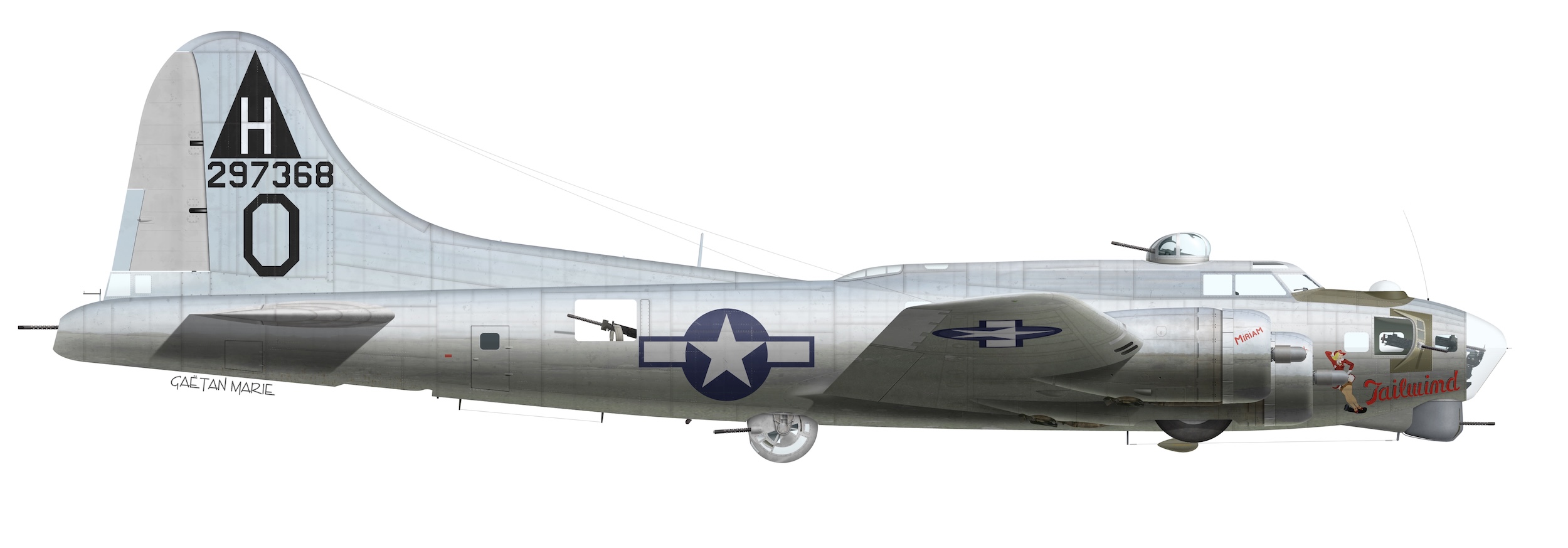
Greeks in Foreign Cockpits · Digital Museum Dossier Captain, USAAF B-17G Flying Fortress Pilot 601st Bombardment Squadron Service Record Biography Willard James Hadjes was born on 15 September 1918 in Waterloo, Iowa, the son of Constantinos Elias Hadjiyianakis and Waneta Thayer Hadjes. His father came from Avlakia on Samos, and the family settled near Fort Dodge, Iowa. After graduating from Fort Dodge High School in 1941, he volunteered for the U.S. Army Air Forces and trained at San Antonio and Houston. He received his pilot wings at Ellington Field on 30 August 1943, then took command of an original 398th Bomb Group combat crew. Associated during training and deployment with B-17G Tailwind, the crew reached RAF Nuthampstead and entered operations with the 601st Bomb Squadron. Hadjes flew fifteen combat missions in May and June 1944, including the D-Day air offensive. On 18 June, flying B-17G 42-102391 against Hamburg, his aircraft was struck by intense flak and force-landed near Bavendorf. All nine crewmen survived but became prisoners of war. Hadjes endured about eleven months in captivity and was liberated on 29 April 1945. His combat record and Greek-American heritage preserve an important account of diaspora service in the Eighth Air Force. Complete Biography Captain Willard James Hadjes was born on September 15, 1918, in Waterloo, Iowa, the son of Constantinos Elias Hadjiyianakis and Waneta Thayer Hadjes.¹ Family testimony later clarified that his father’s surname was later changed to Hadjes and that he came from Avlakia on the island of Samos, then still under Ottoman rule when he emigrated to the United States through New York in 1907.² Willard grew up on a dairy farm near Fort Dodge, Iowa, together with his brothers and sisters Athena, Louis, George, Paul, and Katherine.³ According to his daughter Cathryn Evans Hodgetts, he was the second child and oldest son of the family, and the death of his mother during his childhood left a lasting mark on his early life.⁴ He graduated from Fort Dodge High School in June 1941, only months before the United States entered the Second World War.⁵ After America’s entry into the conflict, Hadjes volunteered for military service in the U.S. Army Air Forces. His flight training eventually brought him to Texas, including periods at San Antonio and Houston, where he trained as a B-17 pilot.⁶ Newspaper accounts later confirmed that he received his wings at Ellington Field, Texas, on August 30, 1943.⁷ While stationed in Texas, Hadjes became closely connected with Houston’s Greek-American community. On February 10, 1944, he married Sophie Menutes, daughter of Pete Menutes and Mary Lardas Menutes, in a ceremony held at the Greek Orthodox Church in Houston and officiated by Rev. Christ Nanopoulos.⁸ The wedding reflected the close-knit wartime Greek-American community in Houston. Phil Moss sang “Because,” accompanied by Miss Detie Geanakis performing traditional wedding music. Sophie was given in marriage by her uncle Gus Lardis, while the bridal party included members of several prominent Greek families of Houston, among them Pappas, Daskas, Chickenis, Rentoumis, and Papadakis.⁹ After the ceremony, a reception was held at the Menutes family home, followed by a wedding supper at the Empire Room. The newlyweds planned to reside in Rapid City, South Dakota, where Hadjes was then stationed with the Army Air Forces.¹⁰ By early 1944, Hadjes had become pilot of one of the original combat crews assigned to the newly formed 398th Bomb Group of the Eighth Air Force. His crew included Homer R. Kuck as co-pilot, Richard E. Howell as navigator, John A. Hiller as bombardier, Joseph Ferraiuolo as radio operator, Robert B. Gibb as engineer/top turret gunner, Floyd Jones Jr. as ball turret gunner, John B. Lindsay as waist gunner, and Frank Pescia as tail gunner.¹¹ Crew chief duties were handled by Master Sergeant Jack H. Brady.¹² During stateside training and deployment preparations, the crew became associated with the B-17G Flying Fortress 'Tailwind', serial number 42-97368, a newly delivered aircraft they ferried overseas before eventually being reassigned to operational aircraft already in theater.¹³ A surviving recollection later recorded by associates of co-pilot Homer Kuck described the crew’s attachment to 'Tailwind': "His crew was given a brand new B-17 Flying Fortress upon completion of their training. They named it the 'Tailwind' and chose the nose art that was painted on both sides of the plane. When they arrived in Europe with it, that plane was taken away from them, and they were given an older one with battle scars."¹⁴ The aircraft eventually lost by Hadjes and his crew was not Tailwind, but B-17G-50-BO serial number 42-102391, squadron code 2391-B, assigned to the 601st Bomb Squadron of the 398th Bomb Group.¹⁵ The operational record of Willard Hadjes during the spring and early summer of 1944 can be reconstructed through surviving 398th Bomb Group mission formation charts and loading lists. His early missions placed him in the increasingly violent daylight bombing offensive against occupied Europe and Germany itself during the months immediately preceding the Normandy invasion. On May 6, 1944, he flew against Sottevast, France, in aircraft 2445-R.¹⁶ On May 7 he participated in the major Eighth Air Force raid against Berlin in aircraft 7080-S.¹⁷ Two days later, on May 9, he attacked St. Dizier flying 2543-B.¹⁸ On May 11 he flew against Sarreguemines aboard 7385-X.¹⁹ On May 19, 1944, Hadjes participated in another Berlin mission flying 7394-P, though records indicate the aircraft returned early.²⁰ The following day, May 20, he again returned early during operations against Villacoublay while flying 2391-B.²¹ On May 23 he attacked Saarbrücken/Woippy in the same aircraft.²² On May 25 he participated in operations against Nancy-Essey flying 7096-K.²³ On May 28 he flew to Meissen/Ruhland in 2391-B.²⁴ On May 30 he again flew 2391-B during the raid on Dessau.²⁵ D-DAY & POW By June 1944, the tempo of operations had intensified dramatically in preparation for Operation Overlord. On June 2, Hadjes flew aboard aircraft 2599-U during operations originally directed against Palaiseau but diverted to a target of opportunity near Braumont.²⁶ On June 5, 1944—the eve of D-Day—he flew in B-17 2391-B during attacks against Trouville, France.²⁷ The following day, June 6, 1944, Hadjes participated in the Normandy invasion air offensive itself. Formation charts place him flying aircraft 7080-S during attacks on German positions near Courseulles, France, as Allied forces landed on the beaches below.²⁸ Later accounts described him as participating in the first wave air strikes on Normandy during D-Day.²⁹ Combat operations continued almost without interruption. On June 7 he flew against Kerlin-Bastard, France, aboard aircraft 2516-H.³⁰ On June 12 he participated in attacks against Lille-Nord while flying once more in 2391-B.³¹ On June 13 he attacked Beauvais/Tille in the same aircraft.³² By then, Hadjes had completed fifteen combat missions.³³ On June 18, 1944, the crew took off aboard B-17G serial number 42-102391 for Mission No. 33 of the 398th Bomb Group: a daylight bombing raid against Hamburg, Germany.³⁴ The aircraft occupied a lead element position in the formation during one of the most dangerous phases of the bombing run.³⁵ Mission records show that flak over Hamburg was exceptionally intense. The 398th Bomb Group formation chart identifies Hadjes’ aircraft, 2391-B, in the lead group during the attack.³⁶ During the bombing run, the aircraft was hit by anti-aircraft fire and severely damaged. Witness statements preserved in Missing Air Crew Report (MACR) 5998 provide detailed testimony regarding the bomber’s final moments. Lieutenant Paul E. Foster reported: "About four minutes after bombs away I saw Lt. Hadjes’ ship drop out of the leading formation to the right. The ship was going down and trailing smoke from No. 3 engine. It lost approximately 3,000 feet altitude on a heading of approximately 200 degrees and appeared under perfect control. Then the ship went into a gentle left bank of about 70 to 80 degrees still losing altitude and still under perfect control. All four engines were still running when the ship disappeared below the clouds."³⁷ Lieutenant Lewis D. Chase added another eyewitness account: "I witnessed Lt. Hadjes’ ship going down during the bombing run over Hamburg. I was leading the high squadron and Lt. Hadjes was leading the second element of the lead squadron. The flak was intense and the worst part of it caught the lead squadron. Major Weibel’s ship caught fire and burned up. Lt. Hadjes’ ship was evidently hit badly, passed under the High Squadron, straightened out parallel to the course and was losing altitude rapidly."³⁸ Additional postwar summaries indicate that the aircraft force-landed near Bavendorf, east of Lüneburg, Germany, after sustaining heavy flak damage.³⁹ Remarkably, all nine crew members survived the descent and became prisoners of war.⁴⁰ Later recollections associated with Homer Kuck described the emergency landing in vivid personal detail: "When their crew was shot down they made an emergency landing, and no one was injured. Homer told me that when they came down they crossed a roadway with ditches on both sides, and it was a pretty rough ride. After they came to a stop, one of the crew members remarked that it was the best landing they ever made."⁴¹ The same account stated that the crew separated after landing in an attempt to evade capture: "They all came out of the plane uninjured. Homer told me he buried his service pistol under a tree because if they were captured it was better to be unarmed. The crew members paired off and departed on foot."⁴² Kuck and ball turret gunner Floyd Jones reportedly evaded capture for more than a week: "They went in a different direction and traveled on foot nine or ten days. When they were captured they were within one day of crossing a border into a friendly country, which I think was Holland. They stole civilian clothes from clotheslines so they could ditch their Army uniforms. They stole food when they could and even tried digging up seed potatoes. They milked cows in the field. They traveled at night and hid during the day."⁴³ Ultimately, all surviving members of the crew became German prisoners of war.⁴⁴ Hadjes himself remained a POW for approximately eleven months until liberation in the spring of 1945.⁴⁵ Newspaper accounts later specified that he was liberated on April 29, 1945.⁴⁶ During his wartime service, Hadjes received the Air Medal with Oak Leaf Cluster under General Orders No. 92 dated June 11, 1944.⁴⁷ A later obituary additionally stated that he had been decorated with the Bronze Star for heroic achievement and had received other commendations, though full official confirmation of the Bronze Star award remains pending further archival verification.⁴⁸ Following the war, Hadjes settled permanently in Houston, Texas with his wife Sophie where they raised 3 daughters and he built a successful business career in the hospitality and beverage industry. According to both family testimony and newspaper accounts, he operated several neighborhood bars and nightclubs during the 1950s and 1960s together with his brother and members of the Menutes family.⁴⁹ Later in life he had a second family with Rosa Evans. They raised 2 daughters Cathryn and Christine while running several clubs and a pizza restaurant together.⁵⁰ The Houston Post later credited Hadjes with helping establish the first Houston retail beverage dealer association known as F.A.B.A. and stated that he was instrumental in lobbying for liquor-law reform in Texas.⁵¹ He was also associated with the Houston Farm and Ranch Club and several business and fraternal organizations.⁵² Throughout his life he remained connected to Houston’s Greek Orthodox community and was a longtime member of Annunciation Greek Orthodox Cathedral.⁵³ Captain Willard James Hadjes died on November 15, 1994.⁵4 His obituary described him as a man remembered for humor, generosity, warmth, and devotion to family.⁵5 Funeral services were held at Annunciation Greek Orthodox Cathedral in Houston.⁵6 Today, the surviving documentary trail of Willard Hadjes—including Eighth Air Force formation charts, Missing Air Crew Report 5998, wartime newspapers, Greek-American community records, and family testimony—preserves the story of a Greek-American combat aviator who flew through the climactic air battles of 1944, survived the destruction of his Flying Fortress over Hamburg, endured captivity in Nazi Germany, and later built a prominent postwar life within the Greek community of Houston, Texas. ΠΛΗΡΗΣ ΑΦΗΓΗΣΗ Από τις ελληνικές ρίζες της Σάμου στους ουρανούς της Ευρώπης και την αιχμαλωσία Ο Λοχαγός Willard James Hadjes γεννήθηκε στις 15 Σεπτεμβρίου 1918 στο Waterloo, Iowa, γιος του Constantine “Gust” Hadjes και της Waneta Thayer Hadjes.¹ Μεταγενέστερη οικογενειακή μαρτυρία διευκρίνισε ότι το αρχικό επώνυμο του πατέρα του ήταν Hadjiyianakis και ότι καταγόταν από τα Αυλάκια της Σάμου, η οποία βρισκόταν ακόμη υπό οθωμανική κυριαρχία όταν μετανάστευσε στις Ηνωμένες Πολιτείες μέσω της Νέας Υόρκης το 1907.² Ο Willard μεγάλωσε σε γαλακτοκομική φάρμα κοντά στο Fort Dodge της Iowa, μαζί με τα αδέλφια του Athena, Louis, George, Paul και Katherine.³ Σύμφωνα με τη μαρτυρία της κόρης του, Cathryn Evans Hodgetts, ήταν το δεύτερο παιδί και ο μεγαλύτερος γιος της οικογένειας, ενώ ο θάνατος της μητέρας του κατά την παιδική του ηλικία άφησε βαθύ αποτύπωμα στα πρώτα χρόνια της ζωής του.⁴ Αποφοίτησε από το Fort Dodge High School τον Ιούνιο του 1941, μόλις λίγους μήνες πριν από την είσοδο των Ηνωμένων Πολιτειών στον Δεύτερο Παγκόσμιο Πόλεμο.⁵ Μετά την είσοδο στον πόλεμο, ο Hadjes κατατάχθηκε εθελοντικά στις Αεροπορικές Δυνάμεις Στρατού των Ηνωμένων Πολιτειών. Η εκπαίδευσή του ως χειριστή τον έφερε τελικά στο Texas, συμπεριλαμβανομένων εκπαιδευτικών περιόδων στο San Antonio και στο Houston, όπου εκπαιδεύτηκε ως χειριστής του βομβαρδιστικού B-17 Flying Fortress.⁶ Δημοσιεύματα της εποχής επιβεβαίωσαν αργότερα ότι έλαβε τις ασημένιες πτέρυγες στο Ellington Field του Texas, στις 30 Αυγούστου 1943.⁷ Κατά τη διάρκεια της παραμονής του στο Texas, ο Hadjes συνδέθηκε στενά με την ελληνοαμερικανική κοινότητα του Houston. Στις 10 Φεβρουαρίου 1944 νυμφεύθηκε τη Sophie Menutes, κόρη του Pete Menutes και της Mary Lardas Menutes, σε τελετή που πραγματοποιήθηκε στην Ελληνική Ορθόδοξη Εκκλησία του Houstonκαι τελέστηκε από τον Rev. Christ Nanopoulos.⁸ Ο γάμος αποτέλεσε χαρακτηριστική έκφραση της στενά δεμένης ελληνοαμερικανικής κοινότητας του Houston κατά τα χρόνια του πολέμου. Ο Phil Moss ερμήνευσε το τραγούδι “Because”, ενώ η Miss Detie Geanakis συνόδευσε την τελετή με παραδοσιακή γαμήλια μουσική. Η νύφη παραδόθηκε από τον θείο της Gus Lardis, ενώ στο γαμήλιο περιβάλλον συμμετείχαν μέλη αρκετών γνωστών ελληνικών οικογενειών του Houston, μεταξύ αυτών οι οικογένειες Pappas, Daskas, Chickenis, Rentoumis και Papadakis.⁹ Μετά την τελετή ακολούθησε δεξίωση στην οικία της οικογένειας Menutes και στη συνέχεια γαμήλιο δείπνο στο Empire Room. Το νεαρό ζευγάρι σχεδίαζε να εγκατασταθεί στο Rapid City, South Dakota, όπου ο Hadjes υπηρετούσε τότε με τις Αεροπορικές Δυνάμεις Στρατού.¹⁰ Στις αρχές του 1944, ο Hadjes είχε ήδη αναλάβει καθήκοντα χειριστή σε ένα από τα αρχικά πληρώματα της νεοσύστατης 398ης Πτέρυγας Βομβαρδισμού της Όγδοης Αεροπορικής Δύναμης. Το πλήρωμά του περιλάμβανε τον Homer R. Kuck ως συγκυβερνήτη, τον Richard E. Howell ως ναυτίλο, τον John A. Hiller ως βομβαρδιστή, τον Joseph Ferraiuolo ως ασυρματιστή, τον Robert B. Gibb ως μηχανικό πτήσεως/πολυβολητή άνω πυργίσκου, τον Floyd Jones Jr. ως πολυβολητή κοιλιακού πυργίσκου, τον John B. Lindsay ως πολυβολητή πλευρικής θέσης και τον Frank Pescia ως πολυβολητή ουράς.¹¹ Τα καθήκοντα αρχιμηχανικού πληρώματος εκτελούσε ο Αρχιλοχίας Jack H. Brady.¹² Κατά την περίοδο της εκπαίδευσης και της προετοιμασίας για ανάπτυξη στο εξωτερικό, στο πλήρωμα ανατέθηκε το B-17G Flying Fortress με την ονομασία 'Tailwind' και αριθμό σειράς 42-97368, ένα ολοκαίνουργιο αεροσκάφος το οποίο μετέφεραν στην Ευρώπη πριν τους ανατεθούν επιχειρησιακά αεροσκάφη που βρίσκονταν ήδη σε υπηρεσία στο θέατρο επιχειρήσεων.¹³ Μία μεταγενέστερη μαρτυρία, η οποία διασώθηκε από συνεργάτες του συγκυβερνήτη Homer Kuck, περιέγραψε τη συναισθηματική σύνδεση του πληρώματος με το Tailwind: «Το πλήρωμά του έλαβε ένα ολοκαίνουργιο B-17 Flying Fortress μετά την ολοκλήρωση της εκπαίδευσής του. Το ονόμασαν “Tailwind” και επέλεξαν το nose art που ζωγραφίστηκε και στις δύο πλευρές του αεροπλάνου. Όταν έφτασαν στην Ευρώπη με αυτό, τους το πήραν και τους έδωσαν ένα παλαιότερο αεροσκάφος με εμφανή ίχνη πολεμικής χρήσης.»¹⁴ Το αεροσκάφος που τελικά χάθηκε με τον Hadjes και το πλήρωμά του δεν ήταν το 'Tailwind', αλλά το B-17G-50-BO, αριθμού σειράς 42-102391, με κωδικό μοίρας 2391-B, το οποίο ανήκε στην 601η Μοίρα Βομβαρδισμού της 398ης Ομάδας Βομβαρδισμού.¹⁵ Η επιχειρησιακή δράση του Willard Hadjes κατά την άνοιξη και τις αρχές του καλοκαιριού του 1944 μπορεί να ανασυντεθεί με σημαντική ακρίβεια μέσω των σωζόμενων διαγραμμάτων σχηματισμού και των καταλόγων φόρτωσης των αποστολών της 398ης Πτέρυγας Βομβαρδισμού. Οι πρώτες αποστολές του τον τοποθέτησαν στο επίκεντρο της ολοένα εντονότερης εκστρατείας στρατηγικού βομβαρδισμού εναντίον της κατεχόμενης Ευρώπης και της ίδιας της Γερμανίας κατά τους μήνες που προηγήθηκαν της Απόβασης στη Νορμανδία. Στις 6 Μαΐου 1944 συμμετείχε στην επιδρομή εναντίον του Sottevast της Γαλλίας, πετώντας με το αεροσκάφος 2445-R.¹⁶ Την επόμενη ημέρα, στις 7 Μαΐου, έλαβε μέρος στη μεγάλη επιδρομή της Όγδοης Αεροπορικής Δύναμηςεναντίον του Βερολίνου πετώντας με το 7080-S.¹⁷ Δύο ημέρες αργότερα, στις 9 Μαΐου, συμμετείχε στην προσβολή του St. Dizier, στη Γαλλία, με το αεροσκάφος 2543-B.¹⁸ Στις 11 Μαΐου ακολούθησε αποστολή εναντίον του Sarreguemines, και πάλι στη Γαλλία, με το 7385-X.¹⁹ Στις 19 Μαΐου 1944 συμμετείχε σε νέα αποστολή κατά του Βερολίνου, πετώντας με το 7394-P, αν και τα αρχεία αναφέρουν ότι το αεροσκάφος επέστρεψε πρόωρα.²⁰ Την επόμενη ημέρα, 20 Μαΐου, σημειώθηκε δεύτερη πρόωρη επιστροφή κατά την επιχείρηση εναντίον του Villacoublay, της Γαλλίας, αυτή τη φορά με το 2391-B.²¹ Στις 23 Μαΐου επιτέθηκε στους στόχους Saarbrücken/Woippy με το ίδιο αεροσκάφος.²² Στις 25 Μαΐου συμμετείχε στην επιδρομή κατά του Nancy-Essey, πετώντας με το 7096-K.²³ Στις 28 Μαΐου βρέθηκε στην αποστολή εναντίον των στόχων Meissen/Ruhland, της Γερμανίας με το 2391-B.²⁴ Στις 30 Μαΐου επέστρεψε ξανά στο ίδιο αεροσκάφος για την επιδρομή κατά του Dessau.²⁵ Τον Ιούνιο του 1944 ο ρυθμός των επιχειρήσεων αυξήθηκε δραματικά καθώς πλησίαζε η έναρξη της Επιχείρησης Overlord. Στις 2 Ιουνίου ο Hadjes πέταξε με το αεροσκάφος 2599-U σε αποστολή που είχε αρχικό στόχο το Palaiseau, France, αλλά τελικά κατευθύνθηκε σε εναλλακτικό στόχο κοντά στο Braumont.²⁶ Στις 5 Ιουνίου 1944, παραμονή της Απόβασης, πέταξε με το 2391-B σε αποστολή εναντίον του Trouville, στη Γαλλία.²⁷ Την επομένη, στις 6 Ιουνίου 1944, συμμετείχε άμεσα στην αεροπορική υποστήριξη της Απόβασης στη Νορμανδία. Τα διαγράμματα σχηματισμού της μονάδας τον τοποθετούν στο αεροσκάφος 7080-S κατά τις επιθέσεις εναντίον γερμανικών θέσεων στην περιοχή του Courseulles, France, ενώ τα συμμαχικά στρατεύματα αποβιβάζονταν στις ακτές κάτω από τον σχηματισμό του.²⁸ Μεταγενέστερες αναφορές τον περιέγραψαν ως έναν από τους αεροπόρους που συμμετείχαν στα πρώτα κύματα αεροπορικών προσβολών της Νορμανδίας κατά την Ημέρα D-Day.²⁹ Οι επιχειρήσεις συνεχίστηκαν σχεδόν αδιάκοπα. Στις 7 Ιουνίου πέταξε εναντίον του Kerlin-Bastard, με το αεροσκάφος 2516-H.³⁰ Στις 12 του μηνός συμμετείχε στην προσβολή του Lille-Nord επιστρέφοντας στο 2391-B.³¹ ενώ στις 13 Ιουνίου επιτέθηκε στο Beauvais/Tille, France, πετώντας ξανά με το ίδιο αεροσκάφος.³² Μέχρι τότε είχε ολοκληρώσει δεκαπέντε πολεμικές αποστολές.³³ Στις 18 Ιουνίου 1944 το πλήρωμά του απογειώθηκε με το B-17G 42-102391 για την Αποστολή Νο. 33 της 398ης Πτέρυγας Βομβαρδισμού, μία ημερήσια επιδρομή εναντίον στο Hamburg της Γερμανίας.³⁴ Το αεροσκάφος κατείχε θέση επικεφαλής στοιχείου μέσα στον σχηματισμό, σε μία από τις πλέον επικίνδυνες φάσεις της αποστολής.³⁵ Τα επιχειρησιακά αρχεία δείχνουν ότι τα αντιαεροπορικά πυρά πάνω από τον στόχο ήταν εξαιρετικά σφοδρά. Το επίσημο διάγραμμα σχηματισμού της αποστολής τοποθετεί το 2391-B του Hadjes στην προπορευόμενη ομάδα του σχηματισμού.³⁶ Κατά τη διάρκεια του βομβαρδισμού, το αεροσκάφος επλήγη σοβαρά από γερμανικά αντιαεροπορικά πυρά. Οι καταθέσεις αυτοπτών μαρτύρων που διασώθηκαν στον Missing Air Crew Report (MACR) 5998 παρέχουν λεπτομερή εικόνα των τελευταίων στιγμών του βομβαρδιστικού. Ο Υπολοχαγός Paul E. Foster κατέθεσε: «Περίπου τέσσερα λεπτά μετά τη ρίψη των βομβών είδα το αεροσκάφος του Υπολοχαγού Hadjes να εγκαταλείπει τον κύριο σχηματισμό προς τα δεξιά. Το αεροπλάνο έχανε ύψος και άφηνε πίσω του καπνό από τον κινητήρα Νο. 3. Έχασε περίπου 3.000 πόδια ύψους ακολουθώντας πορεία περίπου 200 μοιρών και φαινόταν να βρίσκεται υπό πλήρη έλεγχο. Στη συνέχεια εισήλθε σε μία ήπια αριστερή στροφή περίπου 70 έως 80 μοιρών, συνεχίζοντας να χάνει ύψος αλλά εξακολουθώντας να βρίσκεται υπό πλήρη έλεγχο. Και οι τέσσερις κινητήρες λειτουργούσαν ακόμη όταν το αεροσκάφος χάθηκε κάτω από τα σύννεφα.»³⁷ Ο Υπολοχαγός Lewis D. Chase παρείχε μία δεύτερη μαρτυρία: «Παρακολούθησα το αεροσκάφος του Υπολοχαγού Hadjes να πέφτει κατά τη διάρκεια του βομβαρδισμού πάνω από το Αμβούργο. Εγώ ηγούμουν της υψηλής μοίρας και ο Υπολοχαγός Hadjes ηγείτο του δεύτερου στοιχείου της προπορευόμενης μοίρας. Τα αντιαεροπορικά πυρά ήταν εξαιρετικά έντονα και έπληξε την προπορευόμενη μοίρα. Το αεροσκάφος του Ταγματάρχη Weibel τυλίχθηκε στις φλόγες και καταστράφηκε. Το αεροσκάφος του Υπολοχαγού Hadjes είχε προφανώς υποστεί σοβαρές ζημιές, πέρασε κάτω από την Υψηλή Μοίρα, ευθυγραμμίστηκε παράλληλα με την πορεία μας και έχανε ύψος με μεγάλη ταχύτητα.»³⁸ Μεταπολεμικές αναφορές καταγράφουν ότι το αεροσκάφος πραγματοποίησε αναγκαστική προσγείωση κοντά στο Bavendorf, ανατολικά του Lüneburg, Germany, έπειτα από τις σοβαρές ζημιές που υπέστη από τα αντιαεροπορικά πυρά.³⁹ Το πλέον αξιοσημείωτο γεγονός ήταν ότι και τα εννέα μέλη του πληρώματος επέζησαν της καθόδου και της προσγείωσης, καταλήγοντας αιχμάλωτοι πολέμου.⁴⁰ Μετά την αναγκαστική προσγείωση κοντά στο Bavendorf, Germany, τα μέλη του πληρώματος εγκατέλειψαν το κατεστραμμένο βομβαρδιστικό και προσπάθησαν να αποφύγουν τη σύλληψη από τις γερμανικές δυνάμεις.⁴¹ Οι μεταγενέστερες αναμνήσεις που διασώθηκαν από συνεργάτες του συγκυβερνήτη Homer R. Kuck προσφέρουν μια σπάνια προσωπική εικόνα των γεγονότων που ακολούθησαν. Σύμφωνα με τη μαρτυρία αυτή: «Όταν το πλήρωμά τους καταρρίφθηκε, πραγματοποίησαν αναγκαστική προσγείωση και κανείς δεν τραυματίστηκε. Ο Homer μου είχε πει ότι κατά την προσγείωση διέσχισαν έναν δρόμο με χαντάκια και στις δύο πλευρές και ότι η διαδρομή ήταν αρκετά βίαιη. Όταν τελικά σταμάτησαν, ένα από τα μέλη του πληρώματος σχολίασε ότι ήταν η καλύτερη προσγείωση που είχαν κάνει ποτέ.»⁴² Μετά την ακινητοποίηση του αεροσκάφους, τα μέλη του πληρώματος αποφάσισαν να διασκορπιστούν σε μικρές ομάδες με την ελπίδα ότι θα μπορούσαν να διαφύγουν και να φθάσουν σε φιλικό έδαφος.⁴³ Η ίδια μαρτυρία αναφέρει: «Όλοι βγήκαν από το αεροπλάνο χωρίς τραυματισμούς. Ο Homer μου είπε ότι έθαψε το υπηρεσιακό του πιστόλι κάτω από ένα δέντρο, επειδή σε περίπτωση σύλληψης ήταν προτιμότερο να είναι άοπλος. Τα μέλη του πληρώματος χωρίστηκαν σε ζεύγη και έφυγαν με τα πόδια προς διαφορετικές κατευθύνσεις.»⁴⁴ Ο Homer Kuck και ο πολυβολητής του κάτω πυργίσκου Floyd Jones Jr. κατάφεραν να παραμείνουν ασύλληπτοι για περισσότερο από μία εβδομάδα.⁴⁵ Σύμφωνα με την ίδια αφήγηση: «Ακολούθησαν διαφορετική διαδρομή και ταξίδευαν πεζοί για εννέα ή δέκα ημέρες. Όταν συνελήφθησαν, απείχαν μόλις μία ημέρα από τα σύνορα προς φίλια χώρα, που νομίζω ότι ήταν η Ολλανδία. Έκλεψαν πολιτικά ρούχα από απλωμένες μπουγάδες για να ξεφορτωθούν τις στρατιωτικές τους στολές. Έκλεβαν τρόφιμα όταν μπορούσαν και ακόμη προσπάθησαν να ξεθάψουν πατάτες από χωράφια. Άρμεγαν αγελάδες για να επιβιώσουν. Ταξίδευαν τη νύχτα και κρύβονταν κατά τη διάρκεια της ημέρας.»⁴⁶ Παρά τις προσπάθειες διαφυγής, όλα τα μέλη του πληρώματος συνελήφθησαν τελικά από τις γερμανικές αρχές.⁴⁷ Τα αρχεία του Missing Air Crew Report 5998 επιβεβαιώνουν ότι ολόκληρο το πλήρωμα καταγράφηκε ως αιχμάλωτο πολέμου.⁴⁸ Ο ίδιος ο Hadjes παρέμεινε αιχμάλωτος για περίπου έντεκα μήνες, περνώντας το υπόλοιπο του πολέμου σε γερμανικά στρατόπεδα αιχμαλώτων.⁴⁹ Οι λεπτομέρειες της κράτησής του παραμένουν μέχρι σήμερα ελλιπώς τεκμηριωμένες, όμως οι μεταγενέστερες αναφορές εφημερίδων επιβεβαιώνουν ότι απελευθερώθηκε στις 29 Απριλίου 1945, λίγες μόλις ημέρες πριν από την τελική κατάρρευση του Τρίτου Ράιχ.⁵⁰ Κατά τη διάρκεια της πολεμικής του υπηρεσίας τιμήθηκε με το Air Medal με ένα Φύλλο Δρυός σύμφωνα με την Γενική Διαταγή No. 92 της 11ης Ιουνίου 1944.⁵¹ Μεταγενέστερο δημοσίευμα που αφορούσε την νεκρολογία του ανέφερε επίσης ότι είχε τιμηθεί με το Bronze Star για ηρωική δράση, καθώς και με επιπλέον διακρίσεις· ωστόσο πλήρης επίσημη τεκμηρίωση για την απονομή του Bronze Star δεν έχει ακόμη εντοπισθεί στα διαθέσιμα αρχεία και παραμένει αντικείμενο περαιτέρω έρευνας.⁵² Μετά το τέλος του πολέμου, ο Hadjes εγκαταστάθηκε μόνιμα στο Houston του Texas, μαζί με τη σύζυγό του Sophie, όπου ανέθρεψαν τις τρεις κόρες τους και όπου ο ίδιος οικοδόμησε μια επιτυχημένη επιχειρηματική σταδιοδρομία στον χώρο της εστίασης και των αλκοολούχων ποτών. Σύμφωνα τόσο με οικογενειακές μαρτυρίες όσο και με δημοσιεύματα του Τύπου, κατά τις δεκαετίες του 1950 και του 1960 διατηρούσε και διαχειριζόταν αρκετά μπαρ και νυχτερινά κέντρα στο Houston, σε συνεργασία με τον αδελφό του και μέλη της οικογένειας Menutes.⁴⁹ Αργότερα στη ζωή του δημιούργησε δεύτερη οικογένεια με τη Rosa Evans. Μαζί ανέθρεψαν τις δύο κόρες τους, Cathryn και Christine, ενώ παράλληλα συνεργάζονταν επαγγελματικά στη λειτουργία διαφόρων κέντρων διασκέδασης και ενός εστιατορίου πίτσας.⁵⁰ Η εφημερίδα Houston Post απέδωσε αργότερα στον Hadjes σημαντικό ρόλο στη δημιουργία της πρώτης επαγγελματικής ένωσης λιανοπωλητών ποτών του Houston, γνωστής ως F.A.B.A., ενώ ανέφερε ότι υπήρξε καθοριστικός παράγοντας στις προσπάθειες μεταρρύθμισης της νομοθεσίας περί αλκοολούχων ποτών στο Texas.⁵¹ Συνδέθηκε επίσης με τον Houston Farm and Ranch Club, καθώς και με διάφορους επαγγελματικούς, κοινωνικούς και αδελφικούς οργανισμούς της πόλης.⁵² Καθ’ όλη τη διάρκεια της ζωής του παρέμεινε στενά συνδεδεμένος με την ελληνική ομογένεια του Houston και υπήρξε επί μακρόν ενεργό μέλος του Annunciation Greek Orthodox Cathedral.⁵³ Ο Willard James Hadjes απεβίωσε στις 15 Νοεμβρίου 1994.⁵⁴ Η νεκρολογία του τον περιέγραφε ως έναν άνθρωπο γνωστό για το χιούμορ, τη γενναιοδωρία, τη ζεστή προσωπικότητά του και την αφοσίωσή του στην οικογένειά του.⁵⁵ Η εξόδιος ακολουθία τελέστηκε στον Annunciation Greek Orthodox Cathedral του Houston.⁵⁶ Σήμερα, το σωζόμενο αρχειακό υλικό που αφορά τον Willard Hadjes —συμπεριλαμβανομένων των διαγραμμάτων σχηματισμού της Όγδοης Αεροπορικής Δύναμης, του Missing Air Crew Report 5998, των πολεμικών δημοσιευμάτων, των αρχείων της ελληνοαμερικανικής κοινότητας και των οικογενειακών μαρτυριών— διατηρεί ζωντανή την ιστορία ενός Ελληνοαμερικανού αεροπόρου μάχης, ο οποίος έλαβε μέρος στις καθοριστικές αεροπορικές επιχειρήσεις του 1944, επέζησε από την απώλεια του βομβαρδιστικού του πάνω από το Αμβούργο, άντεξε την αιχμαλωσία στη ναζιστική Γερμανία και αργότερα οικοδόμησε μια εξέχουσα μεταπολεμική ζωή στο πλαίσιο της ελληνικής κοινότητας του Houston στο Texas. Formation & Deployment Hadjes progressed from volunteer service and pilot training in Texas to B-17 crew command, overseas deployment, and combat operations with the Eighth Air Force. Volunteered for service in the U.S. Army Air Forces. Trained at San Antonio and Houston as a B-17 pilot. Received his wings at Ellington Field, Texas. Became pilot of an original 398th Bomb Group crew and trained at Rapid City. The crew ferried Tailwind overseas and arrived at Nuthampstead. Entered Eighth Air Force operations with the 601st Bomb Squadron. Shot down on the Hamburg mission. Liberated from POW status. Airframe & Personnel The crew trained aboard and ferried B-17G 42-97368, Tailwind, to England. In combat they flew several squadron aircraft; the bomber lost on 18 June 1944 was B-17G 42-102391, squadron code 2391-B. AIRCRAFT PROFILE · B-17G “TAILWIND” Documented Aircraft Record ‘Tailwind’ was the brand-new B-17 delivered to the Hadjes crew in the United States, although it never flew combat missions with them. According to 398th Bomb Group records, aircraft serial number 42-97368 carried the name Tailwind and was assigned to the 601st Bomb Squadron. Hadjes’ crew appears with the aircraft in a Spring 1944 photograph, and surviving records indicate that they trained aboard it and ferried it to England, arriving at Nuthampstead on 22 April 1944. A distinctive personal detail of the aircraft was the name “Miriam” painted on one of its engines, a tribute to the wife of the crew’s bombardier, John A. Hiller. This wasn't the only names on engine cowlings. According to Hadjes daughters, their father told them about naming the engines after their wives, and Jack Hiller as well as Annabelle Kuck both related this same information to them before they passed away. So the story is that the crew painted the names of the wives of the pilot, co-pilot, bombardier, and navigator one on each engine. Their names were Sophie(Willard), Annabelle(Homer), Miriam(Jack), and Darlene(Dick). On 6 May 1944, Tailwind was transferred to the 306th Bomb Group and flew no combat missions with the 398th Bomb Group. Its ultimate fate was unrelated to Hadjes and his crew. On 12 September 1944, while flying with another crew under John Sasser, the aircraft was hit by flak and anti-aircraft fire over Germany. Following a crash landing near Massow/Freyenstein, six crewmen were killed and three became prisoners of war. (Copyright Bertrand Brown) Aircrew Record Original Crew No. 23 trained together and entered combat with the 601st Bomb Squadron. Crew chief duties were handled by Master Sergeant Jack H. Brady.
Pilot / Aircraft Commander
Co-pilot
Bombardier
Navigator
Radio Operator / Gunner
Engineer / Top Turret Gunner
Ball Turret Gunner
Waist Gunner
Tail Gunner
Crew Chief Ground crew Operational Record Surviving 398th Bomb Group formation charts and loading lists document Hadjes’s operational record during the spring and early summer of 1944.
The Final Operation During 398th Bomb Group Mission No. 33, B-17G 42-102391 occupied a lead-element position in the formation attacking Hamburg. Intense flak struck and severely damaged the bomber, which descended under control and force-landed near Bavendorf, east of Lüneburg. “About four minutes after bombs away I saw Lt. Hadjes’ ship drop out of the leading formation to the right. The ship was going down and trailing smoke from No. 3 engine.” All nine crew members survived the emergency landing. After leaving the aircraft they separated in an effort to evade capture; ultimately every member of the crew became a German prisoner of war. Hadjes remained in captivity for approximately eleven months and was liberated on 29 April 1945. Service & Memory Hadjes’s decorations, prisoner-of-war record, liberation, and postwar life form the closing official and family record of his service. Personal Archive Family-held photographs preserve Hadjes’s Greek-American roots, wartime marriage, and the family circle that surrounded his service. Research Methodology Improoving Photos through AI The Image Restoration and Verification Agent was developed by the Greeks in Foreign Cockpits research team to support historically accurate restoration of archival military photographs. For Willard James Hadjes, restoration focused on improving clarity, tonal balance, and visual stability in wartime and family-held images affected by age, contrast loss, scan artifacts, and uneven quality. Corrections were limited to stabilization—contrast recovery, tonal adjustment, sharpening, and removal of surface or scan imperfections—without reconstructing missing information or adding speculative elements. Facial structure, insignia, clothing, and period-correct textures were preserved according to the source material. Verification compared restored images with authenticated references of Hadjes, including wartime portraits, uniform photographs, and family-held images. The analysis focused on stable anatomical features—facial proportions, eye spacing, brow line, nose structure, and jawline—rather than expression, lighting, or style. Only restorations showing consistent agreement across available references were accepted. The restored images do not replace the originals, but serve as controlled reference surrogates, preserving visual fidelity and evidentiary integrity. This ensures that enhancement serves historical evidence rather than replacing it. Research Record SOURCES 1. “Hadjes,” The Houston Post (Houston, Texas), November 16, 1994, 46. Additional Sources Used in the Biography “Menutes-Hadjes Wedding Held,” The Houston Post (Houston, Texas), February 16, 1944, 9. Special thanks to Cathryn Evans Hodgetts , daughter of Willard James Hadjes. Continue ExploringWILLARD JAMESHADJES
398th Bombardment Group · Eighth Air Force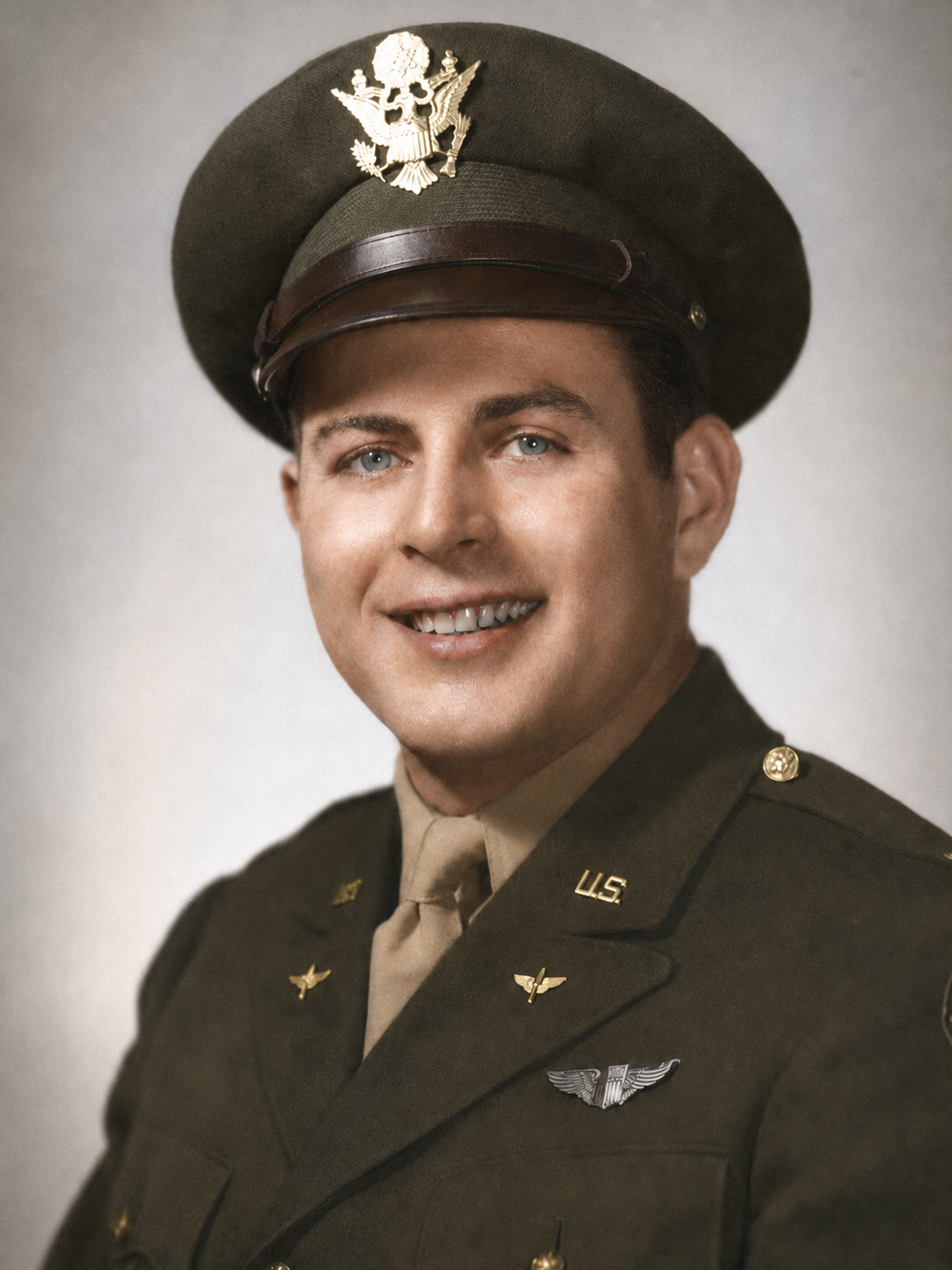
QUICK FACTS
Waterloo, Iowa
Avlakia, Samos
U.S. Army Air Forces
398th Bomb Group
42-102391 · 2391-B
May–June 1944
18 June 1944
Liberated 29 April 1945HIS STORY IN BRIEF
READ THE FULL BIOGRAPHY +
WILLARD JAMES HADJES
AFTER WARΕΛΛΗΝΙΚΗ ΒΙΟΓΡΑΦΙΑ +
ΠΛΗΡΗΣ ΒΙΟΓΡΑΦΙΑ
D-DAY ΚΑΙ ΑΙΧΜΑΛΩΣΙΑ
ΜΕΤΑ ΤΟΝ ΠΟΛΕΜΟ
TRAINING & PATH TO COMBAT
VOLUNTEER SERVICE
PILOT TRAINING
PILOT WINGS
ORIGINAL COMBAT CREW
ARRIVAL IN ENGLAND
COMBAT OPERATIONS
WHEN SHOT DOWN
LIBERATED
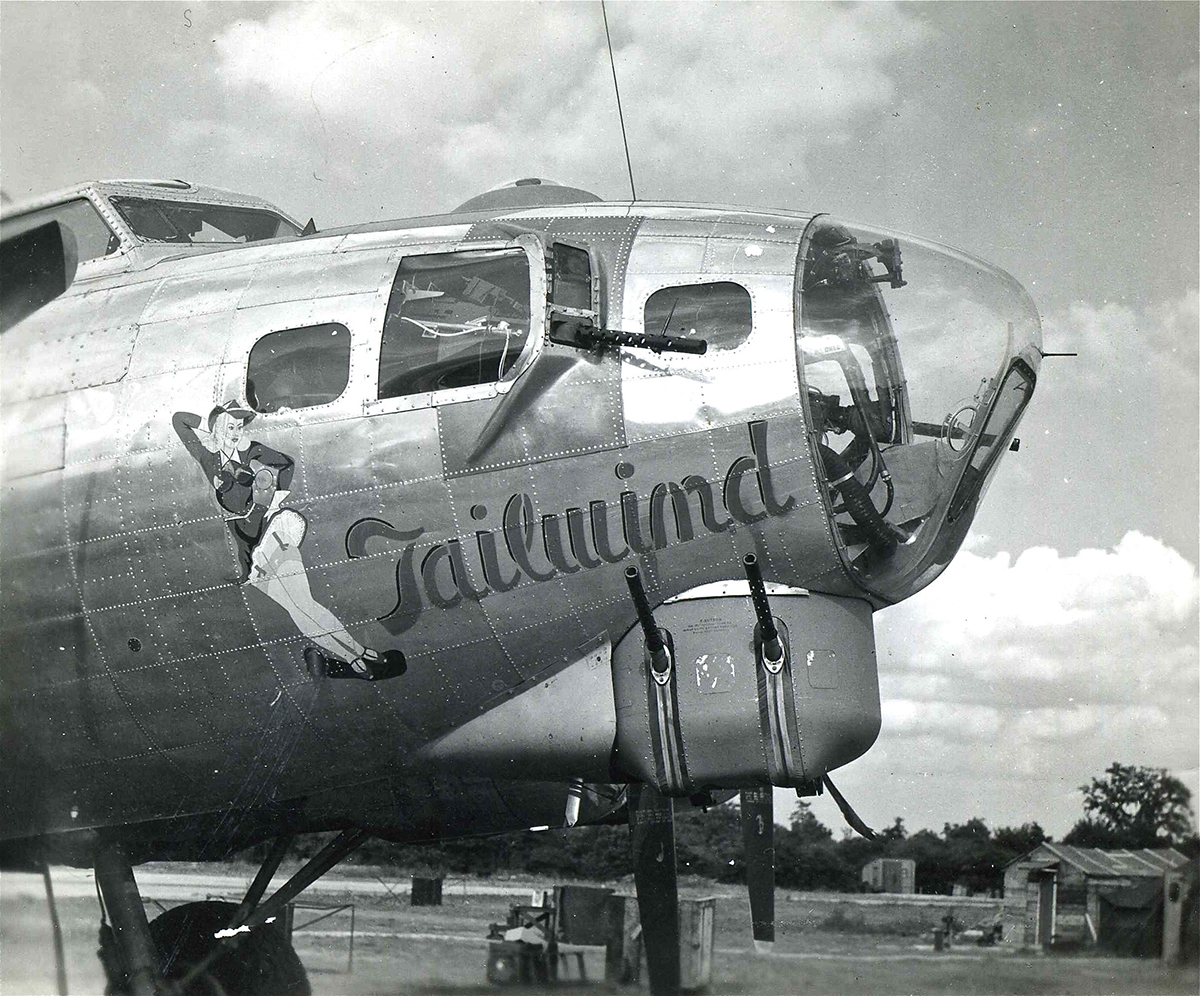
'Tailwind' B-17G Flying Fortress 42-97368 of the 601st Bomb Squadron, 398th Bomb Group, photographed in England during 1944. The aircraft was one of the Flying Fortresses associated with Captain Willard James Hadjes, the Greek-American combat pilot who completed fifteen missions over Europe before being shot down and captured during the Hamburg operation of 18 June 1944. (via https://b17flyingfortress.de/)
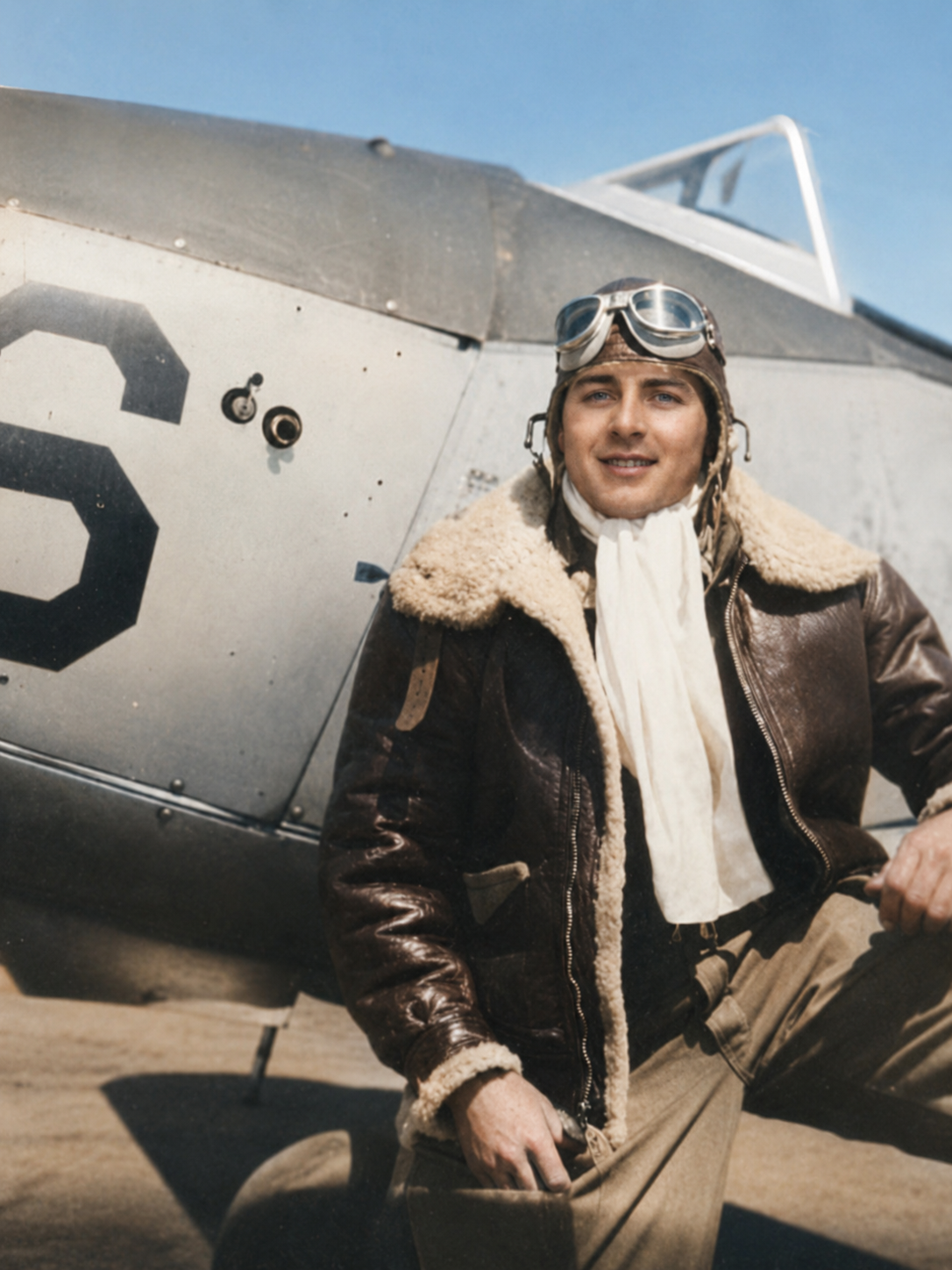
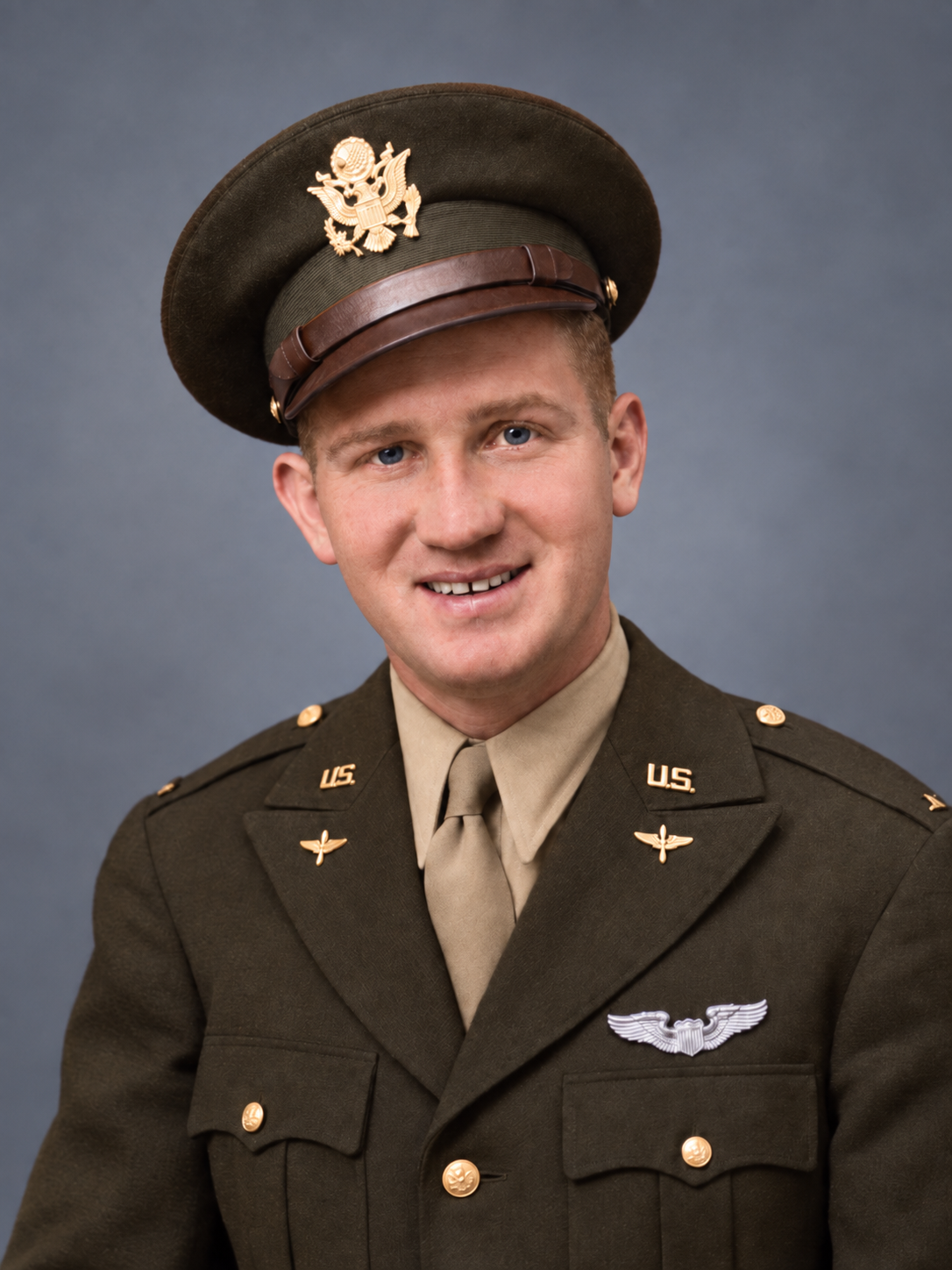
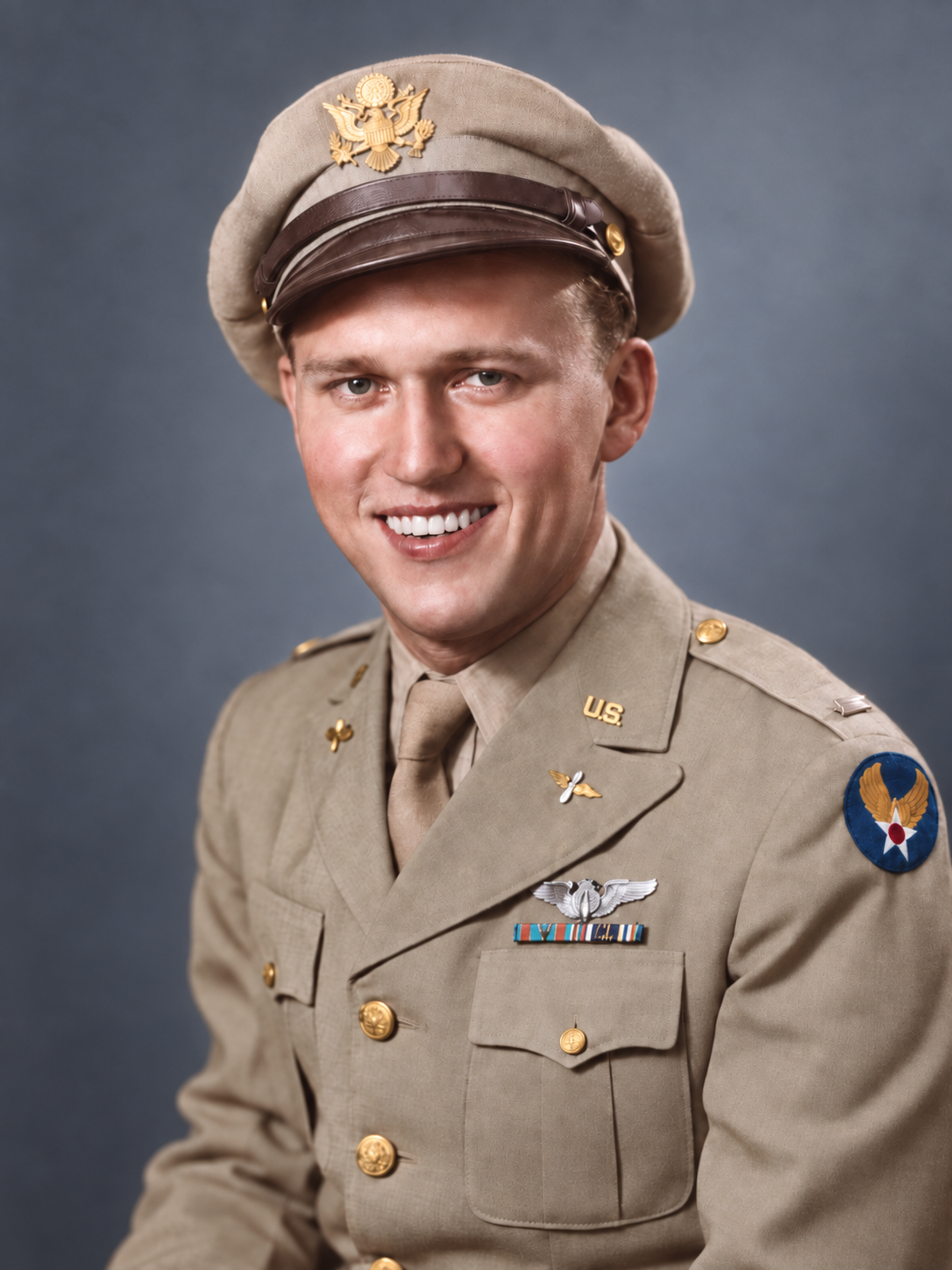
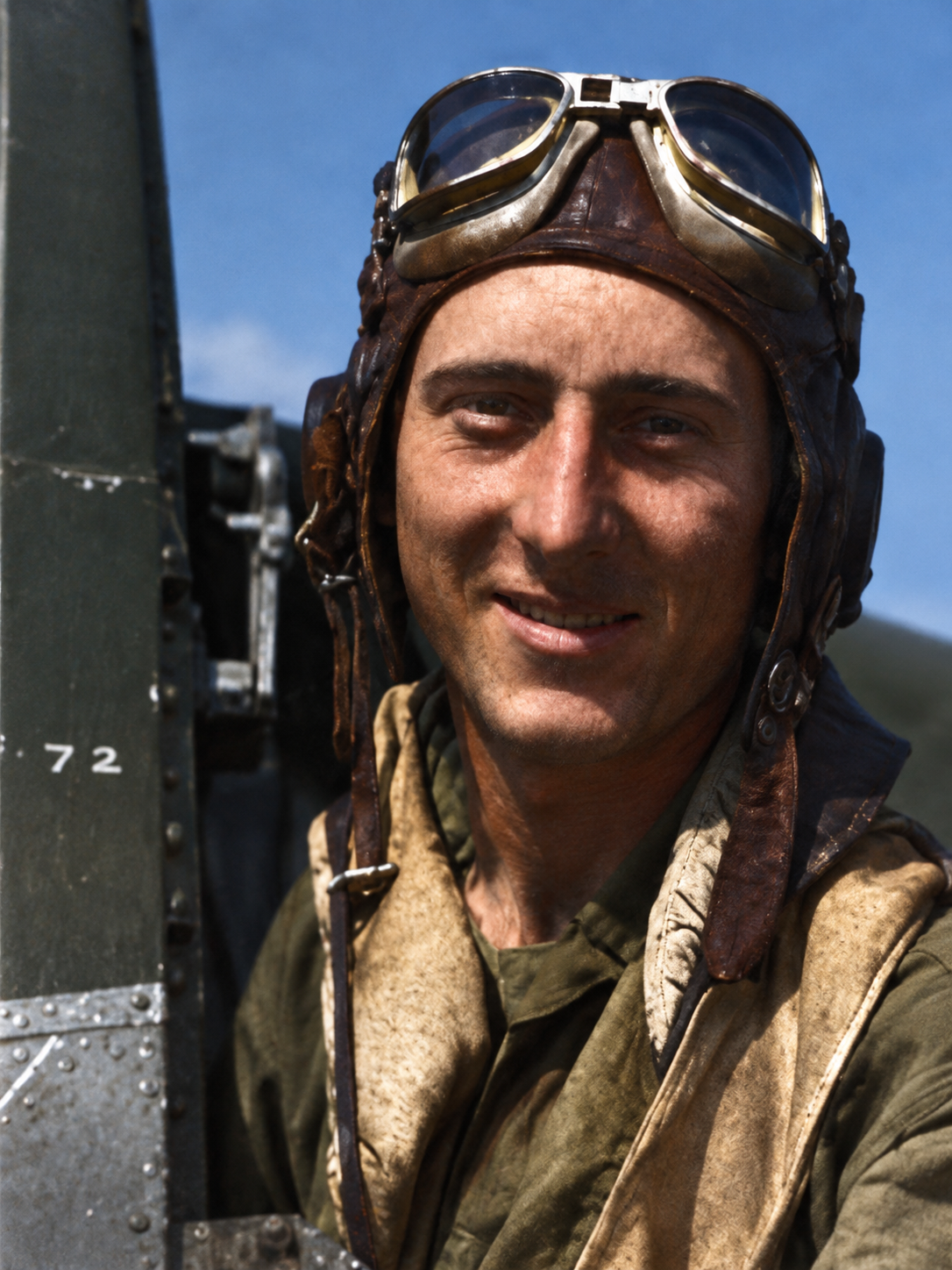
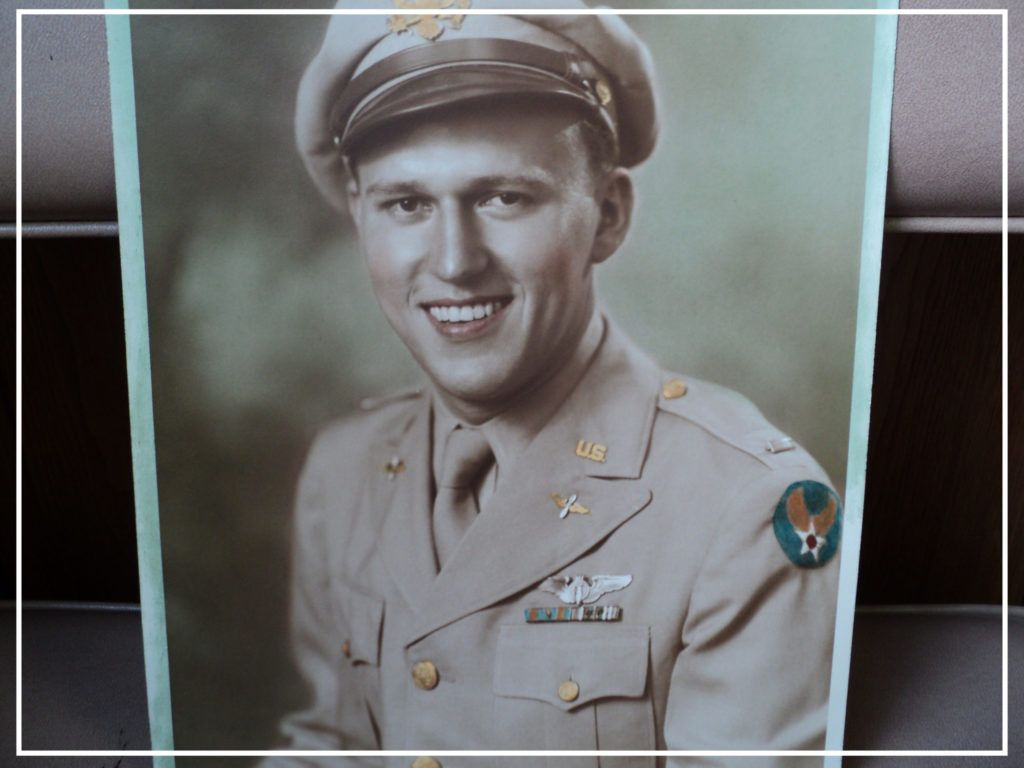
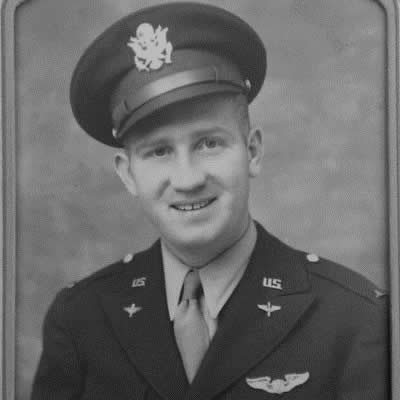
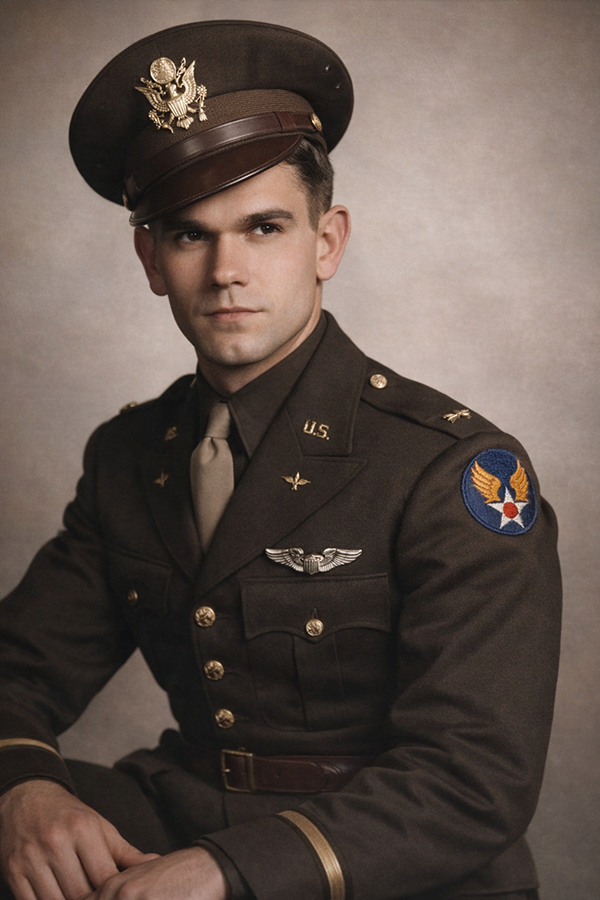
Willard James Hadjes (1918–1994), U.S. Army Air Forces pilot of the 601st Bomb Squadron, 398th Bomb Group, Eighth Air Force. The upper photograph shows Hadjes in his formal Army Air Forces uniform shortly after earning his pilot wings and commission as a Second Lieutenant in 1943. The lower photograph depicts him during flight training beside a Vultee BT-13 Valiant, one of the primary trainers used in the Army Air Forces pilot-training program. (Hadjes Family Collection)
AIRCRAFT & CREW
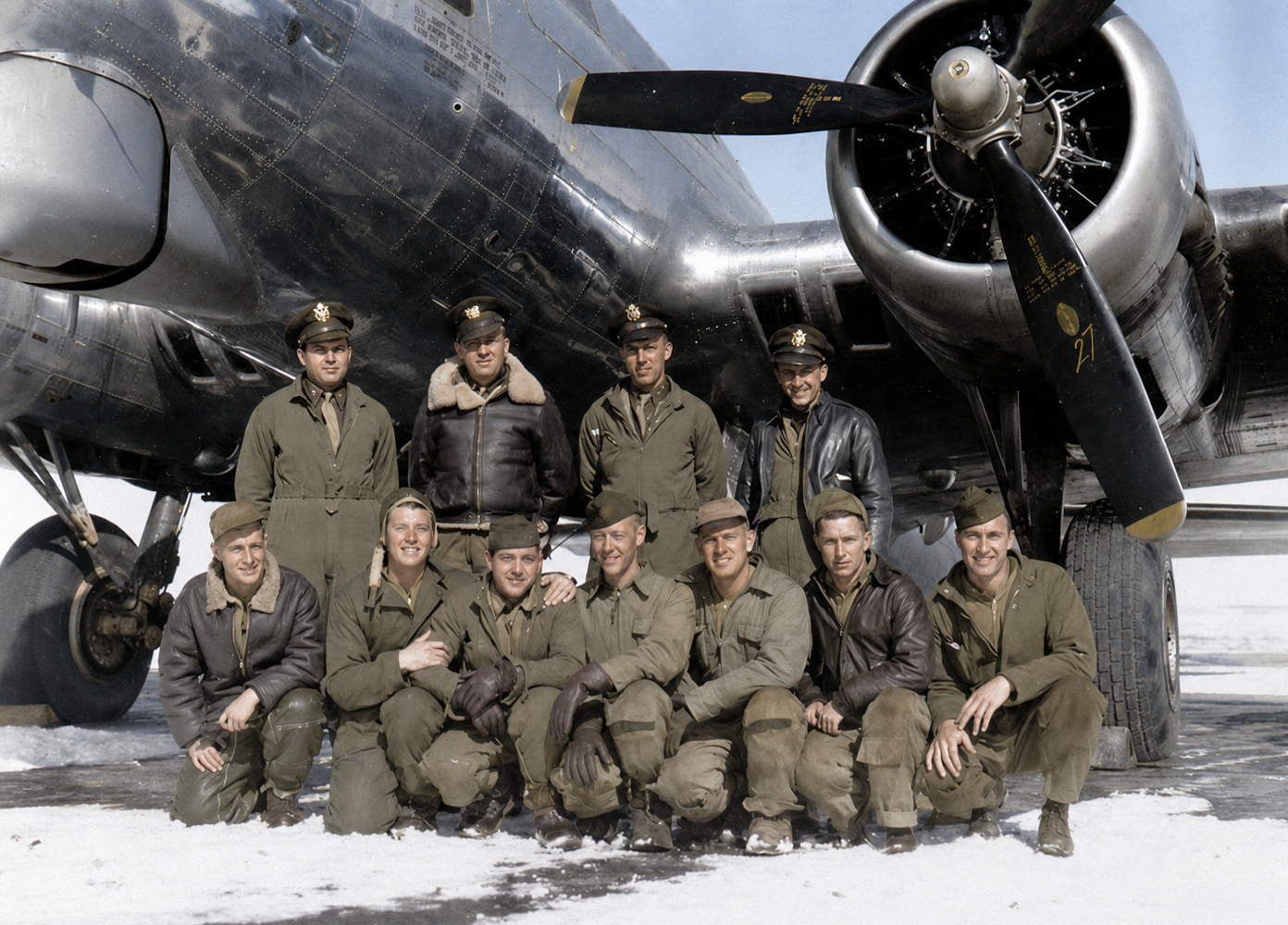
Hadjes Crew No. 23 of the 601st Bomb Squadron, 398th Bomb Group, during training in the United States, probably at Rapid City Army Air Base, South Dakota, in March 1944. Standing, left to right, are 2nd Lt. Willard Hadjes (pilot), F/O Homer R. Kuck (co-pilot), 2nd Lt. John A. Hiller (bombardier), and 2nd Lt. Richard E. Howell (navigator). Seated and kneeling in front are Jack H. Brady (crew chief), Sgt. Frank Pescia (tail gunner), S/Sgt. Joseph Ferraiuolo (radio operator and gunner), Sgt. John B. Lindsay (engineer and waist gunner), Sgt. Floyd Jones, Jr. (ball turret gunner), Sgt. James A. Johnson (gunner), and Sgt. Robert B. Gibb (engineer gunner). The crew constituted Original Crew No. 23 of the 601st Bomb Squadron and trained together aboard B-17G Flying Fortress 42-97368, “Tailwind.” The aircraft visible in the photograph is believed to be Tailwind itself; enlargement of the original image reveals the serial number 42-97368 on the fuselage. After completing training, the crew deployed to England with the 398th Bomb Group and entered combat operations with the Eighth Air Force during the strategic bombing campaign against Nazi Germany in 1944. (https://www.398th.org/)
CREW MEMBERS
Willard J. Hadjes
Homer R. Kuck
John A. “Jack” Hiller Jr.
Richard E. Howell

Joseph Ferraiuolo
Robert B. Gibb
Floyd Jones Jr.
John B. Lindsay
Frank Pescia
Jack H. Brady
COMBAT MISSIONS
MISSION DATE TARGET AIRCRAFT / CODE NOTES
6 May 1944 Sottevast 2445-R
7 May 1944 Berlin 7080-S
9 May 1944 St. Dizier 2543-B
11 May 1944 Sarreguemines 7385-X
19 May 1944 Berlin 7394-P Returned early
20 May 1944 Villacoublay 2391-B Returned early
23 May 1944 Saarbrücken / Woippy 2391-B
25 May 1944 Nancy-Essey 7096-K
28 May 1944 Meissen / Ruhland 2391-B
30 May 1944 Dessau 2391-B
2 June 1944 Palaiseau / Braumont 2599-U
5 June 1944 Trouville 2391-B
6 June 1944 Courseulles 7080-S D-Day
7 June 1944 Kerlin-Bastard 2516-H
12 June 1944 Lille-Nord 2391-B
13 June 1944 Beauvais / Tille 2391-B
FINAL MISSION — HAMBURG, 18 JUNE 1944
— Witness statement of Lt. Paul E. Foster, MACR 5998
Hamburg
2391-B
All nine survived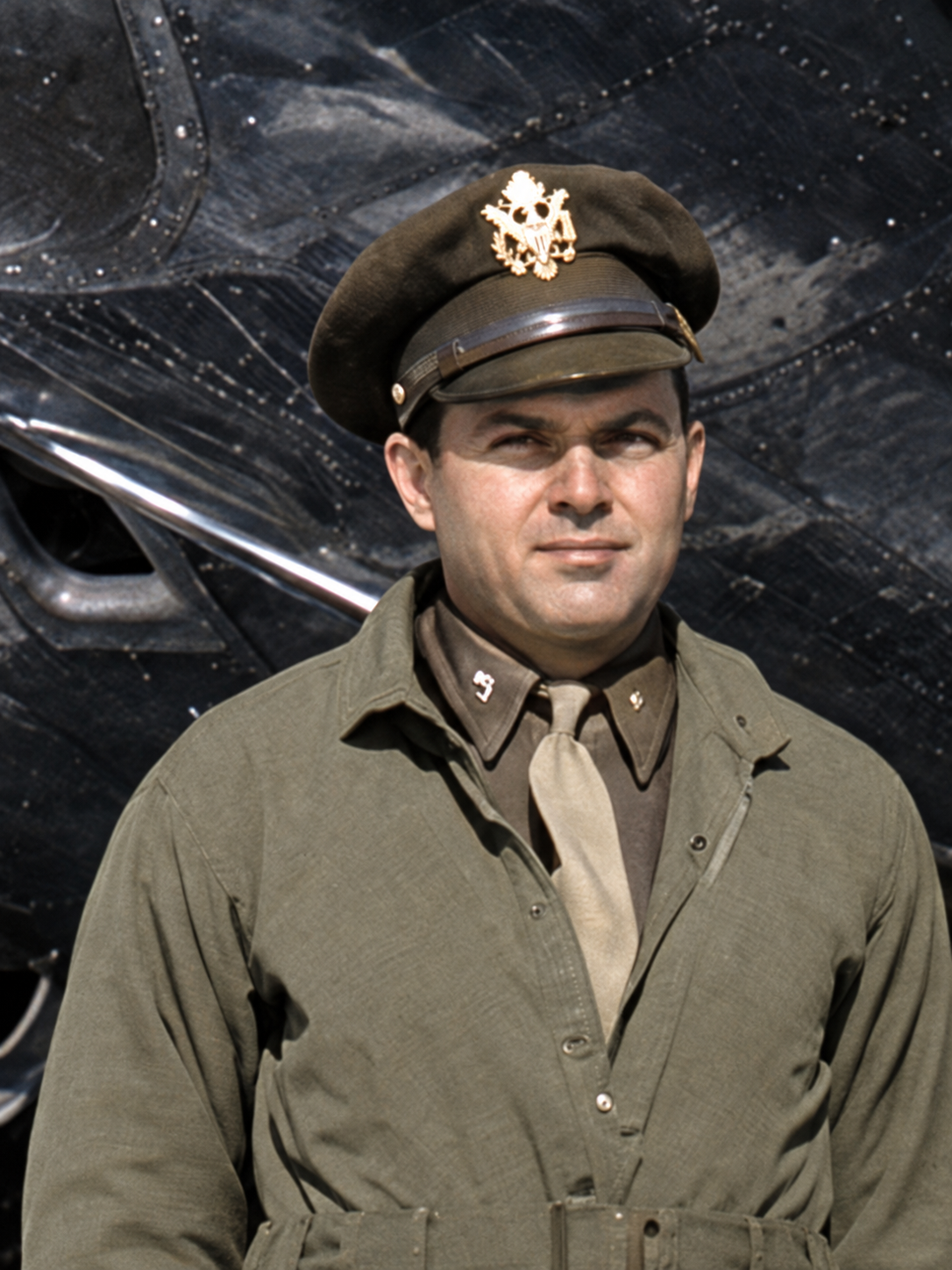
CREW & FATE
HONORS & REMEMBRANCE
FAMILY PHOTOGRAPHS
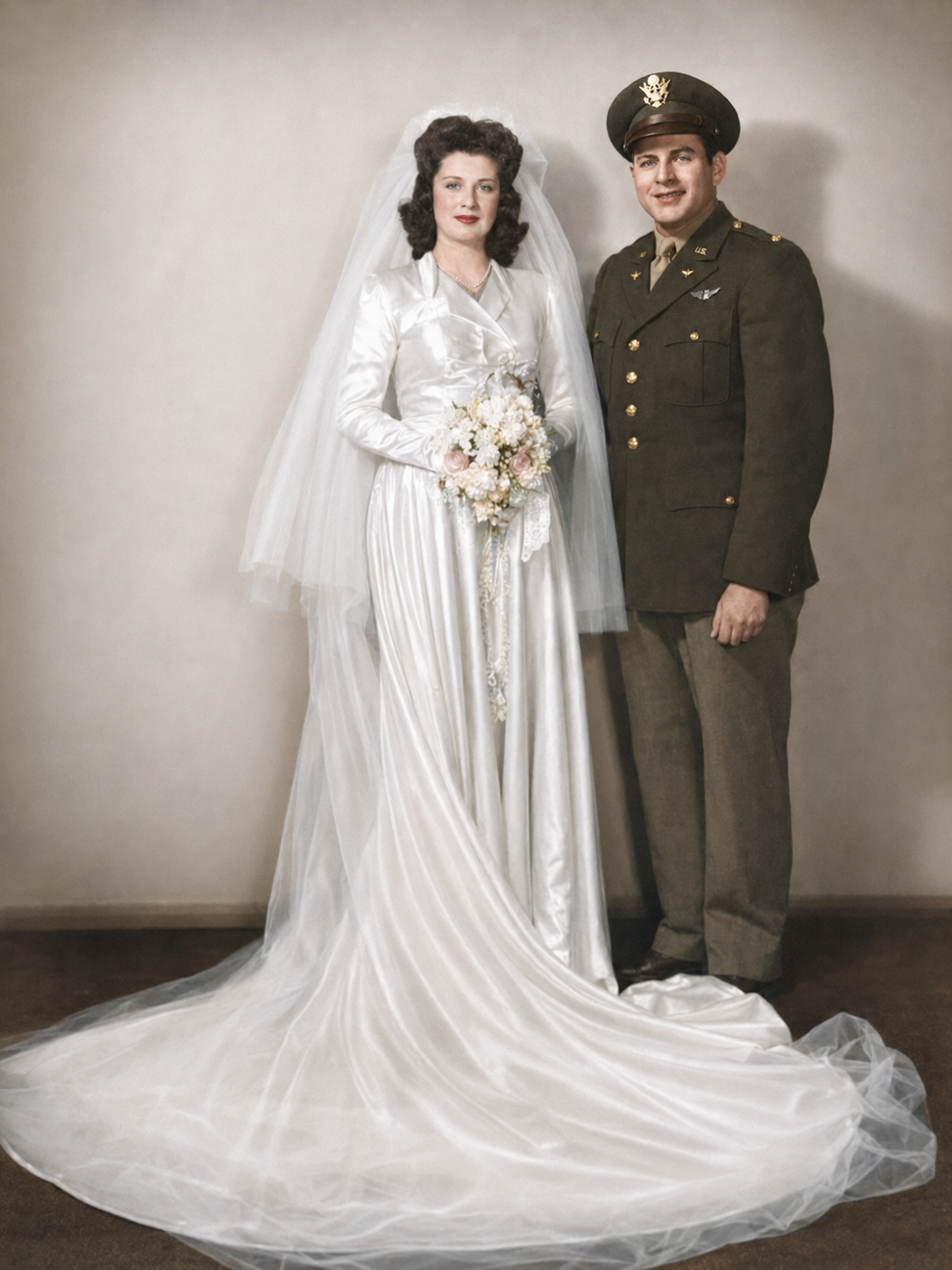
Lieutenant Willard James Hadjes and Sophie Menutes Hadjes on their wedding day, Houston, Texas, 10 February 1944. (Courtesy of the Hadjes Family Collection, colored with AI)
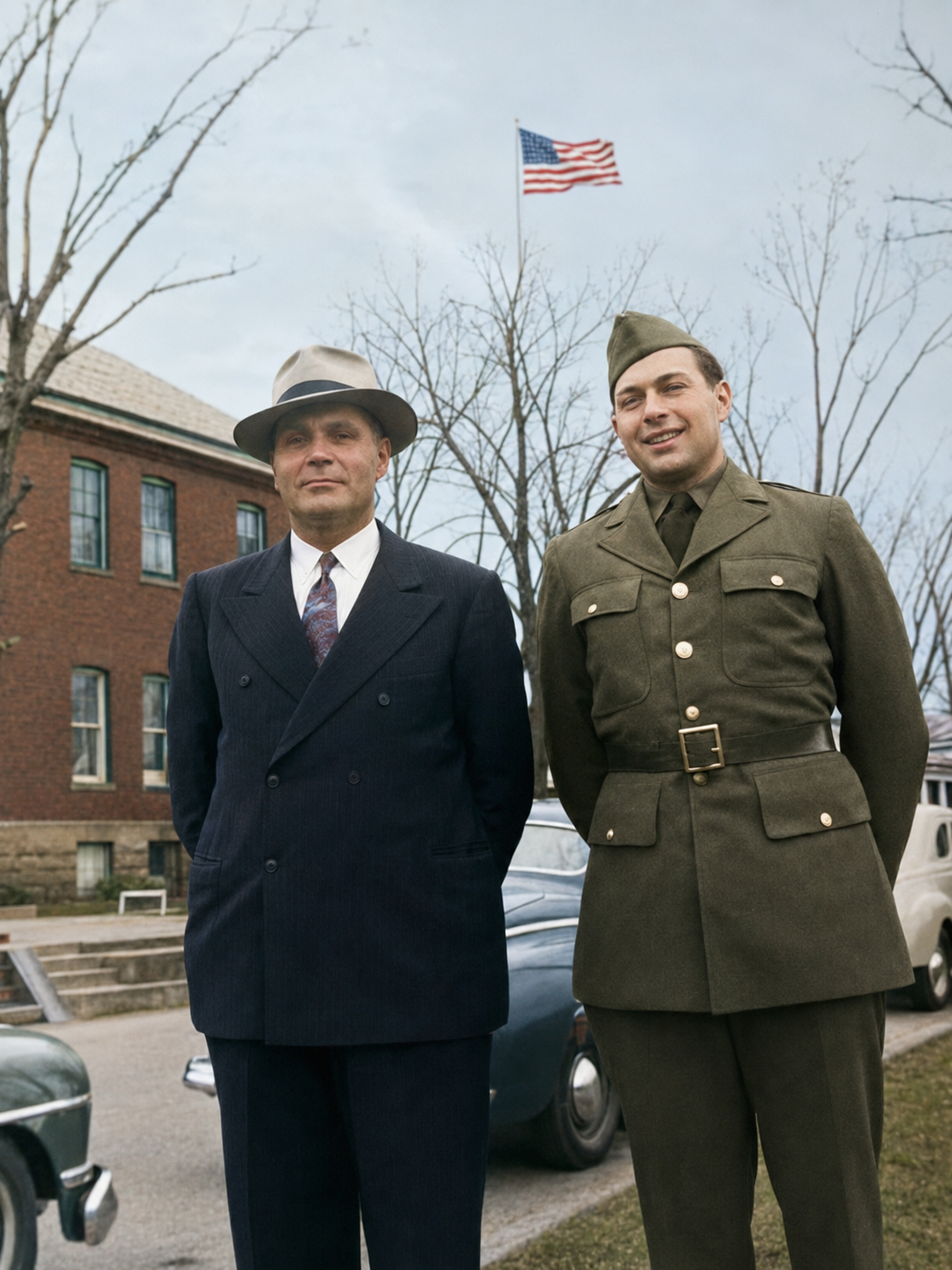
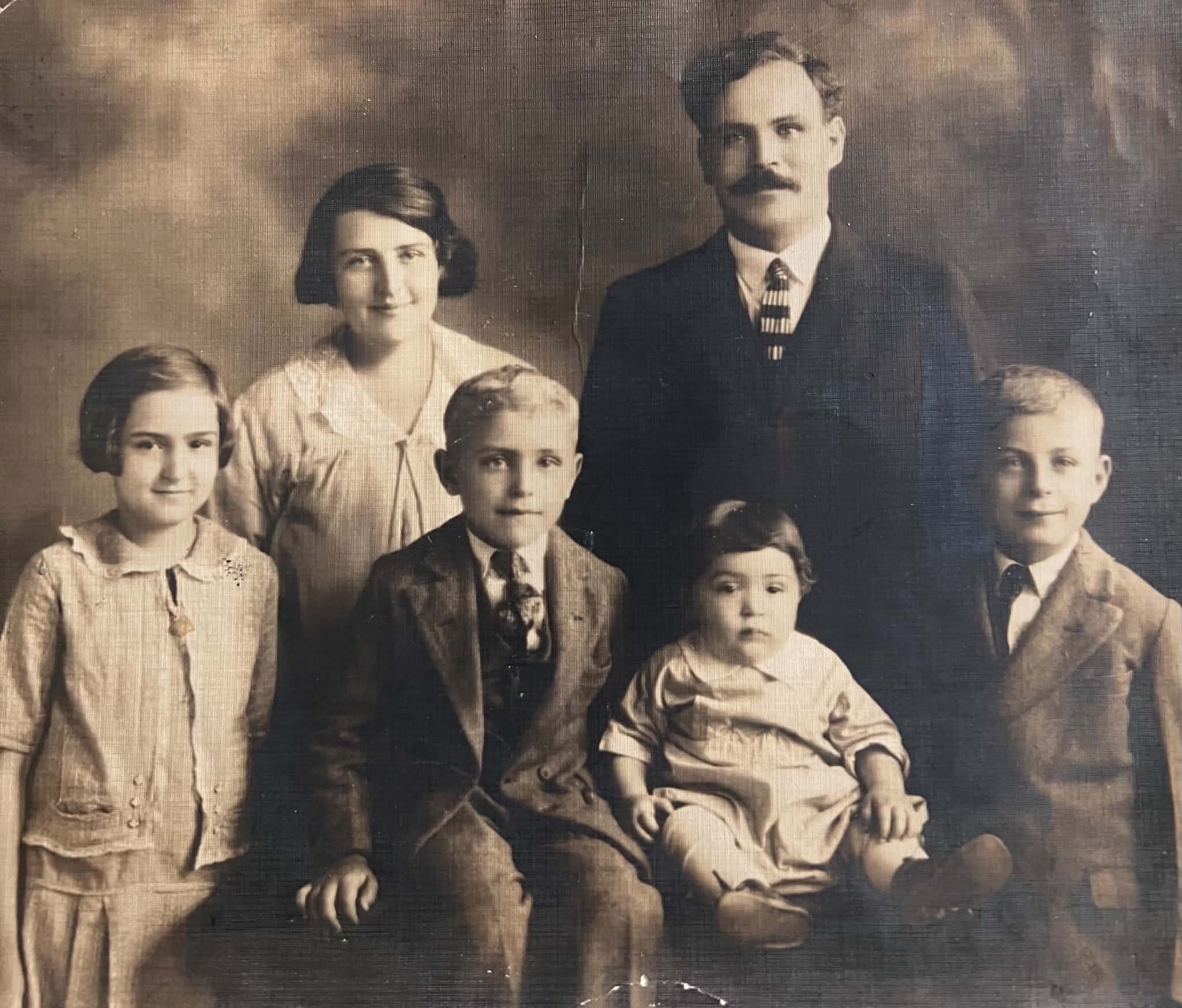
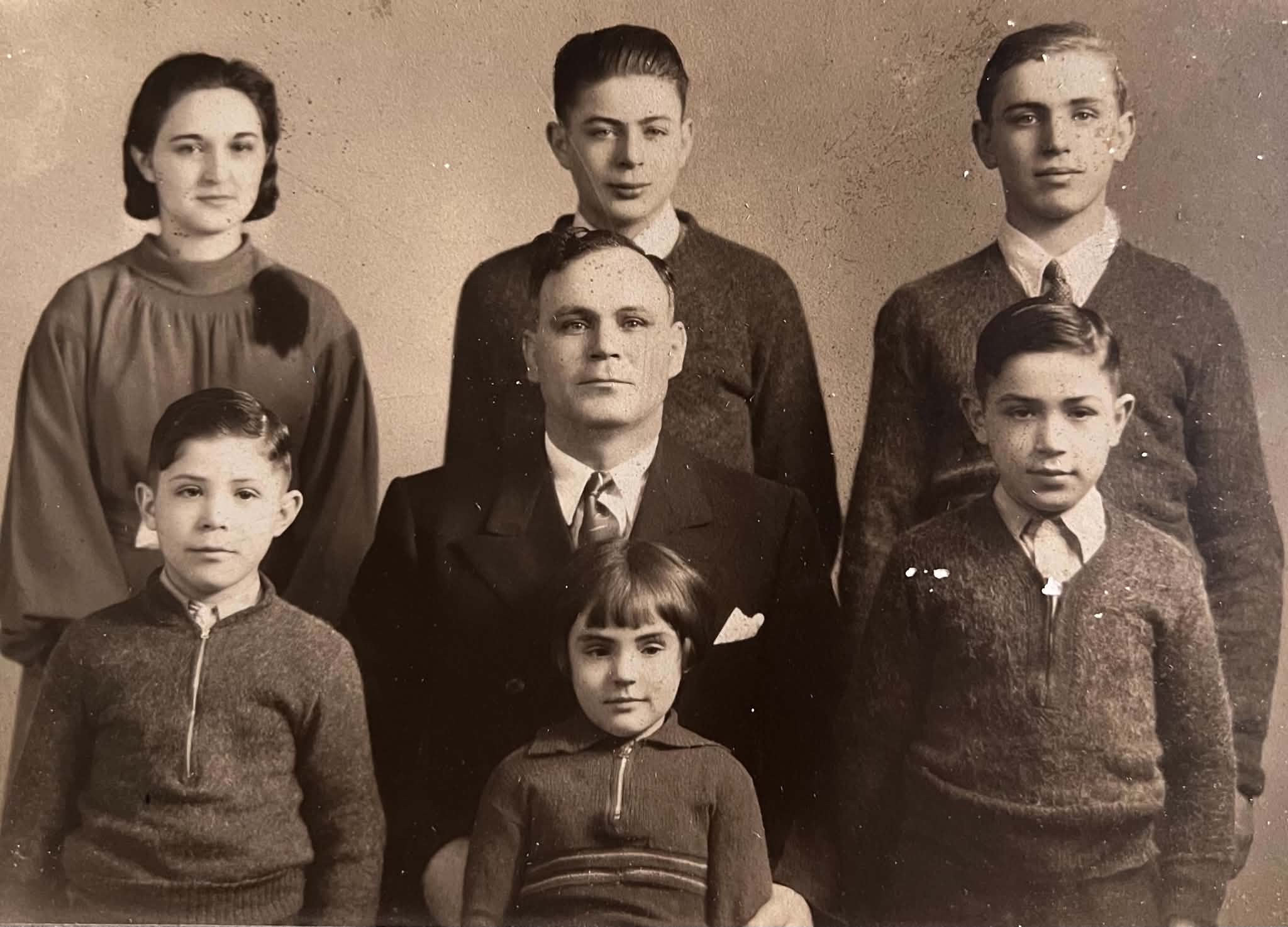
IMAGE RESTORATION & VERIFICATION
SOURCES & DOCUMENTATION
VIEW ALL SOURCES +
2. Cathryn Evans Hodgetts to Dimitrios Vassilopoulos, Messenger correspondence, private family testimony, May 16, 2026.
3. “Hadjes,” The Houston Post, November 16, 1994, 46.
4. Cathryn Evans Hodgetts correspondence, May 16, 2026.
5. “Hadjes,” The Houston Post, November 16, 1994, 46.
6. Cathryn Evans Hodgetts correspondence, May 16, 2026.
7. “Reported Prisoner,” The Houston Post (Houston, Texas), July 19, 1944, 5.
8. “Menutes-Hadjes Wedding Held,” The Houston Post (Houston, Texas), February 16, 1944, 9.
9. Ibid.
10. Ibid.
11. Hadjes Crew No. 23 identification photograph, 601st Bomb Squadron, 398th Bomb Group.
12. Ibid.
13. 398th Bomb Group aircraft assignment records for B-17G 42-97368, Tailwind.
14. Homer R. Kuck recollection preserved at NKHistory.org.
15. Missing Air Crew Report (MACR) No. 5998; B-17G serial history card for aircraft 42-102391.
16. 398th Bomb Group Formation Chart, Mission to Sottevast, France, 6 May 1944.
17. 398th Bomb Group Formation Chart, Mission to Berlin, Germany, 7 May 1944.
18. 398th Bomb Group Formation Chart, Mission to St. Dizier, France, 9 May 1944.
19. 398th Bomb Group Formation Chart, Mission to Sarreguemines, France, 11 May 1944.
20. 398th Bomb Group Formation Chart, Mission to Berlin, Germany, 19 May 1944.
21. 398th Bomb Group Formation Chart, Mission to Villacoublay, France, 20 May 1944.
22. 398th Bomb Group Formation Chart, Mission to Saarbrücken/Woippy, 23 May 1944.
23. 398th Bomb Group Formation Chart, Mission to Nancy-Essey, France, 25 May 1944.
24. 398th Bomb Group Formation Chart, Mission to Meissen/Ruhland, Germany, 28 May 1944.
25. 398th Bomb Group Formation Chart, Mission to Dessau, Germany, 30 May 1944.
26. 398th Bomb Group Formation Chart, Mission to Palaiseau / Braumont, 2 June 1944.
27. 398th Bomb Group Formation Chart, Mission to Trouville, France, 5 June 1944.
28. 398th Bomb Group Formation Chart, D-Day Mission, Courseulles, France, 6 June 1944.
29. “Hadjes,” The Houston Post, November 16, 1994, 46.
30. 398th Bomb Group Formation Chart, Mission to Kerlin-Bastard, France, 7 June 1944.
31. 398th Bomb Group Formation Chart, Mission to Lille-Nord, France, 12 June 1944.
32. 398th Bomb Group Formation Chart, Mission to Beauvais/Tille, France, 13 June 1944.
33. Mission totals derived from 398th Bomb Group Formation Charts and Loading Lists, May–June 1944.
34. 398th Bomb Group Mission No. 33 Formation Chart, Hamburg, Germany, 18 June 1944.
35. Ibid.
36. Ibid.
37. Missing Air Crew Report (MACR) No. 5998, witness statement of Lt. Paul E. Foster.
38. Missing Air Crew Report (MACR) No. 5998, witness statement of Lt. Lewis D. Chase.
39. Aircraft Loss Summary, B-17G 42-102391, 18 June 1944.
40. Missing Air Crew Report (MACR) No. 5998.
41. Homer R. Kuck recollection preserved at NKHistory.org.
42. Ibid.
43. Ibid.
44. Ibid.
45. Ibid.
46. Ibid.
47. Missing Air Crew Report (MACR) No. 5998.
48. Ibid.
49. Prisoner-of-War records associated with MACR No. 5998.
50. “Hadjes,” The Houston Post, November 16, 1994, 46.
51. Eighth Air Force General Orders No. 92, June 11, 1944.
52. “Hadjes,” The Houston Post, November 16, 1994, 46.
53. Cathryn Evans Hodgetts to Dimitrios Vassilopoulos, Messenger correspondence, private family
54. “Hadjes,” The Houston Post, November 16, 1994, 46.
55. Ibid.
56. Ibid.
“Reported Prisoner,” The Houston Post (Houston, Texas), July 19, 1944, 5.
“Hadjes,” The Houston Post (Houston, Texas), November 16, 1994, 46.
“Sophie Diane Hadjes,” The Houston Chronicle (Houston, Texas), April 8, 2018, 77.
Missing Air Crew Report (MACR) No. 5998, B-17G 42-102391, 18 June 1944.
398th Bomb Group Mission Formation Charts and Loading Lists, May–June 1944.
Eighth Air Force General Orders No. 92, June 11, 1944.
NKHistory.org, Homer R. Kuck family recollections and crew history material.
Cathryn Evans Hodgetts to Dimitrios Vassilopoulos, Messenger correspondence, private family testimony, May 16, 2026.RELATED AIRMEN
Born15 September 1918
HeritageGreek American
RankCaptain
Unit601st Bomb Squadron
AircraftB-17G Flying Fortress
Operations15 combat missions
Final MissionHamburg
StatusPrisoner of War
01AFTER U.S. ENTRY INTO THE WAR
02TEXAS
0330 AUGUST 1943
04EARLY 1944
0522 APRIL 1944
06MAY 1944
0718 JUNE 1944
0829 APRIL 1945
TypeB-17G Flying Fortress
Serial42-97368
Squadron601st Bomb Squadron
RoleTraining & deployment aircraft
Date18 June 1944
Mission / TargetMission No. 33
AircraftB-17G 42-102391
OutcomeForce-landed
Willard J. Hadjes · PilotPrisoner of War · Survived
Homer R. Kuck · Co-pilotPrisoner of War · Survived
Richard E. Howell · NavigatorPrisoner of War · Survived
John A. Hiller · BombardierPrisoner of War · Survived
Joseph Ferraiuolo · Radio OperatorPrisoner of War · Survived
Robert B. Gibb · EngineerPrisoner of War · Survived
Floyd Jones Jr. · Ball Turret GunnerPrisoner of War · Survived
John B. Lindsay · Waist GunnerPrisoner of War · Survived
Frank Pescia · Tail GunnerPrisoner of War · Survived
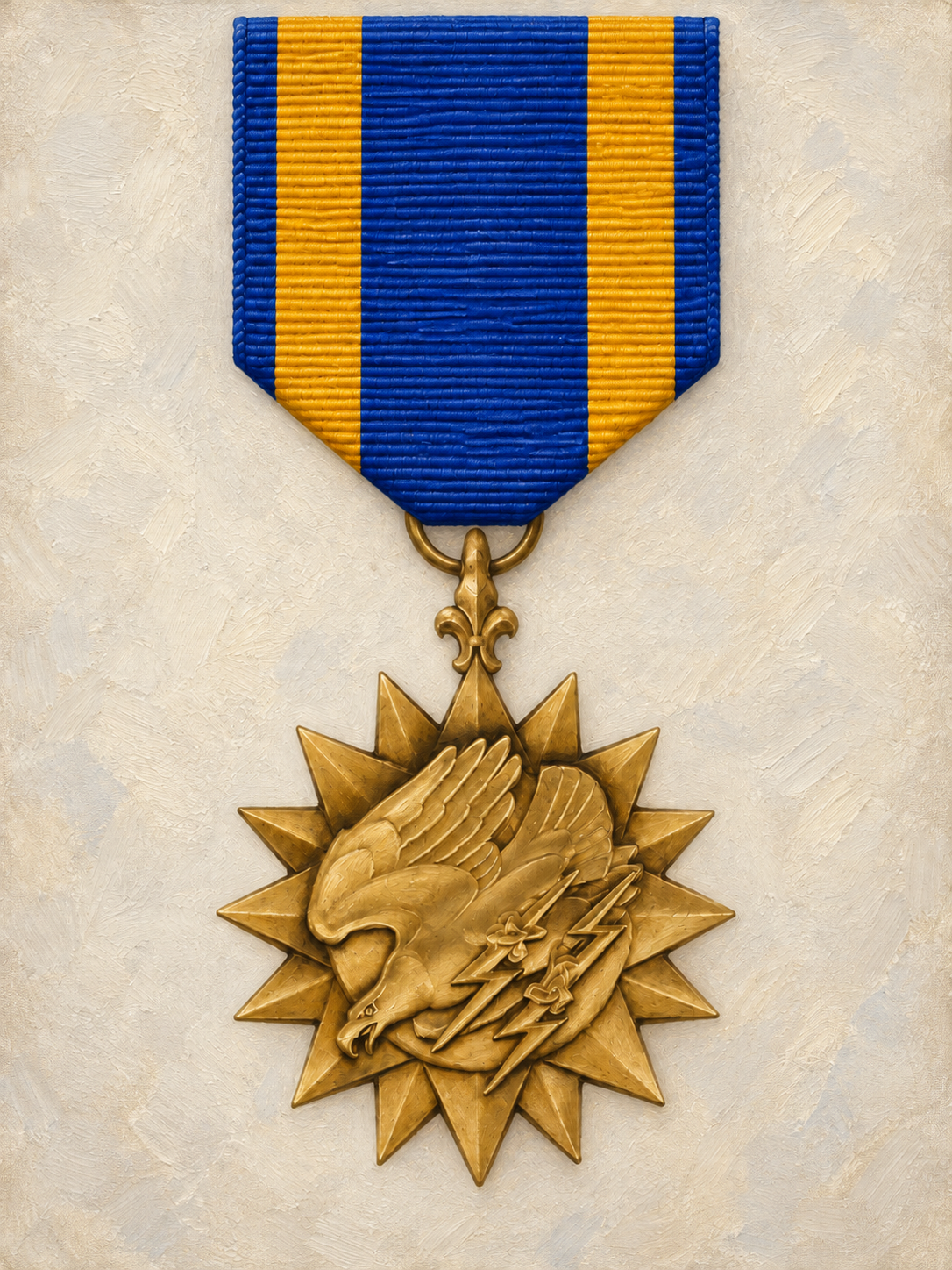
DecorationAir MedalWith Oak Leaf Cluster · General Orders No. 92, 11 June 1944
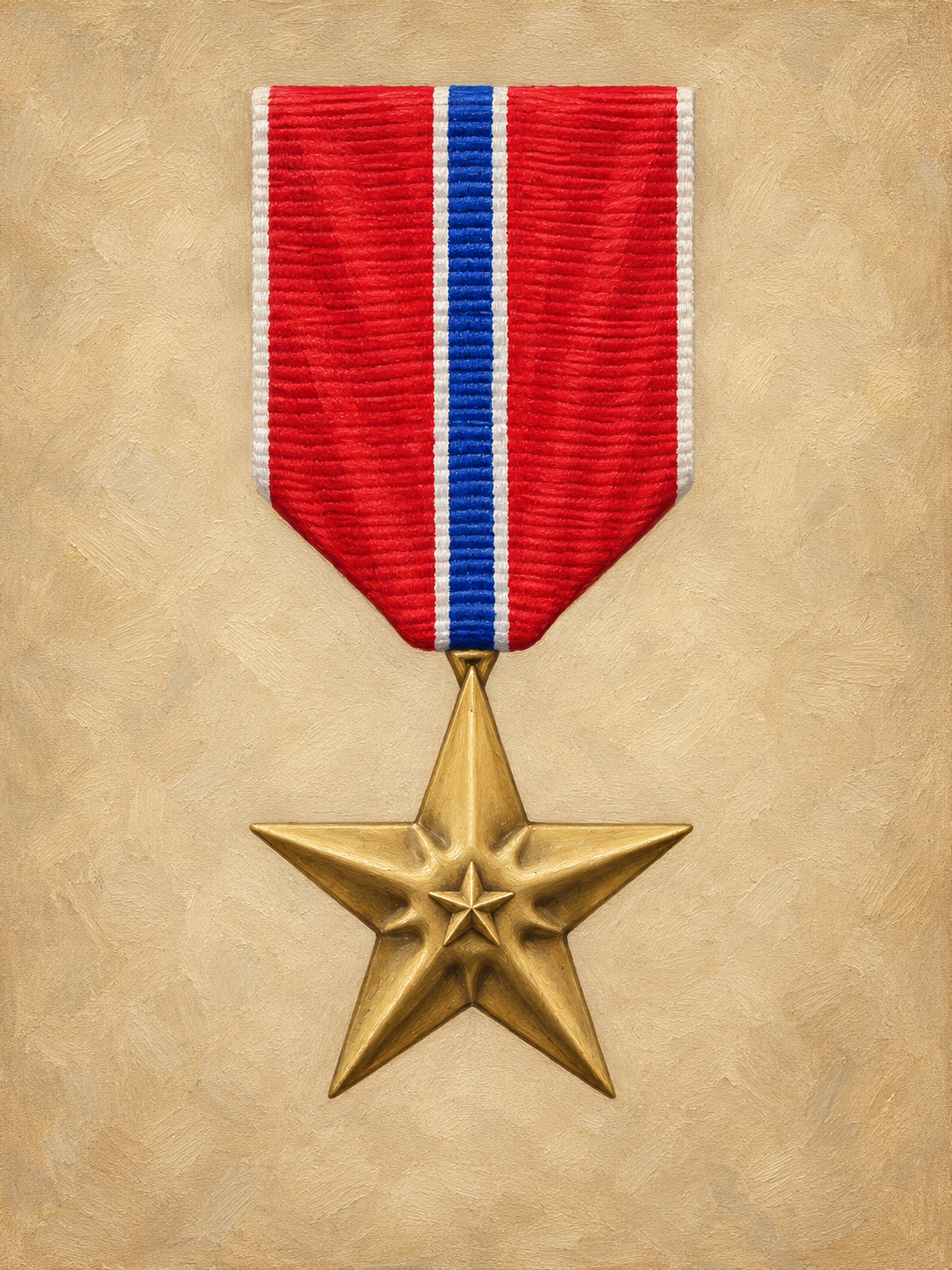
Reported DecorationBronze StarRecorded in a later obituary; archival confirmation remains pending
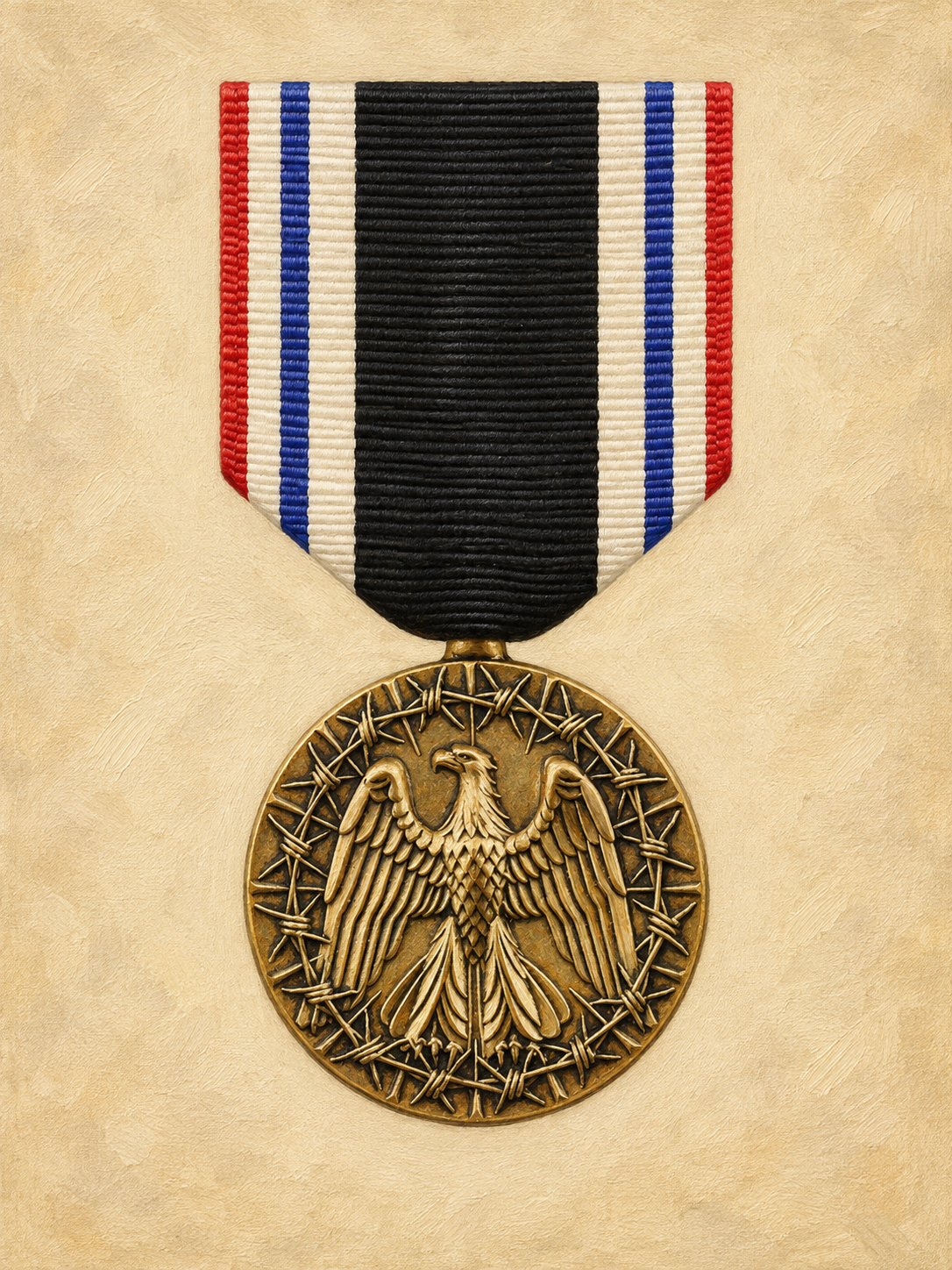
Wartime StatusPrisoner of WarHeld for approximately eleven months
Liberation & Memory29 April 1945Remembered for humor, generosity, warmth, and devotion


Please consider making a donation to Greeks in Foreign Cockpits to support our work !
Greeks in Foreign Cockpits — A research project under the auspices of KERM C.L.C.
Design & hosting by Bravo Bravo Aviation
© 2017-2026 Dimitris Vassilopoulos - All Rights Reserved