Greeks in Foreign CockpitsUS Navy · 1942–1945
Costas “Connie”Contogogou
Costas “Connie”Contogogou
of Gold
1943
Lieutenant (jg), USNRF6F-5 Hellcat Pilot · Fighting Squadron 81 (VF-81) · USS Wasp (CV-18)
Costas John “Connie” Contogogou (4 March 1920 – 19 December 2010) was born in Manchester, New Hampshire, to a Greek immigrant family and grew up in Keene. A Naval Aviator of the United States Naval Reserve, he flew the Grumman F6F-5 Hellcat with Fighting Squadron 81 (VF-81) from the fleet carrier USS Wasp (CV-18) in the winter of 1944–45, from Luzon to Tokyo. Six letters he wrote to his former professor Sprague W. Drenan let him tell that war in his own words. After the war he took the name Charles J. Contas and served New Hampshire for decades, from 1978 as a Superior Court judge.Ο Costas John «Connie» Contogogou (4 Μαρτίου 1920 – 19 Δεκεμβρίου 2010) γεννήθηκε στο Manchester του New Hampshire σε οικογένεια Ελλήνων μεταναστών και μεγάλωσε στο Keene. Αεροπόρος του Εφεδρικού Ναυτικού των Ηνωμένων Πολιτειών, πέταξε με το Grumman F6F-5 Hellcat στη Μοίρα Δίωξης 81 (VF-81) από το αεροπλανοφόρο στόλου USS Wasp (CV-18) τον χειμώνα του 1944–45, από τη Luzon ως το Τόκιο. Έξι επιστολές που έγραψε στον πρώην καθηγητή του Sprague W. Drenan του επιτρέπουν να αφηγηθεί αυτόν τον πόλεμο με τα δικά του λόγια. Μετά τον πόλεμο πήρε το όνομα Charles J. Contas και υπηρέτησε το New Hampshire επί δεκαετίες, από το 1978 ως δικαστής του Ανώτερου Δικαστηρίου.
With special thanks to Professor Rodney Obien and Brian Burford of Keene State College, and to James Goldammer, for their invaluable help.Με ιδιαίτερες ευχαριστίες στον καθηγητή Rodney Obien και στον Brian Burford του Keene State College, καθώς και στον James Goldammer, για την πολύτιμη βοήθειά τους.
Quick FactsΜε μια ματιά
- BornΓέννηση
- 4 March 19204 Μαρτίου 1920Manchester, New HampshireManchester, New Hampshire
- HeritageΚαταγωγή
- Greek AmericanΕλληνοαμερικανόςFather from Braza, GreeceΠατέρας από τη Braza
- WingsΦτερά
- Naval Aviator, 1943Αεροπόρος Ναυτικού, 1943NATC PensacolaNATC Pensacola
- UnitΜονάδα
- Fighting Squadron 81Μοίρα Δίωξης 81VF-81 · Air Group 81VF-81 · Αεροπορική Σμηναρχία 81
- ShipΠλοίο
- USS WaspUSS WaspCV-18 fleet carrierΑεροπλανοφόρο στόλου CV-18
- AircraftΑεροσκάφος
- Grumman F6F-5Grumman F6F-5Hellcat · VF-81Hellcat · VF-81
- RankΒαθμός
- Lieutenant (jg)Υποπλοίαρχος (Ι)Later Lieutenant, USNRΑργότερα Υποπλοίαρχος, USNR
- LaterΑργότερα
- Judge Charles J. ContasΔικαστής Charles J. ContasNH Superior Court, 1978–89Ανώτερο Δικαστήριο NH, 1978–89
From Keene to PensacolaΑπό το Keene στην Pensacola
The familyΗ οικογένεια
- FatherΠατέραςJohn Efthemiou
Contogogou - FromΑπόBraza, GreeceBraza, Ελλάδα
- BornΓέννηση19 May 189519 Μαΐου 1895
- MotherΜητέραZoe Sharkavos
- HomeΚατοικία28 Proctor Court,
Keene, NH
Costas John Contogogou was born on 4 March 1920 in Manchester, New Hampshire, into a family whose roots lay in Greece. His father, John Efthemiou Contogogou, had been born on 19 May 1895 in a Greek locality recorded in his American documents as Braza, while his mother was Zoe Sharkavos. His father had immigrated to the United States before the First World War, joining the thousands of Greeks who sought a new life across the Atlantic. In 1929, the family moved to Keene, New Hampshire, where young Costas would spend much of his formative life. He attended Keene High School, graduating in 1938, before enrolling at Keene Teachers College, from which he graduated four years later. At the time of his Selective Service registration in 1942, he was living at 28 Proctor Court in Keene and working for the Geddes Oil Company.¹
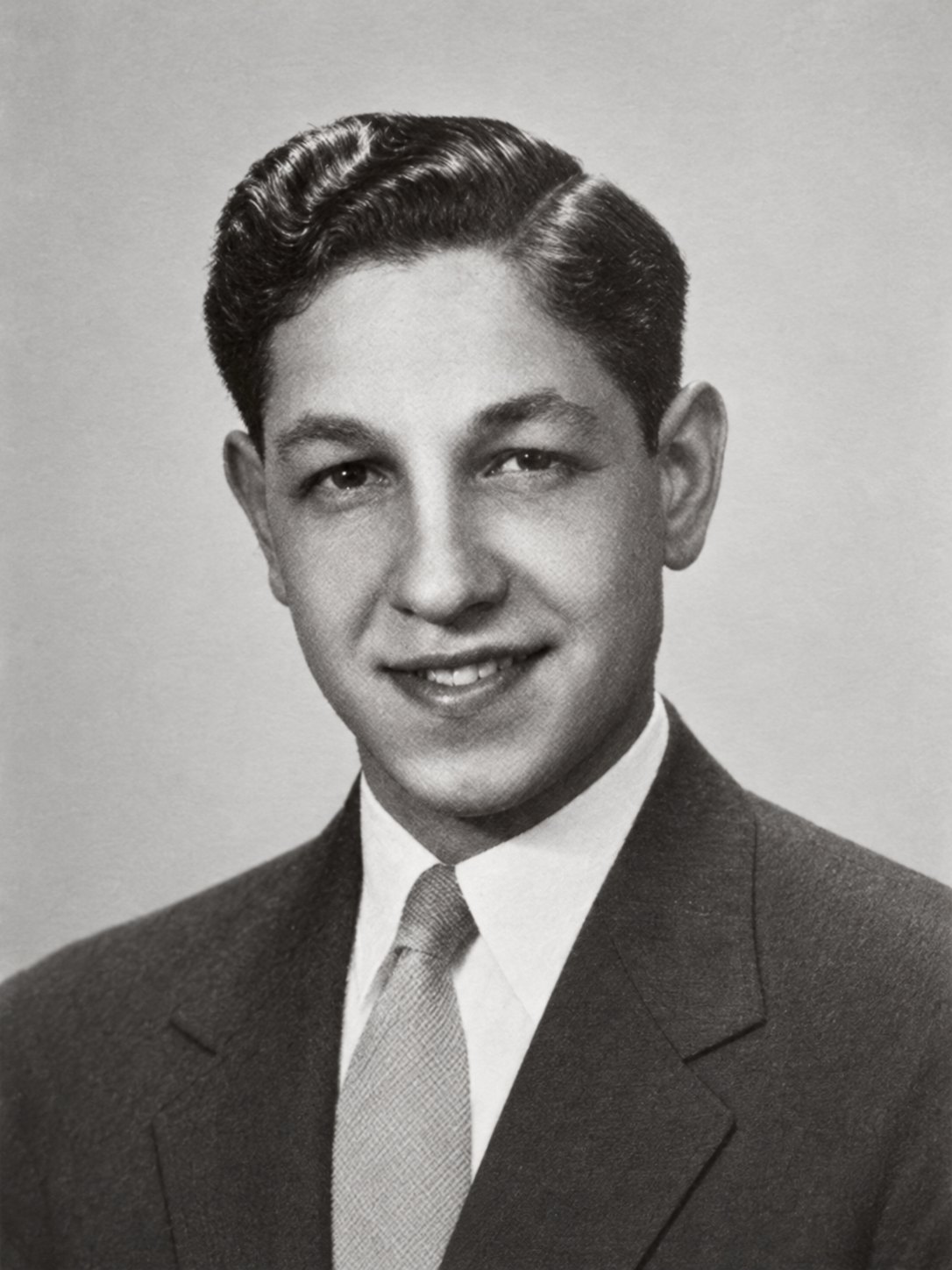
His college years established friendships that would survive the extraordinary upheaval of the Second World War. A contemporary Keene Teachers College yearbook preserves his portrait under the name Contogogou, Costos, identifying him as a member of the Alpha Pi Tau fraternity. Immediately below his photograph appears another young student, Robert Desmarais, whose name would recur in Contogogou’s wartime correspondence. Their connection provides a remarkable link between the ordinary college life of New Hampshire and the distant battlefronts on which members of their generation would eventually serve.²
Among the college faculty, one individual occupied a particularly important place in their lives. Sprague W. Drenan, a Dartmouth graduate who had headed the English Department at Keene Teachers College since 1928, maintained close ties with former students and with the Alpha Pi Tau fraternity. As the war scattered young men across the world, Drenan helped preserve those connections through correspondence, sharing news of former classmates and their whereabouts. Six surviving letters written to him by Costas Contogogou between July 1944 and September 1945 reveal not only the movements of a naval aviator but also his personality, friendships, fears, and hopes. Their preservation gives the historian a rare opportunity to follow his experiences through his own words.³
A rare opportunity to follow his experiences through his own words
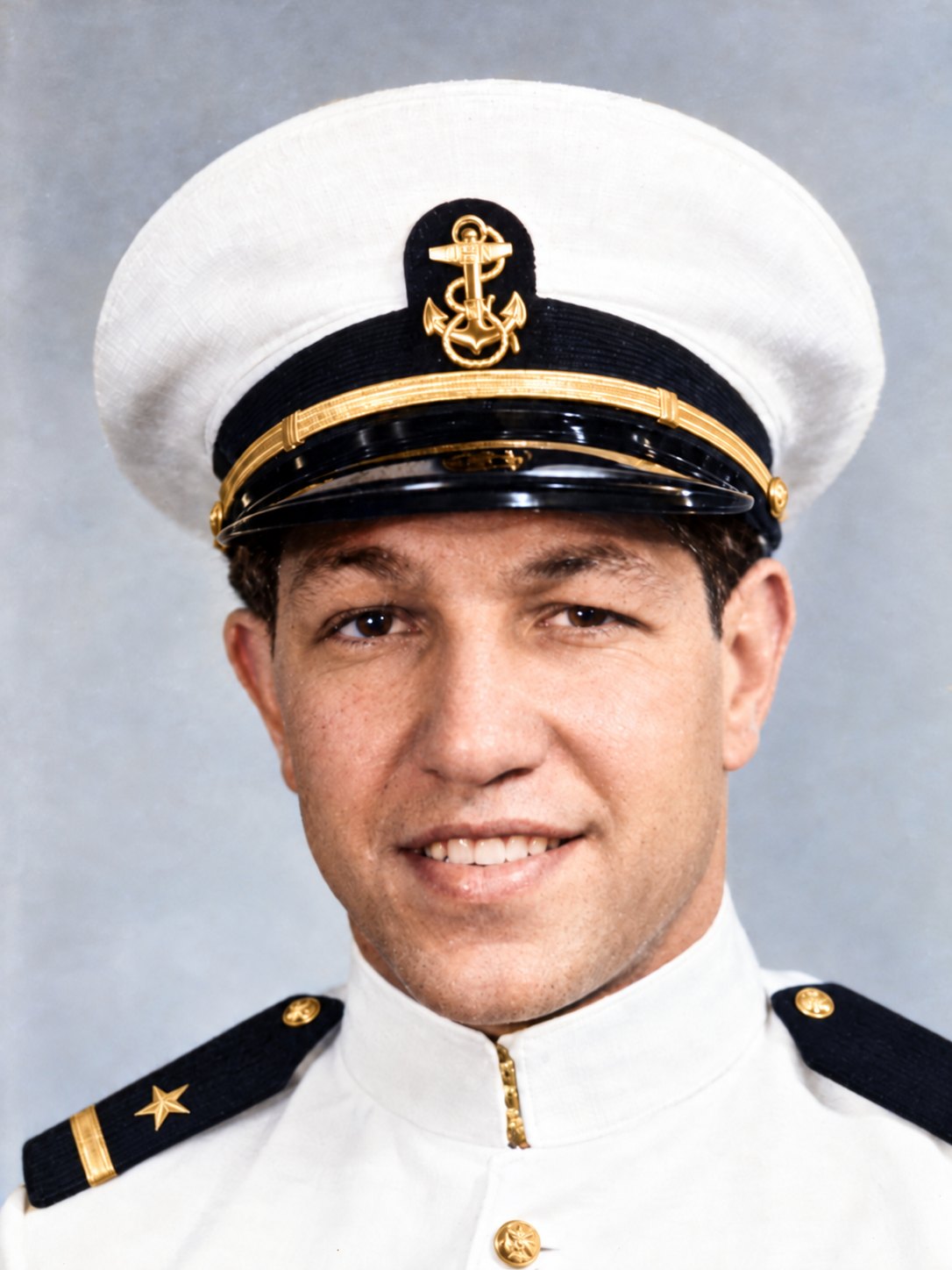
Following his graduation in 1942, Contogogou entered the United States Navy and was accepted for naval aviation training. He attended the Naval Air Training Center at Pensacola, Florida, where he qualified as a naval aviator and received his commission in the United States Naval Reserve. His name appears in the Pensacola graduation yearbook, Mark II, which identifies his hometown as Keene and his former college as Keene Teachers College. He emerged from training as one of the young American naval officers being prepared for the expanding aircraft carrier war against Japan.⁴
In the spring of 1944, Contogogou joined Fighting Squadron 81 (VF-81), which had been established on 2 March 1944. The squadron trained at Naval Air Station Atlantic City, New Jersey, flying Grumman F6F Hellcat fighters. Initially equipped with the F6F-3, it subsequently transitioned to the improved F6F-5. The Hellcat was a powerful, rugged carrier-based fighter, armed with six .50-calibre Browning machine guns and designed to withstand the demanding conditions of operations at sea. Its pilots trained in formation flying, fighter tactics, gunnery, navigation, and the difficult procedures of take-off and arrested landing aboard aircraft carriers.⁵
| No.Α/Α | DateΗμερομηνία | PhaseΦάση | Station / UnitΣταθμός / Μονάδα | EntryΚαταχώριση |
|---|---|---|---|---|
| 01 | 19381938 | SchoolΣχολείο | Keene High School | Graduated.Αποφοίτηση. |
| 02 | 19421942 | CollegeΚολλέγιο | Keene Teachers College | Graduated; member of the Alpha Pi Tau fraternity.Αποφοίτηση· μέλος της αδελφότητας Alpha Pi Tau. |
| 03 | 19421942 | Draft cardΚάρτα στράτευσης | Keene, NH | Registered at 28 Proctor Court; employed by the Geddes Oil Company.Καταγραφή στο 28 Proctor Court· εργαζόμενος στη Geddes Oil Company. |
| 04 | 19421942 | EnlistmentΚατάταξη | U.S. Navy | Accepted for naval flight training.Έγινε δεκτός για εκπαίδευση πτήσεων του Ναυτικού. |
| 05 | 19431943 | Naval AviatorΑεροπόρος Ναυτικού | NATC Pensacola, Fla. | Wings of gold and commission in the U.S. Naval Reserve; listed in the yearbook Mark II.Χρυσά φτερά και ονομασία αξιωματικού του Εφεδρικού Ναυτικού· αναφέρεται στην επετηρίδα Mark II. |
| 06 | 2 March 19442 Μαρτίου 1944 | Fleet squadronΜοίρα στόλου | VF-81, NAS Atlantic City | Squadron formed with F6F-3 Hellcats.Συγκρότηση της μοίρας με F6F-3 Hellcat. |
| 07 | May 1944Μάιος 1944 | Re-equipmentΝέα αεροσκάφη | VF-81 | Transition to the F6F-5 Hellcat; full operational strength.Μετάβαση στο F6F-5 Hellcat· πλήρης επιχειρησιακή δύναμη. |
| 08 | 23 August 194423 Αυγούστου 1944 | TransferΜεταφορά | USS Hancock (CV-19) | San Diego to Pearl Harbor.Από το San Diego στο Pearl Harbor. |
| 09 | Autumn 1944Φθινόπωρο 1944 | Advanced trainingΠροχωρημένη εκπαίδευση | NAS Puunene, Maui | Gunnery, night flying, carrier qualifications.Βολές, νυχτερινές πτήσεις, πιστοποιήσεις σε αεροπλανοφόρο. |
| 10 | 28 October 194428 Οκτωβρίου 1944 | TransferΜεταφορά | USS Copahee (CVE-12) | Aviation personnel from Hawaii toward Guam.Αεροπορικό προσωπικό από τη Χαβάη προς το Guam. |
| 11 | 10 November 194410 Νοεμβρίου 1944 | Combat cruiseΠολεμική περίοδος | USS Wasp (CV-18) | Carrier Air Group 81 begins its assignment aboard Wasp with the fast carriers.Η Carrier Air Group 81 αρχίζει την υπηρεσία της στο Wasp με τα ταχέα αεροπλανοφόρα. |
The familyΗ οικογένεια
- FatherΠατέραςJohn Efthemiou
Contogogou - FromΑπόBraza, GreeceBraza, Ελλάδα
- BornΓέννηση19 May 189519 Μαΐου 1895
- MotherΜητέραZoe Sharkavos
- HomeΚατοικία28 Proctor Court,
Keene, NH
Ο Costas John Contogogou γεννήθηκε στις 4 Μαρτίου 1920 στο Manchester του New Hampshire, σε μια οικογένεια με ρίζες στην Ελλάδα. Ο πατέρας του, John Efthemiou Contogogou, είχε γεννηθεί στις 19 Μαΐου 1895 σε έναν ελληνικό τόπο που καταγράφεται στα αμερικανικά του έγγραφα ως Braza, ενώ μητέρα του ήταν η Zoe Sharkavos. Ο πατέρας του είχε μεταναστεύσει στις Ηνωμένες Πολιτείες πριν από τον Πρώτο Παγκόσμιο Πόλεμο, ένας από τις χιλιάδες Έλληνες που αναζήτησαν μια νέα ζωή πέρα από τον Ατλαντικό. Το 1929 η οικογένεια μετακόμισε στο Keene του New Hampshire, όπου ο νεαρός Costas θα περνούσε μεγάλο μέρος των διαμορφωτικών του χρόνων. Φοίτησε στο Keene High School, από το οποίο αποφοίτησε το 1938, και στη συνέχεια γράφτηκε στο Keene Teachers College, από το οποίο αποφοίτησε τέσσερα χρόνια αργότερα. Όταν καταγράφηκε στην Υπηρεσία Στράτευσης το 1942, έμενε στο 28 Proctor Court στο Keene και εργαζόταν στη Geddes Oil Company.¹
Τα φοιτητικά του χρόνια δημιούργησαν φιλίες που θα άντεχαν την πρωτοφανή αναστάτωση του Δεύτερου Παγκοσμίου Πολέμου. Μια επετηρίδα του Keene Teachers College της εποχής διασώζει το πορτρέτο του με το όνομα Contogogou, Costos και τον αναφέρει ως μέλος της αδελφότητας Alpha Pi Tau. Ακριβώς κάτω από τη φωτογραφία του εμφανίζεται ένας άλλος νεαρός φοιτητής, ο Robert Desmarais, του οποίου το όνομα θα επανερχόταν στην πολεμική αλληλογραφία του Contogogou. Η σχέση τους αποτελεί έναν αξιοσημείωτο σύνδεσμο ανάμεσα στην καθημερινή φοιτητική ζωή του New Hampshire και στα μακρινά μέτωπα όπου θα υπηρετούσαν τελικά οι άνθρωποι της γενιάς τους.²
Ανάμεσα στους καθηγητές του κολλεγίου, ένας άνθρωπος είχε ιδιαίτερα σημαντική θέση στη ζωή τους. Ο Sprague W. Drenan, απόφοιτος του Dartmouth και επικεφαλής του Τμήματος Αγγλικών του Keene Teachers College από το 1928, διατηρούσε στενούς δεσμούς με παλιούς φοιτητές και με την αδελφότητα Alpha Pi Tau. Καθώς ο πόλεμος σκόρπιζε τους νέους σε όλο τον κόσμο, ο Drenan βοηθούσε να διατηρηθούν αυτοί οι δεσμοί μέσω της αλληλογραφίας, μεταφέροντας νέα για παλιούς συμφοιτητές και για το πού βρίσκονταν. Έξι σωζόμενες επιστολές που του έγραψε ο Costas Contogogou μεταξύ Ιουλίου 1944 και Σεπτεμβρίου 1945 αποκαλύπτουν όχι μόνο τις μετακινήσεις ενός αεροπόρου του Ναυτικού αλλά και την προσωπικότητά του, τις φιλίες, τους φόβους και τις ελπίδες του. Η διάσωσή τους δίνει στον ιστορικό τη σπάνια ευκαιρία να παρακολουθήσει τις εμπειρίες του μέσα από τα δικά του λόγια.³
Η σπάνια ευκαιρία να παρακολουθήσουμε τις εμπειρίες του μέσα από τα δικά του λόγια
Μετά την αποφοίτησή του το 1942, ο Contogogou κατατάχθηκε στο Ναυτικό των Ηνωμένων Πολιτειών και έγινε δεκτός για εκπαίδευση στην αεροπορία του Ναυτικού. Εκπαιδεύτηκε στο Κέντρο Αεροπορικής Εκπαίδευσης του Ναυτικού στην Pensacola της Florida, όπου πήρε τα φτερά του αεροπόρου του Ναυτικού και ονομάστηκε αξιωματικός του Εφεδρικού Ναυτικού των Ηνωμένων Πολιτειών. Το όνομά του εμφανίζεται στην επετηρίδα αποφοίτησης της Pensacola, Mark II, που αναφέρει ως πόλη του το Keene και ως κολλέγιό του το Keene Teachers College. Βγήκε από την εκπαίδευση ως ένας από τους νεαρούς Αμερικανούς αξιωματικούς του Ναυτικού που προετοιμάζονταν για τον διευρυνόμενο πόλεμο των αεροπλανοφόρων εναντίον της Ιαπωνίας.⁴
Την άνοιξη του 1944 ο Contogogou εντάχθηκε στη Μοίρα Δίωξης 81 (VF-81), που είχε συγκροτηθεί στις 2 Μαρτίου 1944. Η μοίρα εκπαιδεύτηκε στον Αεροναυτικό Σταθμό Atlantic City του New Jersey με καταδιωκτικά Grumman F6F Hellcat. Αρχικά εξοπλισμένη με το F6F-3, πέρασε στη συνέχεια στο βελτιωμένο F6F-5. Το Hellcat ήταν ένα ισχυρό, στιβαρό καταδιωκτικό αεροπλανοφόρου, οπλισμένο με έξι πολυβόλα Browning διαμετρήματος .50 και σχεδιασμένο να αντέχει τις απαιτητικές συνθήκες των επιχειρήσεων στη θάλασσα. Οι πιλότοι του εκπαιδεύονταν σε πτήσεις σχηματισμού, τακτικές αερομαχίας, βολές, ναυτιλία και στις δύσκολες διαδικασίες απογείωσης και προσνήωσης με άγκιστρο σε αεροπλανοφόρο.⁵
| No.Α/Α | DateΗμερομηνία | PhaseΦάση | Station / UnitΣταθμός / Μονάδα | EntryΚαταχώριση |
|---|---|---|---|---|
| 01 | 19381938 | SchoolΣχολείο | Keene High School | Graduated.Αποφοίτηση. |
| 02 | 19421942 | CollegeΚολλέγιο | Keene Teachers College | Graduated; member of the Alpha Pi Tau fraternity.Αποφοίτηση· μέλος της αδελφότητας Alpha Pi Tau. |
| 03 | 19421942 | Draft cardΚάρτα στράτευσης | Keene, NH | Registered at 28 Proctor Court; employed by the Geddes Oil Company.Καταγραφή στο 28 Proctor Court· εργαζόμενος στη Geddes Oil Company. |
| 04 | 19421942 | EnlistmentΚατάταξη | U.S. Navy | Accepted for naval flight training.Έγινε δεκτός για εκπαίδευση πτήσεων του Ναυτικού. |
| 05 | 19431943 | Naval AviatorΑεροπόρος Ναυτικού | NATC Pensacola, Fla. | Wings of gold and commission in the U.S. Naval Reserve; listed in the yearbook Mark II.Χρυσά φτερά και ονομασία αξιωματικού του Εφεδρικού Ναυτικού· αναφέρεται στην επετηρίδα Mark II. |
| 06 | 2 March 19442 Μαρτίου 1944 | Fleet squadronΜοίρα στόλου | VF-81, NAS Atlantic City | Squadron formed with F6F-3 Hellcats.Συγκρότηση της μοίρας με F6F-3 Hellcat. |
| 07 | May 1944Μάιος 1944 | Re-equipmentΝέα αεροσκάφη | VF-81 | Transition to the F6F-5 Hellcat; full operational strength.Μετάβαση στο F6F-5 Hellcat· πλήρης επιχειρησιακή δύναμη. |
| 08 | 23 August 194423 Αυγούστου 1944 | TransferΜεταφορά | USS Hancock (CV-19) | San Diego to Pearl Harbor.Από το San Diego στο Pearl Harbor. |
| 09 | Autumn 1944Φθινόπωρο 1944 | Advanced trainingΠροχωρημένη εκπαίδευση | NAS Puunene, Maui | Gunnery, night flying, carrier qualifications.Βολές, νυχτερινές πτήσεις, πιστοποιήσεις σε αεροπλανοφόρο. |
| 10 | 28 October 194428 Οκτωβρίου 1944 | TransferΜεταφορά | USS Copahee (CVE-12) | Aviation personnel from Hawaii toward Guam.Αεροπορικό προσωπικό από τη Χαβάη προς το Guam. |
| 11 | 10 November 194410 Νοεμβρίου 1944 | Combat cruiseΠολεμική περίοδος | USS Wasp (CV-18) | Carrier Air Group 81 begins its assignment aboard Wasp with the fast carriers.Η Carrier Air Group 81 αρχίζει την υπηρεσία της στο Wasp με τα ταχέα αεροπλανοφόρα. |
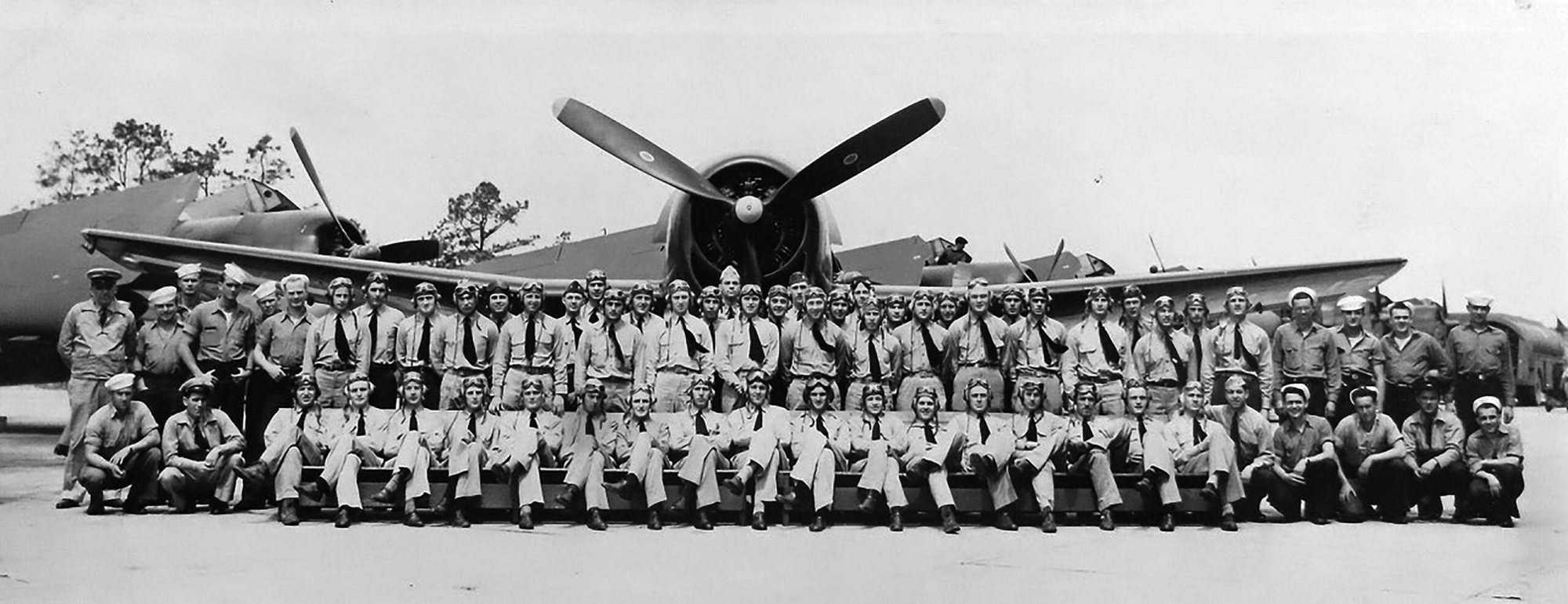 Courtesy James Goldammer
Letters from the PacificΓράμματα από τον Ειρηνικό
Six letters to DrenanΈξι επιστολές στον Drenan
- 25 Jul 1944Camp Edwards, Mass.
- 18 Sep 1944Pacific islandΝησί του Ειρηνικού
- 3 Oct 1944PacificΕιρηνικός
- 5 Jan 1945At seaΣτη θάλασσα
- 27 Feb 1945Aboard his carrierΣτο αεροπλανοφόρο
- 4 Sep 1945Nantucket, Mass.
By the summer, the squadron was approaching operational readiness. The men knew that they would soon be sent overseas, but the exact timing of their departure remained uncertain. On 25 July 1944, Contogogou wrote to Drenan from the naval aviation establishment at Camp Edwards, Massachusetts. After apologizing for having delayed his reply, he described a recent visit to an aunt in Ohio and a chance encounter with John Curtis, another newly commissioned naval officer, at Pennsylvania Station in New York. His delight at meeting a familiar face revealed how widely the war had already scattered his old acquaintances. Then, toward the end of the letter, he turned to the impending departure:
To Sprague W. Drenan25 July 1944Camp Edwards, MassachusettsI expect to be shoving off pretty soon for foreign duty in a carrier with my Squadron so your next letter might not reach me for some time. I do hope I can get home before I leave, but that is questionable.
The final thought was especially revealing. Though ready to undertake his military responsibilities, the young officer still hoped for one last opportunity to return to Keene before leaving the country. His letter ended with greetings to Mrs. Drenan and the familiar signature, Fraternally, Costas. It was postmarked at Camp Edwards on 26 July 1944, at five o’clock in the afternoon.⁶
The anticipated departure soon became a reality. On 23 August 1944, a passenger list recorded Ensign Costas Contogogou among the naval personnel transported from San Diego toward Pearl Harbor aboard USS Hancock (CV-19). This was a movement of personnel rather than a combat assignment aboard Hancock. Once in Hawaii, VF-81 continued its preparations at Naval Air Station Puunene on Maui, where its training included further gunnery practice, night flying, and carrier qualifications. The Hawaiian period marked the final stage before operational deployment to the western Pacific.⁷
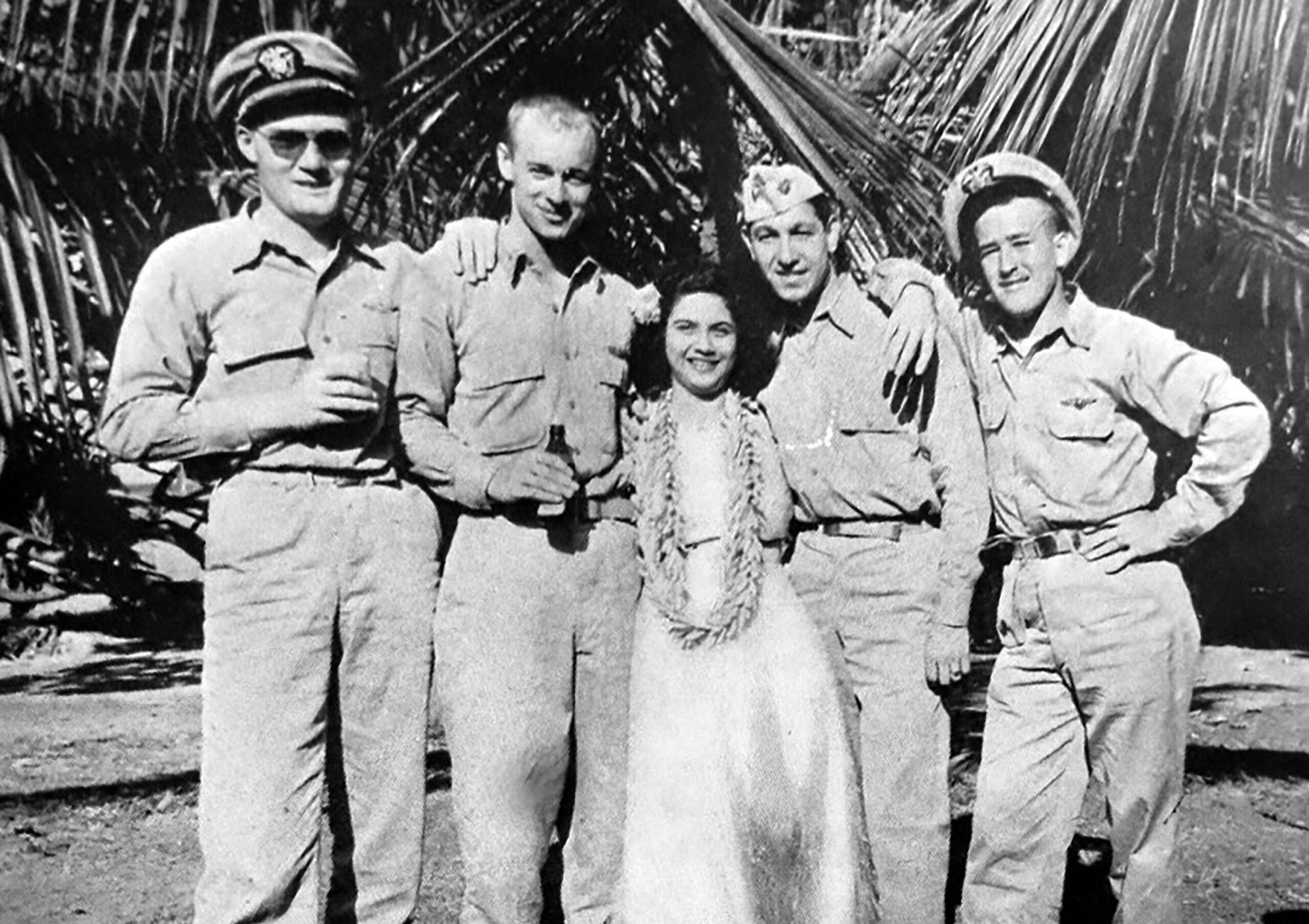
By September, Contogogou was far from home. On 18 September 1944, he wrote again to Drenan, explaining that his departure had been so sudden that he had been unable to visit him beforehand:
To Sprague W. Drenan18 September 1944Somewhere in the PacificI’m very sorry that I was unable to see you before I left the states but everything was so unexpected that I wasn’t even prepared to leave.
He had received a letter from Drenan that appeared to have travelled extensively before reaching him. Grateful for the news of former classmates, he described the disappointment of being unable to encounter anyone he knew despite his travels. Although now stationed somewhere in the Pacific, he could disclose little about his precise location. His description of everyday life was characteristically frank:
To Sprague W. Drenan18 September 1944Somewhere in the PacificAt the present time I am stationed on a little island in the Pacific. Things aren’t too bad but compared to the states it’s terrible here. Our living quarters are better than usual but the food should not even be mentioned.
There were some compensations. He reported that fresh and chilled pineapple was plentiful and that the weather was generally agreeable, with little rain. Nevertheless, neither the tropical surroundings nor the better-than-average accommodations could compensate for the monotonous diet or his separation from friends and family. The restrictions imposed by wartime censorship added to his frustration:
To Sprague W. Drenan18 September 1944Somewhere in the PacificThe topics to write about are very limited seeing that most or I should say all of our mail is censored.
He continued to enquire about Desmarais and another former acquaintance named Vic, neither of whom had answered his recent letters. The correspondence closed with an expression of appreciation for the news that Drenan continued to send. The accompanying envelope bore the return address of Fighting Squadron 81 through Fleet Post Office San Francisco and was postmarked by the U.S. Navy on 20 September 1944.⁸
Another letter followed on 3 October. Once again Contogogou wrote from the Pacific, maintaining his connection with Keene while revealing little about military operations. Its envelope, postmarked on 4 October, identified him as an Ensign attached to Fighting Squadron 81. Together, these letters show the transition from the relative familiarity of American training establishments to the isolation of an overseas deployment. Yet the young officer’s attention remained fixed not only on the coming war but also on his fraternity brothers and former classmates, whose scattered lives were connected through Drenan’s correspondence.⁹
The squadron continued westward during October. A passenger list dated 28 October 1944 places Contogogou aboard USS Copahee (CVE-12), an escort carrier transporting aviation personnel from Hawaii toward Guam. Carrier Air Group 81 subsequently joined the fleet carrier USS Wasp (CV-18), beginning its operational assignment aboard that vessel on 10 November 1944. Wasp was operating with the powerful American fast carrier forces engaged in the campaign to liberate the Philippines and carry the war progressively closer to Japan.¹⁰
On 14 November 1944, aircraft of Carrier Air Group 81 flew their first combat sorties against Japanese targets on Luzon. The opening strikes introduced the pilots of VF-81 to a campaign in which aerial combat, attacks against airfields, fleet defence, and the destruction of enemy installations became part of a demanding operational routine. The Hellcats were called upon to protect strike aircraft, conduct fighter sweeps, attack enemy aircraft on the ground, and intercept hostile formations threatening the fleet. During the following weeks, the carrier force continued its attacks against Japanese airfields and installations in the Philippines, helping to reduce enemy air power during the American advance.¹¹
The conditions of carrier warfare imposed their own dangers. Every combat sortie began and ended on a moving deck surrounded by open sea, and the risks did not disappear when enemy aircraft were absent. Mechanical failure, deteriorating weather, navigational error, and the difficulties of landing a heavy fighter aboard an aircraft carrier remained constant threats. Pilots returning from long missions could find themselves exhausted, short of fuel, or compelled to approach a crowded flight deck under unfavourable conditions.
In December 1944, the American fast carrier forces renewed their offensive against Luzon, striking Japanese airfields from 14 to 16 December in support of the landings on Mindoro. The fleet then encountered a danger that could not be fought with aircraft or antiaircraft guns. On 18 December, a violent typhoon swept through Task Force 38 east of the Philippines. Three destroyers, USS Hull, USS Monaghan, and USS Spence, were lost, while numerous other vessels suffered damage. The disaster, subsequently known as Typhoon Cobra, demonstrated the vulnerability of even the most powerful naval forces to the destructive forces of nature.¹²
As 1945 began, the American offensive expanded across the western Pacific. Carrier aircraft attacked Japanese positions on Luzon, Formosa, and later along the coast of French Indochina, striking airfields, shipping, and military installations. The operational tempo left little opportunity for rest, while the danger of aerial combat and antiaircraft fire remained ever present.
On 5 January 1945, Contogogou wrote another letter to Drenan. The war had given him experiences that he clearly wished to share, but naval censorship continued to restrict what he could disclose. He believed that newspaper reports might already have given people at home some indication of the scale of the operations in which the American carriers were engaged. His account then revealed something of the emotional cost of the campaign:
To Sprague W. Drenan5 January 1945At seaIn the course of action we have had many happy moments and then again some that were sorrowful.
The sentence is among the most significant in his surviving correspondence. Without identifying a particular operation or loss, it conveys the contrast between the satisfaction of successful missions and the sorrow that accompanied the disappearance or death of fellow aviators.
The Christmas and New Year holidays had passed with scarcely any interruption to the demands of service. Religious observances and a particularly good meal were almost the only events that distinguished the festive season from the normal routine of war. Contogogou’s thoughts nevertheless returned to his friends. He had recently received a letter from Robert Desmarais, then in England, who hoped to visit Scotland during a period of leave and explore places of literary interest. Another acquaintance, Howard Smith, was continuing his medical education. Such news offered a welcome reminder that beyond the Pacific War there remained a community of people whose lives had once been closely intertwined.¹³
On 12 January 1945, American carrier aircraft attacked Japanese shipping and installations along the coast of French Indochina, particularly around Cam Ranh Bay and Saigon. Other operations during January struck targets on Formosa and along the Chinese coast. The attacks formed part of the broader effort to cripple Japanese maritime communications, suppress air power, and weaken the defences of the western Pacific. For VF-81, they represented another stage in an increasingly ambitious campaign that would soon bring the American carriers within striking distance of the Japanese home islands.¹⁴
Six letters to DrenanΈξι επιστολές στον Drenan
- 25 Jul 1944Camp Edwards, Mass.
- 18 Sep 1944Pacific islandΝησί του Ειρηνικού
- 3 Oct 1944PacificΕιρηνικός
- 5 Jan 1945At seaΣτη θάλασσα
- 27 Feb 1945Aboard his carrierΣτο αεροπλανοφόρο
- 4 Sep 1945Nantucket, Mass.
Ως το καλοκαίρι η μοίρα πλησίαζε την επιχειρησιακή ετοιμότητα. Οι άνδρες ήξεραν ότι σύντομα θα έφευγαν για το εξωτερικό, όμως η ακριβής ημερομηνία της αναχώρησης παρέμενε αβέβαιη. Στις 25 Ιουλίου 1944 ο Contogogou έγραψε στον Drenan από τις εγκαταστάσεις αεροπορίας του Ναυτικού στο Camp Edwards της Massachusetts. Αφού ζήτησε συγγνώμη για την καθυστέρηση της απάντησής του, περιέγραψε μια πρόσφατη επίσκεψη σε μια θεία του στο Ohio και μια τυχαία συνάντηση με τον John Curtis, έναν άλλο νεοδιορισμένο αξιωματικό του Ναυτικού, στο Pennsylvania Station της Νέας Υόρκης. Η χαρά του που συνάντησε ένα γνώριμο πρόσωπο έδειχνε πόσο είχε ήδη σκορπίσει ο πόλεμος τους παλιούς του γνωστούς. Ύστερα, προς το τέλος της επιστολής, στράφηκε στην επικείμενη αναχώρηση:
Προς τον Sprague W. Drenan25 Ιουλίου 1944Camp Edwards, MassachusettsΠεριμένω να σαλπάρω πολύ σύντομα για υπηρεσία στο εξωτερικό, σε αεροπλανοφόρο, με τη Μοίρα μου, οπότε το επόμενο γράμμα σας ίσως αργήσει να με βρει. Ελπίζω πολύ να μπορέσω να έρθω σπίτι πριν φύγω, αλλά αυτό είναι αμφίβολο.
Η τελευταία σκέψη ήταν ιδιαίτερα αποκαλυπτική. Αν και έτοιμος να αναλάβει τις στρατιωτικές του ευθύνες, ο νεαρός αξιωματικός ήλπιζε ακόμη σε μια τελευταία ευκαιρία να επιστρέψει στο Keene πριν φύγει από τη χώρα. Η επιστολή του έκλεινε με χαιρετισμούς προς την κυρία Drenan και τη γνώριμη υπογραφή Fraternally, Costas («Αδελφικά, Costas»). Σφραγίστηκε στο Camp Edwards στις 26 Ιουλίου 1944, στις πέντε το απόγευμα.⁶
Η αναμενόμενη αναχώρηση σύντομα έγινε πραγματικότητα. Στις 23 Αυγούστου 1944 ένας κατάλογος επιβατών κατέγραψε τον Σημαιοφόρο Costas Contogogou ανάμεσα στο προσωπικό του Ναυτικού που μεταφέρθηκε από το San Diego προς το Pearl Harbor με το USS Hancock (CV-19). Επρόκειτο για μεταφορά προσωπικού και όχι για πολεμική τοποθέτηση στο Hancock. Στη Χαβάη η VF-81 συνέχισε την προετοιμασία της στον Αεροναυτικό Σταθμό Puunene στο Maui, όπου η εκπαίδευσή της περιλάμβανε περισσότερες βολές, νυχτερινές πτήσεις και πιστοποιήσεις σε αεροπλανοφόρο. Η περίοδος της Χαβάης ήταν το τελευταίο στάδιο πριν από την επιχειρησιακή αποστολή στον δυτικό Ειρηνικό.⁷
Τον Σεπτέμβριο ο Contogogou βρισκόταν μακριά από το σπίτι του. Στις 18 Σεπτεμβρίου 1944 έγραψε ξανά στον Drenan, εξηγώντας ότι η αναχώρησή του ήταν τόσο αιφνίδια που δεν πρόλαβε να τον επισκεφθεί:
Προς τον Sprague W. Drenan18 Σεπτεμβρίου 1944Κάπου στον ΕιρηνικόΛυπάμαι πολύ που δεν μπόρεσα να σας δω πριν φύγω από τις Πολιτείες, αλλά όλα ήταν τόσο απρόσμενα που δεν ήμουν καν έτοιμος να φύγω.
Είχε λάβει ένα γράμμα του Drenan που φαινόταν να έχει ταξιδέψει πολύ πριν τον βρει. Ευγνώμων για τα νέα των παλιών συμφοιτητών, περιέγραφε την απογοήτευσή του που, παρά τα ταξίδια του, δεν είχε συναντήσει κανέναν γνωστό. Αν και βρισκόταν πλέον κάπου στον Ειρηνικό, μπορούσε να αποκαλύψει ελάχιστα για την ακριβή του θέση. Η περιγραφή της καθημερινής ζωής ήταν χαρακτηριστικά ειλικρινής:
Προς τον Sprague W. Drenan18 Σεπτεμβρίου 1944Κάπου στον ΕιρηνικόΑυτή τη στιγμή βρίσκομαι σε ένα μικρό νησί στον Ειρηνικό. Τα πράγματα δεν είναι και τόσο άσχημα, αλλά σε σύγκριση με τις Πολιτείες εδώ είναι φρικτά. Τα καταλύματά μας είναι καλύτερα από το συνηθισμένο, αλλά για το φαγητό καλύτερα να μη μιλήσουμε καθόλου.
Υπήρχαν και κάποιες παρηγοριές. Ανέφερε ότι υπήρχε άφθονος φρέσκος και παγωμένος ανανάς και ότι ο καιρός ήταν γενικά ευχάριστος, με λίγη βροχή. Ωστόσο, ούτε το τροπικό περιβάλλον ούτε τα καλύτερα από το συνηθισμένο καταλύματα μπορούσαν να αντισταθμίσουν τη μονότονη διατροφή ή τον αποχωρισμό από φίλους και οικογένεια. Οι περιορισμοί της πολεμικής λογοκρισίας αύξαναν την απογοήτευσή του:
Προς τον Sprague W. Drenan18 Σεπτεμβρίου 1944Κάπου στον ΕιρηνικόΤα θέματα για να γράψει κανείς είναι πολύ περιορισμένα, αφού το μεγαλύτερο μέρος, ή μάλλον όλη, η αλληλογραφία μας λογοκρίνεται.
Συνέχιζε να ρωτά για τον Desmarais και για έναν άλλο παλιό γνωστό, τον Vic, που δεν είχαν απαντήσει στα τελευταία του γράμματα. Η επιστολή έκλεινε με ευχαριστίες για τα νέα που συνέχιζε να του στέλνει ο Drenan. Ο φάκελος έφερε τη διεύθυνση αποστολέα της Μοίρας Δίωξης 81 μέσω του Fleet Post Office του San Francisco και σφραγίστηκε από το Ναυτικό των ΗΠΑ στις 20 Σεπτεμβρίου 1944.⁸
Ακολούθησε άλλη μία επιστολή στις 3 Οκτωβρίου. Ο Contogogou έγραφε και πάλι από τον Ειρηνικό, διατηρώντας τον δεσμό του με το Keene και αποκαλύπτοντας ελάχιστα για τις στρατιωτικές επιχειρήσεις. Ο φάκελός της, σφραγισμένος στις 4 Οκτωβρίου, τον ανέφερε ως Σημαιοφόρο της Μοίρας Δίωξης 81. Μαζί, αυτές οι επιστολές δείχνουν τη μετάβαση από την οικειότητα των αμερικανικών εκπαιδευτικών σταθμών στην απομόνωση μιας αποστολής στο εξωτερικό. Κι όμως, η προσοχή του νεαρού αξιωματικού δεν ήταν στραμμένη μόνο στον πόλεμο που ερχόταν, αλλά και στους αδελφούς της αδελφότητας και στους παλιούς συμφοιτητές του, που οι σκορπισμένες ζωές τους συνδέονταν μέσα από την αλληλογραφία του Drenan.⁹
Η μοίρα συνέχισε προς τα δυτικά τον Οκτώβριο. Ένας κατάλογος επιβατών της 28ης Οκτωβρίου 1944 τοποθετεί τον Contogogou στο USS Copahee (CVE-12), ένα αεροπλανοφόρο συνοδείας που μετέφερε αεροπορικό προσωπικό από τη Χαβάη προς το Guam. Η Carrier Air Group 81 εντάχθηκε στη συνέχεια στο αεροπλανοφόρο στόλου USS Wasp (CV-18), ξεκινώντας την επιχειρησιακή της υπηρεσία σε αυτό στις 10 Νοεμβρίου 1944. Το Wasp επιχειρούσε με τις ισχυρές αμερικανικές ταχείες δυνάμεις αεροπλανοφόρων στην εκστρατεία για την απελευθέρωση των Φιλιππίνων, μεταφέροντας τον πόλεμο όλο και πιο κοντά στην Ιαπωνία.¹⁰
Στις 14 Νοεμβρίου 1944 τα αεροσκάφη της Carrier Air Group 81 πέταξαν τις πρώτες πολεμικές τους εξόδους εναντίον ιαπωνικών στόχων στη Luzon. Οι πρώτες επιθέσεις εισήγαγαν τους πιλότους της VF-81 σε μια εκστρατεία όπου οι αερομαχίες, οι επιθέσεις σε αεροδρόμια, η άμυνα του στόλου και η καταστροφή εχθρικών εγκαταστάσεων έγιναν μέρος μιας απαιτητικής επιχειρησιακής ρουτίνας. Τα Hellcat καλούνταν να προστατεύουν τα αεροσκάφη κρούσης, να εκτελούν εξορμήσεις καταδίωξης, να επιτίθενται σε εχθρικά αεροσκάφη στο έδαφος και να αναχαιτίζουν εχθρικούς σχηματισμούς που απειλούσαν τον στόλο. Τις επόμενες εβδομάδες η δύναμη των αεροπλανοφόρων συνέχισε τις επιθέσεις της σε ιαπωνικά αεροδρόμια και εγκαταστάσεις στις Φιλιππίνες, συμβάλλοντας στη μείωση της εχθρικής αεροπορικής ισχύος κατά την αμερικανική προέλαση.¹¹
Οι συνθήκες του πολέμου των αεροπλανοφόρων είχαν τους δικούς τους κινδύνους. Κάθε πολεμική έξοδος άρχιζε και τελείωνε σε ένα κινούμενο κατάστρωμα περιτριγυρισμένο από ανοιχτή θάλασσα, και οι κίνδυνοι δεν εξαφανίζονταν όταν έλειπαν τα εχθρικά αεροσκάφη. Οι μηχανικές βλάβες, η επιδείνωση του καιρού, τα λάθη ναυτιλίας και η δυσκολία προσνήωσης ενός βαρέος καταδιωκτικού σε αεροπλανοφόρο αποτελούσαν διαρκείς απειλές. Οι πιλότοι που επέστρεφαν από μακριές αποστολές μπορεί να ήταν εξαντλημένοι, με λίγα καύσιμα ή αναγκασμένοι να προσεγγίσουν ένα γεμάτο κατάστρωμα σε δυσμενείς συνθήκες.
Τον Δεκέμβριο του 1944 οι αμερικανικές ταχείες δυνάμεις αεροπλανοφόρων ανανέωσαν την επίθεσή τους κατά της Luzon, πλήττοντας ιαπωνικά αεροδρόμια από τις 14 ως τις 16 Δεκεμβρίου για την υποστήριξη των αποβάσεων στο Mindoro. Ο στόλος βρέθηκε στη συνέχεια αντιμέτωπος με έναν κίνδυνο που δεν μπορούσε να αντιμετωπιστεί με αεροσκάφη ή αντιαεροπορικά πυροβόλα. Στις 18 Δεκεμβρίου ένας σφοδρός τυφώνας σάρωσε την Task Force 38 ανατολικά των Φιλιππίνων. Τρία αντιτορπιλικά, τα USS Hull, USS Monaghan και USS Spence, χάθηκαν, ενώ πολλά άλλα πλοία υπέστησαν ζημιές. Η καταστροφή, γνωστή αργότερα ως τυφώνας Cobra, έδειξε πόσο ευάλωτες ήταν ακόμη και οι ισχυρότερες ναυτικές δυνάμεις στις καταστροφικές δυνάμεις της φύσης.¹²
Με την αρχή του 1945 η αμερικανική επίθεση επεκτάθηκε σε όλο τον δυτικό Ειρηνικό. Τα αεροσκάφη των αεροπλανοφόρων επιτέθηκαν σε ιαπωνικές θέσεις στη Luzon, στη Φορμόζα και αργότερα στις ακτές της Γαλλικής Ινδοκίνας, πλήττοντας αεροδρόμια, πλοία και στρατιωτικές εγκαταστάσεις. Ο επιχειρησιακός ρυθμός άφηνε ελάχιστο χρόνο για ανάπαυση, ενώ ο κίνδυνος των αερομαχιών και των αντιαεροπορικών πυρών ήταν πάντα παρών.
Στις 5 Ιανουαρίου 1945 ο Contogogou έγραψε άλλη μία επιστολή στον Drenan. Ο πόλεμος του είχε δώσει εμπειρίες που ήθελε ολοφάνερα να μοιραστεί, όμως η λογοκρισία του Ναυτικού εξακολουθούσε να περιορίζει όσα μπορούσε να αποκαλύψει. Πίστευε ότι οι εφημερίδες ίσως είχαν ήδη δώσει στους ανθρώπους στην πατρίδα μια ιδέα για την κλίμακα των επιχειρήσεων στις οποίες συμμετείχαν τα αμερικανικά αεροπλανοφόρα. Η αφήγησή του αποκάλυπτε ύστερα κάτι από το συναισθηματικό κόστος της εκστρατείας:
Προς τον Sprague W. Drenan5 Ιανουαρίου 1945Στη θάλασσαΣτη διάρκεια της δράσης είχαμε πολλές χαρούμενες στιγμές και πάλι κάποιες που ήταν θλιβερές.
Η φράση είναι από τις σημαντικότερες της σωζόμενης αλληλογραφίας του. Χωρίς να κατονομάζει κάποια συγκεκριμένη επιχείρηση ή απώλεια, αποδίδει την αντίθεση ανάμεσα στην ικανοποίηση των επιτυχημένων αποστολών και στη θλίψη που συνόδευε την εξαφάνιση ή τον θάνατο συναδέλφων αεροπόρων.
Τα Χριστούγεννα και η Πρωτοχρονιά είχαν περάσει σχεδόν χωρίς καμία διακοπή στις απαιτήσεις της υπηρεσίας. Οι θρησκευτικές τελετές και ένα ιδιαίτερα καλό γεύμα ήταν σχεδόν τα μόνα που ξεχώριζαν τις γιορτές από την κανονική ρουτίνα του πολέμου. Οι σκέψεις του Contogogou επέστρεφαν ωστόσο στους φίλους του. Είχε λάβει πρόσφατα γράμμα από τον Robert Desmarais, που βρισκόταν τότε στην Αγγλία και ήλπιζε σε μια άδεια να επισκεφθεί τη Σκωτία και να εξερευνήσει τόπους λογοτεχνικού ενδιαφέροντος. Ένας άλλος γνωστός, ο Howard Smith, συνέχιζε τις ιατρικές του σπουδές. Τέτοια νέα ήταν μια ευπρόσδεκτη υπενθύμιση ότι πέρα από τον πόλεμο του Ειρηνικού υπήρχε μια κοινότητα ανθρώπων που οι ζωές τους ήταν κάποτε στενά δεμένες.¹³
Στις 12 Ιανουαρίου 1945 αμερικανικά αεροσκάφη από αεροπλανοφόρα επιτέθηκαν σε ιαπωνικά πλοία και εγκαταστάσεις στις ακτές της Γαλλικής Ινδοκίνας, ιδίως γύρω από τον κόλπο Cam Ranh και τη Σαϊγκόν. Άλλες επιχειρήσεις τον Ιανουάριο έπληξαν στόχους στη Φορμόζα και στις ακτές της Κίνας. Οι επιθέσεις ήταν μέρος της ευρύτερης προσπάθειας να παραλύσουν οι ιαπωνικές θαλάσσιες επικοινωνίες, να καταπνιγεί η αεροπορική ισχύς και να αποδυναμωθεί η άμυνα του δυτικού Ειρηνικού. Για τη VF-81 ήταν ένα ακόμη στάδιο μιας όλο και πιο φιλόδοξης εκστρατείας που σύντομα θα έφερνε τα αμερικανικά αεροπλανοφόρα σε απόσταση κρούσης από τα ιαπωνικά μητροπολιτικά νησιά.¹⁴
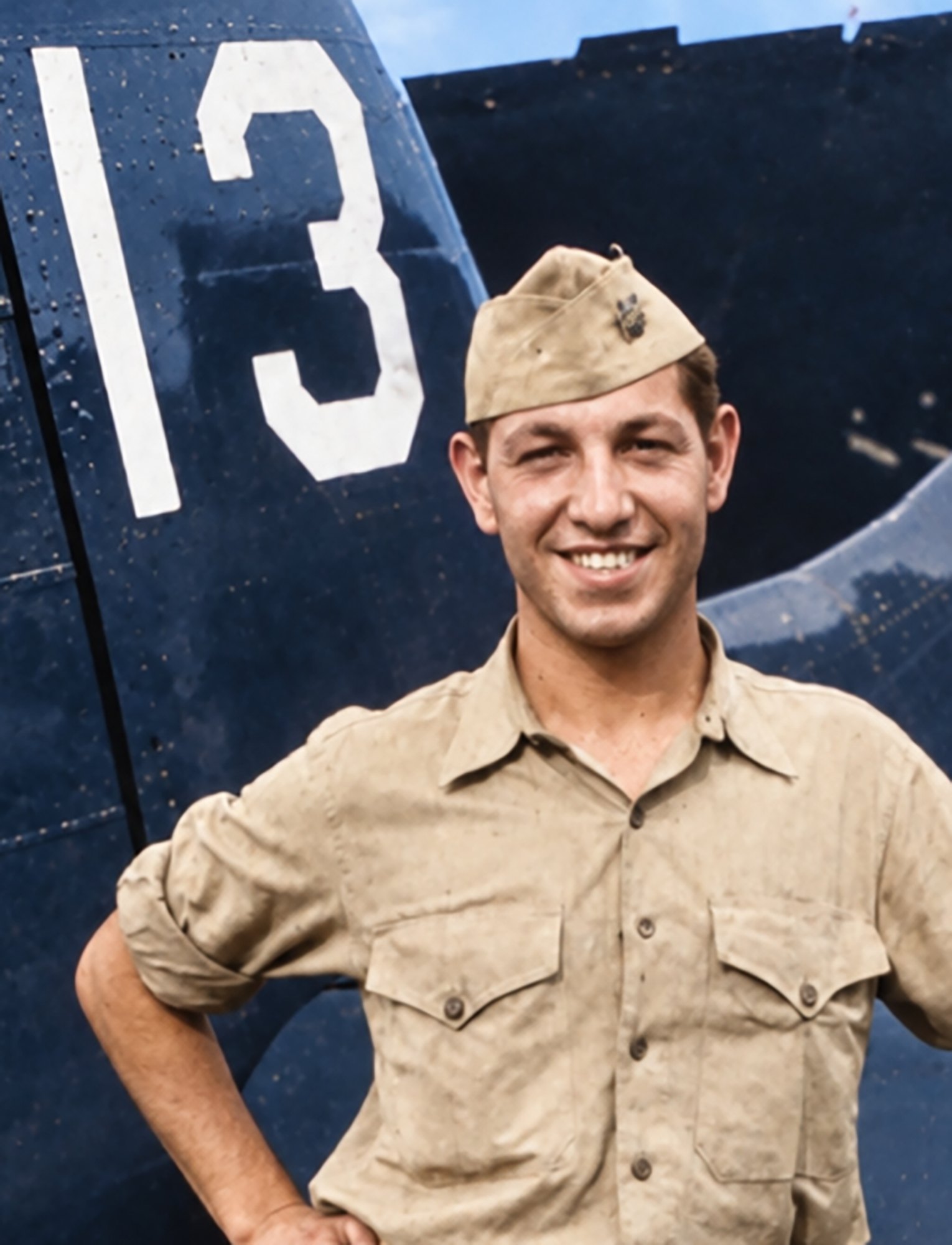
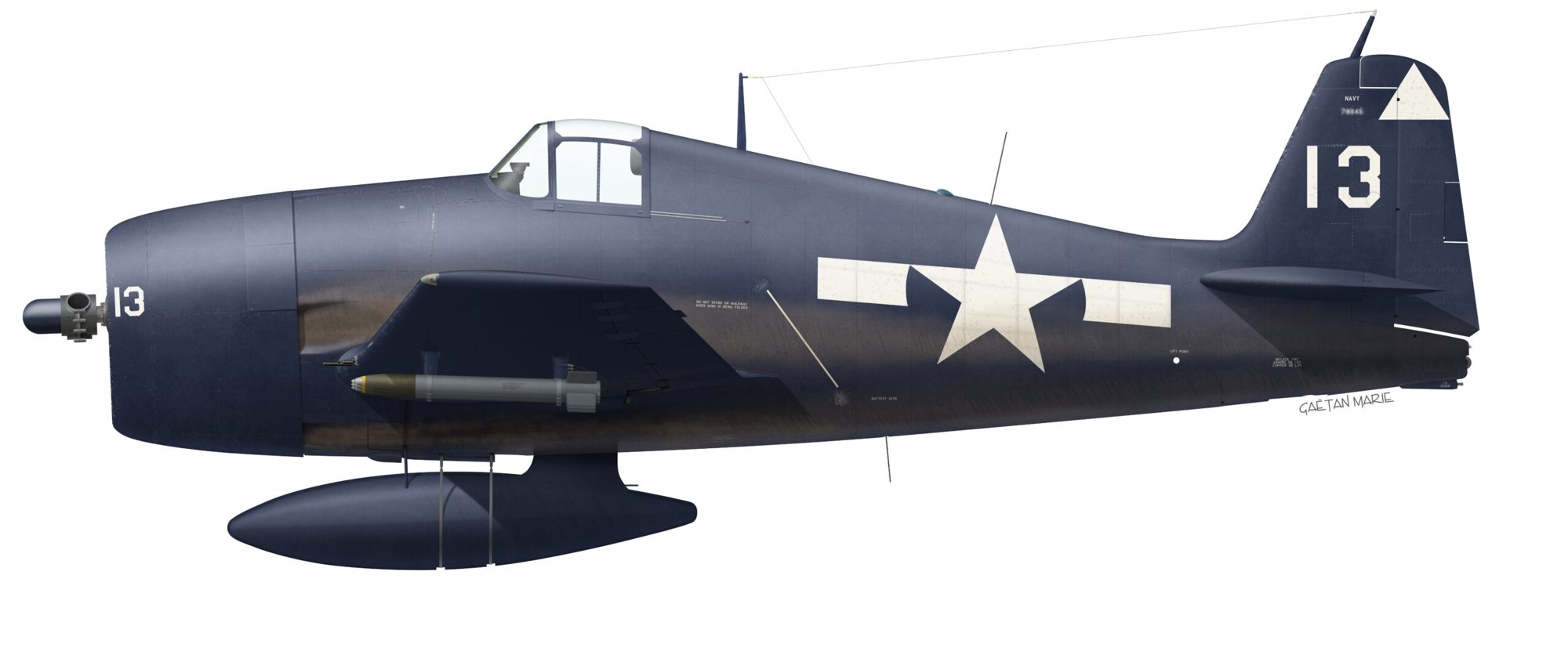
F6F-5 Hellcat · ‘13’
Hellcat ‘13’ of VF-81, the aircraft beside which Contogogou posed for the Prep Charlie yearbook on the deck of USS Wasp.Το Hellcat ‘13’ της VF-81, το αεροσκάφος δίπλα στο οποίο φωτογραφήθηκε ο Contogogou για την επετηρίδα Prep Charlie στο κατάστρωμα του USS Wasp.
- TypeΤύπος
- Grumman F6F-5 Hellcat
- ArmamentΟπλισμός
- Six .50-cal BrowningsΈξι πολυβόλα .50
- NumberΑριθμός
- 13
- UnitΜονάδα
- VF-81 · USS Wasp
Rugged and heavily armedΣτιβαρό και βαριά οπλισμένο
The Grumman F6F-5 Hellcat marked ‘13’ of Fighting Squadron 81 (VF-81) is the same aircraft with which Lieutenant (jg) Costas Contogogou was photographed for the Prep Charlie yearbook. Embarked aboard USS Wasp (CV-18) with Carrier Air Group 81 in November 1944, VF-81 operated one of the largest fighter complements of the war, with nearly ninety Hellcats.
Photographs place Contogogou beside Hellcat ‘13’, but without its Bureau Number and the squadron flight records it cannot be identified as his assigned aircraft. From Wasp’s decks, Contogogou and his squadron flew their first combat sorties over Luzon in the Philippines, and later took part in the first carrier raids on Tokyo and the Iwo Jima operation. The Hellcat, rugged and heavily armed with six .50-caliber Browning machine guns, proved decisive in gaining air superiority; VF-81’s Hellcats destroyed numerous enemy aircraft in the air and on the ground while shielding the fleet from kamikaze attacks.
Το Grumman F6F-5 Hellcat με τον αριθμό ‘13’ της Μοίρας Δίωξης 81 (VF-81) είναι το ίδιο αεροσκάφος με το οποίο φωτογραφήθηκε ο Υποπλοίαρχος (Ι) Costas Contogogou για την επετηρίδα Prep Charlie. Όταν επιβιβάστηκε στο USS Wasp (CV-18) με την Carrier Air Group 81 τον Νοέμβριο του 1944, η VF-81 διέθετε μία από τις μεγαλύτερες δυνάμεις καταδιωκτικών του πολέμου, με σχεδόν ενενήντα Hellcat.
Οι φωτογραφίες δείχνουν τον Contogogou δίπλα στο Hellcat ‘13’, όμως χωρίς τον αριθμό μητρώου (Bureau Number) και τις καταστάσεις πτήσεων της μοίρας δεν μπορεί να ταυτοποιηθεί ως το αεροσκάφος που του είχε ανατεθεί. Από το κατάστρωμα του Wasp, ο Contogogou και η μοίρα του πέταξαν τις πρώτες πολεμικές τους εξόδους πάνω από τη Luzon στις Φιλιππίνες και αργότερα πήραν μέρος στις πρώτες επιθέσεις αεροπλανοφόρων κατά του Τόκιο και στις επιχειρήσεις της Iwo Jima. Το Hellcat, στιβαρό και βαριά οπλισμένο με έξι πολυβόλα Browning διαμετρήματος .50, αποδείχθηκε καθοριστικό για την κατάκτηση της αεροπορικής υπεροχής· τα Hellcat της VF-81 κατέστρεψαν πολυάριθμα εχθρικά αεροσκάφη στον αέρα και στο έδαφος, προστατεύοντας ταυτόχρονα τον στόλο από τις επιθέσεις kamikaze.
Aircraft profile copyright Bertrand Brown, aka Gaetan MarieΠροφίλ αεροσκάφους: copyright Bertrand Brown, γνωστός ως Gaetan Marie
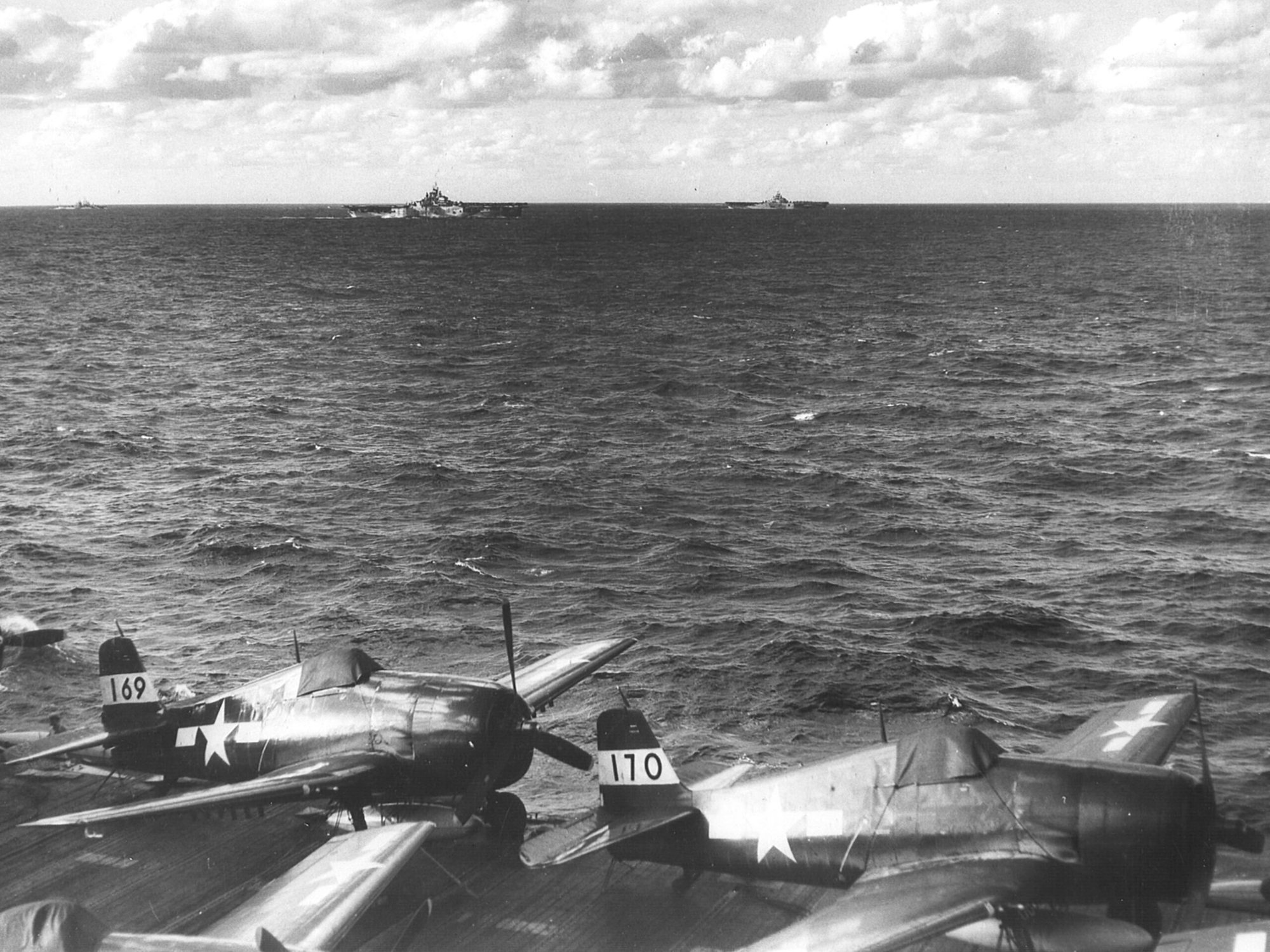
Luzonto TokyoΑπό τη Luzonστο Τόκιο
Four months of continuous front-line duty with the fast carriers, from the first strikes on Luzon to the day Air Group 81 left Wasp.Τέσσερις μήνες συνεχούς υπηρεσίας στην πρώτη γραμμή με τα ταχέα αεροπλανοφόρα, από τις πρώτες επιθέσεις στη Luzon ως την αποχώρηση της Αεροπορικής Σμηναρχίας 81 από το Wasp.
- ShipΠλοίο
- Wasp
- HullΝηολόγιο
- CV-18
- Air groupΑεροπορική σμηναρχία
- CVG-81
- First strikeΠρώτη επίθεση
- 14.XI.44
| No.Α/Α | DateΗμερομηνία | TargetΣτόχος | ReportΑναφορά |
|---|---|---|---|
| 01 | 14 Nov 194414 Νοε 1944 | LuzonLuzon | First combat sorties of Carrier Air Group 81.Οι πρώτες πολεμικές έξοδοι της Carrier Air Group 81. |
| 02 | Nov 1944Νοε 1944 | PhilippinesΦιλιππίνες | Fighter sweeps and strikes on airfields and installations.Εξορμήσεις καταδιωκτικών και επιθέσεις σε αεροδρόμια και εγκαταστάσεις. |
| 03 | 14–16 Dec 194414–16 Δεκ 1944 | LuzonLuzon | Airfields struck in support of the Mindoro landings.Επιθέσεις σε αεροδρόμια για την υποστήριξη των αποβάσεων στο Mindoro. |
| 04 | 18 Dec 194418 Δεκ 1944 | Typhoon CobraΤυφώνας Cobra | Task Force 38 loses the destroyers Hull, Monaghan and Spence.Η Task Force 38 χάνει τα αντιτορπιλικά Hull, Monaghan και Spence. |
| 05 | Jan 1945Ιαν 1945 | Luzon, FormosaLuzon, Φορμόζα | Airfields, shipping and military installations.Αεροδρόμια, πλοία και στρατιωτικές εγκαταστάσεις. |
| 06 | 12 Jan 194512 Ιαν 1945 | French IndochinaΓαλλική Ινδοκίνα | Shipping and installations around Cam Ranh Bay and Saigon.Πλοία και εγκαταστάσεις γύρω από τον κόλπο Cam Ranh και τη Σαϊγκόν. |
| 07 | Jan 1945Ιαν 1945 | Formosa, China coastΦορμόζα, ακτές Κίνας | Strikes against Japanese shipping and communications.Επιθέσεις κατά της ιαπωνικής ναυσιπλοΐας και των επικοινωνιών. |
| 08 | 16–17 Feb 194516–17 Φεβ 1945 | Tokyo areaΠεριοχή Τόκιο | First carrier strikes against the Japanese home islands.Οι πρώτες επιθέσεις αεροπλανοφόρων κατά των ιαπωνικών μητροπολιτικών νησιών. |
| 09 | From 19 Feb 1945Από 19 Φεβ 1945 | Iwo JimaIwo Jima | Air cover and support for the invasion.Αεροπορική κάλυψη και υποστήριξη της απόβασης. |
| 10 | 25 Feb 194525 Φεβ 1945 | Atsugi, ShimomizoAtsugi, Shimomizo | Fighter sweep by 28 VF-81 Hellcats (Action Report 1-A-85).Εξόρμηση 28 Hellcat της VF-81 (Αναφορά Δράσης 1-A-85). |
| 11 | 1 Mar 19451 Μαρ 1945 | Yontan, OkinawaYontan, Okinawa | Fighter sweep against the airfield (Action Report 1-A-89).Εξόρμηση κατά του αεροδρομίου (Αναφορά Δράσης 1-A-89). |
| 12 | 13 Mar 194513 Μαρ 1945 | Air Group 81 leaves WaspΗ CVG-81 αποχωρεί από το Wasp | End of the combat cruise with the ship.Τέλος της πολεμικής περιόδου με το πλοίο. |
Interesting but gruesomeΕνδιαφέρουσες αλλά φρικτές
USS Wasp · CV-18
- Air groupCVG-81
- FightersΚαταδιωκτικάNearly 90 HellcatsΣχεδόν 90 Hellcat
- 10 Nov 1944Embarked from GuamΕπιβίβαση από το Guam
- 14 Nov 1944First strikes, LuzonΠρώτες επιθέσεις, Luzon
- Dec 1944Luzon · Typhoon CobraLuzon · Τυφώνας Cobra
- Jan 1945Formosa · IndochinaΦορμόζα · Ινδοκίνα
- Feb 1945Tokyo · Iwo JimaΤόκιο · Iwo Jima
- 1 Mar 1945Okinawa, YontanOkinawa, Yontan
- 13 Mar 1945Air Group 81 leavesΑποχώρηση CVG-81
During February 1945, the fast carrier forces turned north. On 16 and 17 February, American carrier aircraft attacked the Tokyo region, seeking to reduce Japanese air strength before the invasion of Iwo Jima. The landings began on 19 February, and the carrier forces subsequently provided air cover and support while American Marines fought to secure the island. The campaign was exceptionally costly, and the fighting demonstrated the determination of the Japanese defenders even as the strategic balance shifted decisively toward the Allies.¹⁵
A contemporary VF-81 Aircraft Action Report dated 25 February records a fighter sweep from USS Wasp against the Atsugi and Shimomizo airfields in the Tokyo region. Twenty-eight F6F-5 Hellcats of the squadron took off, with additional fighters participating from USS Hornet. The report documents the intensity and scale of operations during the days immediately preceding Contogogou’s next surviving letter, although the evidence presently available does not independently establish his participation in this particular sortie.¹⁶
Two days later, on 27 February, Contogogou wrote to Drenan from aboard his aircraft carrier. His words provide an unusually vivid description of the strain imposed by prolonged naval air operations. Apologizing for having delayed his reply, he initially joked that he might have written sooner had he spent less time reading or playing bridge. The humour, however, soon gave way to a more sobering account:
To Sprague W. Drenan27 February 1945Aboard his carrierWe have been very busy, though, fighting this war and it isn’t any fun at all.
The demands of the campaign were affecting even the most basic necessities of daily life. Regular meals had become difficult, and exhaustion was a constant companion:
To Sprague W. Drenan27 February 1945Aboard his carrierAt times we are so busy that we don’t even get a chance to eat a good meal. Sandwiches and coffee have been our chief means of subsistence. Up until last night I hadn’t seen the sack for almost forty-eight hours and I was plenty tired.
The passage brings the conditions of life aboard a wartime aircraft carrier into sharp focus. Behind the official operational reports, with their accounts of aircraft launched, targets attacked, and enemy losses, were men living through punishing cycles of preparation, combat, recovery, and renewed preparation. The physical exhaustion described by Contogogou was compounded by the knowledge that the next mission might bring further losses.
Sandwiches and coffee have been our chief means of subsistence
He wanted to tell Drenan more about what his squadron was experiencing, but was prevented from doing so. His brief observation is especially striking:
To Sprague W. Drenan27 February 1945Aboard his carrierI wish I could tell you about the actions we have out there. I think you would find them very interesting but gruesome.
The final word, gruesome, suggests the disturbing nature of some of the experiences he had witnessed. He offered no further details, apparently mindful of the restrictions under which he was writing. Even the identity of his ship was subject to strict censorship. He explained that a letter could carry the ship’s return address only if the squadron was not identified, while a letter mentioning the squadron could not simultaneously reveal the ship.
The restrictions were a source of evident frustration. For a man attempting to maintain contact with an old college friend, the rules made it almost impossible to describe the central facts of his wartime existence.¹⁷
Yet the same letter also preserved moments of ordinary life aboard the carrier. When operational duties allowed, Contogogou and his fellow officers could spend time on deck, read, play cards, or enjoy informal recreation. One surviving page describes volleyball games held in the forward aircraft elevator pit, an unusual playing area aboard a warship. His reading included Daphne du Maurier’s Frenchman’s Creek and a novel by Van Wyck Mason. He also reflected on the relative comfort afforded by a large fleet carrier, despite the hardships of sustained operations.
These brief intervals were essential to morale. For men whose working lives revolved around aircraft, combat assignments, and the dangers of the open sea, even a game of volleyball or an evening spent reading provided an opportunity to escape momentarily from the war.¹⁸
But the reality of combat was never far from his thoughts. Contogogou had heard troubling news about former acquaintances, including a man named Emil who had been reported missing in action. He expressed the hope that the missing man would eventually be found safe. His own experience in VF-81 had taught him that an aviator’s disappearance did not always mean death: some missing pilots returned unexpectedly, while others were never seen again.
To Sprague W. Drenan27 February 1945Aboard his carrierI’ve seen quite a few of my squadron boys in the same situation and they turned up O.K. but others weren’t quite so fortunate.
These words offer one of the most moving glimpses into the emotional world of the fighter squadron. Every mission carried the possibility that familiar faces would be absent when the aircraft returned, and every report of a missing pilot left comrades waiting between hope and grief.¹⁹
Contogogou’s letter ended with a small but memorable detail. A film was about to be shown in the officers’ wardroom, and he intended to attend:
To Sprague W. Drenan27 February 1945Aboard his carrierWe are having a movie in the wardroom in a few minutes and I’d like to see it. The name of it is ‘The Fighting Lady’ and it’s all about Carrier life.
The Fighting Lady, released in 1944, was an American documentary portraying life and combat operations aboard an aircraft carrier in the Pacific. Its principal subject was USS Yorktown (CV-10). For a VF-81 pilot serving aboard USS Wasp, the screening must have offered an unusually familiar subject: the routines, aircraft, and dangers being presented to audiences at home closely resembled the circumstances of his own life. After describing exhaustion, combat, and missing friends, Contogogou ended his correspondence by looking forward to an evening at the movies.²⁰
On 1 March 1945, VF-81 took part in operations against the Ryukyu Islands. An aircraft action report records a fighter sweep directed against Yontan Airfield on Okinawa. These preliminary attacks contributed to the American effort to weaken Japanese air defences before the planned invasion of the island. Shortly afterward, USS Wasp returned to Ulithi, where the carrier underwent replenishment and preparations for the next phase of operations. Carrier Air Group 81’s assignment aboard Wasp concluded on 13 March 1945, marking the end of its combat cruise with the ship.²¹
The officers and pilots of VF-81 had served through a succession of major campaigns, from the Philippines and the South China Sea to the approaches to Japan. The surviving correspondence documents Contogogou’s presence with the squadron throughout its deployment and confirms his firsthand experience of the pressures of carrier warfare, even though the exact number and dates of his individual combat sorties have not yet been established through an authenticated personal flight record.
Among his squadron mates, Contogogou was affectionately known as “Connie.” The contemporary USS Wasp cruise book, Prep Charlie, presents him as a personable, versatile, and enthusiastic officer, whose sense of humour and willingness to undertake additional responsibilities earned the respect of his companions. Its description of him as a “jack-of-all-trades” conveys something of the warmth with which he was remembered.
Photographs from the same cruise book show him in less formal circumstances, including one in which he is leaning against the tailplane of a Grumman F6F Hellcat marked with the number 13. Other images preserve moments during the squadron’s Hawaiian training, before the men departed for combat. Together, the photographs and the surviving letters reveal a young man whose cheerful disposition and concern for his friends remained evident even in the most difficult circumstances.²²
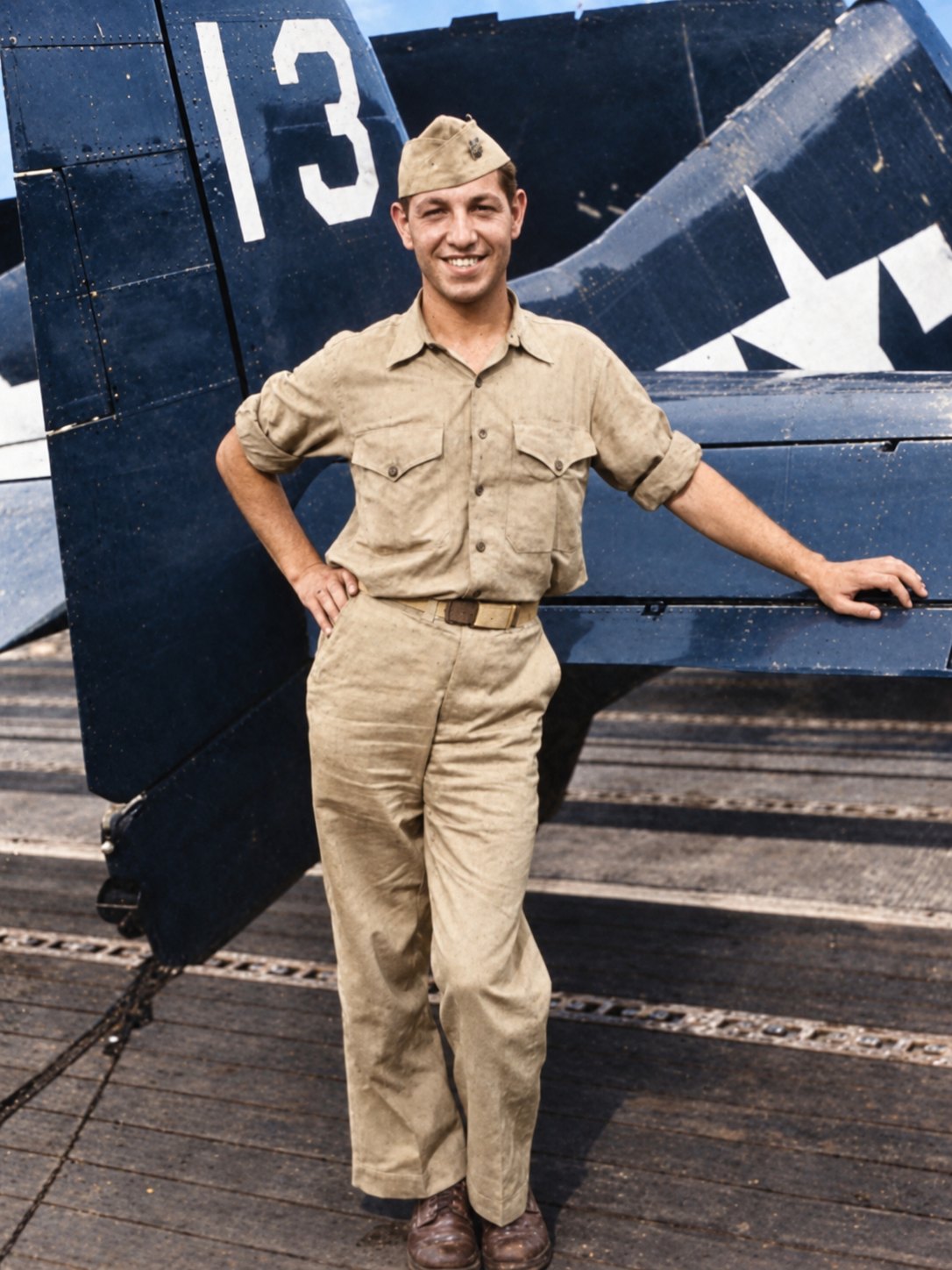
“Connie”
Connie—Connie, our jack-of-all-trades, shoulders the sundry secondary duties thrust upon him, with commendable zeal and cheerfulness. … His smile, his crooning, his honest industry and warm conviviality have won him all our bravos and trust, assuring him worldly success equal to his social victories.²²
With the defeat of Germany in May 1945 and the surrender of Japan in August, the enormous American wartime military establishment began the process of demobilization. Contogogou, however, remained on active duty. On 4 September 1945, just two days after Japan’s formal surrender aboard USS Missouri, he wrote another letter to Drenan, this time from Nantucket, Massachusetts.
The stationery bore the name of The Old Sconset Inn, while the accompanying envelope identified his naval return address as Naval Auxiliary Air Facility Nantucket. It also recorded his rank as Lieutenant (junior grade), confirming that he had been promoted since the earlier letters written as an Ensign.
The contrast with his February correspondence was considerable. The dangerous routine of combat flying had given way to the monotony of waiting for release from military service. His principal concern was now the process of demobilization and the possibility of returning to civilian life. He hoped to avoid another overseas assignment and discussed the Navy’s procedures for releasing personnel from active duty. Reading, conversation, and card games helped occupy the time, but his thoughts were clearly turning toward New Hampshire.²³
His continuing ties to Keene remained as strong as ever. In the three-page letter he described encounters with fraternity acquaintances, including a meeting with an old fraternity brother named Christy at Boston’s North Station. He also mentioned visits involving friends and family members, among them Chris and Ann. The same social world that had sustained his correspondence during the war was once again becoming part of his everyday life.
The letter closed with hopes of seeing Drenan in person. It was posted from Nantucket on 5 September 1945 at seven o’clock in the evening, providing a precise record of the naval officer’s presence on the island shortly after the end of the war. The sequence of letters to his former professor had begun with uncertainty over an impending overseas departure and ended with the desire to return home.²⁴
USS Wasp · CV-18
- Air groupCVG-81
- FightersΚαταδιωκτικάNearly 90 HellcatsΣχεδόν 90 Hellcat
- 10 Nov 1944Embarked from GuamΕπιβίβαση από το Guam
- 14 Nov 1944First strikes, LuzonΠρώτες επιθέσεις, Luzon
- Dec 1944Luzon · Typhoon CobraLuzon · Τυφώνας Cobra
- Jan 1945Formosa · IndochinaΦορμόζα · Ινδοκίνα
- Feb 1945Tokyo · Iwo JimaΤόκιο · Iwo Jima
- 1 Mar 1945Okinawa, YontanOkinawa, Yontan
- 13 Mar 1945Air Group 81 leavesΑποχώρηση CVG-81
Τον Φεβρουάριο του 1945 οι ταχείες δυνάμεις αεροπλανοφόρων στράφηκαν βόρεια. Στις 16 και 17 Φεβρουαρίου αμερικανικά αεροσκάφη από αεροπλανοφόρα επιτέθηκαν στην περιοχή του Τόκιο, με στόχο να μειώσουν την ιαπωνική αεροπορική δύναμη πριν από την απόβαση στην Iwo Jima. Οι αποβάσεις άρχισαν στις 19 Φεβρουαρίου και οι δυνάμεις των αεροπλανοφόρων παρείχαν στη συνέχεια αεροπορική κάλυψη και υποστήριξη, ενώ οι Αμερικανοί πεζοναύτες μάχονταν για να καταλάβουν το νησί. Η εκστρατεία ήταν εξαιρετικά δαπανηρή σε ανθρώπινες ζωές και οι μάχες έδειξαν την αποφασιστικότητα των Ιαπώνων αμυνομένων, ακόμη κι όταν η στρατηγική ισορροπία έγερνε αποφασιστικά υπέρ των Συμμάχων.¹⁵
Μια Αναφορά Αεροπορικής Δράσης (Aircraft Action Report) της VF-81 με ημερομηνία 25 Φεβρουαρίου καταγράφει εξόρμηση καταδιωκτικών από το USS Wasp εναντίον των αεροδρομίων Atsugi και Shimomizo στην περιοχή του Τόκιο. Απογειώθηκαν είκοσι οκτώ F6F-5 Hellcat της μοίρας, ενώ συμμετείχαν και καταδιωκτικά από το USS Hornet. Η αναφορά τεκμηριώνει την ένταση και την κλίμακα των επιχειρήσεων τις ημέρες που προηγήθηκαν της επόμενης σωζόμενης επιστολής του Contogogou, αν και τα διαθέσιμα στοιχεία δεν αποδεικνύουν ανεξάρτητα τη συμμετοχή του στη συγκεκριμένη έξοδο.¹⁶
Δύο ημέρες αργότερα, στις 27 Φεβρουαρίου, ο Contogogou έγραψε στον Drenan από το αεροπλανοφόρο του. Τα λόγια του δίνουν μια ασυνήθιστα ζωντανή εικόνα της πίεσης που προκαλούσαν οι παρατεταμένες αεροναυτικές επιχειρήσεις. Ζητώντας συγγνώμη για την καθυστέρηση, αστειεύτηκε αρχικά ότι ίσως θα είχε γράψει νωρίτερα αν περνούσε λιγότερο χρόνο διαβάζοντας ή παίζοντας μπριτζ. Το χιούμορ όμως έδωσε γρήγορα τη θέση του σε μια πιο σοβαρή αφήγηση:
Προς τον Sprague W. Drenan27 Φεβρουαρίου 1945Στο αεροπλανοφόροΉμασταν πολύ απασχολημένοι, πάντως, πολεμώντας σε αυτόν τον πόλεμο, και δεν είναι καθόλου διασκεδαστικό.
Οι απαιτήσεις της εκστρατείας επηρέαζαν ακόμη και τις πιο βασικές ανάγκες της καθημερινής ζωής. Τα κανονικά γεύματα είχαν γίνει δύσκολα και η εξάντληση ήταν μόνιμη συντροφιά:
Προς τον Sprague W. Drenan27 Φεβρουαρίου 1945Στο αεροπλανοφόροΜερικές φορές είμαστε τόσο απασχολημένοι που δεν προλαβαίνουμε ούτε ένα καλό γεύμα. Σάντουιτς και καφές είναι η κύρια τροφή μας. Ως χθες το βράδυ δεν είχα δει κρεβάτι σχεδόν σαράντα οκτώ ώρες και ήμουν πολύ κουρασμένος.
Το απόσπασμα φέρνει στο προσκήνιο τις συνθήκες ζωής σε ένα αεροπλανοφόρο εν καιρώ πολέμου. Πίσω από τις επίσημες επιχειρησιακές αναφορές, με τους απολογισμούς αεροσκαφών που απογειώθηκαν, στόχων που χτυπήθηκαν και εχθρικών απωλειών, υπήρχαν άνθρωποι που ζούσαν εξαντλητικούς κύκλους προετοιμασίας, μάχης, ανάκαμψης και νέας προετοιμασίας. Η σωματική εξάντληση που περιγράφει ο Contogogou βάραινε ακόμη περισσότερο από τη γνώση ότι η επόμενη αποστολή μπορεί να έφερνε κι άλλες απώλειες.
Σάντουιτς και καφές είναι η κύρια τροφή μας
Ήθελε να πει στον Drenan περισσότερα για όσα ζούσε η μοίρα του, αλλά δεν του επιτρεπόταν. Η σύντομη παρατήρησή του είναι ιδιαίτερα συγκλονιστική:
Προς τον Sprague W. Drenan27 Φεβρουαρίου 1945Στο αεροπλανοφόροΜακάρι να μπορούσα να σας πω για τις μάχες που δίνουμε εκεί έξω. Νομίζω ότι θα τις βρίσκατε πολύ ενδιαφέρουσες αλλά φρικτές.
Η τελευταία λέξη, gruesome («φρικτές»), υποδηλώνει τον ταραχώδη χαρακτήρα ορισμένων εμπειριών που είχε ζήσει. Δεν έδωσε περισσότερες λεπτομέρειες, προφανώς έχοντας υπόψη τους περιορισμούς υπό τους οποίους έγραφε. Ακόμη και η ταυτότητα του πλοίου του υπαγόταν σε αυστηρή λογοκρισία. Εξηγούσε ότι ένα γράμμα μπορούσε να φέρει τη διεύθυνση αποστολέα του πλοίου μόνο αν δεν αναφερόταν η μοίρα, ενώ ένα γράμμα που ανέφερε τη μοίρα δεν μπορούσε ταυτόχρονα να αποκαλύπτει το πλοίο.
Οι περιορισμοί ήταν πηγή φανερής απογοήτευσης. Για έναν άνθρωπο που προσπαθούσε να κρατήσει επαφή με έναν παλιό φίλο από το κολλέγιο, οι κανόνες έκαναν σχεδόν αδύνατη την περιγραφή των βασικών γεγονότων της πολεμικής του ζωής.¹⁷
Κι όμως, η ίδια επιστολή διέσωσε και στιγμές καθημερινής ζωής στο αεροπλανοφόρο. Όταν το επέτρεπαν τα επιχειρησιακά καθήκοντα, ο Contogogou και οι συνάδελφοί του αξιωματικοί μπορούσαν να περάσουν χρόνο στο κατάστρωμα, να διαβάσουν, να παίξουν χαρτιά ή να διασκεδάσουν ανεπίσημα. Μια σωζόμενη σελίδα περιγράφει παιχνίδια βόλεϊ στο φρεάτιο του πρωραίου ανελκυστήρα αεροσκαφών, ένα ασυνήθιστο γήπεδο πάνω σε πολεμικό πλοίο. Ανάμεσα στα αναγνώσματά του ήταν το Frenchman’s Creek της Daphne du Maurier και ένα μυθιστόρημα του Van Wyck Mason. Σχολίαζε επίσης τη σχετική άνεση ενός μεγάλου αεροπλανοφόρου στόλου, παρά τις κακουχίες των συνεχών επιχειρήσεων.
Αυτά τα σύντομα διαλείμματα ήταν απαραίτητα για το ηθικό. Για ανθρώπους που η δουλειά τους περιστρεφόταν γύρω από αεροσκάφη, πολεμικές αποστολές και τους κινδύνους της ανοιχτής θάλασσας, ακόμη και ένα παιχνίδι βόλεϊ ή ένα βράδυ με ένα βιβλίο ήταν μια ευκαιρία να ξεφύγουν για λίγο από τον πόλεμο.¹⁸
Όμως η πραγματικότητα της μάχης δεν απείχε ποτέ πολύ από τις σκέψεις του. Ο Contogogou είχε ακούσει ανησυχητικά νέα για παλιούς γνωστούς, ανάμεσά τους για κάποιον Emil που είχε δηλωθεί αγνοούμενος σε μάχη. Εξέφραζε την ελπίδα ότι ο αγνοούμενος θα βρισκόταν τελικά σώος. Η δική του εμπειρία στη VF-81 τον είχε διδάξει ότι η εξαφάνιση ενός αεροπόρου δεν σήμαινε πάντα θάνατο: κάποιοι αγνοούμενοι πιλότοι επέστρεφαν απροσδόκητα, ενώ άλλοι δεν ξαναφάνηκαν ποτέ.
Προς τον Sprague W. Drenan27 Φεβρουαρίου 1945Στο αεροπλανοφόροΈχω δει αρκετά παιδιά της μοίρας μου στην ίδια κατάσταση και εμφανίστηκαν μια χαρά, αλλά άλλοι δεν ήταν τόσο τυχεροί.
Αυτά τα λόγια προσφέρουν μία από τις πιο συγκινητικές ματιές στον συναισθηματικό κόσμο μιας μοίρας καταδιωκτικών. Κάθε αποστολή έκρυβε την πιθανότητα να λείπουν γνώριμα πρόσωπα όταν τα αεροσκάφη επέστρεφαν, και κάθε αναφορά για αγνοούμενο πιλότο άφηνε τους συντρόφους να περιμένουν ανάμεσα στην ελπίδα και τη θλίψη.¹⁹
Η επιστολή του Contogogou τελείωνε με μια μικρή αλλά αξιομνημόνευτη λεπτομέρεια. Στη λέσχη αξιωματικών επρόκειτο να προβληθεί μια ταινία και σκόπευε να την παρακολουθήσει:
Προς τον Sprague W. Drenan27 Φεβρουαρίου 1945Στο αεροπλανοφόροΣε λίγα λεπτά έχουμε ταινία στη λέσχη και θα ήθελα να τη δω. Λέγεται «The Fighting Lady» και είναι όλη για τη ζωή στα αεροπλανοφόρα.
Το The Fighting Lady, που κυκλοφόρησε το 1944, ήταν ένα αμερικανικό ντοκιμαντέρ για τη ζωή και τις πολεμικές επιχειρήσεις σε ένα αεροπλανοφόρο στον Ειρηνικό. Κύριο θέμα του ήταν το USS Yorktown (CV-10). Για έναν πιλότο της VF-81 στο USS Wasp, η προβολή θα πρέπει να είχε ένα ασυνήθιστα οικείο θέμα: οι ρουτίνες, τα αεροσκάφη και οι κίνδυνοι που παρουσιάζονταν στο κοινό στην πατρίδα έμοιαζαν πολύ με τις συνθήκες της δικής του ζωής. Αφού περιέγραψε την εξάντληση, τη μάχη και τους αγνοούμενους φίλους, ο Contogogou έκλεισε το γράμμα του περιμένοντας με ανυπομονησία μια βραδιά σινεμά.²⁰
Την 1η Μαρτίου 1945 η VF-81 πήρε μέρος σε επιχειρήσεις κατά των νήσων Ryukyu. Μια αναφορά αεροπορικής δράσης καταγράφει εξόρμηση καταδιωκτικών κατά του αεροδρομίου Yontan στην Okinawa. Οι προκαταρκτικές αυτές επιθέσεις συνέβαλαν στην αμερικανική προσπάθεια να αποδυναμωθεί η ιαπωνική αεράμυνα πριν από τη σχεδιαζόμενη απόβαση στο νησί. Λίγο αργότερα το USS Wasp επέστρεψε στο Ulithi, όπου ανεφοδιάστηκε και προετοιμάστηκε για την επόμενη φάση των επιχειρήσεων. Η υπηρεσία της Carrier Air Group 81 στο Wasp ολοκληρώθηκε στις 13 Μαρτίου 1945, σηματοδοτώντας το τέλος της πολεμικής της περιόδου με το πλοίο.²¹
Οι αξιωματικοί και οι πιλότοι της VF-81 είχαν υπηρετήσει σε μια σειρά μεγάλων εκστρατειών, από τις Φιλιππίνες και τη Θάλασσα της Νότιας Κίνας ως τις προσβάσεις της Ιαπωνίας. Η σωζόμενη αλληλογραφία τεκμηριώνει την παρουσία του Contogogou στη μοίρα σε όλη τη διάρκεια της αποστολής και επιβεβαιώνει την προσωπική του εμπειρία από τις πιέσεις του πολέμου των αεροπλανοφόρων, αν και ο ακριβής αριθμός και οι ημερομηνίες των πολεμικών του εξόδων δεν έχουν ακόμη τεκμηριωθεί από επικυρωμένο ατομικό βιβλίο πτήσεων.
Ανάμεσα στους συναδέλφους της μοίρας, ο Contogogou ήταν γνωστός με το χαϊδευτικό «Connie». Το βιβλίο της περιόδου του USS Wasp, Prep Charlie, τον παρουσιάζει ως προσηνή, πολυτάλαντο και ενθουσιώδη αξιωματικό, που το χιούμορ του και η προθυμία του να αναλαμβάνει επιπλέον καθήκοντα του χάρισαν τον σεβασμό των συντρόφων του. Ο χαρακτηρισμός του ως «jack-of-all-trades», ανθρώπου για όλες τις δουλειές, αποδίδει κάτι από τη ζεστασιά με την οποία τον θυμούνταν.
Φωτογραφίες από το ίδιο βιβλίο τον δείχνουν σε λιγότερο επίσημες στιγμές, ανάμεσά τους μία όπου ακουμπά στο ουραίο ενός Grumman F6F Hellcat με τον αριθμό 13. Άλλες εικόνες διασώζουν στιγμές από την εκπαίδευση της μοίρας στη Χαβάη, πριν οι άνδρες φύγουν για τη μάχη. Μαζί, οι φωτογραφίες και οι σωζόμενες επιστολές αποκαλύπτουν έναν νέο άνθρωπο που η εύθυμη διάθεσή του και η φροντίδα του για τους φίλους του έμεναν φανερές ακόμη και στις πιο δύσκολες συνθήκες.²²
“Connie”
Connie—Ο Connie, ο άνθρωπός μας για όλες τις δουλειές, σηκώνει στους ώμους του τα ποικίλα δευτερεύοντα καθήκοντα που του φορτώνουν, με αξιέπαινο ζήλο και κέφι. … Το χαμόγελό του, τα τραγούδια του, η τίμια εργατικότητα και η ζεστή του συντροφικότητα του έχουν κερδίσει όλα μας τα μπράβο και την εμπιστοσύνη μας, εξασφαλίζοντάς του επιτυχία στον κόσμο ίση με τις κοινωνικές του νίκες.²²
Με την ήττα της Γερμανίας τον Μάιο του 1945 και την παράδοση της Ιαπωνίας τον Αύγουστο, ο τεράστιος αμερικανικός πολεμικός μηχανισμός άρχισε τη διαδικασία της αποστράτευσης. Ο Contogogou όμως παρέμενε σε ενεργό υπηρεσία. Στις 4 Σεπτεμβρίου 1945, μόλις δύο ημέρες μετά την επίσημη παράδοση της Ιαπωνίας στο USS Missouri, έγραψε άλλη μία επιστολή στον Drenan, αυτή τη φορά από το Nantucket της Massachusetts.
Το χαρτί αλληλογραφίας έφερε το όνομα του The Old Sconset Inn, ενώ ο φάκελος ανέφερε ως διεύθυνση αποστολέα τη Βοηθητική Αεροπορική Εγκατάσταση του Ναυτικού (Naval Auxiliary Air Facility) στο Nantucket. Κατέγραφε επίσης τον βαθμό του ως Υποπλοιάρχου (Ι), επιβεβαιώνοντας ότι είχε προαχθεί μετά τις προηγούμενες επιστολές, που είχε γράψει ως Σημαιοφόρος.
Η αντίθεση με την αλληλογραφία του Φεβρουαρίου ήταν μεγάλη. Η επικίνδυνη ρουτίνα των πολεμικών πτήσεων είχε δώσει τη θέση της στη μονοτονία της αναμονής για την αποστράτευση. Η κύρια έγνοια του ήταν πλέον η διαδικασία της αποστράτευσης και η δυνατότητα επιστροφής στην πολιτική ζωή. Ήλπιζε να αποφύγει μια νέα τοποθέτηση στο εξωτερικό και συζητούσε τις διαδικασίες του Ναυτικού για την απόλυση του προσωπικού από την ενεργό υπηρεσία. Το διάβασμα, η κουβέντα και τα χαρτιά βοηθούσαν να περνά ο χρόνος, αλλά οι σκέψεις του στρέφονταν ολοφάνερα προς το New Hampshire.²³
Οι δεσμοί του με το Keene έμεναν ισχυροί όσο ποτέ. Στην τρισέλιδη επιστολή περιέγραφε συναντήσεις με γνωστούς από την αδελφότητα, ανάμεσά τους με έναν παλιό αδελφό της αδελφότητας, τον Christy, στο North Station της Βοστώνης. Ανέφερε επίσης επισκέψεις φίλων και μελών της οικογένειας, ανάμεσά τους του Chris και της Ann. Ο ίδιος κοινωνικός κόσμος που είχε κρατήσει ζωντανή την αλληλογραφία του στον πόλεμο γινόταν και πάλι μέρος της καθημερινότητάς του.
Η επιστολή έκλεινε με την ελπίδα να δει τον Drenan από κοντά. Ταχυδρομήθηκε από το Nantucket στις 5 Σεπτεμβρίου 1945 στις επτά το βράδυ, καταγράφοντας με ακρίβεια την παρουσία του αξιωματικού του Ναυτικού στο νησί λίγο μετά το τέλος του πολέμου. Η σειρά των επιστολών προς τον παλιό του καθηγητή είχε αρχίσει με την αβεβαιότητα μιας επικείμενης αναχώρησης για το εξωτερικό και τελείωνε με την επιθυμία της επιστροφής στο σπίτι.²⁴
Judge Charles J. ContasΔικαστής Charles J. Contas
- 1942Keene Teachers CollegeKeene Teachers College
- WingsNaval Aviator, 1943Αεροπόρος Ναυτικού, 1943
- F6F-5VF-81 Hellcat, 1944–45Hellcat της VF-81, 1944–45
- 1978Superior Court judgeΔικαστής Ανώτερου Δικαστηρίου
Charles J. ContasCharles J. Contas
- 1949Boston University LawΝομική Βοστώνης
- 20 Jul 1952Married Katherine MemosΓάμος με την Katherine Memos
- 1953Settled in KeeneΕγκατάσταση στο Keene
- 25 years25 χρόνιαClerk, Cheshire County
Superior CourtΓραμματέας, Ανώτερο
Δικαστήριο Cheshire - 1978Judge, NH Superior CourtΔικαστής, Ανώτερο
Δικαστήριο NH - 1989RetiredΣυνταξιοδότηση
- HonoraryΤιμητικόDoctor of Laws, Keene StateΔιδακτορικό Νομικής, Keene State
- 19 Dec 2010Died, aged 90Πέθανε, 90 ετών
After completing approximately four years of active naval service, Contogogou resumed civilian life. He continued his association with the United States Naval Reserve, ultimately holding the rank of Lieutenant. He also adopted the shortened form of his family name, becoming known professionally as Charles J. Contas.
Having survived the dangers of naval aviation, he turned his attention to the law. He attended Boston University School of Law, receiving his law degree in 1949. His professional ambitions were accompanied by an important development in his personal life. On 20 July 1952, he married Katherine Memos of Nashua, New Hampshire, at the Greek Orthodox Church of the Annunciation. Katherine was the daughter of Sterios Memos and his wife, and a graduate of Nashua High School. Their marriage brought together two Greek-American families who shared the traditions and aspirations of their immigrant communities.²⁵
In 1953, the couple settled in Keene, where Charles established his legal career. He practiced law and later became Clerk of the Cheshire County Superior Court, a position he held for twenty-five years. In 1978, he was appointed a judge of the New Hampshire Superior Court, serving until his retirement in 1989. His judicial career earned him considerable respect, and he remained a prominent figure in the community in which he had grown up.²⁶
He remained a prominent figure in the community in which he had grown up
Contas’s commitment to public service extended well beyond the courtroom. He was involved in the New Hampshire Bar Association, the American Legion, the Keene Lions Club, and several Masonic organizations. He maintained a particularly close association with St. George Greek Orthodox Church in Keene, serving in various leadership positions, including as president of its board. He also supported local banking, medical, and educational institutions. Keene State College, the successor to the teachers’ college where he had studied before the war, later awarded him an honorary Doctor of Laws degree in recognition of his achievements.²⁷
Charles J. ContasCharles J. Contas
- 1949Boston University LawΝομική Βοστώνης
- 20 Jul 1952Married Katherine MemosΓάμος με την Katherine Memos
- 1953Settled in KeeneΕγκατάσταση στο Keene
- 25 years25 χρόνιαClerk, Cheshire County
Superior CourtΓραμματέας, Ανώτερο
Δικαστήριο Cheshire - 1978Judge, NH Superior CourtΔικαστής, Ανώτερο
Δικαστήριο NH - 1989RetiredΣυνταξιοδότηση
- HonoraryΤιμητικόDoctor of Laws, Keene StateΔιδακτορικό Νομικής, Keene State
- 19 Dec 2010Died, aged 90Πέθανε, 90 ετών
Αφού ολοκλήρωσε περίπου τέσσερα χρόνια ενεργού υπηρεσίας στο Ναυτικό, ο Contogogou επέστρεψε στην πολιτική ζωή. Συνέχισε να ανήκει στο Εφεδρικό Ναυτικό των Ηνωμένων Πολιτειών, φτάνοντας τελικά στον βαθμό του Υποπλοιάρχου. Υιοθέτησε επίσης τη συντομευμένη μορφή του οικογενειακού του ονόματος και έγινε γνωστός επαγγελματικά ως Charles J. Contas.
Έχοντας επιζήσει από τους κινδύνους της αεροπορίας του Ναυτικού, στράφηκε στη νομική. Σπούδασε στη Νομική Σχολή του Boston University και πήρε το πτυχίο του το 1949. Τις επαγγελματικές του φιλοδοξίες συνόδευσε μια σημαντική εξέλιξη στην προσωπική του ζωή. Στις 20 Ιουλίου 1952 παντρεύτηκε την Katherine Memos από το Nashua του New Hampshire, στην Ελληνορθόδοξη Εκκλησία του Ευαγγελισμού. Η Katherine ήταν κόρη του Sterios Memos και της συζύγου του και απόφοιτος του Nashua High School. Ο γάμος τους ένωσε δύο ελληνοαμερικανικές οικογένειες που μοιράζονταν τις παραδόσεις και τις φιλοδοξίες των μεταναστευτικών τους κοινοτήτων.²⁵
Το 1953 το ζευγάρι εγκαταστάθηκε στο Keene, όπου ο Charles έχτισε τη νομική του σταδιοδρομία. Άσκησε τη δικηγορία και αργότερα έγινε Γραμματέας του Ανώτερου Δικαστηρίου της Κομητείας Cheshire, θέση που κράτησε για είκοσι πέντε χρόνια. Το 1978 διορίστηκε δικαστής του Ανώτερου Δικαστηρίου του New Hampshire και υπηρέτησε ως τη συνταξιοδότησή του το 1989. Η δικαστική του σταδιοδρομία του χάρισε μεγάλο σεβασμό και παρέμεινε εξέχουσα μορφή στην κοινότητα όπου είχε μεγαλώσει.²⁶
Παρέμεινε εξέχουσα μορφή στην κοινότητα όπου είχε μεγαλώσει
Η αφοσίωση του Contas στη δημόσια προσφορά ξεπερνούσε κατά πολύ τα όρια της δικαστικής αίθουσας. Συμμετείχε στον Δικηγορικό Σύλλογο του New Hampshire, στην American Legion, στο Keene Lions Club και σε αρκετές μασονικές οργανώσεις. Είχε ιδιαίτερα στενή σχέση με την Ελληνορθόδοξη Εκκλησία του Αγίου Γεωργίου στο Keene, όπου υπηρέτησε σε διάφορες θέσεις ευθύνης, μεταξύ άλλων ως πρόεδρος του συμβουλίου της. Στήριξε επίσης τοπικά τραπεζικά, ιατρικά και εκπαιδευτικά ιδρύματα. Το Keene State College, διάδοχος του κολλεγίου όπου είχε σπουδάσει πριν από τον πόλεμο, του απένειμε αργότερα τιμητικό διδακτορικό Νομικής σε αναγνώριση των επιτευγμάτων του.²⁷
He shed a tearΔάκρυσε
Although his life had taken a very different course, Contogogou never entirely left the memories of the Pacific behind. The photographs and recollections of his squadron mates remained part of his personal history, and his friendship with fellow VF-81 pilot James H. Goldammer continued to connect his wartime experience with later generations.
In 2010, James Goldammer’s son, also named James, visited the elderly veteran and showed him a group photograph of Fighting Squadron 81 taken before its combat deployment. According to Goldammer’s later account, Contogogou had never previously seen the photograph. As he looked at the faces of the men with whom he had served so many decades earlier, he was overcome with emotion and began to cry.
The photograph brought back more than the memory of a military unit. It represented friends who had shared the uncertainty of training, the excitement of deployment, the exhaustion of carrier operations, and the terrible possibility of failing to return from a mission. Goldammer photographed the emotional encounter, preserving an image of the veteran confronting a moment from his youth that had never lost its significance.²⁸
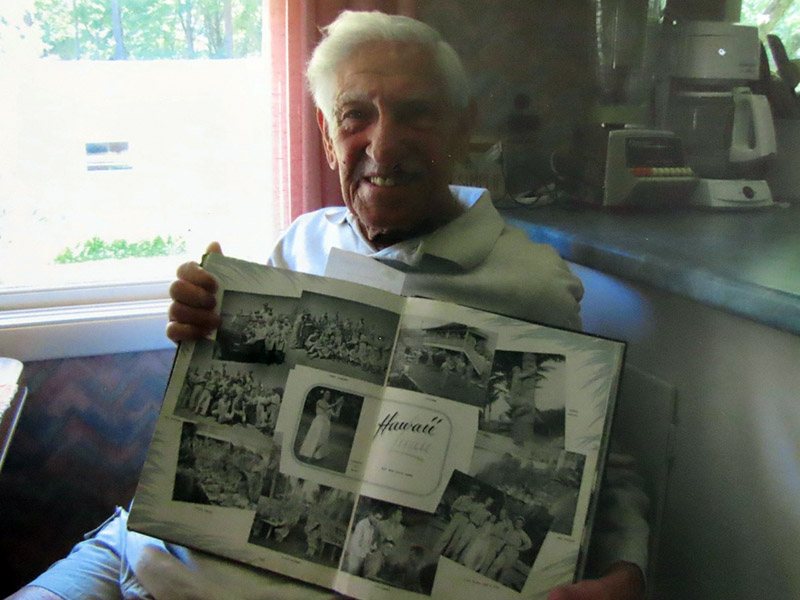
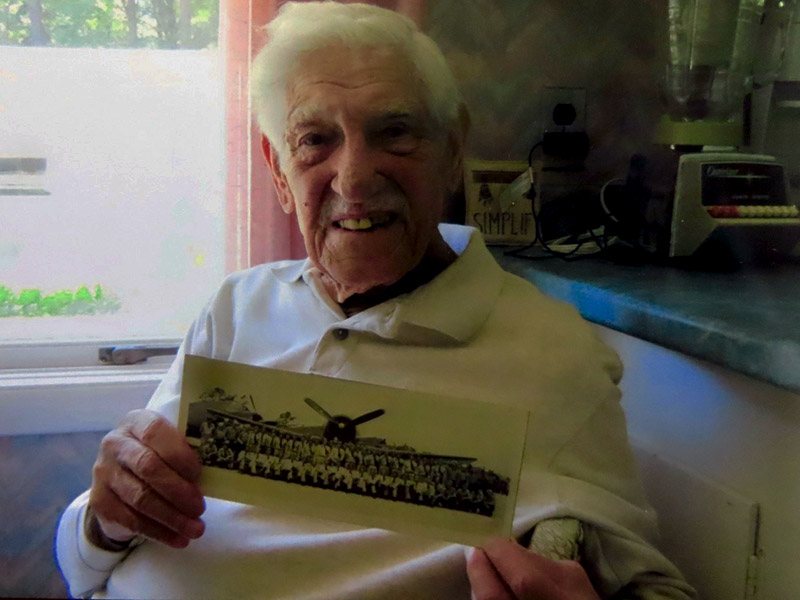
In his later years, Costas Contogogou revisits the memories of his wartime service. At left, he holds the Prep Charlie yearbook open to the page with his photograph taken in Hawaii with fellow VF-81 pilots during their pre-deployment training. At right, he holds the last squadron group photograph taken before VF-81 embarked aboard USS Wasp (CV-18), the image reproduced at the head of Part II. When James Goldammer, son of his squadron mate and friend Lieutenant (jg) James H. Goldammer, showed him this photograph in 2010, Contogogou was moved to tears, as he had never seen it before; it showed comrades of whom less than half would return from combat. (Courtesy James Goldammer)Στα μεταγενέστερα χρόνια του, ο Costas Contogogou ξαναζεί τις αναμνήσεις της υπηρεσίας του στον πόλεμο. Αριστερά κρατά την επετηρίδα Prep Charlie ανοιχτή στη σελίδα με τη φωτογραφία του στη Χαβάη μαζί με συναδέλφους πιλότους της VF-81 κατά την εκπαίδευση πριν από την αποστολή. Δεξιά κρατά την τελευταία ομαδική φωτογραφία της μοίρας πριν η VF-81 επιβιβαστεί στο USS Wasp (CV-18), την ίδια που δημοσιεύεται στην αρχή του Μέρους ΙΙ. Όταν το 2010 ο James Goldammer, γιος του συναδέλφου και φίλου του Υποπλοιάρχου (Ι) James H. Goldammer, του έδειξε αυτή τη φωτογραφία, ο Contogogou δάκρυσε, γιατί δεν την είχε δει ποτέ· έδειχνε συντρόφους από τους οποίους λιγότεροι από τους μισούς επέστρεψαν από τη μάχη. (Ευγενική παραχώρηση James Goldammer)
Costas John Contogogou, known to his naval comrades as Connie and to generations of New Hampshire residents as Judge Charles J. Contas, died on Sunday, 19 December 2010, at the age of ninety. His wife Katherine, with whom he had shared fifty-eight years of marriage, had predeceased him. He was survived by their three children, Elaine, John, and Terry, together with grandchildren and other members of his family.²⁹
His life had spanned two very different worlds. In one, he was a young Greek-American aviator flying the Grumman Hellcat as a member of a combat fighter squadron aboard an American aircraft carrier. In the other, he was a respected lawyer, judge, husband, father, and civic leader whose achievements reflected the determination of the immigrant generation from which he came.
The letters he sent to Sprague Drenan between 1944 and 1945 preserve the connection between those worlds. They reveal a young man who cared deeply about his friends, endured the exhaustion of war, worried about those who had disappeared in combat, and looked forward to returning to the familiar streets of Keene.
Nearly eight decades after they were written, the surviving manuscripts bring his voice back to life. Beyond the operational reports, photographs, and official records, they preserve something equally important: the thoughts of the man inside the uniform.
Αν και η ζωή του είχε πάρει έναν πολύ διαφορετικό δρόμο, ο Contogogou δεν άφησε ποτέ ολότελα πίσω του τις αναμνήσεις του Ειρηνικού. Οι φωτογραφίες και οι αναμνήσεις των συναδέλφων της μοίρας έμειναν μέρος της προσωπικής του ιστορίας, και η φιλία του με τον συνάδελφο πιλότο της VF-81 James H. Goldammer συνέχισε να συνδέει την πολεμική του εμπειρία με τις επόμενες γενιές.
Το 2010 ο γιος του James Goldammer, που λεγόταν επίσης James, επισκέφθηκε τον ηλικιωμένο βετεράνο και του έδειξε μια ομαδική φωτογραφία της Μοίρας Δίωξης 81 που είχε τραβηχτεί πριν από την πολεμική της αποστολή. Σύμφωνα με τη μεταγενέστερη αφήγηση του Goldammer, ο Contogogou δεν είχε ξαναδεί ποτέ αυτή τη φωτογραφία. Καθώς κοίταζε τα πρόσωπα των ανδρών με τους οποίους είχε υπηρετήσει τόσες δεκαετίες νωρίτερα, τον κυρίευσε η συγκίνηση και άρχισε να κλαίει.
Η φωτογραφία ξύπνησε κάτι περισσότερο από την ανάμνηση μιας στρατιωτικής μονάδας. Αντιπροσώπευε φίλους που είχαν μοιραστεί την αβεβαιότητα της εκπαίδευσης, τον ενθουσιασμό της αποστολής, την εξάντληση των επιχειρήσεων στα αεροπλανοφόρα και την τρομερή πιθανότητα να μην επιστρέψουν από μια αποστολή. Ο Goldammer φωτογράφισε τη συγκινητική αυτή στιγμή, διασώζοντας την εικόνα του βετεράνου μπροστά σε μια στιγμή της νιότης του που δεν είχε χάσει ποτέ τη σημασία της.²⁸
In his later years, Costas Contogogou revisits the memories of his wartime service. At left, he holds the Prep Charlie yearbook open to the page with his photograph taken in Hawaii with fellow VF-81 pilots during their pre-deployment training. At right, he holds the last squadron group photograph taken before VF-81 embarked aboard USS Wasp (CV-18), the image reproduced at the head of Part II. When James Goldammer, son of his squadron mate and friend Lieutenant (jg) James H. Goldammer, showed him this photograph in 2010, Contogogou was moved to tears, as he had never seen it before; it showed comrades of whom less than half would return from combat. (Courtesy James Goldammer)Στα μεταγενέστερα χρόνια του, ο Costas Contogogou ξαναζεί τις αναμνήσεις της υπηρεσίας του στον πόλεμο. Αριστερά κρατά την επετηρίδα Prep Charlie ανοιχτή στη σελίδα με τη φωτογραφία του στη Χαβάη μαζί με συναδέλφους πιλότους της VF-81 κατά την εκπαίδευση πριν από την αποστολή. Δεξιά κρατά την τελευταία ομαδική φωτογραφία της μοίρας πριν η VF-81 επιβιβαστεί στο USS Wasp (CV-18), την ίδια που δημοσιεύεται στην αρχή του Μέρους ΙΙ. Όταν το 2010 ο James Goldammer, γιος του συναδέλφου και φίλου του Υποπλοιάρχου (Ι) James H. Goldammer, του έδειξε αυτή τη φωτογραφία, ο Contogogou δάκρυσε, γιατί δεν την είχε δει ποτέ· έδειχνε συντρόφους από τους οποίους λιγότεροι από τους μισούς επέστρεψαν από τη μάχη. (Ευγενική παραχώρηση James Goldammer)
Ο Costas John Contogogou, γνωστός στους συντρόφους του στο Ναυτικό ως Connie και σε γενιές κατοίκων του New Hampshire ως Δικαστής Charles J. Contas, πέθανε την Κυριακή 19 Δεκεμβρίου 2010, σε ηλικία ενενήντα ετών. Η σύζυγός του Katherine, με την οποία είχε μοιραστεί πενήντα οκτώ χρόνια γάμου, είχε πεθάνει πριν από εκείνον. Τον επέζησαν τα τρία παιδιά τους, Elaine, John και Terry, μαζί με εγγόνια και άλλα μέλη της οικογένειάς του.²⁹
Η ζωή του είχε απλωθεί σε δύο πολύ διαφορετικούς κόσμους. Στον έναν ήταν ένας νεαρός Ελληνοαμερικανός αεροπόρος που πετούσε με το Grumman Hellcat ως μέλος μιας μάχιμης μοίρας καταδιωκτικών σε ένα αμερικανικό αεροπλανοφόρο. Στον άλλον ήταν ένας σεβαστός δικηγόρος, δικαστής, σύζυγος, πατέρας και πολίτης με ηγετικό ρόλο, που τα επιτεύγματά του αντανακλούσαν την αποφασιστικότητα της γενιάς των μεταναστών από την οποία προερχόταν.
Οι επιστολές που έστειλε στον Sprague Drenan το 1944 και το 1945 διασώζουν τη γέφυρα ανάμεσα σε αυτούς τους κόσμους. Αποκαλύπτουν έναν νέο άνθρωπο που νοιαζόταν βαθιά για τους φίλους του, άντεξε την εξάντληση του πολέμου, ανησυχούσε για όσους χάνονταν στη μάχη και λαχταρούσε να επιστρέψει στους γνώριμους δρόμους του Keene.
Σχεδόν οκτώ δεκαετίες αφότου γράφτηκαν, τα σωζόμενα χειρόγραφα ζωντανεύουν ξανά τη φωνή του. Πέρα από τις επιχειρησιακές αναφορές, τις φωτογραφίες και τα επίσημα αρχεία, διασώζουν κάτι εξίσου σημαντικό: τις σκέψεις του ανθρώπου μέσα στη στολή.
The FreelancersΟι Freelancers
Fighting Squadron 81 (VF-81), popularly known as the “Freelancers,” was established on 2 March 1944 at Naval Air Station Atlantic City, New Jersey. Equipped with Grumman F6F Hellcat fighters, the squadron underwent intensive training before deploying to the Pacific, where it became part of Carrier Air Group 81 (CVG-81) aboard the Essex-class aircraft carrier USS Wasp (CV-18). Its combat tour would take it across the western Pacific, from the Philippines and the South China Sea to the Japanese home islands.
VF-81 entered combat on 14 November 1944, when aircraft of Air Group 81 began striking Japanese targets on Luzon in the Philippines. Operating with the U.S. Third Fleet’s fast carrier forces, the squadron conducted fighter sweeps, combat air patrols, escort missions, and strafing attacks against enemy airfields and installations. During the December operations against Luzon, its Hellcats helped suppress Japanese air power in support of the American landings on Mindoro. The increasing threat posed by Japanese kamikaze aircraft made fighter interception and the protection of the carrier task force particularly important.
VF-81 · Freelancers
- EstablishedΣυγκρότηση2 Mar 19442 Μαρ 1944
- StationΣταθμόςNAS Atlantic City
- ShipΠλοίοUSS Wasp (CV-18)
- Peak strengthΜέγιστη δύναμη90 F6Fs, 1 Jan 194590 F6F, 1 Ιαν 1945
- VictoriesΝίκες43, by 31 pilots43, από 31 πιλότους
- CO, 2 Mar 1944Lt.Cdr. F.K. Upham
- CO, 6 Feb 1945Lt.Cdr. Harvey P. Lanham
- LaterΑργότεραVF-13A · VF-131 · VF-64 · VF-21
- DisestablishedΔιάλυση31 Jan 199631 Ιαν 1996
In January 1945, VF-81 participated in the extensive offensive conducted by Task Force 38 against Japanese positions throughout the western Pacific. Its operations included strikes against Formosa (Taiwan), the Philippines, French Indochina, Hong Kong, and the Ryukyu Islands. During the American carrier force’s movement into the South China Sea, the squadron’s fighters supported attacks intended to disrupt Japanese air operations, shipping, and communications. As the campaign intensified, VF-81’s Hellcats were increasingly employed in both air-superiority and fighter-bomber roles. At one stage, the squadron operated approximately 90 Hellcats, making it one of the largest carrier-based fighter squadrons in U.S. Navy history.
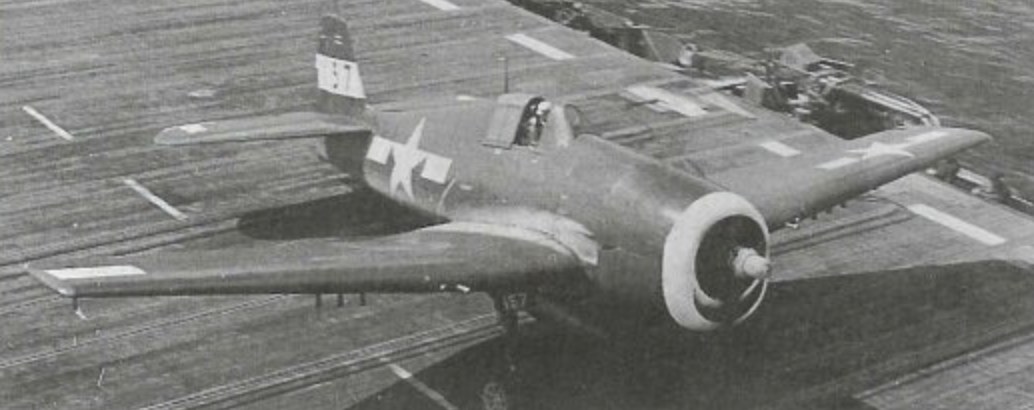
The squadron’s most demanding operations came in February 1945, when USS Wasp, now operating with Task Force 58, participated in the first major American carrier air attacks against the Japanese home islands. On 16–17 February, VF-81 joined strikes against airfields and military installations in the Tokyo area, encountering Japanese fighter opposition. These operations were followed by missions supporting the invasion of Iwo Jima, which began on 19 February 1945. The squadron flew protective patrols and offensive missions as American forces fought to secure the strategically important island.
On 25 February 1945, VF-81 launched 28 F6F-5 Hellcats from USS Wasp for a fighter sweep against Japanese airfields in the Tokyo region. The squadron’s official Aircraft Action Report recorded engagements with Japanese fighters and claims of aircraft destroyed both in the air and on the ground. Its pilots also strafed hangars, railway locomotives, and other installations at Yachimata Airfield. The mission illustrated the increasingly aggressive character of American carrier fighter operations during the final months of the Pacific War.
The fighting was not without losses. Operating hundreds of miles from their carriers, VF-81 pilots faced enemy fighters, anti-aircraft fire, difficult weather, and the hazards of returning to a moving flight deck after combat. Nevertheless, the squadron contributed to the growing Allied air superiority that enabled American naval forces to operate increasingly close to Japan.
VF-81 completed its wartime combat deployment and returned to the United States in March 1945. After the war, the squadron transitioned to the Vought F4U-4 Corsair and continued its service in naval aviation. Redesignated VF-13A in November 1946, it subsequently became VF-131, VF-64, and ultimately VF-21, carrying the proud “Freelancers” name through the jet age until its disestablishment on 31 January 1996.
Η Μοίρα Δίωξης 81 (VF-81), γνωστή ως «Freelancers», συγκροτήθηκε στις 2 Μαρτίου 1944 στον Αεροναυτικό Σταθμό Atlantic City του New Jersey. Εξοπλισμένη με καταδιωκτικά Grumman F6F Hellcat, η μοίρα πέρασε εντατική εκπαίδευση πριν σταλεί στον Ειρηνικό, όπου έγινε μέρος της Carrier Air Group 81 (CVG-81) στο αεροπλανοφόρο κλάσης Essex USS Wasp (CV-18). Η πολεμική της περίοδος θα την έφερνε σε όλο τον δυτικό Ειρηνικό, από τις Φιλιππίνες και τη Θάλασσα της Νότιας Κίνας ως τα ιαπωνικά μητροπολιτικά νησιά.
Η VF-81 μπήκε στη μάχη στις 14 Νοεμβρίου 1944, όταν τα αεροσκάφη της Αεροπορικής Σμηναρχίας 81 άρχισαν να πλήττουν ιαπωνικούς στόχους στη Luzon των Φιλιππίνων. Επιχειρώντας με τις ταχείες δυνάμεις αεροπλανοφόρων του αμερικανικού 3ου Στόλου, η μοίρα εκτέλεσε εξορμήσεις καταδιωκτικών, περιπολίες αεροπορικής κάλυψης, αποστολές συνοδείας και πολυβολισμούς εχθρικών αεροδρομίων και εγκαταστάσεων. Στις επιχειρήσεις του Δεκεμβρίου κατά της Luzon, τα Hellcat της βοήθησαν να καταπνιγεί η ιαπωνική αεροπορική ισχύς για την υποστήριξη των αμερικανικών αποβάσεων στο Mindoro. Η αυξανόμενη απειλή των ιαπωνικών αεροσκαφών kamikaze έκανε την αναχαίτιση και την προστασία της ναυτικής δύναμης κρούσης ιδιαίτερα σημαντικές.
VF-81 · Freelancers
- EstablishedΣυγκρότηση2 Mar 19442 Μαρ 1944
- StationΣταθμόςNAS Atlantic City
- ShipΠλοίοUSS Wasp (CV-18)
- Peak strengthΜέγιστη δύναμη90 F6Fs, 1 Jan 194590 F6F, 1 Ιαν 1945
- VictoriesΝίκες43, by 31 pilots43, από 31 πιλότους
- CO, 2 Mar 1944Lt.Cdr. F.K. Upham
- CO, 6 Feb 1945Lt.Cdr. Harvey P. Lanham
- LaterΑργότεραVF-13A · VF-131 · VF-64 · VF-21
- DisestablishedΔιάλυση31 Jan 199631 Ιαν 1996
Τον Ιανουάριο του 1945 η VF-81 πήρε μέρος στην εκτεταμένη επίθεση της Task Force 38 κατά ιαπωνικών θέσεων σε όλο τον δυτικό Ειρηνικό. Οι επιχειρήσεις της περιλάμβαναν επιθέσεις κατά της Φορμόζας (Ταϊβάν), των Φιλιππίνων, της Γαλλικής Ινδοκίνας, του Χονγκ Κονγκ και των νήσων Ryukyu. Κατά την είσοδο της αμερικανικής δύναμης αεροπλανοφόρων στη Θάλασσα της Νότιας Κίνας, τα καταδιωκτικά της μοίρας υποστήριξαν επιθέσεις που στόχευαν να διαταράξουν τις ιαπωνικές αεροπορικές επιχειρήσεις, τη ναυσιπλοΐα και τις επικοινωνίες. Καθώς η εκστρατεία κλιμακωνόταν, τα Hellcat της VF-81 χρησιμοποιούνταν όλο και περισσότερο τόσο για την αεροπορική υπεροχή όσο και ως καταδιωκτικά-βομβαρδιστικά. Σε κάποια φάση η μοίρα διέθετε περίπου 90 Hellcat, γεγονός που την κατέστησε μία από τις μεγαλύτερες μοίρες καταδιωκτικών αεροπλανοφόρου στην ιστορία του Αμερικανικού Ναυτικού.
Οι πιο απαιτητικές επιχειρήσεις της μοίρας ήρθαν τον Φεβρουάριο του 1945, όταν το USS Wasp, που επιχειρούσε πλέον με την Task Force 58, πήρε μέρος στις πρώτες μεγάλες αμερικανικές αεροπορικές επιθέσεις από αεροπλανοφόρα κατά των ιαπωνικών μητροπολιτικών νησιών. Στις 16–17 Φεβρουαρίου η VF-81 συμμετείχε σε επιθέσεις κατά αεροδρομίων και στρατιωτικών εγκαταστάσεων στην περιοχή του Τόκιο, συναντώντας αντίσταση από ιαπωνικά καταδιωκτικά. Ακολούθησαν αποστολές υποστήριξης της απόβασης στην Iwo Jima, που άρχισε στις 19 Φεβρουαρίου 1945. Η μοίρα πέταξε περιπολίες προστασίας και επιθετικές αποστολές καθώς οι αμερικανικές δυνάμεις μάχονταν για να καταλάβουν το στρατηγικής σημασίας νησί.
Στις 25 Φεβρουαρίου 1945 η VF-81 απογείωσε 28 F6F-5 Hellcat από το USS Wasp για εξόρμηση κατά ιαπωνικών αεροδρομίων στην περιοχή του Τόκιο. Η επίσημη Αναφορά Αεροπορικής Δράσης της μοίρας κατέγραψε εμπλοκές με ιαπωνικά καταδιωκτικά και καταρρίψεις και καταστροφές αεροσκαφών τόσο στον αέρα όσο και στο έδαφος. Οι πιλότοι της πολυβόλησαν επίσης υπόστεγα, ατμομηχανές και άλλες εγκαταστάσεις στο αεροδρόμιο Yachimata. Η αποστολή φανέρωνε τον όλο και πιο επιθετικό χαρακτήρα των αμερικανικών επιχειρήσεων καταδιωκτικών από αεροπλανοφόρα τους τελευταίους μήνες του πολέμου του Ειρηνικού.
Οι μάχες δεν ήταν χωρίς απώλειες. Επιχειρώντας εκατοντάδες μίλια μακριά από τα αεροπλανοφόρα τους, οι πιλότοι της VF-81 αντιμετώπιζαν εχθρικά καταδιωκτικά, αντιαεροπορικά πυρά, δύσκολο καιρό και τους κινδύνους της επιστροφής σε ένα κινούμενο κατάστρωμα μετά τη μάχη. Παρ’ όλα αυτά, η μοίρα συνέβαλε στην αυξανόμενη συμμαχική αεροπορική υπεροχή που επέτρεψε στις αμερικανικές ναυτικές δυνάμεις να επιχειρούν όλο και πιο κοντά στην Ιαπωνία.
Η VF-81 ολοκλήρωσε την πολεμική της αποστολή και επέστρεψε στις Ηνωμένες Πολιτείες τον Μάρτιο του 1945. Μετά τον πόλεμο η μοίρα πέρασε στο Vought F4U-4 Corsair και συνέχισε την υπηρεσία της στην αεροπορία του Ναυτικού. Μετονομάστηκε σε VF-13A τον Νοέμβριο του 1946 και στη συνέχεια έγινε VF-131, VF-64 και τελικά VF-21, κρατώντας το περήφανο όνομα «Freelancers» στην εποχή των αεριωθουμένων ως τη διάλυσή της στις 31 Ιανουαρίου 1996.
Acknowledgements & sourcesΕυχαριστίες & πηγές
Research draws on six letters to Sprague W. Drenan preserved by Keene State College, the Keene Teachers College and Pensacola yearbooks, draft registrations, passenger lists, VF-81 aircraft action reports, the Prep Charlie cruise book, Nashua and Keene newspapers and the testimony of James Goldammer.Η έρευνα βασίζεται σε έξι επιστολές προς τον Sprague W. Drenan που φυλάσσει το Keene State College, στις επετηρίδες του Keene Teachers College και της Pensacola, σε καταγραφές στράτευσης, σε καταλόγους επιβατών, σε αναφορές δράσης της VF-81, στο βιβλίο Prep Charlie, σε εφημερίδες του Nashua και του Keene και στη μαρτυρία του James Goldammer.
The preparation of this expanded biography has benefited greatly from the assistance of individuals whose generosity, historical knowledge, and commitment to preserving the past have made it possible to recover important new evidence concerning the life and wartime service of Costas John Contogogou.
The author wishes to express his sincere gratitude to Professor Rodney Obien, Associate Professor and Head of Special Collections and Archives at Keene State College, for his assistance in facilitating access to historical materials associated with the college and its former students. The preservation and accessibility of these records have made it possible to reconstruct a much more personal account of Contogogou’s wartime experiences.
Special thanks are also extended to Mr. Brian Burford, former New Hampshire State Archivist and Keene State College alumnus, for his valuable assistance in bringing the surviving correspondence and related historical photographs to the attention of this research project. His long-standing dedication to archival preservation and New Hampshire’s documentary heritage deserves particular recognition.
The author is especially grateful to Mr. James Goldammer, son of Lieutenant (junior grade) James H. Goldammer, who served alongside Contogogou in Fighting Squadron 81 aboard USS Wasp (CV-18). Through his generous sharing of family photographs, personal recollections, and information concerning his father’s fellow aviators, Mr. Goldammer has provided an invaluable human dimension to this history. His account of meeting Costas Contogogou in 2010 and showing him a previously unseen photograph of his wartime squadron is among the most moving testimonies associated with the veteran’s life.
The author also acknowledges Keene State College and its Special Collections and Archives for preserving the correspondence of former students and the institutional records that connect their individual experiences to the larger history of the Second World War.
Their contributions have enabled the story of a Greek-American naval aviator to be told not merely through military records and operational histories, but through his own surviving words and the memories of those who knew him.
Photographs: US Navy; USS Wasp 1944-45 Cruise Book “Prep Charlie”; U.S. Navy National Museum of Naval Aviation; Keene State College Archives; James Goldammer. Aircraft profile by Bertrand Brown, aka Gaetan Marie.
Η προετοιμασία αυτής της διευρυμένης βιογραφίας ωφελήθηκε πολύ από τη βοήθεια ανθρώπων που η γενναιοδωρία, οι ιστορικές γνώσεις και η αφοσίωσή τους στη διάσωση του παρελθόντος επέτρεψαν να έρθουν στο φως σημαντικά νέα στοιχεία για τη ζωή και την πολεμική υπηρεσία του Costas John Contogogou.
Ο συγγραφέας εκφράζει τις ειλικρινείς του ευχαριστίες στον καθηγητή Rodney Obien, Αναπληρωτή Καθηγητή και Προϊστάμενο των Ειδικών Συλλογών και Αρχείων του Keene State College, για τη βοήθειά του στην πρόσβαση σε ιστορικό υλικό που σχετίζεται με το κολλέγιο και τους παλιούς του φοιτητές. Η διατήρηση και η προσβασιμότητα αυτών των αρχείων επέτρεψαν μια πολύ πιο προσωπική αφήγηση των πολεμικών εμπειριών του Contogogou.
Ιδιαίτερες ευχαριστίες οφείλονται επίσης στον κ. Brian Burford, πρώην Αρχειονόμο της Πολιτείας του New Hampshire και απόφοιτο του Keene State College, για την πολύτιμη βοήθειά του να φέρει τη σωζόμενη αλληλογραφία και τις σχετικές ιστορικές φωτογραφίες σε γνώση αυτής της έρευνας. Η μακρόχρονη αφοσίωσή του στη διάσωση των αρχείων και στη γραπτή κληρονομιά του New Hampshire αξίζει ιδιαίτερης αναγνώρισης.
Ο συγγραφέας είναι ιδιαίτερα ευγνώμων στον κ. James Goldammer, γιο του Υποπλοιάρχου (Ι) James H. Goldammer, που υπηρέτησε μαζί με τον Contogogou στη Μοίρα Δίωξης 81 στο USS Wasp (CV-18). Μοιραζόμενος γενναιόδωρα οικογενειακές φωτογραφίες, προσωπικές αναμνήσεις και πληροφορίες για τους συναδέλφους αεροπόρους του πατέρα του, ο κ. Goldammer πρόσφερε μια ανεκτίμητη ανθρώπινη διάσταση σε αυτή την ιστορία. Η αφήγησή του για τη συνάντησή του με τον Costas Contogogou το 2010, όταν του έδειξε μια φωτογραφία της πολεμικής του μοίρας που δεν είχε δει ποτέ, είναι από τις πιο συγκινητικές μαρτυρίες για τη ζωή του βετεράνου.
Ο συγγραφέας ευχαριστεί επίσης το Keene State College και τις Ειδικές Συλλογές και τα Αρχεία του για τη διάσωση της αλληλογραφίας παλιών φοιτητών και των θεσμικών αρχείων που συνδέουν τις ατομικές τους εμπειρίες με τη μεγάλη ιστορία του Δεύτερου Παγκοσμίου Πολέμου.
Η συμβολή τους επέτρεψε να ειπωθεί η ιστορία ενός Ελληνοαμερικανού αεροπόρου του Ναυτικού όχι μόνο μέσα από στρατιωτικά αρχεία και επιχειρησιακά ιστορικά, αλλά και μέσα από τα δικά του σωζόμενα λόγια και τις αναμνήσεις όσων τον γνώρισαν.
Φωτογραφίες: US Navy· USS Wasp 1944-45 Cruise Book «Prep Charlie»· U.S. Navy National Museum of Naval Aviation· Keene State College Archives· James Goldammer. Προφίλ αεροσκάφους: Bertrand Brown, γνωστός ως Gaetan Marie.
Notes and documentationΣημειώσεις και τεκμηρίωση
The following references follow Chicago Notes and Bibliography style. Original image identifiers are retained so that every quotation can be traced to its surviving manuscript. References to unpublished material do not imply that an archival accession number or reproduction permission has been established.
- 1U.S. Selective Service System, draft registration of John Efthemiou Contogogou, May 1942; draft registration of Costas John Contogogou, 1942; “Hon. Charles J. Contas,” Union Leader, 21 December 2010, https://www.legacy.com/us/obituaries/unionleader/name/charles-contas-obituary?id=23924583. The father’s recorded birthplace, Braza, is retained as written in the existing biographical sources pending independent identification of the Greek locality.
- 2Keene Teachers College, student yearbook, portrait captioned “Contogogou, Costos,” archival image IMG_7720.JPG; portrait enlargement IMG_7721.jpg, Keene State College archival reproductions. The portrait is the same in both files. The yearbook edition and printed page number require final verification.
- 3Keene Teachers College, The Monadnock, 19 April 1950, concerning Alpha Pi Tau and Sprague W. Drenan; college newspaper profile of Sprague W. Drenan, Keene State College digital collections. Drenan’s service as head of the English Department from 1928 and his continuing association with alumni are independently documented in contemporary college publications.
- 4U.S. Naval Air Training Center, Pensacola, Florida, Mark II, 1943 graduation yearbook, entry for Costas Contogogou; U.S. Navy aviation graduation photograph and identification material cited in the existing Greeks in Foreign Cockpits research.
- 5Naval History and Heritage Command, United States Naval Aviation, 1910–1995, squadron lineage; Naval Aviation News, historical lineage of VF-81/VF-21; VF-81 training history, March–May 1944, cited in the previous biographical research. The formal squadron establishment date was 2 March 1944, although some air-group histories use 1 March.
- 6Costas J. Contogogou to Sprague W. Drenan, 25 July 1944, autograph letter, two manuscript leaves, KIC Image 0002 and KIC Image 0003, corresponding to IMG_2374 and IMG_2367; accompanying envelope KIC Image 0001, postmarked Camp Edwards, Massachusetts, 26 July 1944, 5 p.m. Keene State College archival reproductions, communicated to Greeks in Foreign Cockpits, October 2026. The quoted passage crosses the two manuscript leaves, which join continuously.
- 7USS Hancock (CV-19), passenger list, 23 August 1944, naming Ensign Costas Contogogou; VF-81 training records, Naval Air Station Puunene, Hawaii, 1944, as identified in the existing research. Full National Archives series and item identifiers should be supplied from the original passenger-list images for the definitive archival bibliography.
- 8Contogogou to Drenan, 18 September 1944, autograph letter, KIC Image 0005 and KIC Image 0006 (IMG_2368 and IMG_2375); accompanying envelope KIC Image 0004, postmarked 20 September 1944. The sentence about food continues directly from the first page onto the second. The letter identifies an unnamed island in the Pacific; its identity should not be inferred solely from the return address, which records Fleet Post Office San Francisco.
- 9Contogogou to Drenan, 3 October 1944, autograph letter, KIC Image 0008; associated envelope KIC Image 0007, U.S. Navy postmark, 4 October 1944. Keene State College archival reproductions.
- 10USS Copahee (CVE-12), passenger list, 28 October 1944; Pacific Eagles Database, “Air Group 81,” recording its USS Wasp assignment from 10 November 1944 through 13 March 1945, https://data.pacificeagles.net/units/usn/airgroups/55. The 21 October Wasp embarkation date used in an earlier biographical version is inconsistent with the documented subsequent transport movement aboard Copahee.
- 11Roy A. Grossnick, ed., Dictionary of American Naval Aviation Squadrons, vol. 1, The History of VA, VAH, VAK, VAL, VAP and VFA Squadrons (Washington, DC: Naval Historical Center, 1995), VB-81 lineage and first combat operations of CVG-81, 14 November 1944; USS Wasp and Carrier Air Group 81 operational chronology, November 1944.
- 12Naval History and Heritage Command, accounts of Fast Carrier Task Force strikes against Luzon, 14–16 December 1944, and Typhoon Cobra, 18 December 1944. Earlier working descriptions assigning these December dates to Formosa and French Indochina have been corrected to conform to the documented fleet chronology.
- 13Contogogou to Drenan, 5 January 1945, autograph letter, KIC Image 0009 (IMG_2369), single signed manuscript leaf, Keene State College archival reproduction. The remarks on wartime happiness and sorrow, the Christmas holidays, and Robert Desmarais all occur in this letter.
- 14Naval History and Heritage Command, historical accounts of Task Force 38 operations in the South China Sea, January 1945, especially the strikes against Japanese shipping and facilities along the coast of French Indochina on 12 January; contemporary Pacific Fleet operational summaries.
- 15Naval History and Heritage Command, USS Wasp operational history, February 1945; U.S. Pacific Fleet historical accounts of the carrier strikes against the Tokyo region on 16–17 February 1945 and the operations associated with the Iwo Jima invasion.
- 16Fighting Squadron 81, Aircraft Action Report No. 1-A-85, 25 February 1945, fighter sweep against Atsugi and Shimomizo airfields; USS Wasp (CV-18), U.S. Navy aircraft action reporting records. Digitized copy: https://www.city.yachimata.lg.jp/uploaded/attachment/25200.pdf. The report records twenty-eight VF-81 F6F-5 aircraft launched and the participation of VF-17 aircraft from USS Hornet. The document establishes a squadron mission, not an individually verified sortie by Contogogou.
- 17Contogogou to Drenan, 27 February 1945, autograph letter, first manuscript leaf, KIC Image 0011 (IMG_2370). The discussion of operational exhaustion, meals, forty-eight hours without proper sleep, gruesome experiences, and censorship appears on this leaf. Associated envelope KIC Image 0010 has an obscured postal date; its attribution is supported by the archival arrangement but remains provisional.
- 18Contogogou to Drenan, 27 February 1945, second manuscript leaf, KIC Image 0012 (IMG_2365). This leaf, restored to the correspondence during the complete archival audit of 23 October 2026, describes recreation, reading, and conditions aboard the aircraft carrier. Earlier two-page transcriptions of this letter were incomplete.
- 19Contogogou to Drenan, 27 February 1945, third manuscript leaf, KIC Image 0013 (IMG_2371). The letter refers to Doug Kimball, an acquaintance named Emil reportedly missing in action, Robert Desmarais, and Howard Smith. The identities and fates of Doug Kimball and Emil have not been independently confirmed and should not be expanded beyond the manuscript evidence.
- 20Contogogou to Drenan, 27 February 1945, KIC Image 0013; The Fighting Lady, motion picture, 1944, American Film Institute Catalog, https://catalog.afi.com/Film/1744-THE-FIGHTING-LADY. The carrier featured in the documentary was USS Yorktown (CV-10), not USS Wasp.
- 21Fighting Squadron 81, Aircraft Action Report No. 1-A-89, 1 March 1945, fighter sweep directed against Yontan Airfield, Okinawa; U.S. Navy Aircraft Action Reports, digitized historical material. See also Pacific Eagles Database, “Air Group 81,” recording the conclusion of CVG-81’s USS Wasp assignment on 13 March 1945. The previous attribution of the 1 March operation to the Tokyo region and the extension of VF-81’s Wasp combat cruise to 18–23 March are not retained.
- 22Prep Charlie, USS Wasp (CV-18), cruise book, 1944–45, VF-81 officer biographies and photographs of Costas Contogogou. The photograph with F6F No. 13 establishes his association with that aircraft for the photograph; it does not independently prove exclusive aircraft assignment or a particular sortie flown in it.
- 23Contogogou to Drenan, 4 September 1945, first manuscript leaf, KIC Image 0015 (IMG_2372), written on The Old Sconset Inn stationery; accompanying envelope KIC Image 0014. The envelope records “Lt. (jg) C. Contogogou / N.A.A.F. Nantucket, Mass.” His exact date of promotion and specific duties at Nantucket are not established.
- 24Contogogou to Drenan, 4 September 1945, second and third manuscript leaves, KIC Image 0016 and KIC Image 0017 (IMG_2366 and IMG_2373); envelope KIC Image 0014, postmarked Nantucket, Massachusetts, 5 September 1945, 7 p.m. The reconstruction of this three-page letter follows the supplied archival sequence and the continuity of the narrative.
- 25“Hon. Charles J. Contas,” Union Leader, 21 December 2010; “Katherine Memos, C. Contogogou Plight Troth,” Nashua Telegraph, 1952; “Katherine Memos Bride of Costas J. Contogogou,” Nashua Telegraph, 21 July 1952. The obituary gives his law graduation year as 1949, whereas the 1952 wedding announcement describes him as then attending Boston University Law School. This discrepancy requires examination of the original university or newspaper records and does not affect the established wedding date.
- 26“Hon. Charles J. Contas,” Union Leader, 21 December 2010. The obituary confirms his service as Clerk of the Cheshire County Superior Court, appointment as a New Hampshire Superior Court judge in 1978, and retirement in 1989.
- 27Ibid. The obituary records his professional affiliations, civic activities, service to St. George Greek Orthodox Church, and honorary degree from Keene State College.
- 28James Goldammer to Dimitris Vassilopoulos, personal correspondence, 17 September 2023, describing his conversations with Costas Contogogou and their meeting in 2010; photographs supplied by James Goldammer, private research correspondence. Goldammer is the son of VF-81 pilot James H. Goldammer. His account of the emotional reunion with the squadron photograph is a retrospective personal testimony rather than a contemporary wartime record.
- 29“Hon. Charles J. Contas,” Union Leader, 21 December 2010, obituary and family notice; Social Security Death Index entry for Charles J. Contas, died 19 December 2010.
Selected Bibliography
Unpublished Primary Sources
- Contogogou, Costas J. Letters to Sprague W. Drenan. Six letters dated 25 July 1944, 18 September 1944, 3 October 1944, 5 January 1945, 27 February 1945, and 4 September 1945. Twelve manuscript leaves and five envelope images. Keene State College archival reproductions, KIC Image 0001–0017. Research copies communicated to Greeks in Foreign Cockpits, October 2026.
- Goldammer, James. Personal correspondence with Dimitris Vassilopoulos. 17 September 2023. Greeks in Foreign Cockpits research correspondence.
- Keene Teachers College. Student yearbook containing portraits of Costos Contogogou and Robert Desmarais. Reproductions IMG_7720.JPG and IMG_7721.jpg. Keene State College Archives.
- U.S. Navy. Aircraft Action Reports, Fighting Squadron 81, USS Wasp (CV-18), 1944–45.
- U.S. Navy. USS Hancock (CV-19), passenger list, 23 August 1944.
- U.S. Navy. USS Copahee (CVE-12), passenger list, 28 October 1944.
- U.S. Naval Air Training Center. Mark II. Pensacola, Florida, 1943.
Published and Institutional Sources
- American Film Institute. The Fighting Lady (1944). AFI Catalog.
- Grossnick, Roy A., ed. Dictionary of American Naval Aviation Squadrons. Vol. 1. Washington, DC: Naval Historical Center, 1995.
- Keene Teachers College. The Monadnock. Selected issues, 1940s–1960s.
- Prep Charlie. USS Wasp (CV-18) cruise book, 1944–45.
- Naval History and Heritage Command. United States Naval Aviation, 1910–1995.
- “Hon. Charles J. Contas.” Union Leader, 21 December 2010.
- “Katherine Memos Bride of Costas J. Contogogou.” Nashua Telegraph, 21 July 1952.
- Pacific Eagles Database. “Air Group 81.” https://data.pacificeagles.net/units/usn/airgroups/55.
- Vassilopoulos, Dimitris. “Costas ‘Connie’ Contogogou.” Greeks in Foreign Cockpits. Original biography and subsequent research revisions.
A research project under the auspices of KERM C.L.C.
© 2017-2026 Dimitris Vassilopoulos - All Rights Reserved
