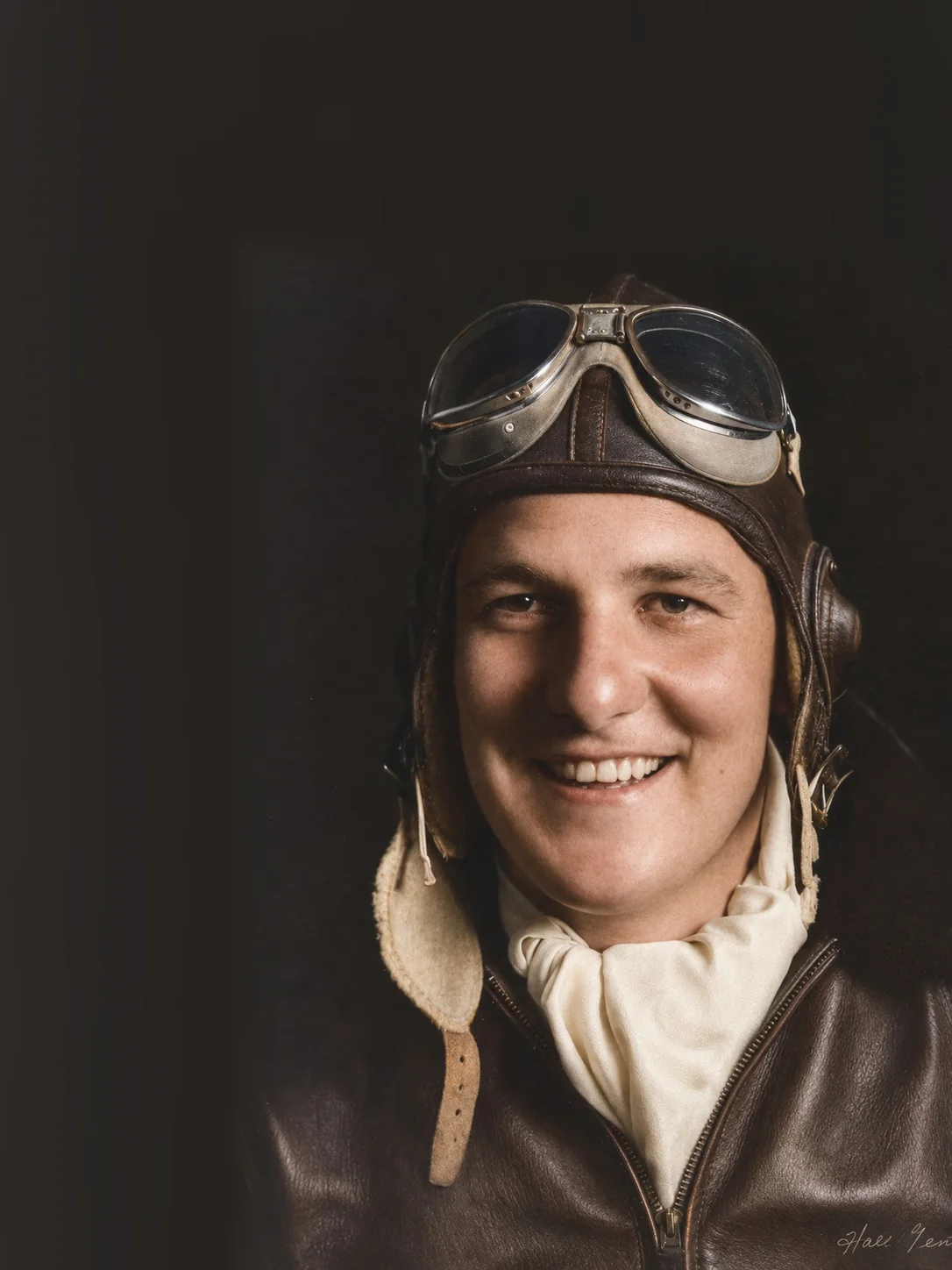
Greeks in Foreign CockpitsU.S. Marine Corps Aviation · 1942–1945
Major, USMCRGeorge E. Koutelas
George E.Koutelas
4–5.6.1942
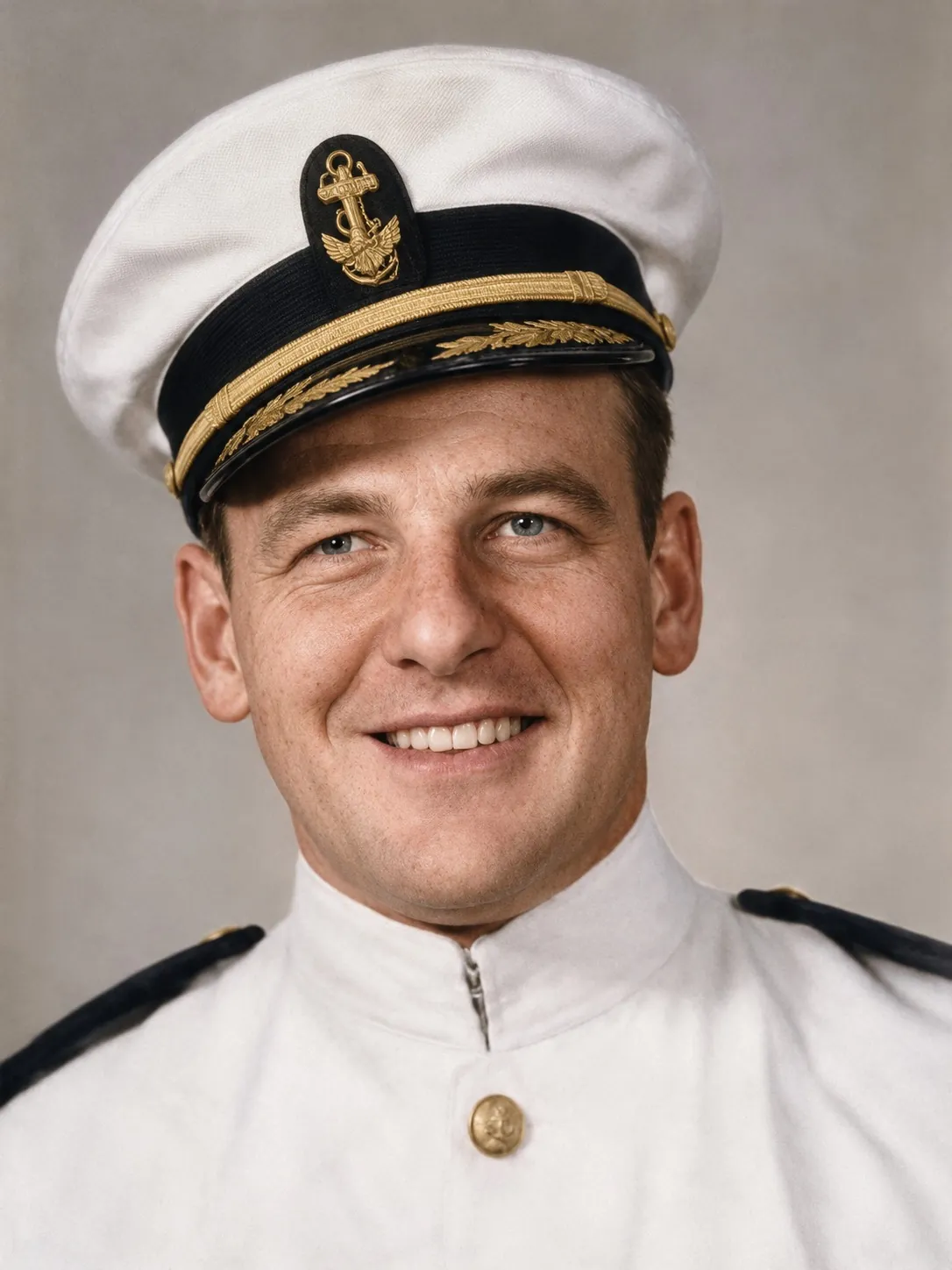
Major, U.S. Marine Corps ReserveNaval aviator · SB2U-3 Vindicator and SBD Dauntless pilot · VMSB-241 at Midway · VMSB-233 at Guadalcanal · Strike Command, Aircraft SolomonsΤαγματάρχης, Εφεδρεία Σώματος Πεζοναυτών των ΗΠΑΧειριστής ναυτικής αεροπορίας · πιλότος SB2U-3 Vindicator και SBD Dauntless · VMSB-241 στο Midway · VMSB-233 στο Guadalcanal · Strike Command, Aircraft Solomons
The son of a Messenian immigrant, a worn Vindicator at Midway, a Navy Cross at twenty-four. The son of Panagiotis (Pete) Koutelas from Draiana in Messenia, George Koutelas grew up in Kansas City, repaired furniture and ran a printing press, and studied Industrial Arts at Kansas State Teachers College before he enlisted in the Naval Reserve in May 1941. Commissioned in the Marine Corps Reserve and designated a naval aviator in early 1942, he reached Midway days before the battle. On 4 and 5 June 1942 he flew a worn SB2U-3 Vindicator with VMSB-241 against the Japanese fleet and earned the Navy Cross. From Henderson Field on Guadalcanal he flew searches, patrols and dive-bombing attacks with VMSB-233, then served as Assistant Operations Officer of Strike Command, Aircraft Solomons, and was commended for the New Georgia, Bougainville and New Britain air campaigns. At home in 1944–45 he trained new crews with VMSB-484, commanding the squadron for recorded periods, and returned to the Pacific as Group Supply Officer of MAG-45 at Ulithi. After the war he became an engineer with J. F. Pritchard, married Mary Louise Fountain and raised four children.Γιος μετανάστη από τη Μεσσηνία, ένα φθαρμένο Vindicator στο Midway, ένα Navy Cross στα είκοσι τέσσερα. Γιος του Παναγιώτη (Pete) Κουτέλα από τη Δραϊάνα της Μεσσηνίας, ο George Κουτέλας μεγάλωσε στο Kansas City, επισκεύαζε έπιπλα και δούλευε σε τυπογραφικό πιεστήριο, και σπούδασε Τεχνικές Τέχνες στο Kansas State Teachers College πριν καταταγεί στην Εφεδρεία του Ναυτικού τον Μάιο του 1941. Ονομάστηκε αξιωματικός της Εφεδρείας του Σώματος Πεζοναυτών και χειριστής ναυτικής αεροπορίας στις αρχές του 1942 και έφτασε στο Midway λίγες ημέρες πριν από τη μάχη. Στις 4 και 5 Ιουνίου 1942 πέταξε με ένα φθαρμένο SB2U-3 Vindicator της VMSB-241 εναντίον του ιαπωνικού στόλου και τιμήθηκε με το Navy Cross. Από το Henderson Field του Guadalcanal πέταξε έρευνες, περιπολίες και επιθέσεις καθετοβομβαρδισμού με τη VMSB-233, έπειτα υπηρέτησε ως βοηθός αξιωματικός επιχειρήσεων του Strike Command, Aircraft Solomons, και έλαβε εύφημο μνεία για τις αεροπορικές εκστρατείες της Νέας Γεωργίας, του Bougainville και της Νέας Βρετανίας. Στην πατρίδα, το 1944–45, εκπαίδευσε νέα πληρώματα στη VMSB-484, την οποία διοίκησε για καταγεγραμμένα διαστήματα, και επέστρεψε στον Ειρηνικό ως αξιωματικός εφοδιασμού της MAG-45 στο Ulithi. Μετά τον πόλεμο έγινε μηχανικός στην J. F. Pritchard, παντρεύτηκε τη Mary Louise Fountain και μεγάλωσε τέσσερα παιδιά.
Quick FactsΜε μια ματιά
- BornΓέννηση
- 8 May 19188 Μαΐου 1918Kansas City, MissouriKansas City, Missouri
- ParentsΓονείς
- Pete & LilliePete & LillieDraiana, Messenia · St. LouisΔραϊάνα Μεσσηνίας · St. Louis
- ServiceΥπηρεσία
- USNR 1941 · USMCR 1942–58USNR 1941 · USMCR 1942–58Active duty to January 1946Ενεργός υπηρεσία ως τον Ιανουάριο 1946
- RankΒαθμός
- MajorΤαγματάρχηςNaval aviator, USMCRΧειριστής ναυτικής αεροπορίας, USMCR
- AircraftΑεροσκάφη
- SB2U-3 · SBD DauntlessSB2U-3 · SBD DauntlessAlso SB2C HelldiverΕπίσης SB2C Helldiver
- CombatΜάχες
- Midway · SolomonsMidway · Σολομώντειες1942–19431942–1943
- HonoursΔιακρίσεις
- Navy CrossNavy CrossSolomons commendationΕύφημος μνεία, Σολομώντειες
- DiedΘάνατος
- 5 December 19905 Δεκεμβρίου 1990Aged 7272 ετών
A Kansas City childhoodΠαιδικά χρόνια στο Kansas City
Family & rootsΟικογένεια & ρίζες
- BornΓέννησηKansas City, Missouri,
8 May 1918Kansas City, Missouri,
8 Μαΐου 1918 - FatherΠατέραςPete (Panagiotis),
from Draiana, MesseniaPete (Παναγιώτης),
από τη Δραϊάνα Μεσσηνίας - MotherΜητέραLillie, from St. LouisLillie, από το St. Louis
- 1935East High School,
Kansas CityEast High School,
Kansas City - 1938–41Kansas State Teachers
College, PittsburgKansas State Teachers
College, Pittsburg
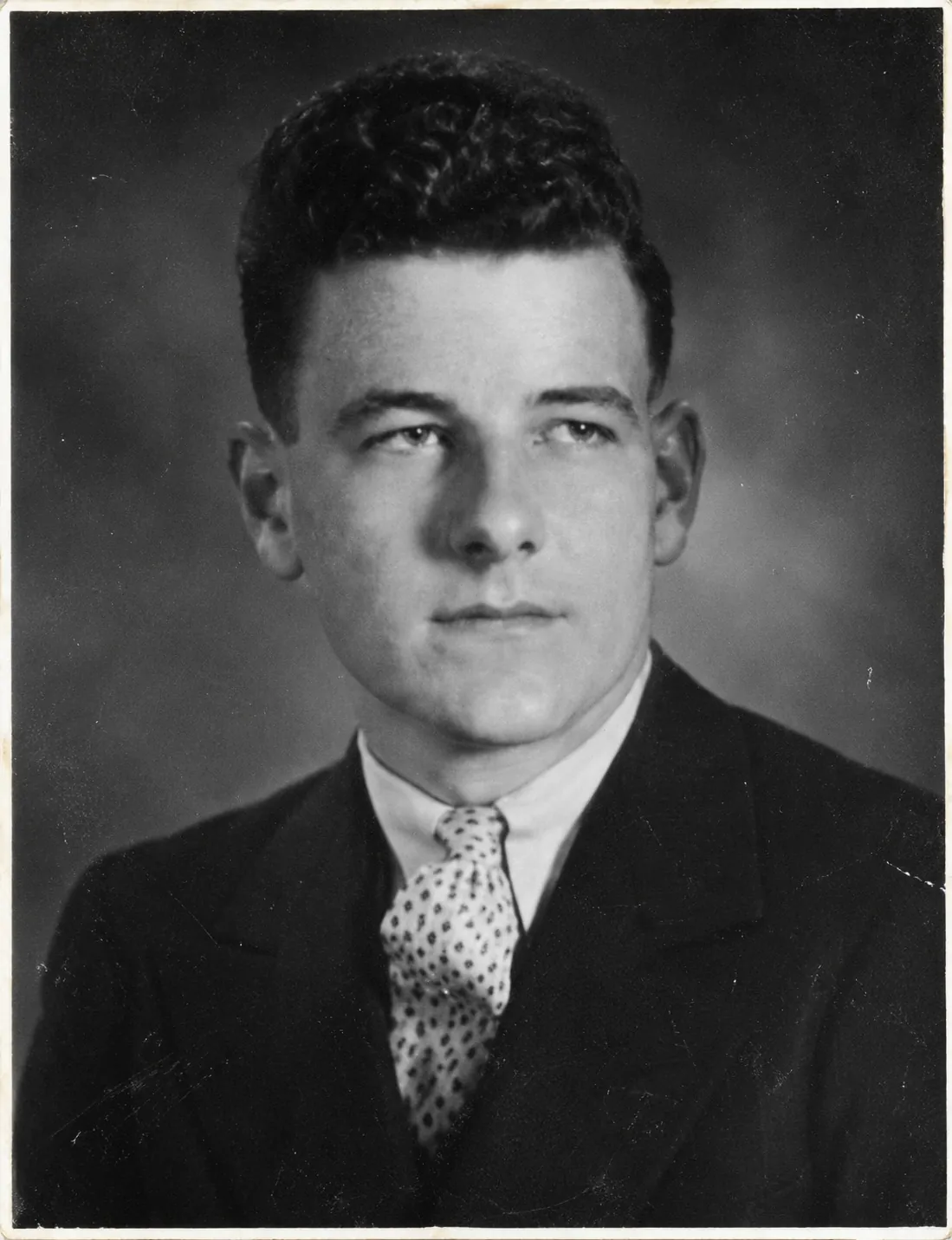
George Edwin Koutelas was twenty-four when he first went into battle over the Pacific. On 4 June 1942, flying an ageing Vought Vindicator from Midway, he faced Japanese fighters and the antiaircraft batteries of a fleet he had scarcely been trained to attack. He survived that morning, returned to the enemy the following day, and remained overseas long after the battle that brought him the Navy Cross. His war continued through the Guadalcanal campaign, the expanding air offensive in the Solomons, the training of a new generation of Marine aviators, and a second Pacific deployment in 1945. Behind the official record was a young man from a Greek immigrant household in Kansas City, writing home about his uniforms, his wristwatch, and when he might see his family again.¹
George was born in Kansas City, Missouri, on 8 May 1918. His father, Pete Koutelas, was a Greek immigrant whose origins a wartime Greek-language newspaper traced to Draiana in Messenia. In the family history preserved with the Greek biography, Pete is identified as Panagiotis Koutelas, a steelworker employed by Sheffield Steel Corporation. His wife, Lillie, came from St. Louis. Their son grew up within the working life of an American industrial city while retaining a family connection to the southern Peloponnese.²
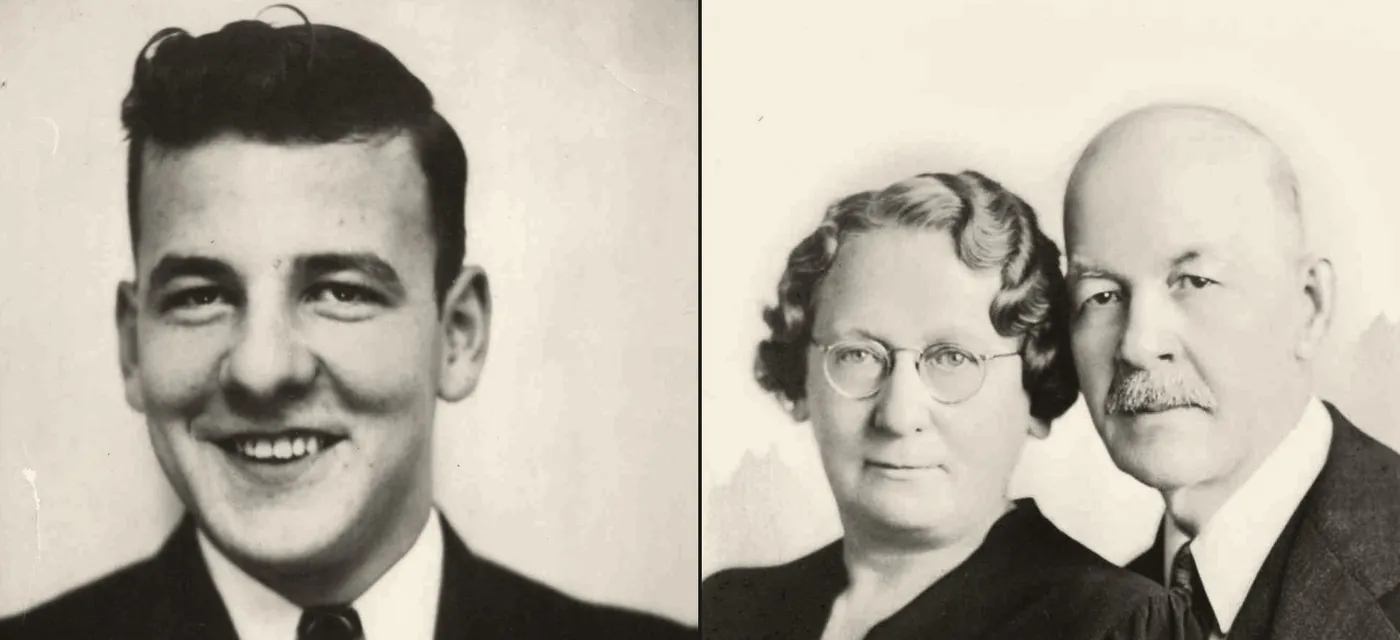
The household remembered in the family account included George and his sisters Deana, Wilma, Inez, Dorothy, and Stella. Names and relationships recur in the correspondence he sent home during the war. In November 1942 he asked his mother to pass news to Stella and Deana, and added a separate affectionate acknowledgment to Wilma, whose letter had reached him the previous day. These were the people to whom he entrusted the possessions he could not take into the South Pacific, and whose uncertainty about his whereabouts he tried to ease.³
He completed high school in Kansas City in 1935; a Marine Corps publicity account identifies his school as East High School. The same year he entered the Missouri National Guard. On 1 August 1935 he enlisted in Company B, 110th Engineers, and served until his honorable discharge on 4 August 1936, the recorded reason being a change of residence. His first experience of military service therefore came in an engineer unit, several years before he entered naval aviation.⁴
During these years he also acquired practical skills that would remain part of his life. From August 1935 to July 1936 he worked as a furniture repairman, using woodworking and metalworking tools to repair furniture in business premises. He then operated an automatic electric printing press that put commercial markings on grain and feed sacks, remaining in that employment until September 1938. His service papers record monthly earnings of ninety dollars in the first job and 125 dollars in the second. They describe an applicant accustomed to machinery and manual work before he ever handled an aircraft.⁵
His further education took him to Kansas State Teachers College at Pittsburg, Kansas, the institution later known as Pittsburg State University. He studied Industrial Arts and played college football. In a postwar application he dated his attendance from September 1938 to May 1941 and recorded four semesters. When he left for military aviation in the spring of 1941, his college education was unfinished.⁶
From Messenia to MidwayΑπό τη Μεσσηνία στο Midway
- RootsΡίζεςDraiana, MesseniaΔραϊάνα Μεσσηνίας
- 1918Kansas CityKansas City
- 1941Corpus ChristiCorpus Christi
- 1942MidwayMidway
- 1943GuadalcanalGuadalcanal
- 1945UlithiUlithi
Family & rootsΟικογένεια & ρίζες
- BornΓέννησηKansas City, Missouri,
8 May 1918Kansas City, Missouri,
8 Μαΐου 1918 - FatherΠατέραςPete (Panagiotis),
from Draiana, MesseniaPete (Παναγιώτης),
από τη Δραϊάνα Μεσσηνίας - MotherΜητέραLillie, from St. LouisLillie, από το St. Louis
- 1935East High School,
Kansas CityEast High School,
Kansas City - 1938–41Kansas State Teachers
College, PittsburgKansas State Teachers
College, Pittsburg
Ο George Edwin Κουτέλας ήταν είκοσι τεσσάρων ετών όταν μπήκε για πρώτη φορά στη μάχη πάνω από τον Ειρηνικό. Στις 4 Ιουνίου 1942, πετώντας ένα γερασμένο Vought Vindicator από το Midway, αντιμετώπισε τα ιαπωνικά καταδιωκτικά και τα αντιαεροπορικά ενός στόλου που μόλις είχε εκπαιδευτεί να προσβάλλει. Επέζησε εκείνο το πρωί, επέστρεψε κατά του εχθρού την επομένη και έμεινε στο εξωτερικό πολύ μετά τη μάχη που του χάρισε το Navy Cross. Ο πόλεμός του συνεχίστηκε με την εκστρατεία του Guadalcanal, τη διευρυνόμενη αεροπορική επίθεση στις Σολομώντειες Νήσους, την εκπαίδευση μιας νέας γενιάς αεροπόρων του Σώματος Πεζοναυτών και μια δεύτερη αποστολή στον Ειρηνικό το 1945. Πίσω από το επίσημο αρχείο υπήρχε ένας νέος από ένα σπίτι Ελλήνων μεταναστών στο Kansas City, που έγραφε στους δικούς του για τις στολές του, για το ρολόι του χεριού του και για το πότε θα ξανάβλεπε την οικογένειά του.¹
Ο Γιώργος γεννήθηκε στο Kansas City του Missouri στις 8 Μαΐου 1918. Ο πατέρας του, ο Pete Κουτέλας, ήταν Έλληνας μετανάστης, την καταγωγή του οποίου μια ελληνόγλωσση εφημερίδα της εποχής του πολέμου τοποθετούσε στη Δραϊάνα (Draiana) της Μεσσηνίας. Στο οικογενειακό ιστορικό που σώζεται μαζί με την ελληνική βιογραφία, ο Pete αναφέρεται ως Παναγιώτης Κουτέλας, εργάτης χαλυβουργίας στη Sheffield Steel Corporation. Η σύζυγός του, η Lillie, καταγόταν από το St. Louis. Ο γιος τους μεγάλωσε μέσα στην εργατική ζωή μιας αμερικανικής βιομηχανικής πόλης, διατηρώντας όμως τον οικογενειακό δεσμό με τη νότια Πελοπόννησο.²
Στο σπίτι, όπως το θυμάται η οικογένεια, ζούσαν ο Γιώργος και οι αδελφές του Deana, Wilma, Inez, Dorothy και Stella. Ονόματα και συγγένειες επανέρχονται στην αλληλογραφία που έστελνε στο σπίτι κατά τη διάρκεια του πολέμου. Τον Νοέμβριο του 1942 ζήτησε από τη μητέρα του να μεταφέρει τα νέα του στη Stella και στη Deana και πρόσθεσε ξεχωριστά μια τρυφερή ευχαριστία στη Wilma, της οποίας το γράμμα του είχε φτάσει την προηγουμένη. Σε αυτούς τους ανθρώπους εμπιστεύτηκε τα υπάρχοντα που δεν μπορούσε να πάρει μαζί του στον Νότιο Ειρηνικό, και αυτών την αβεβαιότητα για το πού βρισκόταν προσπαθούσε να απαλύνει.³
Τελείωσε το γυμνάσιο στο Kansas City το 1935· ένα δημοσίευμα του Σώματος Πεζοναυτών αναφέρει ότι το σχολείο του ήταν το East High School. Την ίδια χρονιά κατατάχθηκε στην Εθνοφρουρά του Missouri. Την 1η Αυγούστου 1935 κατατάχθηκε στον Λόχο B του 110ου Συντάγματος Μηχανικού και υπηρέτησε ώς την έντιμη απόλυσή του στις 4 Αυγούστου 1936, με καταγεγραμμένη αιτία την αλλαγή κατοικίας. Η πρώτη του εμπειρία στρατιωτικής υπηρεσίας ήταν λοιπόν σε μονάδα μηχανικού, αρκετά χρόνια πριν μπει στη ναυτική αεροπορία.⁴
Τα ίδια χρόνια απέκτησε και πρακτικές δεξιότητες που θα έμεναν μέρος της ζωής του. Από τον Αύγουστο του 1935 ώς τον Ιούλιο του 1936 δούλεψε επισκευαστής επίπλων, χρησιμοποιώντας εργαλεία ξυλουργικής και μεταλλουργίας για να επισκευάζει έπιπλα σε επαγγελματικούς χώρους. Έπειτα χειρίστηκε ένα αυτόματο ηλεκτρικό τυπογραφικό πιεστήριο που τύπωνε εμπορικές σημάνσεις σε σακιά σιτηρών και ζωοτροφών, και έμεινε σε αυτή τη δουλειά ώς τον Σεπτέμβριο του 1938. Τα υπηρεσιακά του έγγραφα καταγράφουν μηνιαίες αποδοχές ενενήντα δολαρίων στην πρώτη δουλειά και 125 δολαρίων στη δεύτερη. Περιγράφουν έναν υποψήφιο συνηθισμένο στα μηχανήματα και στη χειρωνακτική εργασία πολύ πριν πιάσει στα χέρια του αεροσκάφος.⁵
Οι παραπέρα σπουδές του τον οδήγησαν στο Kansas State Teachers College στο Pittsburg του Kansas, το ίδρυμα που αργότερα έγινε γνωστό ως Pittsburg State University. Σπούδασε Τεχνικά Μαθήματα (Industrial Arts) και έπαιξε στην ομάδα αμερικανικού ποδοσφαίρου του κολεγίου. Σε μια μεταπολεμική αίτηση χρονολόγησε τη φοίτησή του από τον Σεπτέμβριο του 1938 ώς τον Μάιο του 1941 και δήλωσε τέσσερα εξάμηνα. Όταν έφυγε για τη στρατιωτική αεροπορία την άνοιξη του 1941, οι σπουδές του στο κολέγιο έμεναν ημιτελείς.⁶
From Messenia to MidwayΑπό τη Μεσσηνία στο Midway
- RootsΡίζεςDraiana, MesseniaΔραϊάνα Μεσσηνίας
- 1918Kansas CityKansas City
- 1941Corpus ChristiCorpus Christi
- 1942MidwayMidway
- 1943GuadalcanalGuadalcanal
- 1945UlithiUlithi
Learning to flyΜαθαίνοντας να πετά
Wings of goldΤα χρυσά φτερά
- 28.5.1941Naval Reserve,
Kansas CityΕφεδρεία Ναυτικού,
Kansas City - 1941Jacksonville ·
Corpus ChristiJacksonville ·
Corpus Christi - 25.2.1942Naval aviator;
2nd Lt., USMCRΧειριστής ναυτικής αεροπορίας·
ανθυπολοχαγός USMCR - 8.5.1942Sails for Pearl HarborΑποπλέει για το Pearl Harbor
- 26.5.1942Joins VMSB-241,
MidwayΣτη VMSB-241,
Midway
On 28 May 1941 Koutelas enlisted in the United States Naval Reserve at the Naval Reserve Aviation Base in Kansas City. He entered the V-5 aviation training program, in which preliminary flying instruction and assessment preceded the longer course that would produce a naval aviator. His initial flying record contains ten flights and 8.2 hours. This was his introduction to military flying, separate from the subsequent course at Corpus Christi.⁷
His route through the training establishment included Jacksonville, Florida, before he reached Texas. The formal aviation training report at Naval Air Station Corpus Christi dates his course from 24 July 1941 to 31 March 1942. The months that followed combined ground school, physical and military instruction, and progression through aircraft of increasing performance. His logbook gives that process a more immediate shape: the succession of short flights, repeated exercises, first solos, and days on which several sorties followed one another.⁸
On 10 September 1941 he flew an N2S-2 biplane, recorded as aircraft 3592, on an instructional flight lasting an hour and a half. On 19 September he made his first solo in N2S-2 3638. His early training developed the skills on which everything else depended: takeoffs and landings, control of the aircraft through basic maneuvers, recovery from stalls and spins, and navigation beyond the immediate vicinity of the field. By the end of October the log recorded forty-nine flights and 61.5 hours, including thirty-four hours solo.⁹
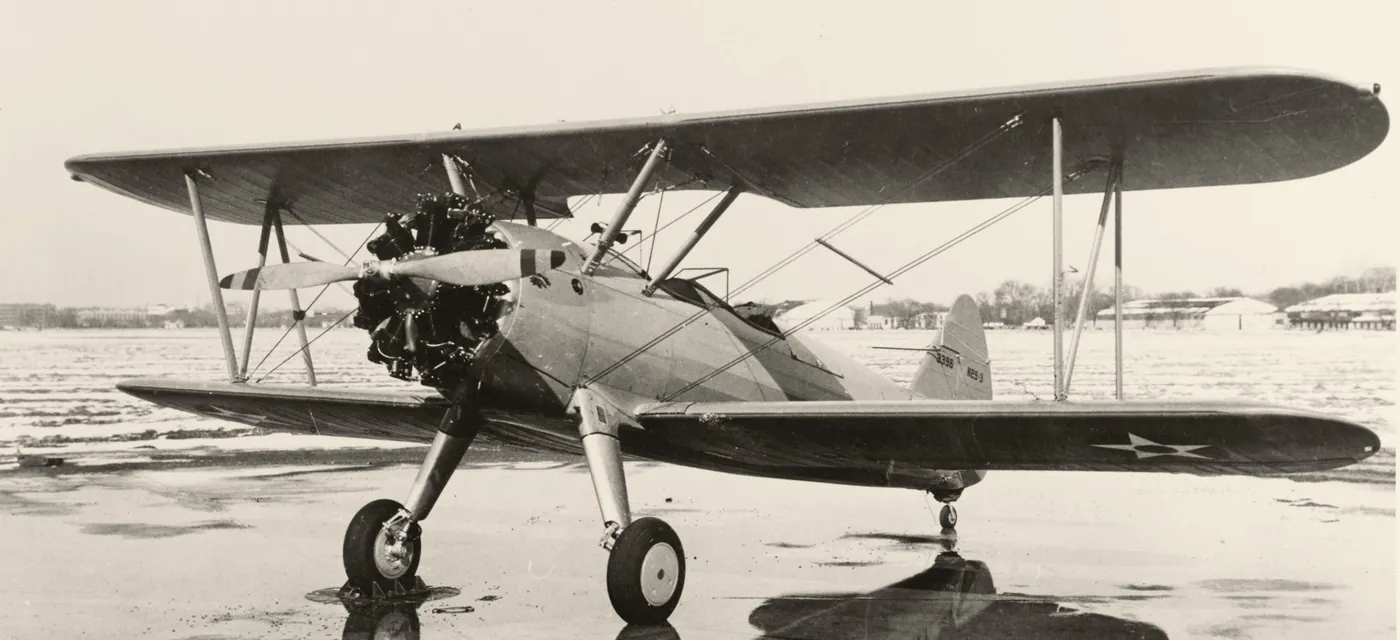
He also flew the Naval Aircraft Factory N3N-3, first under instruction on 12 November and solo the next day. In December he progressed to the Vultee SNV-1, making his first solo in the type on 16 December. Later that month came the Vought OS2U-3 Kingfisher. Although best remembered as a float-equipped scout operating from warships, the OS2U also served in landplane form in the naval training system. It formed another step in Koutelasʼs preparation for operational aircraft.¹⁰
The Japanese attack on Pearl Harbor on 7 December transformed the context of this training. Koutelas had entered the service before the United States became a belligerent; he would graduate into a war already demanding trained aircrew in numbers the prewar establishment had never supplied. The pace of his logbook accelerated. Instrument work, navigation, formation flying, and specialized instruction were compressed into days that could contain three or four separate flights.
On 31 January 1942 he flew the Curtiss-Wright SNC-1 Falcon under instruction and then solo, completing four sorties that day. On 23 February he began flying the Curtiss SBC-4 Helldiver, a biplane scout bomber quite different from the later monoplane SB2C that bore the same name. His first instructional flight in SBC-4 1294 was followed by a solo in 1279 and another flight in 1294. He was learning to handle the kind of two-seat aircraft in which the pilotʼs performance and the rear crewmanʼs work would soon become inseparable.¹¹
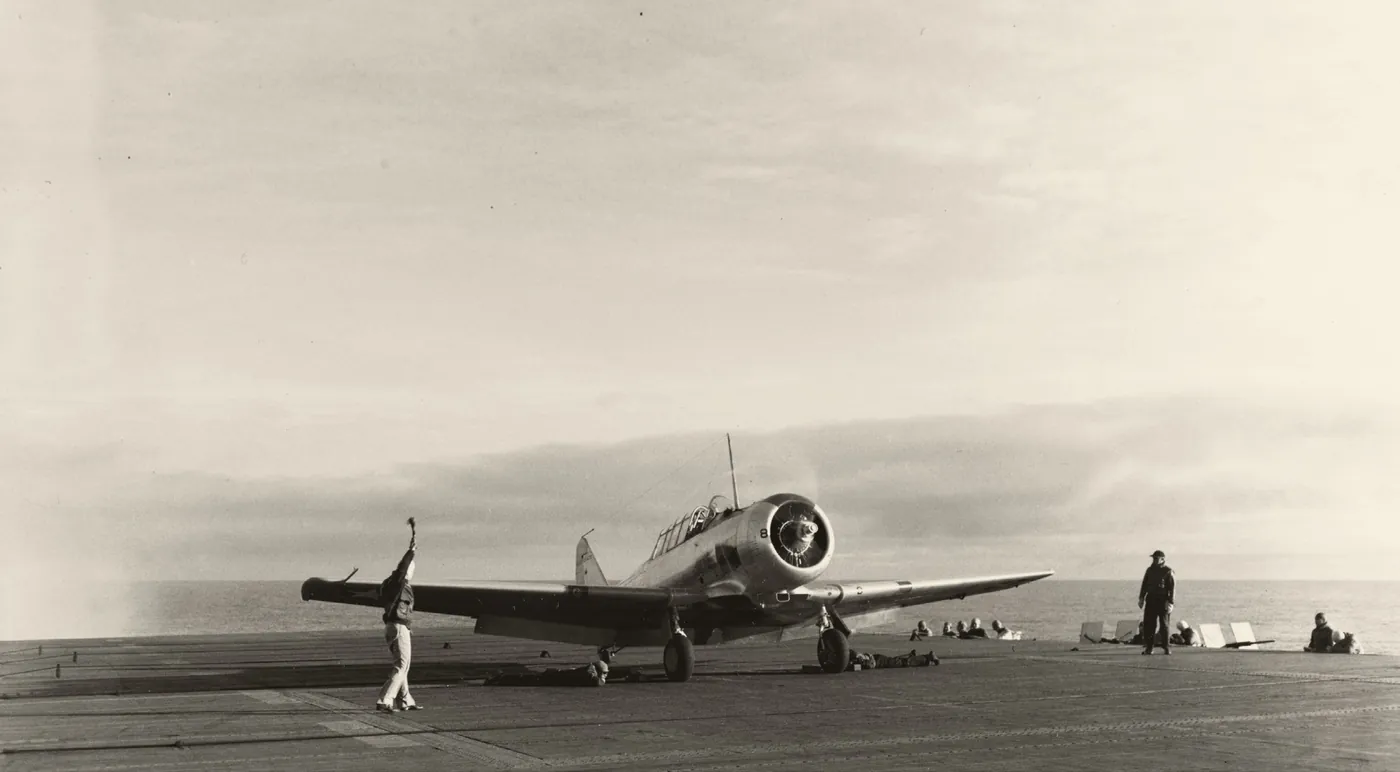
The administrative steps that made him a Marine officer and a naval aviator overlapped the final weeks of instruction. His commission as a second lieutenant in the United States Marine Corps Reserve carried seniority from 7 February 1942; the commission document was dated 25 February, and he accepted the appointment and took the oath at Corpus Christi on 31 March. His designation as a naval aviator, heavier-than-air, was effective from 9 February. On 31 March he also completed his formal training course.¹²
The final report provides a useful measure of his preparation. He stood fortieth in a class of 149, with a final course mark of 3.203. The flight-time summary listed 69.7 hours dual, 155.2 solo, and 10.7 as a passenger, for 235.6 hours in the course. He had completed the specialized carrier course. These figures describe a trained graduate with a substantial foundation in flying, but still a pilot without combat experience and with little time in the aircraft he would meet at his first operational station.¹³
After leave in April, he joined Headquarters Squadron, Second Marine Aircraft Wing, at San Diego. At the end of the month he attended the Advanced Carrier Training Group, completing the additional course by 2 May. His logbook records five SNJ flights on 30 April, 1 May, and 2 May. The training prepared him for the demands of naval aviation, but his immediate destination would be a small land base in the central Pacific rather than an aircraft carrier.¹⁴
Wings of goldΤα χρυσά φτερά
- 28.5.1941Naval Reserve,
Kansas CityΕφεδρεία Ναυτικού,
Kansas City - 1941Jacksonville ·
Corpus ChristiJacksonville ·
Corpus Christi - 25.2.1942Naval aviator;
2nd Lt., USMCRΧειριστής ναυτικής αεροπορίας·
ανθυπολοχαγός USMCR - 8.5.1942Sails for Pearl HarborΑποπλέει για το Pearl Harbor
- 26.5.1942Joins VMSB-241,
MidwayΣτη VMSB-241,
Midway
Στις 28 Μαΐου 1941 ο Κουτέλας κατατάχθηκε στην Εφεδρεία του Ναυτικού των Ηνωμένων Πολιτειών, στη Βάση Αεροπορίας της Ναυτικής Εφεδρείας στο Kansas City. Εντάχθηκε στο πρόγραμμα αεροπορικής εκπαίδευσης V-5, στο οποίο η προκαταρκτική εκπαίδευση πτήσεων και η αξιολόγηση προηγούνταν της μακρύτερης σειράς μαθημάτων που θα έβγαζε έναν ναυτικό αεροπόρο. Το πρώτο του αρχείο πτήσεων περιλαμβάνει δέκα πτήσεις και 8,2 ώρες. Ήταν η πρώτη του επαφή με τη στρατιωτική πτήση, ξεχωριστή από την κατοπινή εκπαίδευση στο Corpus Christi.⁷
Η πορεία του μέσα από τον εκπαιδευτικό μηχανισμό πέρασε από το Jacksonville της Florida πριν φτάσει στο Texas. Η επίσημη έκθεση αεροπορικής εκπαίδευσης του Ναυτικού Αεροπορικού Σταθμού Corpus Christi χρονολογεί τη σειρά μαθημάτων του από τις 24 Ιουλίου 1941 ώς τις 31 Μαρτίου 1942. Οι μήνες που ακολούθησαν συνδύαζαν θεωρητικά μαθήματα, σωματική και στρατιωτική εκπαίδευση και μια σταδιακή μετάβαση σε αεροσκάφη ολοένα μεγαλύτερων επιδόσεων. Το βιβλίο πτήσεών του δίνει σε αυτή τη διαδικασία πιο άμεση μορφή: τη διαδοχή σύντομων πτήσεων, τις επαναλαμβανόμενες ασκήσεις, τις πρώτες μοναχικές πτήσεις και τις μέρες στις οποίες η μία έξοδος ακολουθούσε την άλλη.⁸
Στις 10 Σεπτεμβρίου 1941 πέταξε ένα διπλάνο N2S-2, καταγεγραμμένο ως αεροσκάφος 3592, σε εκπαιδευτική πτήση διάρκειας μιάμισης ώρας. Στις 19 Σεπτεμβρίου έκανε την πρώτη του μοναχική πτήση με το N2S-2 3638. Η πρώτη του εκπαίδευση καλλιέργησε τις δεξιότητες από τις οποίες εξαρτιόνταν όλα τα υπόλοιπα: απογειώσεις και προσγειώσεις, έλεγχο του αεροσκάφους στους βασικούς ελιγμούς, ανάκτηση από απώλεια στήριξης και περιδίνηση, και ναυτιλία πέρα από την άμεση περιοχή του αεροδρομίου. Ώς το τέλος Οκτωβρίου το βιβλίο κατέγραφε σαράντα εννέα πτήσεις και 61,5 ώρες, από τις οποίες τριάντα τέσσερις μοναχικές.⁹
Πέταξε επίσης το N3N-3 του Naval Aircraft Factory, πρώτα με εκπαιδευτή στις 12 Νοεμβρίου και μόνος του την επομένη. Τον Δεκέμβριο πέρασε στο Vultee SNV-1, με την πρώτη του μοναχική πτήση στον τύπο στις 16 Δεκεμβρίου. Αργότερα τον ίδιο μήνα ήρθε το Vought OS2U-3 Kingfisher. Αν και είναι περισσότερο γνωστό ως υδροπλάνο αναγνώρισης που επιχειρούσε από πολεμικά πλοία, το OS2U χρησιμοποιήθηκε και με τροχούς στο εκπαιδευτικό σύστημα του Ναυτικού. Ήταν ένα ακόμη βήμα στην προετοιμασία του Κουτέλα για τα επιχειρησιακά αεροσκάφη.¹⁰
Η ιαπωνική επίθεση στο Pearl Harbor στις 7 Δεκεμβρίου άλλαξε ριζικά το πλαίσιο αυτής της εκπαίδευσης. Ο Κουτέλας είχε καταταγεί πριν οι Ηνωμένες Πολιτείες γίνουν εμπόλεμες· θα αποφοιτούσε σε έναν πόλεμο που ήδη απαιτούσε εκπαιδευμένα πληρώματα σε αριθμούς που ο προπολεμικός μηχανισμός δεν είχε ποτέ προσφέρει. Ο ρυθμός του βιβλίου πτήσεών του επιταχύνθηκε. Πτήσεις με όργανα, ναυτιλία, πτήσεις σε σχηματισμό και εξειδικευμένη εκπαίδευση συμπιέστηκαν σε μέρες που μπορούσαν να περιλαμβάνουν τρεις ή τέσσερις χωριστές πτήσεις.
Στις 31 Ιανουαρίου 1942 πέταξε το Curtiss-Wright SNC-1 Falcon με εκπαιδευτή και έπειτα μόνος του, ολοκληρώνοντας τέσσερις εξόδους εκείνη τη μέρα. Στις 23 Φεβρουαρίου άρχισε να πετά το Curtiss SBC-4 Helldiver, ένα διπλάνο βομβαρδιστικό αναγνώρισης εντελώς διαφορετικό από το μεταγενέστερο μονοπλάνο SB2C που έφερε το ίδιο όνομα. Την πρώτη του εκπαιδευτική πτήση με το SBC-4 1294 ακολούθησαν μια μοναχική πτήση με το 1279 και άλλη μία με το 1294. Μάθαινε να χειρίζεται το είδος του διθέσιου αεροσκάφους στο οποίο η επίδοση του χειριστή και η δουλειά του πίσω μέλους του πληρώματος σύντομα θα γίνονταν αξεχώριστες.¹¹
Τα διοικητικά βήματα που τον έκαναν αξιωματικό των Πεζοναυτών και ναυτικό αεροπόρο συνέπεσαν με τις τελευταίες εβδομάδες της εκπαίδευσης. Ο διορισμός του ως ανθυπολοχαγού της Εφεδρείας του Σώματος Πεζοναυτών των Ηνωμένων Πολιτειών είχε αρχαιότητα από τις 7 Φεβρουαρίου 1942· το έγγραφο του διορισμού χρονολογήθηκε στις 25 Φεβρουαρίου, και ο ίδιος αποδέχθηκε τον διορισμό και ορκίστηκε στο Corpus Christi στις 31 Μαρτίου. Η αναγνώρισή του ως ναυτικού αεροπόρου αεροσκαφών βαρύτερων από τον αέρα ίσχυε από τις 9 Φεβρουαρίου. Στις 31 Μαρτίου ολοκλήρωσε επίσης την τυπική σειρά μαθημάτων του.¹²
Η τελική έκθεση δίνει ένα χρήσιμο μέτρο της προετοιμασίας του. Βγήκε τεσσαρακοστός σε μια τάξη 149 σπουδαστών, με τελικό βαθμό 3,203. Η σύνοψη των ωρών πτήσης κατέγραφε 69,7 ώρες με εκπαιδευτή, 155,2 μοναχικές και 10,7 ως επιβάτης, συνολικά 235,6 ώρες στη διάρκεια της εκπαίδευσης. Είχε ολοκληρώσει την ειδική εκπαίδευση για αεροπλανοφόρα. Τα στοιχεία αυτά περιγράφουν έναν καλά εκπαιδευμένο απόφοιτο με γερές βάσεις στην πτήση, αλλά πάντα έναν χειριστή χωρίς πολεμική εμπειρία και με ελάχιστες ώρες στο αεροσκάφος που θα συναντούσε στον πρώτο του επιχειρησιακό σταθμό.¹³
Μετά από μια άδεια τον Απρίλιο, εντάχθηκε στη Μοίρα Διοίκησης της 2ης Αεροπορικής Πτέρυγας Πεζοναυτών στο San Diego. Στο τέλος του μήνα παρακολούθησε την Ομάδα Προχωρημένης Εκπαίδευσης σε Αεροπλανοφόρα, ολοκληρώνοντας τη συμπληρωματική εκπαίδευση ώς τις 2 Μαΐου. Το βιβλίο πτήσεών του καταγράφει πέντε πτήσεις με SNJ στις 30 Απριλίου, την 1η και τις 2 Μαΐου. Η εκπαίδευση τον προετοίμασε για τις απαιτήσεις της ναυτικής αεροπορίας, όμως ο άμεσος προορισμός του θα ήταν μια μικρή χερσαία βάση στον κεντρικό Ειρηνικό και όχι ένα αεροπλανοφόρο.¹⁴
To MidwayΠρος το Midway
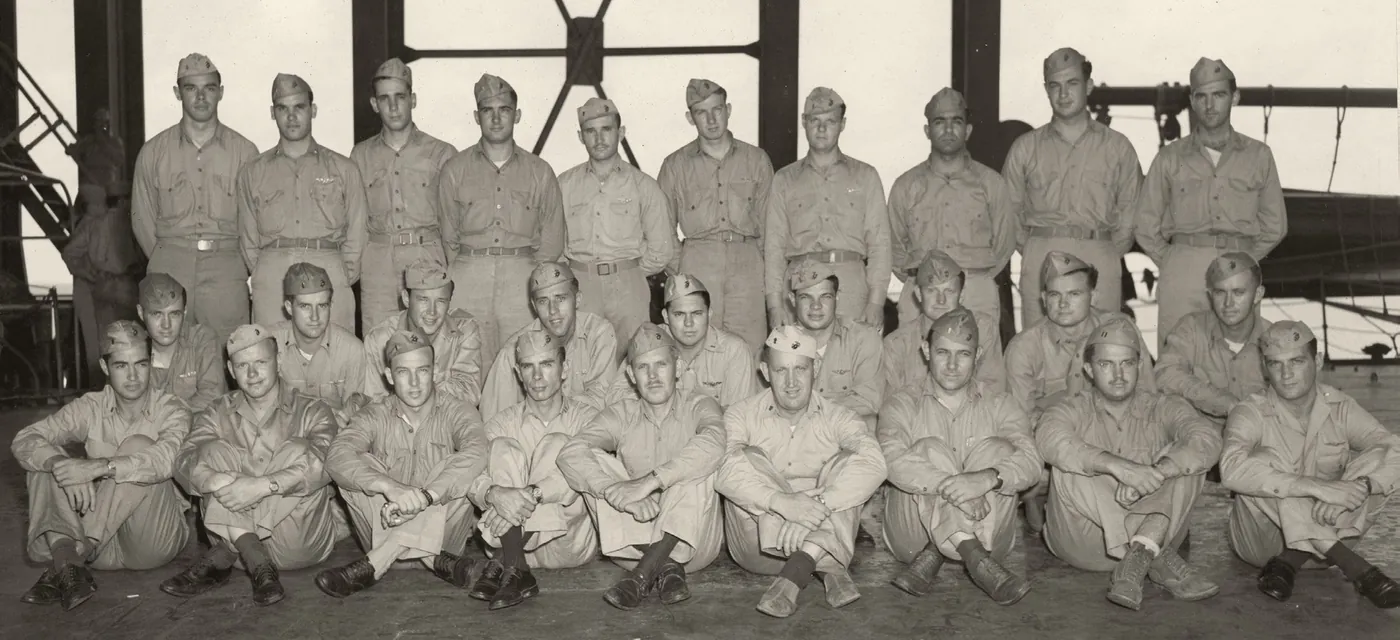
On 8 May 1942, his twenty-fourth birthday according to the birth date used throughout most of his service record, Koutelas embarked in USS J. Franklin Bell (AP-34). The transport sailed from San Francisco on 9 May and reached Pearl Harbor on 17 May. After a short attachment to Headquarters and Service Squadron 21 on Oahu, he embarked in USS Kitty Hawk (APV-1) on 22 May. Four days later he arrived at Midway and joined Marine Scout-Bombing Squadron 241, VMSB-241, in Marine Aircraft Group 22.¹⁵
The men coming ashore had only a few days to settle into the station and prepare for combat. Many years later, in the recollections he supplied to historian Mark E. Horan, Koutelas remembered the beginning of his life on the atoll:
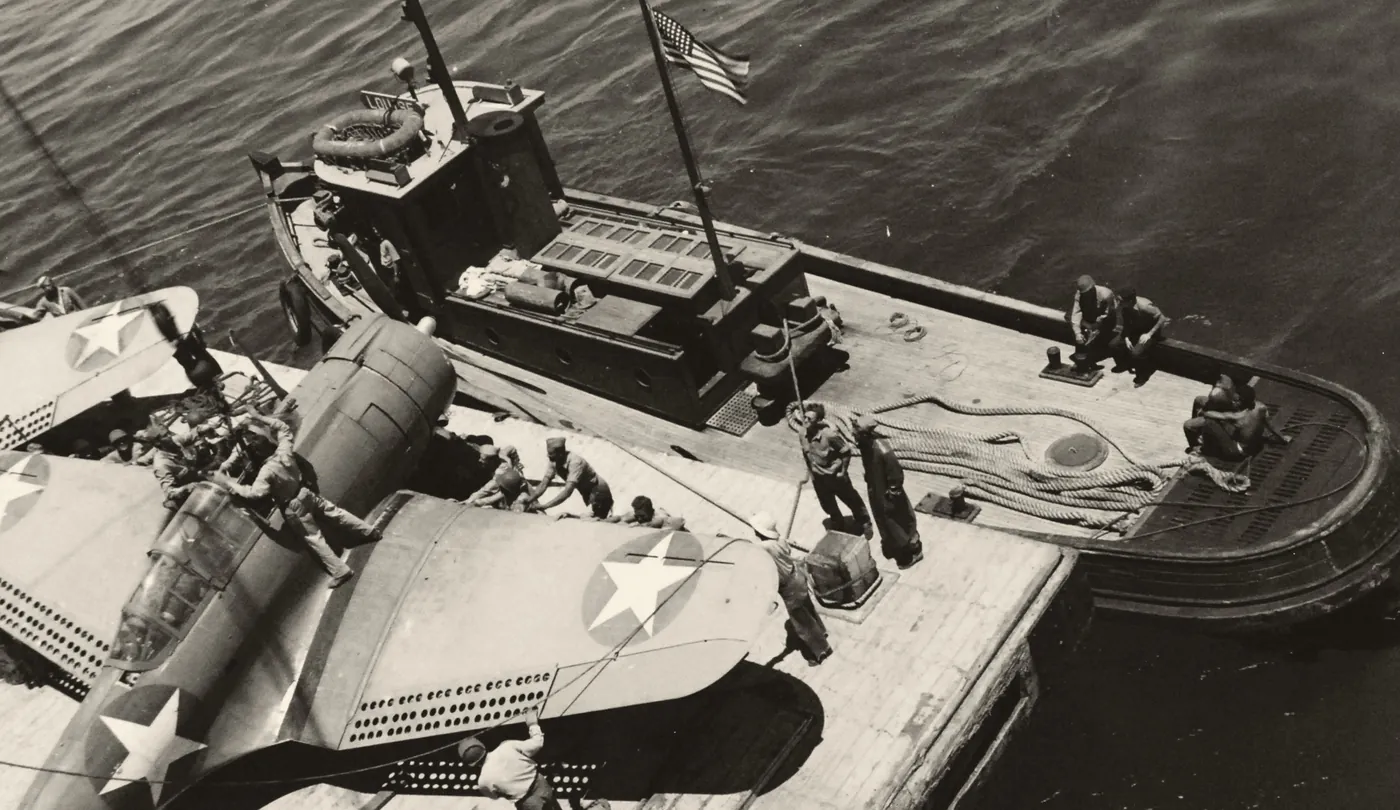
We arrived at Midway on 27 June and we spent the rest of that day and the next checking in, getting bunker living quarters assigned and in general getting acquainted.¹⁶
The reinforcements had brought Douglas SBD-2 Dauntless dive bombers, but the new arrivals would not all fly them. Koutelasʼs disappointment remained clear in his account:
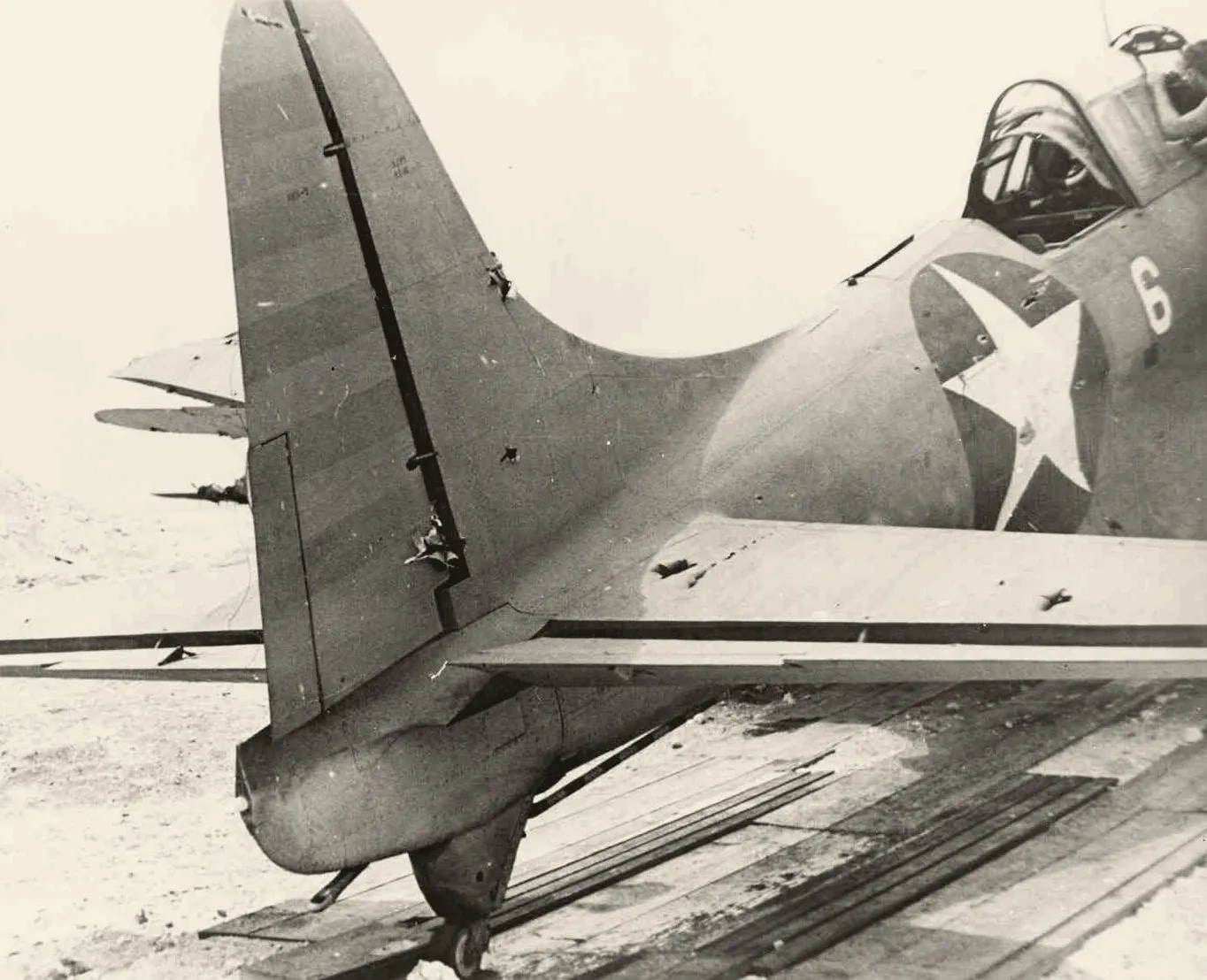
We brought 18 SBD’s with us on the Kittyhawk and of course we thought we would be flying the SBD’s. However, it ended up with the Kittyhawk group getting the SB2U-3’s and the more experienced pilots getting the SBD’s. I and many others of the Kittyhawk group only had one hour of flight time since graduating from flight school so you might say we were pretty green.
He and the other recent graduates inherited the older Vought SB2U-3 Vindicators. The condition of these aircraft would determine the way they could attack. Remembering their age and the repairs that held them together, he wrote:
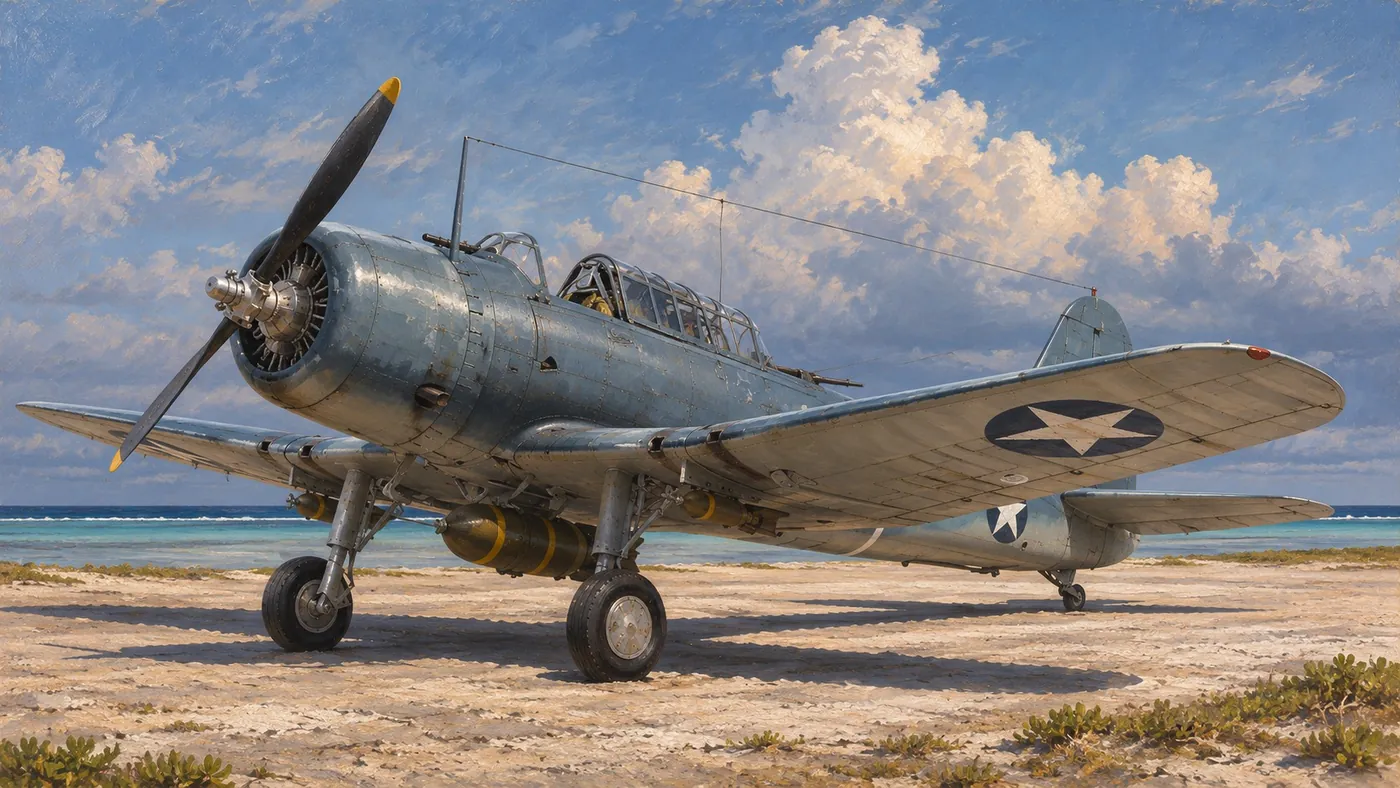
The SB2U-3 were old fabric covered planes that were built around 1933, for the Navy and I believe there were only 53 built. The Navy didn’t like them, so guess who got them.
The fabric was so rotten that 2” wide tape was run along every longitudinally strut and then tape was run around the circumference of the fuselage about every three feet to hold the fabric in place.
Due to the condition of the fabric, we were unable to make a standard dive because the high speed would rip the fabric clear off. We were forced to make a glide bombing run on the battleships which made us sitting ducks for the AA and fighters.
The problem had already become serious before he arrived. On 16 May the squadron diary had recorded the change in bombing practice:
VMSB-241 war diary · 16 May 1942Ημερολόγιο πολέμου VMSB-241 · 16 Μαΐου 1942Saturday, 16 May 1942. Carried out routine patrols. Dive bombing practice cancelled due to fabric ripping off planes and windshields cracking. Practice is to dive with wheels up instead of down, as has been practiced heretofore. Diving wheels up gives much improved control due to lessened stick forces, and shortens the required arc of pull out, but builds up speeds in excess of 300 knots which has proved to be too great a strain for our tattered, battered ships. Therefore, dive bombing has been canceled and glide bombing is now the practice.¹⁷
MidwayMidway
Even the hurried conversion to the Vindicator depended on fuel that the island could ill afford to lose. Koutelas remembered the storage tanks on Sand Island and the accident that restricted flying:
The avgas was stored in two tanks on Sand Island. The gas and cell installation were wired and would be blown up if it looked like the Japanese were going to take the island. Unfortunately, one of the gas storage tanks was accidentally blown by someone getting their wires crossed. This left us critically short on gas.¹⁸
In his memory, the training available before battle had been reduced to a single hour:
Pilots received one hour of flight time in their respective aircraft.
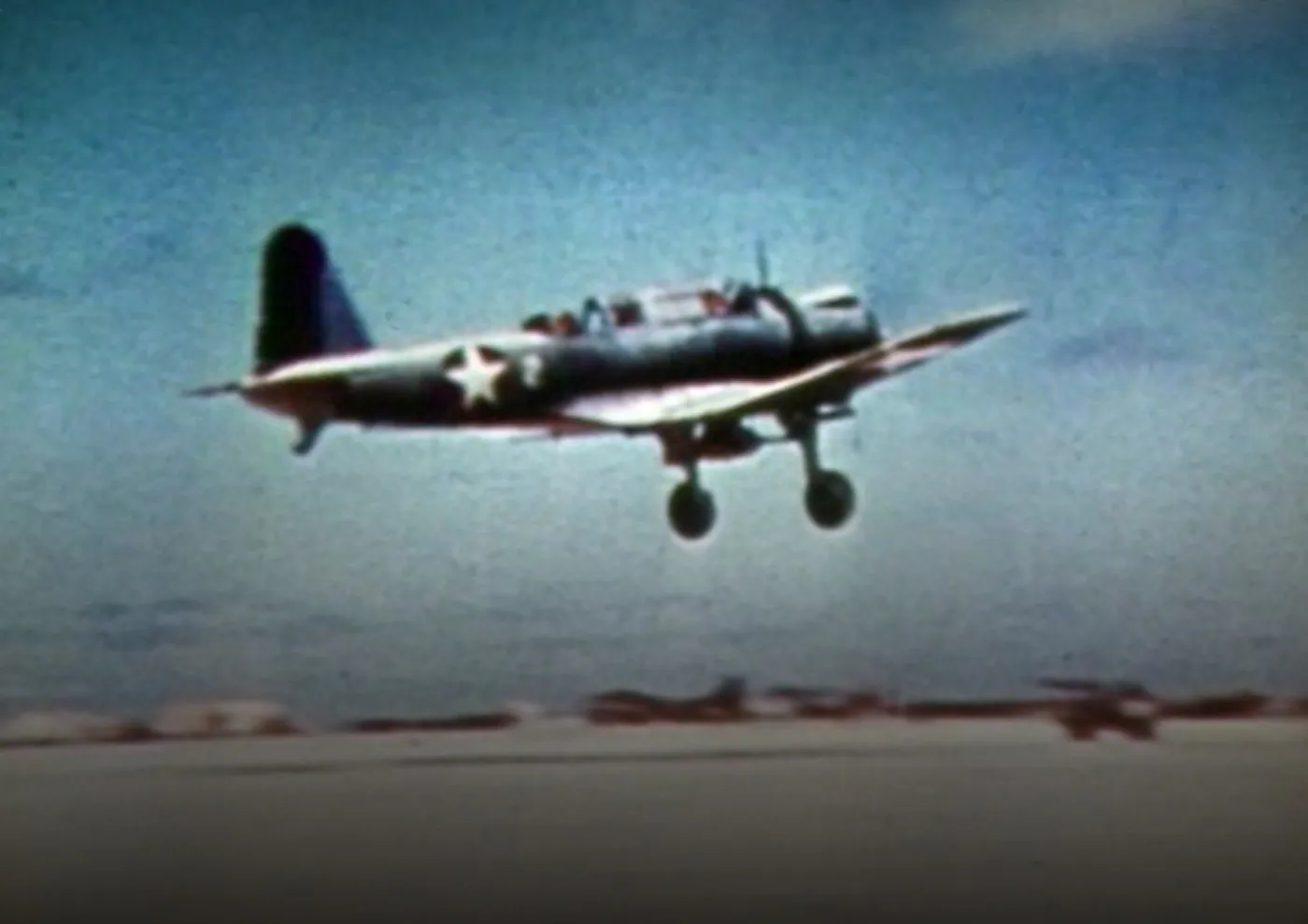
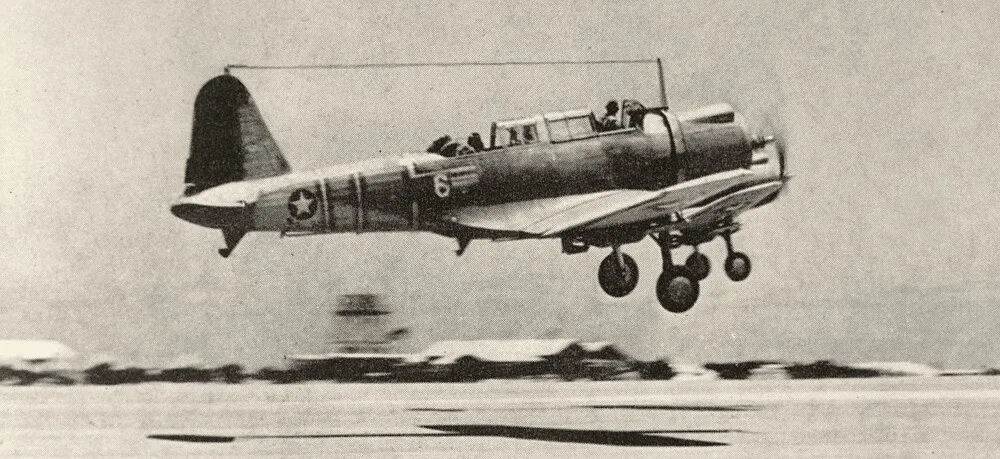
His surviving logbook records familiarization flights in the SB2U-3 between 27 and 31 May, approximately 6.6 hours in all. It was still a brief introduction to an operational aircraft immediately before combat. On different training flights he carried more experienced personnel as well as the man who would accompany him into battle, Private First Class Warren H. Van Kirk.¹⁹
Word of the approaching Japanese fleet reached him at a briefing in the command-post bunker. There was too little room for all the pilots, and Koutelas had to stand outside:
On May 30 or June 1 or 2, a meeting was called in the Command Post bunker to inform us of the impending battle. The bunker was so small that less than half of the pilots were able to crowd into the bunker. I was on the outside and I had a hard time hearing what was being said, so I had to ask a lot of questions afterward to find out what was going on.²⁰
Midway had become the focus of a Japanese plan to draw out and defeat the remaining American carriers. American communications intelligence had provided warning, allowing Admiral Chester W. Nimitz to reinforce the atoll and position his carriers to meet the attack. On Eastern Island, recent graduates such as Koutelas were preparing to take imperfectly familiar aircraft against the carrier air groups and surface defenses of the Japanese fleet.²¹
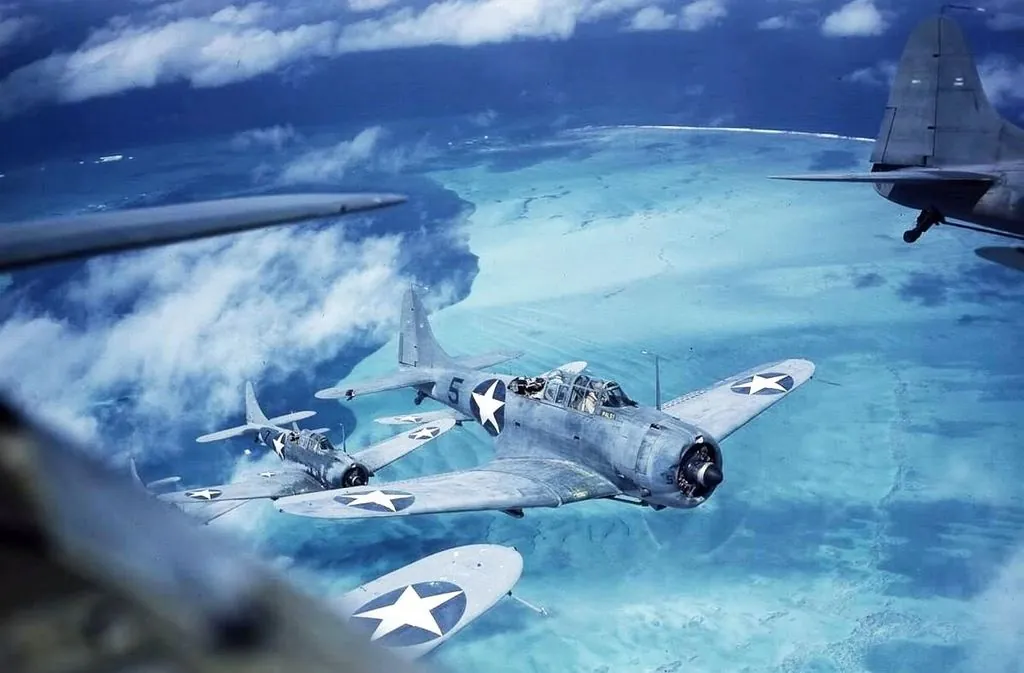
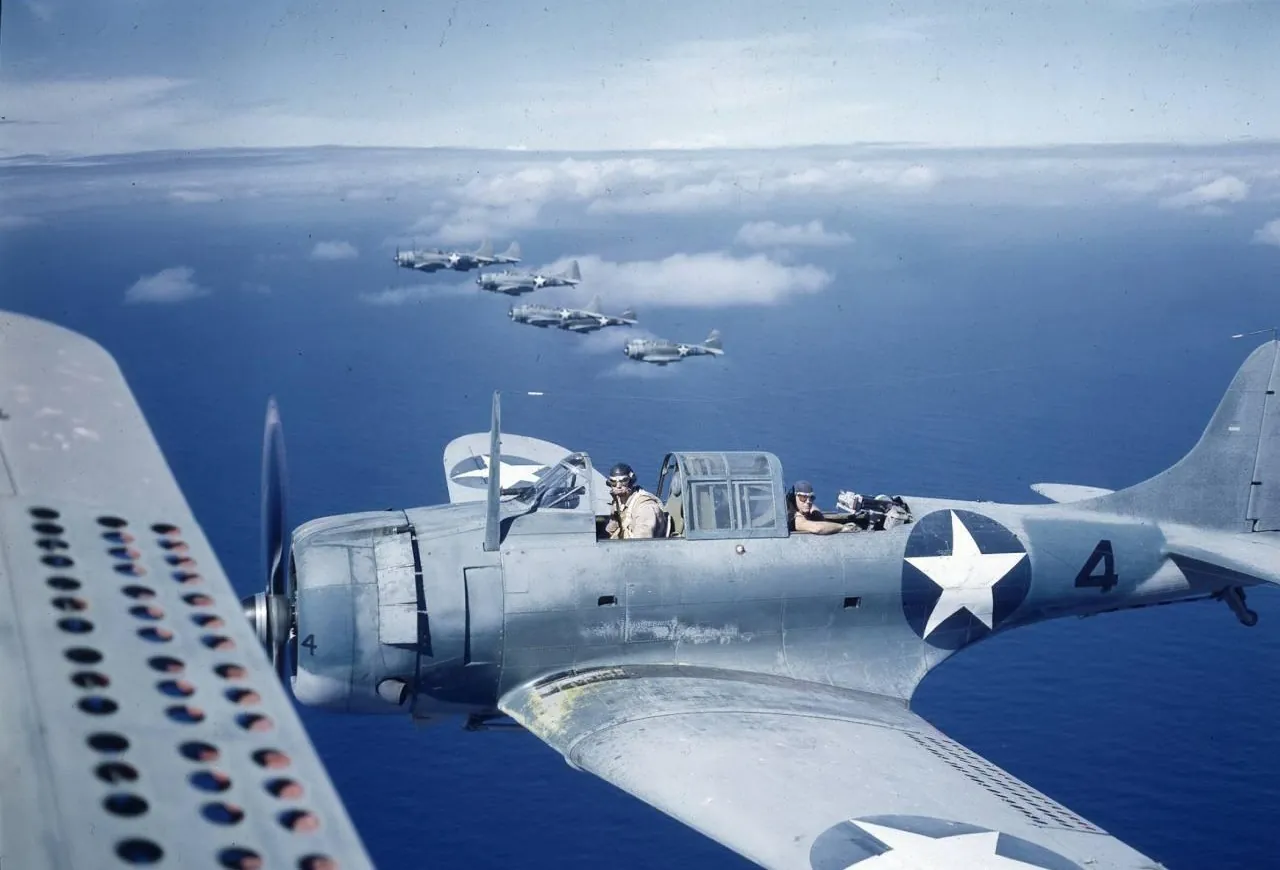
Στις 8 Μαΐου 1942, ανήμερα των εικοστών τετάρτων γενεθλίων του σύμφωνα με την ημερομηνία γέννησης που χρησιμοποιείται στο μεγαλύτερο μέρος του υπηρεσιακού του φακέλου, ο Κουτέλας επιβιβάστηκε στο USS J. Franklin Bell (AP-34). Το μεταγωγικό απέπλευσε από το San Francisco στις 9 Μαΐου και έφτασε στο Pearl Harbor στις 17 Μαΐου. Μετά από μια σύντομη απόσπαση στη Μοίρα Διοίκησης και Υποστήριξης 21 στο Oahu, επιβιβάστηκε στο USS Kitty Hawk (APV-1) στις 22 Μαΐου. Τέσσερις μέρες αργότερα έφτασε στο Midway και εντάχθηκε στη Μοίρα Αναγνώρισης-Βομβαρδισμού Πεζοναυτών 241, τη VMSB-241, της 22ης Αεροπορικής Σμηναρχίας Πεζοναυτών (MAG-22).¹⁵
Οι άνδρες που αποβιβάζονταν είχαν μόλις λίγες μέρες για να εγκατασταθούν στον σταθμό και να προετοιμαστούν για τη μάχη. Πολλά χρόνια αργότερα, στις αναμνήσεις που έδωσε στον ιστορικό Mark E. Horan, ο Κουτέλας θυμόταν την αρχή της ζωής του στην ατόλη:
Φτάσαμε στο Midway στις 27 Ιουνίου και περάσαμε την υπόλοιπη μέρα και την επομένη κάνοντας τις διατυπώσεις άφιξης, παίρνοντας θέση στα καταφύγια όπου θα μέναμε και γενικά γνωρίζοντας τον τόπο.¹⁶
Οι ενισχύσεις είχαν φέρει βομβαρδιστικά κάθετης εφόρμησης Douglas SBD-2 Dauntless, όμως δεν θα τα πετούσαν όλοι οι νεοφερμένοι. Η απογοήτευση του Κουτέλα παραμένει καθαρή στην αφήγησή του:
Φέραμε μαζί μας 18 SBD με το Kittyhawk και φυσικά νομίζαμε ότι θα πετούσαμε τα SBD. Τελικά όμως η ομάδα του Kittyhawk πήρε τα SB2U-3 και οι πιο έμπειροι χειριστές πήραν τα SBD. Εγώ και πολλοί άλλοι της ομάδας του Kittyhawk είχαμε μόλις μία ώρα πτήσης από την αποφοίτησή μας από τη σχολή πτήσεων, οπότε μπορείτε να πείτε ότι ήμασταν εντελώς άπειροι.
Αυτός και οι άλλοι πρόσφατοι απόφοιτοι κληρονόμησαν τα παλαιότερα Vought SB2U-3 Vindicator. Η κατάσταση αυτών των αεροσκαφών θα καθόριζε τον τρόπο με τον οποίο μπορούσαν να επιτεθούν. Θυμούμενος την ηλικία τους και τις επισκευές που τα κρατούσαν στον αέρα, έγραψε:
Τα SB2U-3 ήταν παλιά αεροπλάνα με επένδυση από ύφασμα, κατασκευασμένα γύρω στο 1933 για το Ναυτικό, και νομίζω ότι είχαν φτιαχτεί μόνο 53. Το Ναυτικό δεν τα ήθελε, οπότε μαντέψτε ποιος τα πήρε.
Το ύφασμα ήταν τόσο σάπιο που είχαν περάσει ταινία πλάτους 2 ιντσών κατά μήκος κάθε διαμήκους δοκού και έπειτα ταινία γύρω από την περιφέρεια της ατράκτου περίπου κάθε τρία πόδια, για να κρατά το ύφασμα στη θέση του.
Εξαιτίας της κατάστασης του υφάσματος δεν μπορούσαμε να κάνουμε κανονική κάθετη εφόρμηση, γιατί η μεγάλη ταχύτητα θα ξέσκιζε τελείως το ύφασμα. Αναγκαστήκαμε να βομβαρδίσουμε τα θωρηκτά με ολίσθηση, κάτι που μας έκανε εύκολους στόχους για τα αντιαεροπορικά και τα καταδιωκτικά.
Το πρόβλημα είχε ήδη γίνει σοβαρό πριν φτάσει εκείνος. Στις 16 Μαΐου το ημερολόγιο της μοίρας είχε καταγράψει την αλλαγή στην πρακτική του βομβαρδισμού:
VMSB-241 war diary · 16 May 1942Ημερολόγιο πολέμου VMSB-241 · 16 Μαΐου 1942Σάββατο, 16 Μαΐου 1942. Εκτελέστηκαν περιπολίες ρουτίνας. Η άσκηση βομβαρδισμού με κάθετη εφόρμηση ακυρώθηκε επειδή το ύφασμα ξεκολλά από τα αεροπλάνα και τα παρμπρίζ ραγίζουν. Η πρακτική είναι να γίνεται η εφόρμηση με τους τροχούς ανεβασμένους αντί για κατεβασμένους, όπως γινόταν ώς τώρα. Η εφόρμηση με ανεβασμένους τροχούς δίνει πολύ καλύτερο έλεγχο χάρη στις μικρότερες δυνάμεις στο πηδάλιο και μικραίνει το απαιτούμενο τόξο της ανάσχεσης, αλλά ανεβάζει την ταχύτητα πάνω από τους 300 κόμβους, κάτι που αποδείχθηκε υπερβολική καταπόνηση για τα κουρελιασμένα, ταλαιπωρημένα αεροσκάφη μας. Γι' αυτό ο βομβαρδισμός με κάθετη εφόρμηση ακυρώθηκε και πλέον εφαρμόζεται ο βομβαρδισμός με ολίσθηση.¹⁷
MidwayMidway
Ακόμη και η βιαστική μετάβαση στο Vindicator εξαρτιόταν από καύσιμα που το νησί δύσκολα μπορούσε να χάσει. Ο Κουτέλας θυμόταν τις δεξαμενές στο Sand Island και το ατύχημα που περιόρισε τις πτήσεις:
Η βενζίνη αεροπορίας ήταν αποθηκευμένη σε δύο δεξαμενές στο Sand Island. Οι δεξαμενές και οι εγκαταστάσεις ήταν υπονομευμένες και θα ανατινάζονταν αν φαινόταν ότι οι Ιάπωνες θα καταλάμβαναν το νησί. Δυστυχώς, μία από τις δεξαμενές ανατινάχθηκε κατά λάθος από κάποιον που μπέρδεψε τα καλώδια. Αυτό μας άφησε σε κρίσιμη έλλειψη καυσίμων.¹⁸
Στη μνήμη του, η εκπαίδευση που ήταν διαθέσιμη πριν από τη μάχη είχε περιοριστεί σε μία μόνο ώρα:
Οι χειριστές πήραν μία ώρα πτήσης ο καθένας στο αεροσκάφος του.
Το σωζόμενο βιβλίο πτήσεών του καταγράφει πτήσεις εξοικείωσης με το SB2U-3 από τις 27 ώς τις 31 Μαΐου, περίπου 6,6 ώρες συνολικά. Ήταν και πάλι μια σύντομη γνωριμία με ένα επιχειρησιακό αεροσκάφος λίγο πριν από τη μάχη. Σε διάφορες εκπαιδευτικές πτήσεις μετέφερε πιο έμπειρο προσωπικό, αλλά και τον άνθρωπο που θα τον συνόδευε στη μάχη, τον Στρατιώτη Α΄ Τάξεως Warren H. Van Kirk.¹⁹
Τα νέα για τον ιαπωνικό στόλο που πλησίαζε τα έμαθε σε μια ενημέρωση στο καταφύγιο του σταθμού διοίκησης. Ο χώρος δεν έφτανε για όλους τους χειριστές, και ο Κουτέλας χρειάστηκε να μείνει απέξω:
Στις 30 Μαΐου ή την 1η ή τις 2 Ιουνίου συγκλήθηκε μια σύσκεψη στο καταφύγιο του Σταθμού Διοίκησης για να ενημερωθούμε για την επικείμενη μάχη. Το καταφύγιο ήταν τόσο μικρό που λιγότεροι από τους μισούς χειριστές κατάφεραν να στριμωχτούν μέσα. Εγώ ήμουν απέξω και δυσκολευόμουν να ακούσω τι λεγόταν, οπότε χρειάστηκε να κάνω πολλές ερωτήσεις μετά για να καταλάβω τι συνέβαινε.²⁰
Το Midway είχε γίνει το επίκεντρο ενός ιαπωνικού σχεδίου να παρασυρθούν και να καταστραφούν τα αμερικανικά αεροπλανοφόρα που είχαν απομείνει. Οι αμερικανικές υπηρεσίες υποκλοπής επικοινωνιών είχαν δώσει έγκαιρη προειδοποίηση, επιτρέποντας στον ναύαρχο Chester W. Nimitz να ενισχύσει την ατόλη και να τοποθετήσει τα αεροπλανοφόρα του ώστε να αντιμετωπίσουν την επίθεση. Στο Eastern Island, πρόσφατοι απόφοιτοι όπως ο Κουτέλας ετοιμάζονταν να οδηγήσουν αεροσκάφη που γνώριζαν ελάχιστα εναντίον των αεροπορικών ομάδων των αεροπλανοφόρων και της αντιαεροπορικής άμυνας του ιαπωνικού στόλου.²¹
VMSB-241 · Sons of Satan
The Marine dive-bombing squadron that fought at MidwayΗ μοίρα καθετοβομβαρδισμού των Πεζοναυτών που πολέμησε στο Midway
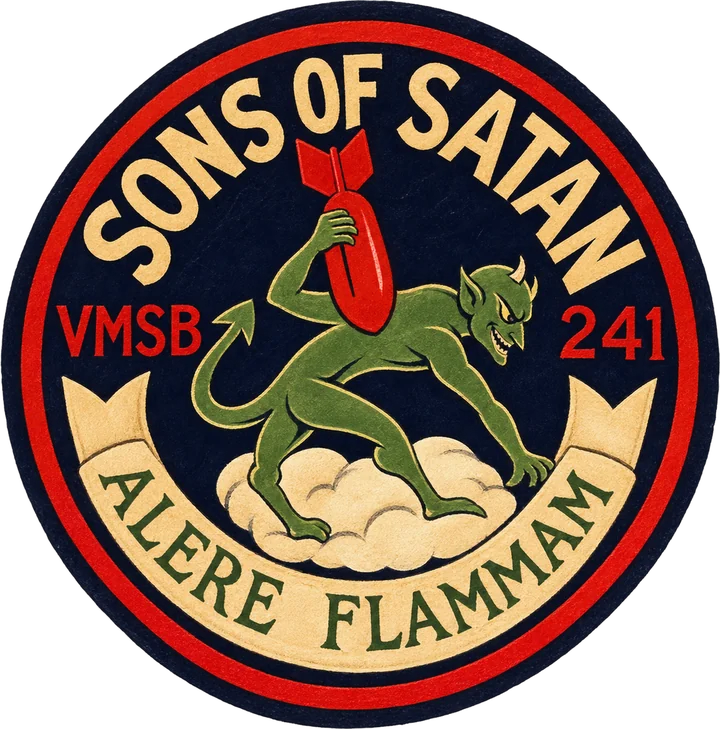
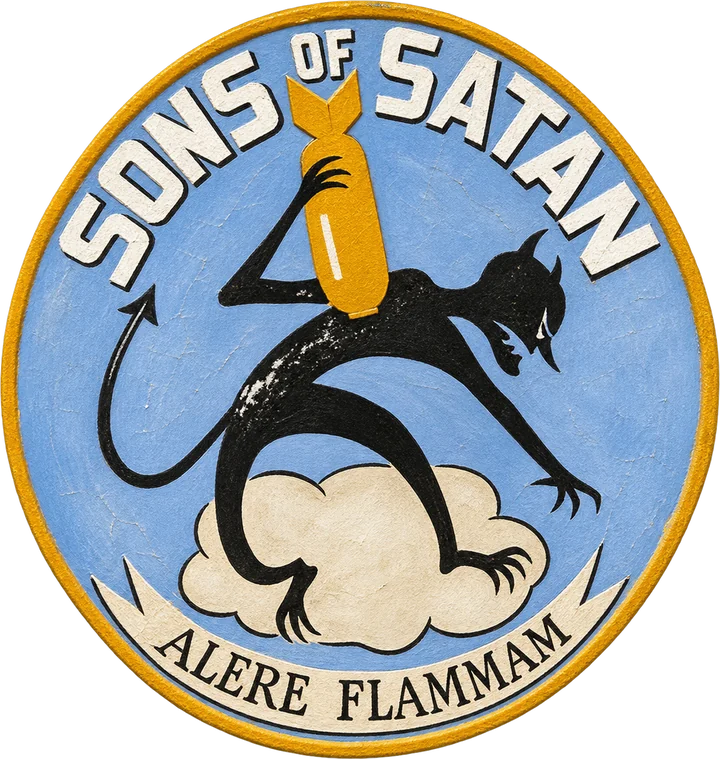
Marine Scout-Bombing Squadron 241 (VMSB-241), known to history as the “Sons of Satan,” was one of the most severely tested squadrons of United States Marine Corps aviation in the Second World War. Its war record is bound for ever to the Battle of Midway, where in June 1942 its crews faced the most powerful air and naval force of the Japanese Empire and paid a heavy price.
The squadron was formed on 1 March 1942 on Midway atoll from personnel and aircraft of VMSB-231 and assigned to Marine Aircraft Group 22 (MAG-22). Under Major Lofton R. Henderson it prepared for a confrontation that American intelligence considered ever more likely. It flew the ageing Vought SB2U-3 Vindicator and the newer Douglas SBD-2 Dauntless, which had arrived only on 26 May. Shortages of fuel and the little time available cut training drastically. Ten pilots had joined the squadron only a week before the battle.¹
On the morning of 4 June 1942, as Japanese aircraft approached Midway, VMSB-241 took off from Eastern Island to strike the enemy carriers. Sixteen SBD-2s led by Henderson and eleven SB2U-3s under Major Benjamin W. Norris headed for the Japanese fleet. Because of the different performance of their aircraft, the two formations operated in effect independently. Shortly before 08:00 Henderson’s Dauntlesses attacked the carrier Hiryū. Facing the agile Zeros and heavy anti-aircraft fire, the American pilots made glide-bombing attacks, descending to very low altitude to release their bombs. Henderson was shot down on the approach, but the others pressed on. Eight of the sixteen Dauntlesses did not return to Midway. Norris’s Vindicators followed with their attack on the battleship Haruna, at further cost. The first American reports recorded hits on the enemy ships, but these are not confirmed by later study of the Japanese records.²
The ordeal was not over. That evening Norris led the remaining Vindicators on a search for Japanese ships. In the darkness, low cloud and tropical squalls his aircraft was lost. In a single day the squadron had lost both its commanding officer and its executive officer. On 5 June the aircraft still available took off again, this time against the Japanese heavy cruisers Mogami and Mikuma. Captain Richard E. Fleming, leading the Vindicators, pressed his attack although his aircraft had been hit, and went down with his rear gunner, Private First Class George A. Toms. For his extraordinary gallantry Fleming was awarded the Medal of Honor posthumously, the only award of the decoration for the Battle of Midway. Among the pilots of the same mission was Second Lieutenant George E. Koutelas.³
Despite its devastating losses VMSB-241 survived as a unit. It remained at Midway until March 1943 and was then re-formed, continuing its war in the South Pacific. In the years that followed its Dauntlesses flew from Bougainville and Emirau, among other missions against Japanese installations around Rabaul. In 1945 the squadron moved to the Philippines, where it supported American ground forces on Luzon and then on Mindanao.⁴
The legacy of VMSB-241 is not a list of sunk ships. It lies in the men who took off knowing how slim their chances were, in the pilots who kept attacking when their leaders were gone, in the rear gunners who fought back against the Zeros, and in the mechanics who kept the surviving aircraft flying.
- U.S. Marine Corps, Report of Activities of VMSB-241 during June 4 and June 5, 1942, 12 June 1942, pp. 1–2.
- Peter F. Owen, “Marine Air’s Dark Day at Midway,” Naval History 38, no. 3 (June 2024). See also VMSB-241, Report of Activities, pp. 2–4, for the first claims of hits.
- VMSB-241, Report of Activities, pp. 4–5; Robert J. Cressman, “Prepared for This Rendezvous,” Naval History 2, no. 2 (Spring 1988).
- Charles W. Boggs Jr., Marine Aviation in the Philippines (Washington, DC: Historical Division, Headquarters, U.S. Marine Corps, 1951).
Η 241η Μοίρα Αναγνώρισης-Βομβαρδισμού των Πεζοναυτών (VMSB-241), γνωστή στην ιστορία ως «Sons of Satan» («Γιοι του Σατανά»), ήταν μία από τις πιο σκληρά δοκιμασμένες μοίρες της αεροπορίας του Σώματος Πεζοναυτών των Ηνωμένων Πολιτειών στον Β΄ Παγκόσμιο Πόλεμο. Η πολεμική της ιστορία είναι για πάντα δεμένη με τη Μάχη του Midway, όπου τον Ιούνιο του 1942 τα πληρώματά της αντιμετώπισαν την ισχυρότερη αεροναυτική δύναμη της Ιαπωνικής Αυτοκρατορίας και πλήρωσαν βαρύ τίμημα.
Η μοίρα συγκροτήθηκε την 1η Μαρτίου 1942 στην ατόλη του Midway από προσωπικό και αεροσκάφη της VMSB-231 και υπάχθηκε στην 22η Αεροπορική Σμηναρχία Πεζοναυτών (MAG-22). Υπό τον ταγματάρχη Lofton R. Henderson προετοιμάστηκε για μια σύγκρουση που οι αμερικανικές υπηρεσίες πληροφοριών θεωρούσαν όλο και πιθανότερη. Πετούσε τα γερασμένα Vought SB2U-3 Vindicator και τα νεότερα Douglas SBD-2 Dauntless, που είχαν φτάσει μόλις στις 26 Μαΐου. Η έλλειψη καυσίμων και ο λίγος χρόνος περιόρισαν δραστικά την εκπαίδευση. Δέκα πιλότοι είχαν έρθει στη μοίρα μόλις μία εβδομάδα πριν από τη μάχη.¹
Το πρωί της 4ης Ιουνίου 1942, καθώς τα ιαπωνικά αεροσκάφη πλησίαζαν το Midway, η VMSB-241 απογειώθηκε από το Eastern Island για να πλήξει τα εχθρικά αεροπλανοφόρα. Δεκαέξι SBD-2 υπό τον Henderson και έντεκα SB2U-3 υπό τον ταγματάρχη Benjamin W. Norris κατευθύνθηκαν προς τον ιαπωνικό στόλο. Λόγω των διαφορετικών επιδόσεων των αεροσκαφών τους, οι δύο σχηματισμοί επιχείρησαν ουσιαστικά χωριστά. Λίγο πριν από τις 08:00 τα Dauntless του Henderson επιτέθηκαν στο αεροπλανοφόρο Hiryū. Απέναντι στα ευέλικτα Zero και στα πυκνά αντιαεροπορικά πυρά, οι Αμερικανοί πιλότοι επιτέθηκαν με ολίσθηση, κατεβαίνοντας πολύ χαμηλά για να αφήσουν τις βόμβες. Ο Henderson καταρρίφθηκε στην προσέγγιση, οι άλλοι όμως συνέχισαν. Οκτώ από τα δεκαέξι Dauntless δεν γύρισαν στο Midway. Ακολούθησαν τα Vindicator του Norris με την επίθεσή τους στο θωρηκτό Haruna, με νέες απώλειες. Οι πρώτες αμερικανικές αναφορές κατέγραψαν πλήγματα στα εχθρικά πλοία, αλλά αυτά δεν επιβεβαιώνονται από τη μεταγενέστερη μελέτη των ιαπωνικών αρχείων.²
Η δοκιμασία δεν είχε τελειώσει. Εκείνο το βράδυ ο Norris οδήγησε τα Vindicator που απέμεναν σε έρευνα για ιαπωνικά πλοία. Μέσα στο σκοτάδι, τα χαμηλά σύννεφα και τις τροπικές μπόρες το αεροσκάφος του χάθηκε. Σε μία μόνο ημέρα η μοίρα είχε χάσει και τον διοικητή και τον υποδιοικητή της. Στις 5 Ιουνίου τα αεροσκάφη που ήταν ακόμη διαθέσιμα απογειώθηκαν ξανά, αυτή τη φορά εναντίον των ιαπωνικών βαρέων καταδρομικών Mogami και Mikuma. Ο λοχαγός Richard E. Fleming, επικεφαλής των Vindicator, συνέχισε την επίθεση παρότι το αεροσκάφος του είχε χτυπηθεί, και χάθηκε μαζί με τον πολυβολητή του, τον στρατιώτη Α΄ τάξεως George A. Toms. Για την εξαιρετική του γενναιότητα ο Fleming τιμήθηκε μετά θάνατον με το Medal of Honor, τη μοναδική απονομή του για τη Μάχη του Midway. Ανάμεσα στους πιλότους της ίδιας αποστολής ήταν και ο ανθυπολοχαγός George E. Κουτέλας.³
Παρά τις συντριπτικές απώλειες η VMSB-241 επιβίωσε ως μονάδα. Έμεινε στο Midway ως τον Μάρτιο του 1943 και στη συνέχεια ανασυγκροτήθηκε, συνεχίζοντας τον πόλεμό της στον Νότιο Ειρηνικό. Τα επόμενα χρόνια τα Dauntless της πέταξαν από το Bougainville και το Emirau, μεταξύ άλλων σε αποστολές εναντίον ιαπωνικών εγκαταστάσεων γύρω από το Rabaul. Το 1945 η μοίρα μετακινήθηκε στις Φιλιππίνες, όπου υποστήριξε τις αμερικανικές χερσαίες δυνάμεις στη Luzon και έπειτα στο Mindanao.⁴
Η κληρονομιά της VMSB-241 δεν είναι ένας κατάλογος βυθισμένων πλοίων. Βρίσκεται στους άνδρες που απογειώθηκαν ξέροντας πόσο λίγες ήταν οι πιθανότητές τους, στους πιλότους που συνέχισαν να επιτίθενται όταν οι επικεφαλής τους είχαν χαθεί, στους πολυβολητές που απαντούσαν στα Zero και στους μηχανικούς που κρατούσαν στον αέρα τα αεροσκάφη που είχαν απομείνει.
- U.S. Marine Corps, Report of Activities of VMSB-241 during June 4 and June 5, 1942, 12 June 1942, pp. 1–2.
- Peter F. Owen, “Marine Air’s Dark Day at Midway,” Naval History 38, no. 3 (June 2024). See also VMSB-241, Report of Activities, pp. 2–4, for the first claims of hits.
- VMSB-241, Report of Activities, pp. 4–5; Robert J. Cressman, “Prepared for This Rendezvous,” Naval History 2, no. 2 (Spring 1988).
- Charles W. Boggs Jr., Marine Aviation in the Philippines (Washington, DC: Historical Division, Headquarters, U.S. Marine Corps, 1951).
The raidon MidwayΗ επιδρομήστο Midway
- Japanese aircraftΙαπωνικά αεροσκάφη
- 108
- CarriersΑεροπλανοφόρα
- 4
- VMF-221 fighters lostΚαταδιωκτικά VMF-221 που χάθηκαν
- 15
- VMSB-241 aloftVMSB-241 στον αέρα
- 27
At about 06:30 on 4 June 1942 some 108 Japanese aircraft from the carriers Akagi, Kaga, Hiryū and Sōryū, torpedo planes used as level bombers, dive bombers and Zero fighters under Lieutenant Joichi Tomonaga, struck the atoll. The Buffalos and Wildcats of VMF-221 met them on the way in and were cut to pieces by the escort: fifteen of its fighters were shot down. On Sand Island the oil tanks went up in flames and the seaplane hangar burned. On Eastern Island, where the Marine bombers were based, the power plant, the mess hall and the command post were hit and the runways were cratered, yet they stayed usable. The bombers of VMSB-241 had taken off before the raid arrived. Tomonaga radioed his carriers that a second attack was needed, a signal that would shape the rest of the battle.
Γύρω στις 06:30 της 4ης Ιουνίου 1942 περίπου 108 ιαπωνικά αεροσκάφη από τα αεροπλανοφόρα Akagi, Kaga, Hiryū και Sōryū, τορπιλοπλάνα που χρησιμοποιήθηκαν ως οριζόντια βομβαρδιστικά, καθετοβομβαρδιστικά και καταδιωκτικά Zero υπό τον υποπλοίαρχο Joichi Tomonaga, χτύπησαν την ατόλη. Τα Buffalo και τα Wildcat της VMF-221 τα συνάντησαν στην προσέγγιση και κατακερματίστηκαν από τη συνοδεία: δεκαπέντε καταδιωκτικά της καταρρίφθηκαν. Στο Sand Island οι δεξαμενές καυσίμων τυλίχτηκαν στις φλόγες και κάηκε το υπόστεγο των υδροπλάνων. Στο Eastern Island, βάση των βομβαρδιστικών των Πεζοναυτών, χτυπήθηκαν ο σταθμός ηλεκτροπαραγωγής, το εστιατόριο και το κέντρο διοίκησης και οι διάδρομοι γέμισαν κρατήρες, έμειναν όμως λειτουργικοί. Τα βομβαρδιστικά της VMSB-241 είχαν απογειωθεί πριν φτάσει η επιδρομή. Ο Tomonaga ειδοποίησε με τον ασύρματο τα αεροπλανοφόρα του ότι χρειαζόταν δεύτερη επίθεση, ένα μήνυμα που θα καθόριζε την υπόλοιπη μάχη.
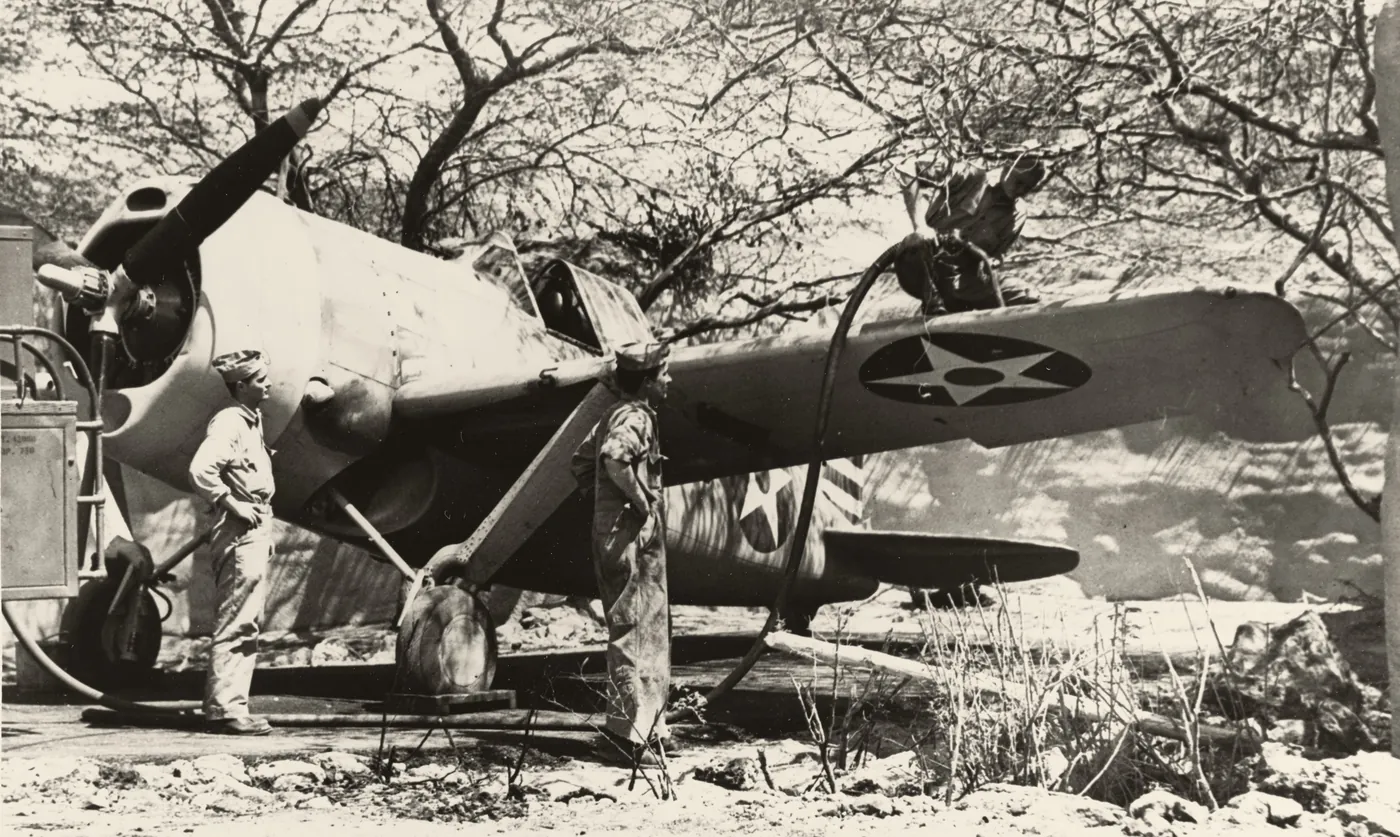
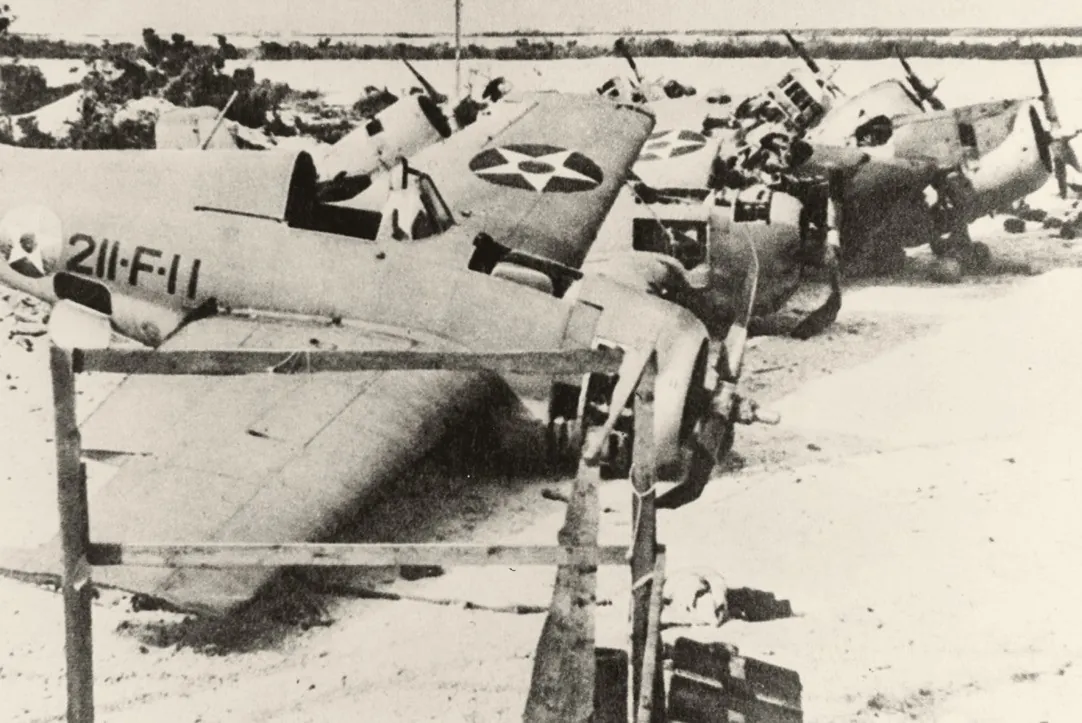
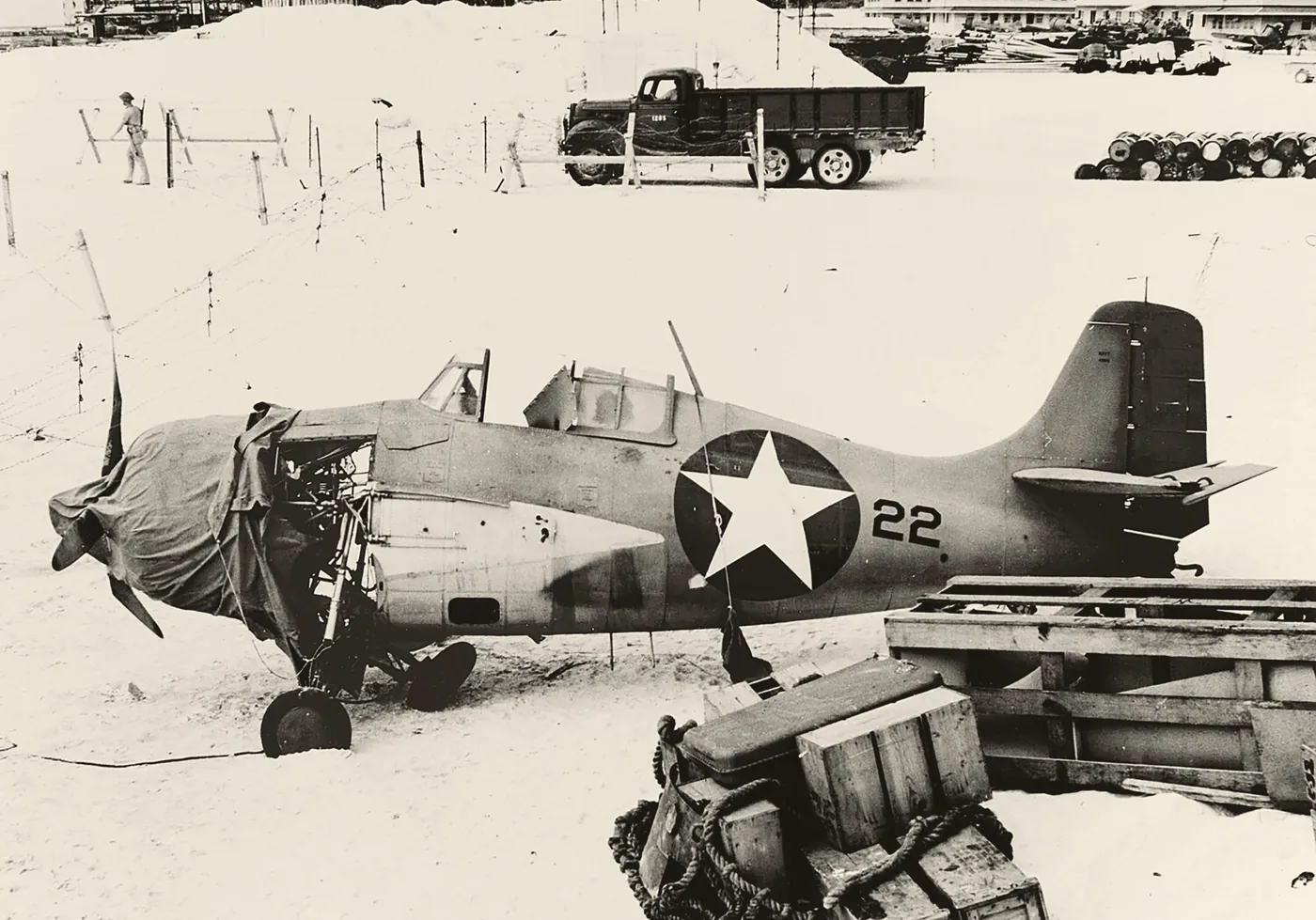
The morning of 4 JuneΤο πρωί της 4ης Ιουνίου
The crews on Eastern Island began their day long before sunrise. Koutelas remembered a routine intended to have every aircraft ready for a quick departure:
We always manned our planes at 3:30 to 4:00 AM and we would warm up our planes immediately so that we would be ready for a quick take off.
On 4 June that routine gave way to hurried orders and uncertainty. Looking back, he could recall the starting and stopping of engines more clearly than the reasoning behind the decisions:
As you stated, it was confusing on the morning of June 4. I’m sort of hazy here, but I think at first a launch was ordered shortly after receiving word form a search plane that contact with the Jap fleet had been made. All engines were started, but before take-off had started, the launch was aborted and all engines were shut down. I believe that since the fleet was heading in our direction, the distance would be closing, meaning less flight time. Also, since none of the Kittyhawk pilots had flown together and only had 1 hour of flight time in the SB2U’s and the experienced pilots were also flying an unfamiliar plane, it was decided that a more effective launch could be made in daylight. Also, since the Task Force had split, with one part coming around the other side of Midway, there was confusion as to which force had the carriers, they needed further contact information. As stated, I am a little hazy here, but I do know we took off at approx. 6:15 AM. I really didn’t know what was going on and as far as I was concerned it was just like another practice flight. How wrong could I be!²²
Once airborne, the two elements of VMSB-241 proceeded separately, the SBDs under Major Lofton R. Henderson and the SB2Us under Major Benjamin W. Norris. Koutelasʼs own difficulties began as he took off:
On takeoff I noticed my airspeed indicator was not working, so I looked out at the pitot tube and saw the plane captain had failed to remove the tube cover. So there I was without a plotting board or a airspeed indicator, and to make matters worse my radio went out shortly after take-off. I could still communicate with my rear seat gunner, but I had no communication with the other planes or base.²³
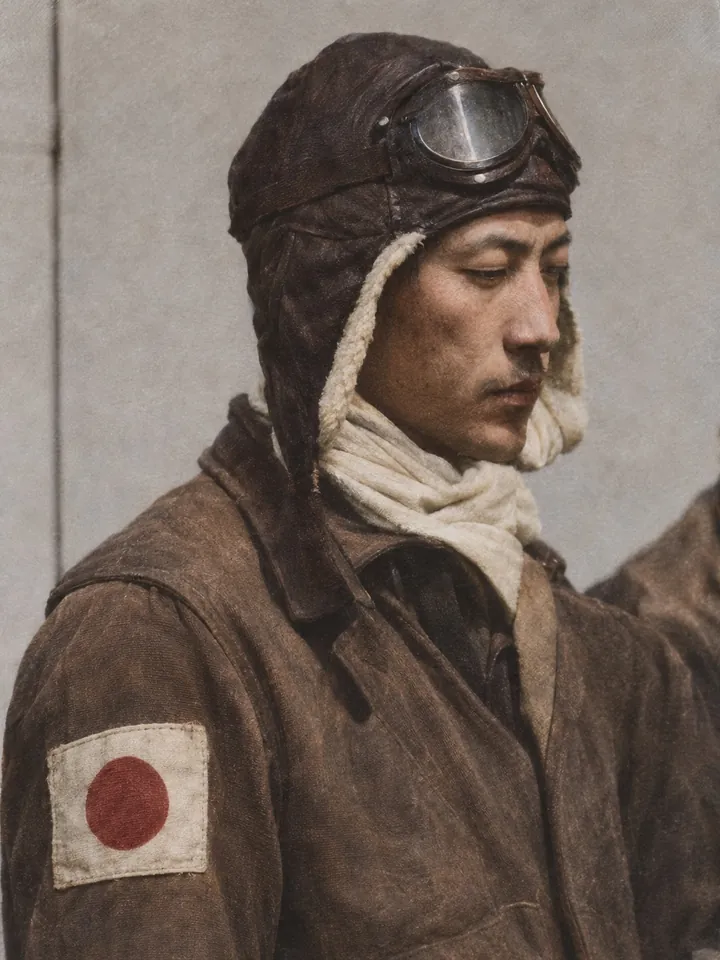
Other aircraft were missing from their intended places in the formation. Captain Prosser had lost his engine cowling and turned back; only after the mission would Koutelas learn that Captain Tyler had not taken off at all. His memory of the disrupted second box was less definite:
I was not aware that Capt. Tyler had not taken off until after we returned from the strike, however, I knew Capt. Prosser had lost his cowling and had returned to base. As you stated, the 2nd box had to join up best they could but I do not remember where they ended up.
With the formation heading out over the sea, the absence of a plotting board became an immediate concern. The request for more boards had brought an answer he never forgot:
I am not sure that I knew the heading to the Task Force, however instead of heading directly for the fleet, we went out on a dog leg to interception. There were only a few plotting boards in the SB2U’s and these were given to the SBD pilots. I know shortly after we arrived a despatch was sent to Pearl requesting plotting boards and the answer was “what for?”
He used his flying suit to keep the record that the missing board should have carried:
Since I did not have a plotting board I noted our compass heading and drew a line on the leg of my flight suit. When we made our turn t the left I noted the time on the previous heading and drew a line for the new direction. Luckily, I noted the time when we made contact with the enemy and since I returned to Midway alone, I flew reciprocal of the course for the times noted and made it back safely.²⁴
The outward flight left him no clear memory of seeing other aircraft along the route. His later recollection on that point was brief:
Not that I recall.
At 7:10, according to his contemporary statement, the formation received orders to attack a carrier on a bearing of 320 degrees at a distance of 170 miles. They climbed toward 13,000 feet. At approximately 8:00 they sighted the Japanese fleet. The ships below were unlike anything Koutelas had seen before:
We were about 10,000 feet when we saw the enemy and we were about 30 to 40 miles from the carriers when the fighters hit us. To show how green we were, these were the first carriers I had ever seen, and what a sight if was to see so many ships zig zagging frantically in evasive action.²⁵
The Japanese fighters came down on the bombers before the Marines could reach their intended targets. Koutelas could not estimate their number, but he remembered the losses ahead of him and the urgency of getting into an attack:
I don’t recall the number of enemy fighters that were involved although I’m sure that the SBD’s, which were ahead of us, took the brunt of the fighter attack, In fact, they were losing so many planes Major Henderson gave up trying to reach the carriers and went for the battleships which were much closer. I believe that had he pressed on for the carriers the fighters would have wiped us all out.²⁶
The willingness of those fighters to close with a formation defended by rear guns remained striking to him even after his later combat experience. He recalled both their determination and the steep passes they made:
Suprisingly, the fighters pressed in close in spite of our rear seat gunners, These were their top pilots. (I stayed out approx. 2 years, came home for 1 year and then went back out until the end of the war. I make this statement because on all the other strikes I was on after Midway, I can only recall one or two other instances where the fighters would attack us while we were in formation. They would wait for us to pull out of our dive and then try to pick us off singlely before we joined up again. Once we were back in formation they would sit above us out of our rear seat gun range and wait for someone to fall out of formation. If someone did, they pounced on him like a bunch of vultures.
The fighters I saw were making diving attacks practically straight down and then would pull straight up and make another pass.
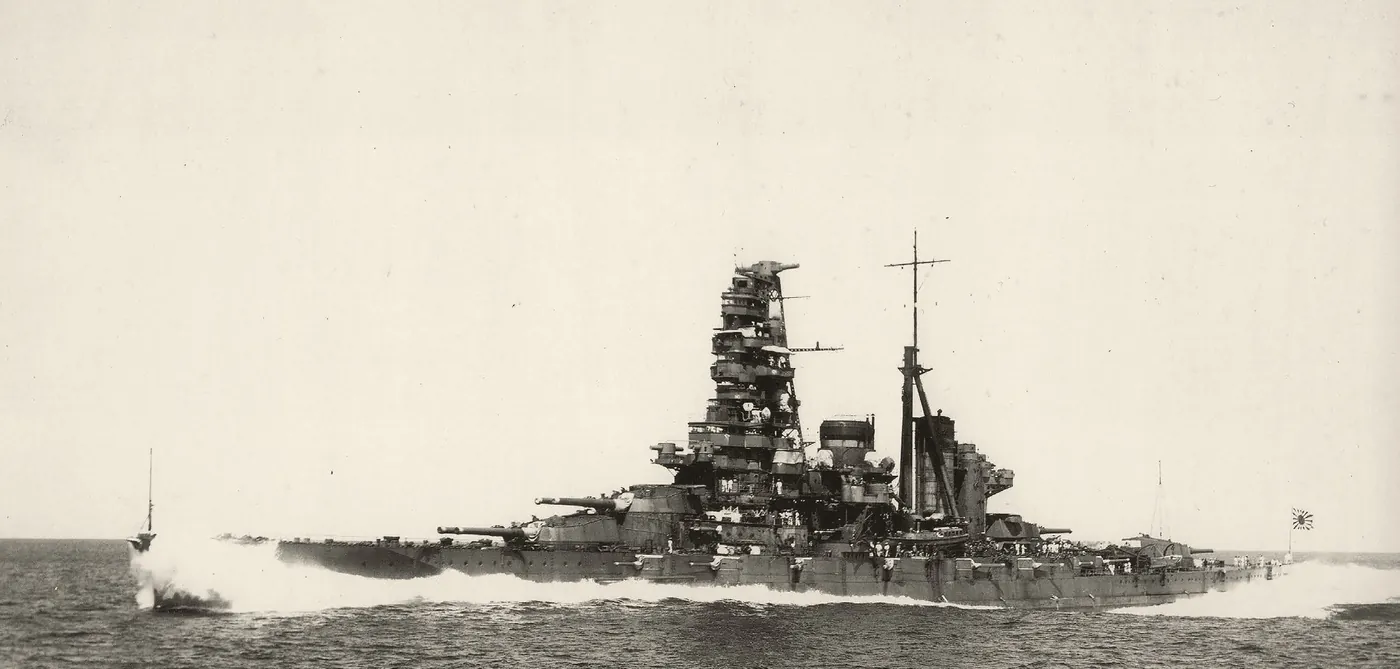
At 8:22 Norris directed the Vindicator element against the battleship below, generally identified as Haruna. Koutelas, the last man in the first four-aircraft box, went down fourth, making his run from bow toward stern. In his statement written soon after the battle he put his bomb release at about 500 feet. Years later, what he remembered most vividly was the blast as he pulled away:
I dropped my bomb about 400 feet and when I pulled out of my glide, I got the concussion of the bomb explosion and I thought “My God, they got me!”
Another Marine pilot, Sumner Whitten, later remembered encountering Koutelas still carrying his bomb, drawing his attention to it, and seeing him peel away. It was another glimpse of the confusion among the attacking aircraft.²⁷
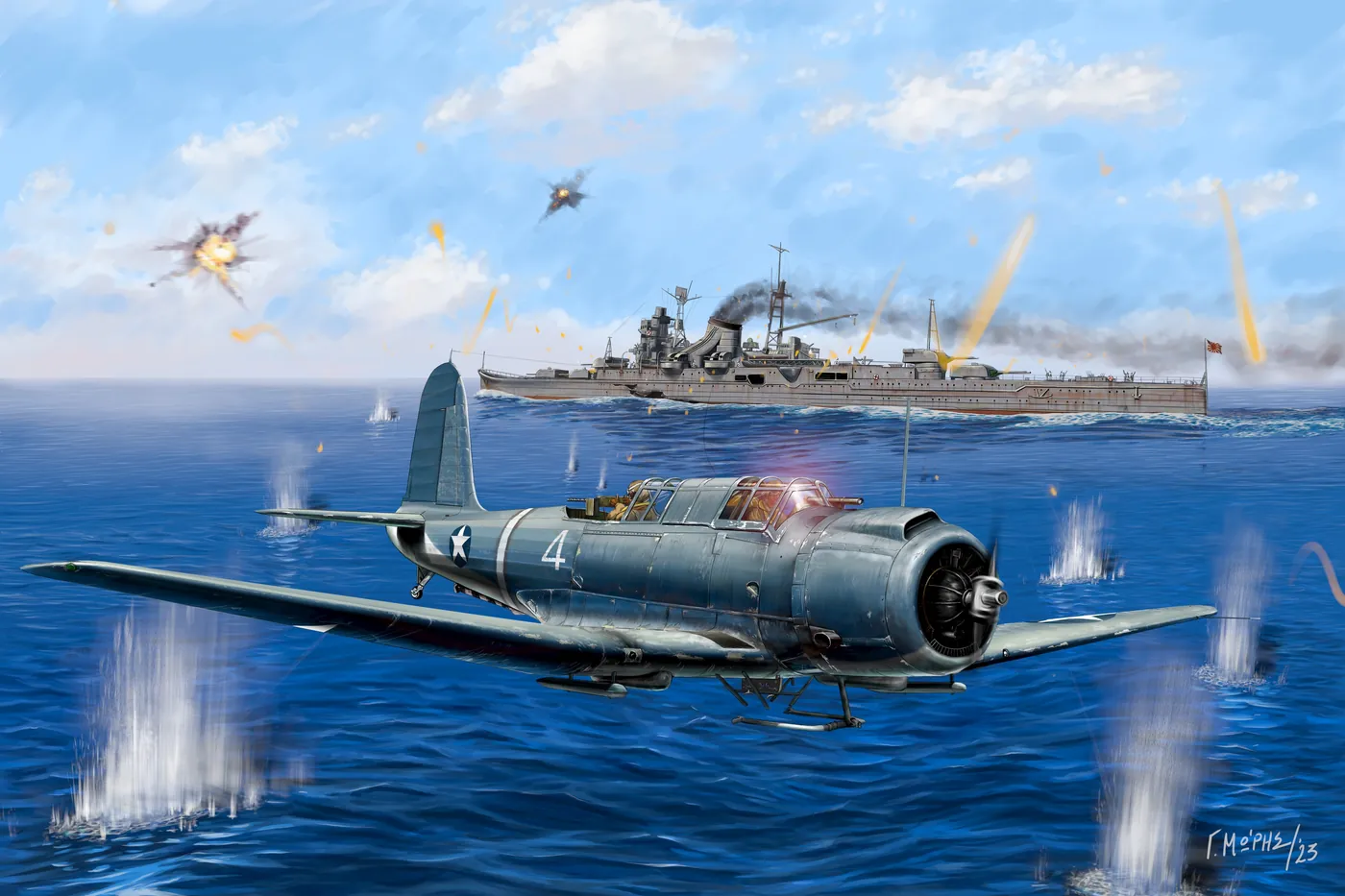
Surviving the bombing run still left the problem of escaping the ships and their fighters. Koutelasʼs failed radio had prevented him from hearing the order to return independently:
The standard procedure at the completion of a dive is to circle and join up for mutual protection with the rear seat guns. However, just as we started our run work went out over the radio that there would not be a rendezvous and it was every man for himself. As I stated earlier, my radio went out shortly after take-off and as they say, there’s always some dumb duck that doesn’t get the “word”.²⁸
He began circling in search of companions, then turned for home with a fighter behind him and Van Kirkʼs guns silent. The intercom carried their exchange as Koutelas tried to reach the clouds:
When I pulled out of my dive I was between the two battleships and since I didn’t get the “word”, I started circling. I think both ships were hitting each other shooting at me and it didn’t take long to figure out that this was no place for me, so I headed home. Shortly after clearing the BB’s, tracers started whizzing by so I looked back and was a Jap fighter on our tail. I hadn’t felt the rear seat guns going so I called my rear seat man to see why he wasn’t firing. (Actually, I thought that he had been hit.) He informed me that he had put his gun in storage when we started our run (strictly a no-no) and couldn’t get it loose. He called me several times after that and said there’s fighters on our tail and that the gun was still jammed. Finally, I answered him by saying “where the hell do you think we are going?” There was a broken cloud cover at about 3000 feet, so I went screaming for that. (Screaming in an 2U-3 was about 130 knots.) Once I reached the cloud bank, I lost the fighters. Here I was, flying on instruments without an airspeed indicator, however, I stayed in the clouds for about a half-hour after which time I slowly started climbing for altitude. I leveled off at 10,000 feet and this gave me good visibility for a 40 to 50 mile range. About half way home, I sort of relaxed, knowing that we were out of fighter range, when all of sudden, the rear seat guns started firing. Boy, this woke me up and I called the gunner to see what he was shooting at. He said he wasn’t shooting at anything and that he had finally released the gun from storage and had fired the gun to see if it still worked.²⁹
No other American aircraft joined him on that return flight. As he emphasized in his recollection:
As I stated earlier, I returned home alone.³⁰
The Vindicator reached Midway with its fabric torn loose, but it had brought both men back:
So much fabric was torn loose from the fuselage we couldn’t really tell whether wind from the dive or bullets had done all the damage. I don’t recall if there were any holes in the wings or not. Anyway, it held together and got us home.³¹
The island itself had been under attack while they were away. Koutelas remembered damage to the station buildings and a bomb crater in the runway, although he could no longer place the grounded Vindicators:
I don’t recall where the 2U’s were located, but I don’t think they were damaged during the bombing. I know on bomb hit the power house and Officers mess and put them out of commission. One small bomb hit the longest runway about 2/3 of the way down.
A jeep took him from his revetment to the command post. After the flight, the debriefing, and a morning with almost nothing to eat, even the meal he disliked became unforgettable:
When I returned to Midway, a jeep met me at the revetment, where I parked the plane, and took me to the Command Post for debriefing. Due to the bomb damage there wasn’t much of anything to eat, and since I hate sardines I will never forget the lunch I ate that day. One lone can of sardines, nothing else, and straight whiskey to wash them down. Since I hadn’t had anything to eat since toast and coffee at 3:00 AM, it tasted pretty good at the time - but never again.³²
Three days after the action, on 7 June, Koutelas put his account on paper. His statement preserved the times, bearings, attack, and withdrawal as he then understood them:³³
His statement · 7 June 1942Η κατάθεσή του · 7 Ιουνίου 1942CONFIDENTIAL
MARINE SCOUT-BOMBING SQUADRON TWO FORTY-ONE,
MARINE AIRCRAFT GROUP 22,
2d MARINE AIRCRAFT WING, FMF.,
c/o FLEET POST OFFICE, SAN FRANCISCO, CALIFORNIA.
7 June, 1942.
STATEMENT OF SECOND LIEUTENANT GEORGE E. KOUTELAS, USMCR(V).
4 June, 1942
On June 4th all pilots manned their planes at 0350 as usual. At 0600 we were ordered to take off. We cleared the field at 0610 and proceeded to rendezvous at Point Affirm. While circling waiting for orders from ZED I noticed a formation of bombers to our left. I thought they were a flight of SBDs and it wasn’t until we returned from our mission that I found out that they were enemy bombers.
At 0710 we received orders to attack a carrier which was on a bearing of 320 degrees, distance 170 miles. We proceeded at once climbing to an altitude of 13,000 feet, on our way out. At 0800 we sighted the enemy fleet which was on course 240 degrees, speed about 15 knots. About five minutes later were attacked by enemy zero fighters, which soon left after killing the gunner in Lt. Cummings’ plane. At 0822 Major Norris called us on the radio and told us to attack a battleship which was directly below us. This was done, because it was impossible to get to the carriers. More fighters were coming at us and AA fire was terrific. I was the hole man in the first box so I was the fourth man to go down. The two bombs I saw were very close. I dived so that I was going from bow to stern. Using the bow as point of aim. I released about 500 feet. My gunner told me that I got a hit on the stern. After releasing I went down to 50 feet and made two complete circles between four enemy ships trying to catch up with two more of our ships to join up with. While I was circling I saw the battleship practically ringed with near misses, also one direct hit on the bow. When I left for home, the ship was turning to the right and smoke was pouring out near the center. On my way out from the enemy fleet, I saw another battleship, 2 cruisers, 3 destroyers and one carrier. As I was leaving, a Jap fighter made one run on me and left. I immediately went for a cloud and came on home.³⁴
VMSB-241, MidwayVMSB-241, Midway
The dayʼs losses were not yet over. That evening VMSB-241 went out again to search for a reported damaged carrier. The search failed to find the target, and Norris and his rear crewman, Arthur B. Whittington, did not return.³⁵
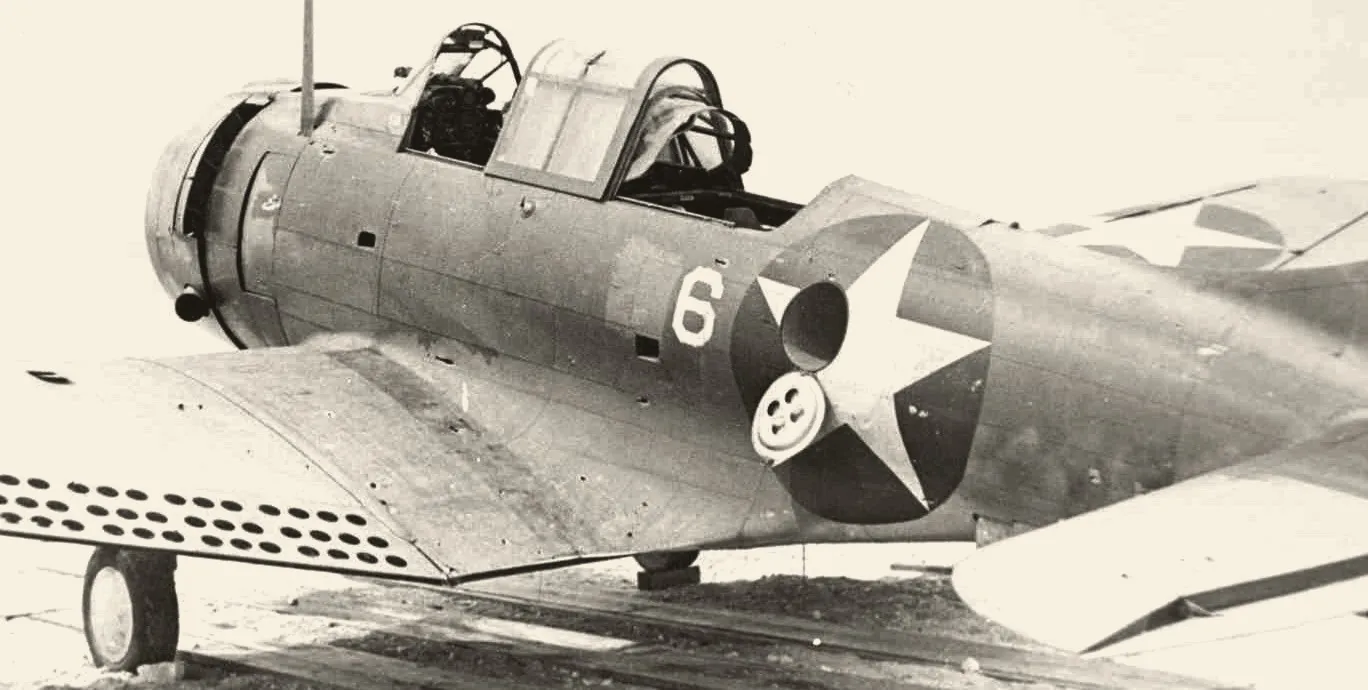
Τα πληρώματα στο Eastern Island ξεκινούσαν τη μέρα τους πολύ πριν από την ανατολή του ηλίου. Ο Κουτέλας θυμόταν μια ρουτίνα που είχε σκοπό να είναι κάθε αεροσκάφος έτοιμο για γρήγορη αναχώρηση:
Πάντα επανδρώναμε τα αεροπλάνα μας από τις 3:30 ώς τις 4:00 το πρωί και ζεσταίναμε αμέσως τις μηχανές, ώστε να είμαστε έτοιμοι για γρήγορη απογείωση.
Στις 4 Ιουνίου η ρουτίνα αυτή έδωσε τη θέση της σε βιαστικές διαταγές και αβεβαιότητα. Κοιτάζοντας πίσω, θυμόταν το άναμμα και το σβήσιμο των κινητήρων πιο καθαρά από το σκεπτικό των αποφάσεων:
Όπως είπατε κι εσείς, το πρωί της 4ης Ιουνίου επικρατούσε σύγχυση. Εδώ τα θυμάμαι κάπως θολά, αλλά νομίζω ότι στην αρχή διατάχθηκε απογείωση λίγο αφού ένα αεροσκάφος έρευνας ανέφερε ότι είχε εντοπίσει τον ιαπωνικό στόλο. Όλοι οι κινητήρες πήραν μπροστά, αλλά πριν αρχίσει η απογείωση, η εξόρμηση ματαιώθηκε και όλοι οι κινητήρες σβήστηκαν. Πιστεύω ότι, αφού ο στόλος κατευθυνόταν προς εμάς, η απόσταση θα μίκραινε, άρα θα χρειαζόταν λιγότερος χρόνος πτήσης. Επίσης, αφού κανένας από τους χειριστές του Kittyhawk δεν είχε πετάξει μαζί με τους άλλους και είχαμε μόνο 1 ώρα πτήσης στα SB2U, και οι έμπειροι χειριστές πετούσαν επίσης ένα αεροπλάνο που δεν γνώριζαν, αποφασίστηκε ότι μια πιο αποτελεσματική εξόρμηση μπορούσε να γίνει με το φως της ημέρας. Ακόμη, επειδή η Ομάδα Κρούσης είχε χωριστεί, με ένα τμήμα να έρχεται από την άλλη πλευρά του Midway, υπήρχε σύγχυση για το ποια δύναμη είχε τα αεροπλανοφόρα· χρειάζονταν κι άλλες πληροφορίες εντοπισμού. Όπως είπα, εδώ τα θυμάμαι λίγο θολά, αλλά ξέρω σίγουρα ότι απογειωθήκαμε γύρω στις 6:15 το πρωί. Πραγματικά δεν ήξερα τι γινόταν και για μένα ήταν σαν μια ακόμη εκπαιδευτική πτήση. Πόσο λάθος έκανα!²²
Μόλις βρέθηκαν στον αέρα, τα δύο τμήματα της VMSB-241 προχώρησαν χωριστά, τα SBD υπό τον ταγματάρχη Lofton R. Henderson και τα SB2U υπό τον ταγματάρχη Benjamin W. Norris. Οι δυσκολίες του ίδιου του Κουτέλα άρχισαν με την απογείωση:
Στην απογείωση πρόσεξα ότι το ταχύμετρο δεν λειτουργούσε, κοίταξα λοιπόν έξω τον σωλήνα pitot και είδα ότι ο υπεύθυνος του αεροσκάφους δεν είχε βγάλει το κάλυμμα του σωλήνα. Να με λοιπόν χωρίς πινακίδα πλοήγησης και χωρίς ταχύμετρο, και για να γίνει χειρότερο το πράγμα, ο ασύρματός μου χάλασε λίγο μετά την απογείωση. Μπορούσα ακόμη να μιλώ με τον πολυβολητή στο πίσω κάθισμα, αλλά δεν είχα καμία επικοινωνία με τα άλλα αεροπλάνα ή με τη βάση.²³
Άλλα αεροσκάφη έλειπαν από τις θέσεις που τους αναλογούσαν στον σχηματισμό. Ο λοχαγός Prosser είχε χάσει το κάλυμμα του κινητήρα του και είχε γυρίσει πίσω· μόνο μετά την αποστολή θα μάθαινε ο Κουτέλας ότι ο λοχαγός Tyler δεν είχε καν απογειωθεί. Η ανάμνησή του για τον διαλυμένο δεύτερο σχηματισμό ήταν λιγότερο σαφής:
Δεν ήξερα ότι ο λοχαγός Tyler δεν είχε απογειωθεί παρά μόνο όταν επιστρέψαμε από την επίθεση· ήξερα όμως ότι ο λοχαγός Prosser είχε χάσει το κάλυμμα του κινητήρα και είχε γυρίσει στη βάση. Όπως είπατε, ο 2ος σχηματισμός χρειάστηκε να συνενωθεί όπως μπορούσε, αλλά δεν θυμάμαι πού κατέληξαν.
Καθώς ο σχηματισμός έβγαινε πάνω από τη θάλασσα, η έλλειψη πινακίδας πλοήγησης έγινε άμεσο πρόβλημα. Το αίτημα για περισσότερες πινακίδες είχε φέρει μια απάντηση που δεν ξέχασε ποτέ:
Δεν είμαι βέβαιος ότι ήξερα την πορεία προς την Ομάδα Κρούσης· πάντως, αντί να πάμε κατευθείαν προς τον στόλο, βγήκαμε με μια τεθλασμένη πορεία αναχαίτισης. Υπήρχαν λίγες μόνο πινακίδες πλοήγησης στα SB2U και αυτές δόθηκαν στους χειριστές των SBD. Ξέρω ότι λίγο αφότου φτάσαμε στάλθηκε μήνυμα στο Pearl ζητώντας πινακίδες πλοήγησης και η απάντηση ήταν «για ποιο λόγο;»
Χρησιμοποίησε τη στολή πτήσης του για να κρατήσει τις σημειώσεις που θα έπρεπε να έχει η πινακίδα που έλειπε:
Επειδή δεν είχα πινακίδα πλοήγησης, σημείωσα την πορεία της πυξίδας και τράβηξα μια γραμμή στο μπατζάκι της στολής πτήσης μου. Όταν στρίψαμε αριστερά, σημείωσα την ώρα στην προηγούμενη πορεία και τράβηξα μια γραμμή για τη νέα κατεύθυνση. Ευτυχώς σημείωσα την ώρα που ήρθαμε σε επαφή με τον εχθρό, και αφού γύρισα στο Midway μόνος μου, πέταξα την αντίστροφη πορεία για τους χρόνους που είχα σημειώσει και επέστρεψα σώος.²⁴
Από την πτήση προς τα έξω δεν του έμεινε καμία καθαρή ανάμνηση άλλων αεροσκαφών στη διαδρομή. Η μεταγενέστερη ανάμνησή του σε αυτό το σημείο ήταν σύντομη:
Όχι απ' όσο θυμάμαι.
Στις 7:10, σύμφωνα με τη σύγχρονη με τα γεγονότα κατάθεσή του, ο σχηματισμός έλαβε διαταγή να προσβάλει ένα αεροπλανοφόρο σε διόπτευση 320 μοιρών και απόσταση 170 μιλίων. Ανέβηκαν προς τα 13.000 πόδια. Γύρω στις 8:00 είδαν τον ιαπωνικό στόλο. Τα πλοία από κάτω δεν έμοιαζαν με τίποτα απ' όσα είχε δει ώς τότε ο Κουτέλας:
Ήμασταν περίπου στα 10.000 πόδια όταν είδαμε τον εχθρό και περίπου 30 με 40 μίλια από τα αεροπλανοφόρα όταν μας χτύπησαν τα καταδιωκτικά. Για να καταλάβετε πόσο άπειροι ήμασταν, αυτά ήταν τα πρώτα αεροπλανοφόρα που είχα δει ποτέ, και τι θέαμα ήταν να βλέπεις τόσα πλοία να κάνουν ξέφρενα ζιγκ-ζαγκ σε ελιγμούς αποφυγής.²⁵
Τα ιαπωνικά καταδιωκτικά έπεσαν πάνω στα βομβαρδιστικά πριν οι Πεζοναύτες φτάσουν στους στόχους τους. Ο Κουτέλας δεν μπορούσε να υπολογίσει πόσα ήταν, θυμόταν όμως τις απώλειες μπροστά του και την επείγουσα ανάγκη να περάσουν στην επίθεση:
Δεν θυμάμαι πόσα εχθρικά καταδιωκτικά έλαβαν μέρος, αν και είμαι σίγουρος ότι τα SBD, που ήταν μπροστά από εμάς, δέχτηκαν το μεγαλύτερο βάρος της επίθεσης των καταδιωκτικών. Στην πραγματικότητα έχαναν τόσα αεροπλάνα, που ο ταγματάρχης Henderson παραιτήθηκε από την προσπάθεια να φτάσει στα αεροπλανοφόρα και στράφηκε στα θωρηκτά, που ήταν πολύ πιο κοντά. Πιστεύω ότι, αν είχε επιμείνει για τα αεροπλανοφόρα, τα καταδιωκτικά θα μας είχαν εξοντώσει όλους.²⁶
Η τόλμη με την οποία εκείνα τα καταδιωκτικά πλησίαζαν έναν σχηματισμό που προστατευόταν από πίσω πολυβόλα του έμεινε εντυπωσιακή ακόμη και μετά τη μεταγενέστερη πολεμική του εμπειρία. Θυμόταν τόσο την αποφασιστικότητά τους όσο και τις απότομες εφορμήσεις τους:
Παραδόξως, τα καταδιωκτικά έρχονταν πολύ κοντά παρά τους πολυβολητές μας στα πίσω καθίσματα. Αυτοί ήταν οι καλύτεροι χειριστές τους. (Έμεινα εκεί έξω περίπου 2 χρόνια, γύρισα σπίτι για 1 χρόνο και μετά ξαναβγήκα ώς το τέλος του πολέμου. Το λέω αυτό γιατί σε όλες τις άλλες επιθέσεις στις οποίες πήρα μέρος μετά το Midway, θυμάμαι μόνο μία ή δύο ακόμη περιπτώσεις όπου τα καταδιωκτικά μάς επιτέθηκαν ενώ ήμασταν σε σχηματισμό. Περίμεναν να βγούμε από την εφόρμηση και μετά προσπαθούσαν να μας χτυπήσουν έναν έναν πριν συνενωθούμε ξανά. Μόλις ξαναβρισκόμασταν σε σχηματισμό, έμεναν από πάνω μας, έξω από το βεληνεκές των πίσω πολυβόλων μας, και περίμεναν να ξεκόψει κάποιος από τον σχηματισμό. Αν συνέβαινε, ορμούσαν πάνω του σαν κοπάδι από όρνια.
Τα καταδιωκτικά που είδα έκαναν εφορμήσεις σχεδόν κατακόρυφα προς τα κάτω, έπειτα ανέβαιναν ευθεία προς τα πάνω και ξανάρχονταν για νέο πέρασμα.
Στις 8:22 ο Norris έστρεψε το τμήμα των Vindicator εναντίον του θωρηκτού από κάτω τους, που συνήθως ταυτίζεται με το Haruna. Ο Κουτέλας, ο τελευταίος του πρώτου σχηματισμού των τεσσάρων αεροσκαφών, εφόρμησε τέταρτος, κάνοντας το πέρασμά του από την πλώρη προς την πρύμνη. Στην κατάθεση που έγραψε λίγο μετά τη μάχη τοποθέτησε την απελευθέρωση της βόμβας του περίπου στα 500 πόδια. Χρόνια αργότερα, αυτό που θυμόταν πιο έντονα ήταν το ωστικό κύμα καθώς απομακρυνόταν:
Έριξα τη βόμβα μου περίπου στα 400 πόδια και όταν βγήκα από την ολίσθηση, με χτύπησε το ωστικό κύμα της έκρηξης και σκέφτηκα «Θεέ μου, με πέτυχαν!»
Ένας άλλος χειριστής των Πεζοναυτών, ο Sumner Whitten, θυμόταν αργότερα ότι συνάντησε τον Κουτέλα να κουβαλά ακόμη τη βόμβα του, ότι του το επισήμανε και ότι τον είδε να αποσπάται. Ήταν άλλη μια ματιά στη σύγχυση που επικρατούσε ανάμεσα στα επιτιθέμενα αεροσκάφη.²⁷
Η επιβίωση από το πέρασμα του βομβαρδισμού άφηνε ακόμη το πρόβλημα της διαφυγής από τα πλοία και τα καταδιωκτικά τους. Ο χαλασμένος ασύρματος του Κουτέλα δεν του είχε επιτρέψει να ακούσει τη διαταγή να επιστρέψει ο καθένας μόνος του:
Η καθιερωμένη διαδικασία στο τέλος μιας εφόρμησης είναι να κάνεις κύκλους και να συνενωθείς με τους άλλους για αμοιβαία προστασία με τα πίσω πολυβόλα. Όμως, ακριβώς τη στιγμή που ξεκινούσαμε το πέρασμά μας, δόθηκε από τον ασύρματο η εντολή ότι δεν θα γινόταν συνένωση και ότι ο καθένας ήταν μόνος του. Όπως είπα πριν, ο ασύρματός μου χάλασε λίγο μετά την απογείωση και, όπως λένε, πάντα υπάρχει κάποιο χαζοπούλι που δεν παίρνει «το μήνυμα».²⁸
Άρχισε να κάνει κύκλους ψάχνοντας συντρόφους, έπειτα στράφηκε για τη βάση με ένα καταδιωκτικό πίσω του και τα πολυβόλα του Van Kirk βουβά. Η ενδοσυνεννόηση μετέφερε τον διάλογό τους καθώς ο Κουτέλας προσπαθούσε να φτάσει στα σύννεφα:
Όταν βγήκα από την εφόρμηση βρισκόμουν ανάμεσα στα δύο θωρηκτά και, αφού δεν είχα πάρει «το μήνυμα», άρχισα να κάνω κύκλους. Νομίζω ότι τα δύο πλοία χτυπούσαν το ένα το άλλο πυροβολώντας εμένα, και δεν μου πήρε πολύ να καταλάβω ότι δεν ήταν μέρος για μένα, οπότε πήρα τον δρόμο για τη βάση. Λίγο αφού ξέφυγα από τα θωρηκτά, άρχισαν να σφυρίζουν τροχιοδεικτικές δίπλα μου· κοίταξα πίσω και ήταν ένα ιαπωνικό καταδιωκτικό στην ουρά μας. Δεν είχα νιώσει τα πίσω πολυβόλα να βάλλουν, οπότε φώναξα τον άνθρωπό μου στο πίσω κάθισμα να δω γιατί δεν πυροβολούσε. (Για την ακρίβεια, νόμιζα ότι τον είχαν χτυπήσει.) Μου είπε ότι είχε μαζέψει το πολυβόλο στη θέση φύλαξης όταν ξεκινήσαμε το πέρασμα (απολύτως απαγορευμένο) και δεν μπορούσε να το ξεσφηνώσει. Με φώναξε αρκετές φορές μετά από αυτό, λέγοντας ότι έχουμε καταδιωκτικά στην ουρά και ότι το πολυβόλο ήταν ακόμη μπλοκαρισμένο. Τελικά του απάντησα: «Και πού διάολο νομίζεις ότι πάμε;» Υπήρχε σπασμένη νεφοκάλυψη γύρω στα 3000 πόδια, κι εγώ όρμησα ουρλιάζοντας προς τα εκεί. (Το «ουρλιάζοντας» με ένα 2U-3 ήταν περίπου 130 κόμβοι.) Μόλις έφτασα στα σύννεφα, έχασα τα καταδιωκτικά. Να με λοιπόν, να πετώ με όργανα χωρίς ταχύμετρο· έμεινα πάντως στα σύννεφα για περίπου μισή ώρα και μετά άρχισα σιγά σιγά να παίρνω ύψος. Ισοπέδωσα στα 10.000 πόδια, κι αυτό μου έδινε καλή ορατότητα σε ακτίνα 40 με 50 μιλίων. Περίπου στα μισά του δρόμου χαλάρωσα κάπως, ξέροντας ότι ήμασταν έξω από την εμβέλεια των καταδιωκτικών, όταν ξαφνικά τα πίσω πολυβόλα άρχισαν να βάλλουν. Αυτό με ξύπνησε για τα καλά, και φώναξα τον πολυβολητή να δω σε τι πυροβολούσε. Μου είπε ότι δεν πυροβολούσε σε τίποτα, ότι επιτέλους είχε ξεσφηνώσει το πολυβόλο από τη θέση φύλαξης και ότι το δοκίμασε να δει αν δουλεύει ακόμη.²⁹
Κανένα άλλο αμερικανικό αεροσκάφος δεν τον συνόδευσε σε εκείνη την πτήση της επιστροφής. Όπως τόνισε στην αφήγησή του:
Όπως είπα πριν, γύρισα στη βάση μόνος.³⁰
Το Vindicator έφτασε στο Midway με το ύφασμά του σκισμένο, όμως είχε φέρει πίσω και τους δύο άνδρες:
Τόσο πολύ ύφασμα είχε ξεσκιστεί από την άτρακτο, που δεν μπορούσαμε στ' αλήθεια να πούμε αν όλη τη ζημιά την είχε κάνει ο αέρας της εφόρμησης ή οι σφαίρες. Δεν θυμάμαι αν υπήρχαν τρύπες στα φτερά ή όχι. Όπως και να 'χει, άντεξε και μας έφερε πίσω.³¹
Το ίδιο το νησί είχε δεχτεί επίθεση όσο εκείνοι έλειπαν. Ο Κουτέλας θυμόταν ζημιές στα κτίρια του σταθμού και έναν κρατήρα βόμβας στον διάδρομο, αν και δεν μπορούσε πια να θυμηθεί πού βρίσκονταν τα Vindicator που είχαν μείνει στο έδαφος:
Δεν θυμάμαι πού βρίσκονταν τα 2U, αλλά δεν νομίζω ότι έπαθαν ζημιά στον βομβαρδισμό. Ξέρω ότι μια βόμβα χτύπησε τον σταθμό ηλεκτροπαραγωγής και τη λέσχη αξιωματικών και τα έθεσε εκτός λειτουργίας. Μια μικρή βόμβα χτύπησε τον μεγαλύτερο διάδρομο περίπου στα 2/3 του μήκους του.
Ένα τζιπ τον πήρε από το προστατευτικό ανάχωμα του αεροσκάφους και τον πήγε στον σταθμό διοίκησης. Μετά την πτήση, την ενημέρωση επιστροφής και ένα πρωινό σχεδόν χωρίς φαγητό, ακόμη και το γεύμα που αντιπαθούσε έγινε αξέχαστο:
Όταν γύρισα στο Midway, ένα τζιπ με περίμενε στο ανάχωμα όπου στάθμευσα το αεροπλάνο και με πήγε στον Σταθμό Διοίκησης για την ενημέρωση. Λόγω των ζημιών από τις βόμβες δεν υπήρχε σχεδόν τίποτα να φάμε, και επειδή σιχαίνομαι τις σαρδέλες, δεν θα ξεχάσω ποτέ το μεσημεριανό που έφαγα εκείνη τη μέρα. Μια μοναδική κονσέρβα σαρδέλες, τίποτε άλλο, και σκέτο ουίσκι για να κατέβουν. Επειδή δεν είχα φάει τίποτα από τη φρυγανιά και τον καφέ στις 3:00 το πρωί, τότε μου φάνηκαν πολύ νόστιμες, αλλά ποτέ ξανά.³²
Τρεις μέρες μετά τη μάχη, στις 7 Ιουνίου, ο Κουτέλας κατέγραψε την αφήγησή του στο χαρτί. Η κατάθεσή του διέσωσε τις ώρες, τις διοπτεύσεις, την επίθεση και την αποχώρηση όπως τις αντιλαμβανόταν τότε:³³
His statement · 7 June 1942Η κατάθεσή του · 7 Ιουνίου 1942ΑΠΟΡΡΗΤΟ
ΜΟΙΡΑ ΑΝΑΓΝΩΡΙΣΗΣ-ΒΟΜΒΑΡΔΙΣΜΟΥ ΠΕΖΟΝΑΥΤΩΝ ΔΙΑΚΟΣΙΑ ΣΑΡΑΝΤΑ ΕΝΑ,
22η ΑΕΡΟΠΟΡΙΚΗ ΣΜΗΝΑΡΧΙΑ ΠΕΖΟΝΑΥΤΩΝ,
2η ΑΕΡΟΠΟΡΙΚΗ ΠΤΕΡΥΓΑ ΠΕΖΟΝΑΥΤΩΝ, FMF.,
μέσω ΣΤΡΑΤΙΩΤΙΚΟΥ ΤΑΧΥΔΡΟΜΕΙΟΥ ΣΤΟΛΟΥ, SAN FRANCISCO, CALIFORNIA.
7 Ιουνίου 1942.
ΚΑΤΑΘΕΣΗ ΤΟΥ ΑΝΘΥΠΟΛΟΧΑΓΟΥ GEORGE E. KOUTELAS, USMCR(V).
4 Ιουνίου 1942
Στις 4 Ιουνίου όλοι οι χειριστές επάνδρωσαν τα αεροπλάνα τους στις 0350 ως συνήθως. Στις 0600 διαταχθήκαμε να απογειωθούμε. Αφήσαμε το αεροδρόμιο στις 0610 και κατευθυνθήκαμε για συνένωση στο σημείο Affirm. Ενώ κάναμε κύκλους περιμένοντας διαταγές από το ZED, πρόσεξα έναν σχηματισμό βομβαρδιστικών στα αριστερά μας. Νόμισα ότι ήταν ένα σμήνος SBD και μόνο όταν επιστρέψαμε από την αποστολή μας έμαθα ότι ήταν εχθρικά βομβαρδιστικά.
Στις 0710 λάβαμε διαταγή να επιτεθούμε σε ένα αεροπλανοφόρο σε διόπτευση 320 μοιρών, σε απόσταση 170 μιλίων. Ξεκινήσαμε αμέσως, ανεβαίνοντας σε ύψος 13.000 ποδιών στη διαδρομή. Στις 0800 είδαμε τον εχθρικό στόλο, που έπλεε με πορεία 240 μοιρών και ταχύτητα περίπου 15 κόμβων. Περίπου πέντε λεπτά αργότερα δεχτήκαμε επίθεση από εχθρικά καταδιωκτικά Zero, τα οποία σύντομα έφυγαν αφού σκότωσαν τον πολυβολητή στο αεροπλάνο του υπολοχαγού Cummings. Στις 0822 ο ταγματάρχης Norris μας κάλεσε από τον ασύρματο και μας είπε να επιτεθούμε σε ένα θωρηκτό ακριβώς από κάτω μας. Αυτό έγινε, επειδή ήταν αδύνατο να φτάσουμε στα αεροπλανοφόρα. Κι άλλα καταδιωκτικά έρχονταν καταπάνω μας και τα αντιαεροπορικά πυρά ήταν τρομερά. Ήμουν ο τελευταίος του πρώτου σχηματισμού, οπότε ήμουν ο τέταρτος που εφόρμησε. Οι δύο βόμβες που είδα έπεσαν πολύ κοντά. Εφόρμησα έτσι ώστε να πηγαίνω από την πλώρη προς την πρύμνη, με την πλώρη ως σημείο σκόπευσης. Απελευθέρωσα περίπου στα 500 πόδια. Ο πολυβολητής μου μού είπε ότι πέτυχα την πρύμνη. Μετά την απελευθέρωση κατέβηκα στα 50 πόδια και έκανα δύο πλήρεις κύκλους ανάμεσα σε τέσσερα εχθρικά πλοία, προσπαθώντας να προλάβω δύο ακόμη δικά μας αεροπλάνα για να συνενωθώ μαζί τους. Ενώ έκανα κύκλους, είδα το θωρηκτό σχεδόν περικυκλωμένο από βόμβες που έπεσαν πολύ κοντά, καθώς και ένα ευθύ πλήγμα στην πλώρη. Όταν έφυγα για τη βάση, το πλοίο έστριβε δεξιά και καπνός έβγαινε κοντά στο κέντρο. Φεύγοντας από τον εχθρικό στόλο, είδα ένα ακόμη θωρηκτό, 2 καταδρομικά, 3 αντιτορπιλικά και ένα αεροπλανοφόρο. Καθώς απομακρυνόμουν, ένα ιαπωνικό καταδιωκτικό έκανε ένα πέρασμα εναντίον μου και έφυγε. Αμέσως κατευθύνθηκα σε ένα σύννεφο και γύρισα στη βάση.³⁴
VMSB-241, MidwayVMSB-241, Midway
Οι απώλειες της ημέρας δεν είχαν τελειώσει. Εκείνο το βράδυ η VMSB-241 βγήκε ξανά για να αναζητήσει ένα αεροπλανοφόρο που είχε αναφερθεί ότι ήταν χτυπημένο. Η έρευνα δεν εντόπισε τον στόχο, και ο Norris με το πίσω μέλος του πληρώματός του, τον Arthur B. Whittington, δεν επέστρεψαν.³⁵
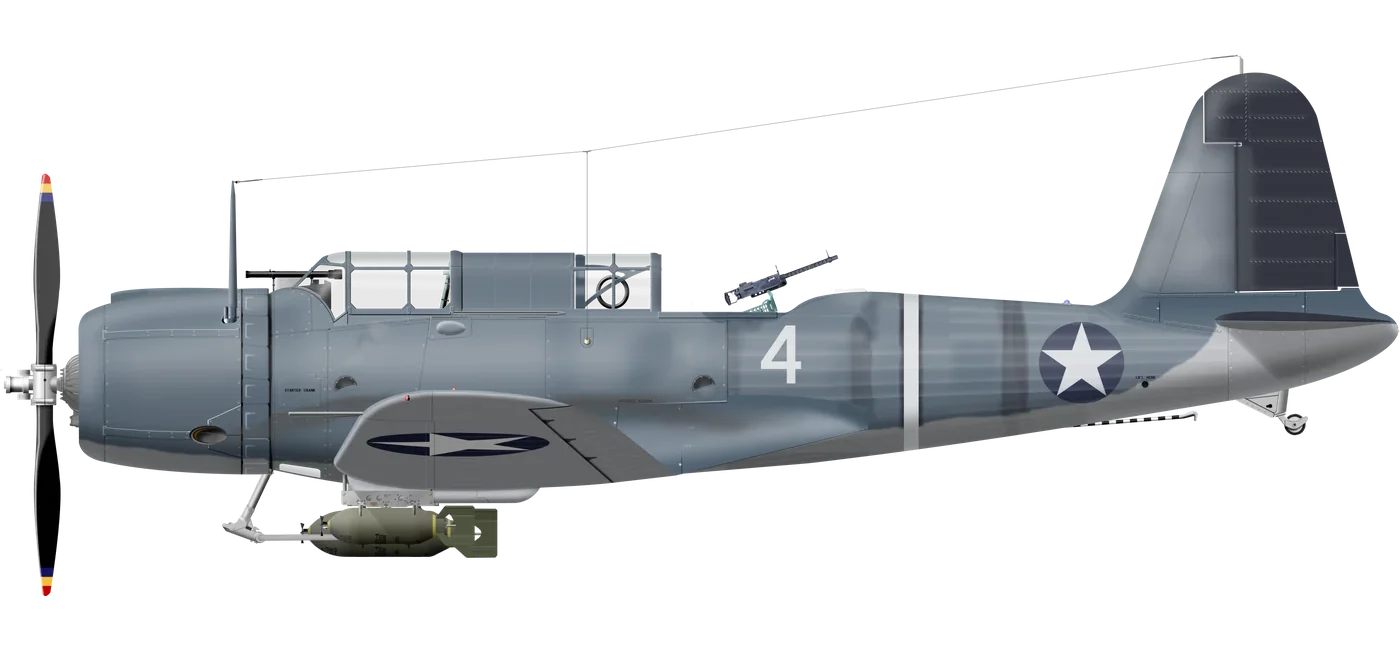
SB2U-3 Vindicator #4
BuNo 2053 · VMSB-241, MAG-22 · Eastern Island, Midway · June 1942BuNo 2053 · VMSB-241, MAG-22 · Eastern Island, Midway · Ιούνιος 1942
- TypeΤύπος
- SB2U-3
- BuNo
- 2053
- CodeΑριθμός
- #4
- UnitΜονάδα
- VMSB-241
Fabric, tape and a glideΎφασμα, ταινία και ολίσθηση
On 4 June 1942 Second Lieutenant George E. Koutelas took SB2U-3 Vindicator #4 off from Eastern Island with the second element of VMSB-241, led by Major Benjamin W. Norris, with Private First Class Warren H. Van Kirk in the rear seat. The pitot cover had been left on and his radio failed soon after take-off, so he flew without an airspeed indicator or contact with the formation, marking his headings on the leg of his flying suit. He glide-bombed the battleship generally identified as Haruna and returned to Midway alone.
The Vindicators of VMSB-241 were worn aircraft. Their fabric had to be held on with tape, and the squadron had given up dive-bombing for the shallower glide attack, which left the crews exposed to fighters and anti-aircraft fire. For the attack on the cruisers on 5 June his logbook records SB2U-3 2056. The profile depicts #4 in the overall blue-grey finish of the Marine Vindicators at Midway, with the white side number, the white fuselage band and a single bomb on the centreline crutch.
Στις 4 Ιουνίου 1942 ο ανθυπολοχαγός George E. Κουτέλας απογειώθηκε από το Eastern Island με το SB2U-3 Vindicator #4 στο δεύτερο τμήμα της VMSB-241, υπό τον ταγματάρχη Benjamin W. Norris, με τον στρατιώτη Α΄ τάξεως Warren H. Van Kirk στο πίσω κάθισμα. Το κάλυμμα του σωλήνα pitot είχε ξεχαστεί στη θέση του και ο ασύρματος χάλασε λίγο μετά την απογείωση, έτσι πέταξε χωρίς ένδειξη ταχύτητας και χωρίς επαφή με τον σχηματισμό, σημειώνοντας τις πορείες του στο πόδι της στολής πτήσης. Επιτέθηκε με ολίσθηση στο θωρηκτό που ταυτίζεται συνήθως με το Haruna και γύρισε μόνος στο Midway.
Τα Vindicator της VMSB-241 ήταν φθαρμένα αεροσκάφη. Το ύφασμά τους συγκρατούνταν με ταινία και η μοίρα είχε εγκαταλείψει τον καθετοβομβαρδισμό για την πιο ήπια επίθεση με ολίσθηση, που άφηνε τα πληρώματα εκτεθειμένα σε καταδιωκτικά και αντιαεροπορικά. Για την επίθεση στα καταδρομικά στις 5 Ιουνίου το βιβλίο πτήσεών του καταγράφει το SB2U-3 2056. Το προφίλ δείχνει το #4 στο ενιαίο γαλαζογκρί χρώμα των Vindicator των Πεζοναυτών στο Midway, με τον λευκό αριθμό, τη λευκή ταινία στην άτρακτο και μία βόμβα στο κεντρικό άγκιστρο.
Aircraft profile: John Smith.Προφίλ αεροσκάφους: John Smith.
Midway, June 1942Midway, Ιούνιος 1942
- 4.6.1942SB2U-3 2053, #4
4.0 h · attack on the fleetSB2U-3 2053, #4
4,0 ώρες · επίθεση στον στόλο - 5.6.1942SB2U-3 2056
3.0 h · the cruisersSB2U-3 2056
3,0 ώρες · τα καταδρομικά - GunnerΠολυβολητήςPFC Warren H. Van KirkΣτρ. Α΄ τάξ. Warren H. Van Kirk
5 and 6 June5 και 6 Ιουνίου
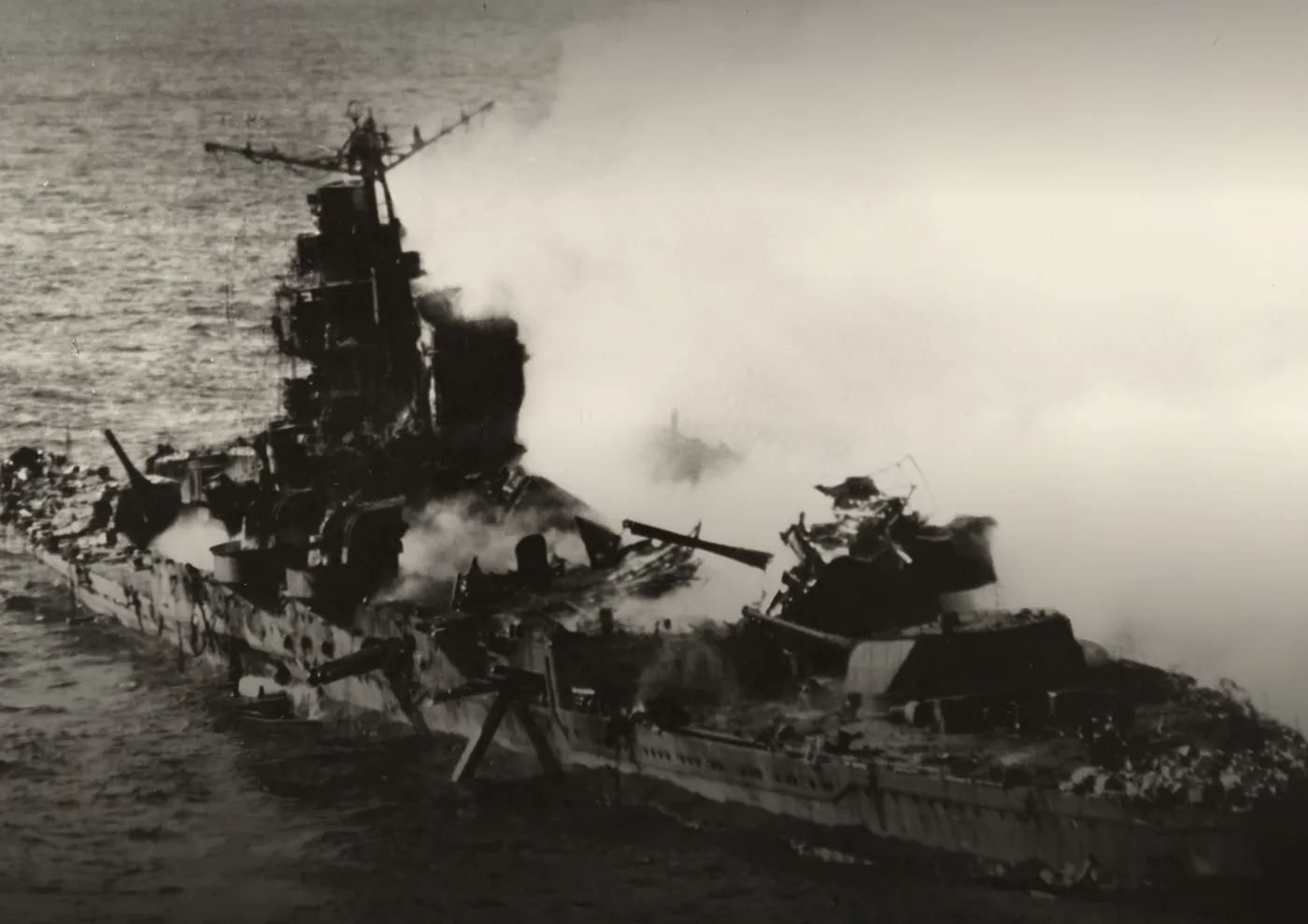
The next morning the surviving Marine bombers were ordered against Japanese warships withdrawing westward. The ships were the heavy cruisers Mogami and Mikuma, which had collided during a maneuver to avoid a reported submarine. The collision had damaged Mogamiʼs bow and left an oil trail that helped the Americans find them.³⁶
Koutelas flew SB2U-3 2056 with Van Kirk again in the rear seat. His logbook would record three hours in the air. Captain Richard E. Fleming led the Vindicator element, while Captain Marshall A. Tyler led the Dauntlesses.³⁷
The assignment had changed just before departure. Koutelas remembered preparing to head toward transports and supply ships, then being redirected toward the two cruisers:
I recall out target was changed again at the last minute. There were several transports and supply ships in the other direction which were the original target. However, a Navy patrol plane had picked up an oil slick which it followed until it spotted the two cruisers, which became our target.
The oil slick led them to the ships. Approaching at 4,000 feet, they came within sight of the flashing guns. For Koutelas, the sight of one aircraft burning became inseparable from the attack:
After take-off we climbed to 4,000 feet and stayed at that altitude until we started our attack. Once we had picked up the oil slick there was no problem finding the target. We were sitting ducks at 4,000 feet and still remember seeing all the gun flashes and the red hot golf balls coming at us and then out of the corner of my eye, I saw one plane on fire and I watched it crash into the cruiser. I believe it went into one of the rear gun turret, but I’m not sure.
He made his own run from the rear of the attacking element, releasing diagonally across the starboard bow before turning away. In the second entry of his statement of 7 June, he described the entire mission:
His statement · 7 June 1942 (continued)Η κατάθεσή του · 7 Ιουνίου 1942 (συνέχεια)5 June, 1942
We received orders about 0715 to go attack a crippled battleship, which was on bearing 278 degrees, distance 130 miles. We took off immediately at 0735 we were heading 270 degrees. About 20 miles past Kure, we picked up an oil slick left by the crippled battleship. A few minutes later we sighted a submarine, but continued oncourse. No enemy aircraft was sighted going out or coming back. We climbed to four thousand feet and went in at four thousand. We attacked at 0850. Captain Fleming was leading the attack and was hit by AA fire and went down in flames. He stayed in his dive even though he was in flames and dropped his bomb at 500 feet. He got a near miss on the stern of the ship. I was the last one of the six to dive. While I was in my dive I saw two near misses about 30 feet off the starboard bow. The two bombs were about twenty feet apart. I made my run diagonally across the starboard bow, releasing at about 1,000 feet. After releasing I turned left to 080 degrees and headed for home. While I was running I saw about one-third the way back from the bow. The ship was listing heavy and was winding up in a tight right turn. I watched it until it was out of sight and it was still smoking near the bow. I went out for 15 minutes and joined up with Captain Prosser and Lt. Ringblom. Sgt. Stamps joined up with us at Kure and we came on home without any further incident.
GEORGE E. KOUTELAS, 2dLt., USMCR(V).³⁸
VMSB-241, MidwayVMSB-241, Midway
Getting back to Midway still left the landing. He put the Vindicator down on the short runway, where the damaged hydraulic line brought one last crisis. When he climbed out, Cosley was waiting:
When we returned to base we landed on the short runway and when I hit the brakes my left one went out and I ground looped to the right onto the long runway. Since I was off the runway we were using and since I couldn’t taxi without brakes, I shut it down and waited for a tow. (I later found out that a small caliber shell had hit the hydraulic line.) When I climbed down out of the plane, Lt. Jack Cosley came up and shook hands with me. He had been waiting at the intersection of the runway for our return.³⁹
It was after his return that he learned whose aircraft he had watched burning. Fleming and his gunner, Private First Class George A. Toms, had not come back.⁴⁰ Koutelas had known Fleming for only a few days, but his admiration survived the years:
I didn’t know that it was Capt. Flemming until I returned to base. I had only known him for a few days, but to me he was top notch.⁴¹
The cruisers continued their withdrawal. Mikuma was sunk by carrier-based aircraft on 6 June, the day after the Marinesʼ attack.⁴²
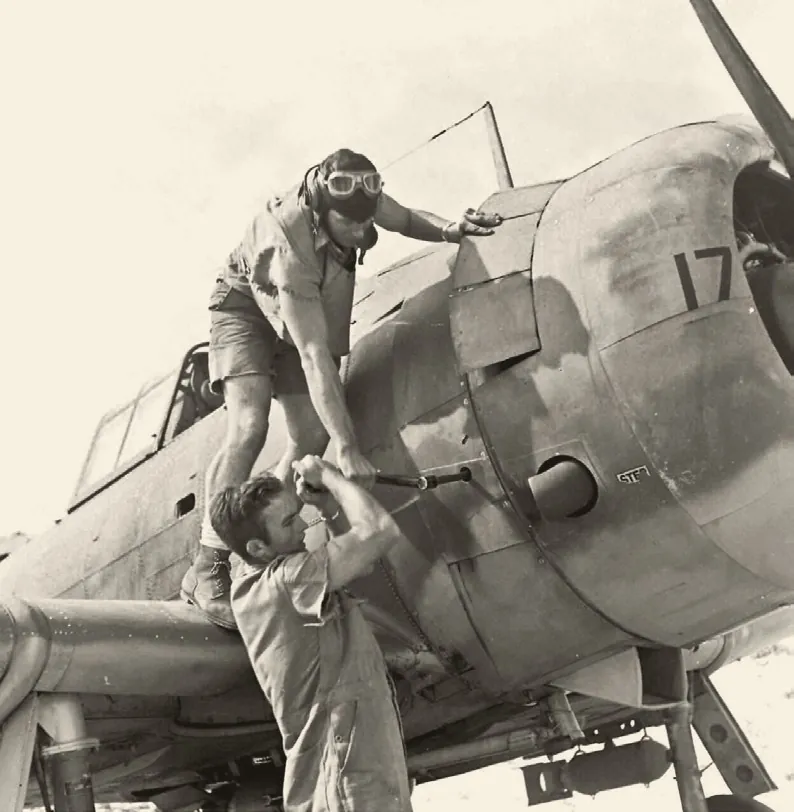
A Dauntless on 6 June and the men who stayed
On 6 June Koutelas was back in the ready room when another call came. A submarine had been reported, and this time the aircraft waiting for him was an SBD Dauntless. He remembered being sent off after a cockpit briefing given while the depth charges were being loaded:
On the sixth I was in the ready room when a jeep came tearing up and someone came in and grabbed me and said a submarine had been spotted. The ground crews were putting depth charges on two SBD’s and I said I hadn’t been checked out in the D’s and he said “I’ll give you a cockpit check-out while they are loading the depth charges.” The checkout consisted of “here’s the throttle, and the flaps, and the landing gear lever, now get going.”
I stayed out about 2 hours, but never spotted anything and that was the end of the mission. I bring this up mainly to stress again, the unfamiliarity of the aircraft we flew.⁴³
The flight went into his log as an observation and patrol toward Kure Island: SBD 2178, Van Kirk in the rear seat, and 1.9 hours in the air.⁴⁴
The battle had left Marine aviation at Midway badly depleted. The surviving pilots had to absorb the loss of commanding officers, friends, and rear crewmen while continuing the stationʼs defense. Aircraft were repaired, replacement personnel arrived, and the battered squadron began to recover its strength. Koutelas remained through the summer. The VMSB-241 war diary for 1 July lists him among the spare pilots in the squadronʼs tactical organization, alongside Cosley, Thompson, and Technical Sergeant Ford. It records twenty SBD-3s assigned, fifteen in commission. Patrols, familiarization, formation work, and bombing practice continued.⁴⁵
Among the men who stayed, shared experience developed into friendships that would carry them through their next campaign. Koutelas remembered the small group that remained together after the squadron was relieved:
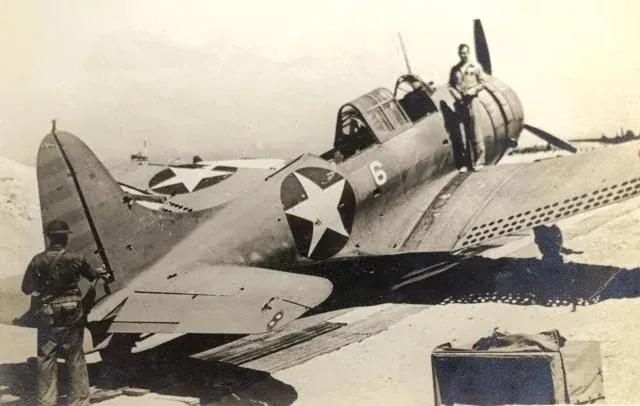
Shortly after the battle was over (I don’t remember how many days) the squadron was relieved except for six of us who stayed on until the middle of September.
The six of us, Lt. G. Schlenderir, Lt. G.T. Lumpkin, Lt. Jack Cosley, Lt. Dan Cummings, Lt. Elmer Thompson and my self were the nucleus of a new squadron when we returned to Pearl in Sept. We landed on Guadacanal in Dec. ’42 and stayed together until June or July of ’43 when the five returned to the States and I stayed out until April ’44. Needless to say, the six of us became very good friends during the period.⁴⁶
On 17 September he finally left Midway by air. The next day he joined VMSB-233 in Hawaii. He had arrived at the atoll a recent graduate learning his first operational aircraft; he left it a combat survivor, ready to carry that experience into another squadron and another campaign.⁴⁷
Το επόμενο πρωί τα βομβαρδιστικά των Πεζοναυτών που είχαν επιζήσει διατάχθηκαν να επιτεθούν σε ιαπωνικά πολεμικά πλοία που αποσύρονταν προς τα δυτικά. Ήταν τα βαριά καταδρομικά Mogami και Mikuma, που είχαν συγκρουστεί σε έναν ελιγμό για να αποφύγουν ένα υποβρύχιο που είχε αναφερθεί. Η σύγκρουση είχε προκαλέσει ζημιά στην πλώρη του Mogami και είχε αφήσει ένα ίχνος πετρελαίου που βοήθησε τους Αμερικανούς να τα βρουν.³⁶
Ο Κουτέλας πέταξε το SB2U-3 2056, και πάλι με τον Van Kirk στο πίσω κάθισμα. Το βιβλίο πτήσεών του θα κατέγραφε τρεις ώρες στον αέρα. Ο λοχαγός Richard E. Fleming ηγούνταν του τμήματος των Vindicator, ενώ ο λοχαγός Marshall A. Tyler ηγούνταν των Dauntless.³⁷
Η αποστολή είχε αλλάξει λίγο πριν από την αναχώρηση. Ο Κουτέλας θυμόταν ότι ετοιμάζονταν να κατευθυνθούν προς μεταγωγικά και πλοία ανεφοδιασμού και ότι ύστερα στάλθηκαν εναντίον των δύο καταδρομικών:
Θυμάμαι ότι ο στόχος μας άλλαξε πάλι την τελευταία στιγμή. Υπήρχαν αρκετά μεταγωγικά και πλοία ανεφοδιασμού στην άλλη κατεύθυνση, που ήταν ο αρχικός στόχος. Όμως ένα περιπολικό αεροσκάφος του Ναυτικού είχε εντοπίσει μια κηλίδα πετρελαίου, την ακολούθησε ώσπου είδε τα δύο καταδρομικά, και αυτά έγιναν ο στόχος μας.
Η κηλίδα πετρελαίου τους οδήγησε στα πλοία. Πλησιάζοντας στα 4.000 πόδια, βρέθηκαν μπροστά στις λάμψεις των πυροβόλων. Για τον Κουτέλα, η εικόνα ενός αεροσκάφους που φλεγόταν έγινε αξεχώριστη από την επίθεση:
Μετά την απογείωση ανεβήκαμε στα 4.000 πόδια και μείναμε σε αυτό το ύψος ώσπου αρχίσαμε την επίθεσή μας. Από τη στιγμή που βρήκαμε την κηλίδα πετρελαίου, δεν υπήρχε πρόβλημα να βρούμε τον στόχο. Στα 4.000 πόδια ήμασταν εύκολοι στόχοι, και θυμάμαι ακόμη όλες τις λάμψεις των πυροβόλων και τις πυρακτωμένες «μπαλίτσες του γκολφ» να έρχονται καταπάνω μας· κι ύστερα, με την άκρη του ματιού μου, είδα ένα αεροπλάνο να φλέγεται και το παρακολούθησα να πέφτει πάνω στο καταδρομικό. Νομίζω ότι έπεσε σε έναν από τους πίσω πυργίσκους πυροβόλων, αλλά δεν είμαι σίγουρος.
Έκανε το δικό του πέρασμα από το πίσω μέρος του επιτιθέμενου τμήματος, απελευθερώνοντας τη βόμβα διαγώνια πάνω από τη δεξιά πλευρά της πλώρης πριν απομακρυνθεί. Στο δεύτερο μέρος της κατάθεσής του της 7ης Ιουνίου περιέγραψε ολόκληρη την αποστολή:
His statement · 7 June 1942 (continued)Η κατάθεσή του · 7 Ιουνίου 1942 (συνέχεια)5 Ιουνίου 1942
Λάβαμε διαταγή περίπου στις 0715 να επιτεθούμε σε ένα χτυπημένο θωρηκτό, σε διόπτευση 278 μοιρών και απόσταση 130 μιλίων. Απογειωθήκαμε αμέσως· στις 0735 είχαμε πορεία 270 μοιρών. Περίπου 20 μίλια μετά το Kure εντοπίσαμε μια κηλίδα πετρελαίου που είχε αφήσει το χτυπημένο θωρηκτό. Λίγα λεπτά αργότερα είδαμε ένα υποβρύχιο, αλλά συνεχίσαμε την πορεία μας. Κανένα εχθρικό αεροσκάφος δεν φάνηκε ούτε στο πήγαινε ούτε στο έλα. Ανεβήκαμε στα τέσσερις χιλιάδες πόδια και επιτεθήκαμε από τα τέσσερις χιλιάδες. Επιτεθήκαμε στις 0850. Ο λοχαγός Fleming ηγούνταν της επίθεσης· χτυπήθηκε από αντιαεροπορικά πυρά και έπεσε στις φλόγες. Έμεινε στην εφόρμησή του αν και φλεγόταν και έριξε τη βόμβα του στα 500 πόδια. Η βόμβα του έπεσε πολύ κοντά στην πρύμνη του πλοίου. Ήμουν ο τελευταίος από τους έξι που εφόρμησαν. Ενώ ήμουν στην εφόρμηση, είδα δύο βόμβες να πέφτουν πολύ κοντά, περίπου 30 πόδια από τη δεξιά πλευρά της πλώρης. Οι δύο βόμβες απείχαν μεταξύ τους περίπου είκοσι πόδια. Έκανα το πέρασμά μου διαγώνια πάνω από τη δεξιά πλευρά της πλώρης, απελευθερώνοντας περίπου στα 1.000 πόδια. Μετά την απελευθέρωση έστριψα αριστερά στις 080 μοίρες και πήρα τον δρόμο για τη βάση. Ενώ απομακρυνόμουν, είδα περίπου στο ένα τρίτο της απόστασης από την πλώρη. Το πλοίο είχε μεγάλη κλίση και έκανε μια κλειστή στροφή προς τα δεξιά. Το παρακολούθησα ώσπου χάθηκε από τα μάτια μου, και εξακολουθούσε να βγάζει καπνό κοντά στην πλώρη. Πέταξα προς τα έξω για 15 λεπτά και συνενώθηκα με τον λοχαγό Prosser και τον υπολοχαγό Ringblom. Ο λοχίας Stamps συνενώθηκε μαζί μας στο Kure και γυρίσαμε στη βάση χωρίς άλλο συμβάν.
GEORGE E. KOUTELAS, Ανθυπολοχαγός, USMCR(V).³⁸
VMSB-241, MidwayVMSB-241, Midway
Η επιστροφή στο Midway άφηνε ακόμη την προσγείωση. Προσγείωσε το Vindicator στον κοντό διάδρομο, όπου ο χτυπημένος υδραυλικός σωλήνας του επιφύλαξε μια τελευταία κρίση. Όταν κατέβηκε, ο Cosley τον περίμενε:
Όταν γυρίσαμε στη βάση, προσγειωθήκαμε στον κοντό διάδρομο, και όταν πάτησα φρένο, το αριστερό δεν έπιασε και το αεροπλάνο στριφογύρισε προς τα δεξιά πάνω στον μακρύ διάδρομο. Αφού είχα βγει από τον διάδρομο που χρησιμοποιούσαμε και δεν μπορούσα να τροχοδρομήσω χωρίς φρένα, έσβησα τον κινητήρα και περίμενα να με ρυμουλκήσουν. (Αργότερα έμαθα ότι ένα βλήμα μικρού διαμετρήματος είχε χτυπήσει τον υδραυλικό σωλήνα.) Όταν κατέβηκα από το αεροπλάνο, ο υπολοχαγός Jack Cosley ήρθε και μου έσφιξε το χέρι. Μας περίμενε στη διασταύρωση των διαδρόμων να γυρίσουμε.³⁹
Μόνο μετά την επιστροφή του έμαθε ποιανού το αεροσκάφος είχε δει να φλέγεται. Ο Fleming και ο πολυβολητής του, ο Στρατιώτης Α΄ Τάξεως George A. Toms, δεν είχαν γυρίσει.⁴⁰ Ο Κουτέλας γνώριζε τον Fleming μόνο λίγες μέρες, όμως ο θαυμασμός του άντεξε στα χρόνια:
Δεν ήξερα ότι ήταν ο λοχαγός Flemming παρά μόνο όταν γύρισα στη βάση. Τον γνώριζα μόνο λίγες μέρες, αλλά για μένα ήταν κορυφαίος.⁴¹
Τα καταδρομικά συνέχισαν την υποχώρησή τους. Το Mikuma βυθίστηκε από αεροσκάφη αεροπλανοφόρων στις 6 Ιουνίου, την επομένη της επίθεσης των Πεζοναυτών.⁴²
Ένα Dauntless στις 6 Ιουνίου και οι άνδρες που έμειναν
Στις 6 Ιουνίου ο Κουτέλας βρισκόταν πάλι στην αίθουσα αναμονής όταν ήρθε νέα κλήση. Είχε αναφερθεί ένα υποβρύχιο, και αυτή τη φορά το αεροσκάφος που τον περίμενε ήταν ένα SBD Dauntless. Θυμόταν ότι τον έστειλαν να πετάξει μετά από μια ενημέρωση στο πιλοτήριο, ενώ φόρτωναν τις βόμβες βυθού:
Στις έξι ήμουν στην αίθουσα αναμονής όταν ένα τζιπ έφτασε με φόρα, κάποιος μπήκε μέσα, με άρπαξε και είπε ότι είχε εντοπιστεί ένα υποβρύχιο. Τα πληρώματα εδάφους φόρτωναν βόμβες βυθού σε δύο SBD κι εγώ είπα ότι δεν είχα εκπαιδευτεί στα D, κι εκείνος μου απάντησε: «Θα σου κάνω μια ενημέρωση στο πιλοτήριο όσο φορτώνουν τις βόμβες βυθού.» Η ενημέρωση ήταν: «Αυτός είναι ο μοχλός ισχύος, αυτά τα πτερύγια, αυτός ο μοχλός του σκελετού προσγείωσης, και τώρα φύγε.»
Έμεινα έξω περίπου 2 ώρες, αλλά δεν εντόπισα τίποτα, και εκεί τελείωσε η αποστολή. Το αναφέρω κυρίως για να τονίσω ξανά πόσο άγνωστα μας ήταν τα αεροσκάφη που πετούσαμε.⁴³
Η πτήση καταγράφηκε στο βιβλίο του ως παρατήρηση και περιπολία προς το Kure Island: SBD 2178, ο Van Kirk στο πίσω κάθισμα και 1,9 ώρες στον αέρα.⁴⁴
Η μάχη είχε αφήσει την αεροπορία των Πεζοναυτών στο Midway σοβαρά αποδεκατισμένη. Οι χειριστές που επέζησαν έπρεπε να αντέξουν την απώλεια διοικητών, φίλων και πίσω μελών των πληρωμάτων, συνεχίζοντας παράλληλα την άμυνα του σταθμού. Τα αεροσκάφη επισκευάστηκαν, έφτασε νέο προσωπικό, και η ταλαιπωρημένη μοίρα άρχισε να ανακτά τις δυνάμεις της. Ο Κουτέλας έμεινε εκεί όλο το καλοκαίρι. Το ημερολόγιο πολέμου της VMSB-241 της 1ης Ιουλίου τον καταγράφει ανάμεσα στους εφεδρικούς χειριστές της τακτικής οργάνωσης της μοίρας, μαζί με τον Cosley, τον Thompson και τον Επιλοχία Ford. Καταγράφει είκοσι SBD-3 στη δύναμη της μοίρας, δεκαπέντε από αυτά επιχειρησιακά. Οι περιπολίες, οι πτήσεις εξοικείωσης, οι ασκήσεις σχηματισμού και η εξάσκηση στον βομβαρδισμό συνεχίστηκαν.⁴⁵
Ανάμεσα στους άνδρες που έμειναν, η κοινή εμπειρία εξελίχθηκε σε φιλίες που θα τους συνόδευαν και στην επόμενη εκστρατεία τους. Ο Κουτέλας θυμόταν τη μικρή ομάδα που έμεινε μαζί όταν η μοίρα αντικαταστάθηκε:
Λίγο μετά το τέλος της μάχης (δεν θυμάμαι πόσες μέρες) η μοίρα αντικαταστάθηκε, εκτός από έξι από εμάς που μείναμε ώς τα μέσα Σεπτεμβρίου.
Οι έξι μας, ο υπολοχαγός G. Schlenderir, ο υπολοχαγός G.T. Lumpkin, ο υπολοχαγός Jack Cosley, ο υπολοχαγός Dan Cummings, ο υπολοχαγός Elmer Thompson κι εγώ, γίναμε ο πυρήνας μιας νέας μοίρας όταν γυρίσαμε στο Pearl τον Σεπτέμβριο. Προσγειωθήκαμε στο Guadacanal τον Δεκέμβριο του ’42 και μείναμε μαζί ώς τον Ιούνιο ή τον Ιούλιο του ’43, όταν οι πέντε γύρισαν στις Πολιτείες κι εγώ έμεινα εκεί ώς τον Απρίλιο του ’44. Περιττό να πω ότι οι έξι μας γίναμε πολύ καλοί φίλοι εκείνη την περίοδο.⁴⁶
Στις 17 Σεπτεμβρίου έφυγε επιτέλους από το Midway αεροπορικώς. Την επομένη εντάχθηκε στη VMSB-233 στη Χαβάη. Είχε φτάσει στην ατόλη πρόσφατος απόφοιτος που μάθαινε το πρώτο του επιχειρησιακό αεροσκάφος· την άφηνε επιζών της μάχης, έτοιμος να μεταφέρει αυτή την εμπειρία σε μια άλλη μοίρα και σε μια άλλη εκστρατεία.⁴⁷
SBD-2 Dauntless #5
BuNo 2178 · VMSB-241, MAG-22 · Eastern Island, Midway · June 1942BuNo 2178 · VMSB-241, MAG-22 · Eastern Island, Midway · Ιούνιος 1942
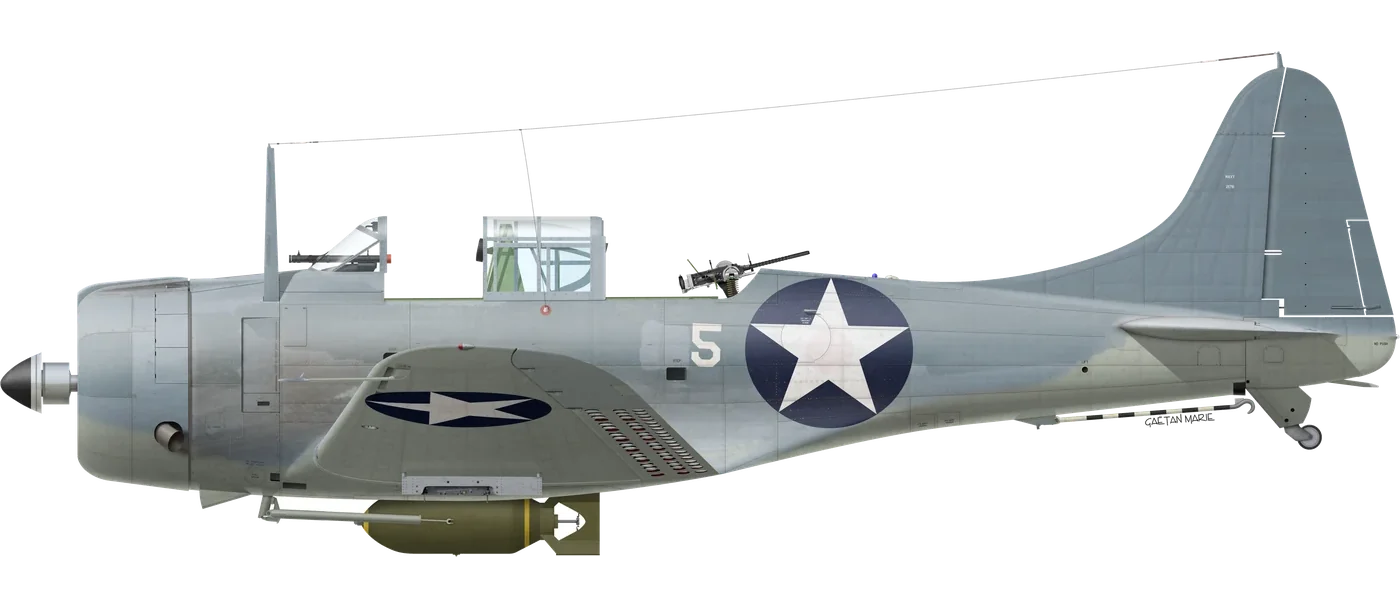
- TypeΤύπος
- SBD-2
- BuNo
- 2178
- CodeΑριθμός
- #5
- FlightΠτήση
- 6.6.1942 · 1.9 h6.6.1942 · 1,9 ώρες
The last flight of the battleΗ τελευταία πτήση της μάχης
On 6 June 1942, with the battle all but over, Koutelas took SBD-2 BuNo 2178 on a 1.9-hour observation and patrol flight toward Kure Island, Private First Class Warren H. Van Kirk again in the rear seat. He saw nothing, and it was the last flight of the battle in his log. After two days in the worn Vindicators it was his first time in a Dauntless in action; 2178 appears again on 11 June for an alert and patrol flight with a new gunner.
The SBD-2 was the first Dauntless model built in numbers for the Navy, with self-sealing tanks only in part, two .50 calibre guns in the nose and a single .30 in the rear cockpit. VMSB-241 received its SBD-2s on Midway in late May 1942, when the experienced pilots of the squadron took them over and the newcomers went to the Vindicators. The profile shows 2178 as #5 in the blue-grey over light grey of the period, with the red centre of the national insignia painted out and a 500 lb bomb on the crutch.
Στις 6 Ιουνίου 1942, με τη μάχη σχεδόν τελειωμένη, ο Κουτέλας πήρε το SBD-2 BuNo 2178 για πτήση παρατήρησης και περιπολίας 1,9 ωρών προς το νησί Kure, πάλι με τον στρατιώτη Α΄ τάξεως Warren H. Van Kirk στο πίσω κάθισμα. Δεν είδε τίποτα, και ήταν η τελευταία πτήση της μάχης στο βιβλίο του. Μετά από δύο ημέρες στα φθαρμένα Vindicator, ήταν η πρώτη του φορά σε Dauntless σε επιχείρηση· το 2178 εμφανίζεται ξανά στις 11 Ιουνίου, σε πτήση επιφυλακής και περιπολίας με νέο πολυβολητή.
Το SBD-2 ήταν το πρώτο μοντέλο Dauntless που κατασκευάστηκε σε αριθμούς για το Ναυτικό, με αυτοσφραγιζόμενες δεξαμενές μόνο εν μέρει, δύο πολυβόλα .50 στη μύτη και ένα .30 στο πίσω θάλαμο. Η VMSB-241 παρέλαβε τα SBD-2 στο Midway στα τέλη Μαΐου 1942, οπότε τα πήραν οι έμπειροι πιλότοι της μοίρας και οι νεοφερμένοι πήγαν στα Vindicator. Το προφίλ δείχνει το 2178 ως #5 στο γαλαζογκρί πάνω από ανοιχτό γκρι της εποχής, με το κόκκινο κέντρο του εθνικού σήματος σβησμένο και μια βόμβα 500 λιβρών στο άγκιστρο.
Aircraft profile © Gaëtan Marie.Προφίλ αεροσκάφους © Gaëtan Marie.
His logbookΤο βιβλίο πτήσεων
- 6.6.1942SBD-2 2178 · 1.9 h
patrol to Kure IslandSBD-2 2178 · 1,9 ώρες
περιπολία προς το Kure - 11.6.1942SBD-2 2178
alert and patrolSBD-2 2178
επιφυλακή και περιπολία - 3.7.1942June page signed;
approved by Paul F. SmithΥπογραφή σελίδας Ιουνίου·
έγκριση Paul F. Smith
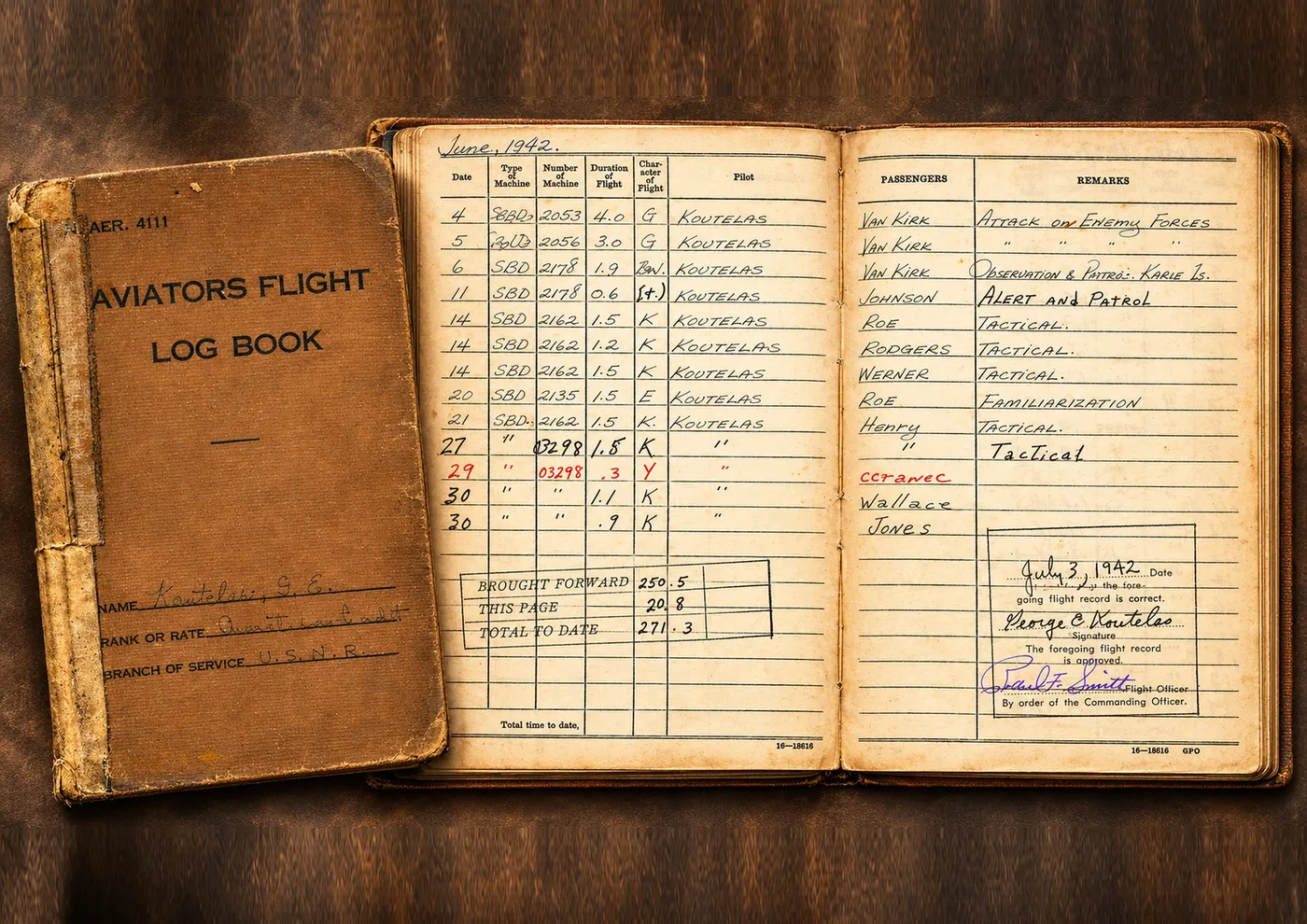
They did not come backΔεν γύρισαν
The men of George Koutelas’s squadron who were killed or went missing in the attacks of 4 and 5 June 1942, as far as their photographs survive. Pilots and their radioman-gunners are shown side by side; every award was made posthumously.Οι άνδρες της μοίρας του George Κουτέλα που σκοτώθηκαν ή χάθηκαν στις επιθέσεις της 4ης και 5ης Ιουνίου 1942, όσων σώζονται φωτογραφίες. Πιλότοι και ασυρματιστές-πολυβολητές εικονίζονται δίπλα δίπλα· όλες οι διακρίσεις απονεμήθηκαν μετά θάνατον.
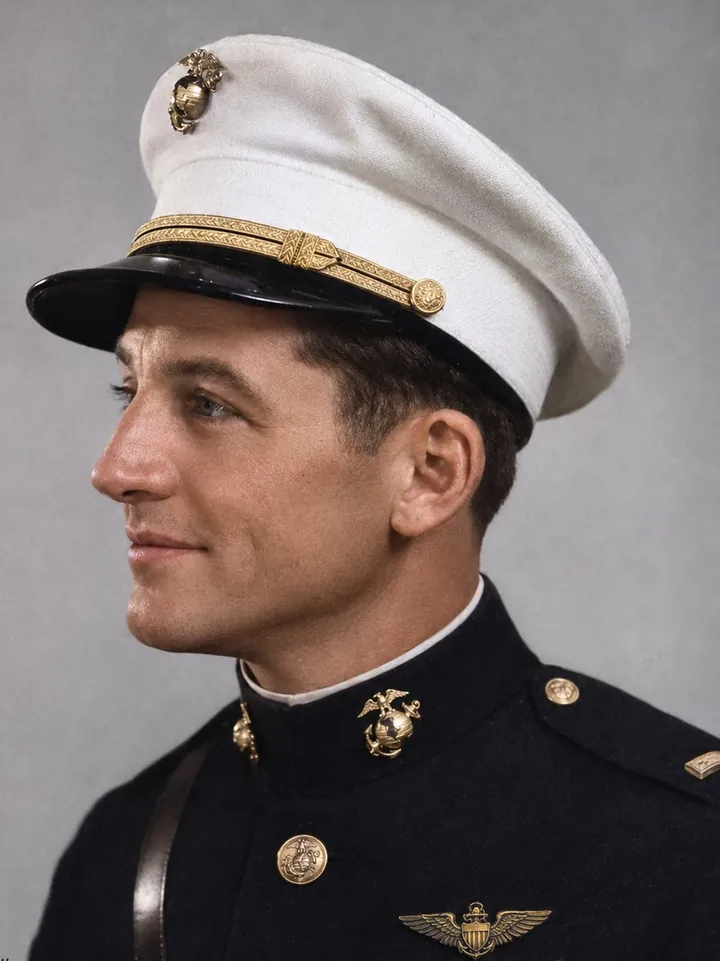
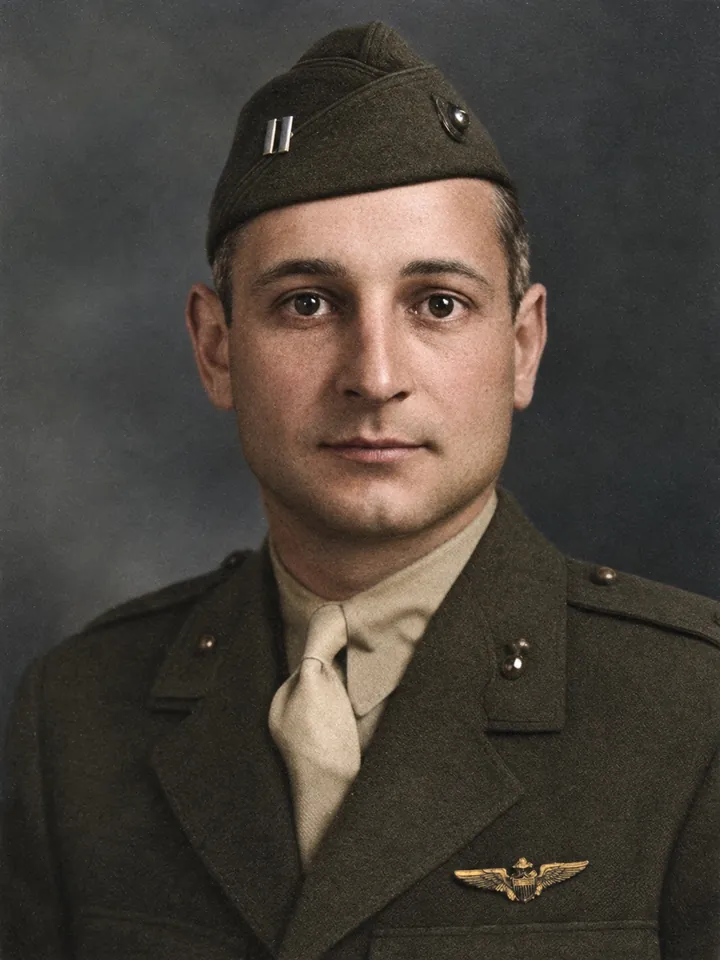
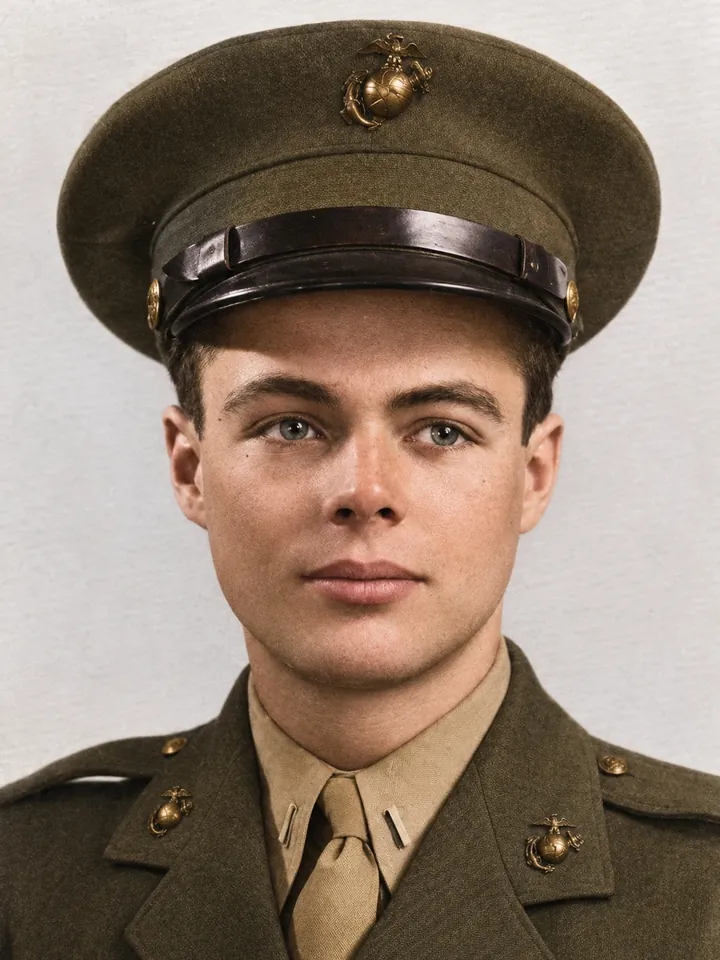
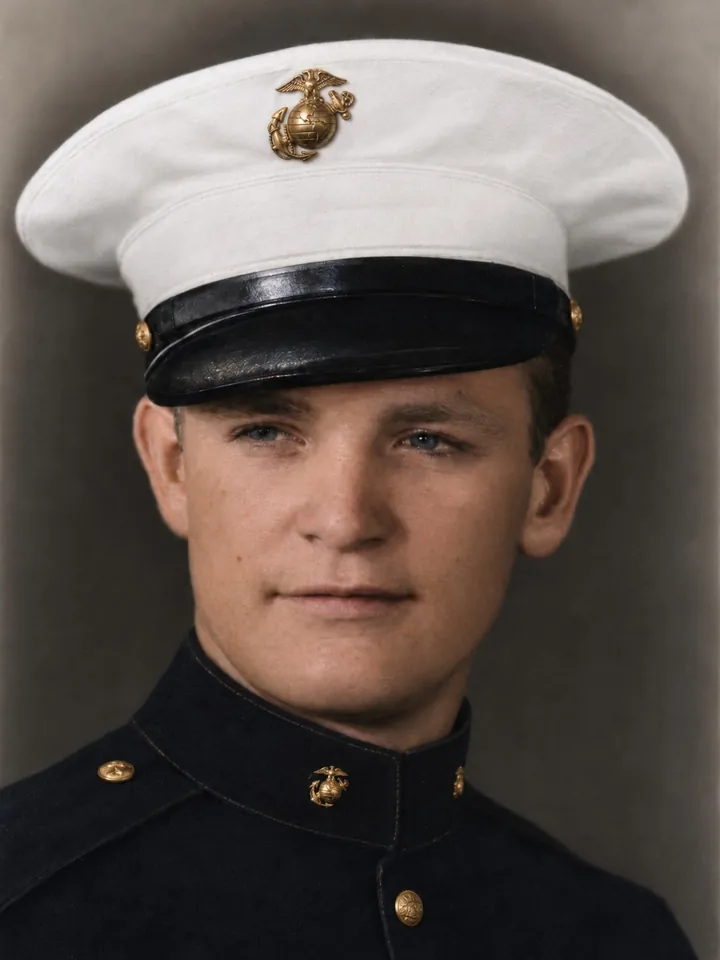
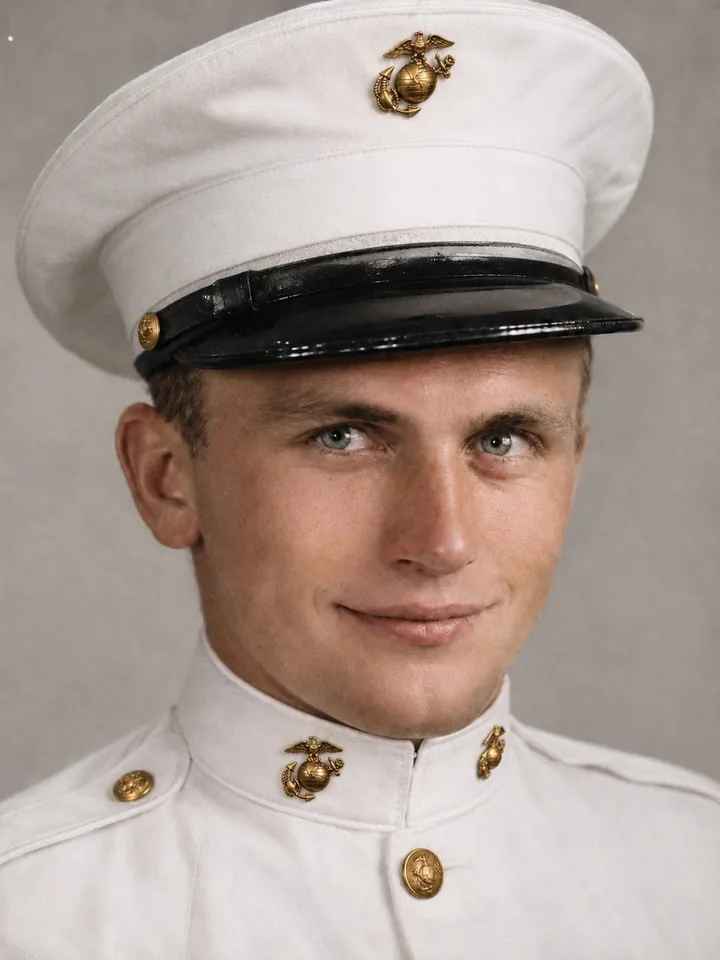
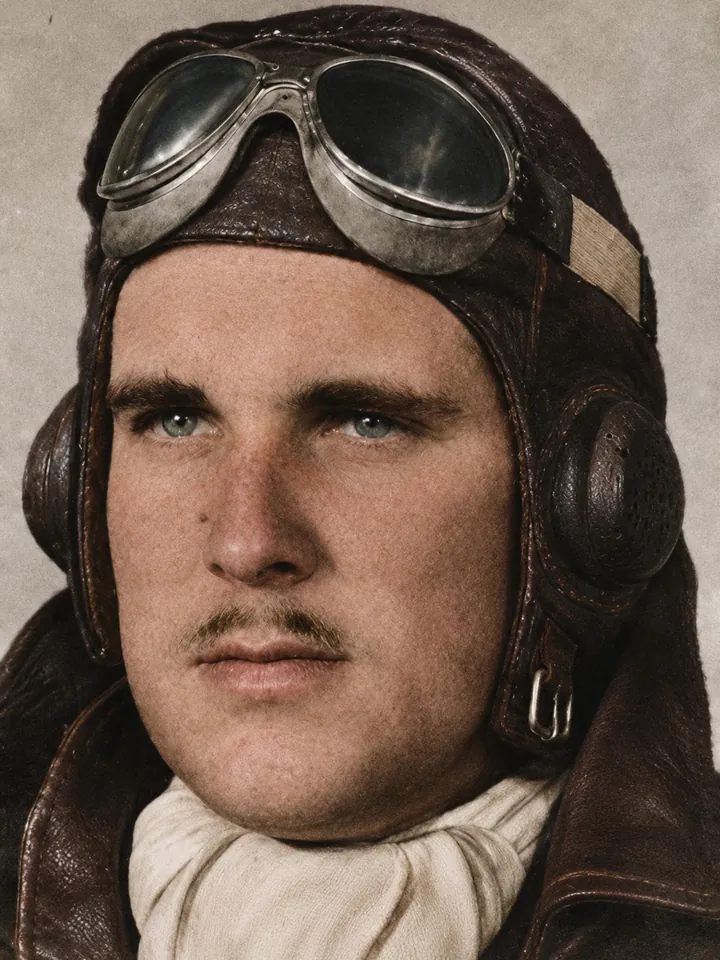
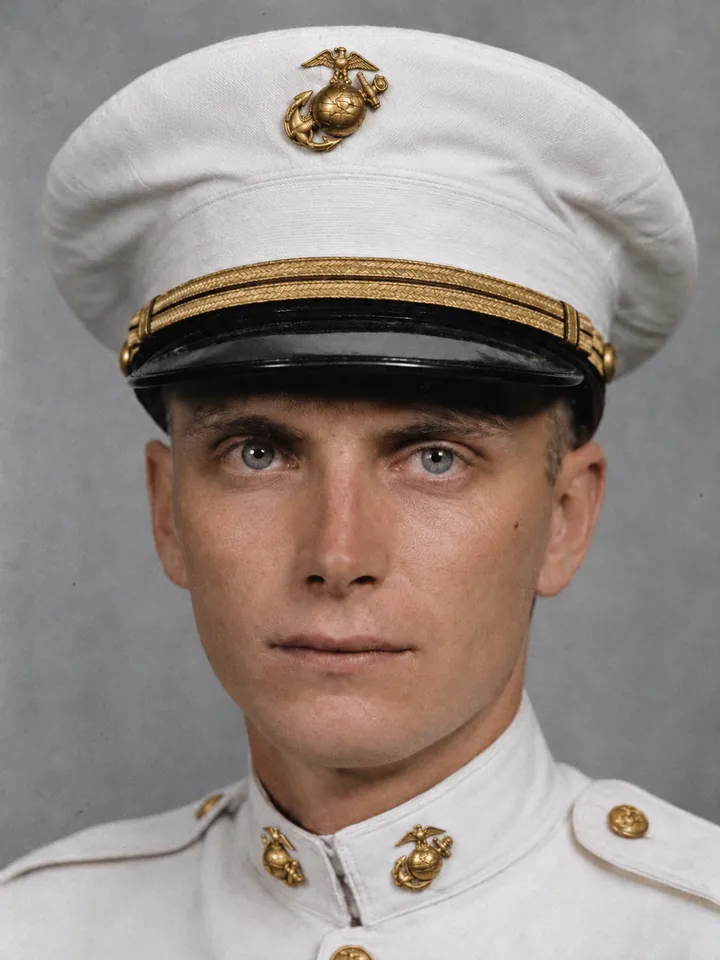
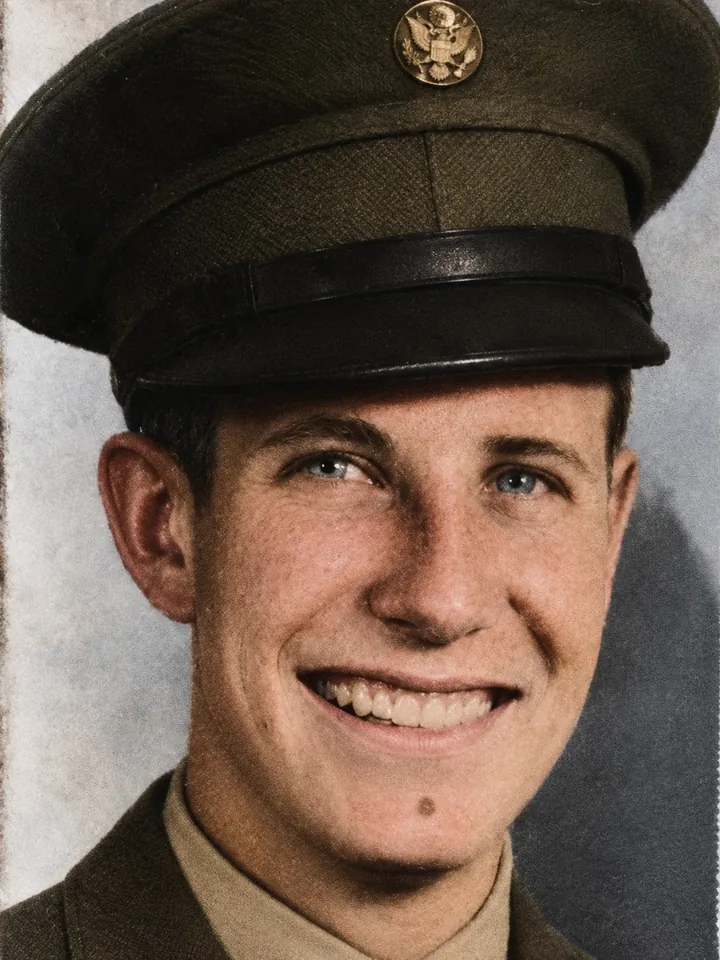
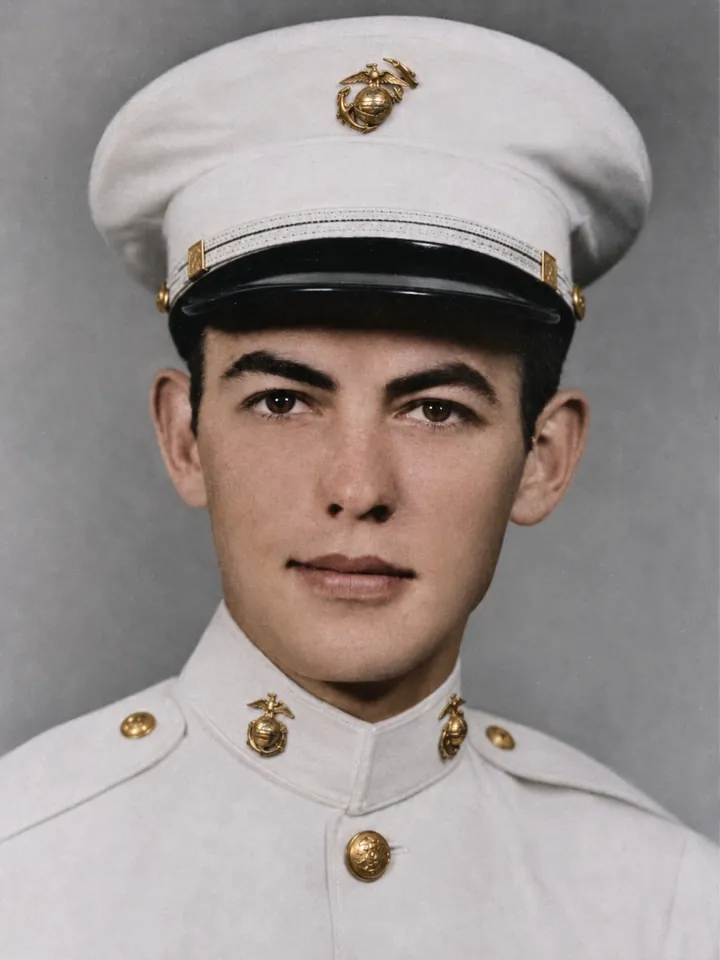
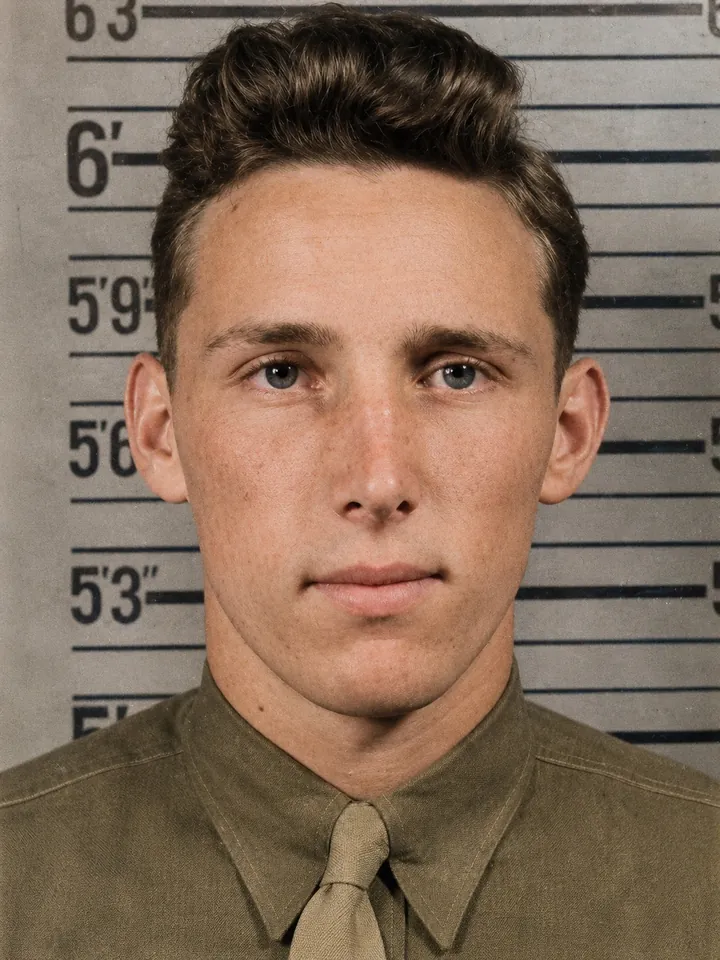
Portraits colourised from originals at missingmarines.com, findagrave.com and Life Magazine.Επιχρωματισμένα πορτρέτα από πρωτότυπα των missingmarines.com, findagrave.com και του περιοδικού Life.
The Navy CrossΤο Navy Cross
VMSB-233 gave him responsibilities beyond the cockpit. His record lists duties in athletics, gunnery, ordnance, welfare, and squadron censorship. From 18 October through 1 November he attended Fighter Director School at the Pearl Harbor Navy Yard, adding instruction connected with the control of aircraft and air defense to the practical experience of his first battle.⁴⁸
Recognition for Midway also arrived. His Navy Cross recommendation was approved on 10 November 1942. The service record enters the decoration as presented on 30 November. The citation signed by Secretary of the Navy Frank Knox recognized the courage with which he had pressed his attacks:
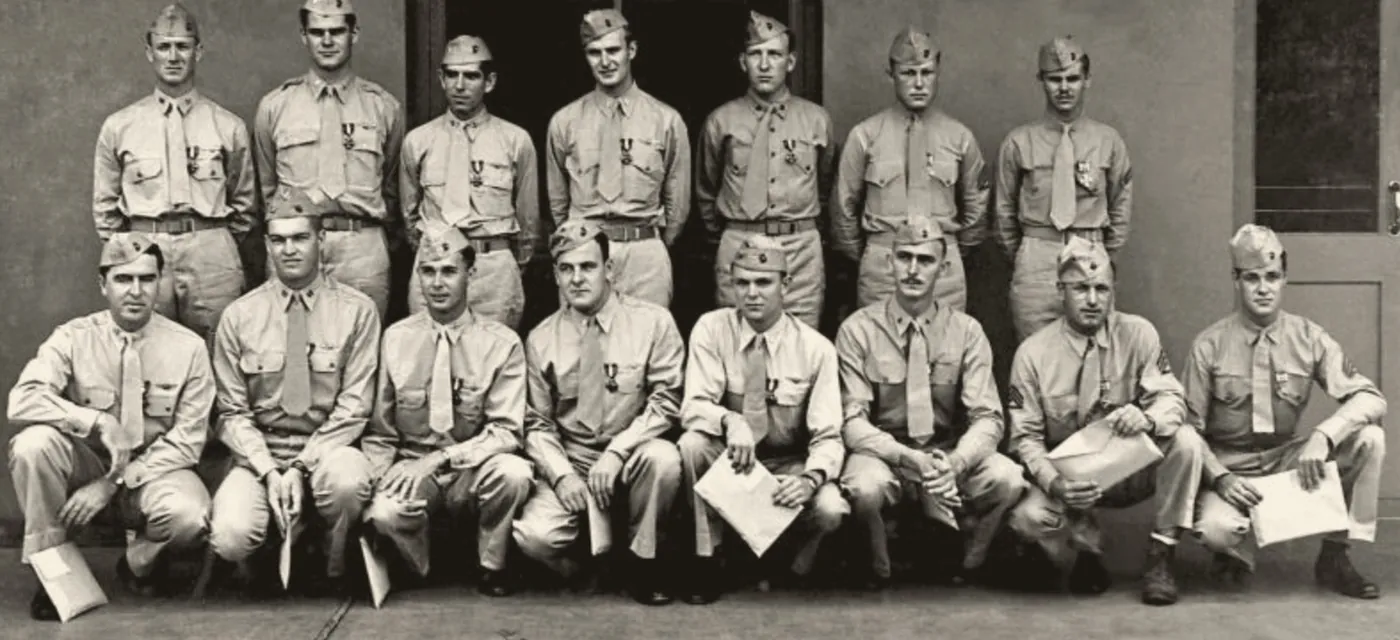
Navy Cross citation · Secretary of the NavyΑιτιολογία Navy Cross · Υπουργός ΝαυτικώνTHE SECRETARY OF THE NAVY.
WASHINGTON.
The President of the United States takes pleasure in presenting the NAVY CROSS to
SECOND LIEUTENANT GEORGE E. KOUTELAS, U.S.M.C.R.,
for service as set forth in the following
CITATION:
“For extraordinary heroism as a pilot in Marine Scout-Bombing Squadron TWO FORTY-ONE during action against enemy Japanese forces in the Battle of Midway on June 4 and 5, 1942. During the initial attack upon an enemy aircraft carrier, Second Lieutenant Koutelas, under tremendous fire from Japanese fighter guns and anti-aircraft batteries, dived his plane to the perilously low altitude of four hundred feet before releasing his bomb. On June 5, after less than four hours’ sleep, he participated in an assault which resulted in the severe damaging of a Japanese battleship. His cool courage and utter disregard of personal safety were in keeping with the highest traditions of the United States Naval Service.”
For the President,
Frank Knox
Secretary of the Navy.Frank KnoxFrank Knox
The presentation citation signed by Admiral Nimitz placed those two days of flying within the defense of Midway:
Navy Cross citation · Pacific FleetΑιτιολογία Navy Cross · Στόλος ΕιρηνικούUnited States Pacific Fleet
Flagship of the Commander in Chief
In the name of the President of the United States, the Commander in Chief, United States Pacific Fleet, takes pleasure in presenting the NAVY CROSS to
SECOND LIEUTENANT GEORGE E. KOUTELAS, UNITED STATES MARINE CORPS RESERVE
for service as set forth in the following
CITATION:
“For extraordinary heroism in the line of his profession as a pilot in Marine Scout-Bombing Squadron …, during the operations of the U. S. Naval and Marine forces on Midway Islands against the invading Japanese fleet on June 4 and 5, 1942. In the first attack on an enemy carrier, and in the face of withering fire from enemy fighters and anti-aircraft batteries he pressed home his attack … He, on June 5, 1942, after less than four hours sleep, participated in an attack through heavy anti-aircraft fire on an enemy battleship in which it was seriously damaged. His courage and devotion to duty were in keeping with the highest traditions of the naval service.”
C. W. NIMITZ,
Admiral, U. S. Navy.
Non-Classified Citation.⁴⁹Admiral C. W. NimitzΝαύαρχος C. W. Nimitz
The decoration was the Navyʼs second-highest award for combat valor, below the Medal of Honor.
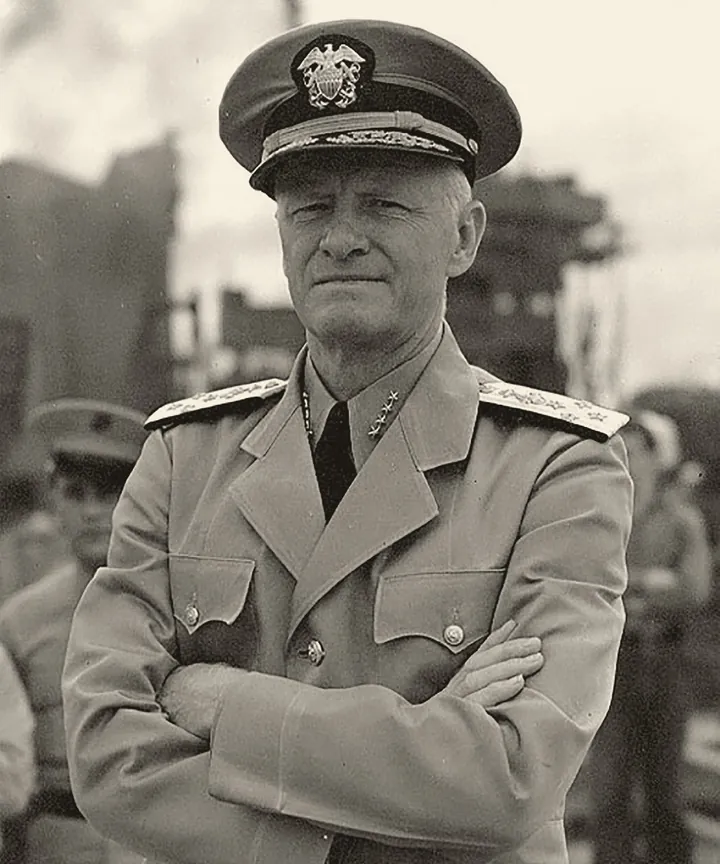
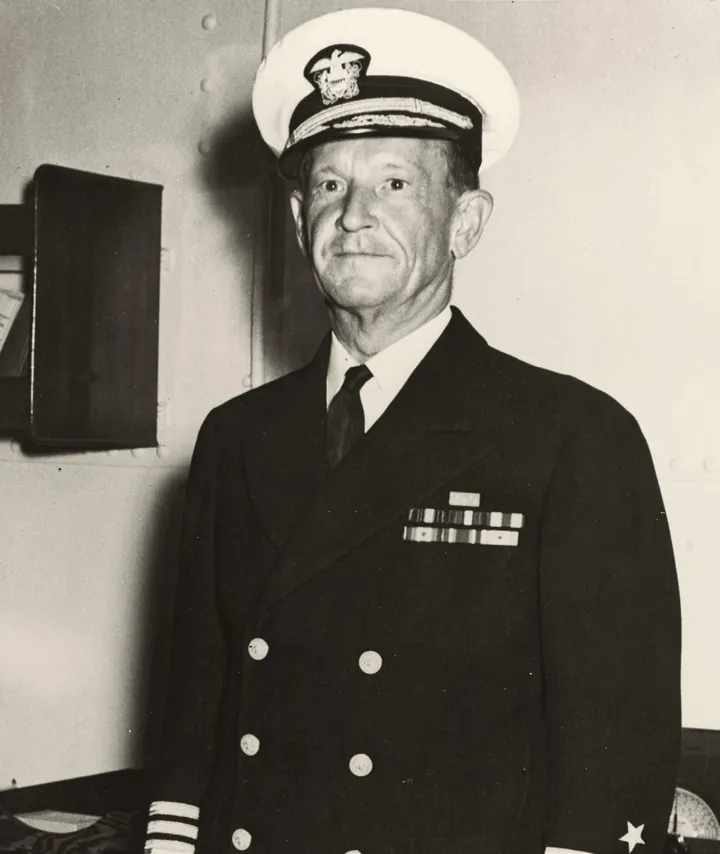
On 30 November he wrote to his mother from Hawaii. He entrusted the letter to a man returning to the United States, who would mail it on the coast. This allowed him to tell her things he felt unable to include in ordinary correspondence. He was preparing to leave for the Solomons, and his news of the coming ceremony shared the page with instructions about bills, uniforms, and a watch he wanted kept safe.⁵⁰
Letter to his mother · 30 November 1942Επιστολή στη μητέρα του · 30 Νοεμβρίου 1942Nov. 30, 1942
Dear Mom:
I am sending this back with one of the fellows that is going back to the states and he is going to mail it on the coast for me. This way I can tell you things that I otherwise couldn’t write. I’M still in Hawaii, stationed about 20 miles from Pearl Harbor. We are leaving in a few days to go South, eventually ending up in the Solomons. If we get a break like the rest of the fellows that have gone down there, I will be home in about four months. The fellows that have gone down have stayed a couple of months and then gone back to the states. There are 12 of us still here that were at Midway during the battle. Admiral Nimitz is presenting the 12 of us with the Navy Cross tomorrow. This is the highest medal the Navy gives.⁵¹
I’ve packed all my stuff that I’m not taking with me in a big box and am shipping it to you. I will put the key in this letter and when it gets there unpack it so it won’t mildew. My greens, flying suits and dirty clothes are in it. It probably won’t get there for a couple of months. I haven’t received my electric razor, check book, or check from the insurance co. yet. I hope you insured the razor. Have Dad write a check and send it to the uniform co. I am enclosing their name and address. The amount is $57.00. I just have $80 and since we are moving out I need the cash with me.⁵²
The next time you hear from me, I ought to be a 1st Lt. A new list comes out every month and I just missed it 5 days the 1st of this month. My wrist watch is also in the box, packed in a cigar box. The crystal is out, so have it fixed for me. It’s to good a watch to take with me, so hold it for me.⁵³
Call Mabel & Helen & write Stella & Deana & tell them what’s in the letter. I guess they wonder where I am & Etc. The mail service is awfully bad where we are going so don’t be surprised if it’s a long time between letters. That’s about all I can think of right now, so I will sign off for the present. Tell everybody hello for me. Wilma, I received your letter yesterday, sure glad you wrote.
Love
George⁵⁴George E. Koutelas, HawaiiGeorge E. Κουτέλας, Χαβάη
His promotion to first lieutenant carried seniority from 30 November 1942. On 1 December, the day after the letter, he sailed from Pearl Harbor in USS Wright (AV-1), the seaplane tender carrying men of VMSB-233 and VMSB-234. He reached Espiritu Santo on 12 December and disembarked the next day. The hoped-for return home in four months would become a much longer absence.⁵⁵
News of his decoration also reached the Greek American community in Kansas City. A Greek-language newspaper traced his fatherʼs origins to Draiana in Messenia and celebrated the honor brought to the family. In English translation, the article reads:
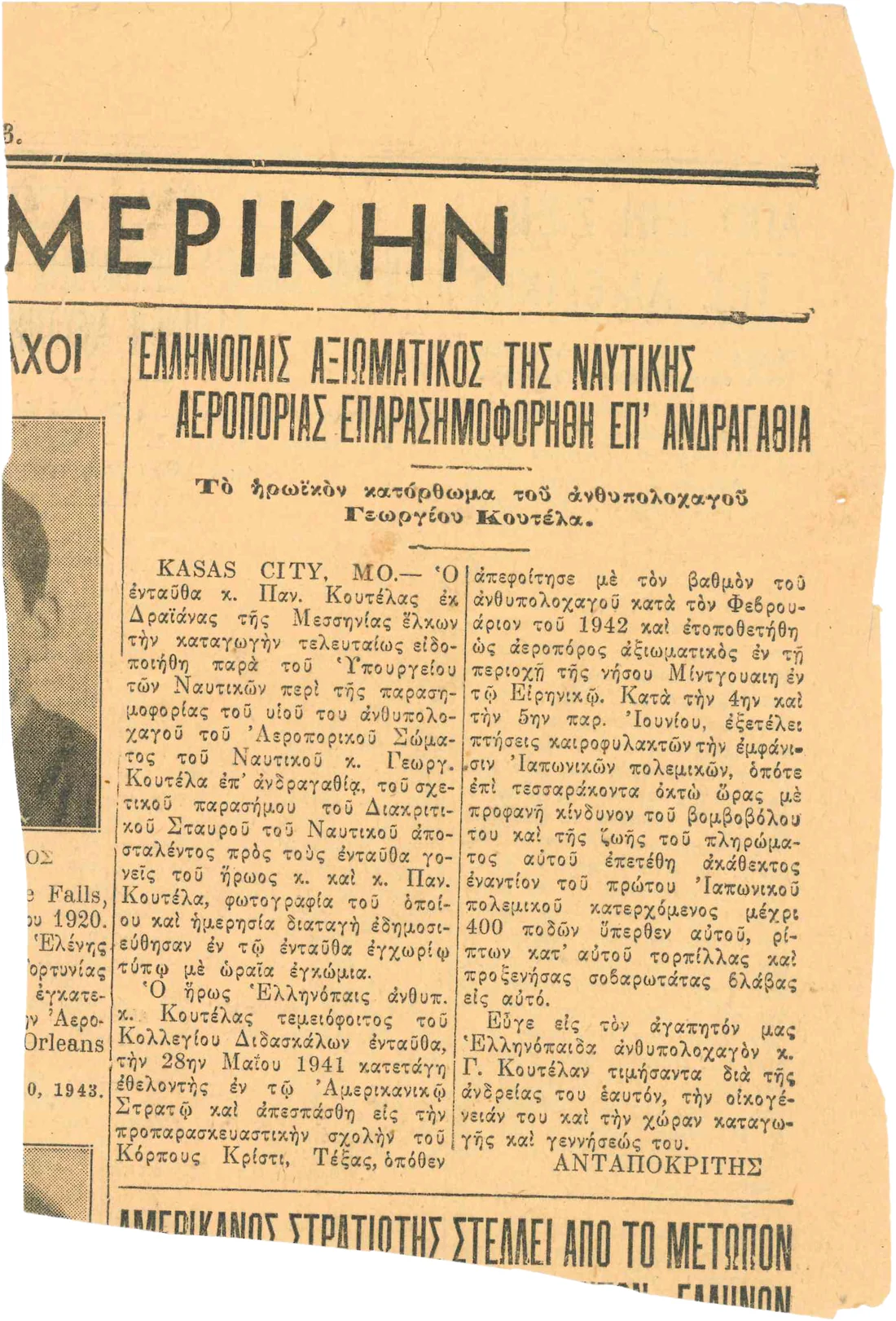
Greek-language newspaper · in translationΕλληνόγλωσση εφημερίδα · το πρωτότυποA YOUNG GREEK OFFICER OF NAVAL AVIATION DECORATED FOR GALLANTRY
The heroic achievement of Second Lieutenant George Koutelas.
KASAS CITY, MO.—Mr. Pan. Koutelas, a local resident originally from Draiana in Messenia, was recently notified by the Department of the Navy that his son, Second Lieutenant George Koutelas of the Naval Air Corps, had been decorated for gallantry. The decoration, the Navy Distinguished Cross, was sent to the hero’s parents here, Mr. and Mrs. Pan. Koutelas. His photograph and the order of the day were published in the local American press with fine tributes.
The heroic young Greek, Second Lieutenant Koutelas, a student in his final year at the Teachers College here, enlisted as a volunteer in the American Army on 28 May 1941 and was assigned to the preparatory school at Corpus Christi, Texas, from which he graduated with the rank of second lieutenant in February 1942. He was posted as an aviation officer in the area of Midway Island in the Pacific. On 4 and 5 June last, he was flying patrols watching for the appearance of Japanese warships when, for forty-eight hours, at obvious risk to his bomber and the lives of its crew, he attacked the first Japanese warship without hesitation, descending to a height of 400 feet, launching torpedoes at it, and inflicting very serious damage.
Well done to our dear young Greek, Second Lieutenant G. Koutelas, who by his courage has brought honor to himself, his family, and the lands of his ancestry and birth.
CORRESPONDENT⁵⁶
Kansas City correspondentΑνταποκριτής Kansas City
Η VMSB-233 του ανέθεσε καθήκοντα και πέρα από το πιλοτήριο. Ο φάκελός του καταγράφει υπευθυνότητες στον αθλητισμό, στην πολυβολητική, στον οπλισμό, στην πρόνοια του προσωπικού και στη λογοκρισία της αλληλογραφίας της μοίρας. Από τις 18 Οκτωβρίου ώς την 1η Νοεμβρίου παρακολούθησε τη Σχολή Καθοδηγητών Αναχαίτισης στο Ναύσταθμο του Pearl Harbor, προσθέτοντας στην πρακτική εμπειρία της πρώτης του μάχης εκπαίδευση στον έλεγχο αεροσκαφών και στην αεράμυνα.⁴⁸
Έφτασε και η αναγνώριση για το Midway. Η εισήγηση για το Navy Cross εγκρίθηκε στις 10 Νοεμβρίου 1942. Ο υπηρεσιακός φάκελος καταγράφει την απονομή του παρασήμου στις 30 Νοεμβρίου. Η αιτιολογία που υπέγραψε ο υπουργός Ναυτικών Frank Knox αναγνώριζε το θάρρος με το οποίο είχε φέρει εις πέρας τις επιθέσεις του:
Navy Cross citation · Secretary of the NavyΑιτιολογία Navy Cross · Υπουργός ΝαυτικώνΟ ΥΠΟΥΡΓΟΣ ΝΑΥΤΙΚΩΝ.
ΟΥΑΣΙΓΚΤΟΝ.
Ο Πρόεδρος των Ηνωμένων Πολιτειών έχει την ευχαρίστηση να απονείμει το NAVY CROSS στον
ΑΝΘΥΠΟΛΟΧΑΓΟ GEORGE E. KOUTELAS, U.S.M.C.R.,
για τις υπηρεσίες που περιγράφονται στην ακόλουθη
ΑΙΤΙΟΛΟΓΙΑ:
«Για εξαιρετικό ηρωισμό ως χειριστής της Μοίρας Αναγνώρισης-Βομβαρδισμού Πεζοναυτών ΔΙΑΚΟΣΙΑ ΣΑΡΑΝΤΑ ΕΝΑ κατά τη διάρκεια της δράσης εναντίον των εχθρικών ιαπωνικών δυνάμεων στη Ναυμαχία του Midway, στις 4 και 5 Ιουνίου 1942. Κατά την αρχική επίθεση εναντίον ενός εχθρικού αεροπλανοφόρου, ο ανθυπολοχαγός Koutelas, κάτω από σφοδρά πυρά των ιαπωνικών καταδιωκτικών και των αντιαεροπορικών πυροβολαρχιών, οδήγησε το αεροπλάνο του στο επικίνδυνα χαμηλό ύψος των τετρακοσίων ποδιών πριν απελευθερώσει τη βόμβα του. Στις 5 Ιουνίου, μετά από λιγότερο από τέσσερις ώρες ύπνου, πήρε μέρος σε μια επίθεση που είχε ως αποτέλεσμα τη σοβαρή ζημιά ενός ιαπωνικού θωρηκτού. Το ψυχρό του θάρρος και η απόλυτη περιφρόνησή του για την προσωπική του ασφάλεια ήταν αντάξια των υψηλότερων παραδόσεων του Ναυτικού των Ηνωμένων Πολιτειών.»
Για τον Πρόεδρο,
Frank Knox
Υπουργός Ναυτικών.Frank KnoxFrank Knox
Η αιτιολογία της απονομής που υπέγραψε ο ναύαρχος Nimitz τοποθέτησε εκείνες τις δύο μέρες πτήσεων μέσα στην άμυνα του Midway:
Navy Cross citation · Pacific FleetΑιτιολογία Navy Cross · Στόλος ΕιρηνικούΣτόλος Ειρηνικού των Ηνωμένων Πολιτειών
Ναυαρχίδα του Αρχηγού
Εξ ονόματος του Προέδρου των Ηνωμένων Πολιτειών, ο Αρχηγός του Στόλου Ειρηνικού των Ηνωμένων Πολιτειών έχει την ευχαρίστηση να απονείμει το NAVY CROSS στον
ΑΝΘΥΠΟΛΟΧΑΓΟ GEORGE E. KOUTELAS, ΕΦΕΔΡΕΙΑ ΤΟΥ ΣΩΜΑΤΟΣ ΠΕΖΟΝΑΥΤΩΝ ΤΩΝ ΗΝΩΜΕΝΩΝ ΠΟΛΙΤΕΙΩΝ
για τις υπηρεσίες που περιγράφονται στην ακόλουθη
ΑΙΤΙΟΛΟΓΙΑ:
«Για εξαιρετικό ηρωισμό κατά την άσκηση των καθηκόντων του ως χειριστής της Μοίρας Αναγνώρισης-Βομβαρδισμού Πεζοναυτών …, κατά τις επιχειρήσεις των ναυτικών δυνάμεων και των δυνάμεων Πεζοναυτών των ΗΠΑ στις Νήσους Midway εναντίον του εισβάλλοντος ιαπωνικού στόλου, στις 4 και 5 Ιουνίου 1942. Στην πρώτη επίθεση εναντίον ενός εχθρικού αεροπλανοφόρου, και μπροστά στα εξοντωτικά πυρά των εχθρικών καταδιωκτικών και των αντιαεροπορικών πυροβολαρχιών, έφερε την επίθεσή του ώς το τέλος … Στις 5 Ιουνίου 1942, μετά από λιγότερο από τέσσερις ώρες ύπνου, πήρε μέρος σε επίθεση μέσα από πυκνά αντιαεροπορικά πυρά εναντίον ενός εχθρικού θωρηκτού, το οποίο υπέστη σοβαρές ζημιές. Το θάρρος του και η αφοσίωσή του στο καθήκον ήταν αντάξια των υψηλότερων παραδόσεων του Ναυτικού.»
C. W. NIMITZ,
Ναύαρχος, Ναυτικό των ΗΠΑ.
Αιτιολογία χωρίς διαβάθμιση.⁴⁹Admiral C. W. NimitzΝαύαρχος C. W. Nimitz
Το παράσημο ήταν η δεύτερη ανώτερη διάκριση του Ναυτικού για ανδρεία στη μάχη, μετά το Medal of Honor.
Στις 30 Νοεμβρίου έγραψε στη μητέρα του από τη Χαβάη. Εμπιστεύτηκε το γράμμα σε έναν άνθρωπο που γύριζε στις Ηνωμένες Πολιτείες και θα το ταχυδρομούσε στις ακτές. Έτσι μπορούσε να της πει πράγματα που δεν θεωρούσε δυνατό να γράψει σε μια συνηθισμένη επιστολή. Ετοιμαζόταν να φύγει για τις Σολομώντειες, και τα νέα για την τελετή που πλησίαζε μοιράζονταν τη σελίδα με οδηγίες για λογαριασμούς, στολές και ένα ρολόι που ήθελε να του φυλάξουν.⁵⁰
Letter to his mother · 30 November 1942Επιστολή στη μητέρα του · 30 Νοεμβρίου 194230 Νοεμβρίου 1942
Αγαπητή μαμά,
Σου στέλνω αυτό το γράμμα με έναν από τους συναδέλφους που γυρίζει στις Πολιτείες, κι εκείνος θα μου το ταχυδρομήσει στις ακτές. Έτσι μπορώ να σου πω πράγματα που αλλιώς δεν θα μπορούσα να γράψω. Είμαι ακόμη στη Χαβάη, σε έναν σταθμό περίπου 20 μίλια από το Pearl Harbor. Φεύγουμε σε λίγες μέρες για τον Νότο και θα καταλήξουμε τελικά στις Σολομώντειες. Αν σταθούμε τυχεροί σαν τους άλλους που έχουν πάει εκεί κάτω, θα είμαι σπίτι σε περίπου τέσσερις μήνες. Όσοι έχουν πάει κάτω έμειναν δυο μήνες και μετά γύρισαν στις Πολιτείες. Είμαστε ακόμη εδώ 12 από εμάς που βρεθήκαμε στο Midway στη μάχη. Ο ναύαρχος Nimitz μας απονέμει αύριο στους 12 το Navy Cross. Είναι το ανώτερο μετάλλιο που δίνει το Ναυτικό.⁵¹
Έβαλα όλα μου τα πράγματα που δεν παίρνω μαζί μου σε ένα μεγάλο κουτί και σ' το στέλνω. Θα βάλω το κλειδί σε αυτό το γράμμα· όταν φτάσει, άδειασέ το για να μη μουχλιάσουν. Μέσα είναι τα πράσινα, οι στολές πτήσης και τα άπλυτα ρούχα μου. Μάλλον δεν θα φτάσει πριν από δυο μήνες. Δεν έχω πάρει ακόμη την ηλεκτρική ξυριστική μηχανή, το μπλοκ επιταγών ούτε την επιταγή από την ασφαλιστική. Ελπίζω να ασφάλισες την ξυριστική. Πες στον μπαμπά να γράψει μια επιταγή και να τη στείλει στην εταιρεία των στολών. Σου εσωκλείω το όνομα και τη διεύθυνσή τους. Το ποσό είναι 57,00 δολάρια. Έχω μόνο 80 δολάρια και, αφού φεύγουμε, χρειάζομαι τα μετρητά μαζί μου.⁵²
Την επόμενη φορά που θα έχεις νέα μου, θα πρέπει να είμαι υπολοχαγός. Κάθε μήνα βγαίνει νέα λίστα και την έχασα για 5 μέρες την 1η αυτού του μήνα. Το ρολόι μου είναι επίσης στο κουτί, μέσα σε ένα κουτί πούρων. Του έχει φύγει το τζάμι, οπότε δώσ' το να μου το φτιάξουν. Είναι πολύ καλό ρολόι για να το πάρω μαζί μου, γι' αυτό κράτα μου το.⁵³
Πάρε τηλέφωνο τη Mabel και την Helen και γράψε στη Stella και στη Deana και πες τους τι γράφει το γράμμα. Φαντάζομαι θα αναρωτιούνται πού είμαι κ.λπ. Η ταχυδρομική υπηρεσία εκεί που πηγαίνουμε είναι φοβερά κακή, οπότε μην παραξενευτείς αν περάσει πολύς καιρός ανάμεσα στα γράμματα. Αυτά μπορώ να σκεφτώ προς το παρόν, οπότε σας αφήνω για τώρα. Πες σε όλους χαιρετίσματα από μένα. Wilma, πήρα το γράμμα σου χθες, χάρηκα πολύ που έγραψες.
Με αγάπη
George⁵⁴George E. Koutelas, HawaiiGeorge E. Κουτέλας, Χαβάη
Η προαγωγή του σε υπολοχαγό είχε αρχαιότητα από τις 30 Νοεμβρίου 1942. Την 1η Δεκεμβρίου, την επομένη του γράμματος, απέπλευσε από το Pearl Harbor με το USS Wright (AV-1), το πλοίο υποστήριξης υδροπλάνων που μετέφερε άνδρες της VMSB-233 και της VMSB-234. Έφτασε στο Espiritu Santo στις 12 Δεκεμβρίου και αποβιβάστηκε την επομένη. Η επιστροφή στο σπίτι σε τέσσερις μήνες, που ήλπιζε, θα γινόταν μια πολύ μεγαλύτερη απουσία.⁵⁵
Τα νέα της διάκρισής του έφτασαν και στην ελληνοαμερικανική κοινότητα του Kansas City. Μια ελληνόγλωσση εφημερίδα τοποθέτησε την καταγωγή του πατέρα του στη Δραϊάνα της Μεσσηνίας και πανηγύρισε την τιμή που έφερε στην οικογένεια. Το δημοσίευμα, στο πρωτότυπο κείμενό του, έγραφε:
Greek-language newspaper · in translationΕλληνόγλωσση εφημερίδα · το πρωτότυποΕΛΛΗΝΟΠΑΙΣ ΑΞΙΩΜΑΤΙΚΟΣ ΤΗΣ ΝΑΥΤΙΚΗΣ ΑΕΡΟΠΟΡΙΑΣ ΕΠΑΡΑΣΗΜΟΦΟΡΗΘΗ ΕΠ’ ΑΝΔΡΑΓΑΘΙΑ
Τὸ ἡρωϊκὸν κατόρθωμα τοῦ ἀνθυπολοχαγοῦ Γεωργίου Κουτέλα.
KASAS CITY, MO.— Ὁ ἐνταῦθα κ. Παν. Κουτέλας ἐκ Δραϊάνας τῆς Μεσσηνίας ἕλκων τὴν καταγωγὴν τελευταίως εἰδοποιήθη παρὰ τοῦ Ὑπουργείου τῶν Ναυτικῶν περὶ τῆς παρασημοφορίας τοῦ υἱοῦ του ἀνθυπολοχαγοῦ τοῦ Ἀεροπορικοῦ Σώματος τοῦ Ναυτικοῦ κ. Γεωργ. Κουτέλα ἐπ’ ἀνδραγαθίᾳ, τοῦ σχετικοῦ παρασήμου τοῦ Διακριτικοῦ Σταυροῦ τοῦ Ναυτικοῦ ἀποσταλέντος πρὸς τοὺς ἐνταῦθα γονεῖς τοῦ ἥρωος κ. καὶ κ. Παν. Κουτέλα, φωτογραφία τοῦ ὁποίου καὶ ἡμερησία διαταγὴ ἐδημοσιεύθησαν ἐν τῷ ἐνταῦθα ἐγχωρίῳ τύπῳ μὲ ὡραῖα ἐγκώμια.
Ὁ ἥρως Ἑλληνόπαις ἀνθυπ. κ. Κουτέλας, τελειόφοιτος τοῦ Κολλεγίου Διδασκάλων ἐνταῦθα, τὴν 28ην Μαΐου 1941 κατετάγη ἐθελοντὴς ἐν τῷ Ἀμερικανικῷ Στρατῷ καὶ ἀπεσπάσθη εἰς τὴν προπαρασκευαστικὴν σχολὴν τοῦ Κόρπους Κρίστι, Τέξας, ὁπόθεν ἀπεφοίτησε μὲ τὸν βαθμὸν τοῦ ἀνθυπολοχαγοῦ κατὰ τὸν Φεβρουάριον τοῦ 1942 καὶ ἐτοποθετήθη ὡς ἀεροπόρος ἀξιωματικὸς ἐν τῇ περιοχῇ τῆς νήσου Μίντγουαιη ἐν τῷ Εἰρηνικῷ. Κατὰ τὴν 4ην καὶ τὴν 5ην παρ. Ἰουνίου ἐξετέλει πτήσεις καιροφυλακτῶν τὴν ἐμφάνισιν Ἰαπωνικῶν πολεμικῶν, ὁπότε ἐπὶ τεσσαράκοντα ὀκτὼ ὥρας μὲ προφανῆ κίνδυνον τοῦ βομβοβόλου του καὶ τῆς ζωῆς τοῦ πληρώματος αὐτοῦ ἐπετέθη ἀκάθεκτος ἐναντίον τοῦ πρώτου Ἰαπωνικοῦ πολεμικοῦ κατερχόμενος μέχρι 400 ποδῶν ὕπερθεν αὐτοῦ, ρίπτων κατ’ αὐτοῦ τορπίλλας καὶ προξενήσας σοβαρωτάτας βλάβας εἰς αὐτό.
Εὖγε εἰς τὸν ἀγαπητόν μας Ἑλληνόπαιδα ἀνθυπολοχαγὸν κ. Γ. Κουτέλαν τιμήσαντα διὰ τῆς ἀνδρείας του ἑαυτόν, τὴν οἰκογένειάν του καὶ τὴν χώραν καταγωγῆς καὶ γεννήσεώς του.
ΑΝΤΑΠΟΚΡΙΤΗΣ⁵⁶
Kansas City correspondentΑνταποκριτής Kansas City
GuadalcanalGuadalcanal
On 24 December 1942 Koutelas reached Guadalcanal for temporary aviation duty at Henderson Field. The airfield bore the name of Major Henderson, killed leading VMSB-241ʼs Dauntlesses at Midway. Six months after that battle, Koutelas was flying from a base named for one of its lost commanders. The aircraft he now flew was the SBD Dauntless, whose steep dive, dive brakes, and heavier structure offered a different means of delivering a bomb from the glide-bombing Vindicator.⁵⁷
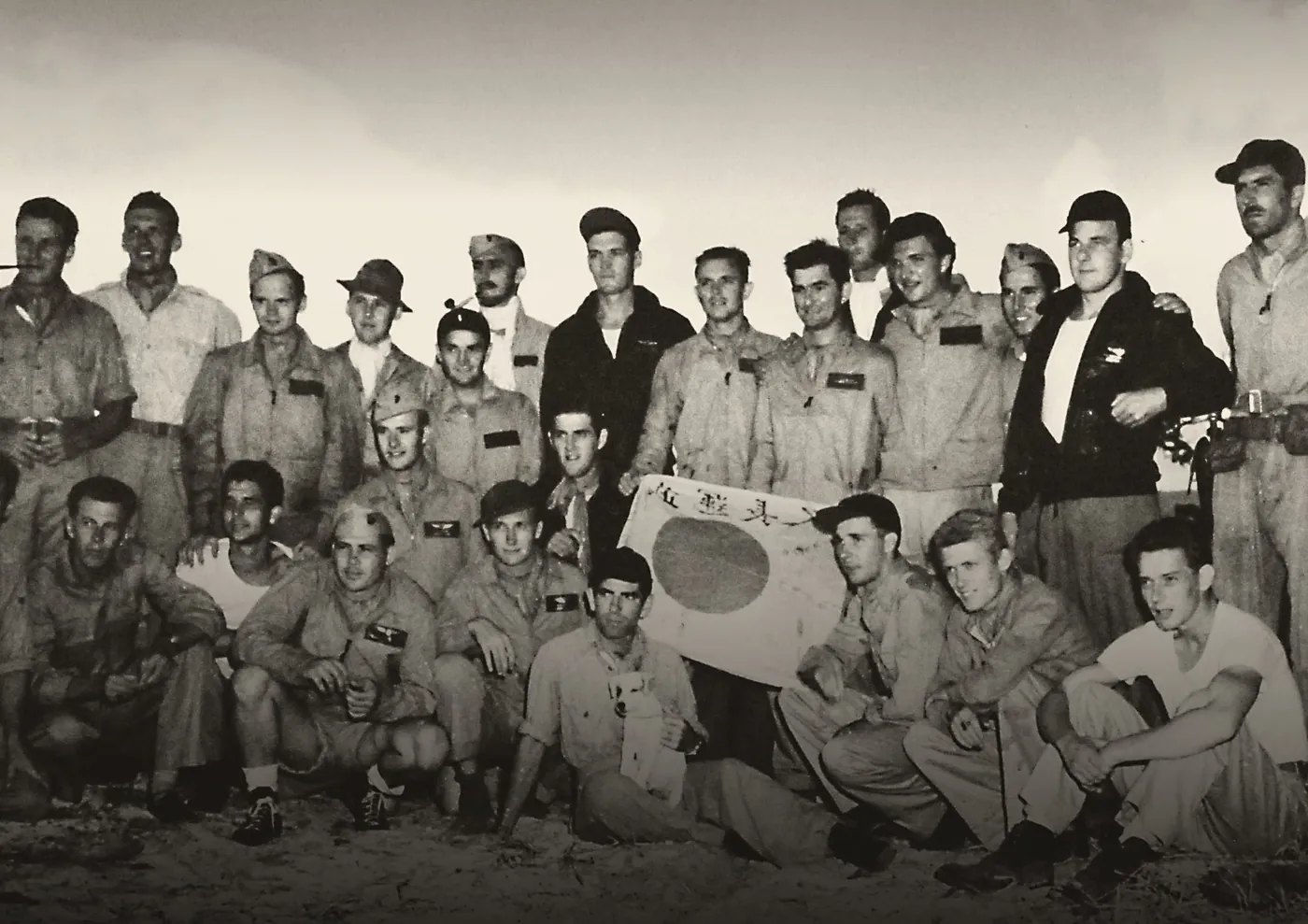
The surviving log opens this phase of his war with a flight on Christmas Eve: SBD-3 06533, 0.9 hours, an artillery-spotting mission with an officer entered as Colonel Gavin. In the Solomons, the work of the dive-bomber squadrons extended far beyond attacking warships. The aircraft searched the sea, covered convoys, observed for artillery, sought missing aircrews, bombed gun positions, and attacked enemy airfields. A flight could end in a carefully directed strike, a brief encounter with a fleeting target, or several hours of searching without finding anything.⁵⁸
On 27 December the VMSB-233 war diary names Koutelas among twelve SBD pilots led by Major Richards to attack Japanese troops in a ravine running inland from the Kokumbona area toward the Poha River. The unit reported that all bombs fell on target. Koutelasʼs logbook records an attack flight of 1.1 hours in SBD-3 03228, with Wilson in the rear seat. It also records a second flight that day, a night search with Lieutenant Johnson. The diary independently lists a special search by Koutelas and reports a negative result.⁵⁹
These early entries introduce Wilson, the rear crewman repeatedly associated with his combat flights in the Guadalcanal period. The log does not supply a securely established full name for him, but the recurrence of the surname gives continuity to the flying record. As with Van Kirk at Midway, the rear-seat man shared the pilotʼs dangers while performing the lookout and defensive work on which their survival could depend.
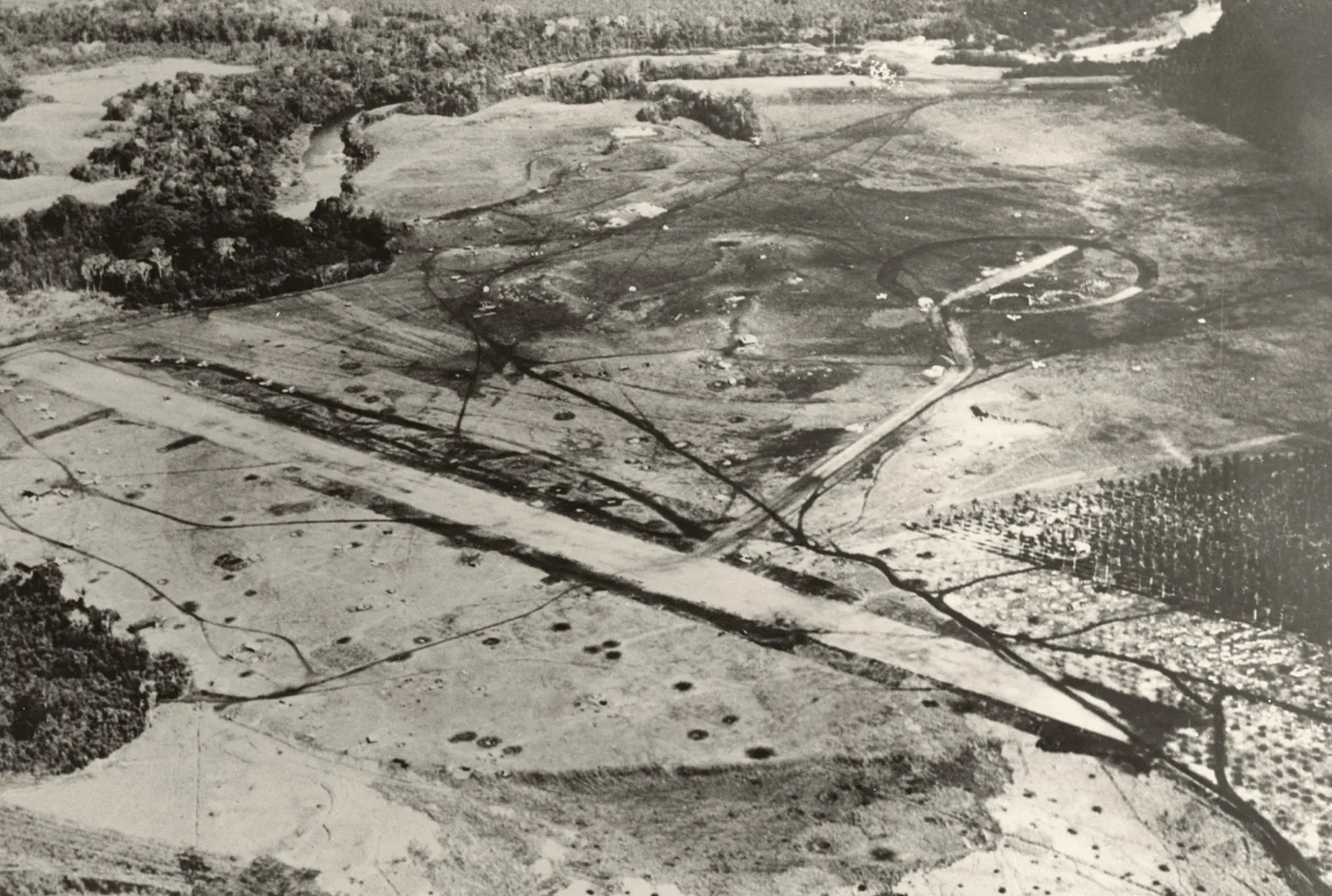
On 31 December Koutelas flew SBD-3 06682 for two hours on a mission entered as “Pistol Pete.” The term appears repeatedly in the squadron material for attacks on Japanese positions. Its terse appearance in a logbook conceals the immediate purpose of this part of the air war: finding and suppressing guns that could threaten the American foothold and the men defending it.⁶⁰
The new year brought a more ambitious target. On 2 January 1943 he flew SBD-4 06769 with Wilson on a 3.3-hour mission entered as “Attack 10 DDʼs.” The destroyers formed part of the Japanese sea traffic that Allied aircraft sought to disrupt in the Solomons. American wartime accounts described a successful attack near Rendova and reported damage and sinkings. The surviving record securely places Koutelas in the mission, while the reported results remain claims of the attacking force rather than a verified tally of ships destroyed by his bombs.⁶¹
The same day his log records a separate attack flight of 1.2 hours. Such entries show how rapidly one sortie could follow another. The demands of an island campaign were cumulative: an antishipping strike might occupy several hours, but it did not necessarily end a pilotʼs working day.
On 3 January he flew another “Pistol Pete” mission. On 6 January came a search of 3.2 hours. On 8 January he took SBD-3 03296 on a mission against a reported force of two destroyers and a cargo ship; the flight lasted 1.3 hours. The next day he flew two antisubmarine patrols, of 2.5 and 2.0 hours. On 11 January there were two more attack entries, one of 1.1 hours and another of 3.4. The logʼs recurring words—attack, search, anti-sub—describe a rhythm of operations that depended as much on endurance and repeated readiness as on the brief moments over a target.⁶²
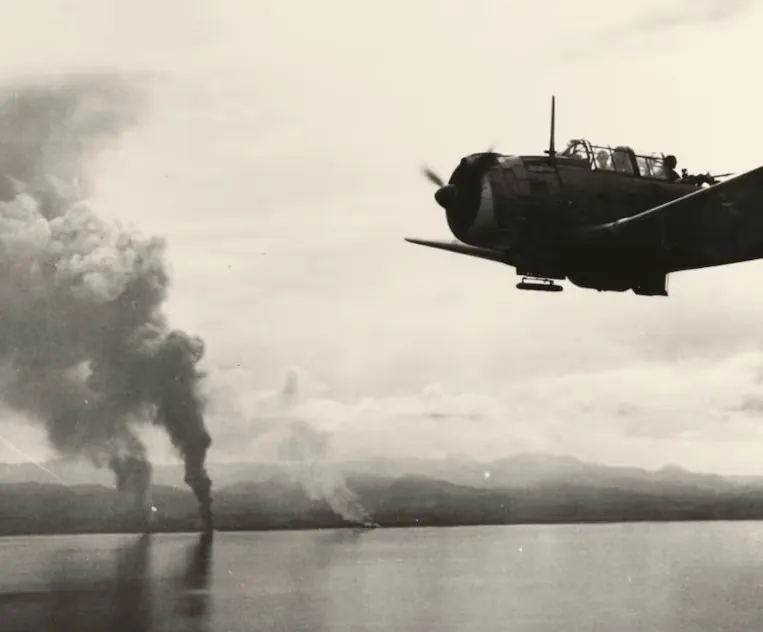
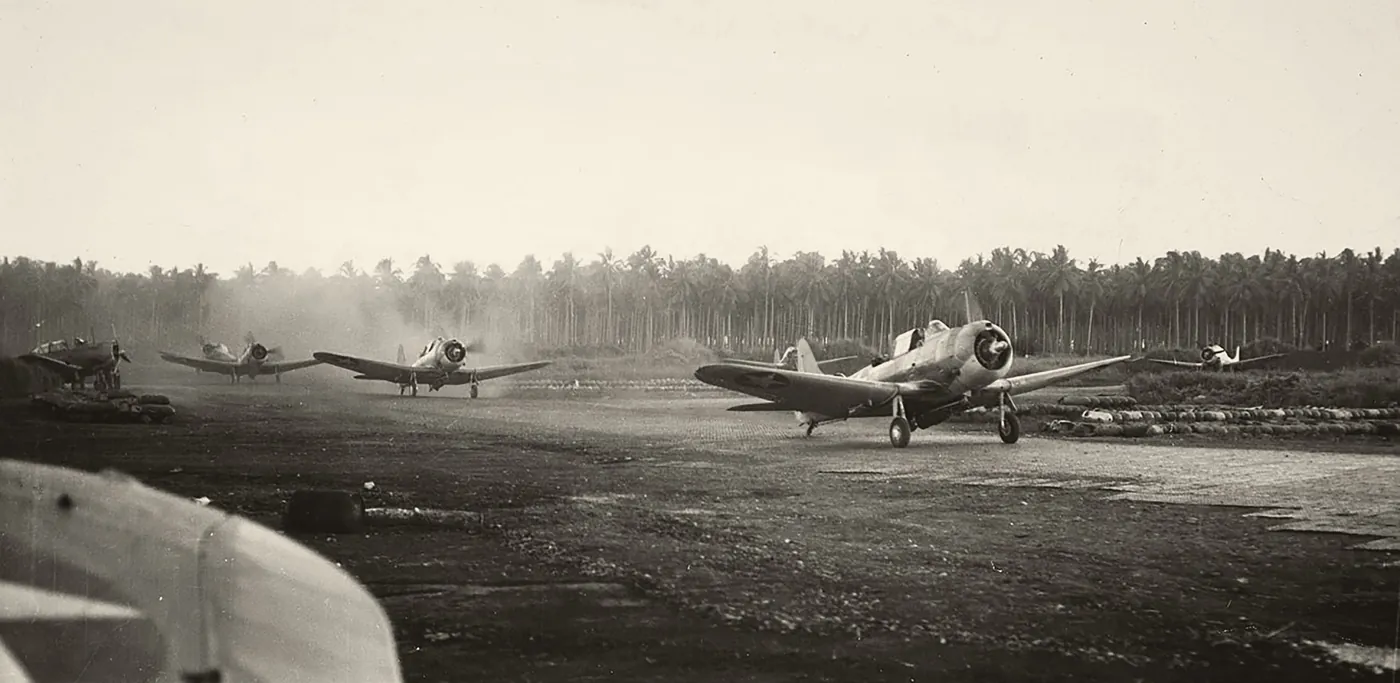
On 12 January Koutelas carried Captain Collier on a 2.5-hour artillery-spotting flight, followed by a separate submarine patrol with Wilson. The following dayʼs log entry records a four-hour attack flight. The squadron diary for 14 January gives a more precise account of a six-SBD mission ordered against a destroyer, with Munda as the secondary target. It records Koutelasʼs bombs falling among installations on the north taxiway:
“LT. KOUTELAS–SALVO FELL IN CENTER OF INSTALLATIONS IN NORTH TAXI-WAY.”
His attack took the bombs into the airfieldʼs installations, part of the continuing effort to disrupt the Japanese air base and the forces it supported.⁶³
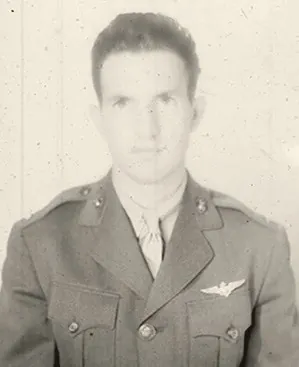
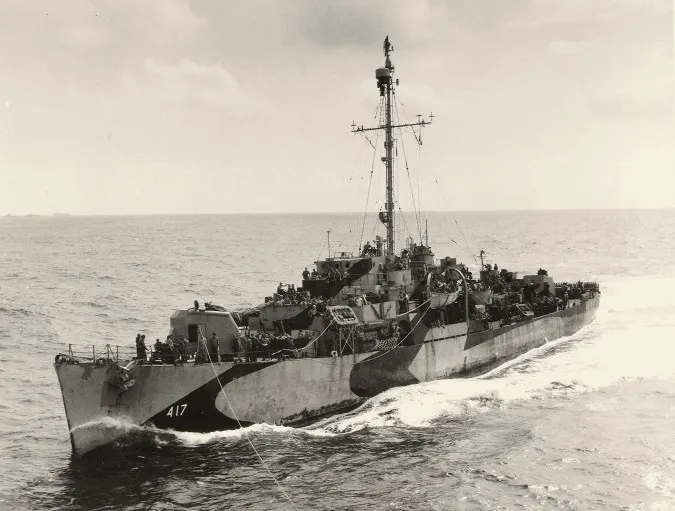
The entry for 19 January in VMSB-233ʼs war diary is particularly revealing. A special mission was ordered to find and destroy a 77-mm gun just inland from the Kokimbona River. Koutelas attacked with a 1,000-pound bomb that fell close to the emplacement. The diary recorded:
“LT. KOUTELAS—HIT TEN FEET FROM GUN PIT, WITH 1000 POUNDER.”
He returned to the same position with another bomb load, released together. The entry continued:
“LT. KOUTELAS—AGAIN DROPPED ON THE GUN PIT WITH SALVO LATER.”⁶⁴
He had been sent back against the same small ground target, close to the fighting on the island. The repeated attacks show how a single gun position could absorb the attention and effort of a dive-bomber pilot across successive flights.
The diary names him twice more that day. He participated in a six-aircraft mission against a truck concentration west of Esperance, but the trucks were not found. He also joined an eighteen-SBD search for seven destroyers and a cruiser, again without contact. The sequence took him from a gun position to a truck search and then back over the sea, responding to different demands as the day developed.⁶⁵
The later January flying continued to mix attacks on land positions with searches for shipping. On 23 January his log records another “Pistol Pete” flight, 2.8 hours in SBD-3 06580 with Wilson. On 25 January he made two flights in SBD-3 03235: an attack of 1.7 hours and a scramble of 1.6 hours. Some missions turned back without reaching their targets because of weather. Cloud, visibility, mechanical serviceability, and incomplete reports could determine the outcome as decisively as enemy action.⁶⁶
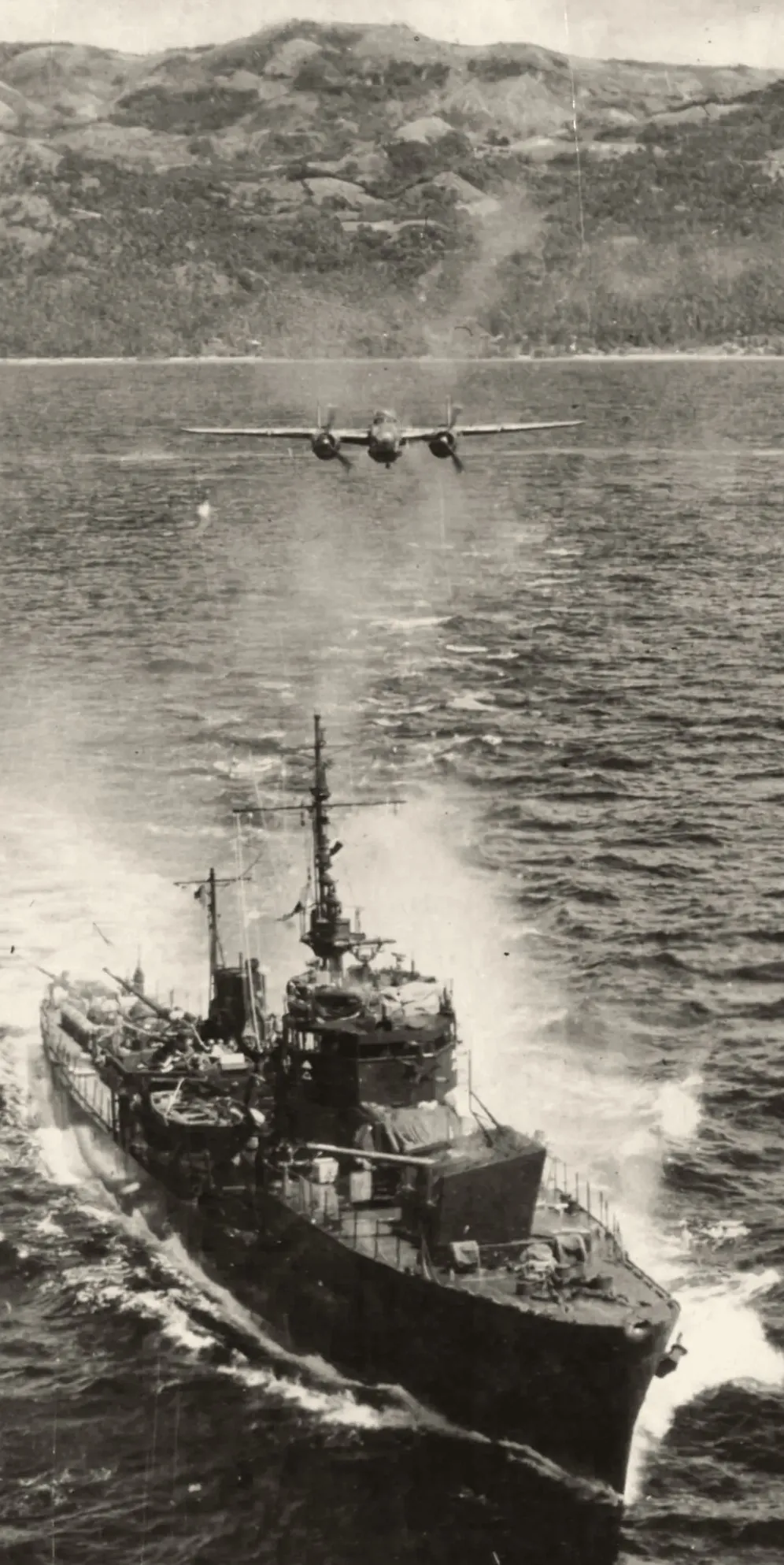
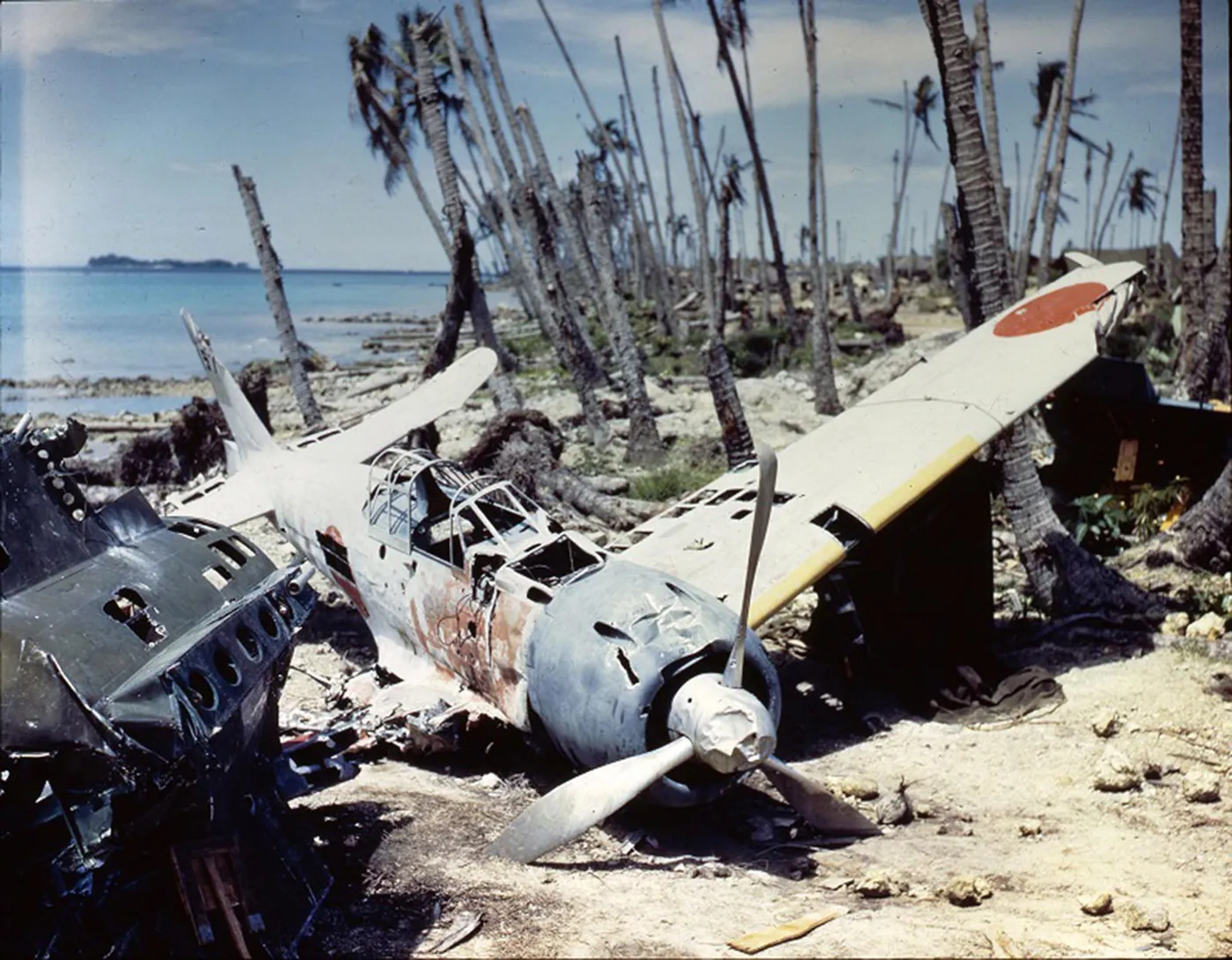
On 2 February Koutelas flew SBD-4 06710 with Wilson for 3.5 hours. His log describes the mission as “Attack—16 DD.” The squadron diary lists him in a mixed force of ten SBDs and eleven TBFs, with fighter cover, sent against a reported sixteen destroyers or destroyer leaders. Two other pilots reported close misses. This was the period of Operation Ke, the Japanese evacuation of Guadalcanal, when destroyer forces were moving through the Solomons. The records place him in the antishipping effort, without establishing a ship hit by his own bombs.⁶⁷
A temporary attachment took him to Efate in February. His personnel record places him there through the first ten days of March, returning to Guadalcanal by government air transport on 11 March. Efate and Espiritu Santo were in the New Hebrides, south of the Solomons, and formed part of the network supporting the air offensive. Administrative assignments and movements between these bases were interwoven with his combat flying.⁶⁸
The March flying again combined protection of Allied movements with attacks on Japanese bases. On 26 March the squadron diary lists Koutelas with OʼSullivan, Cosley, and Cummings on convoy coverage for President Tyler and two destroyers. His personal log records a 2.6-hour flight in aircraft 85, describing it as an antisubmarine patrol. The two descriptions overlap in the protective nature of the work, but the diary places him specifically with the convoy. No enemy contact was reported.
On 30 March he flew aircraft 35 for 3.8 hours. He is named among sixteen SBD pilots sent toward reported shipping at Rekata Bay, escorted by twenty-four F4Fs. No ships were found. The formation turned toward Vila and then, because of conditions, to Munda. There it dropped 1,000-pound bombs on bivouac and supply-dump areas under fire from weapons ranging from machine guns to heavier antiaircraft batteries. Vegetation prevented a confident assessment of the damage. It was another example of a search for ships becoming an attack on a land target.
The next day he flew a 3.1-hour coverage flight in aircraft 23 and a special flight of 0.4 hours in aircraft 15. The diary names him again under convoy coverage. The men and supplies moving between the islands required this continuing air protection, much of which left only a short entry and a negative-contact report behind it.⁶⁹ On 6 April he and Wilson flew SBD-4 06794 on a 3.7-hour attack entered in the log as “Attack—Vila.” The squadron had been sent against five reported ships west of Rekata Bay. When the ships were not found, the formation attacked a supply and unloading area between the Vila River and Disappointment Cove. The reported bomb hits were collective results, without a separately established hit by Koutelas. On 9 April he flew a further search lasting 2.8 hours.
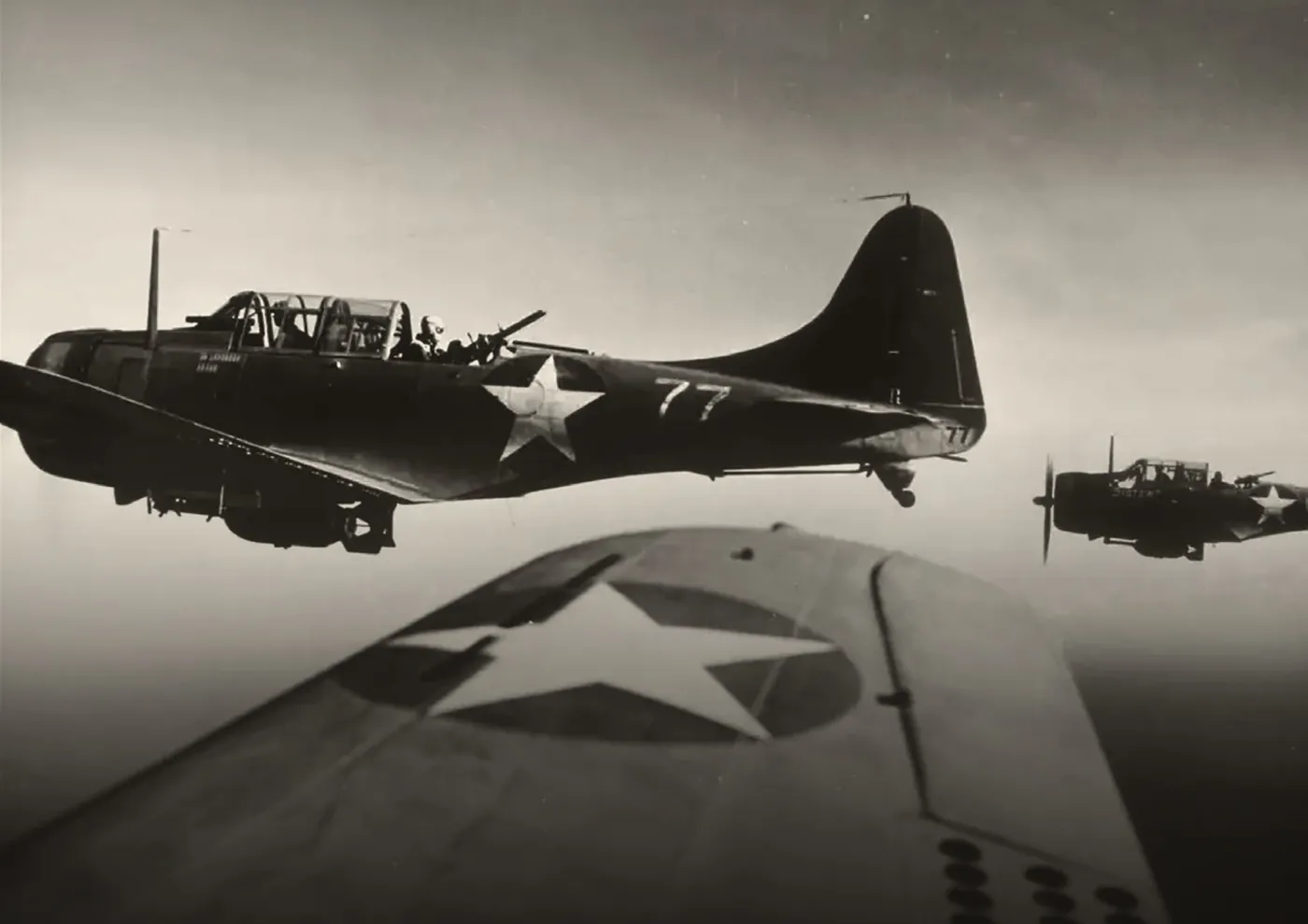
On 10 April his name appears in the VMSB-233 group ordered to ferry its SBDs from Guadalcanal to Buttons. The operation involved two large formations, each accompanied by a B-24 for the flight south. The squadron account states that the flight echelon ferried the aircraft to Button and would then go to Sydney for rest, while the ground personnel remained at Guadalcanal. It was a relocation and relief movement rather than another bombing sortie.⁷⁰
In 1943 the artist and naval officer McClelland Barclay drew Koutelasʼs portrait in Conté crayon. Preserved by the Naval History and Heritage Command as accession 85-236-AG, it represents him during the South Pacific phase of his service. The accompanying contemporary biographical note connects Midway with bombing from Henderson Field against Munda, Vila, and shipping. Its compressed target descriptions contain the uncertainties of wartime reporting, but the portrait places a face beside the names and aircraft numbers of the operational record.⁷¹
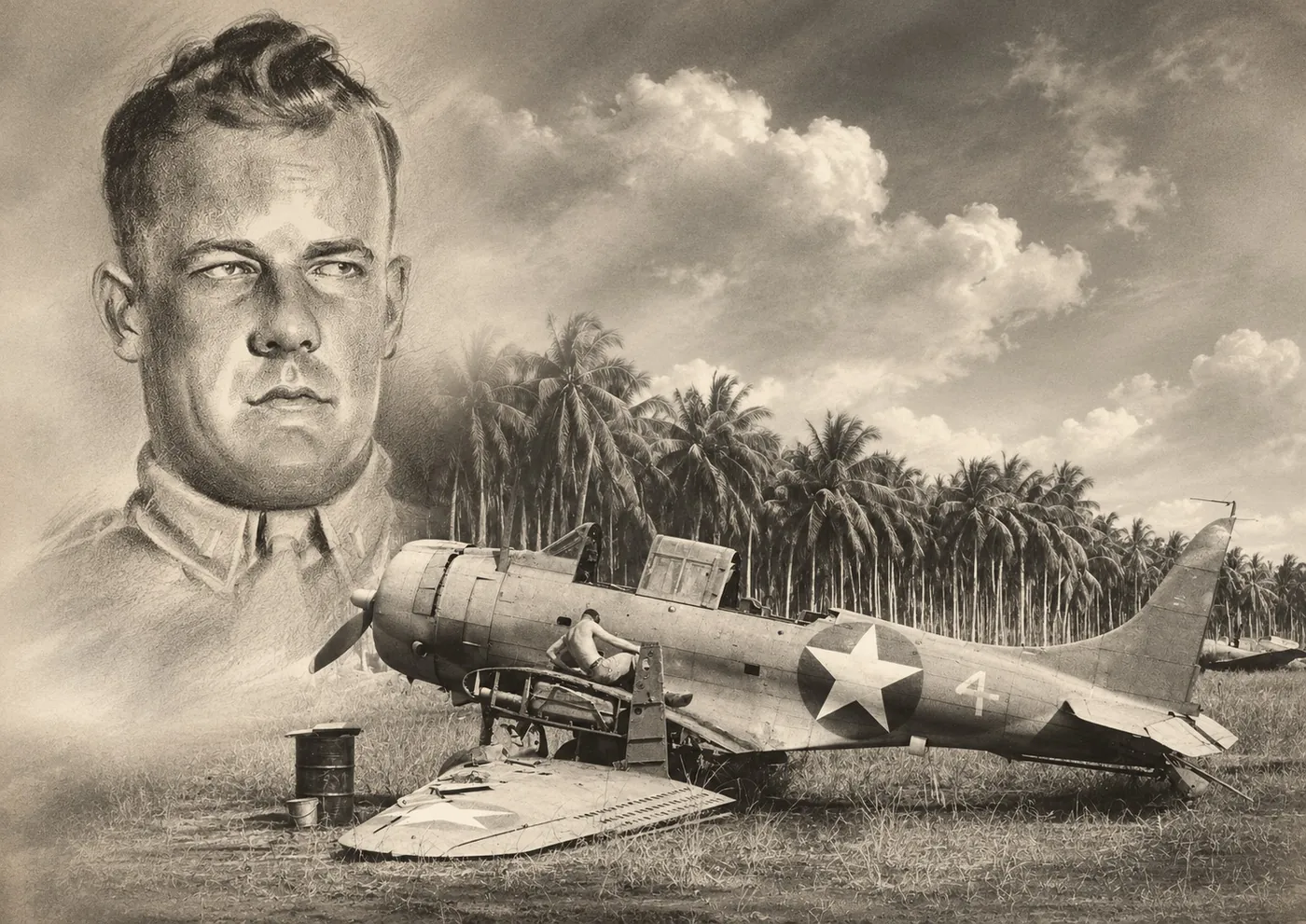
Στις 24 Δεκεμβρίου 1942 ο Κουτέλας έφτασε στο Guadalcanal για προσωρινή αεροπορική υπηρεσία στο Henderson Field. Το αεροδρόμιο έφερε το όνομα του ταγματάρχη Henderson, που σκοτώθηκε επικεφαλής των Dauntless της VMSB-241 στο Midway. Έξι μήνες μετά από εκείνη τη μάχη, ο Κουτέλας πετούσε από μια βάση που είχε πάρει το όνομα ενός από τους χαμένους διοικητές της. Το αεροσκάφος που πετούσε τώρα ήταν το SBD Dauntless, που με την απότομη εφόρμησή του, τα αερόφρενα και τη στιβαρότερη κατασκευή του πρόσφερε διαφορετικό τρόπο ρίψης βόμβας από το Vindicator, που βομβάρδιζε με ολίσθηση.⁵⁷
Το σωζόμενο βιβλίο πτήσεων ανοίγει αυτή τη φάση του πολέμου του με μια πτήση την παραμονή των Χριστουγέννων: SBD-3 06533, 0,9 ώρες, αποστολή παρατήρησης πυρών πυροβολικού με έναν αξιωματικό που καταγράφεται ως συνταγματάρχης Gavin. Στις Σολομώντειες, η δουλειά των μοιρών βομβαρδιστικών κάθετης εφόρμησης ξεπερνούσε κατά πολύ τις επιθέσεις σε πολεμικά πλοία. Τα αεροσκάφη ερευνούσαν τη θάλασσα, κάλυπταν νηοπομπές, παρατηρούσαν για το πυροβολικό, αναζητούσαν χαμένα πληρώματα, βομβάρδιζαν θέσεις πυροβόλων και προσέβαλλαν εχθρικά αεροδρόμια. Μια πτήση μπορούσε να καταλήξει σε μια προσεκτικά καθοδηγούμενη επίθεση, σε μια σύντομη επαφή με έναν φευγαλέο στόχο ή σε πολλές ώρες έρευνας χωρίς να βρεθεί τίποτα.⁵⁸
Στις 27 Δεκεμβρίου το ημερολόγιο πολέμου της VMSB-233 κατονομάζει τον Κουτέλα ανάμεσα σε δώδεκα χειριστές SBD υπό τον ταγματάρχη Richards, που στάλθηκαν να επιτεθούν σε ιαπωνικά στρατεύματα σε μια χαράδρα που ξεκινούσε από την περιοχή του Kokumbona και ανέβαινε στην ενδοχώρα προς τον ποταμό Poha. Η μονάδα ανέφερε ότι όλες οι βόμβες έπεσαν στον στόχο. Το βιβλίο πτήσεων του Κουτέλα καταγράφει πτήση επίθεσης 1,1 ωρών με το SBD-3 03228, με τον Wilson στο πίσω κάθισμα. Καταγράφει επίσης μια δεύτερη πτήση την ίδια μέρα, νυχτερινή έρευνα με τον υπολοχαγό Johnson. Το ημερολόγιο καταγράφει ανεξάρτητα μια ειδική έρευνα του Κουτέλα και αναφέρει αρνητικό αποτέλεσμα.⁵⁹
Αυτές οι πρώτες εγγραφές συστήνουν τον Wilson, το πίσω μέλος του πληρώματος που συνδέεται επανειλημμένα με τις πολεμικές του πτήσεις στην περίοδο του Guadalcanal. Το βιβλίο δεν δίνει με βεβαιότητα το πλήρες όνομά του, όμως η επανάληψη του επωνύμου δίνει συνέχεια στο αρχείο των πτήσεων. Όπως ο Van Kirk στο Midway, ο άνθρωπος του πίσω καθίσματος μοιραζόταν τους κινδύνους του χειριστή, κάνοντας την επιτήρηση και την άμυνα από τις οποίες μπορούσε να εξαρτηθεί η επιβίωσή τους.
Στις 31 Δεκεμβρίου ο Κουτέλας πέταξε το SBD-3 06682 για δύο ώρες σε αποστολή που καταγράφεται ως «Pistol Pete». Ο όρος εμφανίζεται συχνά στο υλικό της μοίρας για επιθέσεις σε ιαπωνικές θέσεις. Η λακωνική του παρουσία σε ένα βιβλίο πτήσεων κρύβει τον άμεσο σκοπό αυτού του κομματιού του αεροπορικού πολέμου: τον εντοπισμό και την εξουδετέρωση πυροβόλων που απειλούσαν το αμερικανικό προγεφύρωμα και τους άνδρες που το υπερασπίζονταν.⁶⁰
Η νέα χρονιά έφερε έναν φιλοδοξότερο στόχο. Στις 2 Ιανουαρίου 1943 πέταξε το SBD-4 06769 με τον Wilson σε αποστολή 3,3 ωρών που καταγράφεται ως «Attack 10 DDʼs» (επίθεση σε 10 αντιτορπιλικά). Τα αντιτορπιλικά ήταν μέρος της ιαπωνικής θαλάσσιας κίνησης που τα συμμαχικά αεροσκάφη προσπαθούσαν να διαταράξουν στις Σολομώντειες. Αμερικανικές αναφορές της εποχής περιέγραψαν μια επιτυχημένη επίθεση κοντά στη Rendova και ανέφεραν ζημιές και βυθίσεις. Το σωζόμενο αρχείο τοποθετεί με βεβαιότητα τον Κουτέλα στην αποστολή, ενώ τα αναφερόμενα αποτελέσματα παραμένουν ισχυρισμοί της επιτιθέμενης δύναμης και όχι επιβεβαιωμένος απολογισμός πλοίων που καταστράφηκαν από τις δικές του βόμβες.⁶¹
Την ίδια μέρα το βιβλίο του καταγράφει μια ξεχωριστή πτήση επίθεσης 1,2 ωρών. Τέτοιες εγγραφές δείχνουν πόσο γρήγορα μπορούσε η μία έξοδος να ακολουθεί την άλλη. Οι απαιτήσεις μιας εκστρατείας στα νησιά ήταν σωρευτικές: μια επίθεση κατά της ναυτιλίας μπορούσε να κρατήσει αρκετές ώρες, αλλά δεν τελείωνε απαραίτητα την εργάσιμη μέρα ενός χειριστή.
Στις 3 Ιανουαρίου πέταξε άλλη μια αποστολή «Pistol Pete». Στις 6 Ιανουαρίου ακολούθησε μια έρευνα 3,2 ωρών. Στις 8 Ιανουαρίου πήρε το SBD-3 03296 σε αποστολή εναντίον μιας δύναμης δύο αντιτορπιλικών και ενός φορτηγού πλοίου που είχε αναφερθεί· η πτήση κράτησε 1,3 ώρες. Την επομένη πέταξε δύο ανθυποβρυχιακές περιπολίες, 2,5 και 2,0 ωρών. Στις 11 Ιανουαρίου υπάρχουν δύο ακόμη εγγραφές επίθεσης, η μία 1,1 ωρών και η άλλη 3,4. Οι λέξεις που επανέρχονται στο βιβλίο, επίθεση, έρευνα, ανθυποβρυχιακή, περιγράφουν έναν ρυθμό επιχειρήσεων που εξαρτιόταν από την αντοχή και τη διαρκή ετοιμότητα όσο και από τις σύντομες στιγμές πάνω από τον στόχο.⁶²
Στις 12 Ιανουαρίου ο Κουτέλας μετέφερε τον λοχαγό Collier σε πτήση παρατήρησης πυρών 2,5 ωρών, και ακολούθησε μια χωριστή περιπολία κατά υποβρυχίων με τον Wilson. Η εγγραφή της επομένης καταγράφει πτήση επίθεσης τεσσάρων ωρών. Το ημερολόγιο της μοίρας της 14ης Ιανουαρίου δίνει ακριβέστερη περιγραφή μιας αποστολής έξι SBD που διατάχθηκε εναντίον ενός αντιτορπιλικού, με δευτερεύοντα στόχο τη Munda. Καταγράφει ότι οι βόμβες του Κουτέλα έπεσαν ανάμεσα στις εγκαταστάσεις του βόρειου τροχόδρομου:
«ΥΠΟΛ. KOUTELAS – Η ΟΜΟΒΡΟΝΤΙΑ ΕΠΕΣΕ ΣΤΟ ΚΕΝΤΡΟ ΤΩΝ ΕΓΚΑΤΑΣΤΑΣΕΩΝ ΣΤΟΝ ΒΟΡΕΙΟ ΤΡΟΧΟΔΡΟΜΟ.»
Η επίθεσή του έριξε τις βόμβες μέσα στις εγκαταστάσεις του αεροδρομίου, μέρος της συνεχούς προσπάθειας να διαταραχθεί η ιαπωνική αεροπορική βάση και οι δυνάμεις που αυτή υποστήριζε.⁶³
Η εγγραφή της 19ης Ιανουαρίου στο ημερολόγιο πολέμου της VMSB-233 είναι ιδιαίτερα αποκαλυπτική. Διατάχθηκε ειδική αποστολή για να εντοπιστεί και να καταστραφεί ένα πυροβόλο 77 χιλιοστών λίγο μέσα στην ενδοχώρα από τον ποταμό Kokimbona. Ο Κουτέλας επιτέθηκε με μια βόμβα 1.000 λιβρών, που έπεσε κοντά στο όρυγμα του πυροβόλου. Το ημερολόγιο κατέγραψε:
«ΥΠΟΛ. KOUTELAS – ΠΛΗΓΜΑ ΔΕΚΑ ΠΟΔΙΑ ΑΠΟ ΤΟ ΟΡΥΓΜΑ ΤΟΥ ΠΥΡΟΒΟΛΟΥ, ΜΕ ΒΟΜΒΑ 1000 ΛΙΒΡΩΝ.»
Επέστρεψε στην ίδια θέση με νέο φορτίο βομβών, που απελευθερώθηκαν μαζί. Η εγγραφή συνέχιζε:
«ΥΠΟΛ. KOUTELAS – ΕΡΙΞΕ ΞΑΝΑ ΣΤΟ ΟΡΥΓΜΑ ΤΟΥ ΠΥΡΟΒΟΛΟΥ ΜΕ ΟΜΟΒΡΟΝΤΙΑ ΑΡΓΟΤΕΡΑ.»⁶⁴
Τον είχαν στείλει ξανά εναντίον του ίδιου μικρού χερσαίου στόχου, κοντά στις μάχες του νησιού. Οι επαναλαμβανόμενες επιθέσεις δείχνουν πώς μια μόνο θέση πυροβόλου μπορούσε να απορροφήσει την προσοχή και την προσπάθεια ενός χειριστή βομβαρδιστικού σε διαδοχικές πτήσεις.
Το ημερολόγιο τον κατονομάζει άλλες δύο φορές εκείνη τη μέρα. Πήρε μέρος σε αποστολή έξι αεροσκαφών εναντίον μιας συγκέντρωσης φορτηγών δυτικά του Esperance, όμως τα φορτηγά δεν βρέθηκαν. Συμμετείχε επίσης σε έρευνα δεκαοκτώ SBD για επτά αντιτορπιλικά και ένα καταδρομικό, πάλι χωρίς επαφή. Η διαδοχή αυτή τον πήγε από μια θέση πυροβόλου σε μια έρευνα για φορτηγά και ξανά πάνω από τη θάλασσα, ανταποκρινόμενος σε διαφορετικές ανάγκες καθώς εξελισσόταν η μέρα.⁶⁵
Οι πτήσεις του υπόλοιπου Ιανουαρίου συνέχισαν να συνδυάζουν επιθέσεις σε χερσαίες θέσεις με έρευνες για πλοία. Στις 23 Ιανουαρίου το βιβλίο του καταγράφει άλλη μια πτήση «Pistol Pete», 2,8 ώρες με το SBD-3 06580 και τον Wilson. Στις 25 Ιανουαρίου έκανε δύο πτήσεις με το SBD-3 03235: μια επίθεση 1,7 ωρών και μια άμεση απογείωση συναγερμού 1,6 ωρών. Ορισμένες αποστολές γύρισαν πίσω χωρίς να φτάσουν στους στόχους τους εξαιτίας του καιρού. Τα σύννεφα, η ορατότητα, η τεχνική κατάσταση των αεροσκαφών και οι ελλιπείς αναφορές μπορούσαν να κρίνουν την έκβαση εξίσου αποφασιστικά με την εχθρική δράση.⁶⁶
Στις 2 Φεβρουαρίου ο Κουτέλας πέταξε το SBD-4 06710 με τον Wilson για 3,5 ώρες. Το βιβλίο του περιγράφει την αποστολή ως «Attack—16 DD» (επίθεση σε 16 αντιτορπιλικά). Το ημερολόγιο της μοίρας τον καταγράφει σε μια μικτή δύναμη δέκα SBD και έντεκα TBF, με κάλυψη καταδιωκτικών, που στάλθηκε εναντίον δεκαέξι αντιτορπιλικών ή αρχηγίδων αντιτορπιλικών που είχαν αναφερθεί. Δύο άλλοι χειριστές ανέφεραν βόμβες που έπεσαν πολύ κοντά. Ήταν η περίοδος της Επιχείρησης Ke, της ιαπωνικής εκκένωσης του Guadalcanal, όταν δυνάμεις αντιτορπιλικών κινούνταν μέσα από τις Σολομώντειες. Τα αρχεία τον τοποθετούν στην προσπάθεια κατά της ναυτιλίας, χωρίς να τεκμηριώνουν πλήγμα σε πλοίο από τις δικές του βόμβες.⁶⁷
Μια προσωρινή απόσπαση τον έφερε στο Efate τον Φεβρουάριο. Ο υπηρεσιακός του φάκελος τον τοποθετεί εκεί ώς τις πρώτες δέκα μέρες του Μαρτίου και καταγράφει την επιστροφή του στο Guadalcanal με κυβερνητικό αεροπορικό μεταφορικό στις 11 Μαρτίου. Το Efate και το Espiritu Santo βρίσκονταν στις Νέες Εβρίδες, νότια των Σολομώντειων, και αποτελούσαν μέρος του δικτύου που στήριζε την αεροπορική επίθεση. Οι διοικητικές τοποθετήσεις και οι μετακινήσεις ανάμεσα σε αυτές τις βάσεις διαπλέκονταν με τις πολεμικές του πτήσεις.⁶⁸
Οι πτήσεις του Μαρτίου συνδύασαν πάλι την προστασία συμμαχικών κινήσεων με επιθέσεις σε ιαπωνικές βάσεις. Στις 26 Μαρτίου το ημερολόγιο της μοίρας καταγράφει τον Κουτέλα μαζί με τους OʼSullivan, Cosley και Cummings στην κάλυψη της νηοπομπής του President Tyler και δύο αντιτορπιλικών. Το προσωπικό του βιβλίο καταγράφει πτήση 2,6 ωρών με το αεροσκάφος 85 και την περιγράφει ως ανθυποβρυχιακή περιπολία. Οι δύο περιγραφές συμπίπτουν ως προς τον προστατευτικό χαρακτήρα της δουλειάς, όμως το ημερολόγιο τον τοποθετεί συγκεκριμένα με τη νηοπομπή. Δεν αναφέρθηκε επαφή με τον εχθρό.
Στις 30 Μαρτίου πέταξε το αεροσκάφος 35 για 3,8 ώρες. Κατονομάζεται ανάμεσα σε δεκαέξι χειριστές SBD που στάλθηκαν προς πλοία που είχαν αναφερθεί στον κόλπο Rekata, με συνοδεία είκοσι τεσσάρων F4F. Πλοία δεν βρέθηκαν. Ο σχηματισμός στράφηκε προς τη Vila και έπειτα, λόγω των συνθηκών, προς τη Munda. Εκεί έριξε βόμβες 1.000 λιβρών σε περιοχές καταυλισμού και αποθηκών εφοδίων, κάτω από πυρά όπλων που κυμαίνονταν από πολυβόλα ώς βαρύτερες αντιαεροπορικές πυροβολαρχίες. Η βλάστηση δεν επέτρεψε ασφαλή εκτίμηση των ζημιών. Ήταν άλλο ένα παράδειγμα έρευνας για πλοία που κατέληξε σε επίθεση σε χερσαίο στόχο.
Την επομένη πέταξε μια πτήση κάλυψης 3,1 ωρών με το αεροσκάφος 23 και μια ειδική πτήση 0,4 ωρών με το αεροσκάφος 15. Το ημερολόγιο τον κατονομάζει και πάλι στην κάλυψη νηοπομπής. Οι άνδρες και τα εφόδια που κινούνταν ανάμεσα στα νησιά χρειάζονταν αυτή τη συνεχή αεροπορική προστασία, από την οποία συχνά έμενε μόνο μια σύντομη εγγραφή και μια αναφορά χωρίς επαφή.⁶⁹ Στις 6 Απριλίου αυτός και ο Wilson πέταξαν το SBD-4 06794 σε επίθεση 3,7 ωρών, που καταγράφεται στο βιβλίο ως «Attack—Vila». Η μοίρα είχε σταλεί εναντίον πέντε πλοίων που είχαν αναφερθεί δυτικά του κόλπου Rekata. Όταν τα πλοία δεν βρέθηκαν, ο σχηματισμός επιτέθηκε σε μια περιοχή εφοδίων και εκφόρτωσης ανάμεσα στον ποταμό Vila και τον όρμο Disappointment. Τα αναφερόμενα πλήγματα ήταν συλλογικά αποτελέσματα, χωρίς να τεκμηριώνεται χωριστά πλήγμα του Κουτέλα. Στις 9 Απριλίου πέταξε μια ακόμη έρευνα διάρκειας 2,8 ωρών.
Στις 10 Απριλίου το όνομά του εμφανίζεται στην ομάδα της VMSB-233 που διατάχθηκε να μεταφέρει τα SBD της από το Guadalcanal στο «Buttons». Η επιχείρηση περιλάμβανε δύο μεγάλους σχηματισμούς, ο καθένας με ένα B-24 που τον συνόδευε στην πτήση προς τα νότια. Η αφήγηση της μοίρας αναφέρει ότι το ιπτάμενο κλιμάκιο μετέφερε τα αεροσκάφη στο Button και στη συνέχεια θα πήγαινε στο Σίδνεϊ για ανάπαυση, ενώ το προσωπικό εδάφους έμενε στο Guadalcanal. Ήταν μετακίνηση και αντικατάσταση, όχι άλλη μια έξοδος βομβαρδισμού.⁷⁰
Το 1943 ο ζωγράφος και αξιωματικός του Ναυτικού McClelland Barclay σχεδίασε το πορτρέτο του Κουτέλα με κραγιόν Conté. Φυλάσσεται στο Naval History and Heritage Command με αριθμό εισαγωγής 85-236-AG και τον απεικονίζει στη φάση της υπηρεσίας του στον Νότιο Ειρηνικό. Το σύντομο βιογραφικό σημείωμα της εποχής που το συνοδεύει συνδέει το Midway με τους βομβαρδισμούς από το Henderson Field εναντίον της Munda, της Vila και της ναυτιλίας. Οι συμπυκνωμένες περιγραφές στόχων του κουβαλούν τις αβεβαιότητες των αναφορών του πολέμου, όμως το πορτρέτο βάζει ένα πρόσωπο δίπλα στα ονόματα και στους αριθμούς αεροσκαφών του επιχειρησιακού αρχείου.⁷¹
VMSB-233 · The Bulldogs
From Guadalcanal to the last operations of the Pacific warΑπό το Guadalcanal ως τις τελευταίες επιχειρήσεις του πολέμου στον Ειρηνικό
Marine Scout-Bombing Squadron 233 (VMSB-233), known in the Second World War as the “Bulldogs,” was one of the Marine Corps dive-bombing squadrons that played a significant part in the operations of the South Pacific. From the hard-fought battles over Guadalcanal to the operations against the Japanese stronghold of Rabaul and, later, strikes flown from escort carriers, its record reflects the evolution of Marine aviation from defence and survival to organised air support of the Allied forces.
The squadron was commissioned on 1 May 1942 at Marine Corps Air Station Ewa, Hawaii, and equipped with Douglas SBD Dauntless dive bombers. Among those who joined its ranks was the Greek American aviator George E. Koutelas, a survivor of Midway decorated with the Navy Cross. In December 1942 the squadron sailed for the South Pacific in USS Wright, reaching Espiritu Santo, where its aircraft were assembled and readied for operations.¹ On 24 December its first flights reached Henderson Field on Guadalcanal, relieving VMSB-132. Its missions included bombing Japanese positions, armed reconnaissance, attacks on shipping and the escort of Allied convoys. Constant flying, the shortage of spare parts, the tropical climate and enemy raids tested the endurance of aircrews and ground personnel every day.²
On 31 January 1943 twelve Dauntlesses of VMSB-233 attacked Japanese transports off Kolombangara. Despite an escort of F4F Wildcats from VMF-112, the Americans met Japanese fighters and floatplanes. The transport Toa Maru No. 2 was badly hit and sank a few days later.³ After successive periods of combat and rebuilding, the squadron completed its first cycle on Guadalcanal in the spring of 1943. On 22 May 1943 its conversion to Marine Torpedo-Bombing Squadron 233 (VMTB-233) began, and its Dauntlesses were replaced by the three-seat Grumman TBF Avenger. Its costliest mission came on the night of 14 February 1944, when its Avengers were ordered to mine Simpson Harbour at Rabaul. Flying low and slow into searchlights and dense anti-aircraft fire, six aircraft did not return.⁴
In 1945 VMTB-233 became part of the first all-Marine escort-carrier air group, Marine Carrier Air Group 1, in USS Block Island (CVE-106). With TBM Avengers it supported the battle of Okinawa, struck the Sakishima Islands and, in June, took part in the operations before the landing at Balikpapan in Borneo. The squadron was deactivated in March 1946.⁵ For George Koutelas, as for many of his comrades, service in this squadron was another chapter of a war that had begun in the waters of Midway.
- “Marine Scout Bombing Squadron 233 (VMSB-233) / Marine Torpedo Bombing Squadron 233 (VMTB-233),” Pacific Wrecks, unit history; George E. Koutelas, personnel file.
- VMSB-233 war diary, December 1942–April 1943.
- “Toa Maru No. 2,” Pacific Wrecks, account of the raid of 31 January 1943.
- Henry I. Shaw Jr. and Douglas T. Kane, History of U.S. Marine Corps Operations in World War II, vol. 2, Isolation of Rabaul (Washington, DC: Historical Branch, HQMC, 1963); VMTB-233, war diary, 1–29 February 1944, pp. 53, 80–82, NARA.
- Benis M. Frank and Henry I. Shaw Jr., History of U.S. Marine Corps Operations in World War II, vol. 5, Victory and Occupation (Washington, DC: Historical Branch, HQMC, 1968), 427–428.
Η 233η Μοίρα Αναγνώρισης-Βομβαρδισμού των Πεζοναυτών (VMSB-233), γνωστή στον Β΄ Παγκόσμιο Πόλεμο ως «Bulldogs», ήταν μία από τις μοίρες καθετοβομβαρδισμού των Πεζοναυτών που έπαιξαν σημαντικό ρόλο στις επιχειρήσεις του Νότιου Ειρηνικού. Από τις σκληρές μάχες πάνω από το Guadalcanal ως τις επιχειρήσεις εναντίον του ιαπωνικού προπυργίου του Rabaul και, αργότερα, τις επιθέσεις από συνοδευτικά αεροπλανοφόρα, η πορεία της αντανακλά την εξέλιξη της αεροπορίας των Πεζοναυτών από την άμυνα και την επιβίωση στην οργανωμένη αεροπορική υποστήριξη των συμμαχικών δυνάμεων.
Η μοίρα συγκροτήθηκε την 1η Μαΐου 1942 στον Αεροπορικό Σταθμό Πεζοναυτών Ewa της Χαβάης και εξοπλίστηκε με καθετοβομβαρδιστικά Douglas SBD Dauntless. Ανάμεσα σε όσους εντάχθηκαν σε αυτήν ήταν και ο Ελληνοαμερικανός αεροπόρος George E. Κουτέλας, επιζών του Midway, τιμημένος με το Navy Cross. Τον Δεκέμβριο του 1942 η μοίρα έπλευσε για τον Νότιο Ειρηνικό με το USS Wright και έφτασε στο Espiritu Santo, όπου τα αεροσκάφη της συναρμολογήθηκαν και ετοιμάστηκαν για επιχειρήσεις.¹ Στις 24 Δεκεμβρίου οι πρώτες πτήσεις της έφτασαν στο Henderson Field του Guadalcanal, αντικαθιστώντας τη VMSB-132. Οι αποστολές της περιλάμβαναν βομβαρδισμό ιαπωνικών θέσεων, ένοπλη αναγνώριση, επιθέσεις σε πλοία και συνοδεία συμμαχικών νηοπομπών. Οι αδιάκοπες πτήσεις, η έλλειψη ανταλλακτικών, το τροπικό κλίμα και οι εχθρικές επιδρομές δοκίμαζαν καθημερινά την αντοχή πληρωμάτων και προσωπικού εδάφους.²
Στις 31 Ιανουαρίου 1943 δώδεκα Dauntless της VMSB-233 επιτέθηκαν σε ιαπωνικά μεταγωγικά ανοιχτά της Kolombangara. Παρά τη συνοδεία από F4F Wildcat της VMF-112, οι Αμερικανοί συνάντησαν ιαπωνικά καταδιωκτικά και υδροπλάνα. Το μεταγωγικό Toa Maru No. 2 χτυπήθηκε σοβαρά και βυθίστηκε λίγες ημέρες αργότερα.³ Μετά από διαδοχικές περιόδους μάχης και ανασυγκρότησης, η μοίρα ολοκλήρωσε τον πρώτο της κύκλο στο Guadalcanal την άνοιξη του 1943. Στις 22 Μαΐου 1943 άρχισε η μετατροπή της σε 233η Μοίρα Τορπιλοβομβαρδισμού (VMTB-233) και τα Dauntless αντικαταστάθηκαν από τα τριθέσια Grumman TBF Avenger. Η πιο πολύνεκρη αποστολή της ήρθε τη νύχτα της 14ης Φεβρουαρίου 1944, όταν τα Avenger διατάχθηκαν να ναρκοθετήσουν το λιμάνι Simpson του Rabaul. Πετώντας χαμηλά και αργά μέσα σε προβολείς και πυκνά αντιαεροπορικά πυρά, έξι αεροσκάφη δεν επέστρεψαν.⁴
Το 1945 η VMTB-233 εντάχθηκε στην πρώτη αμιγώς πεζοναυτική αεροπορική ομάδα συνοδευτικού αεροπλανοφόρου, τη Marine Carrier Air Group 1, στο USS Block Island (CVE-106). Με TBM Avenger υποστήριξε τη μάχη της Okinawa, έπληξε τα νησιά Sakishima και τον Ιούνιο πήρε μέρος στις επιχειρήσεις πριν από την απόβαση στο Balikpapan του Βόρνεο. Η μοίρα απενεργοποιήθηκε τον Μάρτιο του 1946.⁵ Για τον George Κουτέλα, όπως και για πολλούς συναδέλφους του, η υπηρεσία σε αυτή τη μοίρα ήταν ένα ακόμη κεφάλαιο ενός πολέμου που είχε αρχίσει στα νερά του Midway.
- “Marine Scout Bombing Squadron 233 (VMSB-233) / Marine Torpedo Bombing Squadron 233 (VMTB-233),” Pacific Wrecks, unit history; George E. Koutelas, personnel file.
- VMSB-233 war diary, December 1942–April 1943.
- “Toa Maru No. 2,” Pacific Wrecks, account of the raid of 31 January 1943.
- Henry I. Shaw Jr. and Douglas T. Kane, History of U.S. Marine Corps Operations in World War II, vol. 2, Isolation of Rabaul (Washington, DC: Historical Branch, HQMC, 1963); VMTB-233, war diary, 1–29 February 1944, pp. 53, 80–82, NARA.
- Benis M. Frank and Henry I. Shaw Jr., History of U.S. Marine Corps Operations in World War II, vol. 5, Victory and Occupation (Washington, DC: Historical Branch, HQMC, 1968), 427–428.
Strike CommandStrike Command
Koutelasʼs service in the South Pacific was already expanding beyond the role of a squadron pilot. In April he performed duty with Marine Aircraft Group 11 at Espiritu Santo. His personnel record also records a May passage with squadron personnel in SS Mormacwren, arriving at Espiritu Santo on 14 May and disembarking the next day. On 25 May he joined VMSB-141; the record places him at Auckland, New Zealand, during the final days of that month, and with the squadronʼs flight echelon at Espiritu Santo in June.⁷²
Promotion followed. His temporary appointment as captain was issued on 1 June 1943 with seniority from 31 May. In July he moved through further headquarters assignments before joining Headquarters Squadron, MAG-11, on 25 July. An order of that date also names Major Gregory N. Boyington, later famous as the commander of VMF-214. It is a documentary intersection of two Marine aviatorsʼ careers, without establishing that they flew together or served in the same operational squadron.⁷³
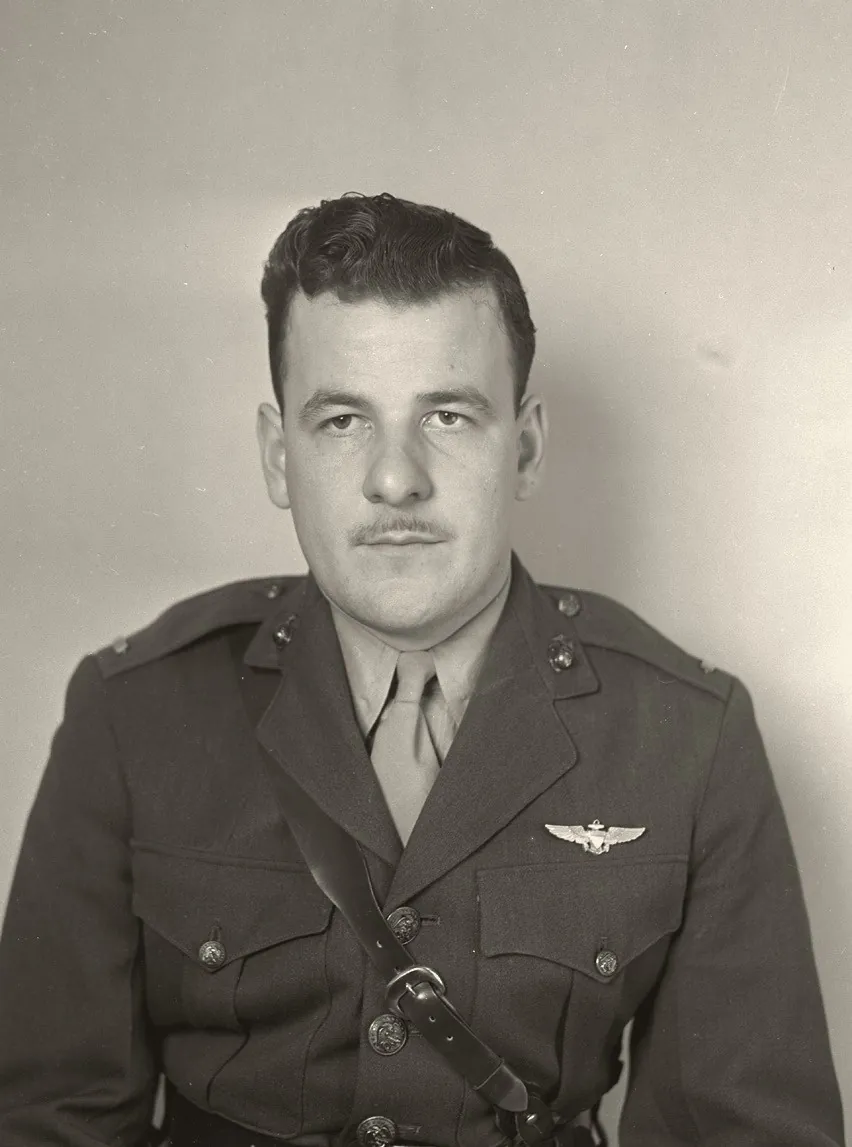
He continued flying SBD-4s during the summer. The later pages of his first wartime log record familiarization, aerobatics, bombing exercises, and a flight between the bases entered as Button and Roses. These flights maintained his skills while his duties increasingly placed him within the organization directing the air campaign.⁷⁴
On 14 August he went by government air transport to ComAirSols at Guadalcanal for special temporary aviation duty. The war diary of Headquarters Squadron, First Marine Aircraft Wing, records the move independently of his personal service card. He became Assistant Operations Officer in Strike Command, the organization responsible for directing striking operations as the Allied offensive moved through New Georgia and toward Bougainville.⁷⁵
The work put him at the junction between planning and execution. The pilot who had experienced the consequences of poor communications over Midway now served in a staff whose effectiveness depended on the preparation and coordination of missions. He would be commended for his contribution to the air campaigns in New Georgia, Bougainville, and the New Britain–New Ireland area. This was operational responsibility on a broader scale than his own aircraft, while still drawing on the experience of a man who had flown the missions he helped organize.
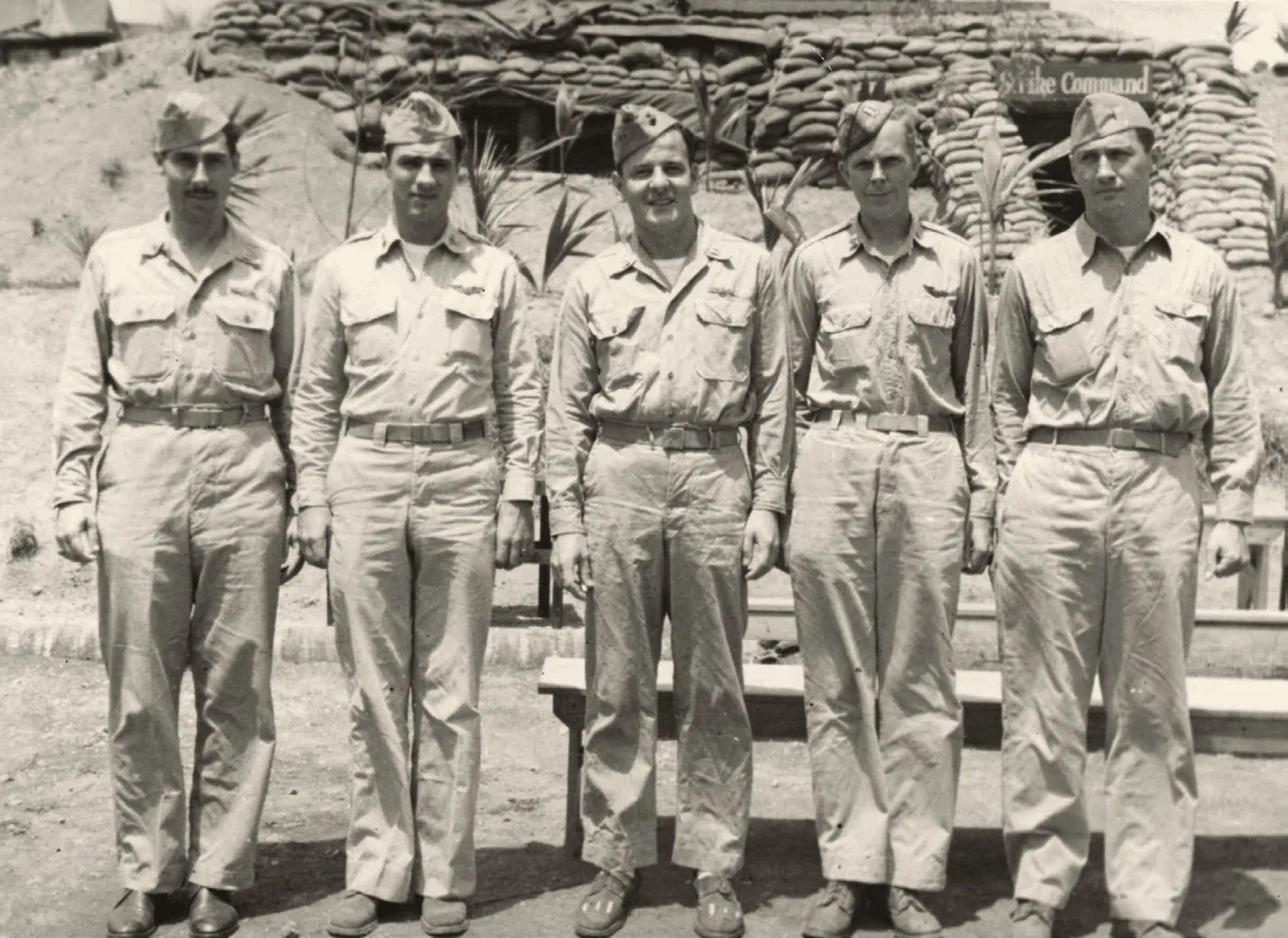
Staff duty did not entirely remove him from combat flying. Three September mission reports place him in SBDs with operational squadrons. On 11 September he took part in a VMSB-236 strike against gun positions around Parapatu Point and Bamberi Harbor. The reported force comprised twenty-four SBDs and fourteen TBFs, with participation also reflected in the VS-54 material. The report identifies Butler and Koutelas as two Strike Command pilots flying with the formation.⁷⁶
Koutelas flew aircraft 77, taking off at 10:35 and returning at 13:56, an elapsed interval of three hours and twenty-one minutes. The mission combined bombing and strafing against the Japanese gun positions. The formation encountered antiaircraft fire, and several aircraft were damaged. The report describes the attackʼs effects collectively; it does not isolate a particular successful bomb hit as Koutelasʼs. His named participation, aircraft, and flying times are the firm personal details.⁷⁷
On 19 September he flew aircraft 60 in a VMSB-236/VS-54 attack on gun positions around Vila airfield on Kolombangara. His individual times were 12:15 to 15:01, an elapsed interval of two hours and forty-six minutes. The report describes a force of thirty-three SBDs and twenty-four TBFs. The dive bombers approached from the north, made seventy-degree dives with their flaps extended, and released from approximately 1,700–2,000 feet before pulling out at 800–1,200 feet. The attack brought him once more over the Japanese positions around Vila, with the long approach followed by a steep dive through the antiaircraft defenses.
The next morning, 20 September, he flew with VMSB-235 against gun emplacements on Parapatu Point that had been firing on American PT boats. The report lists twenty-four SBDs and twenty-four TBFs. Koutelasʼs individual line reads aircraft 60, takeoff 08:52, arrival 11:47. The individual time entries span two hours and fifty-five minutes. The formation approached at high speed, began its attack from altitude, and bombed and strafed the positions under antiaircraft fire.⁷⁸
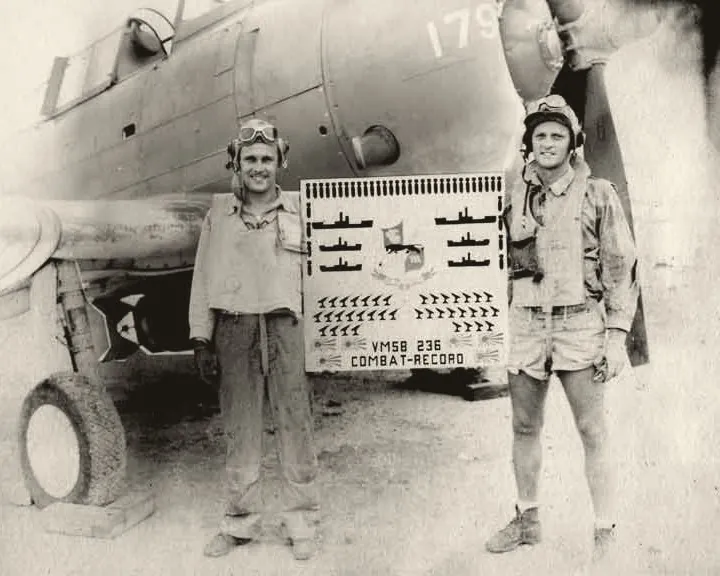
For those September strikes he had stepped out of headquarters and back into an operational cockpit. On returning, he resumed the planning and administrative work that occupied the larger part of his service with Strike Command.
By November his work had earned the confidence of his commanding officer. On 15 November 1943 Lieutenant Colonel D. F. OʼNeill reported on the three months Koutelas had spent in Strike Commandʼs operations section:⁷⁹
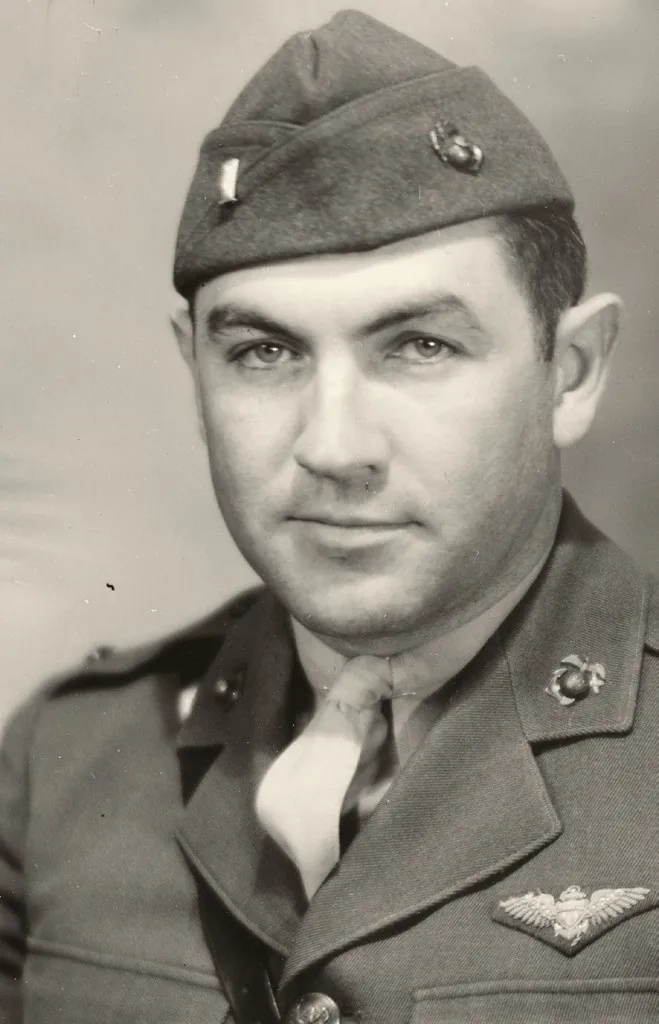
Fitness report · 15 November 1943Έκθεση αξιολόγησης · 15 Νοεμβρίου 1943STRIKE COMMAND AIRCRAFT, SOLOMONS
November 15, 1943.
From: The Commanding Officer.
To: The Commander Aircraft, Solomons.
Subject: Report, concerning Officer assigned on Temporary Duty, case of Captain George E. Koutelas, U.S.M.C.
1. The above named officer has served as Assistant Operations Officer at Strike Command from 14 August 1943 to date.
2. This officer has done excellent work in his present assignment; has far above average ability to command and in administration. I would particularly desire to have this officer in my command. He has no mental or physical weaknesses which would affect his efficiency.
3. He has exhibited ability to grasp essentials of a situation quickly; has good judgement in estimating situations and reaching sound decisions; he is able to plan and execute missions on his own responsibility; he has a strong and agreeable personality and inspires others to a high degree, by precept and example; he is courageous to a high degree, exceptionally successful in working with others to a common end; is unswerving in allegiance and frank and honest in aiding and advising; he is resolute and cool headed and logical in his actions under all conditions; he is capable of standing physical hardships and strain; he is energetic and industrious and possesses an exceptional military bearing and neatness of person and dress. In comparison with other officers of his rank and length of service he is outstanding.
4. This officer by his diligence and hard work has been of great value in the effective functioning of the Operations Section of this command.
D. F. O’NEILL⁸⁰
Lt. Col. D. F. O’Neill, Strike CommandΑντισυνταγματάρχης D. F. O’Neill, Strike Command
A further report dated 28 February 1944 stated that Koutelas had taken on responsibilities beyond those called for by his position, repeatedly shown good judgment, and worked exceptionally well with others. On 15 March OʼNeill again rated him outstanding. The final report emphasized the need for quick decisions and prompt action, and found that he had fulfilled both requirements. Once again OʼNeill wrote:
“I would particularly desire to have this officer in my command.”⁸¹
Major General R. J. Mitchellʼs formal commendation brought these assessments together. It covered Koutelasʼs service as Assistant Operations Officer at Guadalcanal, Munda in New Georgia, and Torokina on Bougainville, from 14 August 1943 to 15 March 1944:
Commendation · Commander Aircraft, SolomonsΕύφημος μνεία · Διοίκηση Αεροπορίας ΣολομώντειωνHEADQUARTERS OF THE COMMANDER AIRCRAFT, SOLOMON ISLANDS
Care of the Fleet Post Office, San Francisco, California.
The Commander Aircraft, Solomon Islands, takes pleasure in commending
CAPTAIN GEORGE E. KOUTELAS, UNITED STATES MARINE CORPS RESERVE
for service as set forth in the following
CITATION:
“For meritorious devotion to duty while serving as an Assistant Operations Officer of Strike Command at Guadalcanal; Munda, New Georgia; and Torokina, Bougainville; during the period from 14 August 1943 to 15 March 1944. Captain Koutelas consistently and continuously performed his duties in a highly effective manner, contributing markedly to the efficient operation of Strike Command and the success of the New Georgia, Bougainville, and New Britain-New Ireland Islands air campaigns. His conduct at all times and under all circumstances was in keeping with the highest traditions of the United States Marine Corps.”
R. J. MITCHELL
Major General, U. S. Marine Corps
Commanding.⁸²Major General R. J. MitchellΥποστράτηγος R. J. Mitchell
By early 1944 he had become both an experienced pilot and an officer trusted to help organize the work of many others. The Solomons commendation recognized months of sustained responsibility within an operating command, extending the record of service that had begun with the Navy Cross at Midway.
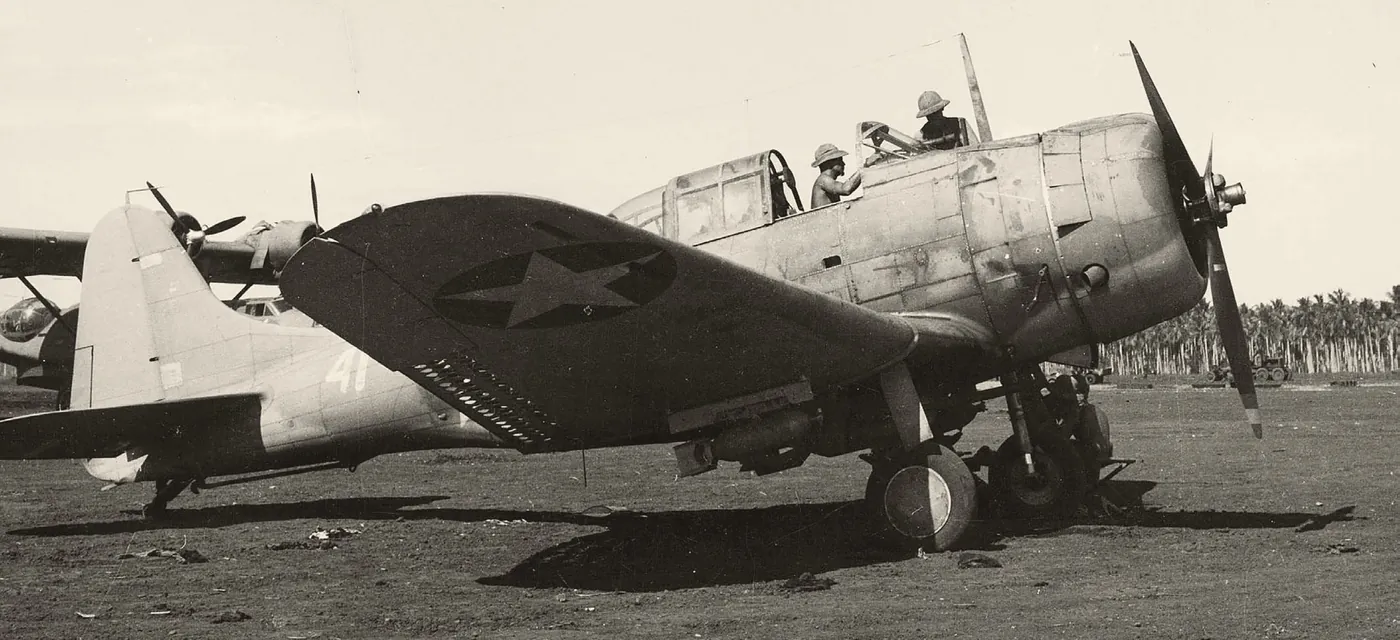
Η υπηρεσία του Κουτέλα στον Νότιο Ειρηνικό ξεπερνούσε ήδη τον ρόλο ενός χειριστή μοίρας. Τον Απρίλιο υπηρέτησε στην 11η Αεροπορική Σμηναρχία Πεζοναυτών στο Espiritu Santo. Ο υπηρεσιακός του φάκελος καταγράφει επίσης ένα ταξίδι τον Μάιο με προσωπικό της μοίρας στο SS Mormacwren, με άφιξη στο Espiritu Santo στις 14 Μαΐου και αποβίβαση την επομένη. Στις 25 Μαΐου εντάχθηκε στη VMSB-141· ο φάκελος τον τοποθετεί στο Auckland της Νέας Ζηλανδίας τις τελευταίες μέρες εκείνου του μήνα και με το ιπτάμενο κλιμάκιο της μοίρας στο Espiritu Santo τον Ιούνιο.⁷²
Ακολούθησε προαγωγή. Ο προσωρινός διορισμός του ως λοχαγού εκδόθηκε την 1η Ιουνίου 1943 με αρχαιότητα από τις 31 Μαΐου. Τον Ιούλιο πέρασε από άλλες τοποθετήσεις σε επιτελεία πριν ενταχθεί στη Μοίρα Διοίκησης της MAG-11 στις 25 Ιουλίου. Μια διαταγή εκείνης της ημερομηνίας κατονομάζει επίσης τον ταγματάρχη Gregory N. Boyington, που αργότερα έγινε διάσημος ως διοικητής της VMF-214. Είναι μια συνάντηση δύο σταδιοδρομιών αεροπόρων των Πεζοναυτών στα έγγραφα, χωρίς να τεκμηριώνεται ότι πέταξαν μαζί ή ότι υπηρέτησαν στην ίδια επιχειρησιακή μοίρα.⁷³
Συνέχισε να πετά SBD-4 όλο το καλοκαίρι. Οι τελευταίες σελίδες του πρώτου του βιβλίου πτήσεων του πολέμου καταγράφουν πτήσεις εξοικείωσης, ακροβατικά, ασκήσεις βομβαρδισμού και μια πτήση ανάμεσα σε βάσεις που καταγράφονται ως Button και Roses. Οι πτήσεις αυτές διατηρούσαν τις δεξιότητές του, την ώρα που τα καθήκοντά του τον τοποθετούσαν όλο και περισσότερο μέσα στον οργανισμό που διηύθυνε την αεροπορική εκστρατεία.⁷⁴
Στις 14 Αυγούστου μετακινήθηκε με κυβερνητικό αεροπορικό μεταφορικό στη ComAirSols στο Guadalcanal για ειδική προσωρινή αεροπορική υπηρεσία. Το ημερολόγιο πολέμου της Μοίρας Διοίκησης της 1ης Αεροπορικής Πτέρυγας Πεζοναυτών καταγράφει τη μετακίνηση ανεξάρτητα από την προσωπική του υπηρεσιακή καρτέλα. Έγινε Βοηθός Αξιωματικός Επιχειρήσεων στη Strike Command, τον οργανισμό που διηύθυνε τις επιθετικές επιχειρήσεις καθώς η συμμαχική επίθεση προχωρούσε μέσα από τη Νέα Γεωργία προς το Bougainville.⁷⁵
Η δουλειά τον έφερε στο σημείο όπου συναντιόνταν ο σχεδιασμός και η εκτέλεση. Ο χειριστής που είχε ζήσει τις συνέπειες των κακών επικοινωνιών πάνω από το Midway υπηρετούσε τώρα σε ένα επιτελείο του οποίου η αποτελεσματικότητα εξαρτιόταν από την προετοιμασία και τον συντονισμό των αποστολών. Θα επαινούνταν για τη συμβολή του στις αεροπορικές εκστρατείες της Νέας Γεωργίας, του Bougainville και της περιοχής Νέας Βρετανίας–Νέας Ιρλανδίας. Ήταν επιχειρησιακή ευθύνη σε κλίμακα πολύ ευρύτερη από το δικό του αεροσκάφος, που όμως στηριζόταν στην εμπειρία ενός ανθρώπου που είχε πετάξει ο ίδιος τις αποστολές που βοηθούσε να οργανωθούν.
Η επιτελική υπηρεσία δεν τον απομάκρυνε εντελώς από τις πολεμικές πτήσεις. Τρεις εκθέσεις αποστολών του Σεπτεμβρίου τον τοποθετούν σε SBD με επιχειρησιακές μοίρες. Στις 11 Σεπτεμβρίου πήρε μέρος σε επίθεση της VMSB-236 εναντίον θέσεων πυροβόλων γύρω από το ακρωτήριο Parapatu και το λιμάνι Bamberi. Η δύναμη που αναφέρεται αποτελούνταν από είκοσι τέσσερα SBD και δεκατέσσερα TBF, με συμμετοχή που καταγράφεται και στο υλικό της VS-54. Η έκθεση κατονομάζει τον Butler και τον Κουτέλα ως δύο χειριστές της Strike Command που πετούσαν με τον σχηματισμό.⁷⁶
Ο Κουτέλας πέταξε το αεροσκάφος 77, με απογείωση στις 10:35 και επιστροφή στις 13:56, διάστημα τριών ωρών και είκοσι ενός λεπτών. Η αποστολή συνδύαζε βομβαρδισμό και πολυβολισμό των ιαπωνικών θέσεων πυροβόλων. Ο σχηματισμός συνάντησε αντιαεροπορικά πυρά και αρκετά αεροσκάφη υπέστησαν ζημιές. Η έκθεση περιγράφει τα αποτελέσματα της επίθεσης συλλογικά· δεν ξεχωρίζει κάποιο συγκεκριμένο επιτυχημένο πλήγμα ως πλήγμα του Κουτέλα. Η ονομαστική του συμμετοχή, το αεροσκάφος και οι ώρες πτήσης είναι τα βέβαια προσωπικά στοιχεία.⁷⁷
Στις 19 Σεπτεμβρίου πέταξε το αεροσκάφος 60 σε επίθεση των VMSB-236/VS-54 εναντίον θέσεων πυροβόλων γύρω από το αεροδρόμιο της Vila στην Kolombangara. Οι ατομικοί του χρόνοι ήταν 12:15 ώς 15:01, διάστημα δύο ωρών και σαράντα έξι λεπτών. Η έκθεση περιγράφει μια δύναμη τριάντα τριών SBD και είκοσι τεσσάρων TBF. Τα βομβαρδιστικά κάθετης εφόρμησης πλησίασαν από τα βόρεια, εφόρμησαν σε γωνία εβδομήντα μοιρών με ανοιχτά τα πτερύγια και απελευθέρωσαν περίπου από τα 1.700–2.000 πόδια πριν ανασχέσουν στα 800–1.200 πόδια. Η επίθεση τον έφερε άλλη μια φορά πάνω από τις ιαπωνικές θέσεις γύρω από τη Vila, με τη μακριά προσέγγιση να ακολουθείται από μια απότομη εφόρμηση μέσα από την αντιαεροπορική άμυνα.
Το επόμενο πρωί, στις 20 Σεπτεμβρίου, πέταξε με τη VMSB-235 εναντίον θέσεων πυροβόλων στο ακρωτήριο Parapatu που έβαλλαν κατά αμερικανικών τορπιλακάτων PT. Η έκθεση καταγράφει είκοσι τέσσερα SBD και είκοσι τέσσερα TBF. Η ατομική γραμμή του Κουτέλα γράφει: αεροσκάφος 60, απογείωση 08:52, άφιξη 11:47. Οι ατομικές εγγραφές χρόνου καλύπτουν δύο ώρες και πενήντα πέντε λεπτά. Ο σχηματισμός πλησίασε με μεγάλη ταχύτητα, άρχισε την επίθεση από ύψος και βομβάρδισε και πολυβόλησε τις θέσεις κάτω από αντιαεροπορικά πυρά.⁷⁸
Για εκείνες τις επιθέσεις του Σεπτεμβρίου είχε βγει από το επιτελείο και είχε ξαναμπεί σε επιχειρησιακό πιλοτήριο. Όταν επέστρεψε, συνέχισε τη δουλειά του σχεδιασμού και της διοίκησης που απορρόφησε το μεγαλύτερο μέρος της υπηρεσίας του στη Strike Command.
Ώς τον Νοέμβριο η δουλειά του είχε κερδίσει την εμπιστοσύνη του διοικητή του. Στις 15 Νοεμβρίου 1943 ο αντισυνταγματάρχης D. F. OʼNeill συνέταξε έκθεση για τους τρεις μήνες που είχε περάσει ο Κουτέλας στο τμήμα επιχειρήσεων της Strike Command:⁷⁹
Fitness report · 15 November 1943Έκθεση αξιολόγησης · 15 Νοεμβρίου 1943STRIKE COMMAND, ΑΕΡΟΠΟΡΙΑ ΣΟΛΟΜΩΝΤΕΙΩΝ
15 Νοεμβρίου 1943.
Από: Τον Διοικητή.
Προς: Τον Διοικητή Αεροπορίας Σολομώντειων.
Θέμα: Έκθεση για αξιωματικό σε προσωρινή υπηρεσία, περίπτωση του λοχαγού George E. Koutelas, U.S.M.C.
1. Ο ανωτέρω αξιωματικός υπηρετεί ως Βοηθός Αξιωματικός Επιχειρήσεων στη Strike Command από τις 14 Αυγούστου 1943 μέχρι σήμερα.
2. Ο αξιωματικός αυτός έχει κάνει εξαιρετική δουλειά στην παρούσα θέση του· έχει πολύ πάνω από τον μέσο όρο ικανότητα διοίκησης και διαχείρισης. Θα επιθυμούσα ιδιαίτερα να έχω αυτόν τον αξιωματικό υπό τις διαταγές μου. Δεν έχει καμία πνευματική ή σωματική αδυναμία που θα επηρέαζε την αποδοτικότητά του.
3. Έχει δείξει ικανότητα να συλλαμβάνει γρήγορα την ουσία μιας κατάστασης· έχει καλή κρίση στην εκτίμηση καταστάσεων και στη λήψη σωστών αποφάσεων· είναι ικανός να σχεδιάζει και να εκτελεί αποστολές με δική του ευθύνη· έχει ισχυρή και ευχάριστη προσωπικότητα και εμπνέει τους άλλους σε υψηλό βαθμό, με τον λόγο και το παράδειγμά του· είναι θαρραλέος σε υψηλό βαθμό, εξαιρετικά επιτυχημένος στη συνεργασία με άλλους για κοινό σκοπό· είναι ακλόνητος στην αφοσίωσή του και ειλικρινής και τίμιος όταν βοηθά και συμβουλεύει· είναι αποφασιστικός, ψύχραιμος και λογικός στις ενέργειές του υπό οποιεσδήποτε συνθήκες· είναι ικανός να αντέχει σωματικές κακουχίες και πίεση· είναι δραστήριος και εργατικός και έχει εξαιρετικό στρατιωτικό παράστημα και περιποιημένη εμφάνιση και ενδυμασία. Σε σύγκριση με άλλους αξιωματικούς του βαθμού του και της ίδιας διάρκειας υπηρεσίας, είναι εξαιρετικός.
4. Ο αξιωματικός αυτός, με την επιμέλεια και τη σκληρή δουλειά του, υπήρξε πολύτιμος για την αποτελεσματική λειτουργία του Τμήματος Επιχειρήσεων αυτής της διοίκησης.
D. F. O’NEILL⁸⁰
Lt. Col. D. F. O’Neill, Strike CommandΑντισυνταγματάρχης D. F. O’Neill, Strike Command
Μια ακόμη έκθεση με ημερομηνία 28 Φεβρουαρίου 1944 ανέφερε ότι ο Κουτέλας είχε αναλάβει ευθύνες πέρα από όσα απαιτούσε η θέση του, είχε επανειλημμένα δείξει καλή κρίση και συνεργαζόταν εξαιρετικά με τους άλλους. Στις 15 Μαρτίου ο OʼNeill τον βαθμολόγησε ξανά ως εξαιρετικό. Η τελευταία έκθεση τόνιζε την ανάγκη για γρήγορες αποφάσεις και άμεση δράση και έκρινε ότι είχε ανταποκριθεί και στις δύο απαιτήσεις. Για άλλη μια φορά ο OʼNeill έγραψε:
«Θα επιθυμούσα ιδιαίτερα να έχω αυτόν τον αξιωματικό υπό τις διαταγές μου.»⁸¹
Ο επίσημος έπαινος του υποστράτηγου R. J. Mitchell συγκέντρωσε αυτές τις αξιολογήσεις. Κάλυπτε την υπηρεσία του Κουτέλα ως Βοηθού Αξιωματικού Επιχειρήσεων στο Guadalcanal, στη Munda της Νέας Γεωργίας και στην Torokina του Bougainville, από τις 14 Αυγούστου 1943 ώς τις 15 Μαρτίου 1944:
Commendation · Commander Aircraft, SolomonsΕύφημος μνεία · Διοίκηση Αεροπορίας ΣολομώντειωνΣΤΡΑΤΗΓΕΙΟ ΤΟΥ ΔΙΟΙΚΗΤΗ ΑΕΡΟΠΟΡΙΑΣ ΝΗΣΩΝ ΣΟΛΟΜΩΝΤΟΣ
Μέσω Στρατιωτικού Ταχυδρομείου Στόλου, San Francisco, California.
Ο Διοικητής Αεροπορίας Νήσων Σολομώντος έχει την ευχαρίστηση να επαινέσει τον
ΛΟΧΑΓΟ GEORGE E. KOUTELAS, ΕΦΕΔΡΕΙΑ ΤΟΥ ΣΩΜΑΤΟΣ ΠΕΖΟΝΑΥΤΩΝ ΤΩΝ ΗΠΑ
για τις υπηρεσίες που περιγράφονται στην ακόλουθη
ΑΙΤΙΟΛΟΓΙΑ:
«Για αξιέπαινη αφοσίωση στο καθήκον κατά την υπηρεσία του ως Βοηθού Αξιωματικού Επιχειρήσεων της Strike Command στο Guadalcanal, στη Munda της Νέας Γεωργίας και στην Torokina του Bougainville, κατά την περίοδο από τις 14 Αυγούστου 1943 ώς τις 15 Μαρτίου 1944. Ο λοχαγός Koutelas εκτελούσε σταθερά και αδιάλειπτα τα καθήκοντά του με εξαιρετικά αποτελεσματικό τρόπο, συμβάλλοντας σημαντικά στην αποδοτική λειτουργία της Strike Command και στην επιτυχία των αεροπορικών εκστρατειών της Νέας Γεωργίας, του Bougainville και των νήσων Νέας Βρετανίας–Νέας Ιρλανδίας. Η διαγωγή του σε κάθε στιγμή και υπό οποιεσδήποτε συνθήκες ήταν αντάξια των υψηλότερων παραδόσεων του Σώματος Πεζοναυτών των Ηνωμένων Πολιτειών.»
R. J. MITCHELL
Υποστράτηγος, Σώμα Πεζοναυτών των ΗΠΑ
Διοικητής.⁸²Major General R. J. MitchellΥποστράτηγος R. J. Mitchell
Στις αρχές του 1944 είχε γίνει ταυτόχρονα έμπειρος χειριστής και αξιωματικός στον οποίο εμπιστεύονταν την οργάνωση της δουλειάς πολλών άλλων. Ο έπαινος των Σολομώντειων αναγνώριζε μήνες συνεχούς ευθύνης μέσα σε μια επιχειρησιακή διοίκηση, προεκτείνοντας τον υπηρεσιακό απολογισμό που είχε ξεκινήσει με το Navy Cross στο Midway.
Confirmed combat missionsΕπιβεβαιωμένες πολεμικές αποστολές
From the Japanese fleet off Midway in June 1942 to the gun positions of Kolombangara in September 1943: the sorties that his two logbooks and the squadron records confirm, flown from Eastern Island, from Henderson Field and with the strike squadrons of ComAirSols.Από τον ιαπωνικό στόλο ανοιχτά του Midway τον Ιούνιο του 1942 ως τα πυροβολεία της Kolombangara τον Σεπτέμβριο του 1943: οι έξοδοι που επιβεβαιώνουν τα δύο βιβλία πτήσεών του και τα αρχεία των μοιρών, από το Eastern Island, από το Henderson Field και με τις μοίρες κρούσης της ComAirSols.
- Combat sortiesΠολεμικές έξοδοι
- 36confirmedεπιβεβαιωμένες
- MidwayMidway
- 3VMSB-241 · June 1942Ιούνιος 1942
- GuadalcanalGuadalcanal
- 30VMSB-233 · 1942–43
- Strike CommandStrike Command
- 3VMSB-236 / 235 · Sept. 1943Σεπτ. 1943
Sorties by monthΈξοδοι ανά μήνα
Mission ledgerΠίνακας αποστολών
| No.Α/Α | DateΗμερομηνία | AircraftΑεροσκάφος | MissionΑποστολή | TimeΧρόνος | RemarksΠαρατηρήσεις |
|---|---|---|---|---|---|
| VMSB-241 · Midway · SB2U-3 Vindicator / SBD-2 · June 1942VMSB-241 · Midway · SB2U-3 Vindicator / SBD-2 · Ιούνιος 1942 | |||||
| 1 | 04.06.1942 | SB2U-3 · BuNo 2053, #4 | Attack on Enemy ForcesΕπίθεση σε εχθρικές δυνάμεις | 4:00 | Midway |
| 2 | 05.06.1942 | SB2U-3 · BuNo 2056 | Attack on Enemy ForcesΕπίθεση σε εχθρικές δυνάμεις | 3:00 | Midway |
| 3 | 06.06.1942 | SBD-2 · BuNo 2178 | Observation & Patrol in Kure Is. areaΠαρατήρηση & περιπολία, περιοχή Kure | 1:54 | Midway |
| VMSB-233 · Henderson Field, Guadalcanal · SBD Dauntless · 1942–43VMSB-233 · Henderson Field, Guadalcanal · SBD Dauntless · 1942–43 | |||||
| 4 | 24.12.1942 | SBD-3 · BuNo 06533 | Artillery SpotΠαρατήρηση βολής πυροβολικού | 0:54 | Henderson Field |
| 5 | 27.12.1942 | SBD-3 · BuNo 03228 | Attack Ground TargetsΕπίθεση σε χερσαίους στόχους | 1:06 | Henderson Field |
| 6 | 〃 | SBD-3 · BuNo 06689 | Night SearchΝυχτερινή έρευνα | 1:24 | Henderson Field |
| 7 | 31.12.1942 | SBD-3 · BuNo 06682 | Pistol PetePistol Pete | 2:00 | Henderson Field |
| 8 | 02.01.1943 | SBD-3 · BuNo 06674 | Attack Ground TargetsΕπίθεση σε χερσαίους στόχους | 1:12 | Henderson Field |
| 9 | 〃 | SBD-4 · BuNo 06769 | Attack on 10 DestroyersΕπίθεση σε 10 αντιτορπιλικά | 3:18 | Henderson Field |
| 10 | 03.01.1943 | SBD-3 · BuNo 06516 | Pistol PetePistol Pete | 2:00 | Henderson Field |
| 11 | 06.01.1943 | SBD-4 · BuNo 06769 | SearchΈρευνα | 3:12 | Henderson Field |
| 12 | 08.01.1943 | SBD-3 · BuNo 03296 | Attack on 2 Destroyers and 1 TransportΕπίθεση σε 2 αντιτορπιλικά και 1 μεταγωγικό | 1:18 | Henderson Field |
| 13 | 09.01.1943 | SBD-3 · BuNo 06516 | Anti-Submarine PatrolΑνθυποβρυχιακή περιπολία | 2:30 | Henderson Field |
| 14 | 〃 | SBD-3 · BuNo 06529, #5 | Anti-Submarine PatrolΑνθυποβρυχιακή περιπολία | 2:00 | Henderson Field |
| 15 | 11.01.1943 | SBD-3 · BuNo 03288, #2 | Attack Ground TargetsΕπίθεση σε χερσαίους στόχους | 1:06 | Henderson Field |
| 16 | 〃 | SBD-4 · BuNo 06710, #52 | Attack Ground TargetsΕπίθεση σε χερσαίους στόχους | 3:24 | Henderson Field |
| 17 | 12.01.1943 | SBD-3 · BuNo 03233, #38 | Artillery SpotΠαρατήρηση βολής πυροβολικού | 2:30 | Henderson Field |
| 18 | 〃 | SBD-3 · BuNo 06689, #10 | Submarine PatrolΠεριπολία για υποβρύχια | 2:00 | Henderson Field |
| 19 | 13.01.1943 | SBD-4 · BuNo 06982, #15 | Attack Ground TargetsΕπίθεση σε χερσαίους στόχους | 4:00 | Henderson Field |
| 20 | 16.01.1943 | SBD-3 · BuNo 4550, #17 | Attack Ground TargetsΕπίθεση σε χερσαίους στόχους | 0:48 | Henderson Field |
| 21 | 〃 | SBD-3 · BuNo 03288, #2 | Attack Ground TargetsΕπίθεση σε χερσαίους στόχους | 1:00 | Henderson Field |
| 22 | 〃 | SBD-4 · BuNo 06710 | Attack Ground TargetsΕπίθεση σε χερσαίους στόχους | 1:00 | Henderson Field |
| 23 | 〃 | SBD-3 · BuNo 06529, #5 | Attack Ground TargetsΕπίθεση σε χερσαίους στόχους | 4:06 | Henderson Field |
| 24 | 23.01.1943 | SBD-3 · BuNo 06580, #12 | Pistol PetePistol Pete | 2:48 | Henderson Field |
| 25 | 25.01.1943 | SBD-3 · BuNo 03235, #22 | Attack Ground TargetsΕπίθεση σε χερσαίους στόχους | 1:42 | Henderson Field |
| 26 | 〃 | — | ScrambleΆμεση απογείωση | 1:36 | Henderson Field |
| 27 | 02.02.1943 | SBD-4 · BuNo 06710 | Attack on 16 DestroyersΕπίθεση σε 16 αντιτορπιλικά | 3:30 | Henderson Field |
| 28 | 26.03.1943 | SBD-? · BuNo ????, #85 | Submarine PatrolΠεριπολία για υποβρύχια | 2:36 | Henderson Field |
| 29 | 30.03.1943 | SBD-? · BuNo ????, #35 | Attack Ground TargetsΕπίθεση σε χερσαίους στόχους | 3:48 | Henderson Field |
| 30 | 31.03.1943 | SBD-? · BuNo ????, #23 | YB CoverageΚάλυψη YB | 3:06 | Henderson Field |
| 31 | 〃 | SBD-4 · BuNo 06982, #15 | SpecialΕιδική | 0:24 | Henderson Field |
| 32 | 06.04.1943 | SBD-4 · BuNo 06794 | Attack Ground TargetsΕπίθεση σε χερσαίους στόχους | 3:42 | Henderson Field |
| 33 | 09.04.1943 | SBD-4 · BuNo ???? | SearchΈρευνα | 2:48 | Henderson Field |
| Strike Command pilot with VMSB-236 / VMSB-235 · SBD-4 · September 1943Πιλότος του Strike Command με τις VMSB-236 / VMSB-235 · SBD-4 · Σεπτέμβριος 1943 | |||||
| 34 | 11.09.1943 | SBD-4 · BuNo ????, #77 | Attack Ground TargetsΕπίθεση σε χερσαίους στόχους | 3:21 | VMSB-236 · Parapatu Pt & Bamberi |
| 35 | 19.09.1943 | SBD-4 · BuNo ????, #60 | Attack Ground TargetsΕπίθεση σε χερσαίους στόχους | 2:46 | VMSB-236 · Vila, Kolombangara |
| 36 | 20.09.1943 | SBD · #60 | Attack Ground TargetsΕπίθεση σε χερσαίους στόχους | 2:55 | VMSB-235 · Parapatu Point |
Showing 1 to 10 of 36 entries. The combat sorties confirmed in his logbooks and in the squadron records: 3 with VMSB-241 at Midway in June 1942, 30 with VMSB-233 from Henderson Field, December 1942–April 1943, and 3 flown as a Strike Command pilot in September 1943. 〃 marks a further sortie on the same day.Εμφανίζονται 1 έως 10 από 36. Οι πολεμικές έξοδοι που επιβεβαιώνονται στα βιβλία πτήσεων και στα αρχεία των μοιρών: 3 με τη VMSB-241 στο Midway τον Ιούνιο του 1942, 30 με τη VMSB-233 από το Henderson Field, Δεκέμβριος 1942–Απρίλιος 1943, και 3 ως πιλότος του Strike Command τον Σεπτέμβριο του 1943. Το 〃 σημειώνει δεύτερη έξοδο την ίδια μέρα.
Training new crewsΕκπαιδεύοντας νέα πληρώματα
Koutelas left his South Pacific assignment in March 1944 and reached San Francisco by commercial aircraft on 23 March. His thirty-day leave ran from 25 March through 23 April. Nearly two years had passed since he embarked for Hawaii in May 1942. The four-month return he had hoped for in his letter home had not materialized.⁸³
A Marine Corps release written at Miramar on 24 March announced his return and the recent commendation. Asked about Midway, he gave a more restrained account of his own bomb than some of the wartime publicity suggested:
“I don’t know where my bomb went, but we left one of the battle wagons limping and smoking furiously.”⁸⁴
The recollection still carried an aircrewʼs impression of the attacked ships, but the admission concerning his own bomb is important. It belongs beside the certainty of his courage and the uncertainty of the damage claims. He had survived; many of his companions had not; the result of a bomb falling among moving ships and antiaircraft bursts was another matter.
On 3 May he joined VMSB-474. Ten days later he joined VMSB-484 at El Toro, California, where his record soon identifies him as Flight Officer. His log records an SBD-5 flight on 12 May, one day before the administrative joining entry. The new squadron offered a setting in which operational experience could be passed to men preparing for their own deployments. Familiarization, bombing, gunnery, tests, and cross-country flights filled the later logbook.⁸⁵
Aircraft technology was changing around him. Alongside the Dauntless he began flying the Curtiss SB2C Helldiver, the larger monoplane scout bomber intended to succeed it. His record includes a 1.3-hour flight in an SB2C on 14 June 1944. Other entries show the Beech GB-2 Traveler on flights between stations. The work demanded both the specialized handling of dive bombers and the broader competence needed to move aircraft and personnel around the expanding Marine aviation establishment. In January 1945 he flew a Canadian-built SBW-3 Helldiver, number 21566, to El Centro for dummy rocket runs and live rocket firing. The training broadened his experience beyond the bomb-delivery methods in which he had first gone to war.⁸⁶
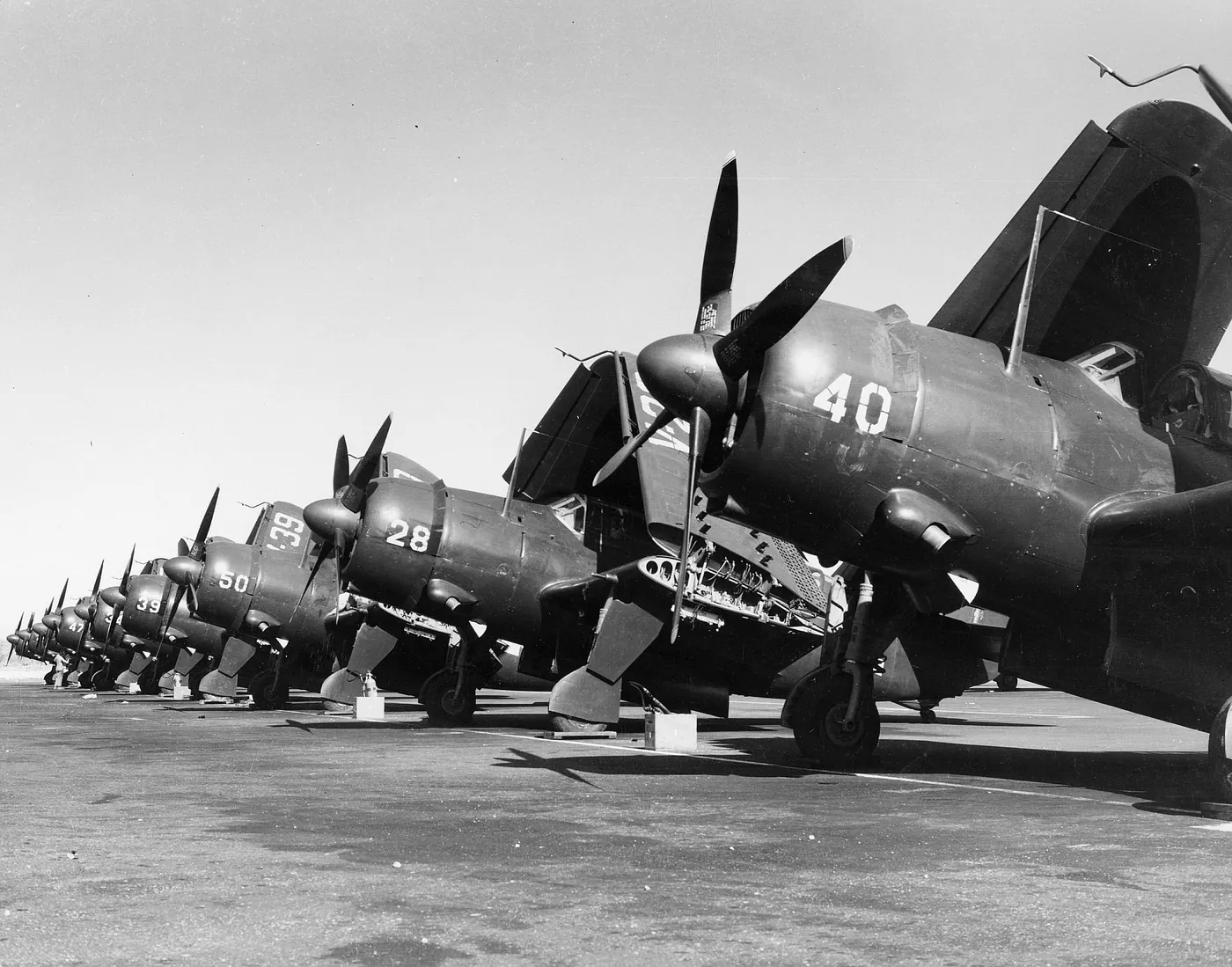
He was promoted to major with seniority from 30 July 1944 and accepted the temporary appointment on 19 August. In the autumn his recorded duties expanded to Executive Officer and Fire Marshal. In January 1945 they also included Squadron Safety Officer and Gas Officer, with a short period of temporary aviation duty at El Centro. The assignments show how much of a senior squadron officerʼs work lay in keeping the organization trained, safe, equipped, and ready to operate.⁸⁷
His personnel record also shows that he commanded the squadron. Koutelas is entered as Commanding Officer of VMSB-484 from 4 to 13 February 1945, again from 20 to 31 March, and continuously from 1 to 25 April. On the intervening dates he held executive and other squadron duties. These are specific recorded intervals of command, rather than evidence that he was the squadronʼs permanent commander throughout 1944–45.⁸⁸
He was still only twenty-six. Less than three years had passed since Midway, where he had entered battle in an unfamiliar Vindicator. He now had responsibility for a squadron preparing and training aircrew in the aircraft that would equip the later war.
Back across the Pacific in 1945
On 26 April 1945 Koutelas detached from VMSB-484 and, two days later, joined the Headquarters Personnel Group at the Marine Corps Air Depot, Miramar. Another overseas assignment followed. On 19 May he embarked at San Diego in USS Geneva, reaching Pearl Harbor on 26 May. After departing Hawaii on 1 June, he traveled through Majuro and Guam and arrived at Falalop Island, Ulithi Atoll, on 10 June.⁸⁹
He was assigned to Headquarters Squadron 45, Marine Aircraft Group 45, Fourth Marine Aircraft Wing. The groupʼs war diary for 16 June names Major George E. Koutelas among the arriving officers and states that he had been appointed Group Supply Officer. His personnel record dates the performance of that duty from 17 June. He had returned to the Pacific in a position whose daily work rested on organization, distribution, and the continuing needs of an air group in the forward area.⁹⁰
This was another part of the Pacific war. Marine aviation at Ulithi supported continuing operations against Japanese-held islands, including Yap. The same diary pages that record Koutelasʼs arrival describe Helldiver attacks by VMSB-245, fighter cover, reconnaissance photography, and rescue support. His work was in the group headquarters, supplying the organization that made such operations possible.⁹¹
In July and August he remained Group Supply Officer and served on the Group Screening Board. A temporary aviation assignment on 5–6 July was connected with supply matters. Transport flying and movements between bases continued alongside the headquarters work. His responsibilities were now tied to the supply and administration of an aviation group far from the American mainland.⁹²
The war ended while he was on this second overseas tour. He detached from MAG-45 on 15 September 1945 and reached the Marine Barracks at the United States Naval Station, Seattle, on 4 October, awaiting release from active duty. Orders dated 31 October governed the next stage of his return to civilian life. He detached for home and inactive status in November, followed by travel and leave. His official record gives 13 January 1946 as the effective date on which he was relieved from active duty.⁹³
Ο Κουτέλας άφησε την υπηρεσία του στον Νότιο Ειρηνικό τον Μάρτιο του 1944 και έφτασε στο San Francisco με εμπορικό αεροσκάφος στις 23 Μαρτίου. Η τριαντάμερη άδειά του διήρκεσε από τις 25 Μαρτίου ώς τις 23 Απριλίου. Είχαν περάσει σχεδόν δύο χρόνια από τότε που επιβιβάστηκε για τη Χαβάη τον Μάιο του 1942. Η επιστροφή σε τέσσερις μήνες, που ήλπιζε στο γράμμα του στο σπίτι, δεν είχε έρθει.⁸³
Ένα δελτίο του Σώματος Πεζοναυτών που γράφτηκε στο Miramar στις 24 Μαρτίου ανακοίνωνε την επιστροφή του και τον πρόσφατο έπαινο. Ερωτηθείς για το Midway, έδωσε για τη δική του βόμβα μια πιο συγκρατημένη περιγραφή από όσα άφηνε να εννοηθούν ένα μέρος της πολεμικής προπαγάνδας:
«Δεν ξέρω πού πήγε η βόμβα μου, αλλά αφήσαμε ένα από τα θωρηκτά να κουτσαίνει και να βγάζει μανιασμένα καπνούς.»⁸⁴
Η ανάμνηση κουβαλούσε ακόμη την εντύπωση ενός πληρώματος για τα πλοία που δέχτηκαν την επίθεση, όμως η παραδοχή για τη δική του βόμβα είναι σημαντική. Στέκεται δίπλα στη βεβαιότητα για το θάρρος του και στην αβεβαιότητα των ισχυρισμών για ζημιές. Εκείνος είχε επιζήσει· πολλοί από τους συντρόφους του όχι· το αποτέλεσμα μιας βόμβας που πέφτει ανάμεσα σε πλοία σε κίνηση και σε εκρήξεις αντιαεροπορικών ήταν άλλο ζήτημα.
Στις 3 Μαΐου εντάχθηκε στη VMSB-474. Δέκα μέρες αργότερα εντάχθηκε στη VMSB-484 στο El Toro της California, όπου ο φάκελός του σύντομα τον αναφέρει ως Αξιωματικό Πτήσεων. Το βιβλίο του καταγράφει μια πτήση με SBD-5 στις 12 Μαΐου, μία μέρα πριν από τη διοικητική εγγραφή της ένταξής του. Η νέα μοίρα πρόσφερε ένα περιβάλλον όπου η επιχειρησιακή εμπειρία μπορούσε να περάσει σε άνδρες που προετοιμάζονταν για τις δικές τους αποστολές. Πτήσεις εξοικείωσης, βομβαρδισμός, πολυβολισμός, δοκιμές και πτήσεις ναυτιλίας γέμισαν το μεταγενέστερο βιβλίο πτήσεων.⁸⁵
Η τεχνολογία των αεροσκαφών άλλαζε γύρω του. Δίπλα στο Dauntless άρχισε να πετά το Curtiss SB2C Helldiver, το μεγαλύτερο μονοπλάνο βομβαρδιστικό αναγνώρισης που προοριζόταν να το διαδεχθεί. Ο φάκελός του περιλαμβάνει πτήση 1,3 ωρών με SB2C στις 14 Ιουνίου 1944. Άλλες εγγραφές δείχνουν το Beech GB-2 Traveler σε πτήσεις ανάμεσα σε σταθμούς. Η δουλειά απαιτούσε τόσο τον εξειδικευμένο χειρισμό των βομβαρδιστικών κάθετης εφόρμησης όσο και την ευρύτερη ικανότητα να μετακινούνται αεροσκάφη και προσωπικό μέσα στον διευρυνόμενο μηχανισμό της αεροπορίας των Πεζοναυτών. Τον Ιανουάριο του 1945 πέταξε ένα καναδικής κατασκευής SBW-3 Helldiver, με αριθμό 21566, στο El Centro για εικονικά περάσματα με ρουκέτες και πραγματικές βολές ρουκετών. Η εκπαίδευση αυτή διεύρυνε την εμπειρία του πέρα από τις μεθόδους ρίψης βομβών με τις οποίες είχε πρωτοπάει στον πόλεμο.⁸⁶
Προήχθη σε ταγματάρχη με αρχαιότητα από τις 30 Ιουλίου 1944 και αποδέχθηκε τον προσωρινό διορισμό στις 19 Αυγούστου. Το φθινόπωρο τα καταγεγραμμένα καθήκοντά του διευρύνθηκαν σε Υποδιοικητή και Υπεύθυνο Πυρασφάλειας. Τον Ιανουάριο του 1945 περιλάμβαναν επίσης τα καθήκοντα του Αξιωματικού Ασφάλειας Πτήσεων της μοίρας και του Αξιωματικού Χημικής Προστασίας, με μια σύντομη περίοδο προσωρινής αεροπορικής υπηρεσίας στο El Centro. Οι τοποθετήσεις δείχνουν πόσο μεγάλο μέρος της δουλειάς ενός ανώτερου αξιωματικού μοίρας ήταν να κρατά τον οργανισμό εκπαιδευμένο, ασφαλή, εξοπλισμένο και έτοιμο για επιχειρήσεις.⁸⁷
Ο υπηρεσιακός του φάκελος δείχνει επίσης ότι διοίκησε τη μοίρα. Ο Κουτέλας καταγράφεται ως Διοικητής της VMSB-484 από τις 4 ώς τις 13 Φεβρουαρίου 1945, ξανά από τις 20 ώς τις 31 Μαρτίου και συνεχώς από την 1η ώς τις 25 Απριλίου. Τις ενδιάμεσες ημερομηνίες είχε καθήκοντα υποδιοικητή και άλλα καθήκοντα στη μοίρα. Πρόκειται για συγκεκριμένα καταγεγραμμένα διαστήματα διοίκησης και όχι για ένδειξη ότι ήταν ο μόνιμος διοικητής της μοίρας σε όλη τη διάρκεια του 1944–45.⁸⁸
Ήταν ακόμη μόλις είκοσι έξι ετών. Είχαν περάσει λιγότερα από τρία χρόνια από το Midway, όπου είχε μπει στη μάχη με ένα Vindicator που δεν γνώριζε. Τώρα είχε την ευθύνη μιας μοίρας που προετοίμαζε και εκπαίδευε πληρώματα στα αεροσκάφη με τα οποία θα εξοπλιζόταν ο πόλεμος στη συνέχεια.
Ξανά στον Ειρηνικό το 1945
Στις 26 Απριλίου 1945 ο Κουτέλας αποσπάστηκε από τη VMSB-484 και δύο μέρες αργότερα εντάχθηκε στην Ομάδα Προσωπικού Διοίκησης στην Αεροπορική Αποθήκη Πεζοναυτών του Miramar. Ακολούθησε νέα αποστολή στο εξωτερικό. Στις 19 Μαΐου επιβιβάστηκε στο San Diego στο USS Geneva και έφτασε στο Pearl Harbor στις 26 Μαΐου. Αφού έφυγε από τη Χαβάη την 1η Ιουνίου, ταξίδεψε μέσω Majuro και Guam και έφτασε στη νήσο Falalop της ατόλης Ulithi στις 10 Ιουνίου.⁸⁹
Τοποθετήθηκε στη Μοίρα Διοίκησης 45 της 45ης Αεροπορικής Σμηναρχίας Πεζοναυτών, της 4ης Αεροπορικής Πτέρυγας Πεζοναυτών. Το ημερολόγιο πολέμου της σμηναρχίας της 16ης Ιουνίου κατονομάζει τον ταγματάρχη George E. Koutelas ανάμεσα στους αξιωματικούς που έφτασαν και αναφέρει ότι είχε οριστεί Αξιωματικός Εφοδιασμού της Σμηναρχίας. Ο υπηρεσιακός του φάκελος χρονολογεί την άσκηση αυτού του καθήκοντος από τις 17 Ιουνίου. Είχε επιστρέψει στον Ειρηνικό σε μια θέση της οποίας η καθημερινή δουλειά στηριζόταν στην οργάνωση, στη διανομή και στις συνεχείς ανάγκες μιας αεροπορικής σμηναρχίας στην πρώτη γραμμή.⁹⁰
Ήταν μια άλλη όψη του πολέμου του Ειρηνικού. Η αεροπορία των Πεζοναυτών στο Ulithi υποστήριζε συνεχιζόμενες επιχειρήσεις εναντίον νησιών που κρατούσαν οι Ιάπωνες, ανάμεσά τους και το Yap. Οι ίδιες σελίδες του ημερολογίου που καταγράφουν την άφιξη του Κουτέλα περιγράφουν επιθέσεις των Helldiver της VMSB-245, κάλυψη καταδιωκτικών, φωτογραφική αναγνώριση και υποστήριξη διάσωσης. Η δουλειά του ήταν στο επιτελείο της σμηναρχίας, εφοδιάζοντας τον οργανισμό που έκανε δυνατές τέτοιες επιχειρήσεις.⁹¹
Τον Ιούλιο και τον Αύγουστο παρέμεινε Αξιωματικός Εφοδιασμού της Σμηναρχίας και υπηρέτησε στην Επιτροπή Αξιολόγησης της Σμηναρχίας. Μια προσωρινή αεροπορική αποστολή στις 5–6 Ιουλίου σχετιζόταν με θέματα εφοδιασμού. Οι μεταφορικές πτήσεις και οι μετακινήσεις ανάμεσα στις βάσεις συνεχίστηκαν παράλληλα με τη δουλειά στο επιτελείο. Οι ευθύνες του ήταν πλέον δεμένες με τον εφοδιασμό και τη διοίκηση μιας αεροπορικής σμηναρχίας μακριά από την αμερικανική ηπειρωτική χώρα.⁹²
Ο πόλεμος τελείωσε ενώ βρισκόταν σε αυτή τη δεύτερη αποστολή του στο εξωτερικό. Αποσπάστηκε από τη MAG-45 στις 15 Σεπτεμβρίου 1945 και έφτασε στους Στρατώνες Πεζοναυτών του Ναυτικού Σταθμού των Ηνωμένων Πολιτειών στο Seattle στις 4 Οκτωβρίου, περιμένοντας την απαλλαγή του από την ενεργό υπηρεσία. Διαταγές με ημερομηνία 31 Οκτωβρίου ρύθμισαν το επόμενο στάδιο της επιστροφής του στην πολιτική ζωή. Αναχώρησε για το σπίτι και την ανενεργό κατάσταση τον Νοέμβριο, με ταξίδι και άδεια να ακολουθούν. Ο επίσημος φάκελός του δίνει τις 13 Ιανουαρίου 1946 ως την ημερομηνία από την οποία απαλλάχθηκε από την ενεργό υπηρεσία.⁹³
Civilian lifeΠολιτική ζωή
After the warΜετά τον πόλεμο
- 13.1.1946Released from
active dutyΑποστρατεία από
την ενεργό υπηρεσία - 1948Engineer,
J. F. Pritchard & Co.Μηχανικός,
J. F. Pritchard & Co. - 16.6.1951Marries Mary Louise
FountainΓάμος με τη Mary Louise
Fountain - 15.3.1958Honorable discharge,
Major, USMCRΈντιμη απόλυση,
ταγματάρχης USMCR - 1987Answers Mark Horan’s
questions on MidwayΑπαντά στις ερωτήσεις
του Mark Horan για το Midway - 5.12.1990Dies, aged 72Πεθαίνει, 72 ετών
Release from active duty did not immediately end Koutelasʼs military career. He remained a major in the Marine Corps Reserve. In July 1946 he applied to transfer to permanent commissioned status in the Regular Marine Corps, but the application was not processed for selection because the permitted post-release period had expired. This was an administrative time limit, not a recorded finding that he lacked the professional qualifications for a commission.⁹⁴
A separate process confirmed his permanent rank in the Reserve. He was appointed a permanent major in the Marine Corps Reserve on 16 August 1946, retaining seniority from 30 July 1944, and accepted the appointment and took the oath on 15 October. His later reserve service included an aviation assignment in the Ninth Reserve District and duties as a Volunteer Recruiting Officer.⁹⁵
He also continued flying. A naval aviator fitness report from NAS Olathe, Kansas, covering 1–15 September 1948 lists eighteen flights and twenty-six hours as first pilot. His total pilot time had reached 1,226 hours. The reporting officer rated both his flying ability and his ability to command tactical aviation units as excellent. These were peacetime reserve flights, but they demonstrate that his connection with military aviation continued well beyond demobilization.⁹⁶
His final separation from the Marine Corps Reserve came with an honorable discharge on 15 March 1958. The associated correspondence concerns the disposition of an inactive reserve officer and unsuccessful attempts to deliver administrative notices. It does not describe a disciplinary discharge. His military service therefore extends, in its successive active and reserve forms, from the prewar training program through the late 1950s.⁹⁷
Civilian life returned him to the practical and technical interests that had preceded flying. The family account states that he completed his studies at the institution now known as Pittsburg State University and built a long career with J. F. Pritchard, the engineering and construction company. A contemporary newspaper provides a specific point of contact with that career. On 19 November 1948 the Robert Lee Observer in Texas reported that George Koutelas, an engineer, had recently arrived to begin work with J. F. Pritchard on Sun Oilʼs new gas plant at Silver. The report places a man of his name in the company and occupation remembered by the family, although the short notice does not identify his former Marine service.⁹⁸
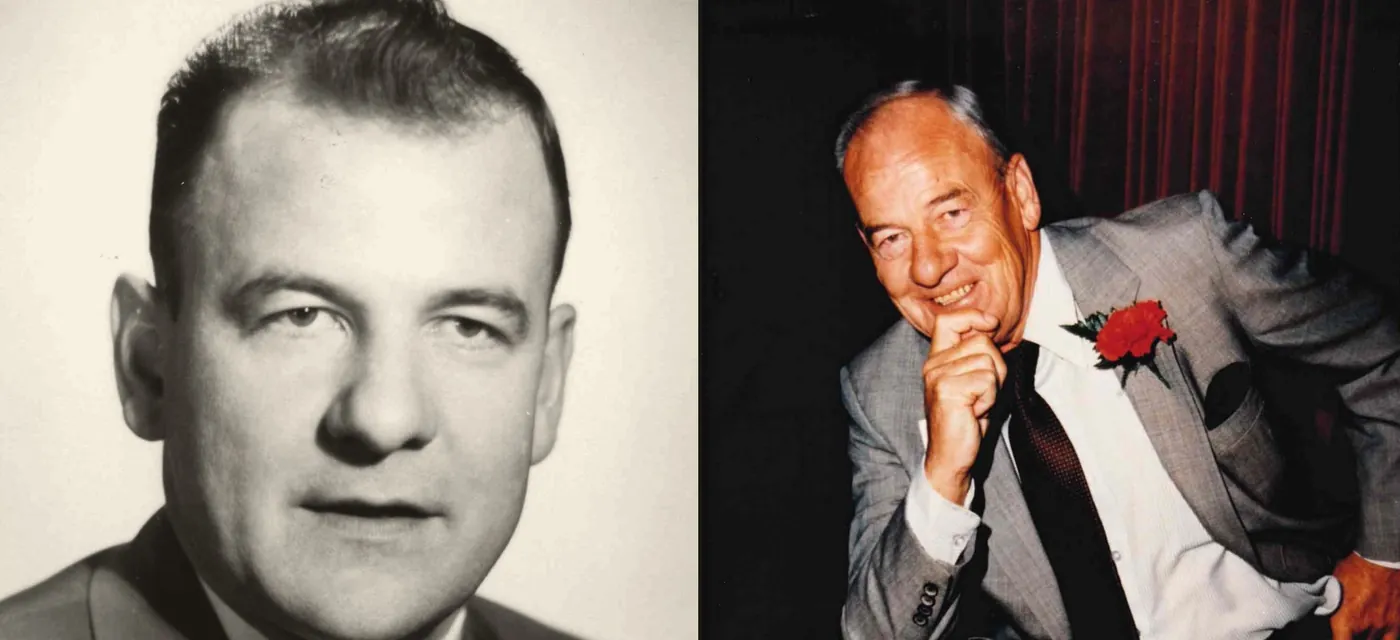
On 16 June 1951, according to the family biography, he married Mary Louise Fountain. Born in Emporia, Kansas, in 1921 and raised in Arkansas City, she had attended Oklahoma A&M before moving to Kansas City during the war. They had four children, Mary, Peter, Patricia, and Curtis. Her later obituary independently confirms the marriage to George E. Koutelas and the names of their children.⁹⁹
The family remembered his enjoyment of woodworking and golf, and the time he devoted to them after retirement. The woodworking is consistent with the young furniture repairman and Industrial Arts student described in his prewar records. The family account dates his retirement to 1980 after a long association with Pritchard. His wartime life, meanwhile, remained part of the history that researchers were beginning to recover from the surviving aircrew.¹⁰⁰
In July 1987 historian Mark E. Horan wrote to him after a telephone conversation, asking about VMSB-241ʼs operations at Midway. Horan was trying to identify individual pilots and gunners, reconstruct formations, establish aircraft assignments, and describe the missions through the experience of the men who flew them. Koutelasʼs answers supplied the details that a formal action report rarely preserves: the pitot cover, the pencil lines on his flying suit, the gun that would not come out of its stowed position, the sardines, and Cosleyʼs handshake.¹⁰¹
They also preserved his awareness of the limits of memory. He repeatedly said that he was uncertain about a time, an aircraftʼs position, or what he had seen. His account can therefore be read alongside the logbooks and contemporary statements as the recollection of a participant who remembered the fear and practical demands of the flights more clearly than every detail of the battle around him.
George E. Koutelas died on 5 December 1990. Mary Louise survived him until 27 August 2012. Their family carried forward a life that had encompassed the Depression-era working world of Kansas City, the training fields of naval aviation, the carrier battles and island campaigns of the Pacific, and the quieter responsibilities of engineering and family life.¹⁰²
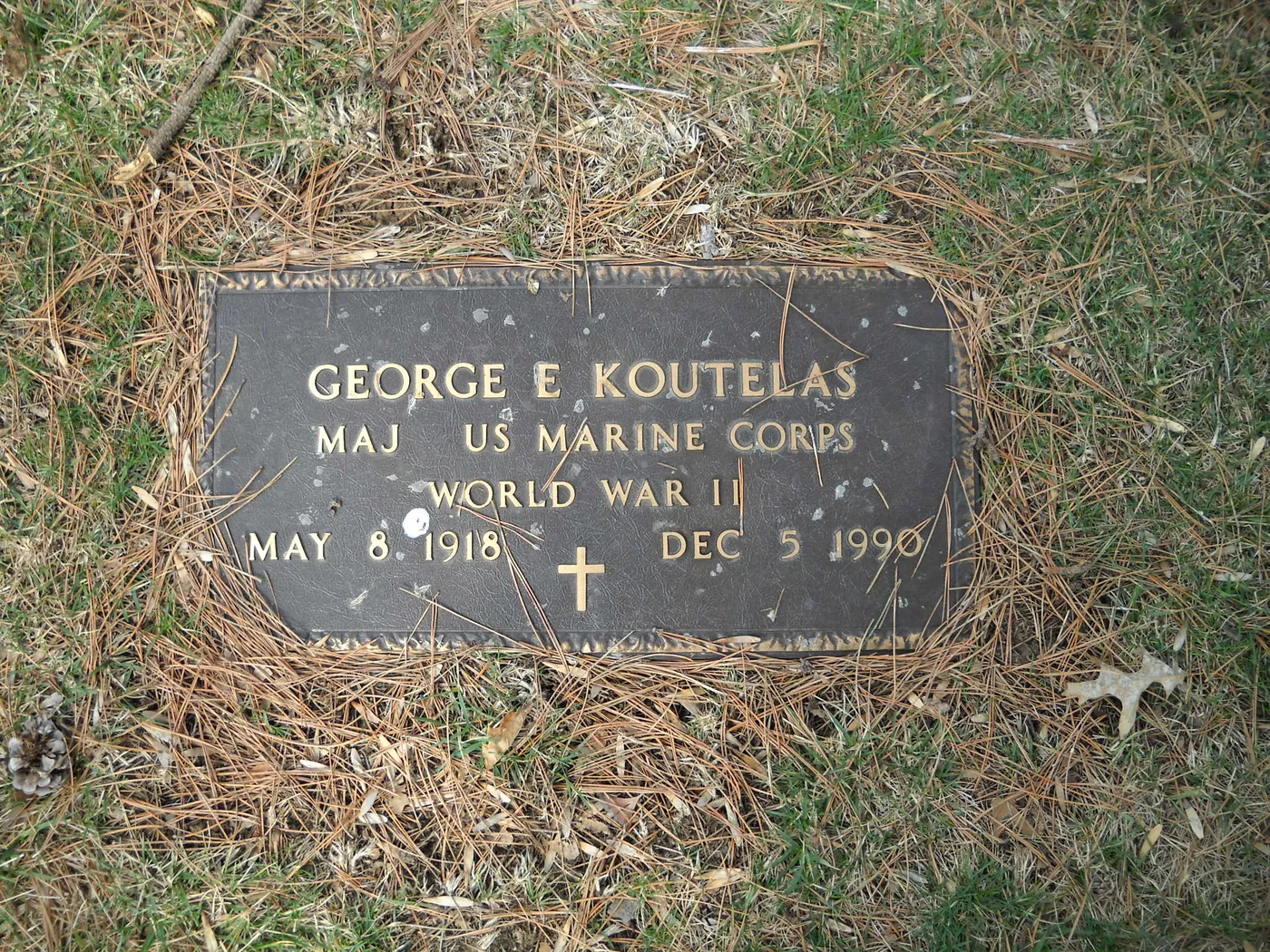
The most enduring account of his service brings those experiences together without requiring a confirmed sinking or a personal victory claim. At Midway he continued toward his target in an aircraft with failed instruments and communications. In the Solomons he flew the repeated searches, patrols, and attacks that sustained an island campaign, then earned his superiorsʼ confidence in the operations staff. Later he trained aircrew, commanded his squadron for recorded periods, and returned to the Pacific to serve in group supply. The Navy Cross marks one part of that history. The logbooks, the commendation, and the letter home reveal the rest: a Greek American Marine who learned rapidly, accepted increasing responsibility, and came back to the family whose news he had carried with him across the ocean.
After the warΜετά τον πόλεμο
- 13.1.1946Released from
active dutyΑποστρατεία από
την ενεργό υπηρεσία - 1948Engineer,
J. F. Pritchard & Co.Μηχανικός,
J. F. Pritchard & Co. - 16.6.1951Marries Mary Louise
FountainΓάμος με τη Mary Louise
Fountain - 15.3.1958Honorable discharge,
Major, USMCRΈντιμη απόλυση,
ταγματάρχης USMCR - 1987Answers Mark Horan’s
questions on MidwayΑπαντά στις ερωτήσεις
του Mark Horan για το Midway - 5.12.1990Dies, aged 72Πεθαίνει, 72 ετών
Η απαλλαγή από την ενεργό υπηρεσία δεν έβαλε αμέσως τέλος στη στρατιωτική σταδιοδρομία του Κουτέλα. Παρέμεινε ταγματάρχης της Εφεδρείας του Σώματος Πεζοναυτών. Τον Ιούλιο του 1946 υπέβαλε αίτηση για μετάταξη σε μόνιμο αξιωματικό του τακτικού Σώματος Πεζοναυτών, όμως η αίτηση δεν προωθήθηκε για επιλογή επειδή είχε λήξει η επιτρεπόμενη προθεσμία μετά την απαλλαγή. Ήταν ένα διοικητικό χρονικό όριο και όχι καταγεγραμμένη κρίση ότι του έλειπαν τα επαγγελματικά προσόντα για τον βαθμό.⁹⁴
Μια χωριστή διαδικασία επιβεβαίωσε τον μόνιμο βαθμό του στην Εφεδρεία. Διορίστηκε μόνιμος ταγματάρχης της Εφεδρείας του Σώματος Πεζοναυτών στις 16 Αυγούστου 1946, διατηρώντας την αρχαιότητα από τις 30 Ιουλίου 1944, και αποδέχθηκε τον διορισμό και ορκίστηκε στις 15 Οκτωβρίου. Η μεταγενέστερη εφεδρική υπηρεσία του περιλάμβανε μια αεροπορική τοποθέτηση στην Ένατη Περιφέρεια Εφεδρείας και καθήκοντα Εθελοντή Αξιωματικού Στρατολόγησης.⁹⁵
Συνέχισε επίσης να πετά. Μια έκθεση ικανότητας ναυτικού αεροπόρου από τον Ναυτικό Αεροπορικό Σταθμό Olathe του Kansas, για το διάστημα 1–15 Σεπτεμβρίου 1948, καταγράφει δεκαοκτώ πτήσεις και είκοσι έξι ώρες ως πρώτος χειριστής. Οι συνολικές του ώρες πτήσης είχαν φτάσει τις 1.226. Ο αξιολογητής βαθμολόγησε ως εξαιρετικές τόσο την ικανότητά του στην πτήση όσο και την ικανότητά του να διοικεί τακτικές αεροπορικές μονάδες. Ήταν εφεδρικές πτήσεις σε καιρό ειρήνης, όμως δείχνουν ότι ο δεσμός του με τη στρατιωτική αεροπορία συνεχίστηκε πολύ μετά την αποστράτευση.⁹⁶
Ο οριστικός χωρισμός του από την Εφεδρεία του Σώματος Πεζοναυτών ήρθε με έντιμη απόλυση στις 15 Μαρτίου 1958. Η σχετική αλληλογραφία αφορά τη διευθέτηση ενός ανενεργού έφεδρου αξιωματικού και ανεπιτυχείς προσπάθειες επίδοσης διοικητικών ειδοποιήσεων. Δεν περιγράφει πειθαρχική απόλυση. Η στρατιωτική του υπηρεσία εκτείνεται λοιπόν, στις διαδοχικές ενεργές και εφεδρικές μορφές της, από το προπολεμικό εκπαιδευτικό πρόγραμμα ώς τα τέλη της δεκαετίας του 1950.⁹⁷
Η πολιτική ζωή τον επέστρεψε στα πρακτικά και τεχνικά ενδιαφέροντα που είχαν προηγηθεί της πτήσης. Σύμφωνα με την οικογένεια, ολοκλήρωσε τις σπουδές του στο ίδρυμα που σήμερα είναι γνωστό ως Pittsburg State University και έκανε μακρά σταδιοδρομία στην J. F. Pritchard, εταιρεία μελετών και κατασκευών. Μια εφημερίδα της εποχής δίνει ένα συγκεκριμένο σημείο επαφής με αυτή τη σταδιοδρομία. Στις 19 Νοεμβρίου 1948 η Robert Lee Observer του Texas ανέφερε ότι ο George Koutelas, μηχανικός, είχε φτάσει πρόσφατα για να εργαστεί με την J. F. Pritchard στη νέα μονάδα φυσικού αερίου της Sun Oil στο Silver. Το δημοσίευμα τοποθετεί έναν άνθρωπο με το όνομά του στην εταιρεία και στο επάγγελμα που θυμάται η οικογένεια, αν και η σύντομη είδηση δεν αναφέρει την προηγούμενη υπηρεσία του στους Πεζοναύτες.⁹⁸
Στις 16 Ιουνίου 1951, σύμφωνα με την οικογενειακή βιογραφία, παντρεύτηκε τη Mary Louise Fountain. Γεννημένη στην Emporia του Kansas το 1921 και μεγαλωμένη στο Arkansas City, είχε σπουδάσει στο Oklahoma A&M πριν μετακομίσει στο Kansas City στη διάρκεια του πολέμου. Απέκτησαν τέσσερα παιδιά, τη Mary, τον Peter, την Patricia και τον Curtis. Η μεταγενέστερη νεκρολογία της επιβεβαιώνει ανεξάρτητα τον γάμο με τον George E. Koutelas και τα ονόματα των παιδιών τους.⁹⁹
Η οικογένεια θυμάται την αγάπη του για την ξυλουργική και το γκολφ και τον χρόνο που τους αφιέρωσε μετά τη συνταξιοδότησή του. Η ξυλουργική ταιριάζει με τον νεαρό επισκευαστή επίπλων και φοιτητή των Τεχνικών Μαθημάτων που περιγράφουν τα προπολεμικά του έγγραφα. Η οικογένεια χρονολογεί τη συνταξιοδότησή του το 1980, μετά από μακρά συνεργασία με την Pritchard. Η ζωή του στον πόλεμο, στο μεταξύ, παρέμενε μέρος της ιστορίας που οι ερευνητές είχαν αρχίσει να ανασυνθέτουν από τα πληρώματα που είχαν επιζήσει.¹⁰⁰
Τον Ιούλιο του 1987 ο ιστορικός Mark E. Horan του έγραψε μετά από μια τηλεφωνική συνομιλία, ρωτώντας τον για τις επιχειρήσεις της VMSB-241 στο Midway. Ο Horan προσπαθούσε να ταυτοποιήσει χειριστές και πολυβολητές έναν έναν, να ανασυνθέσει σχηματισμούς, να εξακριβώσει ποιος πέταξε ποιο αεροσκάφος και να περιγράψει τις αποστολές μέσα από την εμπειρία των ανδρών που τις πέταξαν. Οι απαντήσεις του Κουτέλα έδωσαν τις λεπτομέρειες που μια επίσημη έκθεση δράσης σπάνια διασώζει: το κάλυμμα του σωλήνα pitot, τις γραμμές από μολύβι στη στολή πτήσης, το πολυβόλο που δεν έβγαινε από τη θέση φύλαξης, τις σαρδέλες και τη χειραψία του Cosley.¹⁰¹
Διέσωσαν επίσης την επίγνωσή του για τα όρια της μνήμης. Επανειλημμένα έλεγε ότι δεν ήταν βέβαιος για μια ώρα, για τη θέση ενός αεροσκάφους ή για το τι είχε δει. Η αφήγησή του μπορεί λοιπόν να διαβαστεί δίπλα στα βιβλία πτήσεων και στις καταθέσεις της εποχής ως η ανάμνηση ενός συμμετέχοντα που θυμόταν τον φόβο και τις πρακτικές απαιτήσεις των πτήσεων πιο καθαρά από κάθε λεπτομέρεια της μάχης γύρω του.
Ο George E. Koutelas πέθανε στις 5 Δεκεμβρίου 1990. Η Mary Louise έζησε ώς τις 27 Αυγούστου 2012. Η οικογένειά τους συνέχισε μια ζωή που είχε περάσει από τον εργατικό κόσμο του Kansas City την εποχή της Μεγάλης Ύφεσης, από τα εκπαιδευτικά πεδία της ναυτικής αεροπορίας, από τις αεροναυμαχίες και τις εκστρατείες στα νησιά του Ειρηνικού, και από τις πιο ήσυχες ευθύνες της μηχανικής και της οικογενειακής ζωής.¹⁰²
Η πιο διαρκής αποτίμηση της υπηρεσίας του συνδέει αυτές τις εμπειρίες χωρίς να χρειάζεται μια επιβεβαιωμένη βύθιση ή μια προσωπική νίκη. Στο Midway συνέχισε προς τον στόχο του με ένα αεροσκάφος χωρίς λειτουργικά όργανα και επικοινωνίες. Στις Σολομώντειες πέταξε τις επαναλαμβανόμενες έρευνες, περιπολίες και επιθέσεις που στήριξαν μια εκστρατεία στα νησιά, και έπειτα κέρδισε την εμπιστοσύνη των ανωτέρων του στο επιτελείο επιχειρήσεων. Αργότερα εκπαίδευσε πληρώματα, διοίκησε τη μοίρα του για καταγεγραμμένα διαστήματα και επέστρεψε στον Ειρηνικό για να υπηρετήσει στον εφοδιασμό μιας σμηναρχίας. Το Navy Cross σημαδεύει ένα μέρος αυτής της ιστορίας. Τα βιβλία πτήσεων, ο έπαινος και το γράμμα στο σπίτι αποκαλύπτουν τα υπόλοιπα: έναν Ελληνοαμερικανό Πεζοναύτη που μάθαινε γρήγορα, αναλάμβανε όλο και μεγαλύτερες ευθύνες και γύρισε στην οικογένεια της οποίας τα νέα είχε κουβαλήσει μαζί του πέρα από τον ωκεανό.
HonoursΤιμές
The Navy Cross for his attacks of 4 and 5 June 1942 at Midway, approved on 10 November 1942 and presented on 30 November in Hawaii; a formal commendation from Major General R. J. Mitchell, Commander Aircraft, Solomon Islands, for his work in Strike Command from August 1943 to March 1944. He wore the Marine Corps emblem from 1942 until his honorable discharge as a major in 1958.Το Navy Cross για τις επιθέσεις του στις 4 και 5 Ιουνίου 1942 στο Midway, εγκρίθηκε στις 10 Νοεμβρίου 1942 και απονεμήθηκε στις 30 Νοεμβρίου στη Χαβάη· εύφημος μνεία του υποστράτηγου R. J. Mitchell, διοικητή της Αεροπορίας των Σολομώντειων Νήσων, για το έργο του στο Strike Command από τον Αύγουστο του 1943 ως τον Μάρτιο του 1944. Φόρεσε το έμβλημα των Πεζοναυτών από το 1942 ως την έντιμη απόλυσή του ως ταγματάρχης το 1958.
- For heroismΓια ηρωισμό
- Navy CrossMidway, 4–5 June 1942Midway, 4–5 Ιουνίου 1942
- PresentedΑπονομή
- 30.11.1942Hawaii · VMSB-233Χαβάη · VMSB-233
- CommendationΕύφημος μνεία
- SolomonsΣολομώντειεςMaj. Gen. R. J. Mitchell, 1944Υποστρ. R. J. Mitchell, 1944
- Final rankΤελικός βαθμός
- MajorΤαγματάρχηςUSMCR · discharged 15.3.1958USMCR · απόλυση 15.3.1958
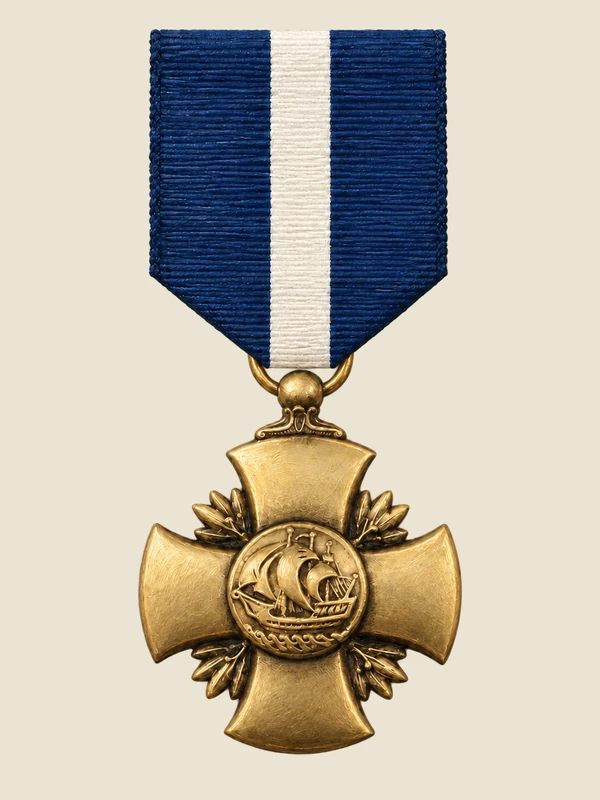
Research & sourcesΈρευνα & πηγές
All English passages in quotation marks or block quotations reproduce English-language originals, except the newspaper article, which is a translation from the Greek. His statement of 7 June 1942, his answers to Mark E. Horan, both Navy Cross citations, the letter of 30 November 1942, O’Neill’s report of 15 November 1943 and the Solomons commendation are given in full, with their original spellings.Τα αποσπάσματα σε εισαγωγικά ή σε πλαίσιο μεταφράζουν αγγλικά πρωτότυπα, εκτός από το δημοσίευμα της εφημερίδας, που δίνεται στο ελληνικό πρωτότυπο. Η κατάθεσή του της 7ης Ιουνίου 1942, οι απαντήσεις του στον Mark E. Horan, οι δύο αιτιολογίες του Navy Cross, η επιστολή της 30ής Νοεμβρίου 1942, η έκθεση του O’Neill της 15ης Νοεμβρίου 1943 και η εύφημος μνεία των Σολομώντειων δίνονται ολόκληρα.
Text and research by Greeks in Foreign Cockpits / KERM C.L.C., from George Koutelas’s enlisted and officer personnel files, his two flight logbooks and letters, the war diaries of VMSB-241 and VMSB-233, the Strike Command mission reports and his own 1987 recollection of Midway. To Kurt Koutelas and the Koutelas family for opening their albums and sharing the letters, logbooks and papers of George Koutelas. Aircraft profiles: John Smith (SB2U-3 #4) and Gaëtan Marie (SBD-2 #5). Painting of Vindicator #4: George Morris, 2023. This text was first written for the fourth volume of Greeks in Foreign Cockpits; as that volume could not be published, its chapters are released as digital dossiers, intended above all for the families of the airmen.Κείμενο και έρευνα: Greeks in Foreign Cockpits / ΚΕΡΜ, από τους υπηρεσιακούς φακέλους του George Κουτέλα, τα δύο βιβλία πτήσεων και τις επιστολές του, τα ημερολόγια πολέμου των VMSB-241 και VMSB-233, τις αναφορές αποστολών του Strike Command και τη δική του αφήγηση του 1987 για το Midway. Στον Kurt Koutelas και στην οικογένεια Koutelas, που άνοιξαν τα άλμπουμ τους και μοιράστηκαν τις επιστολές, τα βιβλία πτήσεων και τα έγγραφα του George Κουτέλα. Προφίλ αεροσκαφών: John Smith (SB2U-3 #4) και Gaëtan Marie (SBD-2 #5). Πίνακας του Vindicator #4: George Morris, 2023. Το κείμενο γράφτηκε αρχικά για τον τέταρτο τόμο του Έλληνες σε Ξένα Πιλοτήρια· καθώς ο τόμος δεν μπόρεσε να εκδοθεί, τα κεφάλαιά του δημοσιεύονται ως ψηφιακοί φάκελοι, αφιερωμένοι πρώτα απ’ όλα στις οικογένειες των αεροπόρων.
NotesΣημειώσεις
- 1George E. Koutelas, Official Military Personnel File, USMCR officer no. 09041 (hereafter OMPF), pp. 32–38, 66–68, 73, 77–79; George E. Koutelas, Flight Log Book no. 2 (hereafter Log 2), pp. 24, 35–41. The name Edwin appears in many original personnel documents, including the final training report (OMPF, p. 67); Edward occurs in other military and genealogical records.
- 2OMPF, pp. 1, 14–16, 26, 38, 63, 69; “Ελληνόπαις αξιωματικός της Ναυτικής Αεροπορίας επαρασημοφορήθη επʼ ανδραγαθία,” undated Greek-language newspaper clipping, George Koutelas research collection, p. 1; Koutelas family biography, opening paragraph. Most personnel documents give 8 May 1918; the Missouri National Guard certificate (p. 63) gives 8 May 1917. The clipping names his father as “Παν. Κουτέλας” and his village as Draiana. The family biography records Pete’s arrival in 1905 aboard La Touraine with his brother Andrew.
- 3Koutelas family biography, opening paragraph; Koutelas to his mother, 30 November 1942, p. 1. The FamilySearch profile “Peter J Koutelas,” L7GC-GXG, lists a partially different set of children and identifies Lillie as Lillie Catherine Lenge.
- 4OMPF, pp. 26, 40, 44, 63; Wallace R. McLain, U.S. Marine Corps press release, Miramar, 24 March 1944 (hereafter Miramar release), pp. 1–2. The National Guard certificate is dated 17 April 1942; the original enlistment was for three years, of which about one was served.
- 5OMPF, pp. 15, 26, 40. The press printed markings on grain and feed sacks.
- 6OMPF, pp. 23, 26, 40, 69; Miramar release, p. 2. One form reads “Kansas City Teach Col.”; other cards specify Kansas State Teachers College, Pittsburg, Kansas, and two years of Industrial Arts without a degree. His 1946 application records September 1938–May 1941 and four semesters. Football and woodcraft appear in the qualifications record.
- 7OMPF, pp. 38, 44, 46; George E. Koutelas, Official Military Personnel File, enlisted service (hereafter Enlisted OMPF), pp. 21, 40; Log 2, preliminary training entries. The preliminary Kansas City period ran from 28 May to 25 June 1941.
- 8OMPF, pp. 38, 46, 67; Enlisted OMPF, pp. 21, 40; Log 2, pp. 3–22. 24 July is the date on the final Corpus Christi course report.
- 9Log 2, September–October 1941, pp. 3–7; Koutelas family biography, training narrative.
- 10Log 2, November–December 1941, pp. 8–11.
- 11Log 2, January–March 1942, pp. 12–18. The SNC-1 was the Navy’s Curtiss-Wright advanced trainer; the North American SNJ belongs to the wartime Texan family.
- 12OMPF, pp. 5, 16, 24, 38, 46, 65. Seniority, the date of the commission, acceptance and oath, aviator designation and course completion are separate events; the oath is dated 31 March.
- 13OMPF, p. 67, “Final Report of Aviation Training,” class 7B-41C(C). The report gives ground school 3.248, flight school 2.97, final school mark 3.081, military record 3.49 and final course 3.203. The 235.6-hour total includes passenger time and covers this course only.
- 14OMPF, pp. 9, 38, 46; Log 2, late April–early May 1942. The summary dates Advanced Carrier Training to 27 April–2 May 1942.
- 15OMPF, p. 38. In May 1942 the transports were classified AP-34 (J. Franklin Bell) and APV-1 (Kitty Hawk). The service record gives arrival and joining at Midway on 26 May.
- 16George E. Koutelas, “Battle of Midway Island As Seen by George E. Koutelas,” answers to questions from Mark E. Horan, 1987 (hereafter Statements), p. 1. The surviving print is headed “BATTTLE OF MIDWAY ISLAND” and marked “Printed 2/6/91.” The recollection gives “27 June” for the arrival; the personnel record gives 26 May.
- 17VMSB-241 war diary, 16 May 1942, transcription reproduced in Missing Marines, “Lofton Russell Henderson,” https://missingmarines.com/lofton-r-henderson/. Compare Statements, p. 4, question 5e.
- 18Statements, p. 1. The explanation of the demolition wiring is Koutelas’s own recollection. See also Peter F. Owen, “Marine Air’s Dark Day at Midway,” Naval History 38, no. 3 (June 2024), https://www.usni.org/magazines/naval-history/2024/june/marine-airs-dark-day-midway.
- 19Log 2, p. 23; VMSB-241, Midway action report, 12 June 1942, crew lists; Statements, pp. 1–2. The squadron roster identifies his gunner as Warren H. Van Kirk.
- 20Statements, p. 1. Koutelas was unsure of the briefing date and offered several possibilities around the end of May and the beginning of June.
- 21VMSB-241, Midway action report, 12 June 1942; Owen, “Marine Air’s Dark Day.”
- 22Statements, p. 2. He estimates the final takeoff at about 6:15 a.m., against 6:10 in his statement of 7 June.
- 23Statements, p. 3. “Plane captain” here is the enlisted man responsible for the aircraft on the ground.
- 24Statements, pp. 2–3. The answer preserves the typed phrase “turn t the left.”
- 25George E. Koutelas, statement of 7 June 1942, filed with his Navy Cross citation (hereafter Attack Statement), p. 3; Statements, p. 3.
- 26Attack Statement, p. 3; Statements, p. 4. The 1942 statement names Norris as the officer who directed the change of target; the later recollection names Henderson.
- 27Sumner Whitten, oral history, National WWII Museum, section “Going After the Japanese Battleship Haruna,” https://www.ww2online.org/view/sumner-whitten. Paraphrased from the museum’s annotated summary.
- 28Attack Statement, p. 3; Statements, p. 4. The 1942 statement gives a release at about 500 feet; the later answer recalls about 400 feet.
- 29Statements, pp. 4–5.
- 30Statements, p. 5.
- 31Statements, p. 5.
- 32Statements, pp. 1–6. Koutelas’s answers are quoted as typed, including “form,” “Suprisingly,” “singlely” and “on bomb”; the interviewer’s prompts and numbering are omitted.
- 33Attack Statement, pp. 3–4; a duplicate typed copy of the 4 June entry survives in the George Koutelas research collection. The typed wording “hole man” is retained. Log 2, p. 24, records a four-hour flight on 4 June in SB2U-3 2053.
- 34Attack Statement, p. 3; OMPF, p. 66; Owen, “Marine Air’s Dark Day.” The Navy Cross wording reflects wartime American identification and damage claims; no hit on Haruna or on a carrier is confirmed in Japanese records.
- 35VMSB-241, Midway action report, 12 June 1942; Log 2, p. 24.
- 36Attack Statement, pp. 3–4; VMSB-241, Midway action report; Owen, “Marine Air’s Dark Day.” The ships were the heavy cruisers Mogami and Mikuma, damaged in a collision while avoiding a submarine report.
- 37Log 2, p. 24; Attack Statement, p. 3. The log gives the aircraft for 5 June as 2056.
- 38Attack Statement, pp. 3–4. The phrase “While I was running I saw about one-third the way back from the bow” is incomplete in the surviving copy. A duplicate copy reads “listing badly” and signs “2ndLieut.”
- 39Statements, p. 6.
- 40Statements, p. 6; Attack Statement, pp. 3–4. Koutelas thought the burning aircraft hit a rear gun turret but was unsure.
- 41Statements, p. 6. The typed forms “out target” and “Flemming” are retained.
- 42Attack Statement, p. 4. The photograph of the burning cruiser Mikuma is U.S. Navy 80-G-414422, taken from a carrier aircraft on 6 June.
- 43Statements, p. 7, answer to question 10. The surviving account moves from question 8 to question 10.
- 44Log 2, p. 24; Statements, p. 7. The log gives “Observation & Patrol—Kure Is.” and 1.9 hours.
- 45VMSB-241 war diary, 1 July 1942, p. 1; Log 2, pp. 24–32; OMPF, pp. 36, 38.
- 46Statements, p. 7, answer to question 11. The typed spellings “Schlenderir,” “my self” and “Guadacanal” are retained. The service record gives his return to the mainland as 23 March 1944.
- 47OMPF, pp. 8, 36.
- 48OMPF, p. 36. The dated school entry covers 18 October–1 November 1942.
- 49OMPF, pp. 36, 66, 74–76; Navy Cross citations, pp. 1–2. Both citations are reproduced in full from the English originals; the ellipses in the Nimitz text are in the original. The approval notation “11-10-42” is 10 November 1942; the service card reads “Presented 30 November 42.”
- 50Koutelas to his mother, 30 November 1942, typed copy, p. 1.
- 51Letter of 30 November 1942; OMPF, p. 36. The letter anticipates the presentation “tomorrow”; the service card enters 30 November.
- 52Letter of 30 November 1942.
- 53Letter of 30 November 1942. “It’s to good” is as typed.
- 54Letter of 30 November 1942, reproduced in full.
- 55OMPF, pp. 36, 61. The tender was USS Wright (AV-1). The appointment as first lieutenant was issued 1 December with rank from 30 November and acknowledged on 22 December.
- 56Greek-language newspaper clipping, undated, George Koutelas research collection, p. 1. The dateline reads “KASAS CITY, MO.” The article’s references to the Army, the “Naval Air Corps,” torpedoes and the title of the award are the newspaper’s own; the decoration was the Navy Cross and his service was in the Marine Corps Reserve.
- 57OMPF, pp. 36–37; Log 2, p. 35. The first Guadalcanal aviation-duty period begins 24 December 1942.
- 58Log 2, p. 35. SBD-3 06533, 0.9 hours, artillery spotting, with “Col Gavin.”
- 59VMSB-233 war diary, 27 December 1942, p. 8; Log 2, p. 35. The diary records twelve SBDs under Major Richards. The second flight in the log is 1.4 hours in 06689, “Night Search,” with Lt. Johnson.
- 60Log 2, p. 35; VMSB-233 war diary, entries headed “Pistol Pete.”
- 61Log 2, p. 35; Miramar release, p. 2; Koutelas family biography, January 1943. The log records a 3.3-hour “Attack 10 DD’s” with Wilson.
- 62Log 2, p. 35.
- 63Log 2, p. 35; VMSB-233 war diary, 14 January 1943, p. 26 (Fold3 image 269426472). The diary names Koutelas and places his salvo on the north taxiway; Frazer and Stamps are credited with the aircraft destroyed.
- 64VMSB-233 war diary, 19 January 1943, p. 31.
- 65VMSB-233 war diary, 19 January 1943, p. 31; Log 2, p. 35. The log enters four rows under 16 January, in aircraft 4550, 03288, 06710 and 06529, of 0.8, 1.0, 1.0 and 4.1 hours.
- 66Log 2, p. 36; Koutelas family biography, January 1943.
- 67Log 2, p. 37; VMSB-233 war diary, 2 February 1943 (Fold3 image 269426633). The log gives sixteen DD; the diary gives “16 DD OR DL,” ten SBDs and eleven TBFs, and close-miss claims by Frazer and Hays.
- 68OMPF, p. 37. The card reads “Efate, New Caledonia”; Efate is in the New Hebrides, now Vanuatu.
- 69Log 2, p. 38; VMSB-233 war diary, 26, 30 and 31 March 1943 (Fold3 images 269426754, 269426790, 269426799). The diary names Koutelas in convoy cover on 26 and 31 March.
- 70Log 2, p. 39; VMSB-233 war diary, 6 and 10 April 1943 (Fold3 images 269426856/861 and 269426890/899). The diary names Koutelas in the five-ship search formation and on the ferry roster. Later transport entries place him in the passenger column.
- 71Naval History and Heritage Command, “Marines—1st Lt George E. Koutelas, Air Corps”; McClelland Barclay, Conté crayon on paper, 1943, accession 85-236-AG.
- 72OMPF, p. 37.
- 73OMPF, pp. 10, 37, 59–60. The captain’s appointment was issued on 1 June 1943 with rank from 31 May.
- 74Log 2, pp. 40–41. The final page has flights on 30–31 July and 2–13 August 1943 in SBD-4s.
- 75OMPF, p. 34; Headquarters Squadron, 1st Marine Aircraft Wing, war diary, August 1943, p. 4: “Capt KOUTELAS, George E., STAD to ComAirSols, Guadalcanal, Solomon Islands, via Govt Air.” See also OMPF, p. 68.
- 76VMSB-236, operations mission report, 11 September 1943, pp. 9–10. The report names “2 Strike Pilots (Butler and Koutelas).”
- 77VMSB-236, operations mission report, 11 September 1943, p. 10. Koutelas’s times are 10:35–13:56; hits are reported for the formation as a whole.
- 78VMSB-236/VS-54 mission report, 19 September 1943 (Fold3 images 270262338, 270262340), with Koutelas’s 12:15–15:01 row; VMSB-235 mission report, 20 September 1943, pp. 22–24. On 20 September his row gives 08:52–11:47.
- 79OMPF, p. 68, Strike Command, Aircraft, Solomons, report of 15 November 1943, reproduced in full.
- 80OMPF, p. 68, paragraph 4 and signature of D. F. O’Neill.
- 81O’Neill, reports of 28 February and 15 March 1944, OMPF, pp. 79, 77. The February report begins 20 November 1943 and gives its end as “31 December 1942.” The March report covers 1 January–15 March 1944.
- 82OMPF, pp. 73, 77–78, commendation signed by Major General R. J. Mitchell, reproduced in full from p. 73.
- 83OMPF, pp. 11, 35, 41, 56–57. He reached the mainland on 23 March 1944; thirty days’ leave began on 25 March.
- 84Miramar release, 24 March 1944, p. 1.
- 85OMPF, p. 35; George E. Koutelas, Flight Log Book no. 1 (hereafter Log 1), p. 2. The service card gives 3 May 1944 for VMSB-474, detachment on 10 May and joining VMSB-484 on 13 May. The first SBD-5 flight in the log is 12 May.
- 86Log 1, pp. 2–13; Koutelas family biography, 1944. Log 1, p. 13, records SBW-3 21566 in January 1945, including El Centro, “Dummy Rocket Run” and “Rocket Firing.”
- 87OMPF, pp. 32, 35, 54–55. Seniority dates from 30 July 1944; the appointment was accepted on 19 August.
- 88OMPF, p. 32. The command periods are 4–13 February, 20–31 March and 1–25 April 1945.
- 89OMPF, p. 32. Departure from Pearl Harbor 1 June 1945, the International Date Line 4 June, Majuro 7–8 June, Guam 8–10 June, Falalop 10 June.
- 90OMPF, p. 32; MAG-45 war diary, 16 June 1945, p. 7. The diary records him as joined effective 19 May, assigned to Headquarters Squadron 45 and appointed Group Supply Officer.
- 91MAG-45 war diary, 16–17 June 1945, p. 7. The strikes on Yap and Gagil-Tomil were flown by VMSB-245.
- 92OMPF, pp. 32–33; Log 1, pp. 17–20. Several entries name Mattingly or another pilot and place Koutelas in the passenger column.
- 93OMPF, pp. 12–13, 33, 48, 69. Relief from active duty is dated 13 January 1946; a separation form also gives 13 November 1945.
- 94OMPF, pp. 52, 69–70. The application is dated 27 July 1946.
- 95OMPF, pp. 33, 49–51, 71.
- 96“Supplementary Fitness Report on Naval Aviators,” 15 September 1948, OMPF, p. 42.
- 97OMPF, pp. 17–20, 27–31, 72. Honorable discharge effective 15 March 1958.
- 98Koutelas family biography, closing paragraph; Robert Lee Observer, 19 November 1948, p. 1, Southwest Collection, Texas Tech University.
- 99Koutelas family biography, closing paragraph; McGilley State Line Chapel, “Mary Louise Koutelas,” obituary, August 2012, https://www.dignitymemorial.com/obituaries/kansas-city-mo/mary-koutelas-5219028.
- 100Koutelas family biography, closing paragraph; OMPF, pp. 26, 40; U.S. Environmental Protection Agency, Control Technology Appendices for Pollution Control Technical Manuals (April 1983), appendix A10, p. A10-12, citing a September 1980 communication from “G. Koutelas, J. F. Pritchard & Co.”
- 101Mark E. Horan to George E. Koutelas, 24 July 1987; Statements, pp. 1–7.
- 102Koutelas family biography, closing paragraph; BillionGraves, “George E Koutelas (1918–1990)”; McGilley State Line Chapel, “Mary Louise Koutelas,” obituary, 2012.
BibliographyΒιβλιογραφία
- Barclay, McClelland. Portrait of 1st Lt. George E. Koutelas, from the series “Heroes of the South Seas,” Conté crayon on paper, 1943. Naval History and Heritage Command, accession 85-236-AG.
- FamilySearch. “Peter J Koutelas,” L7GC-GXG. https://ancestors.familysearch.org/en/L7GC-GXG/peter-j-koutelas-1880.
- “Ελληνόπαις αξιωματικός της Ναυτικής Αεροπορίας επαρασημοφορήθη επʼ ανδραγαθία.” Undated Greek-language newspaper clipping. George Koutelas research collection.
- Headquarters Squadron, 1st Marine Aircraft Wing. War diary, August 1943.
- Horan, Mark E. Letter to George E. Koutelas, 24 July 1987.
- Koutelas family. Biography of George E. Koutelas, family narrative, with photographs from the collection of Kurt Koutelas.
- Koutelas, George E. “Battle of Midway Island As Seen by George E. Koutelas.” Seven-page recollection, answers to questions from Mark E. Horan, 1987.
- Koutelas, George E. Flight Log Books nos. 1 and 2, 1941–1945. Koutelas family.
- Koutelas, George E. Letter to his mother, 30 November 1942. Koutelas family.
- Koutelas, George E. Official Military Personnel Files, enlisted and officer service, USMCR officer no. 09041.
- Koutelas, George E. Statement on the actions of 4 and 5 June 1942, dated 7 June 1942, filed with his Navy Cross citation.
- Marine Aircraft Group 45. War diary, June 1945.
- Marine Scout-Bombing Squadron 233. War diary, December 1942–August 1943.
- Marine Scout-Bombing Squadron 235. SBD operations mission report, 20 September 1943.
- Marine Scout-Bombing Squadron 236. Operations mission reports, 11 and 19 September 1943.
- Marine Scout-Bombing Squadron 241. Report of Activities of VMSB-241 during June 4 and June 5, 1942, 12 June 1942. https://www.midway42.org/Midway_AAR/vmsb-241.pdf.
- Marine Scout-Bombing Squadron 241. War diary, May–July 1942.
- McGilley State Line Chapel. “Mary Louise Koutelas,” obituary, August 2012. https://www.dignitymemorial.com/obituaries/kansas-city-mo/mary-koutelas-5219028.
- McLain, Wallace R. U.S. Marine Corps combat-correspondent release, Miramar, 24 March 1944.
- Missing Marines. “Lofton Russell Henderson.” https://missingmarines.com/lofton-r-henderson/.
- National WWII Museum. Sumner Whitten, oral history. https://www.ww2online.org/view/sumner-whitten.
- Owen, Peter F. “Marine Air’s Dark Day at Midway.” Naval History 38, no. 3 (June 2024). https://www.usni.org/magazines/naval-history/2024/june/marine-airs-dark-day-midway.
- Robert Lee Observer, 19 November 1948, p. 1. Southwest Collection, Texas Tech University.
- United States Environmental Protection Agency. Control Technology Appendices for Pollution Control Technical Manuals. April 1983, appendix A10.
A research project under the auspices of KERM C.L.C.
© 2017-2026 Dimitris Vassilopoulos - All Rights Reserved