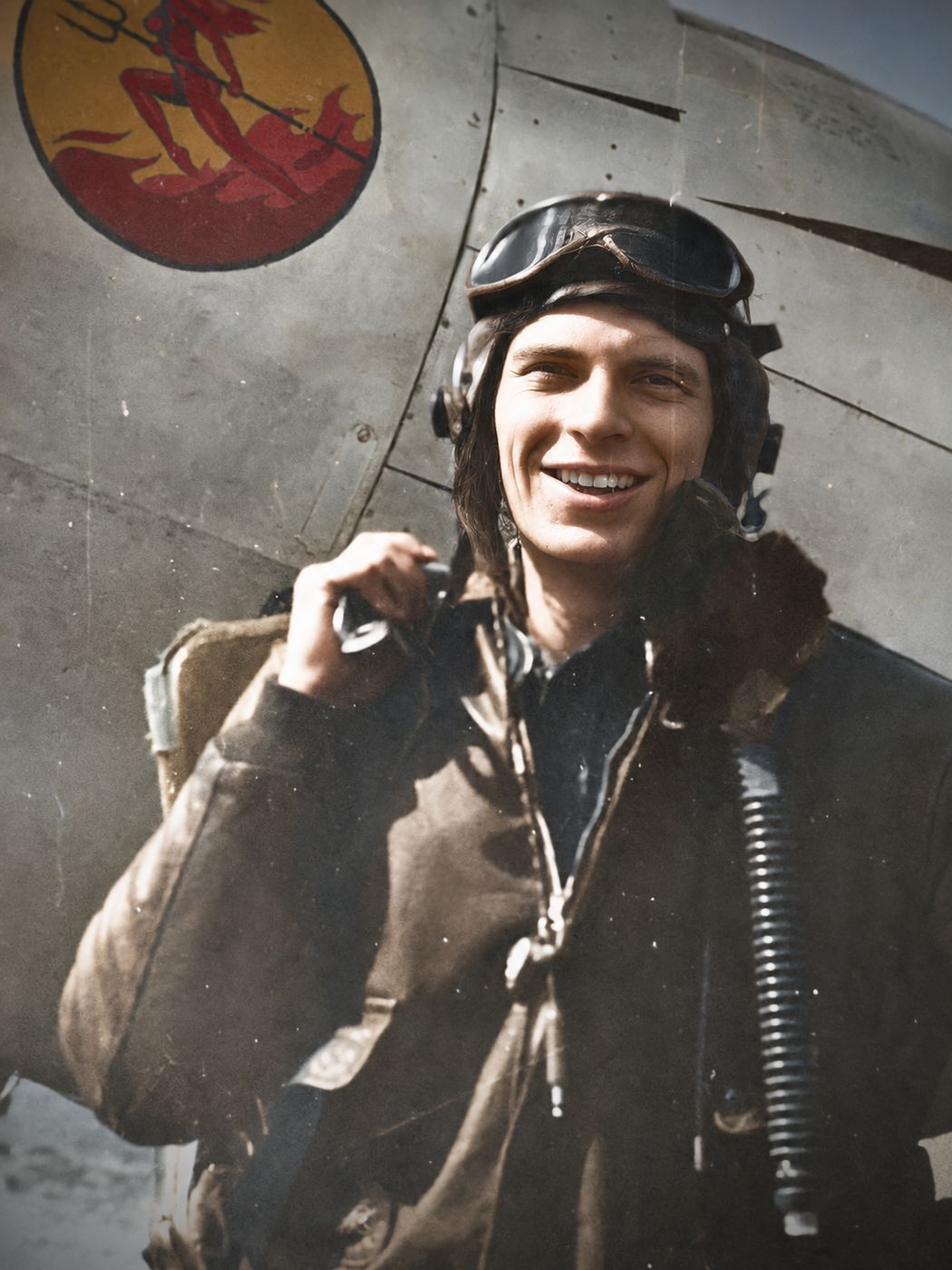
Greeks in Foreign CockpitsUSAAF · 1944–1945
Andrew NicholasKandis

Andrew NicholasKandis
Confirmed
Victory
Lieutenant Colonel, USAF ReserveP-47D Thunderbolt Pilot · 316th Fighter Squadron · 324th Fighter Group · Twelfth Air Force
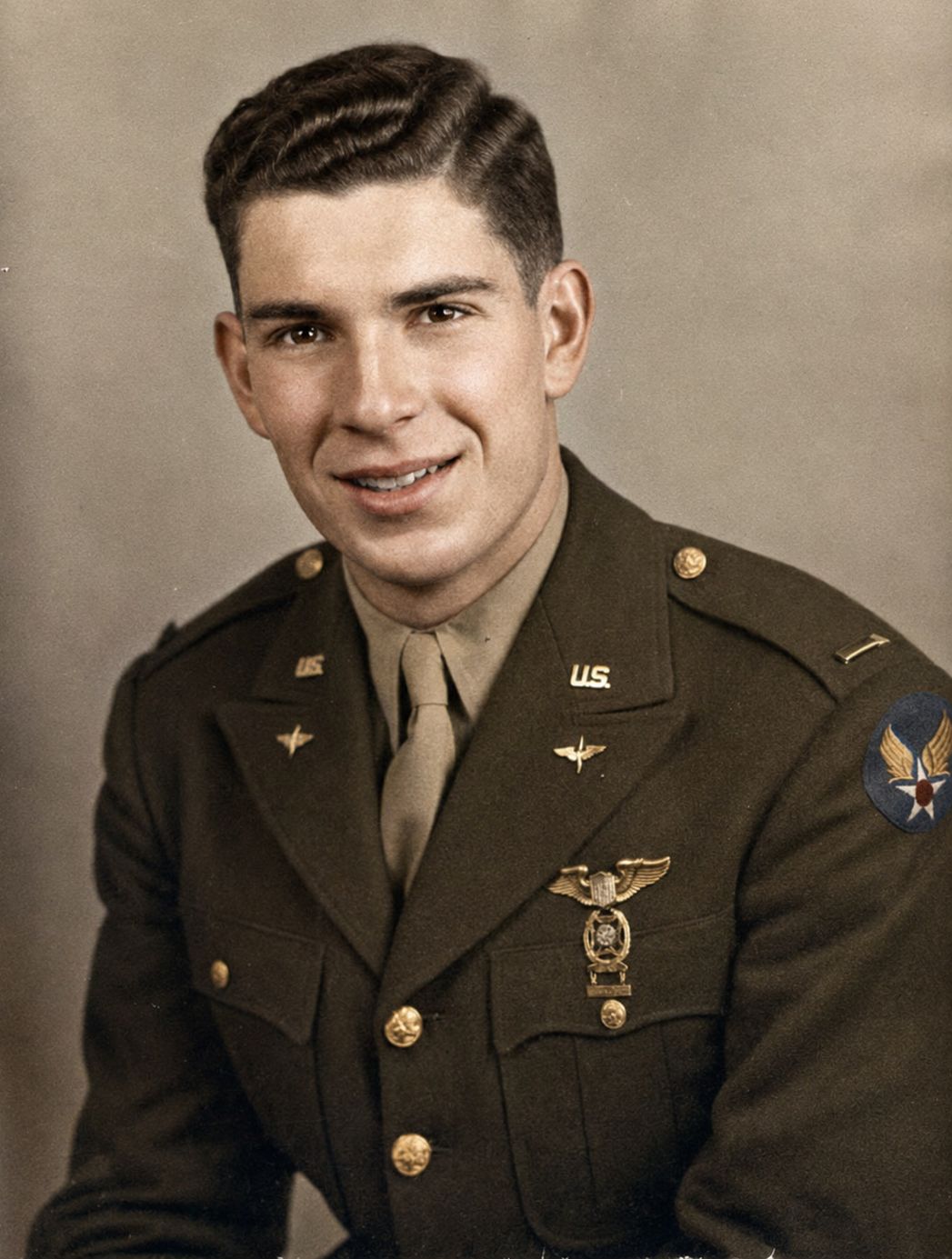
Andrew Nicholas Kandis was a Greek-American P-47 Thunderbolt pilot who served with the 316th Fighter Squadron, 324th Fighter Group, in the Mediterranean and European theaters. Born in South Bend, Indiana, he spent formative childhood years in Greece: he lived in Tripolis, visited Athens and Kandyla in Arcadia, attended school there and learned the language before returning to the United States. He entered the USAAF in March 1943 and followed the full fighter-pilot training sequence through Texas, Kansas and Florida, progressing from the PT-19A through advanced instruction and P-40 transition flying to the Republic P-47D Thunderbolt. With the 316th Fighter Squadron, Kandis flew armed-reconnaissance, dive-bombing, strafing and tactical-support missions during the final campaigns in Europe. On 4 April 1945, while leading an eight-aircraft armed-reconnaissance formation near Memmingen in P-47 No. 70, he attacked a German Me 262 as it took off and claimed its destruction. The signed combat report remains the central primary document for that engagement. Postwar records credit him with 101 combat missions; 41 individual sorties are presently documented in surviving squadron material. He continued to fly in the Air Force Reserve and ultimately held the rank of Lieutenant Colonel.
This dossier is dedicated to the memory of Kandis’s daughter, Connie Kandis Kakalia, whose care helped preserve the family archive and the record of her father’s service.
Quick Facts
- Born
- 15 January 1924South Bend, Indiana
- Heritage
- Greek AmericanKandyla, Arcadia
- Unit
- 316th Fighter Squadron324th Fighter Group
- Aircraft
- Republic P-47DThunderbolt
- Operations
- 101 reported41 documented sorties
- Distinction
- Me 262 destroyed4 April 1945
- Training
- PT-19A · AT-6 · P-40Advanced flying, 1943–44
- Rank
- Lieutenant ColonelUSAF Reserve
The early years and his entry into the USAAF
Two names
- Greek surnameKandalepas
Κανδαλέπας - American formKandis
- Service numberO-706411
- Born15 January 1924
- In Greece1933–1935
Andrew Nicholas Kandis was born on January 15, 1924, in South Bend, Indiana, the son of Nicholas and Cleopatra Kandis. His life began in the American Midwest, but his roots amounted to far more than a Greek surname carried within the everyday world of the diaspora. For him, Greece was a childhood experience rather than an abstract family memory. The family’s original Greek surname was Kandalepas (Κανδαλέπας), while Kandis was the Americanized form adopted by this particular branch of the family after settling in the United States. In Greek-American sources, his father appears under the Greek form of his name, Nikolaos Andreou Kandalepas (Νικόλαος Ανδρέου Κανδαλέπας), while as early as 1915 an N. Kandalepas was recorded in La Porte, Indiana, as a Greek restaurateur.[47] In 1933, at approximately nine years of age, Andrew traveled to Greece with his mother and his younger brother, James. They lived for two years in Tripoli, in the Peloponnese, while Andrew also visited Athens and his grandparents in Kandila.
For him, Greece was a childhood experience rather than an abstract family memory.
It was there that he learned Greek and attended school. This detail is fundamental to understanding his place within the broader history of the Greek diaspora: Kandis was not merely an American of Greek descent; he was a child who had actually lived in Greece, heard its language spoken in everyday life, come to know the Peloponnese, and acquired memories of Greece that were personal and lived rather than inherited.¹ After the family returned to the United States, Kandis grew up in LaPorte, Indiana. His youth reflected the life of an active American schoolboy of his generation: he was a Boy Scout, delivered newspapers from house to house, and took part in athletics, competing in both track and cross-country running. He graduated from LaPorte High School in 1942. The family, however, had already experienced the tragedy of an early loss when his brother James died in 1940 at only twelve years of age. Andrew attended Purdue University for one semester, but his generation was not destined to enjoy the normalcy of a carefree college life. In March 1943, he entered the United States Army Air Forces (USAAF), becoming part of the vast training establishment that was preparing thousands of young Americans to serve as pilots in the war.²
Kandis’s flight records allow us to follow this transformation almost step by step. The surviving file held by the National Archives for Andrew N. Kandis, service number O-706411, covers both his wartime service and his subsequent career in the United States Air Force Reserve.³ During the first stage of his training as an aviation cadet, he was assigned to the 308th Army Air Forces Flying Training Detachment at Stamford, Texas, where he made his first training flights in the PT-19A. There he began accumulating his first flying hours, sometimes with an instructor and sometimes flying solo. The aircraft was a far cry from the power and sheer scale of the P-47s he would later fly, yet it provided him with the foundations of military flying: precise aircraft control, self-discipline, strict adherence to procedures, and constant practice.⁴
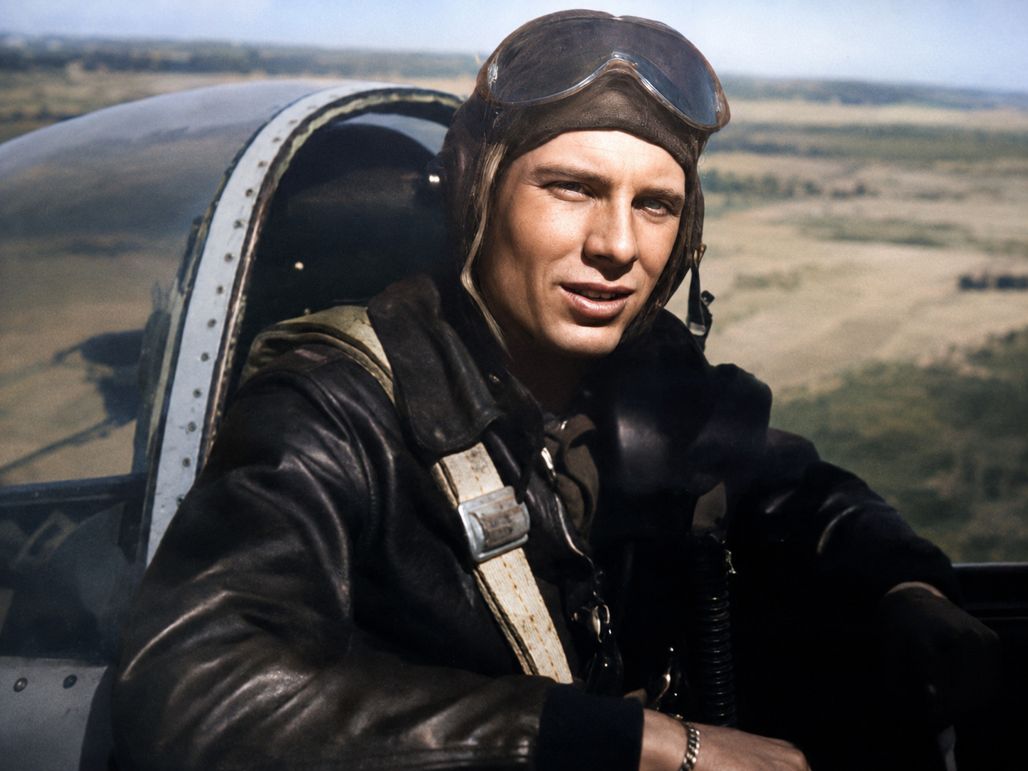
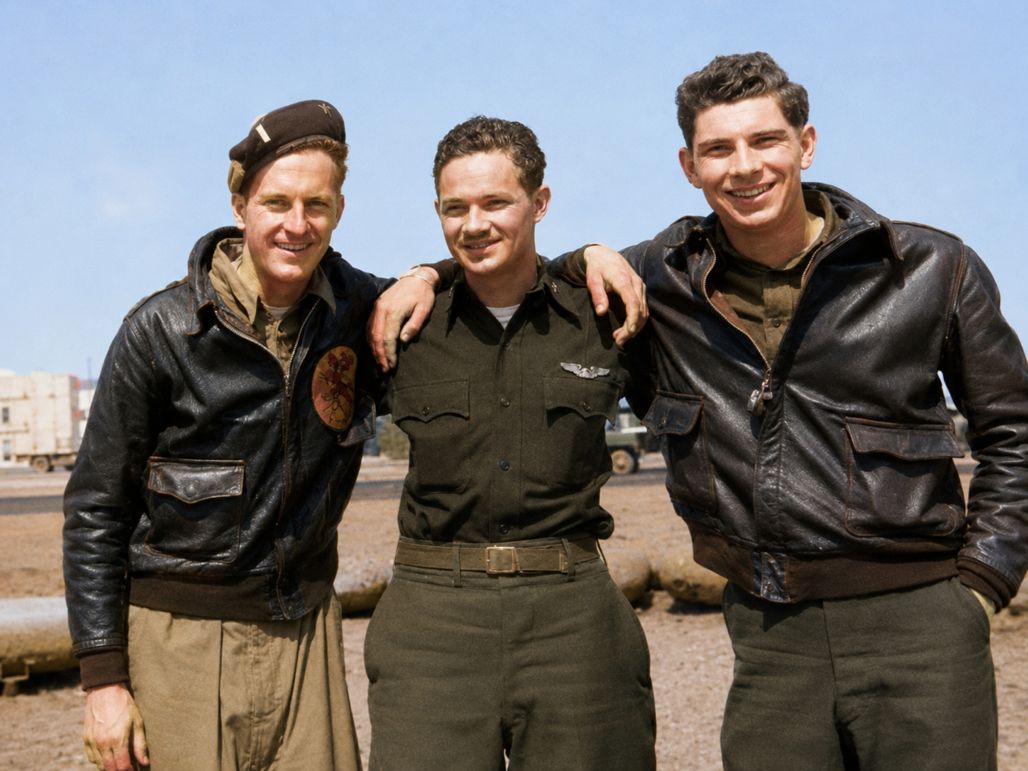
From Stamford he was transferred to Strother Army Air Field at Winfield, Kansas, where he entered the next, more demanding stage of his training. Here the cadet gradually ceased to be merely a student learning how to operate an aircraft and began to develop into a military pilot. The training became increasingly rigorous, while the aircraft flown, the accumulating flight hours, the evaluations, and the continuous documentation of his progress reveal the steady maturation of his abilities. Kandis did not proceed directly to fighter aircraft. He followed the full progression of the American pilot-training system, passing through primary, basic, and advanced training—a system that produced thousands of pilots to meet the demands of the Second World War.⁵
In early November 1943, he was transferred from Strother Army Air Field to Foster Field, near Victoria, Texas, to complete his advanced and operational training. There he flew the AT-6 and P-40, aircraft that brought him considerably closer to the world of fighter aviation and the demands of aerial combat.⁶ A decisive milestone in his career came on January 7, 1944, when he graduated from flight training and was commissioned as a Second Lieutenant.⁷ From that moment onward he was no longer an aviation cadet, but an officer of the United States Army Air Forces, ready to move on to the next stage of his career: transition to fighter aircraft and, before long, operational combat. This transition took place at Punta Gorda Field, Florida. From February through May 1944, Kandis flew the P-40, learning to employ a fighter not simply as an aircraft, but as a weapon of war.
His flight-log entries record formation and tactical-formation exercises, long-range instrument-navigation flights, aerial gunnery with the aircraft’s fixed guns, and other activities designed to reproduce the demands of combat operations. In May 1944, his records noted the successful completion of his instrument-flight evaluation as well as fulfillment of the requirements of his combat training.⁸ Although such wording may appear bureaucratic, its significance was considerable. A fighter pilot’s survival depended not only on courage or maneuvering ability, but also on his capacity to fly with absolute precision and discipline: to maintain control of his instruments, formation position, course, fuel reserves, altitude, and airspeed under conditions that frequently left no margin for error.
| No. | Date | Phase | Station / Unit | Entry |
|---|---|---|---|---|
| 01 | March 1943 | Enlistment | USAAF | Entered the United States Army Air Forces and began the route to pilot training. |
| 02 | 1943 · Texas | Primary flying | 308th AAF FTD, Stamford | PT-19A instruction with the 308th Army Air Forces Flying Training Detachment at Stamford. |
| 03 | 1943 · Kansas | Basic training | Strother AAF, Winfield | Continued flight instruction at Strother Army Air Field, Winfield. |
| 04 | Late 1943 | Advanced phase | Foster Field | Advanced training at Foster Field, including AT-6 and P-40 flying. |
| 05 | 7 January 1944 | Commissioned pilot | Foster Field | Graduated from the USAAF training sequence and received his officer’s commission. |
| 06 | Feb–May 1944 | Fighter transition | Punta Gorda Field | P-40 operational preparation at Punta Gorda Field, Florida. |
| 07 | Summer 1944 | P-47D assignment | 316th Fighter Squadron | Transitioned to the Republic P-47D Thunderbolt and joined the 316th Fighter Squadron. |
| 08 | 1944–45 | Combat operations | 324th Fighter Group | Flew tactical missions with the 324th Fighter Group in the Mediterranean and European theaters. |
Two names
- Greek surnameKandalepas
Κανδαλέπας - American formKandis
- Service numberO-706411
- Born15 January 1924
- In Greece1933–1935
Ο Andrew Nicholas Kandis γεννήθηκε στις 15 Ιανουαρίου 1924 στο South Bend της Indiana, υιός του Nicholas και της Cleopatra Kandis. Η ζωή του ξεκίνησε στις μεσοδυτικές Ηνωμένες Πολιτείες , αλλά οι ρίζες του δεν ήταν απλώς ένα ελληνικό επώνυμο μέσα στην καθημερινότητα της διασποράς. Η Ελλάδα υπήρξε για εκείνον παιδική εμπειρία, όχι αφηρημένη οικογενειακή ανάμνηση. Το αρχικό ελληνικό επώνυμο της οικογένειας ήταν Κανδαλέπας, ενώ το Kandis αποτέλεσε την αμερικανική μορφή που υιοθέτησε ο συγκεκριμένος οικογενειακός κλάδος μετά την εγκατάστασή του στις Ηνωμένες Πολιτείες. Σε ελληνοαμερικανικές πηγές ο πατέρας του απαντά με την ελληνική μορφή του ονόματός του, Νικόλαος Ανδρέου Κανδαλέπας, ενώ ήδη από το 1915 καταγράφεται στη La Porte της Indiana ένας N. Kandalepas ως Έλληνας εστιάτορας.[47] Το 1933, σε ηλικία περίπου εννέα ετών, ήλθε στην Ελλάδα μαζί με τη μητέρα του και τον μικρότερο αδελφό του James. Για δύο χρόνια έζησαν στην Τρίπολη της Πελοποννήσου, ενώ ο Andrew επισκεπτόταν την Αθήνα και τους παππούδες του στην Κανδήλα.
Η Ελλάδα υπήρξε για εκείνον παιδική εμπειρία, όχι αφηρημένη οικογενειακή ανάμνηση.
Εκεί έμαθε ελληνικά και πήγε σχολείο. Αυτή η λεπτομέρεια είναι καθοριστική για τη θέση του μέσα στην ιστορία των Ελλήνων της διασποράς: ο Kandis δεν ήταν απλώς Αμερικανός ελληνικής καταγωγής· ήταν ένα παιδί που είχε ζήσει στην Ελλάδα, είχε ακούσει τη γλώσσα της στην καθημερινότητα, είχε γνωρίσει την Πελοπόννησο και είχε αποκτήσει μια μνήμη ελληνική, προσωπική, όχι δανεισμένη.¹ Μετά την επιστροφή της οικογένειάς του στις ΗΠΑ, ο Kandis μεγάλωσε στη LaPorte της Indiana. Τα νεανικά του χρόνια αντανακλούσαν την εικόνα ενός δραστήριου Αμερικανού μαθητή της εποχής: υπήρξε πρόσκοπος, μοίραζε εφημερίδες από σπίτι σε σπίτι και συμμετείχε σε αθλητικές δραστηριότητες, τόσο στον στίβο όσο και στο ανώμαλο τρέξιμο. Αποφοίτησε από το Γυμνάσιο της LaPorte το 1942. Η οικογένεια, ωστόσο, γνώρισε νωρίς τη δοκιμασία της απώλειας, καθώς ο αδελφός του, James, πέθανε το 1940 σε ηλικία μόλις δώδεκα ετών. Ο Andrew φοίτησε για ένα εξάμηνο στο Πανεπιστήμιο Purdue, όμως η γενιά του δεν έμελλε να ζήσει την κανονικότητα μιας ανέμελης φοιτητικής ζωής. Τον Μάρτιο του 1943 κατατάχθηκε στην Αμερικανική Αεροπορία Στρατού (USAAF), εντασσόμενος στον τεράστιο εκπαιδευτικό μηχανισμό που προετοίμαζε χιλιάδες νέους Αμερικανούς για να υπηρετήσουν ως πιλότοι στον πόλεμο.²
Τα βιβλία πτήσεων του Kandis μάς επιτρέπουν να παρακολουθήσουμε αυτή τη μεταμόρφωση σχεδόν βήμα προς βήμα. Το αρχείο που διασώζεται στα National Archives και αφορά τον Andrew N. Kandis, με αριθμό στρατιωτικού μητρώου O-706411, καλύπτει τόσο την πολεμική του υπηρεσία όσο και τη μεταγενέστερη θητεία του στην εφεδρεία της αμερικανικής αεροπορίας.³ Στην πρώτη φάση της εκπαίδευσής του ως δόκιμος αεροπόρος εντάχθηκε στο 308th Army Air Forces Flying Training Detachment στο Stamford του Texas, όπου πραγματοποίησε τις πρώτες του εκπαιδευτικές πτήσεις με τα PT-19A. Εκεί άρχισε να συσσωρεύει τις πρώτες ώρες πτήσης, πετώντας άλλοτε με εκπαιδευτή και άλλοτε μόνος (solo). Το αεροσκάφος αυτό απείχε πολύ από τη δύναμη και το εκτόπισμα των P-47 που αργότερα θα χειριζόταν, ωστόσο του προσέφερε τα θεμέλια της αεροπορικής τέχνης: ακριβή έλεγχο, αυτοπειθαρχία, προσήλωση στις διαδικασίες και αδιάκοπη εξάσκηση.⁴
Από το Stamford μεταφέρθηκε στο Strother Army Air Field στο Winfield του Kansas, όπου εισήλθε στο επόμενο και απαιτητικότερο στάδιο της εκπαίδευσής του. Εκεί ο δόκιμος έπαυε σταδιακά να είναι απλώς ένας μαθητής που μάθαινε να χειρίζεται αεροσκάφη και άρχιζε να διαμορφώνεται σε στρατιωτικό πιλότο. Η εκπαίδευση γινόταν αυστηρότερη, ενώ τα αεροσκάφη, οι ώρες πτήσης, οι αξιολογήσεις και η συνεχής καταγραφή της προόδου του αποτυπώνουν τη σταδιακή ωρίμανση των ικανοτήτων του. Ο Kandis δεν οδηγήθηκε απευθείας στα μαχητικά αεροσκάφη. Ακολούθησε την πλήρη διαδρομή της αμερικανικής πτητικής εκπαίδευσης, περνώντας από την αρχική, τη βασική και την προκεχωρημένη φάση, ένα σύστημα που παρήγαγε χιλιάδες πιλότους για τις ανάγκες του Β΄ Παγκοσμίου Πολέμου.⁵ Στις αρχές Νοεμβρίου 1943 μετατέθηκε από το Strother Army Air Field στο Foster Field, κοντά στη Victoria του Texas, για να ολοκληρώσει την προκεχωρημένη και επιχειρησιακή του εκπαίδευση. Εκεί πέταξε πλέον με AT-6 και P-40, αεροσκάφη που τον έφερναν πολύ πιο κοντά στον κόσμο των μαχητικών και στις απαιτήσεις της αεροπορικής μάχης.⁶
Καθοριστικό ορόσημο στην πορεία του υπήρξε η 7η Ιανουαρίου 1944, ημερομηνία κατά την οποία αποφοίτησε από την εκπαίδευσή του και προήχθη στον βαθμό του Ανθυπολοχαγού.⁷ Από εκείνη τη στιγμή δεν ήταν πλέον ένας δόκιμος αεροπόρος, αλλά αξιωματικός της Αμερικανικής Αεροπορίας Στρατού, έτοιμος να περάσει στο επόμενο στάδιο της σταδιοδρομίας του: τη μετάπτωση στα μαχητικά αεροσκάφη και, σύντομα, στην επιχειρησιακή δράση. Η μετάβαση αυτή πραγματοποιήθηκε στο Punta Gorda Field της Florida. Από τον Φεβρουάριο έως τον Μάιο του 1944, ο Kandis πετούσε με P-40, μαθαίνοντας πλέον να χειρίζεται ένα μαχητικό αεροσκάφος όχι απλώς ως μέσο πτήσης, αλλά ως πολεμικό όπλο. Οι εγγραφές του βιβλίου πτήσεων καταγράφουν ασκήσεις σχηματισμού και τακτικού σχηματισμού, πτήσεις ναυτιλίας δι’ οργάνων μεγάλων αποστάσεων, βολές με τα ενσωματωμένα όπλα και άλλες δραστηριότητες που προσομοίαζαν τις απαιτήσεις των επιχειρήσεων μάχης. Τον Μάιο του 1944 σημειώνεται η επιτυχής ολοκλήρωση της αξιολόγησής του στις πτήσεις δι’ οργάνων, καθώς και η εκπλήρωση των απαιτήσεων της πολεμικής του εκπαίδευσης.⁸ Η διατύπωση αυτή, αν και φαινομενικά γραφειοκρατική, είχε ιδιαίτερη σημασία. Η επιβίωση ενός πιλότου μαχητικού δεν εξαρτιόταν μόνο από το θάρρος ή τις ικανότητες ελιγμών του, αλλά και από τη δυνατότητά του να πετά με απόλυτη ακρίβεια και πειθαρχία, διατηρώντας τον έλεγχο των οργάνων, του σχηματισμού, της πορείας, των αποθεμάτων καυσίμου, του υψομέτρου και της ταχύτητας σε συνθήκες που συχνά δεν άφηναν περιθώρια για λάθη.
| No. | Date | Phase | Station / Unit | Entry |
|---|---|---|---|---|
| 01 | March 1943 | Enlistment | USAAF | Entered the United States Army Air Forces and began the route to pilot training. |
| 02 | 1943 · Texas | Primary flying | 308th AAF FTD, Stamford | PT-19A instruction with the 308th Army Air Forces Flying Training Detachment at Stamford. |
| 03 | 1943 · Kansas | Basic training | Strother AAF, Winfield | Continued flight instruction at Strother Army Air Field, Winfield. |
| 04 | Late 1943 | Advanced phase | Foster Field | Advanced training at Foster Field, including AT-6 and P-40 flying. |
| 05 | 7 January 1944 | Commissioned pilot | Foster Field | Graduated from the USAAF training sequence and received his officer’s commission. |
| 06 | Feb–May 1944 | Fighter transition | Punta Gorda Field | P-40 operational preparation at Punta Gorda Field, Florida. |
| 07 | Summer 1944 | P-47D assignment | 316th Fighter Squadron | Transitioned to the Republic P-47D Thunderbolt and joined the 316th Fighter Squadron. |
| 08 | 1944–45 | Combat operations | 324th Fighter Group | Flew tactical missions with the 324th Fighter Group in the Mediterranean and European theaters. |
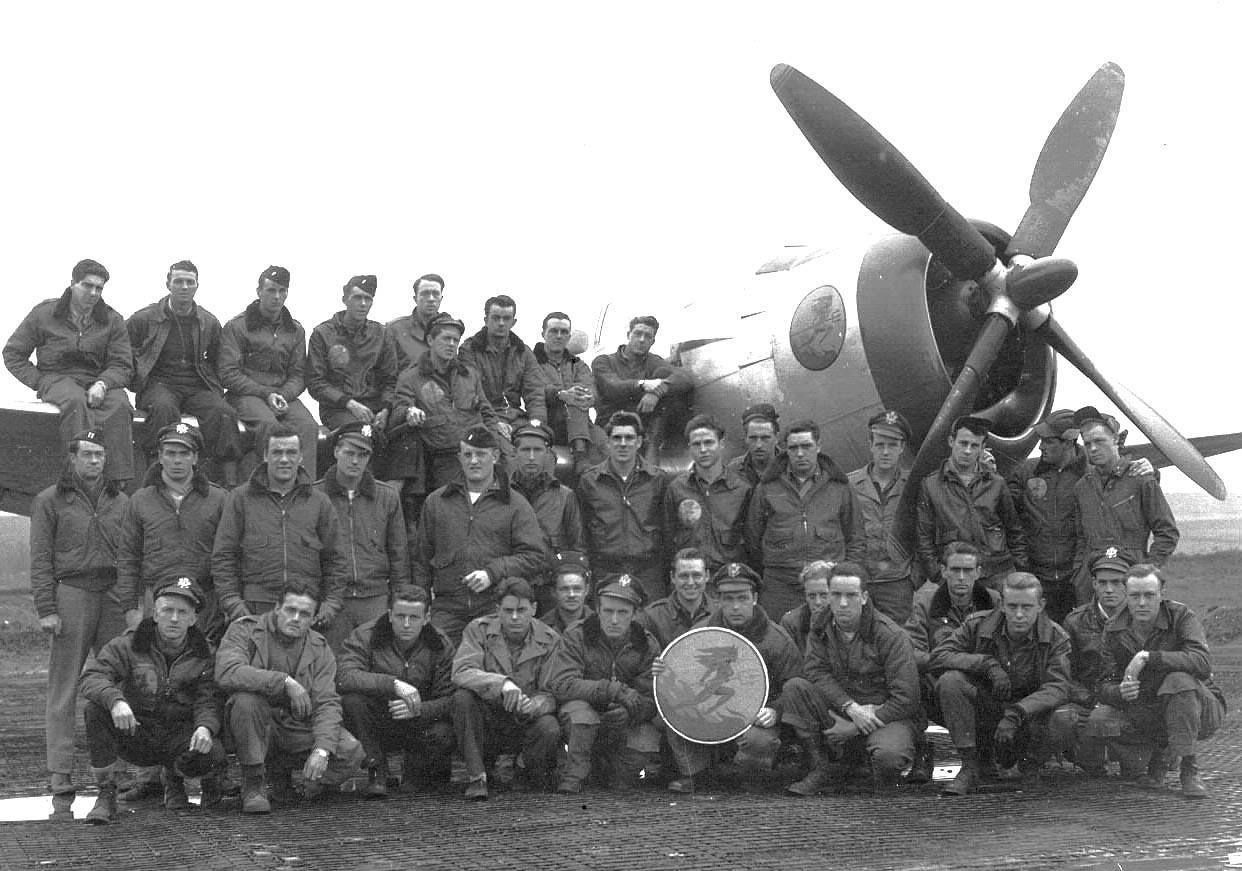 Courtesy Doug Patteson, 324th Fighter Group historian
The Mediterranean and Europe — 1944
Forward air controllers
Code names in the 316th Fighter Squadron’s mission reports.
- Elite
- Baggage
- Pelican
- Baby
- All Square
- Halfbake
In the summer of 1944, Kandis was transferred to the Mediterranean theater of operations, joining the 324th Fighter Group under XII Tactical Air Command. From August of that year onward, the aircraft that would become inseparably associated with his wartime service began to appear in his records: the P-47D Thunderbolt.⁹ At the same time, he was assigned to the 316th Fighter Squadron,¹⁰ with which he would take part in the operations of the final months of the war in Europe. The Republic P-47 Thunderbolt represented an entirely different world from the PT-19s, AT-6s, and P-40s of his training days. Heavy, rugged, and enormous for a single-engine fighter, powered by a formidable radial engine and armed with eight machine guns, the Thunderbolt could absorb punishment that would have destroyed lighter aircraft. In the hands of the Twelfth Air Force, it had become far more than simply a fighter: it was an instrument of tactical air power.
Kandis’s daily wartime experience was far removed from the romantic image of aerial combat in a clear blue sky.
It flew dive-bombing, armed-reconnaissance, strafing, escort, offensive-patrol, ground-attack, and close-support missions. It struck bridges, trains, trucks, roads, barracks, ammunition and supply dumps, troop concentrations, and virtually every form of movement capable of sustaining the German defense.¹¹ Kandis’s daily wartime experience was far removed from the romantic image of aerial combat in a clear blue sky. This was the harsh reality of tactical air warfare. Mission reports of the 316th Fighter Squadron describe P-47s taking off laden with bombs, searching for targets with the assistance of forward air controllers operating under code names such as Elite, Baggage, Pelican, Baby, All Square, and Halfbake, receiving new assignments while already airborne, and diving toward their targets through haze or broken cloud. Attacks were directed against bridges, railway lines, and built-up areas, while the release of the bombs was frequently followed by strafing runs against ground targets.
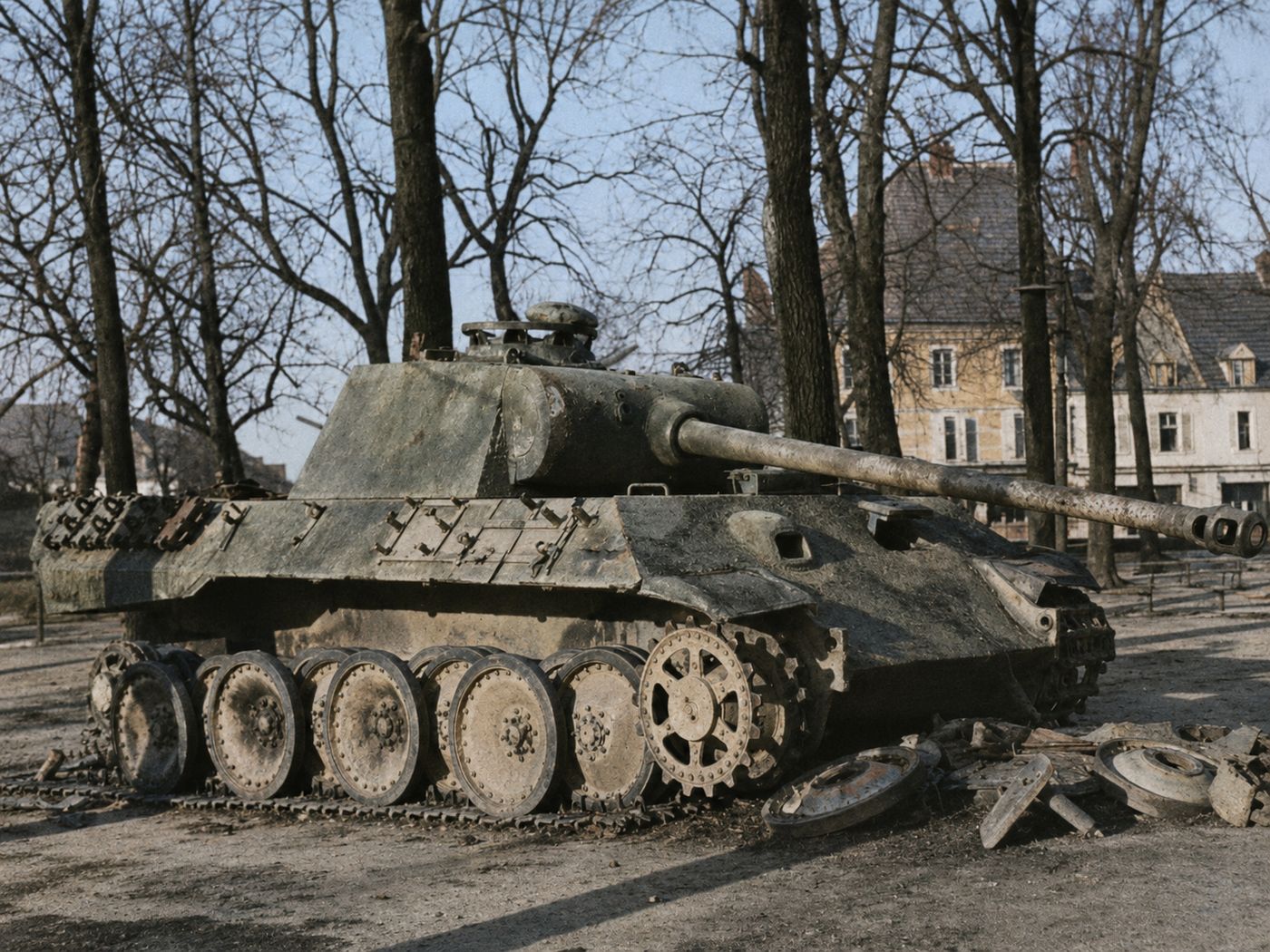
The language of the reports is terse and impersonal: “all aircraft returned safely,” “limited light flak,” “moderate to intense anti-aircraft fire,” “results could not be observed due to weather conditions.” Yet behind these brief phrases lay the reality of war: low-level passes over hostile anti-aircraft positions, landings in adverse weather, bombs that failed to release properly, aircraft returning damaged, and pilots who, on every mission, first had to survive long enough to make it back to their base.¹² From the combat reports examined to date, Kandis can be documented by name on at least forty-one operational missions. This figure, however, should not be interpreted as representing the full extent of his combat service. Both a 1948 article in the Indianapolis News and his obituary state that he flew a total of 101 missions in the P-47 Thunderbolt.¹³ The forty-one reports therefore represent the documented sample derived from the specific pages of the operational records examined thus far, rather than the final total of his wartime service.
Tactical numbers flown
At the same time, no documentation has been located to substantiate the claim that Twelfth Air Force missions were generally counted as “double” missions.¹⁴ The reports also reveal that Kandis was not associated exclusively with a single P-47. Tactical aircraft numbers changed according to aircraft availability and the operational requirements of the squadron. In the reports examined, he is recorded flying aircraft carrying the tactical numbers 70, 71, 72, 75, 76, 77, 78, 80, 82, 83, 87, 90, 92, 93, 95, 96, and 97.¹⁵ Nevertheless, certain numbers assume particular significance through both the frequency and the content of the surviving reports. Aircraft No. 92 appears repeatedly and is associated with documented instances of flak damage. No. 90 occurs frequently in missions flown during February and April 1945. Of particular importance, however, is No. 70, the P-47 in which Kandis participated in the mission against Memmingen on April 4, 1945, one of the most significant recorded operations of his wartime service.¹⁶
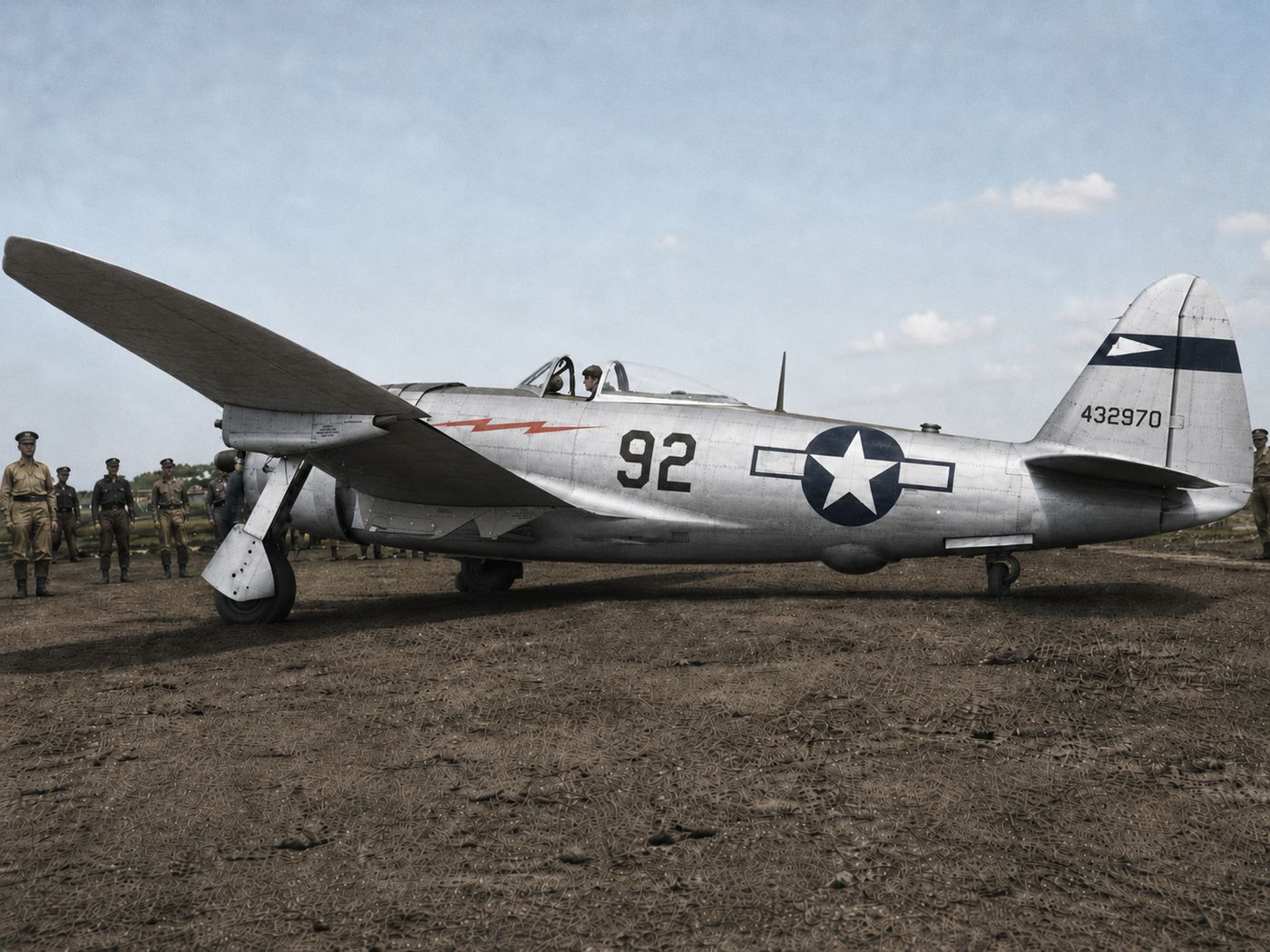
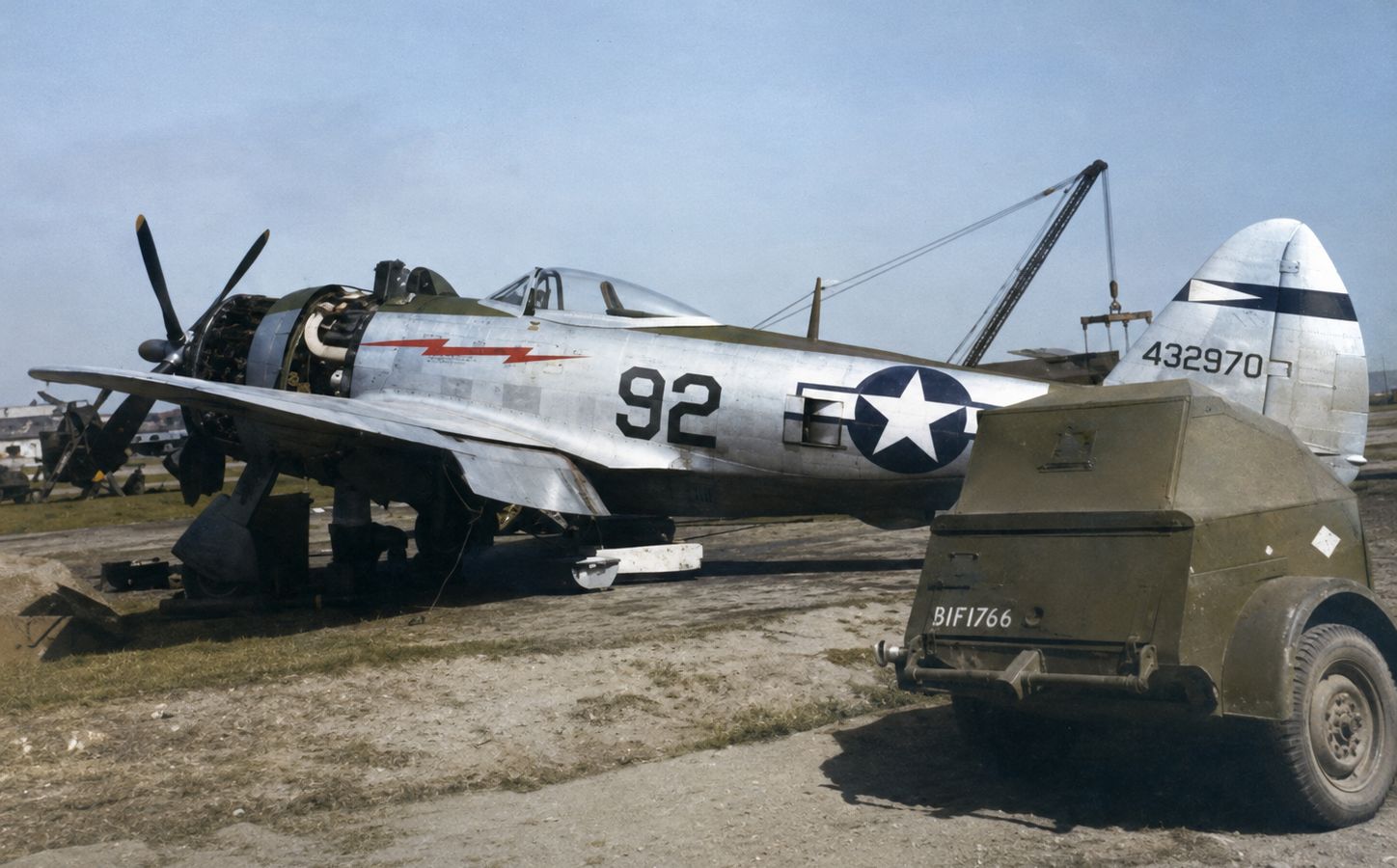
A photograph provided by Kandis’s daughter lends particular significance to this sequence of aircraft numbers. It shows a P-47 Thunderbolt of the 316th Fighter Squadron, with the tactical number 92 clearly visible on the fuselage, undergoing repairs for battle damage. On December 14, 1944, during a dive-bombing mission against Buchelberg / Buchsberg, Lieutenant Kandis’s No. 92 was struck by enemy anti-aircraft fire, sustained Category I damage, and returned safely.¹⁷ For the squadron historian, it amounted to a single line in the remarks column. For the pilot, however, it meant an actual hit on his aircraft and the need to keep the damaged machine under control all the way home. No. 92 was not the aircraft in which he would later score his celebrated aerial victory, but it is perhaps the aircraft that most vividly illustrates the everyday attrition of the war in which Kandis fought.
For the squadron historian, it amounted to a single line in the remarks column.
By November and December 1944, Kandis was fully immersed in the routine of tactical air operations, taking part in his squadron’s daily missions as an increasingly experienced P-47 pilot. He flew against troop concentrations, infantry positions and trenches, road junctions, railway bridges, trains, and enemy rail traffic in general. Some operations were cancelled or curtailed because of adverse weather, while others developed into dive-bombing attacks followed by strafing runs against ground targets. Frequently, indeed, the weather proved almost as dangerous as the enemy itself: low cloud, haze, heavy overcast, snowfall, and restricted visibility created additional hazards for the pilots.¹⁸ On December 17, 1944, flying aircraft No. 92, Kandis participated in a mission during which the squadron also encountered enemy aerial activity. The engagement with German Bf 109s involved other pilots of the unit, but Kandis was operating in the same combat environment, where a ground-attack mission could at any moment develop into an air-to-air engagement.¹⁹ During January and February 1945, the tempo of operations intensified.
Frequently, indeed, the weather proved almost as dangerous as the enemy itself
The 316th Fighter Squadron attacked supply dumps, barracks, ammunition depots, railway bridges, locomotives, railway cars, marshalling yards, and urban centers. In the operational reports, the Allied advance appears not as arrows moving across a map but as a succession of specific targets that had to be destroyed: lines of communication that had to be severed, trains that had to be immobilized, wooded areas suspected of concealing armored vehicles, towns in which fires and dense columns of smoke were observed, and railway lines struck repeatedly until they were rendered unusable.²⁰ On January 21, 1945, the squadron was operating in snowstorm conditions, and two aircraft sustained Category II damage during landing.²¹ On February 11, during a mission against the military camp at Oberhoffen, the controller using the call sign “Baggage” alerted the formation to the presence of two jet aircraft approximately ten miles west of Haguenau. No visual contact was established, however, and no engagement followed.²² This brief report foreshadowed a new reality. During the final weeks of the war, the world of the P-47 pilots was no longer confined to attacks on bridges, trains, and other ground targets. Luftwaffe jet aircraft had already appeared on the horizon, heralding the beginning of a new era in aerial warfare.
Forward air controllers
Code names in the 316th Fighter Squadron’s mission reports.
- Elite
- Baggage
- Pelican
- Baby
- All Square
- Halfbake
Το καλοκαίρι του 1944 ο Kandis μετακινήθηκε στο επιχειρησιακό περιβάλλον της Μεσογείου, εντασσόμενος στην 324η Σμηναρχία Μαχητικών (324th Fighter Group) της 12ης Τακτικής Αεροπορικής Διοίκησης. Από τον Αύγουστο του ίδιου έτους εμφανίζεται πλέον στις καταγραφές το αεροσκάφος που θα συνδεόταν άρρηκτα με την πολεμική του δράση: το P-47D Thunderbolt.⁹ Παράλληλα τοποθετήθηκε στην 316η Μοίρα Μαχητικών (316th Fighter Squadron),¹⁰ με την οποία θα συμμετείχε στις επιχειρήσεις των τελευταίων μηνών του πολέμου στην Ευρώπη. Το Republic P-47 Thunderbolt ήταν ένας εντελώς διαφορετικός κόσμος από τα PT-19, AT-6 και P-40 της εκπαίδευσης. Βαρύ, στιβαρό, τεράστιο για μονοκινητήριο μαχητικό, με ισχυρό κινητήρα αστεροειδούς τύπου και οκτώ πολυβόλα, το Thunderbolt μπορούσε να απορροφήσει ζημιές που θα κατέστρεφαν ελαφρότερα αεροσκάφη. Στα χέρια της 12ης Αεροπορικής Δύναμης είχε γίνει κάτι περισσότερο από ένα απλό μαχητικό: ήταν εργαλείο τακτικής ισχύος. Εκτελούσε αποστολές βομβαρδισμού κάθετης εφόρμησης, οπλισμένης αναγνώρισης, πολυβολισμού, συνοδείας, επιθετικής περιπολίας, προσβολής στόχων εδάφους και εγγύς υποστήριξης. Χτυπούσε γέφυρες, τρένα, φορτηγά, δρόμους, στρατώνες, αποθήκες πυρομαχικών, εφοδίων, συγκεντρώσεις στρατευμάτων και κάθε μορφή κίνησης που μπορούσε να κρατήσει ζωντανή τη γερμανική άμυνα.¹¹
Η πολεμική καθημερινότητα του Kandis απείχε πολύ από τη ρομαντική εικόνα της αερομαχίας σε έναν καθαρό ουρανό.
Η πολεμική καθημερινότητα του Kandis απείχε πολύ από τη ρομαντική εικόνα της αερομαχίας σε έναν καθαρό ουρανό. Ήταν η σκληρή πραγματικότητα του τακτικού αεροπορικού πολέμου. Οι αναφορές αποστολών της 316ης Μοίρας παρουσιάζουν P-47 που απογειώνονται φορτωμένα με βόμβες, αναζητούν στόχους με τη βοήθεια ελεγκτών προώθησης στόχων με κωδικές ονομασίες όπως Elite, Baggage, Pelican, Baby, All Square και Halfbake, αλλάζουν αποστολή εν πτήσει και βυθίζονται προς τον στόχο μέσα από ομίχλη ή διασπασμένα νέφη. Οι επιθέσεις στρέφονταν εναντίον γεφυρών, σιδηροδρομικών γραμμών και οικισμών, ενώ μετά τη ρίψη των βομβών ακολουθούσαν πολυβολισμοί εναντίον στόχων εδάφους. Η γλώσσα των αναφορών είναι λιτή και ψυχρή: «όλα τα αεροσκάφη επέστρεψαν με ασφάλεια», «περιορισμένα ελαφρά αντιαεροπορικά πυρά», «μέτρια έως ισχυρά πυρά αντιαεροπορικού πυροβολικού», «τα αποτελέσματα δεν κατέστη δυνατό να παρατηρηθούν λόγω των καιρικών συνθηκών». Πίσω όμως από αυτές τις σύντομες διατυπώσεις κρυβόταν η πραγματικότητα του πολέμου: χαμηλές διελεύσεις πάνω από εχθρικά αντιαεροπορικά πυρά, προσγειώσεις υπό δυσμενείς καιρικές συνθήκες, βόμβες που δεν απελευθερώνονταν κανονικά, αεροσκάφη που επέστρεφαν με ζημιές και πιλότοι που κάθε φορά έπρεπε να καταφέρουν να επιστρέψουν στη βάση τους.¹²
Tactical numbers flown
Από τις αναφορές μάχης που έχουν αποδελτιωθεί μέχρι σήμερα, ο Kandis τεκμηριώνεται ονομαστικά σε τουλάχιστον σαράντα μία επιχειρησιακές αποστολές. Ο αριθμός αυτός, ωστόσο, δεν θα πρέπει να εκληφθεί ως το πλήρες σύνολο της πολεμικής του δράσης. Τόσο δημοσίευμα της Indianapolis News το 1948 όσο και η νεκρολογία του αναφέρουν ότι πραγματοποίησε συνολικά 101 αποστολές με P-47 Thunderbolt.¹³ Οι σαράντα μία αναφορές αντιπροσωπεύουν το τεκμηριωμένο δείγμα που προκύπτει από τις συγκεκριμένες σελίδες των επιχειρησιακών αναφορών οι οποίες έχουν μέχρι στιγμής εξεταστεί και όχι τον τελικό απολογισμό της υπηρεσίας του. Παράλληλα, δεν έχει εντοπιστεί τεκμηρίωση που να επιβεβαιώνει ότι οι αποστολές της Twelfth Air Force υπολογίζονταν γενικά ως «διπλές».¹⁴ Οι αναφορές αποκαλύπτουν επίσης ότι ο Kandis δεν συνδέθηκε αποκλειστικά με ένα συγκεκριμένο P-47. Οι τακτικοί αριθμοί των αεροσκαφών (tactical aircraft numbers) μεταβάλλονταν ανάλογα με τη διαθεσιμότητα του υλικού και τις επιχειρησιακές ανάγκες της Μοίρας. Στις αποδελτιωμένες αναφορές εμφανίζεται να πετά με αεροσκάφη που έφεραν τους αριθμούς 70, 71, 72, 75, 76, 77, 78, 80, 82, 83, 87, 90, 92, 93, 95, 96 και 97.¹⁵ Παρ’ όλα αυτά, ορισμένοι αριθμοί αποκτούν ιδιαίτερη βαρύτητα μέσα από τη συχνότητα και το περιεχόμενο των αναφορών.
Το αεροσκάφος με αριθμό 92 εμφανίζεται επανειλημμένα και συνδέεται με τεκμηριωμένες περιπτώσεις ζημιών από αντιαεροπορικά πυρά (flak damage). Το Νο. 90 απαντά συχνά σε αποστολές του Φεβρουαρίου και του Απριλίου 1945. Ιδιαίτερη σημασία, όμως, έχει το Νο. 70, καθώς πρόκειται για το P-47 με το οποίο ο Kandis συμμετείχε στην αποστολή εναντίον του Memmingen στις 4 Απριλίου 1945, μία από τις πλέον σημαντικές καταγεγραμμένες επιχειρήσεις της πολεμικής του υπηρεσίας.¹⁶ Η φωτογραφία που παραχωρήθηκε από την κόρη του Kandis δίνει ιδιαίτερη αξία σε αυτή την ακολουθία αριθμών. Η φωτογραφία δείχνει P-47 Thunderbolt της 316th Fighter Squadron με καθαρά ορατό τον τακτικό αριθμό 92 στην άτρακτο με ζημιές κατά τη διάρκεια επισκευών. Στις 14 Δεκεμβρίου 1944, σε αποστολή βομβαρδισμού καθέτου εφορμήσεως εναντίον του Buchelberg / Buchsberg, το No. 92 του Υπολοχαγού Kandis χτυπήθηκε από εχθρικά αντιαεροπορικά, καταγράφηκε ως Category I damage και επέστρεψε ασφαλώς.¹⁷ Για τον ιστοριογράφο της Μοίρας ήταν μία γραμμή στις παρατηρήσεις. Για τον πιλότο όμως ήταν ένα πραγματικό πλήγμα πάνω στο αεροσκάφος του και η ανάγκη να το κρατήσει ελεγχόμενο μέχρι την επιστροφή. Το No. 92 δεν είναι το αεροπλάνο της διάσημης κατάρριψης που πέτυχε αργότερα, αλλά είναι ίσως το αεροπλάνο που δείχνει καλύτερα την καθημερινή φθορά του πολέμου στον οποίο επιχείρησε ο Kandis.
Για τον ιστοριογράφο της Μοίρας ήταν μία γραμμή στις παρατηρήσεις.
Τον Νοέμβριο και τον Δεκέμβριο του 1944, ο Kandis εμφανίζεται πλέον πλήρως ενταγμένος στη ρουτίνα των επιχειρήσεων της τακτικής αεροπορίας, συμμετέχοντας στις καθημερινές αποστολές της Μοίρας του ως ένας έμπειρος πια πιλότος P-47. Πετούσε σε αποστολές εναντίον συγκεντρώσεων στρατευμάτων, θέσεων πεζικού και χαρακωμάτων, οδικών κόμβων, σιδηροδρομικών γεφυρών, αμαξοστοιχιών και γενικότερα της εχθρικής σιδηροδρομικής κυκλοφορίας. Ορισμένες επιχειρήσεις ακυρώνονταν ή περιορίζονταν λόγω των δυσμενών καιρικών συνθηκών, ενώ άλλες κατέληγαν σε βομβαρδισμούς καθέτου εφορμήσεως (divebombing) και πολυβολισμούς εδάφους (strafing). Συχνά, μάλιστα, ο καιρός αποδεικνυόταν εξίσου επικίνδυνος με τον ίδιο τον εχθρό: χαμηλή νέφωση, αχλή, πυκνή συννεφιά, χιονοπτώσεις και περιορισμένη ορατότητα δημιουργούσαν πρόσθετους κινδύνους για τα πληρώματα.¹⁸ Στις 17 Δεκεμβρίου 1944, πετώντας με το αεροσκάφος Νο. 92, ο Kandis συμμετείχε σε αποστολή κατά την οποία η Μοίρα βρέθηκε αντιμέτωπη και με εχθρική αεροπορική δραστηριότητα. Η αερομαχία με γερμανικά Bf 109 αφορούσε άλλους πιλότους της μονάδας, ωστόσο ο ίδιος βρισκόταν στο ίδιο επιχειρησιακό περιβάλλον, όπου μια αποστολή προσβολής επίγειων στόχων μπορούσε ανά πάσα στιγμή να εξελιχθεί σε εμπλοκή αέρος-αέρος.¹⁹
Συχνά, μάλιστα, ο καιρός αποδεικνυόταν εξίσου επικίνδυνος με τον ίδιο τον εχθρό
Τον Ιανουάριο και τον Φεβρουάριο του 1945 η επιχειρησιακή δραστηριότητα εντείνεται. Η 316η Μοίρα Μαχητικών προσβάλλει αποθήκες εφοδίων, στρατώνες, αποθήκες πυρομαχικών, σιδηροδρομικές γέφυρες, ατμομηχανές, σιδηροδρομικά βαγόνια, σιδηροδρομικούς σταθμούς διαλογής και αστικά κέντρα. Στις αναφορές επιχειρήσεων η συμμαχική προέλαση δεν εμφανίζεται ως βέλη πάνω σε έναν χάρτη, αλλά ως συγκεκριμένοι στόχοι προς καταστροφή: γραμμές επικοινωνιών που πρέπει να διακοπούν, τρένα που πρέπει να ακινητοποιηθούν, δασικές περιοχές όπου ενδέχεται να αποκρύπτουν τεθωρακισμένα, πόλεις όπου καταγράφονται πυρκαγιές και πυκνοί καπνοί, καθώς και σιδηροδρομικές γραμμές που πλήττονται επανειλημμένα μέχρι να καταστούν άχρηστες.²⁰ Στις 21 Ιανουαρίου 1945 η Μοίρα επιχειρούσε υπό συνθήκες χιονοθύελλας και δύο αεροσκάφη υπέστησαν ζημιές Κατηγορίας ΙΙ κατά την προσγείωση.²¹ Στις 11 Φεβρουαρίου, κατά τη διάρκεια αποστολής εναντίον του στρατοπέδου Oberhoffen, ο ελεγκτής με το διακριτικό κλήσεως «Baggage» ειδοποίησε τον σχηματισμό για την παρουσία δύο αεριωθούμενων αεροσκαφών περίπου δέκα μίλια δυτικά του Haguenau, χωρίς ωστόσο να ακολουθήσει οπτική επαφή ή εμπλοκή.²² Η σύντομη αυτή αναφορά προοιώνιζε μια νέα πραγματικότητα. Κατά τις τελευταίες εβδομάδες του πολέμου, ο κόσμος των χειριστών των P-47 δεν περιοριζόταν πλέον σε επιθέσεις κατά γεφυρών, αμαξοστοιχιών και επίγειων στόχων. Στον ορίζοντα είχαν ήδη εμφανιστεί τα αεριωθούμενα αεροσκάφη της Luftwaffe, προάγγελοι μιας νέας εποχής στον αεροπορικό πόλεμο.²²
P-47D Thunderbolt · Aircraft No. 92
The Republic P-47D Thunderbolt was central to Kandis’s operational life with the 316th Fighter Squadron. Aircraft No. 92 is especially well documented through a family-archive photograph, unit reporting and a contemporary profile reconstruction.
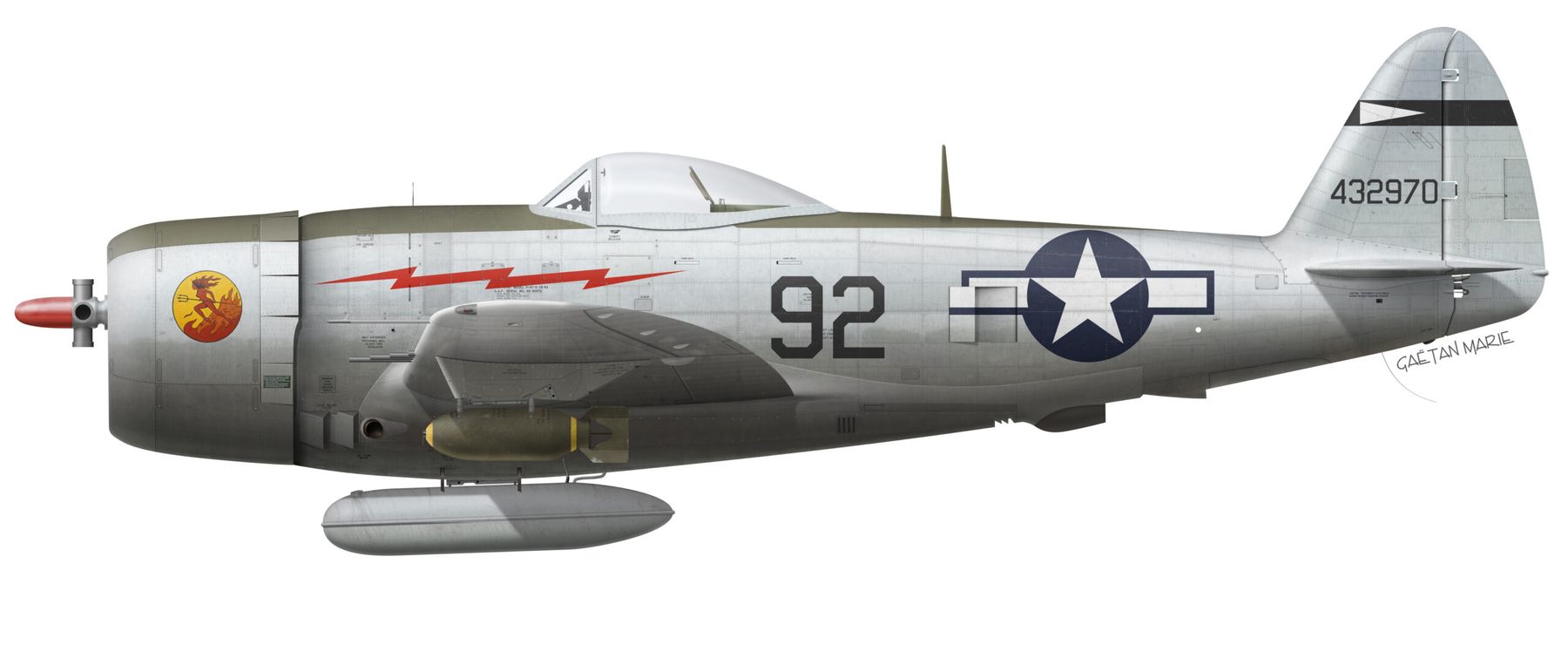
- Type
- P-47D-30-RA Thunderbolt
- Serial
- 44-32970
- Tactical No.
- 92
- Unit
- 316th Fighter Squadron · 324th Fighter Group
Documented aircraft record
The Republic-built P-47D-30-RA Thunderbolt 44-32970 was manufactured at Evansville, Indiana. Its family-archive photograph gives the aircraft particular significance in Kandis’s wartime record, but the available evidence does not establish it as his exclusive personal aircraft; serial databases also associate it with George Potts. The profile depicts the aircraft in its operational natural-metal finish with the large black tactical number 92, the 324th Fighter Group lightning flash and the abbreviated serial 432970 on the tail. In keeping with the artist’s research notes, no red cowling perimeter band has been shown for 1944 because evidence that 324th Fighter Group Thunderbolts carried it at that time is insufficient. The cockpit is shown with the period-standard reflector gunsight; a gyroscopic sight may theoretically have been fitted later as a retrofit, but no evidence has been found for this specific aircraft.
The service history of 44-32970 extended beyond the Second World War. After its European service, it passed to the 141st Fighter-Bomber Squadron of the 108th Fighter-Bomber Group, New Jersey Air National Guard, and later appeared at Godman Air Force Base, Fort Knox, Kentucky. On 11 July 1952 it was recorded as damaged by fire near Godman. The sources presently located do not establish whether it was repaired, retired or struck off immediately after that incident.
Aircraft profile by Bertrand Brown, aka Gaetan Marie.
Me 262destroyed
Leading eight P-47s on an armed-reconnaissance mission, Kandis saw a Me 262 taking off near Memmingen. He attacked repeatedly at close range before the German jet could gain the speed that made it so dangerous in the air.
- Kandis aircraft
- P-47 · No. 70
- Enemy aircraft
- Me 262
- Area
- Memmingen
- Result
- Destroyed
The destruction of the Messerschmitt Me 262
4 April 1945
- Morning · No. 82Lt. Haun, 1 probable
- Memmingen · No. 70Lt. Kandis, Me 262 destroyed
- Memmingen · No. 90Lt. Dewey, Me 262 damaged
- AugsburgLt. Thompson, Arado 234 destroyed
By late March 1945, the operational reports of the 316th Fighter Squadron were beginning to record the presence of German Me 262 jet aircraft within the squadron’s area of operations. On March 31, during a mission in which Kandis was flying aircraft No. 92, an Me 262 was reported in the area, although no engagement took place.²³ The Luftwaffe was already in an advanced state of collapse, yet its technological superiority in certain fields remained very real. For P-47 Thunderbolt pilots, the Me 262 represented an entirely different kind of threat: an aircraft significantly faster than their own, technologically revolutionary, and extremely dangerous in aerial combat. Given sufficient altitude and speed, it was exceedingly difficult for conventional Allied piston-engined fighters to intercept. The jets did, however, possess one critical vulnerability. They were more exposed during takeoff and landing, or when operating at low altitude in the vicinity of their bases. Allied air forces therefore frequently sought to locate and attack them at precisely these moments, before they could exploit their superior speed.²³
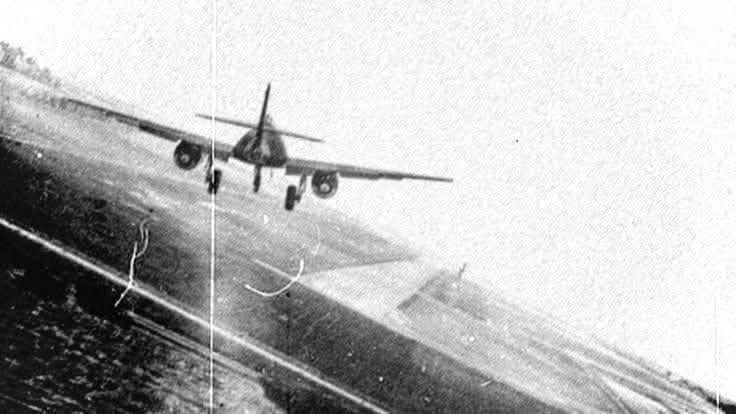
The defining moment of Kandis’s wartime career came on April 4, 1945. That day, the 316th Fighter Squadron was heavily engaged over southern Germany, where German Me 262 jets continued to pose a dangerous threat despite the broader collapse of the Luftwaffe. During a morning mission, in which Kandis flew aircraft No. 82, the squadron encountered Me 262s and Lieutenant Haun was credited with one probable victory.²⁴ A few hours later, during an armed-reconnaissance mission toward Memmingen, Kandis was at the controls of aircraft No. 70. Operating in the same area was Lieutenant Ryland Dewey in aircraft No. 90, who attacked an Me 262 and was credited with damaging it.²⁵ The mission, however, would become associated above all with Kandis. Within minutes, he would accomplish something relatively few P-47 pilots achieved: the confirmed destruction of a German Me 262, the Luftwaffe’s most advanced operational fighter aircraft.²⁵ Kandis’s personal combat report constitutes the most important documentary evidence for the engagement and is reproduced here in full:
The authentic combat report
“On 4 April 1945, I was leading an eight-ship formation on an armed reconnaissance mission at an altitude of 10,000 feet when I observed an enemy aircraft taking off from an airdrome near Memmingen, Germany. When I got in a favorable position to make an attack I took four ships down on him. As I got close to the aircraft I observed it to be an Me-262, and I gave him a long burst at a very close range. I saw strikes enter all parts of the aircraft, and at the same time he dropped his flaps. I made two more passes at close range. On the last pass I saw pieces fly off with a good fire going near his left wing root. The plane was soon enveloped in flames and crashed on the airdrome, being thoroughly scattered over the field and exploding. I claim 1 Me-262 destroyed.”
The report is characteristic of the terse, factual language of wartime documentation. Yet behind its brief descriptions one can sense the speed of the engagement: the sighting of the enemy aircraft as it took off, the immediate turn to attack, repeated firing passes at extremely close range, and ultimately the complete destruction of the Me 262 within the airfield itself. This victory was Kandis’s only confirmed aerial victory and placed him among the relatively small number of Allied pilots credited with destroying the most advanced German fighter of the war.²⁶ The P-47 did not prevail in an aerial engagement in which speed was the decisive factor. Rather, the German jet was attacked during the most vulnerable phase of its flight, immediately after takeoff, before it had gained the speed and operational advantages afforded by its jet engines.
The later Osprey literature on Twelfth Air Force P-47 units further clarifies the operational context of the mission. Author and researcher Jonathan Bernstein describes April 4 as a day of armed-reconnaissance operations, with the P-47s configured for attacks against ground targets. According to his account, Kandis’s flight proceeded south toward Memmingen after the original targets could not be located. There, the Thunderbolts encountered Me 262 jets in the process of taking off, together with other German aircraft on the airfield.²⁷ This account places the engagement in its proper operational setting: it was not an isolated aerial duel taking place in an empty sky, but an attack against a German airfield at a time when the Luftwaffe was still attempting to operate some of its last available jet aircraft.
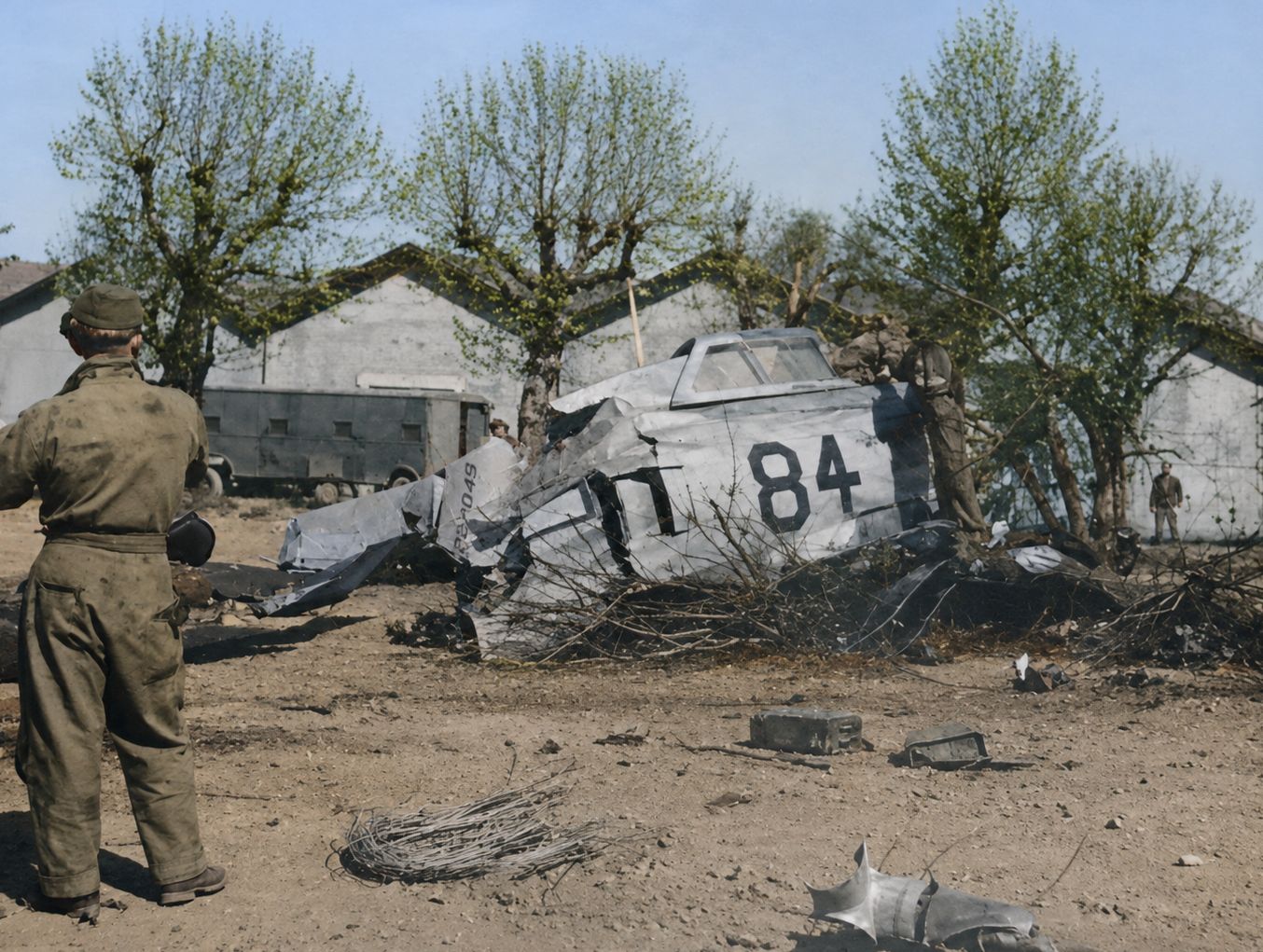
The precise German identity of the aircraft destroyed by Kandis must nevertheless be treated with caution. Kandis’s American combat report, the squadron daily record, and the Osprey literature all identify the aircraft as an Me 262 at Memmingen. Subsequent research correspondence with specialists in German aircraft losses during the Second World War, however, has raised questions concerning the exact identification of the incident. Georg Morrison noted the difficulty of correlating the claim with known Me 262 losses and suggested the possibility that the aircraft may have been conducting a transfer flight to Memmingen. Michael Balss examined both the possibility that it was an Me 262 A of IV./EKG 1 and the possibility of confusion with an Arado Ar 234 C-4 of the E-Stelle Rechlin, flown by Walter Strobl and shot down by P-47s near Reinhartshausen.²⁸ The squadron’s daily record for April 4, however, clearly records two separate successes against jet aircraft: the destruction of an Arado 234 by Lt. Thompson in the Augsburg area and the destruction of an Me 262 by Lt. Kandis at Memmingen.²⁹ The most historically defensible conclusion, therefore, is that Kandis was officially credited with the destruction of an Me 262 at Memmingen on April 4, 1945, while the exact correlation with a specific German aircraft loss remains the subject of further archival research.
Following April 4, Kandis continued to fly operationally with his squadron. On April 6, he appears in three separate missions that could be positively identified through clearer readings of the surviving documents: Mission No. 900 in aircraft No. 80, Mission No. 901 in aircraft No. 82, and Mission No. 911 in aircraft No. 90. On April 9, two further documented missions appear: Mission No. 910 in aircraft No. 87 and Mission No. 917 in aircraft No. 70.³⁰ Aircraft No. 70 was therefore not associated solely with the victory over Memmingen. It reappeared almost immediately in the routine daily operations of the 316th Fighter Squadron, a reminder that tactical aircraft numbers were not personal markings assigned permanently to individual pilots. Yet certain moments are enough to transform an otherwise ordinary identification number into a historical point of reference.
Three years later, in 1948, after Kandis had returned to civilian life and was completing his senior year at Indiana University’s School of Business, the Indianapolis News published a photograph of him under the headline “Wins Signal Distinction.” The article identified Andrew “Andy” Kandis as the son of Mr. and Mrs. N. A. Kandis of LaPorte and reported that he had been credited with destroying a German Me 262 near Memmingen in the spring of 1945. It described him as a lieutenant and flight leader with the 316th Fighter Squadron, 324th Fighter Group, flying P-47 Thunderbolts and having completed 101 combat missions. It further stated that his decorations included the Distinguished Flying Cross, the Air Medal with thirteen Oak Leaf Clusters, and the European Theater Ribbon with six campaign stars. The article, however, incorrectly assigned him to the Ninth Air Force.³¹
4 April 1945
- Morning · No. 82Lt. Haun, 1 probable
- Memmingen · No. 70Lt. Kandis, Me 262 destroyed
- Memmingen · No. 90Lt. Dewey, Me 262 damaged
- AugsburgLt. Thompson, Arado 234 destroyed
Στα τέλη Μαρτίου 1945, οι αναφορές επιχειρήσεων της 316ης Μοίρας Μαχητικών καταγράφουν πλέον την παρουσία των γερμανικών αεριωθουμένων Me 262 στον χώρο των επιχειρήσεών της. Στις 31 Μαρτίου, κατά τη διάρκεια αποστολής στην οποία ο Kandis πετούσε με το αεροσκάφος Νο. 92, αναφέρθηκε η παρουσία Me 262 στην περιοχή, χωρίς ωστόσο να σημειωθεί εμπλοκή.²³ Η Luftwaffe βρισκόταν ήδη σε προχωρημένο στάδιο κατάρρευσης, όμως η τεχνολογική της υπεροχή σε ορισμένους τομείς παρέμενε απτή. Για τους χειριστές των P-47 Thunderbolt, τα Me 262 αντιπροσώπευαν μια εντελώς διαφορετική πραγματικότητα: αεροσκάφη σημαντικά ταχύτερα, τεχνολογικά πρωτοποριακά και ιδιαίτερα επικίνδυνα σε συνθήκες αερομαχίας. Εφόσον διέθεταν ύψος και ταχύτητα, ήταν εξαιρετικά δύσκολο να αναχαιτιστούν από τα συμβατικά ελικοφόρα μαχητικά των Συμμάχων. Υπήρχε, ωστόσο, ένα κρίσιμο μειονέκτημα. Τα αεριωθούμενα ήταν περισσότερο ευάλωτα κατά τις φάσεις της απογείωσης και της προσγείωσης ή όταν επιχειρούσαν σε χαμηλό ύψος κοντά στις βάσεις τους. Για τον λόγο αυτό, οι συμμαχικές αεροπορικές δυνάμεις επιδίωκαν συχνά να τα εντοπίζουν και να τα προσβάλλουν σε αυτές ακριβώς τις στιγμές, πριν μπορέσουν να εκμεταλλευθούν την ανώτερη ταχύτητά τους.²³
Η καθοριστική στιγμή στην πολεμική σταδιοδρομία του Kandis ήρθε στις 4 Απριλίου 1945. Εκείνη την ημέρα η 316η Μοίρα Μαχητικών ανέπτυξε έντονη δραστηριότητα στον εναέριο χώρο της νότιας Γερμανίας, όπου τα γερμανικά αεριωθούμενα Me 262 εξακολουθούσαν να αποτελούν μια επικίνδυνη απειλή παρά τη γενικότερη κατάρρευση της Luftwaffe. Σε πρωινή αποστολή, κατά την οποία ο Kandis πετούσε με το αεροσκάφος υπ’ αριθ. 82, η Μοίρα ενεπλάκη με Me 262 και ο υπολοχαγός Haun κατέγραψε μία πιθανή κατάρριψη.²⁴ Λίγες ώρες αργότερα, σε αποστολή ένοπλης αναγνώρισης προς το Memmingen, ο Kandis βρισκόταν στα χειριστήρια του αεροσκάφους υπ’ αριθ. 70. Στην ίδια περιοχή επιχειρούσε και ο υπολοχαγός Ryland Dewey με το αεροσκάφος υπ’ αριθ. 90, ο οποίος επιτέθηκε σε ένα Me 262 και του πιστώθηκε πρόκληση ζημιών.²⁵ Η αποστολή αυτή, ωστόσο, επρόκειτο να συνδεθεί κυρίως με το όνομα του Kandis. Μέσα σε λίγα λεπτά θα πετύχαινε αυτό που ελάχιστοι πιλότοι των P-47 είχαν καταφέρει: την επιβεβαιωμένη κατάρριψη ενός γερμανικού Me 262, του πλέον προηγμένου επιχειρησιακού μαχητικού αεροσκάφους της Luftwaffe.²⁵ Η προσωπική αναφορά αερομαχίας του Kandis αποτελεί το σημαντικότερο τεκμήριο για το περιστατικό και παρατίθεται αυτούσια:
Η αυθεντική αναφορά μάχης
“On 4 April 1945, I was leading an eight-ship formation on an armed reconnaissance mission at an altitude of 10,000 feet when I observed an enemy aircraft taking off from an airdrome near Memmingen, Germany. When I got in a favorable position to make an attack I took four ships down on him. As I got close to the aircraft I observed it to be an Me-262, and I gave him a long burst at a very close range. I saw strikes enter all parts of the aircraft, and at the same time he dropped his flaps. I made two more passes at close range. On the last pass I saw pieces fly off with a good fire going near his left wing root. The plane was soon enveloped in flames and crashed on the airdrome, being thoroughly scattered over the field and exploding. I claim 1 Me-262 destroyed.”
Η αναφορά είναι χαρακτηριστική της λιτής και πραγματολογικής γλώσσας των πολεμικών εγγράφων της εποχής. Πίσω από τις σύντομες περιγραφές διακρίνεται η ταχύτητα της εμπλοκής: ο εντοπισμός του εχθρικού αεροσκάφους κατά την απογείωσή του, η εφόρμηση για επίθεση, οι επανειλημμένες διελεύσεις σε πολύ μικρή απόσταση και, τελικά, η ολοκληρωτική καταστροφή του Me 262 μέσα στον ίδιο τον αεροδιάδρομο. Η κατάρριψη αυτή αποτέλεσε τη μοναδική επιβεβαιωμένη αεροπορική νίκη του Kandis και τον κατέταξε μεταξύ των σχετικά λίγων πιλότων των Συμμαχικών Δυνάμεων που κατέρριψαν το πλέον εξελιγμένο γερμανικό μαχητικό του πολέμου.²⁶ Το P-47 δεν επικράτησε σε αερομαχία όπου η ταχύτητα θα αποτελούσε τον καθοριστικό παράγοντα. Αντιθέτως, το γερμανικό αεριωθούμενο προσβλήθηκε κατά την πλέον ευάλωτη φάση της πτήσης του, αμέσως μετά την απογείωση, προτού αποκτήσει την ταχύτητα και τα επιχειρησιακά πλεονεκτήματα που του παρείχαν οι κινητήρες του.
Η μεταγενέστερη βιβλιογραφία της Osprey για τις μονάδες P-47 της 12ης Αεροπορικής Δύναμης ενισχύει το επιχειρησιακό πλαίσιο της αποστολής. Ο συγγραφέας και ερευνητής Jonathan Bernstein παρουσιάζει την 4η Απριλίου ως ημέρα αποστολών ένοπλης αναγνώρισης, με τα P-47 οπλισμένα για προσβολές στόχων εδάφους. Σύμφωνα με την περιγραφή του, η πτήση του Kandis κατευθύνθηκε νοτίως προς το Memmingen, όταν δεν κατέστη δυνατός ο εντοπισμός των αρχικών στόχων. Εκεί τα Thunderbolt εντόπισαν αεριωθούμενα Me 262 σε φάση απογείωσης, καθώς και άλλα γερμανικά αεροσκάφη εντός του αεροδρομίου.²⁷ Η περιγραφή αυτή αποδίδει το σωστό επιχειρησιακό πλαίσιο της εμπλοκής: δεν επρόκειτο για μια μεμονωμένη αερομαχία σε κενό επιχειρησιακό περιβάλλον, αλλά για επίθεση εναντίον γερμανικού αεροδρομίου σε μια περίοδο κατά την οποία η Luftwaffe εξακολουθούσε να επιχειρεί με τα τελευταία διαθέσιμα αεριωθούμενα αεροσκάφη της.
Η ακριβής γερμανική ταυτότητα του αεροσκάφους που κατέρριψε ο Kandis πρέπει να εξεταστεί με προσοχή. Η αμερικανική αναφορά αερομαχίας του Kandis, το ημερήσιο αρχείο της μοίρας και η βιβλιογραφία της Osprey το καταγράφουν ως Me 262 στο Memmingen. Παράλληλα, μεταγενέστερη ερευνητική αλληλογραφία με ειδικούς στις απώλειες γερμανικών αεροσκαφών κατά τον Β.ΠΠ έθεσε ορισμένα ερωτήματα ως προς την ταύτιση του περιστατικού. Ο Georg Morrison επισήμανε δυσκολίες συσχέτισης με γνωστές απώλειες Me 262 και διατύπωσε το ενδεχόμενο το αεροσκάφος να εκτελούσε πτήση μεταφοράς προς το Memmingen. Ο Michael Balss εξέτασε τόσο το ενδεχόμενο να επρόκειτο για Me 262 A της IV./EKG 1 όσο και την πιθανότητα σύγχυσης με ένα Arado Ar 234 C-4 της E-Stelle Rechlin, το οποίο καταρρίφθηκε από P-47 κοντά στο Reinhartshausen με χειριστή τον Walter Strobl.²⁸ Ωστόσο, το ημερήσιο αρχείο της Mοίρας για τις 4 Απριλίου καταγράφει σαφώς δύο διαφορετικές επιτυχίες εναντίον αεριωθουμένων αεροσκαφών: την κατάρριψη ενός Arado 234 από τον Lt. Thompson στην περιοχή του Augsburg και την κατάρριψη ενός Me 262 από τον Lt. Kandis στο Memmingen.²⁹ Συνεπώς, η ασφαλέστερη ιστορική διατύπωση είναι ότι ο Kandis επισήμως πιστώθηκε με την κατάρριψη ενός Me 262 στο Memmingen στις 4 Απριλίου 1945, ενώ η ακριβής αντιστοίχιση της γερμανικής απώλειας εξακολουθεί να αποτελεί αντικείμενο περαιτέρω αρχειακής έρευνας.
Μετά την 4η Απριλίου ο Kandis συνέχισε να επιχειρεί κανονικά με τη Μοίρα του. Στις 6 Απριλίου εμφανίζεται σε τρεις διακριτές αποστολές, οι οποίες κατέστη δυνατό να ταυτοποιηθούν χάρη σε καθαρότερες αναγνώσεις των εγγράφων: την αποστολή υπ' αριθ. 900 με αεροσκάφος υπ' αριθ. 80, την αποστολή υπ' αριθ. 901 με αεροσκάφος υπ' αριθ. 82 και την αποστολή υπ' αριθ. 911 με αεροσκάφος υπ' αριθ. 90. Στις 9 Απριλίου καταγράφονται δύο ακόμη τεκμηριωμένες αποστολές, η υπ' αριθ. 910 με αεροσκάφος υπ' αριθ. 87 και η υπ' αριθ. 917 με αεροσκάφος υπ' αριθ. 70.³⁰ Το αεροσκάφος υπ' αριθ. 70 δεν συνδέεται, επομένως, μόνο με την κατάρριψη στο Memmingen. Επανεμφανίζεται αμέσως μετά στις καθημερινές επιχειρήσεις της 316ης Μοίρας, υπενθυμίζοντας ότι οι τακτικοί αριθμοί των αεροσκαφών δεν αποτελούσαν προσωπικά διακριτικά των πιλότων. Ωστόσο, ορισμένες στιγμές είναι αρκετές για να μετατρέψουν έναν απλό αριθμό αναγνώρισης σε ιστορικό σημείο αναφοράς.
Τρία χρόνια αργότερα, το 1948, όταν ο Kandis είχε ήδη επιστρέψει στην πολιτική ζωή και φοιτούσε στο τελευταίο έτος της Σχολής Διοίκησης Επιχειρήσεων του Πανεπιστημίου της Indiana, η εφημερίδα Indianapolis News δημοσίευσε φωτογραφία του με τον τίτλο «Wins Signal Distinction». Το δημοσίευμα παρουσίαζε τον Andrew «Andy» Kandis, γιο των Ν. Α. Kandis της LaPorte, και ανέφερε ότι είχε πιστωθεί με την κατάρριψη ενός γερμανικού Me 262 κοντά στο Memmingen την άνοιξη του 1945. Τον περιέγραφε ως υπολοχαγό και διοικητή σχηματισμού της 316ης Μοίρας της 324ης Σμηναρχίας, χειριστή αεροσκαφών P-47 Thunderbolt, με 101 πολεμικές αποστολές στο ενεργητικό του, καθώς και τιμημένο με παράσημα Distinguished Flying Cross, Air Medal με δεκατρία Φύλλα Δρυός και το European Theater Ribbon με έξι αστέρες εκστρατείας. Το άρθρο, ωστόσο, τον τοποθετούσε εσφαλμένα στην 9η Αεροπορική Δύναμη.³¹
Combat missions archive
The mission ledger is structured from the surviving 316th Fighter Squadron material. The contemporary combat report remains available as a primary document.
- Reported total
- 101missions
- Documented
- 41sorties
- Primary roles
- Armed reconnaissance
- Theater
- Mediterranean · Europe
Documented sorties by month
From the 41 sorties in the ledger below.
P-47s flown, by tactical number
Documented sorties per aircraft; 92, 90 and 70 highlighted.
Mission ledger
| Mission No. | Date | Aircraft | Unit | Target / Area | Operation | Notes |
|---|---|---|---|---|---|---|
| 594 / A/O 60 | 1 November 1944 | P-47 No. 75 | 316th Fighter Squadron | Railroad bridge | Dive bombing | Early documented sortie |
| 601 / A/O 42 | 17 November 1944 | P-47 No. 87 | 316th Fighter Squadron | Troop concentration | Dive bombing | Hits in target area |
| 612 / A/O 44 | 19 November 1944 | P-47 No. 75 | 316th Fighter Squadron | Troops / trenches | Dive bombing | All returned |
| 629 / A/O 31 | 8 December 1944 | P-47 No. 92 | 316th Fighter Squadron | Train / rail W-8298 | Dive bombing | Train attacked |
| 631 / A/O 35 | 12 December 1944 | P-47 No. 92 | 316th Fighter Squadron | Bridge R-335325 | Dive bombing | Flak in target area |
| 633 / A/O 32 | 14 December 1944 | P-47 No. 92 | 316th Fighter Squadron | Buchelberg / Buchsberg | Dive bombing | Aircraft hit by flak - Category I damage |
| 636 / A/O 31 | 17 December 1944 | P-47 No. 92 | 316th Fighter Squadron | Rail / train targets | Dive bombing | Enemy fighter activity |
| 665 / A/O 30 | 12 January 1945 | P-47 No. 75 | 316th Fighter Squadron | Supply huts R-258505 | Armed reconnaissance / dive bombing | Explosion / buildings hit |
| 666 / A/O 36 | 13 January 1945 | P-47 No. 76 | 316th Fighter Squadron | Railroad bridge R-041675 | Dive bombing | Rail damage |
| 671 / A/O 31 | 14 January 1945 | P-47 No. 75 | 316th Fighter Squadron | Barracks | Dive bombing | Target hits; light anti-aircraft fire |
| 672 / A/O 32 | 14 January 1945 | P-47 No. 83 | 316th Fighter Squadron | Ammunition dump R-258505 | Dive bombing | Bombs in target area |
| 674 / A/O 30 | 16 January 1945 | P-47 No. 77 | 316th Fighter Squadron | Railroad bridge R-041675 | Dive bombing | All returned |
| 679 / A/O 31 | 21 January 1945 | P-47 No. 71 | 316th Fighter Squadron | Woods / reported tanks | Dive bombing | Snowstorm return |
| 690 / A/O 34 | 2 February 1945 | P-47 No. 78 | 316th Fighter Squadron | Rail / movement targets | Dive bombing | All returned |
| 693 / A/O 32 | 3 February 1945 | P-47 No. 76 | 316th Fighter Squadron | Neuf-Brisach | Dive bombing | Explosion / buildings hit |
| 699 / A/O 35 | 9 February 1945 | P-47 No. 83 | 316th Fighter Squadron | Railcut / train | Dive bombing | Rail attack / strafing |
| 702 / A/O 35 | 11 February 1945 | P-47 No. 96 | 316th Fighter Squadron | Camp de Oberhoffen | Dive bombing | Two jets called; no contact |
| 703 / A/O 31 | 13 February 1945 | P-47 No. 90 | 316th Fighter Squadron | Oberhausen | Dive bombing | Buildings destroyed |
| 706 / A/O 37 | 13 February 1945 | P-47 No. 90 | 316th Fighter Squadron | Duckbill / Oberhoffen | Dive bombing | Bombing / strafing |
| 710 / A/O 31 | 15 February 1945 | P-47 No. 90 | 316th Fighter Squadron | Neualtheim / stores dump | Dive bombing | Buildings destroyed |
| 712 / A/O 38 | 15 February 1945 | P-47 No. 90 | 316th Fighter Squadron | Locomotives / boxcars | Dive bombing | Rolling stock hit |
| 719* / A/O 35 | 16 February 1945 | P-47 No. 90 | 316th Fighter Squadron | Fuel / rail targets | Dive bombing | Squadron aircraft hit by flak |
| 720* / A/O 42 | 16 February 1945 | P-47 No. 90 | 316th Fighter Squadron | Train / boxcars | Dive bombing | Boxcars destroyed |
| 725 / A/O 34 | 19 February 1945 | P-47 No. 90 | 316th Fighter Squadron | Train / rail targets | Dive bombing | All returned |
| 729 / A/O 31 | 20 February 1945 | P-47 No. 93 | 316th Fighter Squadron | Train W-8292 | Dive bombing | Rail / rolling stock attack |
| 731 / A/O 32 | 21 February 1945 | P-47 No. 96 | 316th Fighter Squadron | Rail / boxcars | Dive bombing | Railcut / boxcars |
| 733 / A/O 31 | 22 February 1945 | P-47 No. 93 | 316th Fighter Squadron | Rail traffic | Armed reconnaissance / dive bombing | Locomotive / boxcars attacked |
| 737 / A/O 54 | 22 February 1945 | P-47 No. 96 | 316th Fighter Squadron | Rail area | Dive bombing | Railcut |
| 746 / A/O 57 | 26 February 1945 | P-47 No. 92 | 316th Fighter Squadron | Radio / command target | Dive bombing | Heavy light flak observed |
| 748 / A/O 33 | 28 February 1945 | P-47 No. 92 | 316th Fighter Squadron | Rail / marshalling yard | Dive bombing | Tracks / cars hit |
| 793* / A/O 56A* | 15 March 1945 | P-47 No. 71 | 316th Fighter Squadron | Oberbronn | Dive bombing | Faint / not fully locked source reading |
| 766* / A/O 54* | 16 March 1945 | P-47 No. 77 | 316th Fighter Squadron | Command / building target | Dive bombing | Faint / not fully locked source reading |
| 875 / A/O 41A | 31 March 1945 | P-47 No. 92 | 316th Fighter Squadron | Rail traffic | Dive bombing | Me 262s observed |
| —* / bomber escort | 2 April 1945 | P-47 No. 70 | 316th Fighter Squadron | B-26 escort | Escort | Mission number not secure |
| 898* / A/O 48* | 4 April 1945 | P-47 No. 82 | 316th Fighter Squadron | Morning sortie | Dive bombing | Me 262 engagement context |
| — / A/O 66 | 4 April 1945 | P-47 No. 70 | 316th Fighter Squadron | Memmingen airfield | Armed reconnaissance | One Me 262 destroyed |
| 900 / A/O 40 | 6 April 1945 | P-47 No. 80 | 316th Fighter Squadron | Rail / ground targets | Dive bombing | Corrected aircraft number: 80 |
| 901 | 6 April 1945 | P-47 No. 82 | 316th Fighter Squadron | B-26 escort | Bomber escort | Aircraft No. 82 |
| 911 / A/O 58 | 6 April 1945 | P-47 No. 90 | 316th Fighter Squadron | Fighter sweep | Fighter sweep | Aircraft No. 90 |
| 910 / A/O 44 | 9 April 1945 | P-47 No. 87 | 316th Fighter Squadron | Woods I-590225 | Dive bombing | No results observed |
| 917 / A/O 55 | 9 April 1945 | P-47 No. 70 | 316th Fighter Squadron | Crailsheim / Heilbronn | Escort | All returned safely |
Showing 1 to 10 of 41 entries. Red marks sorties with flak hits; gold marks the Memmingen victory.
In the reserve and civilian life
- PT-19AStamford, Texas
- AT-6 · P-40Foster Field
- P-40Punta Gorda
- P-47D316th Fighter Squadron
- AT-6/T-6Stout Field
- C-46 · C-47Atterbury
- F-51DGodman AFB
- F-84Godman AFB · RAF Manston
Kandis’s aviation career did not end with the conclusion of the war in Europe. His flight records continued well beyond 1945. He initially appears at Stout Field in Indianapolis, with entries for AT-6/T-6 aircraft and flights performed as a member of the reserve.³² This is consistent with a 1948 newspaper article that described him as a reserve instructor at Stout Field.³³ After graduating from Indiana University in June 1949, having studied business administration and chemistry, he went to work for the Upjohn Company as a sales representative. On August 29, 1948, he had married Phyllis Roberts in LaPorte.³⁴ The Korean crisis brought him back into more active military flying. His flight records place him at Atterbury, Indiana, in an air-transport environment, with entries for C-46, C-47, and T-6 aircraft and an association with the 73rd Air Transport Squadron.³⁵ His obituary adds further detail, stating that in 1951 he was recalled to active duty with the rank of captain and flew C-46 transport aircraft from Columbus, Indiana.³⁶ This phase of his career may appear less dramatic than his service in the P-47, but it is equally significant.
The pilot who in 1945 had destroyed a German Me 262 jet while flying a piston-engined P-47 was now himself entering the jet age of the United States Air Force.
It demonstrates that Kandis was not simply a wartime pilot who closed his logbook after 1945. On the contrary, he continued to fly, train, and serve in transport and support missions. The next major turning point in his flying career brought him back to fighter aircraft. Entries from 1951 place him at Godman Air Force Base, Kentucky, with the 165th Fighter-Bomber Squadron, where he first flew F-51D Mustangs and subsequently F-84 jets.³⁷ This transition is of particular historical interest. The pilot who in 1945 had destroyed a German Me 262 jet while flying a piston-engined P-47 was now himself entering the jet age of the United States Air Force. His obituary states that he was transferred to a fighter unit operating P-51s at Knoxville and that his unit was later sent to England, where he flew F-84 jets from RAF Manston, near Dover.³⁸ His wife, Phyllis, joined him in England. Rather than living exclusively within the confines of the military base, they settled in Cliftonville on the North Sea coast, experiencing at close hand everyday life in postwar Britain. Kandis served there as a flight commander and instructor.³⁹ Entries from 1952 referring to the Third Air Force, the 165th Fighter-Bomber Squadron, APO 125, and flights in the F-84 confirm this phase of his career.⁴⁰
His flight records include regular jet operations, local missions, instrument flying, and fulfillment of the United States Air Force’s recurring instrument-flight qualification requirements. In November 1953, he returned to the United States following the death of Phyllis’s mother, bringing back with him a British MG two-seat sports car.⁴¹ Kandis’s later flight records show that his life as a reserve pilot continued after his return from England. By the mid-1950s, he appears at Bakalar Air Force Base in Columbus, Indiana, as part of the 2466th Air Reserve Flying Center, with entries covering reserve flying, transport and training aircraft, and the periodic fulfillment of instrument-flight requirements.⁴² The final consolidated evaluation sheet records that Kandis was considered fully compliant with the requirements of AFR 60-2 for a period of 157.6 months.⁴³ This terse administrative entry provides a fitting symbolic conclusion to a long aviation career: from an aviation cadet flying PT-19As in Texas, to a trainee in the P-40, a P-47 combat pilot over the battlefields of Europe, a C-46 transport pilot, an F-51 fighter pilot, and finally an F-84 jet pilot, before completing his military career as a long-serving officer of the United States Air Force Reserve.
In civilian life, Kandis returned to the Upjohn Company, where he developed long-standing professional and personal relationships within the medical community of South Bend. He and Phyllis had two daughters. His obituary portrays him not only as a decorated airman but also as a man with deep and enduring interests outside military life. He was an accomplished photographer, developed his own photographs, and had a particular fondness for family photography. He also maintained a lifelong commitment to physical fitness, eventually leading an exercise program at the YMCA even while in his eighties.⁴⁴ Following his retirement from Upjohn in November 1983, he traveled through Europe with Phyllis and frequently visited his daughter and grandchildren in Hawaii. Phyllis died on June 22, 2010. Andrew Nicholas Kandis died at his home in Granger, Indiana, on July 12, 2017, at the age of ninety-three, and was buried with military honors at Saint Joseph Valley Memorial Park.⁴⁵ He had retired from the United States Air Force Reserve in 1984 with the rank of lieutenant colonel.⁴⁶
The life of Andrew Nicholas Kandis brings together several distinct layers of history. First and foremost, it is a story of the Greek diaspora. His Greek identity was not limited to family ancestry, but had been shaped by his childhood years in Tripoli, Athens, and Kandila before his family returned permanently to the United States. At the same time, his career offers a representative example of the American pilot-training system during the Second World War. His flight records allow us to follow, step by step, the progression from the PT-19A trainers of Texas, through advanced training, and ultimately to frontline fighter aircraft. His story is also part of the history of tactical air warfare in Europe. The destruction of the Me 262 near Memmingen was undoubtedly the best-known episode of his combat service, but it was by no means the only one. Behind it lay dozens of reconnaissance, bombing, and ground-attack missions flown day after day in an environment of anti-aircraft fire, adverse weather, and relentless operational attrition. As was the case for thousands of other fighter-bomber pilots, war was not defined only by isolated moments of glory, but above all by the persistent repetition of missions. Finally, his career reflects aviation’s great technological transition from the era of piston-engined aircraft to the jet age. As a P-47 pilot, Kandis fought against the first operational German jet aircraft; only a few years later, he himself was at the controls of F-84 jets of the United States Air Force.
They were men of two homelands and two cultural worlds
For the GREEKS IN FOREIGN COCKPITS series, Kandis belongs to that distinctive category of men of the Greek diaspora who did more than simply serve in a foreign air force. They were men of two homelands and two cultural worlds: America, which gave them the opportunity to wear the uniform and take to the skies, and Greece, which remained a point of reference in both family memory and personal identity. Through the life of Andrew N. Kandis, these two worlds come together in the story of a pilot whose journey led from the villages of Arcadia to the skies of Europe and into the early jet age.
Η αεροπορική σταδιοδρομία του Kandis δεν ολοκληρώθηκε με το τέλος του πολέμου στην Ευρώπη. Τα βιβλία πτήσεών του συνεχίζονται και μετά το 1945. Αρχικά εμφανίζεται στο Stout Field της Indianapolis, με καταχωρίσεις σε αεροσκάφη AT-6/T-6 και πτήσεις ως μέλος της εφεδρείας.³² Η εικόνα αυτή συμφωνεί με δημοσίευμα του 1948, το οποίο τον παρουσιάζει ως εκπαιδευτή της εφεδρείας στο Stout Field.³³ Μετά την αποφοίτησή του από το Πανεπιστήμιο της Indiana, τον Ιούνιο του 1949, με σπουδές στη διοίκηση επιχειρήσεων και τη χημεία, εργάστηκε στην εταιρεία Upjohn ως εμπορικός αντιπρόσωπος. Στις 29 Αυγούστου 1948 είχε νυμφευθεί τη Phyllis Roberts στη LaPorte.³⁴ Η κρίση της Κορέας τον έφερε εκ νέου πιο ενεργά στην αεροπορική υπηρεσία. Τα βιβλία πτήσεών του τον εμφανίζουν στη βάση Atterbury της Indiana, σε περιβάλλον αερομεταφορών, με καταχωρίσεις σε αεροσκάφη C-46, C-47 και T-6 και σύνδεση με την 73η Μοίρα Αεροματαφορών.³⁵ Η νεκρολογία του συμπληρώνει την εικόνα, αναφέροντας ότι το 1951 ανακλήθηκε στην ενεργό υπηρεσία με τον βαθμό του λοχαγού και πέταξε μεταγωγικά αεροσκάφη C-46 από το Columbus της Indiana.³⁶
Ο πιλότος που το 1945 είχε καταρρίψει ένα γερμανικό αεριωθούμενο Me 262 με ένα ελικοφόρο P-47 περνούσε πλέον ο ίδιος στην εποχή των αεριωθουμένων.
Το τμήμα αυτό της σταδιοδρομίας του είναι ίσως λιγότερο εντυπωσιακό από την υπηρεσία του στα P-47, είναι όμως εξίσου σημαντικό. Δείχνει ότι ο Kandis δεν υπήρξε ένας πολεμικός πιλότος που έκλεισε το βιβλίο πτήσεών του μετά το 1945. Αντιθέτως, συνέχισε να πετά, να εκπαιδεύεται και να υπηρετεί σε αποστολές μεταφοράς και υποστήριξης. Η επόμενη σημαντική καμπή στην πτητική του δραστηριότητα τον έφερε ξανά στον χώρο των μαχητικών αεροσκαφών. Οι καταχωρίσεις του 1951 τον τοποθετούν στη βάση Godman του Kentucky, με την 165η Μοίρα Δίωξης - Βομβαρδισμού, όπου πέταξε αρχικά F-51D Mustang και στη συνέχεια αεριωθούμενα F-84.³⁷ Η μετάβαση αυτή έχει ιδιαίτερο ιστορικό ενδιαφέρον. Ο πιλότος που το 1945 είχε καταρρίψει ένα γερμανικό αεριωθούμενο Me 262 με ένα ελικοφόρο P-47 περνούσε πλέον ο ίδιος στην εποχή των αεριωθουμένων της Πολεμικής Αεροπορίας των Ηνωμένων Πολιτειών. Η νεκρολογία του αναφέρει ότι μετατέθηκε σε μονάδα μαχητικών που επιχειρούσε με P-51 στο Knoxville και ότι αργότερα η μονάδα του στάλθηκε στην Αγγλία, όπου πέταξε αεριωθούμενα F-84 από τη βάση Manston, κοντά στο Dover.³⁸
Στην Αγγλία τον ακολούθησε η σύζυγός του, Phyllis. Αντί να ζήσουν αποκλειστικά εντός της στρατιωτικής βάσης, εγκαταστάθηκαν στο Cliftonville, στις ακτές της Βόρειας Θάλασσας, γνωρίζοντας από κοντά την καθημερινότητα της μεταπολεμικής βρετανικής κοινωνίας. Ο Kandis υπηρέτησε εκεί ως διοικητής σμήνους και εκπαιδευτής.³⁹ Οι καταχωρίσεις του 1952, με αναφορές στην 3η Αεροπορική Δύναμη, την 165η Μοίρα Δίωξης - Βομβαρδισμού και το APO 125, καθώς και σε πτήσεις με F-84, επιβεβαιώνουν αυτή τη φάση της σταδιοδρομίας του.⁴⁰ Τα φύλλα πτήσεων περιλαμβάνουν τακτικές πτήσεις με αεριωθούμενα, τοπικές αποστολές, πτήσεις δι’ οργάνων και την κάλυψη των περιοδικών απαιτήσεων πιστοποίησης πτήσεων δι’ οργάνων της Πολεμικής Αεροπορίας. Τον Νοέμβριο του 1953 επέστρεψε στις Ηνωμένες Πολιτείες λόγω του θανάτου της μητέρας της Phyllis, φέρνοντας μαζί του ένα βρετανικό διθέσιο σπορ αυτοκίνητο MG.⁴¹ Τα μεταγενέστερα βιβλία πτήσεων δείχνουν ότι η ζωή του Kandis ως εφέδρου χειριστή συνεχίστηκε και μετά την επιστροφή του από την Αγγλία.
Στα μέσα της δεκαετίας του 1950 εμφανίζεται στο Bakalar Air Force Base στο Columbus της Indiana, στο πλαίσιο του 2466th Air Reserve Flying Center, με καταχωρίσεις που αφορούν πτήσεις της εφεδρείας, μεταφορικά και εκπαιδευτικά αεροσκάφη, καθώς και την περιοδική κάλυψη των απαιτήσεων πτήσεων δι’ οργάνων.⁴² Το τελευταίο συγκεντρωτικό φύλλο αξιολόγησης σημειώνει ότι ο Kandis θεωρήθηκε πλήρως συμμορφούμενος με τις απαιτήσεις του κανονισμού AFR 60-2 για περίοδο 157,6 μηνών.⁴³ Η λιτή αυτή διοικητική καταγραφή κλείνει συμβολικά μια μακρά αεροπορική διαδρομή: από δόκιμος στα PT-19A του Τέξας, σε εκπαιδευόμενος στα P-40, σε πιλότος P-47 στα πεδία μάχης της Ευρώπης, σε χειριστής μεταγωγικών C-46, σε πιλότος μαχητικών F-51 και αεριωθουμένων F-84, για να ολοκληρώσει την πορεία του ως αξιωματικός μακράς υπηρεσίας της Εφεδρείας της Πολεμικής Αεροπορίας των Ηνωμένων Πολιτειών. Στην πολιτική του ζωή ο Kandis επέστρεψε στην εταιρεία Upjohn, όπου ανέπτυξε μακροχρόνιες επαγγελματικές και προσωπικές σχέσεις με την ιατρική κοινότητα του South Bend.
Με τη σύζυγό του, Phyllis, απέκτησαν δύο κόρες . Η νεκρολογία του τον παρουσιάζει όχι μόνο ως παρασημοφορημένο αεροπόρο, αλλά και ως άνθρωπο με βαθιά και σταθερά ενδιαφέροντα στην καθημερινή ζωή. Υπήρξε ικανός φωτογράφος, εμφάνιζε ο ίδιος τις φωτογραφίες του και αγαπούσε ιδιαίτερα τις οικογενειακές λήψεις. Παράλληλα, διατήρησε σε όλη του τη ζωή έντονο ενδιαφέρον για τη φυσική άσκηση, φθάνοντας μάλιστα να καθοδηγεί πρόγραμμα γυμναστικής στο YMCA ακόμη και κατά την όγδοη δεκαετία της ζωής του.⁴⁴ Μετά τη συνταξιοδότησή του από την Upjohn, τον Νοέμβριο του 1983, ταξίδεψε με τη Phyllis στην Ευρώπη και επισκεπτόταν συχνά την κόρη και τα εγγόνια του στη Χαβάη. Η Phyllis πέθανε στις 22 Ιουνίου 2010. Ο Andrew Nicholas Kandis πέθανε στο σπίτι του στο Granger της Indiana στις 12 Ιουλίου 2017, σε ηλικία 93 ετών, και τάφηκε με στρατιωτικές τιμές στο κοιμητήριο Saint Joseph Valley Memorial Park.⁴⁵ Είχε αποστρατευθεί από την Εφεδρεία της Πολεμικής Αεροπορίας των Ηνωμένων Πολιτειών με τον βαθμό του αντισμηνάρχου (lieutenant colonel) το 1984.⁴⁶
Η ζωή του Andrew Nicholas Kandis συνδέει πολλαπλά επίπεδα ιστορίας. Είναι, πρώτα απ’ όλα, μια ιστορία της ελληνικής διασποράς. Η ελληνική του ταυτότητα δεν περιοριζόταν στην οικογενειακή καταγωγή, αλλά διαμορφώθηκε μέσα από τα παιδικά του χρόνια στην Τρίπολη, την Αθήνα και την Κανδήλα, πριν η οικογένειά του επιστρέψει οριστικά στις Ηνωμένες Πολιτείες. Παράλληλα, η πορεία του αποτελεί χαρακτηριστικό παράδειγμα της αμερικανικής αεροπορικής εκπαίδευσης κατά τον Β΄ Παγκόσμιο Πόλεμο. Τα βιβλία πτήσεών του επιτρέπουν να παρακολουθήσουμε βήμα προς βήμα τη μετάβαση από τα εκπαιδευτικά PT-19A του Τέξας, στην προκεχωρημένη εκπαίδευση και τελικά στα μαχητικά αεροσκάφη πρώτης γραμμής.
Υπήρξαν άνθρωποι δύο πατρίδων και δύο πολιτισμικών κόσμων
Η ιστορία του είναι επίσης ιστορία του τακτικού αεροπορικού πολέμου στην Ευρώπη. Η κατάρριψη του Me 262 κοντά στο Memmingen αποτελεί αναμφίβολα την πιο γνωστή στιγμή της πολεμικής του δράσης, δεν ήταν όμως η μόνη. Πίσω από αυτήν βρίσκονταν δεκάδες αποστολές αναγνώρισης, βομβαρδισμού και προσβολής στόχων εδάφους, που εκτελούνταν καθημερινά σε ένα περιβάλλον αντιαεροπορικών πυρών, κακοκαιρίας και συνεχούς επιχειρησιακής φθοράς. Όπως για χιλιάδες άλλους πιλότους μαχητικών-βομβαρδισμού, ο πόλεμος δεν ήταν μόνο οι στιγμές της δόξας, αλλά κυρίως η επίμονη επανάληψη των αποστολών. Τέλος, η σταδιοδρομία του αντανακλά τη μεγάλη τεχνολογική μετάβαση της αεροπορίας από την εποχή των ελικοφόρων στην εποχή των αεριωθουμένων. Ως πιλότος P-47 πολέμησε εναντίον των πρώτων επιχειρησιακών γερμανικών αεριωθουμένων και λίγα μόλις χρόνια αργότερα βρέθηκε ο ίδιος στα χειριστήρια αεριωθουμένων F-84 της Πολεμικής Αεροπορίας των Ηνωμένων Πολιτειών.
Για τη σειρά ΕΛΛΗΝΕΣ ΣΕ ΞΕΝΑ COCKPITS, ο Kandis ανήκει σε εκείνη τη διακριτή κατηγορία ανδρών της ελληνικής διασποράς που δεν υπηρέτησαν απλώς σε μια ξένη αεροπορία. Υπήρξαν άνθρωποι δύο πατρίδων και δύο πολιτισμικών κόσμων: της Αμερικής που τους προσέφερε την ευκαιρία να φορέσουν τη στολή και να πετάξουν, και της Ελλάδας που παρέμεινε σημείο αναφοράς της οικογενειακής τους μνήμης και της προσωπικής τους ταυτότητας. Μέσα από τη ζωή του Andrew N. Kandis, οι δύο αυτοί κόσμοι συναντώνται στην ιστορία ενός πιλότου που διέγραψε μια διαδρομή από τα χωριά της Αρκαδίας έως τους ουρανούς της Ευρώπης και της πρώιμης εποχής των αεριωθουμένων.
Honors & remembrance
Postwar sources record Kandis’s recognition for his combat service and the sustained record of the unit in which he served.
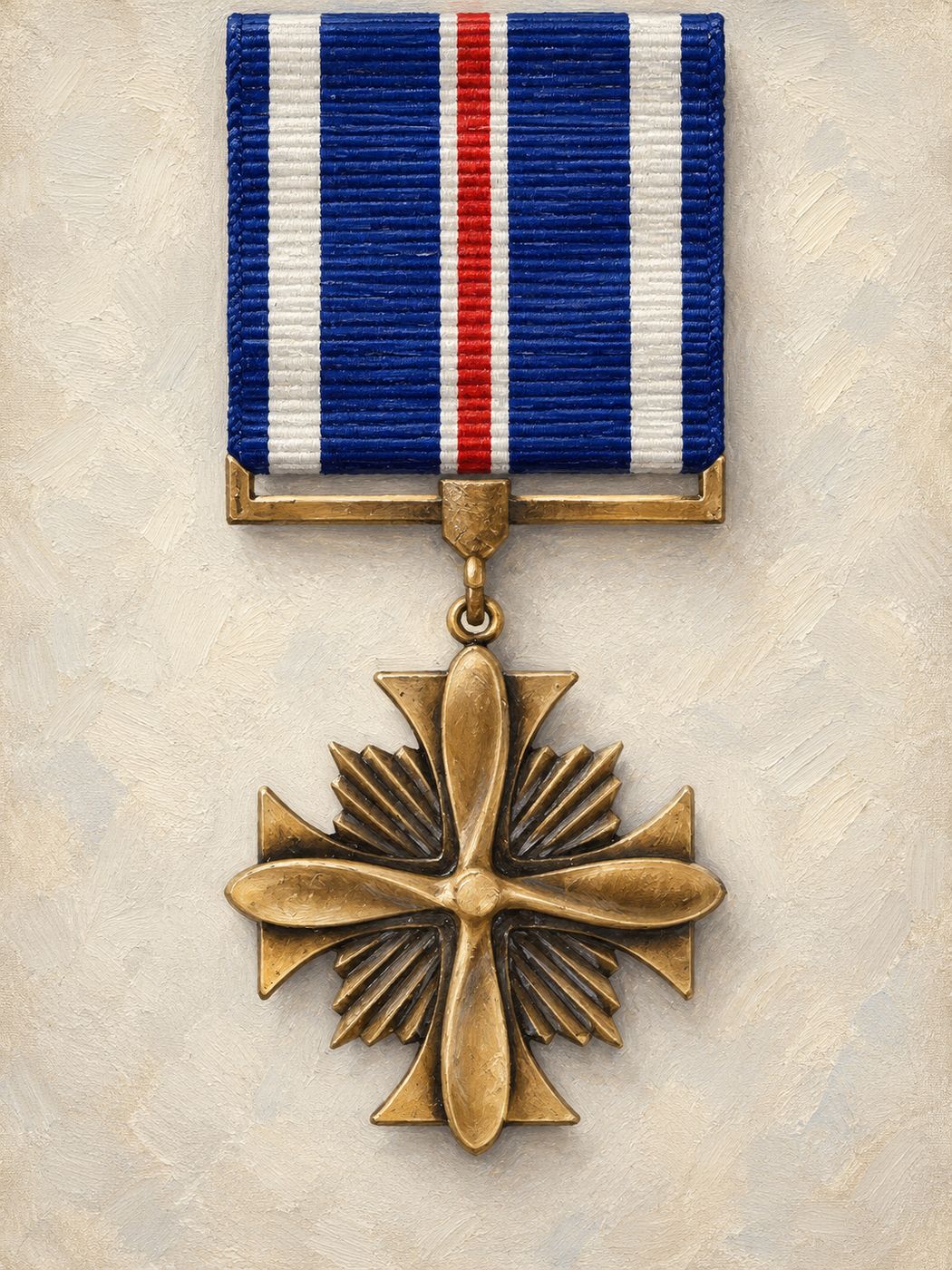
Distinguished Flying Cross
Recorded in postwar reporting on Kandis’s wartime service.
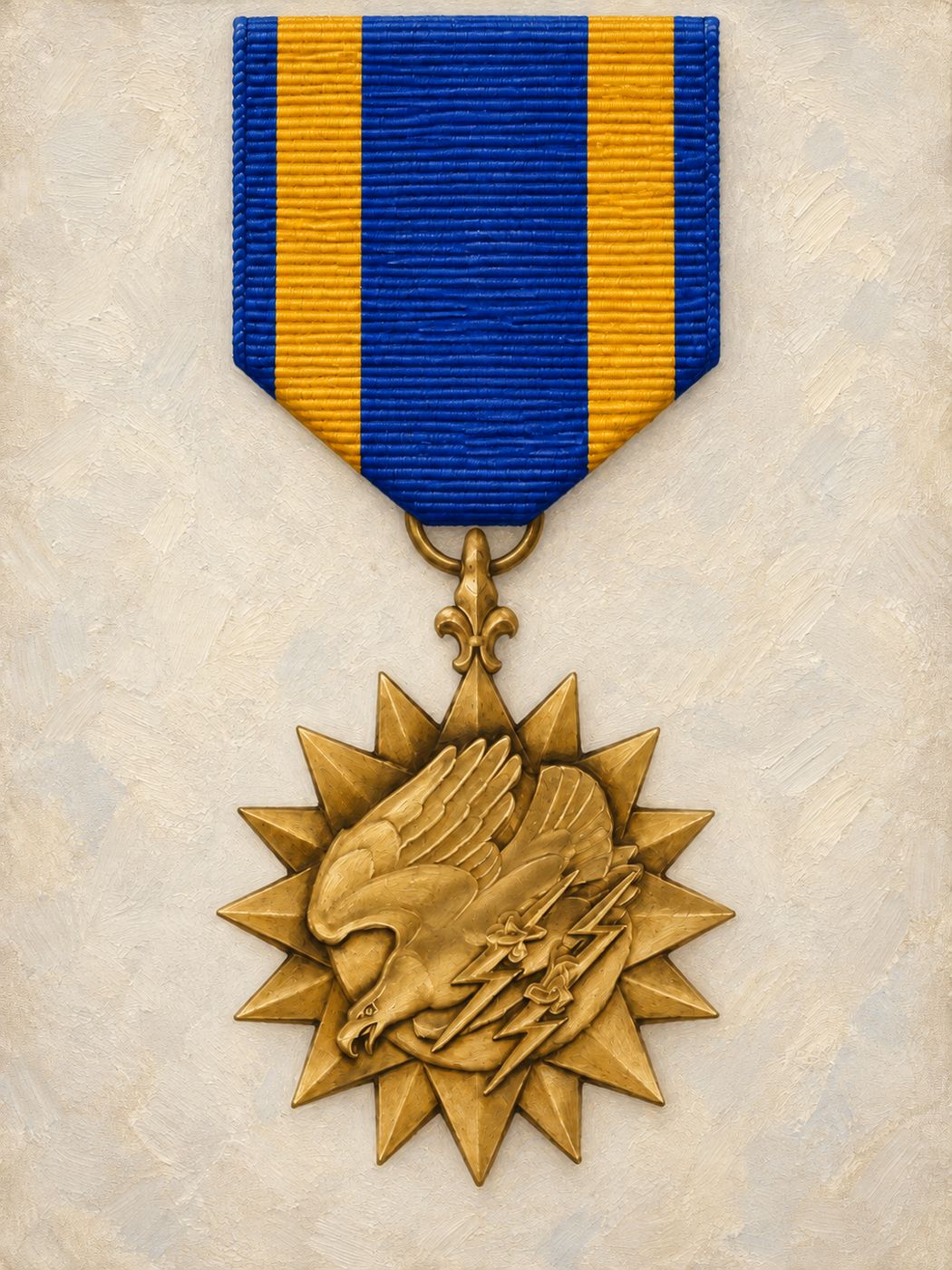
Air Medal
With thirteen Oak Leaf Clusters, according to the same postwar account.
European–Mediterranean Service
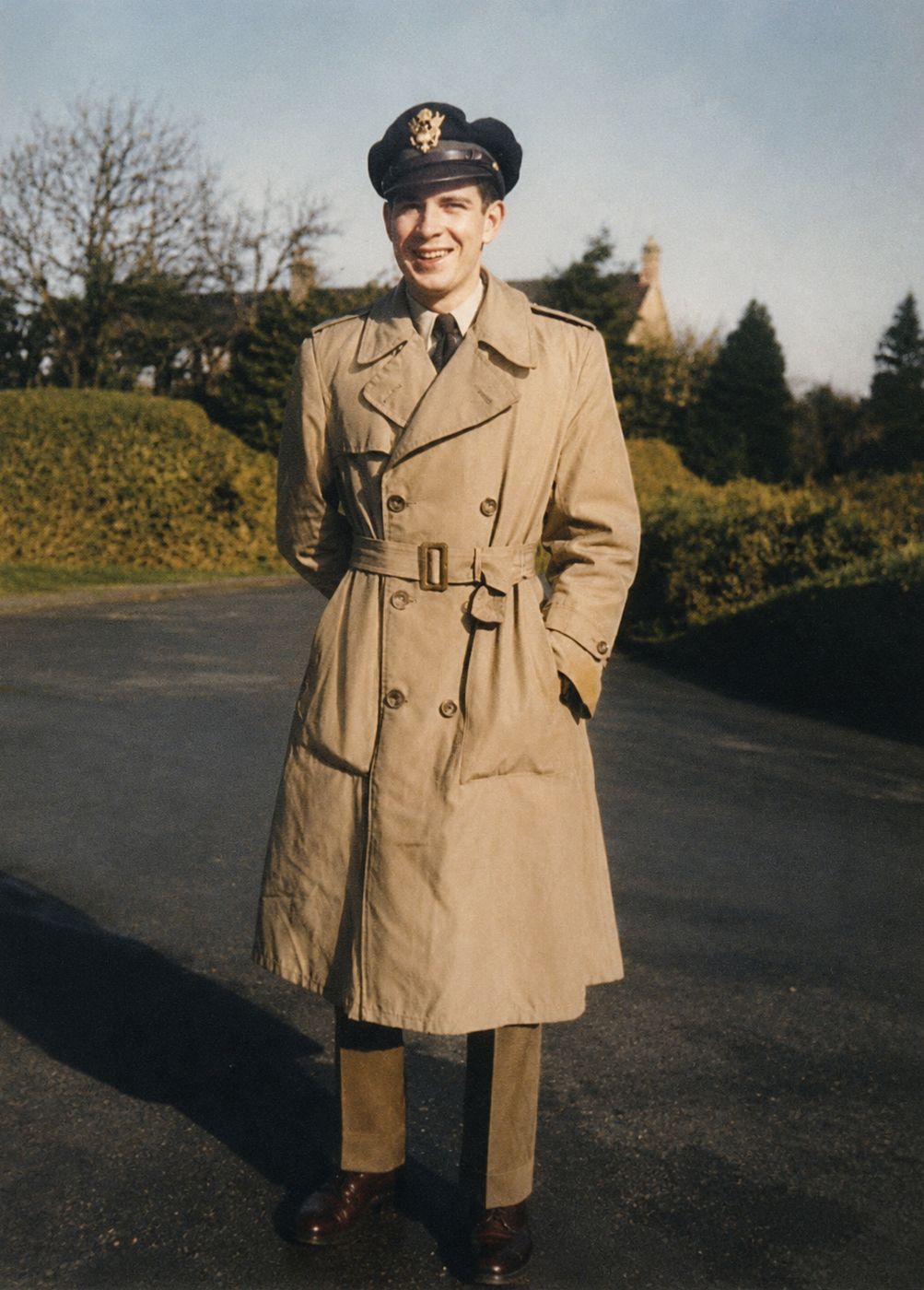
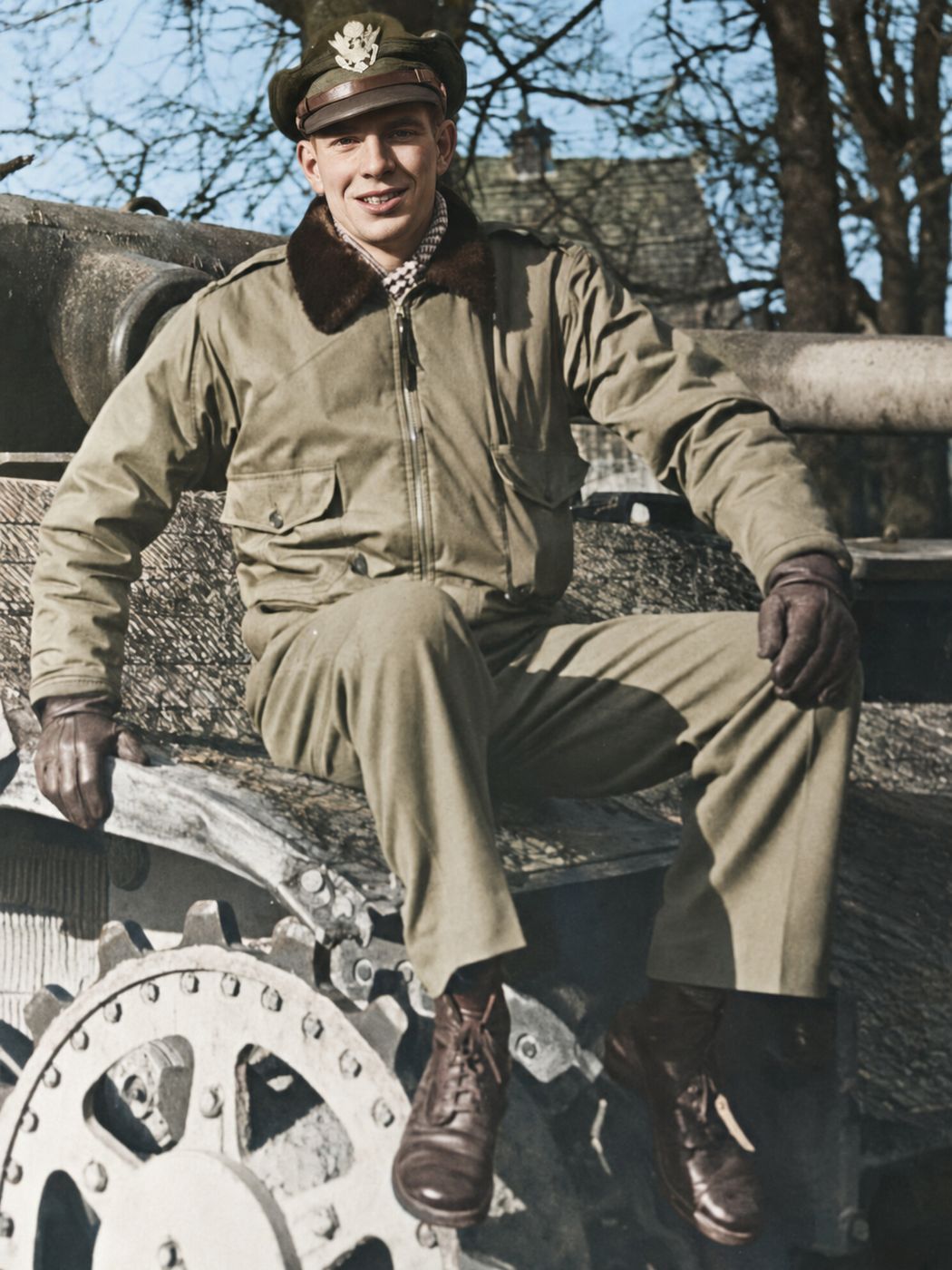
A flight-line portrait of the pilot behind the squadron’s mission record and six campaign stars.
Image restoration & verification
Improving Photographs through Artificial Intelligence: The Case of Andrew Nicholas Kandis
The Image Restoration and Verification Agent was used in the case of Andrew Nicholas Kandis for the conservative restoration, enhancement and colourisation of family photographic material made available to the Greeks in Foreign Cockpits research team. The purpose was not to “reconstruct” images or beautify them aesthetically, but to recover as much as possible of the visual information already present. A central principle was that no element unsupported by the original photograph should be added, and that no intervention should turn a historical record into a free artistic rendering. The principal difficulty is that most photographs were not standard digital scans of the originals, but comparatively low-quality mobile-phone photographs. In many cases the originals were photographed through album pages or protective surfaces, producing focus issues, perspective distortion, uneven illumination, reflections, noise, reduced resolution and substantial loss of fine photographic information. Some available digital files contain far less detail than may still survive on the original photographic print.
Processing was therefore kept as conservative as possible: no facial characteristics, inscriptions, insignia or mechanical details were artificially generated where they could not be verified from the source material. Despite these limitations, the photographic group is of exceptional research value. Any colourisation or enhancement must be understood as an interpretive aid to viewing, not as a new primary historical document. Provenance and the distinction between original material and later digital versions remain essential to their presentation. The processed images do not replace the originals; they provide a more legible, interim method of presenting a family archive that has not yet been digitised to ideal technical standards. For the research team, this transparency matters as much as the visual quality of the restoration: readers should know what derives from the original record and what reflects contemporary digital enhancement.
It is hoped that the photographs will eventually be scanned directly from the originals at high resolution, under controlled lighting and colour conditions. When that becomes possible, today’s processed versions should be replaced by new restorations based on those genuine scans. Direct scanning will allow much greater accuracy, better recovery of the original surface and grain, and—most importantly—the preservation of small historical details that mobile-phone captures cannot reveal. Until then, the present images represent the best possible, but temporary, digital restoration of a highly valuable family and aviation archive. Courtesy of the Kandis family.
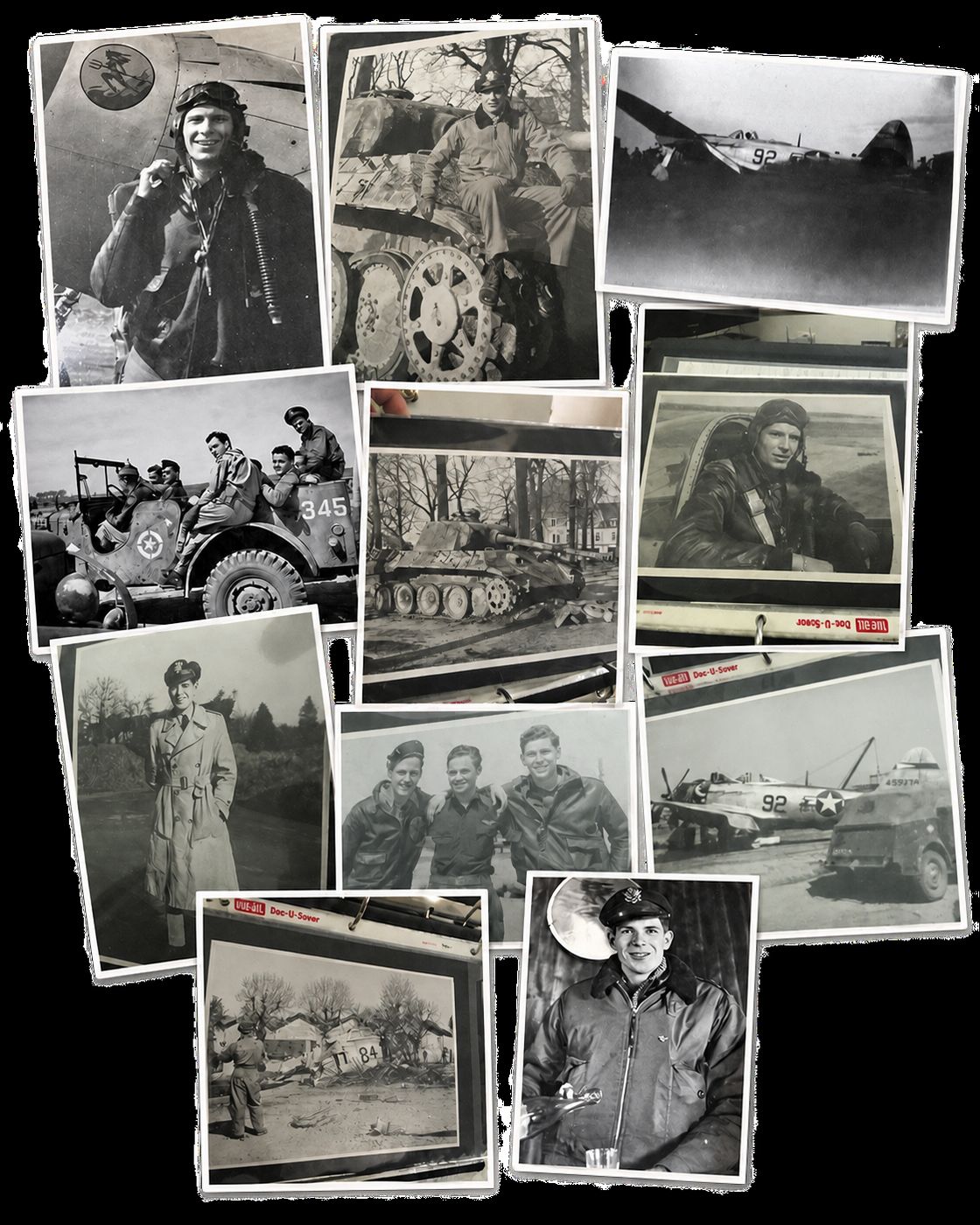
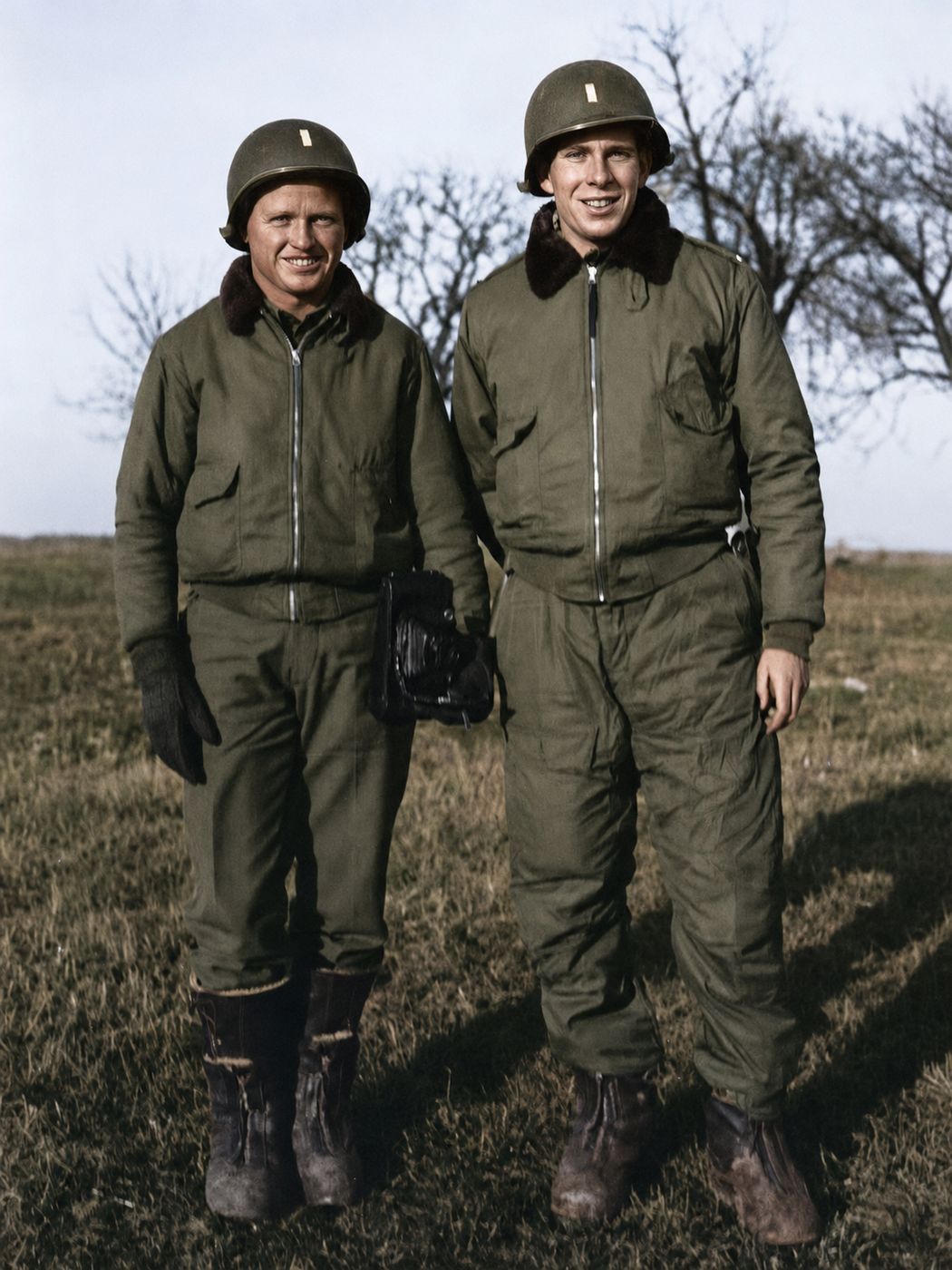
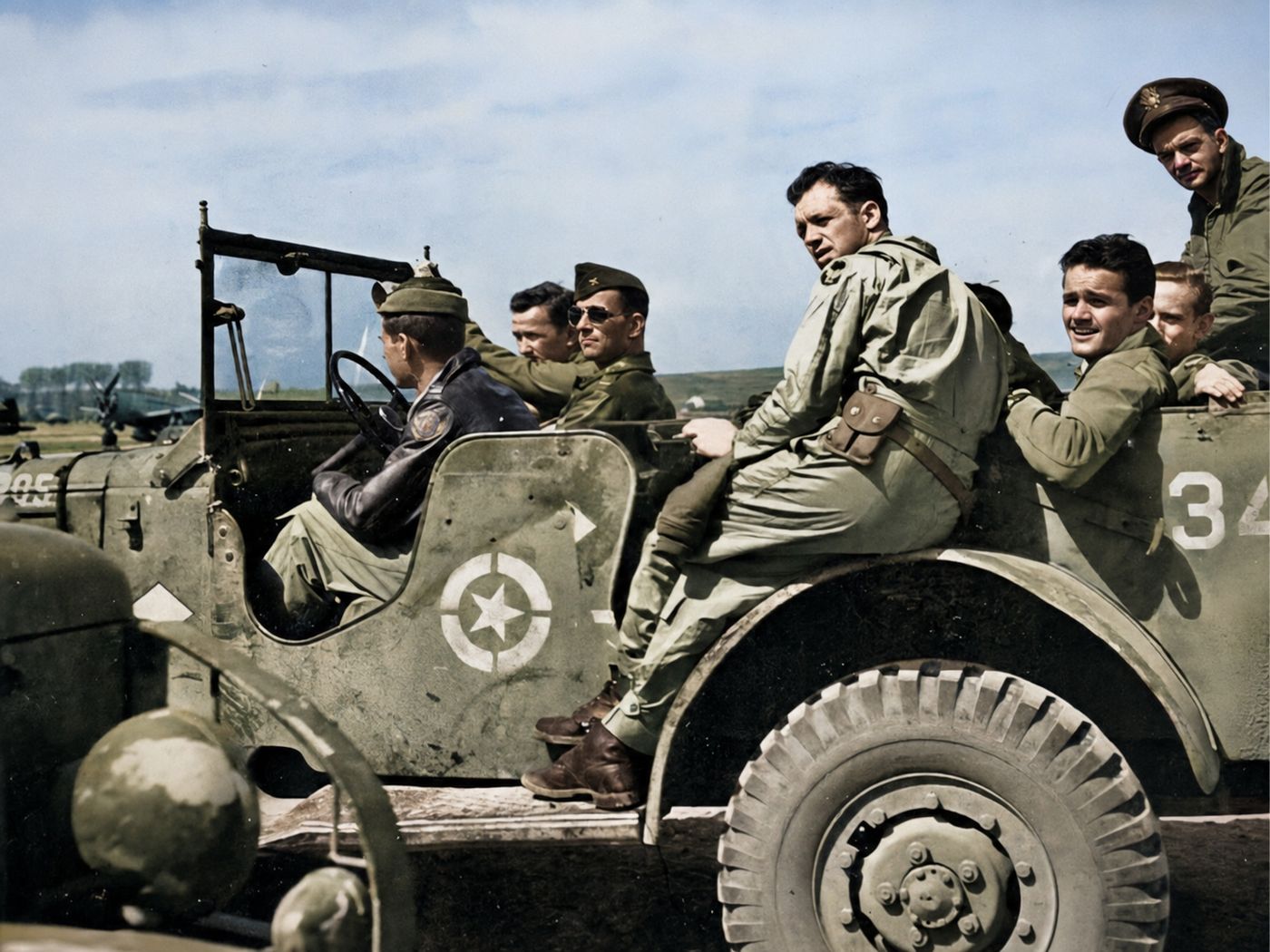
All images: Kandis family archive, except the group photograph and the two-airmen photograph, courtesy Doug Patteson, 324th Fighter Group historian.
Acknowledgements, sources & documentation
Research draws on the Kandis family archive, individual flight records, 316th Fighter Squadron sortie reports, the signed combat report and specialist historical correspondence.
Greeks in Foreign Cockpits gratefully acknowledges the Kandis family, especially Connie Kandis Kakalia, for preserving and sharing the family archive. Thanks are also due to Doug Patteson, 324th Fighter Group historian, for the two-airmen photograph and for his assistance in identifying the visual and unit context of the material.
Archival footnotes & source guide
The numbered notes below document the biographical, operational and archival evidence used throughout this dossier.
- 1“Andrew N. Kandis,” obituary, South Bend Tribune, 16 July 2017; Welsheimer Family Funeral Home obituary text, screenshots supplied by the researcher. The obituary records his 1933 move to Greece, residence in Tripolis, visits to Athens and Kandyla, learning Greek, and school attendance in Greece. ↩
- 2Ibid. The obituary records his LaPorte upbringing, Boy Scout membership, paper route, track and cross-country, graduation from LaPorte High School in 1942, brother James’s death in 1940, one semester at Purdue University, and enlistment in March 1943. ↩
- 3Andrew N. Kandis, Individual Flight Records, service no. O-706411, National Archives file supplied by the researcher, NARA reference slip identifying “Kandis, Andrew SN O-706411,” Regular AF and AF Reserve periods. ↩
- 4Kandis, Individual Flight Records, Student sheets, 1943, 308th Army Air Forces Flying Training Detachment, Stamford, Texas, PT-19A entries. ↩
- 5Kandis, Individual Flight Records, Student sheets, 1943, Strother Army Air Field, Winfield, Kansas. ↩
- 6Kandis, Individual Flight Records, Student sheet, November 1943; Foster Field / AAFAS training sequence; aircraft entries include P-40 and AT-6 in the advanced training phase. ↩
- 7Kandis, Individual Flight Records, Foster Field, Victoria, Texas, January 1944, recording graduation / transfer date of 7 January 1944; “Andrew N. Kandis,” obituary, South Bend Tribune, 16 July 2017. ↩
- 8Kandis, Individual Flight Records, Pilot sheets, February–May 1944, Punta Gorda Field, Florida, showing 2nd Lieutenant status, P-40-series fighter transition flying, instrument check and completion of advanced / squadron training requirement. ↩
- 9Kandis, Individual Flight Records, July–September 1944, showing 324th Fighter Group / XII Tactical Air Command environment and P-47D entries. ↩
- 10Kandis, Individual Flight Records, August–September 1944; 316th Fighter Squadron sortie reports, 324th Fighter Group, Twelfth Air Force, November 1944–April 1945. Because some IFR squadron header readings are faint, the combat-report evidence is used for the specific 316th Fighter Squadron assignment. ↩
- 11316th Fighter Squadron sortie reports, 324th Fighter Group, Twelfth Air Force, November 1944–April 1945, Reel A0772. ↩
- 12Ibid. ↩
- 13“Wins Signal Distinction,” The Indianapolis News (Indianapolis, Indiana), 23 June 1948, p. 12, “Andrew N. Kandis,” obituary, South Bend Tribune, 16 July 2017. ↩
- 14Consolidated review of supplied 316th Fighter Squadron sortie reports. No supplied 12th Air Force regulation has been located showing automatic double-counting of P-47 missions. Working distinction: separate takeoff / sortie equals separate sortie; multiple attacks within one sortie do not create multiple sorties. ↩
- 15Consolidated aircraft-number table derived from supplied 316th Fighter Squadron sortie reports, November 1944–April 1945. ↩
- 16Andrew N. Kandis, Combat Report, 316th Fighter Squadron, 4 April 1945, A/C No. 70; 316th Fighter Squadron Sortie Report, Mission No. 633, 14 December 1944; 316th Fighter Squadron sortie reports, February–April 1945. ↩
- 17Family photograph of P-47 Thunderbolt No. 92, 316th Fighter Squadron, 324th Fighter Group, Twelfth Air Force, courtesy of the daughter of Lt. Andrew N. Kandis; 316th Fighter Squadron Sortie Report, Mission No. 633, 14 December 1944, noting Kandis’s A/C No. 92 hit by enemy flak, Category I. ↩
- 18316th Fighter Squadron Sortie Reports, Missions 601, 612, 616, 617, 626, 627, 629, 631, 633, 634, and 636, November–December 1944. ↩
- 19316th Fighter Squadron Sortie Report, Mission No. 636, 17 December 1944. ↩
- 20316th Fighter Squadron Sortie Reports, selected missions, January–February 1945. ↩
- 21316th Fighter Squadron Sortie Report, Mission No. 679, 21 January 1945. ↩
- 22316th Fighter Squadron Sortie Report, Mission No. 702, 11 February 1945. ↩
- 23316th Fighter Squadron Sortie Report, Mission No. 875, 31 March 1945. ↩
- 24316th Fighter Squadron Sortie Report, 4 April 1945, morning mission with Kandis in A/C No. 82 and Me 262 engagement; screenshot supplied by the researcher. ↩
- 25316th Fighter Squadron Sortie Report, 4 April 1945, Memmingen mission with Kandis in A/C No. 70 and Lt. Ryland Dewey in A/C No. 90; Dewey Combat Report, 4 April 1945, supplied screenshots. ↩
- 26Andrew N. Kandis, Combat Report, 316th Fighter Squadron, 4 April 1945, “I claim 1 ME-262 Destroyed,” screenshot supplied by the researcher. ↩
- 27Jonathan Bernstein, P-47 Thunderbolt Units of the Twelfth Air Force, Osprey Combat Aircraft 92 (Oxford: Osprey Publishing, 2012), 85–86, supplied screenshots. ↩
- 28Research correspondence with Georg Morrison and Michael Balss discussing possible Me 262 delivery-flight hypothesis, IV./EKG 1, E-Stelle Rechlin, Arado Ar 234 C-4, Walter Strobl, and Augsburg–Memmingen–München geography. ↩
- 29316th Fighter Squadron daily / squadron record, 4 April 1945, distinguishing Lt. Thompson’s Arado 234 at Augsburg from Lt. Kandis’s Me 262 at Memmingen, screenshot supplied by the researcher. ↩
- 30316th Fighter Squadron Sortie Reports, Missions 900, 901, and 911, 6 April 1945; Missions 910 and 917, 9 April 1945, enlarged screenshots supplied by the researcher. ↩
- 31“Wins Signal Distinction,” The Indianapolis News, 23 June 1948, p. 12. The article states Ninth Air Force, but the squadron records and unit context identify the 316th Fighter Squadron, 324th Fighter Group, as part of the Twelfth Air Force. ↩
- 32Kandis, Individual Flight Records, postwar pilot sheets, Stout Field, Indianapolis, Indiana, 1947–49. ↩
- 33“Wins Signal Distinction,” The Indianapolis News, 23 June 1948, p. 12. ↩
- 34“Andrew N. Kandis,” obituary, South Bend Tribune, 16 July 2017. ↩
- 35Kandis, Individual Flight Records, Atterbury Air Force Base, Columbus, Indiana, 1949–51, showing troop carrier / transport flying environment and C-46 / C-47 / T-6 type entries. ↩
- 36“Andrew N. Kandis,” obituary, South Bend Tribune, 16 July 2017. ↩
- 37Kandis, Individual Flight Records, Godman Air Force Base, Kentucky, 1951, 165th Fighter-Bomber Squadron, showing F-51D and F-84 fighter / fighter-bomber flying. ↩
- 38“Andrew N. Kandis,” obituary, South Bend Tribune, 16 July 2017. ↩
- 39Ibid. ↩
- 40Kandis, Individual Flight Records, 1952 sheets, 3rd Air Force / 165th Fighter-Bomber Squadron / APO 125, F-84 flying and Air Force periodic instrument requirements / Manston Air Base, England. ↩
- 41“Andrew N. Kandis,” obituary, South Bend Tribune, 16 July 2017. ↩
- 42Kandis, Individual Flight Records, Bakalar Air Force Base, Columbus, Indiana, 2466th Air Reserve Flying Center, 1954–57. ↩
- 43Kandis, Individual Flight Records, final summary sheet, noting acceptance as satisfactorily passing AFR 60-2 requirements for 157.6 months. ↩
- 44“Andrew N. Kandis,” obituary, South Bend Tribune, 16 July 2017. ↩
- 45Ibid. ↩
- 46Ibid. ↩
- 47“100 Years Since the Founding of Kekrops,” Ta Kandyliotika, no. 61, p. 6, listing “Nikolaos Andreou Kandalepas” among the members of the Kekrops Association of Kandyliots of America; George N. Helmis, Greek-American Guide and Business Directory, 1915, 8th year (New York: The Helmis Press, 1915), 137, listing in La Porte, Indiana, “Kandalepas, N. & Houlis, M., ‘The Royal Restaurant,’ 610 Main St.” Taken together with the documented Kandis family connections to Kandyla, these sources confirm that Kandis was the Americanized form of the surname used by this branch of the Kandalepas family. ↩
A research project under the auspices of KERM C.L.C.
© 2017-2026 Dimitris Vassilopoulos - All Rights Reserved
