Greeks in Foreign CockpitsUSAAF · USAF · 1942–1950
First Lieutenant George M.Lukakis

George M.Lukakis
missions
First Lieutenant, United States Air ForceFighter pilot · 39th Fighter Interceptor Squadron · 35th Fighter Interceptor Wing · Fifth Air ForceΥπολοχαγός, Πολεμική Αεροπορία των ΗΠΑΠιλότος μαχητικών · 39η Μοίρα Αναχαίτισης · 35η Πτέρυγα Αναχαίτισης · 5η Αεροπορική Δύναμη
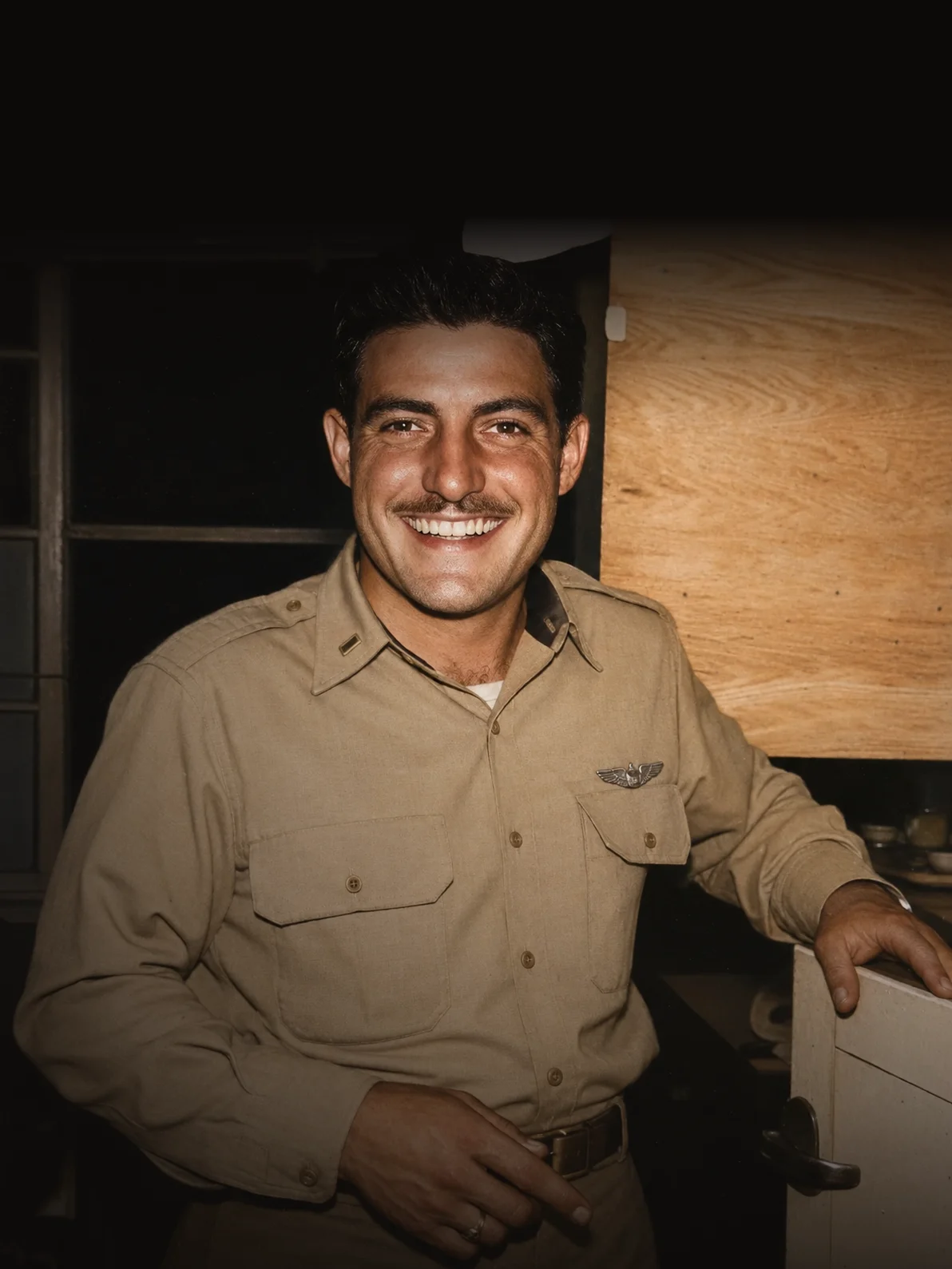
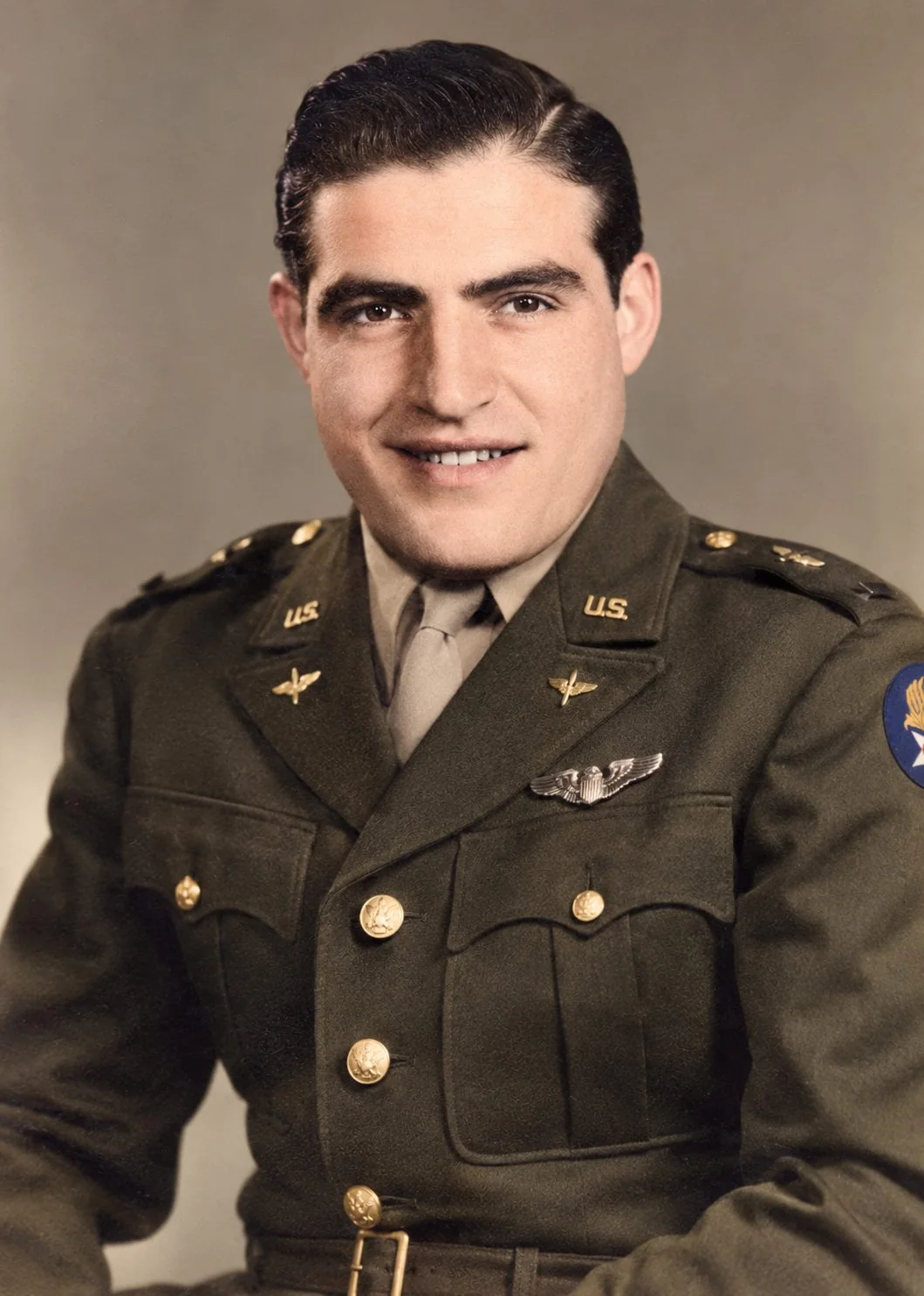
The son of a Cretan barber in Chicopee, Massachusetts, George Michael Lukakis earned his wings in 1944, was taken off fighters, and served out the Second World War as a flight engineer on heavy bombers. Recalled in 1948, he went back to the cockpit in Japan, this time in jets. When war broke out in Korea he flew F-80C Shooting Stars and then F-51D Mustangs in close support of the UN troops, flying at least 65 combat missions. He was killed on 6 November 1950, when his Mustang crashed on approach to Pohang.Γιος ενός Κρητικού κουρέα στο Chicopee της Μασαχουσέτης, ο Γεώργιος Μιχαήλ Λουκάκης (George Michael Lukakis) κέρδισε τις πτέρυγές του το 1944, απομακρύνθηκε από τα μαχητικά και ολοκλήρωσε τον Β΄ Παγκόσμιο Πόλεμο ως μηχανικός πτήσης σε βαρέα βομβαρδιστικά. Ανακλήθηκε το 1948 και επέστρεψε στο πιλοτήριο στην Ιαπωνία, αυτή τη φορά σε αεριωθούμενα. Όταν ξέσπασε ο πόλεμος στην Κορέα πέταξε με F-80C Shooting Star και έπειτα με F-51D Mustang σε άμεση υποστήριξη των στρατευμάτων του ΟΗΕ, ολοκληρώνοντας τουλάχιστον 65 πολεμικές αποστολές. Σκοτώθηκε στις 6 Νοεμβρίου 1950, όταν το Mustang του συνετρίβη κατά την προσέγγιση στο Pohang.
Quick FactsΜε μια ματιά
- BornΓέννηση
- 10 January 192410 Ιανουαρίου 1924Springfield · third of four childrenSpringfield · τρίτο από τέσσερα παιδιά
- ParentsΓονείς
- Michael & IreneΜιχαήλ & ΕιρήνηFrom Heraklion and Chania, CreteΑπό το Ηράκλειο και τα Χανιά
- HometownΠόλη
- Chicopee, MAChicopee, MABorn in SpringfieldΓεννημένος στο Springfield
- ServiceΥπηρεσία
- USAAF 1942–46USAAF 1942–46USAF Reserve, recalled 1948Εφεδρεία USAF, ανάκληση 1948
- RankΒαθμός
- First LieutenantΥπολοχαγόςPilot, 39th FISΠιλότος, 39η Μοίρα
- UnitΜονάδα
- 39th Fighter Interceptor Squadron39η Μοίρα Αναχαίτισης35th Fighter Interceptor Wing · Fifth Air Force35η Πτέρυγα Αναχαίτισης · 5η Αεροπορική Δύναμη
- AircraftΑεροσκάφη
- F-80C · F-51DF-80C · F-51DEarlier B-29 flight engineerΠαλαιότερα μηχανικός πτήσης B-29
- CombatΜάχη
- At least 65 missionsΤουλάχιστον 65 αποστολέςKorea, 9 Jul – 11 Oct 1950Κορέα, 9 Ιουλ. – 11 Οκτ. 1950
- Service nos.Αρ. μητρώου
- T-63921 · O-944241T-63921 · O-944241Flight Officer, 1944 · Second Lieutenant, 1947Flight Officer, 1944 · Ανθυπολοχαγός, 1947
- DiedΘάνατος
- 6 November 19506 Νοεμβρίου 1950Pohang, Korea · aged 26Pohang, Κορέα · 26 ετών
The Boy from ChicopeeΤο αγόρι από το Chicopee
The familyΗ οικογένεια
- FatherΠατέραςMichael Lukakis,
from Heraklion, barberΜιχαήλ Λουκάκης,
από το Ηράκλειο, κουρέας - MotherΜητέραIrene (Kalouramakis),
from ChaniaΕιρήνη (Καλουραμάκη),
από τα Χανιά - ChildrenΠαιδιάMary, Nick, George
and the youngest, JohnΜαρία, Νίκος, Γιώργος
και ο μικρότερος, Γιάννης - 10.1.1924George born,
Springfield, MAΓέννηση του Γιώργου,
Springfield, MA - HomeΣπίτιSpringfield Street,
ChicopeeΟδός Springfield,
Chicopee
Before he was a fighter pilot, before the military orders and the medals, George Michael Lukakis was a boy in a Greek-American family trying to make its way in Massachusetts. He was born in Springfield on 10 January 1924, the third of four children of Michael and Irene Lukakis. His parents had crossed the Atlantic from Crete—Michael from Heraklion, Irene, née Kalouramakis, from Chania, travelling with her brother John. The family remembered their passage through Ellis Island. A surviving birth-register extract, recorded just four days after George’s arrival, places the family at 27 Bond Street, Springfield, and gives his father’s occupation as barber. The mother’s name is rendered differently on that extract, a documentary variation that has not been conclusively resolved.¹,²
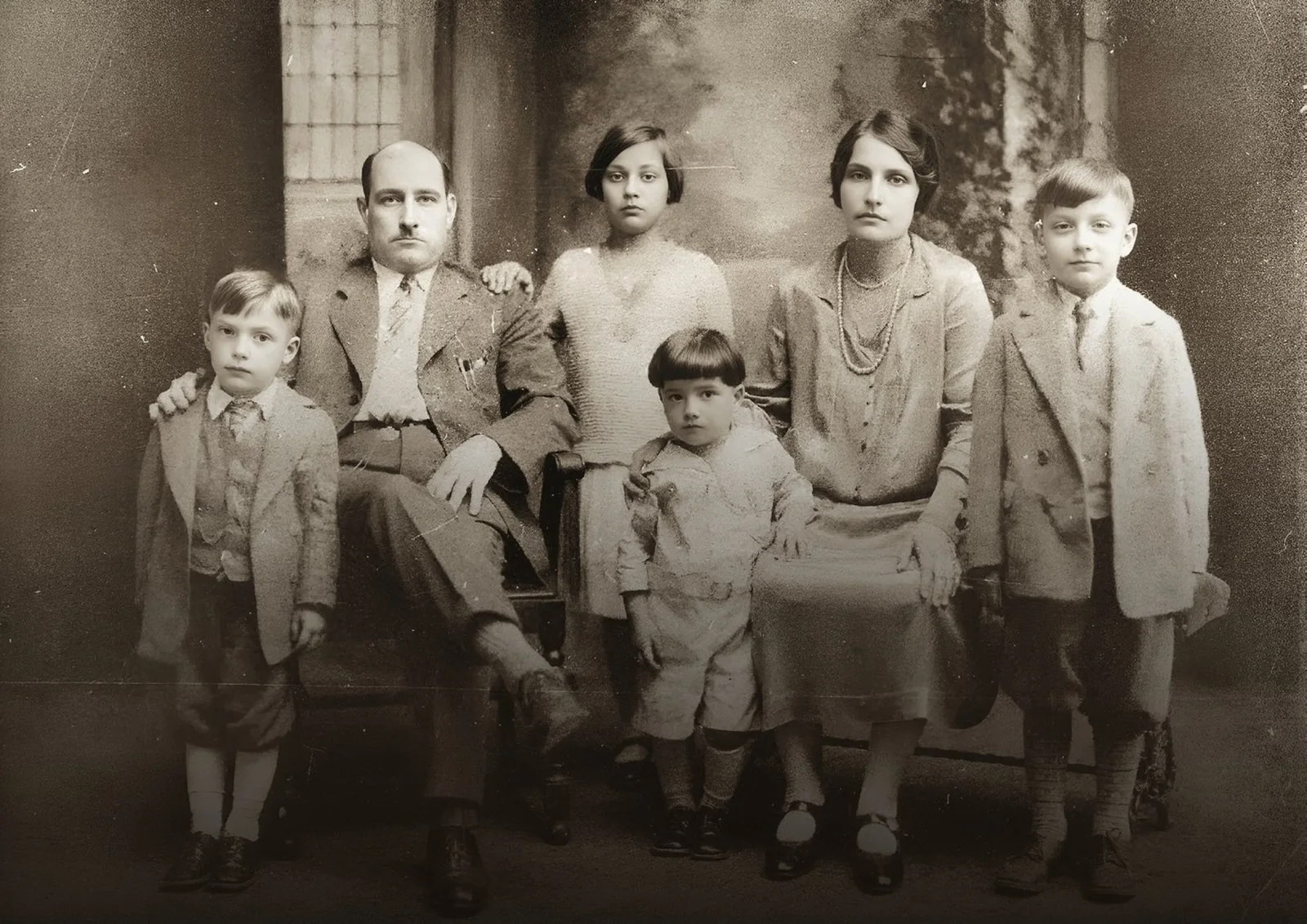
The streets around Chicopee offered the family a second home without erasing the first. Michael kept a barbershop on Exchange Street; contemporary directories place his trade there in the 1920s and early 1930s. The children sometimes polished customers’ shoes to earn a little money. Later the family lived in a two-family house on Springfield Street, only a short walk from the shop and from P. E. Bowe Elementary School, which George and his younger brother John attended. Their lives extended through the Greek Orthodox Church of Saints Constantine and Helen at Chicopee Falls: choir rehearsals, picnics, family gatherings and the close company of cousins. According to the family’s account, Michael stood as godfather to many children. This was an immigrant household whose Greek traditions were neither ceremonial relics nor distant memories; they were part of ordinary life.³,⁴
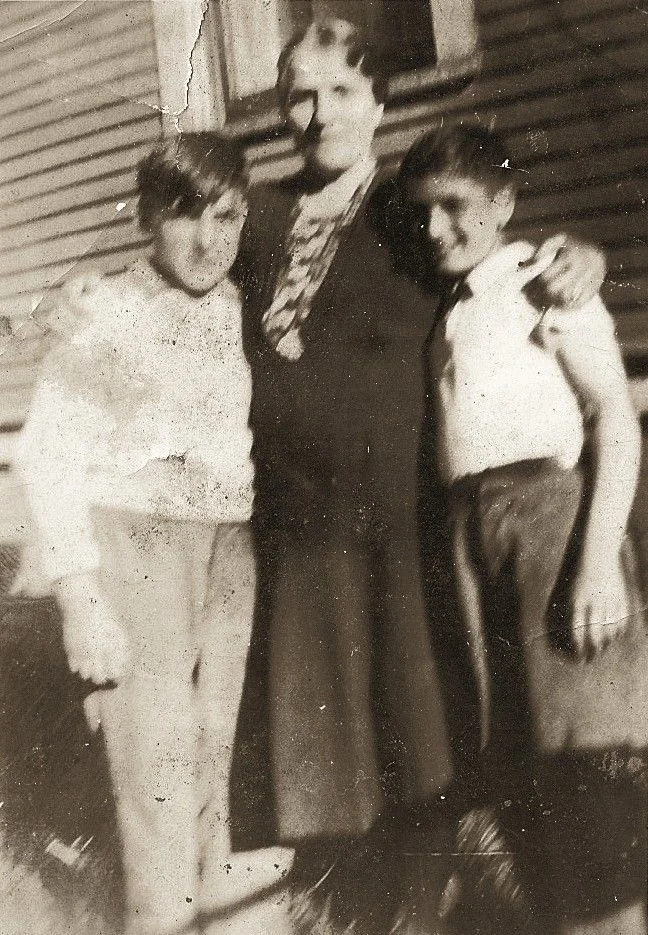
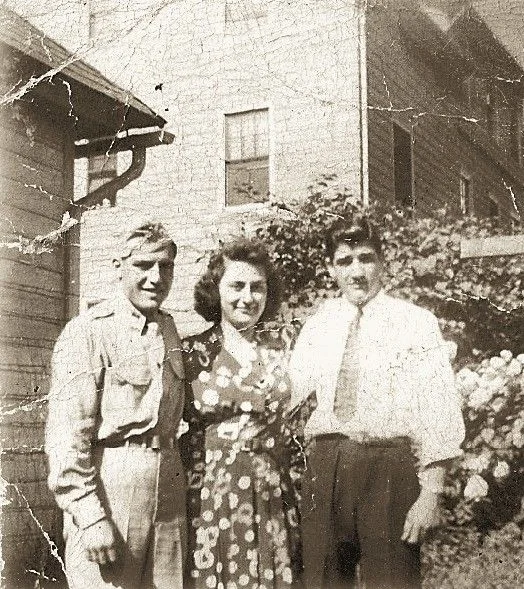
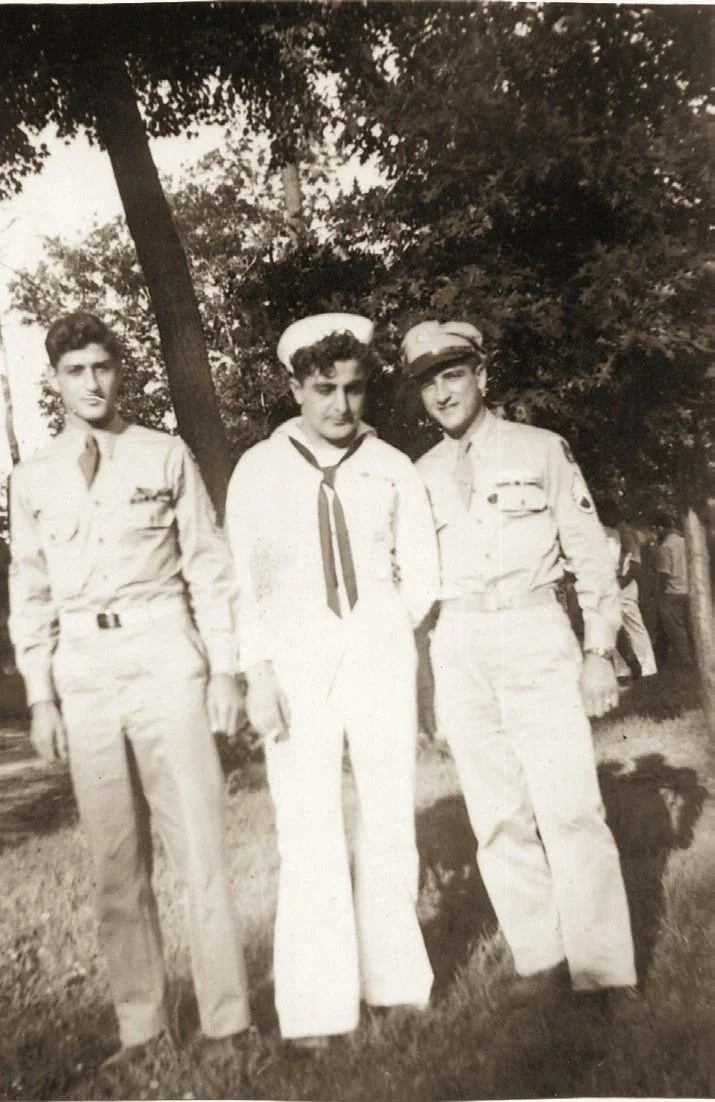
That childhood changed when Michael died while George was still an adolescent. The family record does not establish the date, but it remembers the practical consequences clearly. Irene found work in a garment factory; the children did what they could. George and John hauled vegetables with a wagon, weeded tobacco fields and later worked after school at Westinghouse. Responsibility arrived early, alongside the wish to help their mother. When war came, all three brothers would enter aviation service—Nick in naval aviation, George and John in the Army air arm. The family remembered two impulses behind that decision: the desire to serve their country and the hope of sending some of their pay home. George’s own application for military flying was taking shape in 1942, when schoolteachers and workshop supervisors began to write on his behalf. One of the first letters was written by a teacher at Chicopee High School on 19 June 1942. Its simplicity says much about the qualities that those around George saw in him:
“Gentlemen, I take pleasure in recommending George M. Lukakis who is an applicant for admission into the Air Cadet Corps. I have known the young man for the past five years. He possesses good intelligence and character. He is a fine type of student and a conscientious worker, willing and cooperative.”⁵
Another school endorsement, signed by C. M. Bartholomew on 15 September, remembered a dependable young man, able to shoulder responsibility and work alongside others. Yet George was also developing the hands-on skills that would follow him through his flying career. Since 11 May 1942 he had been attending the G. G. Mackintosh Apprentice School at Springfield Armory. On 6 November a supervisor described his work with lathes, milling machines, shapers and grinders and spoke of the conscientious apprentice behind the tools. The surviving letter is worth hearing in its own words:⁶
“George M. Lukakis has been a student in the Apprentice School at the Springfield Armory from May 11, 1942 to the present time. Mr. Lukakis has been operating lathes, millers, shapers, and surface grinders, and has tool crib experience. His instructors report him a willing worker with good mechanical aptitude in his shop work. His classroom subjects consisting of Engineering Drawing, Mathematics, Shop Theory and First Aid, average ‘B’. His leave record is good. All his instructors have found him to be a perfect gentleman at all times.”⁷
A week later, on 13 November, George signed his formal application to become an Aviation Cadet. He gave 524 Springfield Street in Chicopee as his mailing address and chose flying duty. The application reached the First Corps Area in Boston by 23 November; the examining board, meeting on 24 November, found him qualified and recommended him. There would still be a long road between that recommendation and the silver wings he wanted to wear. He had made his choice, however, and in a few weeks the Army would take him away from Chicopee.⁸
The Greeks of ChicopeeΟι Έλληνες του Chicopee
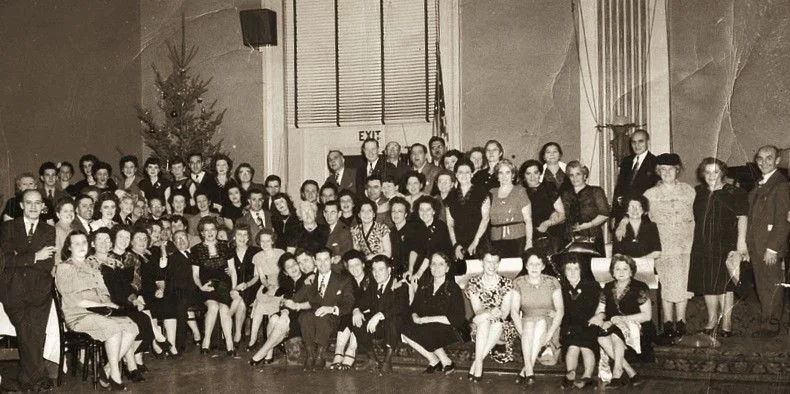
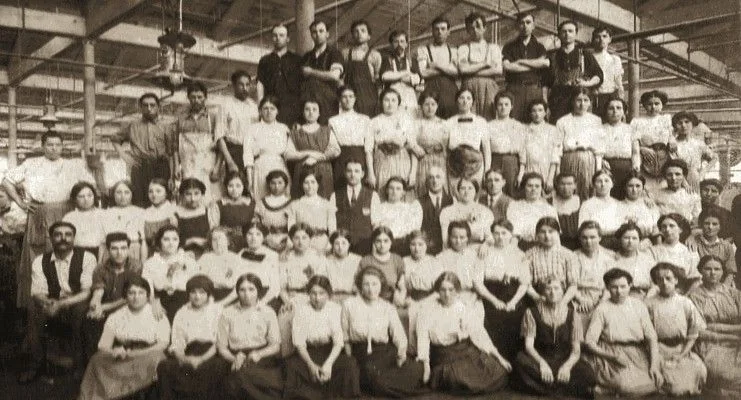
Greek immigrants began settling in Chicopee in the 1890s, drawn by its growing industries. Many came from Lagadia in Arcadia and found work in local factories, above all the J. Stevens Arms and Tool Company, while a Cretan community grew up in Chicopee Center. By 1915 the city’s Greek population had reached 325. In 1918 the community founded the parish of Saints Constantine and Helen, where regular services began in 1921.¹²⁷ Its coffeehouses in Chicopee Center and Chicopee Falls served as gathering places, keeping friendships, language and traditions alive across generations.¹²⁸Οι Έλληνες μετανάστες άρχισαν να εγκαθίστανται στο Chicopee τη δεκαετία του 1890, ελκυσμένοι από τις αναπτυσσόμενες βιομηχανίες του. Πολλοί ήρθαν από τα Λαγκάδια της Αρκαδίας και βρήκαν δουλειά στα τοπικά εργοστάσια, κυρίως στη J. Stevens Arms and Tool Company, ενώ στο Chicopee Center αναπτύχθηκε μια κρητική κοινότητα. Ως το 1915 ο ελληνικός πληθυσμός της πόλης είχε φτάσει τους 325. Το 1918 η κοινότητα ίδρυσε την ενορία των Αγίων Κωνσταντίνου και Ελένης, όπου οι τακτικές λειτουργίες άρχισαν το 1921.¹²⁷ Τα καφενεία της στο Chicopee Center και στο Chicopee Falls ήταν τόποι συνάντησης, που κρατούσαν ζωντανές τις φιλίες, τη γλώσσα και τις παραδόσεις από γενιά σε γενιά.¹²⁸
The familyΗ οικογένεια
- FatherΠατέραςMichael Lukakis,
from Heraklion, barberΜιχαήλ Λουκάκης,
από το Ηράκλειο, κουρέας - MotherΜητέραIrene (Kalouramakis),
from ChaniaΕιρήνη (Καλουραμάκη),
από τα Χανιά - ChildrenΠαιδιάMary, Nick, George
and the youngest, JohnΜαρία, Νίκος, Γιώργος
και ο μικρότερος, Γιάννης - 10.1.1924George born,
Springfield, MAΓέννηση του Γιώργου,
Springfield, MA - HomeΣπίτιSpringfield Street,
ChicopeeΟδός Springfield,
Chicopee
Πριν γίνει πιλότος μαχητικών, πριν από τις στρατιωτικές διαταγές και τα μετάλλια, ο Γεώργιος Μιχαήλ Λουκάκης (George Michael Lukakis) ήταν ένα αγόρι μιας ελληνοαμερικανικής οικογένειας που πάλευε να βρει τον δρόμο της στη Μασαχουσέτη. Γεννήθηκε στο Springfield στις 10 Ιανουαρίου 1924, τρίτο από τα τέσσερα παιδιά του Μιχαήλ και της Ειρήνης Λουκάκη. Οι γονείς του είχαν διασχίσει τον Ατλαντικό από την Κρήτη, ο Μιχαήλ από το Ηράκλειο και η Ειρήνη, το γένος Καλουραμάκη, από τα Χανιά, ταξιδεύοντας μαζί με τον αδελφό της Ιωάννη. Η οικογένεια θυμόταν το πέρασμά της από το Ellis Island. Ένα σωζόμενο απόσπασμα του ληξιαρχικού βιβλίου γεννήσεων, που συντάχθηκε μόλις τέσσερις ημέρες μετά τη γέννηση του Γιώργου, τοποθετεί την οικογένεια στην οδό Bond 27 στο Springfield και δίνει ως επάγγελμα του πατέρα του τον κουρέα. Το όνομα της μητέρας αποδίδεται διαφορετικά σε εκείνο το απόσπασμα, μια απόκλιση των εγγράφων που δεν έχει ξεκαθαριστεί οριστικά.¹,²
Οι δρόμοι γύρω από το Chicopee πρόσφεραν στην οικογένεια μια δεύτερη πατρίδα, χωρίς να σβήσουν την πρώτη. Ο Μιχαήλ είχε κουρείο στην οδό Exchange· οι οδηγοί της πόλης της εποχής καταγράφουν εκεί το μαγαζί του στη δεκαετία του 1920 και στις αρχές της δεκαετίας του 1930. Τα παιδιά γυάλιζαν καμιά φορά τα παπούτσια των πελατών για να βγάλουν λίγα χρήματα. Αργότερα η οικογένεια έμενε σε ένα διώροφο σπίτι δύο κατοικιών στην οδό Springfield, σε απόσταση λίγων βημάτων από το κουρείο και από το δημοτικό σχολείο P. E. Bowe, όπου πήγαιναν ο Γιώργος και ο μικρότερος αδελφός του Γιάννης. Η ζωή τους απλωνόταν γύρω από την ελληνορθόδοξη εκκλησία των Αγίων Κωνσταντίνου και Ελένης στο Chicopee Falls: πρόβες της χορωδίας, πικνίκ, οικογενειακές συγκεντρώσεις και η στενή συντροφιά των ξαδέλφων. Σύμφωνα με τη μαρτυρία της οικογένειας, ο Μιχαήλ είχε βαφτίσει πολλά παιδιά. Ήταν ένα σπίτι μεταναστών όπου οι ελληνικές παραδόσεις δεν ήταν ούτε τελετουργικά απομεινάρια ούτε μακρινές αναμνήσεις· ήταν κομμάτι της καθημερινής ζωής.³,⁴
Αυτά τα παιδικά χρόνια άλλαξαν όταν ο Μιχαήλ πέθανε, ενώ ο Γιώργος ήταν ακόμη έφηβος. Το οικογενειακό αρχείο δεν προσδιορίζει την ημερομηνία, θυμάται όμως καθαρά τις πρακτικές συνέπειες. Η Ειρήνη έπιασε δουλειά σε εργοστάσιο ενδυμάτων· τα παιδιά έκαναν ό,τι μπορούσαν. Ο Γιώργος και ο Γιάννης κουβαλούσαν λαχανικά με ένα καροτσάκι, ξεβοτάνιζαν χωράφια με καπνό και αργότερα δούλευαν μετά το σχολείο στη Westinghouse. Η ευθύνη ήρθε νωρίς, μαζί με την επιθυμία να βοηθήσουν τη μητέρα τους. Όταν ήρθε ο πόλεμος, και οι τρεις αδελφοί θα υπηρετούσαν στην αεροπορία: ο Νίκος στην αεροπορία του Ναυτικού, ο Γιώργος και ο Γιάννης στην αεροπορία του Στρατού. Η οικογένεια θυμόταν δύο κίνητρα πίσω από αυτή την απόφαση: την επιθυμία να υπηρετήσουν την πατρίδα τους και την ελπίδα να στέλνουν ένα μέρος του μισθού τους στο σπίτι. Η αίτηση του ίδιου του Γιώργου για να πετάξει στον Στρατό έπαιρνε μορφή το 1942, όταν δάσκαλοι και επόπτες εργαστηρίων άρχισαν να γράφουν συστατικές επιστολές για εκείνον. Μία από τις πρώτες την έγραψε στις 19 Ιουνίου 1942 μια καθηγήτρια του Chicopee High School. Η απλότητά της λέει πολλά για τις αρετές που έβλεπαν στον Γιώργο όσοι τον γνώριζαν:
«Κύριοι, με ευχαρίστηση συστήνω τον George M. Lukakis, ο οποίος υποβάλλει αίτηση εισαγωγής στο Σώμα Αεροπορικών Δοκίμων. Γνωρίζω τον νέο εδώ και πέντε χρόνια. Διαθέτει καλή νοημοσύνη και χαρακτήρα. Είναι εξαιρετικός μαθητής και ευσυνείδητος εργάτης, πρόθυμος και συνεργάσιμος.»⁵
Μια ακόμη σχολική σύσταση, με την υπογραφή C. M. Bartholomew στις 15 Σεπτεμβρίου, θυμόταν έναν αξιόπιστο νέο, ικανό να αναλαμβάνει ευθύνες και να δουλεύει μαζί με άλλους. Ο Γιώργος όμως καλλιεργούσε παράλληλα και τις πρακτικές δεξιότητες που θα τον συνόδευαν σε όλη την αεροπορική του πορεία. Από τις 11 Μαΐου 1942 φοιτούσε στη Σχολή Μαθητευομένων G. G. Mackintosh του Springfield Armory. Στις 6 Νοεμβρίου ένας επόπτης περιέγραψε τη δουλειά του σε τόρνους, φρέζες, πλάνες και λειαντικές μηχανές και μίλησε για τον ευσυνείδητο μαθητευόμενο πίσω από τα εργαλεία. Η επιστολή που σώζεται αξίζει να ακουστεί με τα δικά της λόγια:⁶
«Ο George M. Lukakis είναι μαθητής της Σχολής Μαθητευομένων του Springfield Armory από τις 11 Μαΐου 1942 έως σήμερα. Ο κ. Lukakis χειρίζεται τόρνους, φρέζες, πλάνες και επίπεδες λειαντικές μηχανές και έχει εμπειρία στην αποθήκη εργαλείων. Οι εκπαιδευτές του τον αναφέρουν ως πρόθυμο εργάτη με καλή μηχανική κλίση στη δουλειά του εργαστηρίου. Στα θεωρητικά του μαθήματα, Μηχανολογικό Σχέδιο, Μαθηματικά, Θεωρία Εργαστηρίου και Πρώτες Βοήθειες, έχει μέσο όρο «B». Το ιστορικό των αδειών του είναι καλό. Όλοι οι εκπαιδευτές του τον βρίσκουν πάντοτε τέλειο κύριο.»⁷
Μία εβδομάδα αργότερα, στις 13 Νοεμβρίου, ο Γιώργος υπέγραψε την επίσημη αίτησή του για να γίνει Αεροπορικός Δόκιμος. Έδωσε ως διεύθυνση αλληλογραφίας την οδό Springfield 524 στο Chicopee και δήλωσε προτίμηση για ιπτάμενη υπηρεσία. Η αίτηση έφτασε στην Περιοχή του Πρώτου Σώματος Στρατού στη Βοστώνη ως τις 23 Νοεμβρίου· η εξεταστική επιτροπή, που συνεδρίασε στις 24 Νοεμβρίου, τον έκρινε κατάλληλο και τον πρότεινε. Ο δρόμος από εκείνη την πρόταση ως τις ασημένιες πτέρυγες που ήθελε να φορέσει θα ήταν ακόμη μακρύς. Είχε όμως κάνει την επιλογή του, και σε λίγες εβδομάδες ο Στρατός θα τον έπαιρνε μακριά από το Chicopee.⁸
The Greeks of ChicopeeΟι Έλληνες του Chicopee
Greek immigrants began settling in Chicopee in the 1890s, drawn by its growing industries. Many came from Lagadia in Arcadia and found work in local factories, above all the J. Stevens Arms and Tool Company, while a Cretan community grew up in Chicopee Center. By 1915 the city’s Greek population had reached 325. In 1918 the community founded the parish of Saints Constantine and Helen, where regular services began in 1921.¹²⁷ Its coffeehouses in Chicopee Center and Chicopee Falls served as gathering places, keeping friendships, language and traditions alive across generations.¹²⁸Οι Έλληνες μετανάστες άρχισαν να εγκαθίστανται στο Chicopee τη δεκαετία του 1890, ελκυσμένοι από τις αναπτυσσόμενες βιομηχανίες του. Πολλοί ήρθαν από τα Λαγκάδια της Αρκαδίας και βρήκαν δουλειά στα τοπικά εργοστάσια, κυρίως στη J. Stevens Arms and Tool Company, ενώ στο Chicopee Center αναπτύχθηκε μια κρητική κοινότητα. Ως το 1915 ο ελληνικός πληθυσμός της πόλης είχε φτάσει τους 325. Το 1918 η κοινότητα ίδρυσε την ενορία των Αγίων Κωνσταντίνου και Ελένης, όπου οι τακτικές λειτουργίες άρχισαν το 1921.¹²⁷ Τα καφενεία της στο Chicopee Center και στο Chicopee Falls ήταν τόποι συνάντησης, που κρατούσαν ζωντανές τις φιλίες, τη γλώσσα και τις παραδόσεις από γενιά σε γενιά.¹²⁸
Learning to Fly—and Learning to Begin AgainΜαθαίνοντας να πετά, μαθαίνοντας να ξαναρχίζει
George enlisted in the Army’s Enlisted Reserve Corps at Springfield on 3 December 1942, initially as a private. He entered active duty on 28 January 1943. Atlantic City supplied the first weeks of basic training; Goldsboro, North Carolina, was a brief stop before he joined an aircrew college-training detachment at Syracuse University in March. Syracuse meant classrooms as well as flying: mathematics and physics, history, geography, English, military instruction and aviation regulations. His final grade sheet, preserved with his personal records, even records ten hours of flight training. Like thousands of wartime aviation students, he was being tested for much more than his enthusiasm for aircraft.⁹,¹⁰
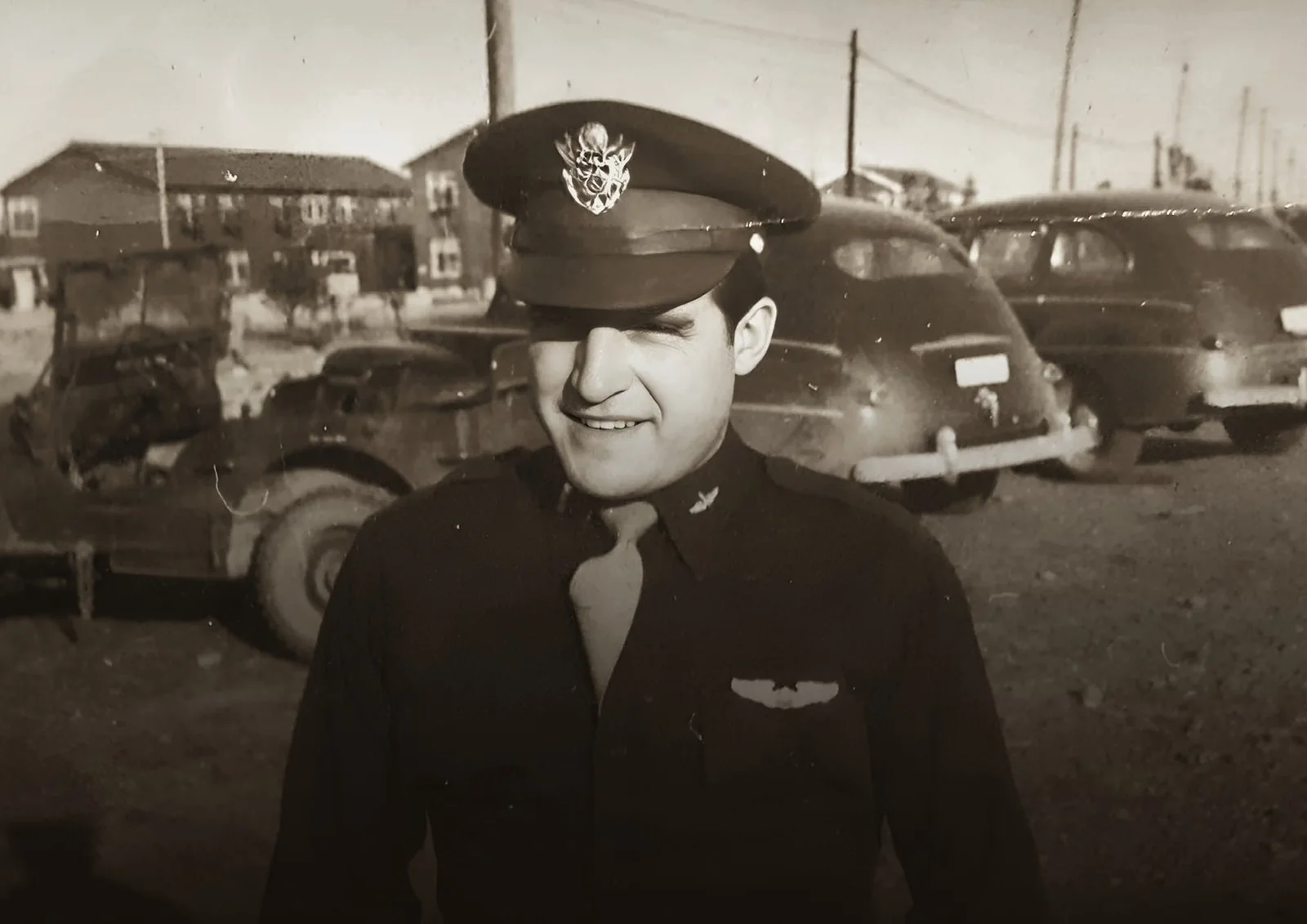
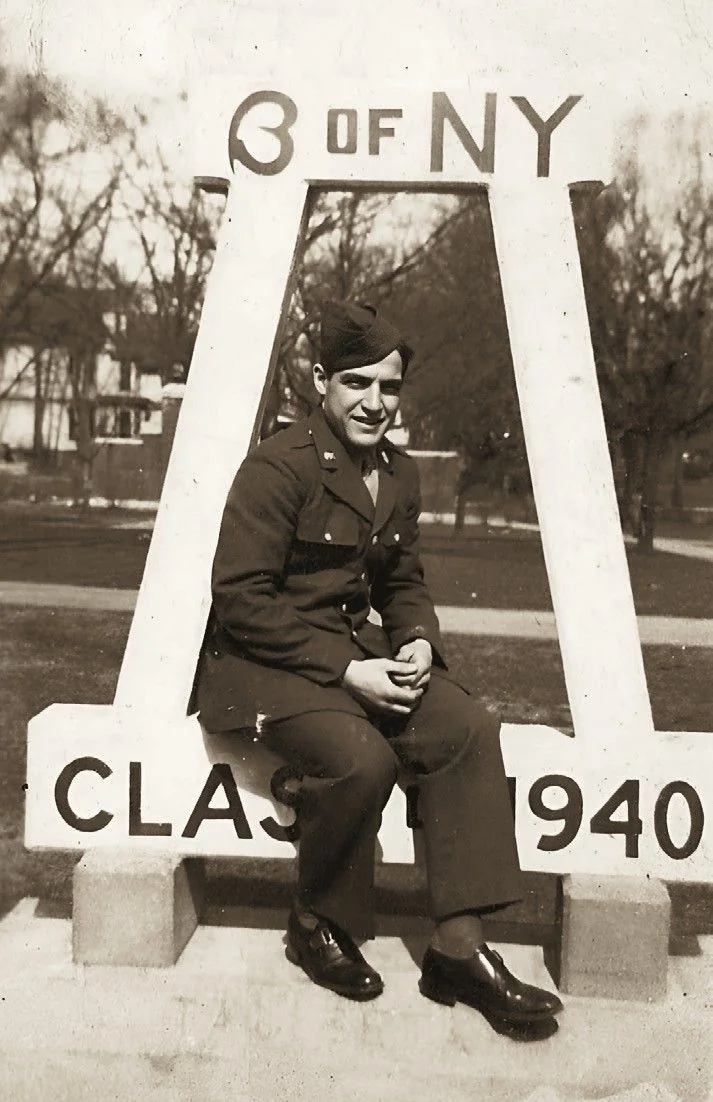
At Syracuse he was formally authorised for duties involving regular flying during July and early August 1943, though the order does not list individual flights. The next destination was Nashville Army Air Center, where the Army decided what place each student would occupy in the air. George’s transfer was scheduled for 7 August. There he signed his acceptance of pilot training on 23 August. This was the moment when the hope expressed in his application became a definite training assignment.¹¹,¹²,¹³,¹⁴
Even among the impersonal paperwork are glimpses of the son and brother at home. At Nashville, George, unmarried and without children, named Irene as his beneficiary and Mary as the alternate. He had put pilot training first on a preference form, followed by bombardier and navigator. The Army designated him an Aviation Cadet effective 1 October 1943 and sent him to Maxwell Field, Alabama, for pre-flight school. The machinery of wartime training had its own relentless rhythm: finish one course, pack a bag, report to the next.¹⁵,¹⁶
From cadet to pilotΑπό δόκιμος πιλότος
Wartime pilot training in the US Army Air Forces was a production line built to turn civilians into combat pilots in little more than a year. Each stage lasted about nine weeks, and a cadet who failed at any point could be “washed out” and sent to another aircrew trade.Η πολεμική εκπαίδευση πιλότων της USAAF ήταν μια γραμμή παραγωγής, φτιαγμένη για να κάνει πολίτες πιλότους μάχης σε λίγο περισσότερο από έναν χρόνο. Κάθε στάδιο κρατούσε περίπου εννέα εβδομάδες, και ένας δόκιμος που αποτύγχανε σε οποιοδήποτε σημείο μπορούσε να «κοπεί» και να σταλεί σε άλλη ειδικότητα ιπτάμενου προσωπικού.
- ClassificationΚατάταξηAt centres such as Nashville, aptitude, coordination and medical tests decided whether a cadet would train as pilot, navigator or bombardier.Σε κέντρα όπως το Nashville, τεστ κλίσεων, συντονισμού και ιατρικές εξετάσεις έκριναν αν ένας δόκιμος θα εκπαιδευόταν ως πιλότος, ναυτίλος ή βομβαρδιστής.George: Nashville, summer 1943Ο Γιώργος: Nashville, καλοκαίρι 1943
- Pre-FlightΠροπτητικήGround school without aircraft: mathematics, physics, aerodynamics, engines, navigation, Morse code and aircraft recognition, with drill and hard physical training.Θεωρητική σχολή χωρίς αεροσκάφη: μαθηματικά, φυσική, αεροδυναμική, κινητήρες, ναυτιλία, κώδικας Morse και αναγνώριση αεροσκαφών, με στρατιωτική εκπαίδευση και σκληρή σωματική άσκηση.George: Maxwell Field, AlabamaΟ Γιώργος: Maxwell Field, Αλαμπάμα
- PrimaryΑρχικήOften at civilian contract schools with Army supervision, on open-cockpit biplanes such as the PT-17 Stearman: take-offs, landings, stalls, spins and the first solo.Συχνά σε πολιτικές σχολές με σύμβαση και εποπτεία του Στρατού, σε διπλάνα ανοιχτού θαλάμου όπως το PT-17 Stearman: απογειώσεις, προσγειώσεις, απώλειες στήριξης, περιστροφές και η πρώτη μοναχική πτήση.George: Camden, South CarolinaΟ Γιώργος: Camden, Νότια Καρολίνα
- BasicΒασικήA heavier, faster aircraft, usually the BT-13 Valiant, with Army instructors: instrument and night flying, cross-country navigation and formation.Ένα βαρύτερο και ταχύτερο αεροσκάφος, συνήθως το BT-13 Valiant, με εκπαιδευτές του Στρατού: πτήση με όργανα και νυχτερινή πτήση, ναυτιλία σε μεγάλες αποστάσεις και σχηματισμοί.George: Bush Field, GeorgiaΟ Γιώργος: Bush Field, Γεωργία
- AdvancedΠροκεχωρημένηSingle-engine AT-6s for future fighter pilots, with aerobatics and gunnery; twin-engine AT-10s or AT-17s for bomber and transport crews. Graduates received their silver wings as second lieutenants or flight officers.Μονοκινητήρια AT-6 για τους μελλοντικούς πιλότους μαχητικών, με ακροβατικά και βολή· δικινητήρια AT-10 ή AT-17 για πληρώματα βομβαρδιστικών και μεταφορικών. Οι απόφοιτοι έπαιρναν τις ασημένιες πτέρυγες ως ανθυπολοχαγοί ή flight officers.George: Spence Field, Georgia; wings on 4 August 1944Ο Γιώργος: Spence Field, Γεωργία· πτέρυγες στις 4 Αυγούστου 1944
- TransitionΜετάβασηOnly then did a new pilot meet a combat type, for George the P-40. His path was unusual: from fighters to bomber crews, back to propeller fighters and finally to jets, on which he flew his first combat missions in Korea.Μόνο τότε ένας νέος πιλότος γνώριζε έναν τύπο μάχης, για τον Γιώργο το P-40. Η πορεία του ήταν ασυνήθιστη: από τα μαχητικά στα πληρώματα βομβαρδιστικών, πίσω στα μαχητικά με έλικα και τελικά στα αεριωθούμενα, με τα οποία πέταξε τις πρώτες πολεμικές του αποστολές στην Κορέα.
Maxwell was the threshold to the flying schools. George belonged to Class 44-F, Group III, Squadron K; his ground-school average was 79.4. In November he qualified as a sharpshooter with the .45-calibre pistol, one of the many parts of military instruction that had little to do with the sensations of flight. Early in December the cadets were directed to Camden, South Carolina. The movement orders refer to departure by train and the prescribed last breakfast at Maxwell, small bureaucratic details that evoke how an entire generation moved from post to post. The records distinguish the scheduled journey from the dates on which he was actually entered on the schools’ rolls.¹⁷,¹⁸,¹⁹,²⁰
At Camden, the flying began in earnest. George practised on the Link instrument trainer and learned to handle an aeroplane alone. He made his first solo after 11 hours and 52 minutes of dual instruction. By the end of Primary flying in March 1944, his record showed 224 landings and ninety hours in the air, including 54 hours and fifteen minutes flown solo. Those figures represent real repetition: approach after approach, circuits and landings until the movements became familiar. They also represent something less easily entered on a form—the distance a young apprentice from Chicopee had travelled from the workshop floor to the controls of an aircraft.²¹,²²
Flying training, 1943–44Πτητική εκπαίδευση, 1943–44
- Camden, SCPrimary · 90:00
54:15 solo · first solo after 11:52 dualΑρχική · 90:00
54:15 μόνος · πρώτη μοναχική μετά από 11:52 - Bush Field, GABasic · BT-13 · 86:50
solo after 6:52 dualΒασική · BT-13 · 86:50
μόνος μετά από 6:52 - Spence Field, GAAdvanced · 73:55Προκεχωρημένη · 73:55
- Total, 4.8.1944Σύνολο, 4.8.1944250:45
153:25 solo250:45
153:25 μόνος
March brought another transfer, this time to Bush Field at Augusta, Georgia, for Basic flying. His new aircraft included the BT-13 Valiant; he soloed it after six hours and 52 minutes of dual instruction. The school credited him with 86 hours and fifty minutes of flying and recorded that he had satisfactorily completed the course. An administrative redesignation of the training unit in May did not mean George had changed station. He was moving forward on the same path, with Spence Field in Moultrie, Georgia, waiting at the end of May. By then his Primary and Basic flying together amounted to 176 hours and fifty minutes.²³,²⁴,²⁵,²⁶
His progress was not uniformly smooth. One instrument check at Georgia Aero Tech graded him average overall but recorded weaker marks for particular manoeuvres. The later record must be allowed to show both the difficulties and the improvements: at Spence he would pass his instrument test on 27 July. The personal questionnaire that he completed there in May 1944 also gives a portrait from his own hand. He described his Greek as good in reading, speaking and understanding, but fair in writing; he noted some engineering study at Northeastern and spoke of his machine-tool work at Springfield Armory. The technical side of flying was already part of his character, not a specialty suddenly discovered years later.²⁷,²⁸,²⁹,³⁰
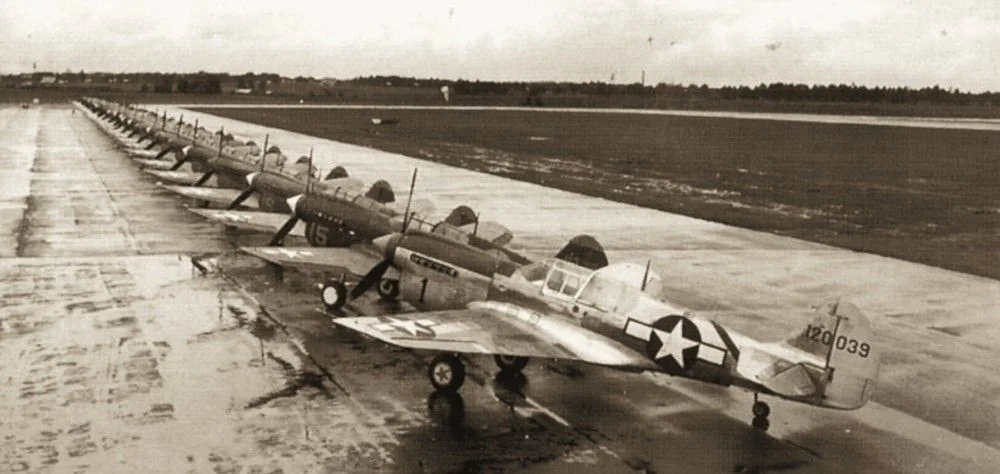
Spence Field brought Advanced Single-Engine training and, with it, new scrutiny. The faculty board recommended George for pilot rating and appointment as a Flight Officer upon graduation.
Other rating cards were less generous, especially in the category of judgment; the assessments differed from school to school and from instructor to instructor. A fitness card, by contrast, shows improvement across his three flying schools. The training records tell a recognisably human story: a capable young man learning a difficult craft, not a flawless hero moving untouched from one triumph to another. On 27 July he passed his instrument test.³¹,³²,³³,³⁴,³⁵
On 4 August 1944 George received his appointment as Flight Officer T-63921, rated as a pilot. His three schools had credited a total of 250 hours and 45 minutes of flying, with 153 hours and 25 minutes solo. Yet his next assignment, transition to the Curtiss P-40 Warhawk and advanced fighter-gunnery work, proved much harder. Landing technique and judgment became the central concerns. In one incident the aeroplane’s left wing was dragged after a bounced landing; later attempts continued to trouble his instructors. The final instructor’s assessment of 8 September 1944 was severe, and the document should not be softened into a success story:³⁶,³⁷,³⁸,³⁹,⁴⁰
“On AT-6 backseat transition ride student in first hour showed inconsistency in judgement and planning, being unable to land the airplane straight, due to a tendency to look out one side when close to the ground. Coordination was sloppy in the airwork called for. Student was given extra ride on which he showed enough improvement to be released for P-40 flying.
On student’s third mission in a P-40, he landed in a crab on wheels, bounced and hit in a crab again dragging left wing for minor damage. Student was given a check in an AT-6 and found to be proficient enough on this ride to continue training.
Student thereafter attempted a cross-tee landing, then tried to land with no flaps, and on his next landing, hit in a crab on wheels and went around, came around and did the same thing again, almost getting another wing-tip.
On the basis of the above, it is definitely felt that this student is not qualified to fly P-40 on basis of poor judgement, technique, and ability in spite of ability to pass AT-6 checks. Student’s appearance, attitude and actions are not good officer-material.”⁴¹
George was told to appear before a faculty board on 13 September and was given the opportunity to seek counsel and produce evidence. The board recommended that his P-40 fighter-gunnery training be discontinued for flying deficiency. When asked what type of flying he would prefer instead, he answered, “Single Engine Miscellaneous, sir.” The ruling was a painful setback, but it did not annul the pilot wings he had earned. On 14 September he was assigned as a utility pilot; at the end of the month he received orders for Amarillo, Texas. The Army had not finished with him, and he had not finished with aviation.⁴²,⁴³,⁴⁴
Single Engine Miscellaneous, sir.
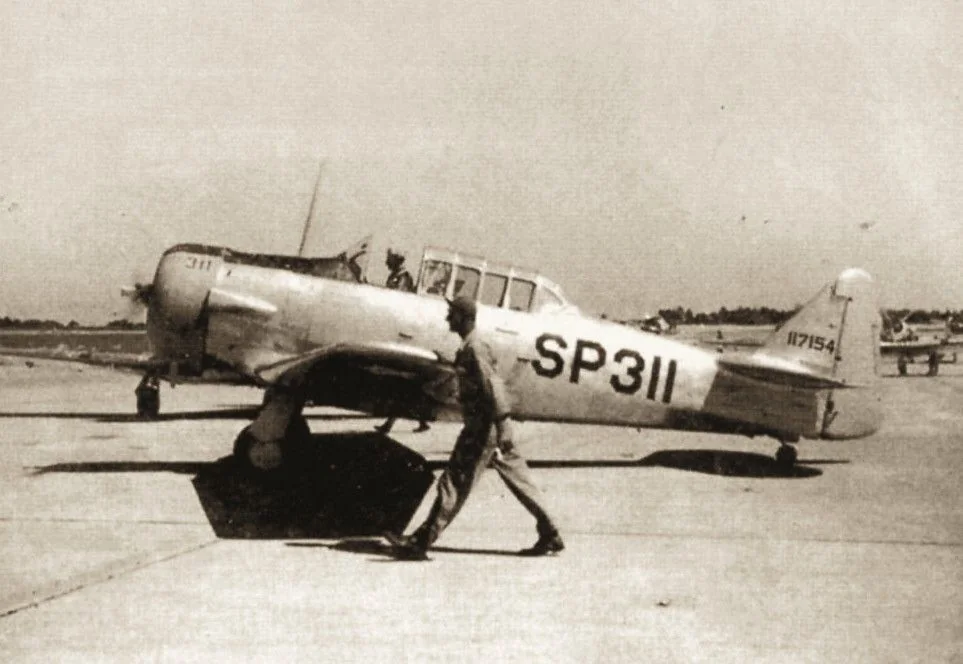
At Amarillo he entered a preliminary flight-engineer course and then went to Lowry Field, Colorado. The new training demanded the same mechanical understanding he had developed in Chicopee and Springfield. In February 1945 he successfully completed the prescribed flight-engineer course and received the rating of Aircraft Observer (Flight Engineer). He was still expected to take part in aerial flying, and in February an operations order sent him to Pueblo for a B-29 crew-training flight. The change of specialty was not a denial of his pilot rating; it was another way to serve in the air.⁴⁵,⁴⁶,⁴⁷
Next came the B-29 Superfortress, at Roswell Army Air Field in New Mexico. A contemporary school report records his transition course from 5 March through 29 April 1945, notes that he graduated, and rates his academic work “Excellent.” Later administrative summaries used slightly different end dates, but the school report is explicit about its own course period. At Gulfport, Mississippi, Major George L. Simmons gave him a Very Satisfactory evaluation on 1 July, writing: “This officer has a good attitude and is very cooperative.” There is a quiet symmetry here: the boy praised for his mechanical aptitude in 1942 had found a demanding technical role aboard one of the largest bombers of the war.⁴⁸,⁴⁹
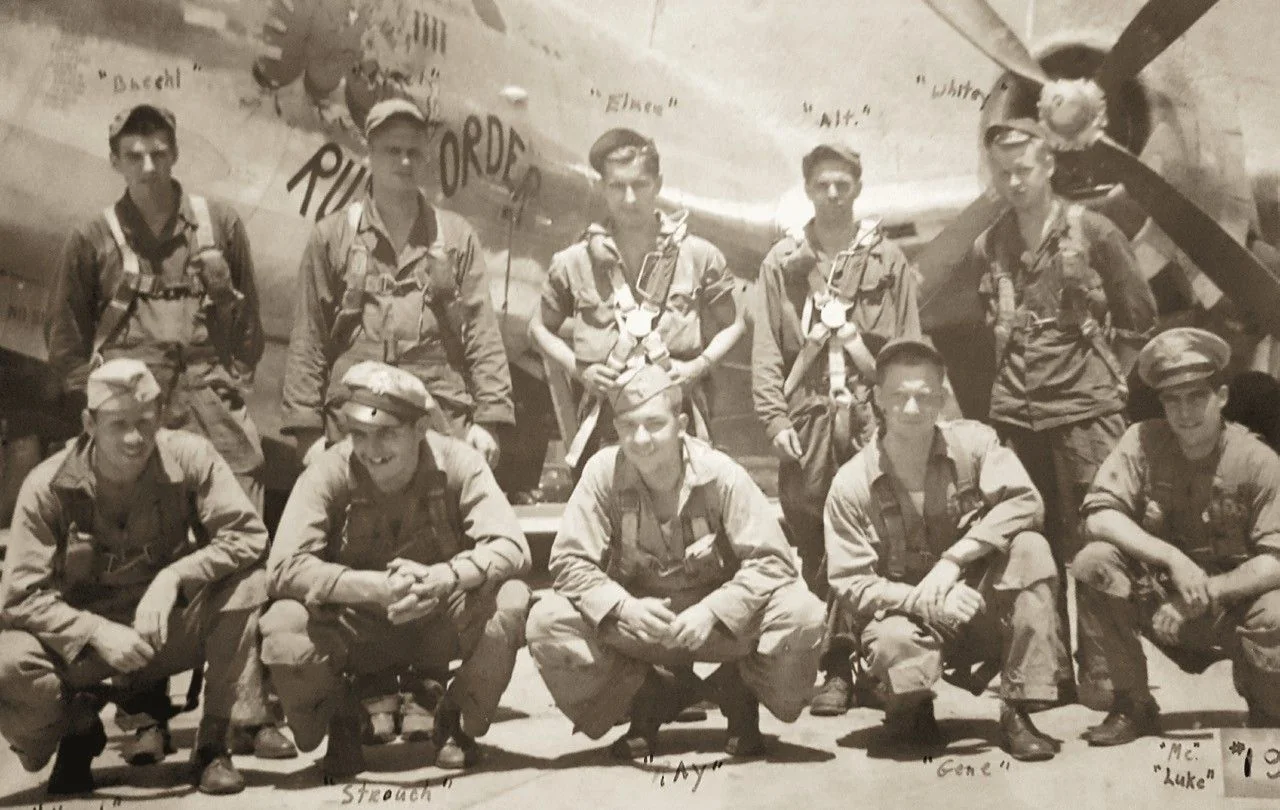
By the summer he was on a movement roster for Kearney Army Air Field with ten other men designated Crew No. 19. The roster establishes their transfer; it does not prove they flew combat missions together. Subsequent records place him at Kearney, Pratt and Westover before release from active service. At Fort Devens in February 1946, the Army arranged his terminal leave and final separation. The formal summary of his wartime service recognised both sides of his work: pilot and B-29 flight engineer. He had never followed quite the straight line suggested by a training-school poster, but he had stayed with flying and emerged with skills, experience and the determination to return.⁵⁰,⁵¹,⁵²,⁵³
Ο Γιώργος κατατάχθηκε στο Σώμα Εφέδρων του Στρατού (Enlisted Reserve Corps) στο Springfield στις 3 Δεκεμβρίου 1942, αρχικά ως στρατιώτης. Παρουσιάστηκε στην ενεργό υπηρεσία στις 28 Ιανουαρίου 1943. Οι πρώτες εβδομάδες της βασικής εκπαίδευσης έγιναν στο Atlantic City· το Goldsboro της Βόρειας Καρολίνας ήταν ένας σύντομος σταθμός, πριν ενταχθεί τον Μάρτιο σε κλιμάκιο πανεπιστημιακής εκπαίδευσης ιπτάμενου προσωπικού στο Πανεπιστήμιο των Syracuse. Οι Syracuse σήμαιναν αίθουσες διδασκαλίας αλλά και πτήσεις: μαθηματικά και φυσική, ιστορία, γεωγραφία, αγγλικά, στρατιωτική εκπαίδευση και αεροπορικούς κανονισμούς. Το τελικό φύλλο βαθμολογίας του, που σώζεται στον προσωπικό του φάκελο, καταγράφει ακόμη και δέκα ώρες πτητικής εκπαίδευσης. Όπως χιλιάδες σπουδαστές της αεροπορίας στον πόλεμο, δοκιμαζόταν για πολύ περισσότερα από τον ενθουσιασμό του για τα αεροπλάνα.⁹,¹⁰
Στις Syracuse εγκρίθηκε επίσημα για καθήκοντα με τακτικές πτήσεις τον Ιούλιο και στις αρχές Αυγούστου 1943, αν και η διαταγή δεν απαριθμεί μεμονωμένες πτήσεις. Επόμενος προορισμός ήταν το Nashville Army Air Center, όπου ο Στρατός αποφάσιζε ποια θέση θα έπαιρνε στον αέρα ο κάθε σπουδαστής. Η μετάθεση του Γιώργου είχε προγραμματιστεί για τις 7 Αυγούστου. Εκεί, στις 23 Αυγούστου, υπέγραψε την αποδοχή της εκπαίδευσης πιλότου. Ήταν η στιγμή που η ελπίδα της αίτησής του έγινε συγκεκριμένη εκπαιδευτική τοποθέτηση.¹¹,¹²,¹³,¹⁴
Ακόμη και ανάμεσα στα απρόσωπα χαρτιά διακρίνονται ο γιος και ο αδελφός. Στο Nashville ο Γιώργος, άγαμος και χωρίς παιδιά, όρισε δικαιούχο την Ειρήνη και αναπληρωματική τη Μαρία. Σε ένα έντυπο προτιμήσεων είχε βάλει πρώτη την εκπαίδευση πιλότου, μετά του βομβαρδιστή και του ναυτίλου. Ο Στρατός τον όρισε Αεροπορικό Δόκιμο από την 1η Οκτωβρίου 1943 και τον έστειλε στο Maxwell Field της Αλαμπάμα για την προπτητική σχολή. Η μηχανή της πολεμικής εκπαίδευσης είχε τον δικό της αδυσώπητο ρυθμό: τελειώνεις ένα σχολείο, φτιάχνεις τον σάκο σου, παρουσιάζεσαι στο επόμενο.¹⁵,¹⁶
From cadet to pilotΑπό δόκιμος πιλότος
Wartime pilot training in the US Army Air Forces was a production line built to turn civilians into combat pilots in little more than a year. Each stage lasted about nine weeks, and a cadet who failed at any point could be “washed out” and sent to another aircrew trade.Η πολεμική εκπαίδευση πιλότων της USAAF ήταν μια γραμμή παραγωγής, φτιαγμένη για να κάνει πολίτες πιλότους μάχης σε λίγο περισσότερο από έναν χρόνο. Κάθε στάδιο κρατούσε περίπου εννέα εβδομάδες, και ένας δόκιμος που αποτύγχανε σε οποιοδήποτε σημείο μπορούσε να «κοπεί» και να σταλεί σε άλλη ειδικότητα ιπτάμενου προσωπικού.
- ClassificationΚατάταξηAt centres such as Nashville, aptitude, coordination and medical tests decided whether a cadet would train as pilot, navigator or bombardier.Σε κέντρα όπως το Nashville, τεστ κλίσεων, συντονισμού και ιατρικές εξετάσεις έκριναν αν ένας δόκιμος θα εκπαιδευόταν ως πιλότος, ναυτίλος ή βομβαρδιστής.George: Nashville, summer 1943Ο Γιώργος: Nashville, καλοκαίρι 1943
- Pre-FlightΠροπτητικήGround school without aircraft: mathematics, physics, aerodynamics, engines, navigation, Morse code and aircraft recognition, with drill and hard physical training.Θεωρητική σχολή χωρίς αεροσκάφη: μαθηματικά, φυσική, αεροδυναμική, κινητήρες, ναυτιλία, κώδικας Morse και αναγνώριση αεροσκαφών, με στρατιωτική εκπαίδευση και σκληρή σωματική άσκηση.George: Maxwell Field, AlabamaΟ Γιώργος: Maxwell Field, Αλαμπάμα
- PrimaryΑρχικήOften at civilian contract schools with Army supervision, on open-cockpit biplanes such as the PT-17 Stearman: take-offs, landings, stalls, spins and the first solo.Συχνά σε πολιτικές σχολές με σύμβαση και εποπτεία του Στρατού, σε διπλάνα ανοιχτού θαλάμου όπως το PT-17 Stearman: απογειώσεις, προσγειώσεις, απώλειες στήριξης, περιστροφές και η πρώτη μοναχική πτήση.George: Camden, South CarolinaΟ Γιώργος: Camden, Νότια Καρολίνα
- BasicΒασικήA heavier, faster aircraft, usually the BT-13 Valiant, with Army instructors: instrument and night flying, cross-country navigation and formation.Ένα βαρύτερο και ταχύτερο αεροσκάφος, συνήθως το BT-13 Valiant, με εκπαιδευτές του Στρατού: πτήση με όργανα και νυχτερινή πτήση, ναυτιλία σε μεγάλες αποστάσεις και σχηματισμοί.George: Bush Field, GeorgiaΟ Γιώργος: Bush Field, Γεωργία
- AdvancedΠροκεχωρημένηSingle-engine AT-6s for future fighter pilots, with aerobatics and gunnery; twin-engine AT-10s or AT-17s for bomber and transport crews. Graduates received their silver wings as second lieutenants or flight officers.Μονοκινητήρια AT-6 για τους μελλοντικούς πιλότους μαχητικών, με ακροβατικά και βολή· δικινητήρια AT-10 ή AT-17 για πληρώματα βομβαρδιστικών και μεταφορικών. Οι απόφοιτοι έπαιρναν τις ασημένιες πτέρυγες ως ανθυπολοχαγοί ή flight officers.George: Spence Field, Georgia; wings on 4 August 1944Ο Γιώργος: Spence Field, Γεωργία· πτέρυγες στις 4 Αυγούστου 1944
- TransitionΜετάβασηOnly then did a new pilot meet a combat type, for George the P-40. His path was unusual: from fighters to bomber crews, back to propeller fighters and finally to jets, on which he flew his first combat missions in Korea.Μόνο τότε ένας νέος πιλότος γνώριζε έναν τύπο μάχης, για τον Γιώργο το P-40. Η πορεία του ήταν ασυνήθιστη: από τα μαχητικά στα πληρώματα βομβαρδιστικών, πίσω στα μαχητικά με έλικα και τελικά στα αεριωθούμενα, με τα οποία πέταξε τις πρώτες πολεμικές του αποστολές στην Κορέα.
Το Maxwell ήταν το κατώφλι των σχολών πτήσης. Ο Γιώργος ανήκε στη Σειρά 44-F, Ομάδα III, Ουλαμός K· ο μέσος όρος του στη θεωρητική εκπαίδευση ήταν 79,4. Τον Νοέμβριο πιστοποιήθηκε ως εύστοχος σκοπευτής με το πιστόλι διαμετρήματος .45, ένα από τα πολλά κομμάτια της στρατιωτικής εκπαίδευσης που λίγη σχέση είχαν με τη συγκίνηση της πτήσης. Στις αρχές Δεκεμβρίου οι δόκιμοι στάλθηκαν στο Camden της Νότιας Καρολίνας. Οι διαταγές μετακίνησης αναφέρουν αναχώρηση με τρένο και το προβλεπόμενο τελευταίο πρωινό στο Maxwell, μικρές γραφειοκρατικές λεπτομέρειες που δείχνουν πώς μια ολόκληρη γενιά μετακινούνταν από στρατόπεδο σε στρατόπεδο. Τα αρχεία ξεχωρίζουν το προγραμματισμένο ταξίδι από τις ημερομηνίες που ενεγράφη πράγματι στις σχολές.¹⁷,¹⁸,¹⁹,²⁰
Στο Camden η πτήση άρχισε για τα καλά. Ο Γιώργος εξασκήθηκε στον εξομοιωτή οργάνων Link και έμαθε να χειρίζεται μόνος ένα αεροπλάνο. Έκανε την πρώτη του μοναχική πτήση ύστερα από 11 ώρες και 52 λεπτά διπλής εκπαίδευσης. Ως το τέλος της Αρχικής εκπαίδευσης, τον Μάρτιο του 1944, το αρχείο του έδειχνε 224 προσγειώσεις και ενενήντα ώρες στον αέρα, από τις οποίες 54 ώρες και δεκαπέντε λεπτά μόνος. Οι αριθμοί αυτοί σημαίνουν πραγματική επανάληψη: προσέγγιση μετά από προσέγγιση, κυκλώματα και προσγειώσεις ώσπου οι κινήσεις να γίνουν οικείες. Σημαίνουν όμως και κάτι που δεν γράφεται εύκολα σε ένα έντυπο: την απόσταση που είχε διανύσει ένας νεαρός μαθητευόμενος από το Chicopee, από το δάπεδο του εργαστηρίου ως τα χειριστήρια ενός αεροσκάφους.²¹,²²
Flying training, 1943–44Πτητική εκπαίδευση, 1943–44
- Camden, SCPrimary · 90:00
54:15 solo · first solo after 11:52 dualΑρχική · 90:00
54:15 μόνος · πρώτη μοναχική μετά από 11:52 - Bush Field, GABasic · BT-13 · 86:50
solo after 6:52 dualΒασική · BT-13 · 86:50
μόνος μετά από 6:52 - Spence Field, GAAdvanced · 73:55Προκεχωρημένη · 73:55
- Total, 4.8.1944Σύνολο, 4.8.1944250:45
153:25 solo250:45
153:25 μόνος
Ο Μάρτιος έφερε νέα μετάθεση, αυτή τη φορά στο Bush Field της Augusta, στη Γεωργία, για τη Βασική εκπαίδευση. Ανάμεσα στα νέα του αεροσκάφη ήταν το BT-13 Valiant· πέταξε μόνος του με αυτό ύστερα από έξι ώρες και 52 λεπτά διπλής εκπαίδευσης. Η σχολή του πίστωσε 86 ώρες και πενήντα λεπτά πτήσης και κατέγραψε ότι ολοκλήρωσε ικανοποιητικά το πρόγραμμα. Μια διοικητική μετονομασία της εκπαιδευτικής μονάδας τον Μάιο δεν σήμαινε ότι ο Γιώργος άλλαξε σταθμό. Προχωρούσε στον ίδιο δρόμο, και στο τέλος του Μαΐου τον περίμενε το Spence Field στο Moultrie της Γεωργίας. Ως τότε η Αρχική και η Βασική εκπαίδευσή του έφταναν μαζί τις 176 ώρες και πενήντα λεπτά.²³,²⁴,²⁵,²⁶
Η πρόοδός του δεν ήταν παντού ομαλή. Ένας έλεγχος πτήσης με όργανα στη Georgia Aero Tech τον βαθμολόγησε συνολικά «μέτριο», σημείωσε όμως χαμηλότερους βαθμούς σε ορισμένους ελιγμούς. Το αρχείο πρέπει να αφεθεί να δείξει και τις δυσκολίες και τη βελτίωση: στο Spence θα περνούσε το τεστ πτήσης με όργανα στις 27 Ιουλίου. Το προσωπικό ερωτηματολόγιο που συμπλήρωσε εκεί τον Μάιο του 1944 δίνει και ένα πορτρέτο γραμμένο από το δικό του χέρι. Χαρακτήρισε τα ελληνικά του καλά στην ανάγνωση, την ομιλία και την κατανόηση, αλλά μέτρια στη γραφή· ανέφερε κάποιες σπουδές μηχανικού στο Northeastern και μίλησε για τη δουλειά του στις εργαλειομηχανές του Springfield Armory. Η τεχνική πλευρά της πτήσης ήταν ήδη κομμάτι του χαρακτήρα του, όχι μια ειδικότητα που ανακάλυψε ξαφνικά χρόνια αργότερα.²⁷,²⁸,²⁹,³⁰
Το Spence Field έφερε την Προκεχωρημένη εκπαίδευση σε μονοκινητήρια αεροσκάφη και, μαζί της, νέο έλεγχο. Το εκπαιδευτικό συμβούλιο πρότεινε τον Γιώργο για πτυχίο πιλότου και διορισμό ως Flight Officer με την αποφοίτησή του.
Άλλες κάρτες αξιολόγησης ήταν λιγότερο γενναιόδωρες, ιδιαίτερα στην κατηγορία της κρίσης· οι εκτιμήσεις διέφεραν από σχολή σε σχολή και από εκπαιδευτή σε εκπαιδευτή. Μια κάρτα φυσικής κατάστασης, αντίθετα, δείχνει βελτίωση σε όλες τις τρεις σχολές πτήσης του. Τα εκπαιδευτικά αρχεία λένε μια ιστορία βαθιά ανθρώπινη: έναν ικανό νέο που μαθαίνει μια δύσκολη τέχνη, όχι έναν άψογο ήρωα που περνά αλώβητος από θρίαμβο σε θρίαμβο. Στις 27 Ιουλίου πέρασε το τεστ πτήσης με όργανα.³¹,³²,³³,³⁴,³⁵
Στις 4 Αυγούστου 1944 ο Γιώργος διορίστηκε Flight Officer με αριθμό T-63921 και πτυχίο πιλότου. Οι τρεις σχολές του τού είχαν πιστώσει συνολικά 250 ώρες και 45 λεπτά πτήσης, από τις οποίες 153 ώρες και 25 λεπτά μόνος. Η επόμενη τοποθέτησή του όμως, η μετάβαση στο Curtiss P-40 Warhawk και η προκεχωρημένη εκπαίδευση βολής μαχητικών, αποδείχθηκε πολύ δυσκολότερη. Η τεχνική της προσγείωσης και η κρίση έγιναν τα κεντρικά προβλήματα. Σε ένα περιστατικό, ύστερα από μια αναπηδητική προσγείωση, η αριστερή πτέρυγα του αεροπλάνου σύρθηκε στο έδαφος· και οι επόμενες προσπάθειες συνέχισαν να προβληματίζουν τους εκπαιδευτές του. Η τελική αξιολόγηση του εκπαιδευτή, στις 8 Σεπτεμβρίου 1944, ήταν αυστηρή, και το έγγραφο δεν πρέπει να εξωραϊστεί σε ιστορία επιτυχίας:³⁶,³⁷,³⁸,³⁹,⁴⁰
«Στην πτήση μετάβασης με AT-6 από το πίσω κάθισμα, ο σπουδαστής έδειξε στην πρώτη ώρα ασυνέπεια στην κρίση και στον σχεδιασμό, χωρίς να μπορεί να προσγειώσει ίσια το αεροπλάνο, λόγω της τάσης του να κοιτάζει προς τη μία πλευρά κοντά στο έδαφος. Ο συντονισμός στους ζητούμενους ελιγμούς ήταν πρόχειρος. Του δόθηκε επιπλέον πτήση, στην οποία έδειξε αρκετή βελτίωση ώστε να αποδεσμευτεί για πτήσεις με P-40.
Στην τρίτη αποστολή του με P-40, ο σπουδαστής προσγειώθηκε με πλάγια ολίσθηση πάνω στους τροχούς, αναπήδησε και ακούμπησε ξανά λοξά, σέρνοντας την αριστερή πτέρυγα με μικρή ζημιά. Ελέγχθηκε σε AT-6 και κρίθηκε αρκετά ικανός σε αυτή την πτήση ώστε να συνεχίσει την εκπαίδευση.
Στη συνέχεια ο σπουδαστής επιχείρησε προσγείωση πάνω στο σήμα του διαδρόμου, έπειτα προσπάθησε να προσγειωθεί χωρίς πτερύγια, και στην επόμενη προσγείωσή του ακούμπησε λοξά πάνω στους τροχούς, ανέβηκε ξανά, έκανε κύκλο και επανέλαβε το ίδιο, σχεδόν χτυπώντας και πάλι το άκρο της πτέρυγας.
Με βάση τα παραπάνω, κρίνεται οριστικά ότι ο σπουδαστής δεν είναι κατάλληλος να πετά P-40, λόγω κακής κρίσης, τεχνικής και ικανότητας, παρά την ικανότητά του να περνά τους ελέγχους με AT-6. Η εμφάνιση, η στάση και η συμπεριφορά του σπουδαστή δεν είναι καλό υλικό αξιωματικού.»⁴¹
Ο Γιώργος κλήθηκε να παρουσιαστεί ενώπιον εκπαιδευτικού συμβουλίου στις 13 Σεπτεμβρίου και του δόθηκε η δυνατότητα να ζητήσει συνήγορο και να προσκομίσει στοιχεία. Το συμβούλιο πρότεινε να διακοπεί η εκπαίδευσή του στη βολή με P-40 λόγω ανεπαρκούς πτητικής απόδοσης. Όταν ρωτήθηκε τι είδους πτήσεις θα προτιμούσε, απάντησε: «Μονοκινητήρια διάφορα, κύριε». Η απόφαση ήταν οδυνηρό πισωγύρισμα, δεν ακύρωνε όμως τις πτέρυγες πιλότου που είχε κερδίσει. Στις 14 Σεπτεμβρίου τοποθετήθηκε ως πιλότος γενικών καθηκόντων· στο τέλος του μήνα πήρε διαταγή για το Amarillo του Τέξας. Ο Στρατός δεν είχε τελειώσει μαζί του, και εκείνος δεν είχε τελειώσει με την αεροπορία.⁴²,⁴³,⁴⁴
Μονοκινητήρια διάφορα, κύριε.
Στο Amarillo παρακολούθησε προκαταρκτικό πρόγραμμα μηχανικού πτήσης και έπειτα πήγε στο Lowry Field του Κολοράντο. Η νέα εκπαίδευση απαιτούσε την ίδια μηχανική αντίληψη που είχε αναπτύξει στο Chicopee και στο Springfield. Τον Φεβρουάριο του 1945 ολοκλήρωσε με επιτυχία το προβλεπόμενο πρόγραμμα μηχανικού πτήσης και πήρε τον τίτλο Aircraft Observer (Flight Engineer). Εξακολουθούσε να συμμετέχει σε πτήσεις, και τον Φεβρουάριο μια επιχειρησιακή διαταγή τον έστειλε στο Pueblo για εκπαιδευτική πτήση πληρώματος B-29. Η αλλαγή ειδικότητας δεν ήταν άρνηση του πτυχίου πιλότου· ήταν ένας άλλος τρόπος να υπηρετήσει στον αέρα.⁴⁵,⁴⁶,⁴⁷
Ακολούθησε το B-29 Superfortress, στο Roswell Army Air Field του Νέου Μεξικού. Μια έκθεση της σχολής εκείνης της εποχής καταγράφει το πρόγραμμα μετάβασής του από τις 5 Μαρτίου ως τις 29 Απριλίου 1945, σημειώνει ότι αποφοίτησε και βαθμολογεί τη θεωρητική του επίδοση «Άριστη». Μεταγενέστερες διοικητικές περιλήψεις έδωσαν ελαφρώς διαφορετικές ημερομηνίες λήξης, η έκθεση της σχολής όμως είναι σαφής για τη δική της περίοδο. Στο Gulfport του Μισισιπή, ο Ταγματάρχης George L. Simmons τον αξιολόγησε «Πολύ Ικανοποιητικό» την 1η Ιουλίου, γράφοντας: «Ο αξιωματικός αυτός έχει καλή στάση και είναι πολύ συνεργάσιμος». Υπάρχει εδώ μια σιωπηλή συμμετρία: το αγόρι που επαινέθηκε το 1942 για τη μηχανική του κλίση είχε βρει έναν απαιτητικό τεχνικό ρόλο σε ένα από τα μεγαλύτερα βομβαρδιστικά του πολέμου.⁴⁸,⁴⁹
Ως το καλοκαίρι βρισκόταν σε κατάσταση μετακίνησης για το Kearney Army Air Field μαζί με δέκα ακόμη άνδρες, με την ονομασία Πλήρωμα Αρ. 19. Η κατάσταση τεκμηριώνει τη μετάθεσή τους· δεν αποδεικνύει ότι πέταξαν μαζί πολεμικές αποστολές. Μεταγενέστερα αρχεία τον τοποθετούν στο Kearney, στο Pratt και στο Westover πριν από την αποδέσμευσή του από την ενεργό υπηρεσία. Στο Fort Devens, τον Φεβρουάριο του 1946, ο Στρατός κανόνισε την τελική του άδεια και την αποστράτευσή του. Η επίσημη περίληψη της πολεμικής του υπηρεσίας αναγνώριζε και τις δύο όψεις της δουλειάς του: πιλότος και μηχανικός πτήσης B-29. Δεν είχε ακολουθήσει ποτέ την ευθεία γραμμή που υπόσχονταν οι αφίσες των σχολών, είχε όμως μείνει κοντά στην πτήση και έβγαινε με δεξιότητες, εμπειρία και την αποφασιστικότητα να επιστρέψει.⁵⁰,⁵¹,⁵²,⁵³
A Second Chance in the AirΜια δεύτερη ευκαιρία στον αέρα
Service recordΥπηρεσιακή πορεία
- 3.12.1942Enlisted Reserve,
SpringfieldΕφεδρεία Στρατού,
Springfield - 4.8.1944Wings, Spence Field
Flight Officer T-63921Πτέρυγες, Spence Field
Flight Officer T-63921 - 1945B-29 flight engineer,
RoswellΜηχανικός πτήσης B-29,
Roswell - 18.4.1947Second Lieutenant,
Reserve, O-944241Ανθυπολοχαγός,
Εφεδρεία, O-944241 - 30.9.1948Recalled, USAF;
39th FS, JapanΑνάκληση, USAF·
39η Μοίρα, Ιαπωνία - 16.5.1950First Lieutenant;
“Pilot Jet”Υπολοχαγός·
«Pilot Jet»
When he returned to civilian life in Massachusetts, George worked again for a living rather than retiring into a wartime story. A signed qualification form records employment with Sewak Company of America and Savage Arms Corporation; the recorded periods partly overlap, so the exact transition cannot be reconstructed with certainty. He continued to belong to the Air Reserve. In April 1947 he accepted an appointment as Second Lieutenant, and before that month was over he was asking for copies of his qualification records. By October the Westover Field reserve detachment was arranging the documentation needed for him to return to flying status. The desire to sit in a cockpit had outlasted the discouragement of the P-40.⁵⁴,⁵⁵,⁵⁶,⁵⁷
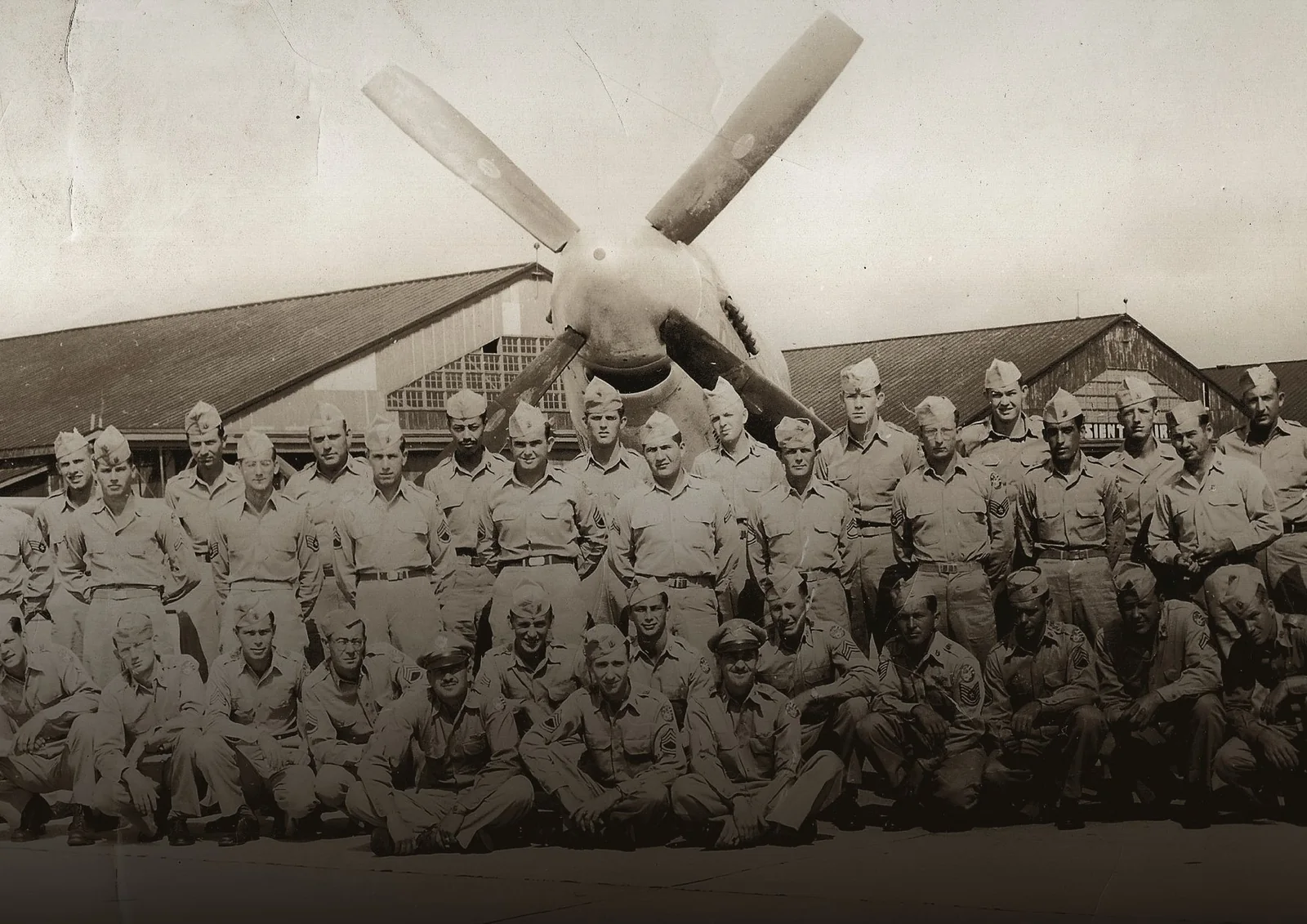
On 19 May 1948 George volunteered for extended active duty with the new United States Air Force, including service overseas. He was called back effective 30 September. At Hamilton Air Force Base he filed a new life-insurance application naming his mother as principal beneficiary. His name appeared on the overseas passenger roster of 21 October; the surviving roster documents his selection for movement, not the precise day the ship or aircraft departed. By the end of November he had been reassigned within the 35th Fighter Group in Japan, and from December he was serving with the 39th Fighter Squadron. His commanders gave him additional work as historical officer, decorations officer, recruiter and assistant maintenance officer—duties that made use of his organisational and mechanical experience without replacing his primary role as a fighter pilot.⁵⁸,⁵⁹,⁶⁰,⁶¹,⁶²
An Air Force order in January 1949 confirmed his status as a pilot authorised to fly regularly. He completed phases of the Officers’ Interim Training Program in Japan, and by June his effectiveness report placed him at Johnson Air Force Base, both flying fighters and helping oversee aircraft maintenance. Captain Ervin C. Ethell looked beyond the tidy rank and assignment columns. He saw a warm personality, strength, alertness and a man willing to take responsibility. His signed assessment said:⁶³,⁶⁴,⁶⁵
“This Officer has a warm personality and his devotion to duty is above average.
Lt. Lukakis is mentally alert and physically strong. He is capable and willing to accept additional responsibility. He is interested in technical subjects and makes every effort to improve himself.
Retention on active duty is recommended.”⁶⁶
Those lines mattered because they were written by men who worked beside George. Lieutenant Colonel Archie M. Burke reviewed the report. The interest in technical subjects was not a decorative observation: it connected the young machinist, the B-29 flight engineer and the fighter pilot now maintaining his place in a jet-age air force.⁶⁷
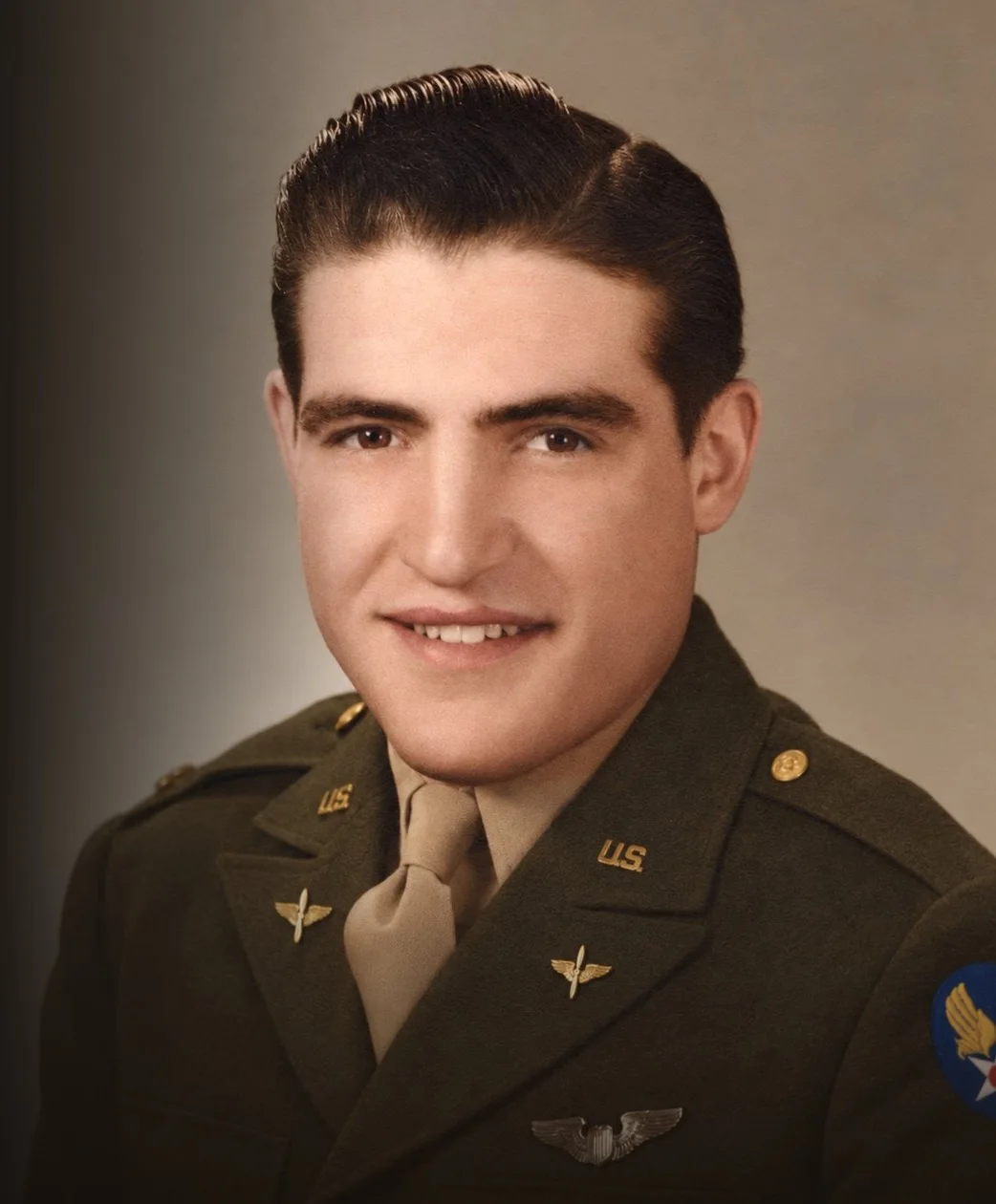
The most immediate glimpse of George in Japan, however, comes not from a superior’s report but from a letter home. On 22 July 1949 he wrote to Mary about the oppressive summer heat, a day at the beach, a car that was suffering on Japanese roads, and a pearl ring he had bought for her birthday. Between the jokes and apologies for not writing sooner, he inserted the simple assurance that his flying was going well. The surviving family text reads:
“Dear Mary, how are you? Sorry I haven’t had time to answer all your letters. I’m always really glad to hear from you. As you probably already know, I’m not much good at writing letters, especially in this heat we have here. You can’t sleep at night, it’s unbearably hot. The temperature today is about 102°F in the shade. My flying is going fine. Last night I went down to the club and had a good meal; it was the first meal I’d had all day. Mary, I bought you a pearl ring for your birthday, but I won’t send it yet because I’d have to pay customs duty. The law that will let us send duty-free goods to the States hasn’t passed Congress yet. As soon as the restriction is lifted I’ll send it to you. I didn’t get the chance to wish you a happy birthday. I’m very sorry I didn’t write sooner. Last Sunday I went to the beach and got burned like the devil. The sun was incredibly strong. The funny thing is I didn’t realise I was burning until I’d left. I drove about 70 miles along the coast, to the other side of Yokohama. We went with a crowd of friends and girls (of course) (not Japanese). We had a wonderful time. My car really suffers on these roads. I’m thinking about whether to sell it and get a new one. I don’t know yet, I haven’t decided. By the way, how is Johnny doing at school? I hope he’s learning something. I’m trying to put a little money aside.”
The service records continue beside that cheerful letter. A temporary medical restriction kept George from flying for part of August 1949; it was revoked on the 22nd. His second evaluation by Ethell, in November, called him industrious, aggressive and highly cooperative, while noting that he needed more seasoning in military matters. It was a measured judgment rather than a ceremonial tribute. Major Gerald Brown, later commanding the 39th Fighter-Interceptor Squadron, would see enough in George to recommend promotion the following spring.⁶⁸,⁶⁹
“I highly recommend Lieutenant Lukakis for promotion to the grade of First Lieutenant in the Air Force Reserve. This officer applies himself in a highly efficient manner and is capable of any and all assignments given him. He has the necessary character, experience, and initiative to perform his duties in an excellent manner. In view of his high qualifications, I am strongly desirous of retaining Lieutenant Lukakis in my command if promoted. He has no disciplinary action pending against him. This officer has been on extended active duty for one year and four months.”⁷⁰
In a separate memorandum Brown described George’s actual place within the squadron. The wording is direct and unusually strong:
“Lt Lukakis, while assigned to this organization, has performed primary duty as Fighter Pilot in an excellent manner. He is performing additional duty as Group Mess Officer. His manner of performance of duty has been far above average. Lt Lukakis has clearly shown that he is deserving of promotion to the grade of 1st Lt, USAFR.”⁷¹
The recommendation moved through the command, and George’s promotion to First Lieutenant took effect on 16 May 1950. A personnel action dated later that month changed his formal flying specialty from single-engine fighter pilot to “Pilot Jet.” Those designations do not furnish a flight log, but they make one fact unmistakable: by the spring of 1950 George had reclaimed a fighter-pilot career on active service. He was also performing additional squadron duties, including those of Group Mess Officer, while preparing with his unit for whatever might come.⁷²,⁷³,⁷⁴,⁷⁵
Another short medical restriction in late May and early June concerned lumbar muscle inflammation; the records do not connect it to an aircraft crash, to combat or to his eventual death. On 3 June George was among the pilots named for an F-51 aerial-gunnery target-towing exercise. The war was not yet in the skies around him. On 25 June 1950 North Korea crossed into the South, and ordinary station life in Japan gave way to a conflict for which the 39th had little time to prepare.⁷⁶
His eagerness to do a job and his flying ability marked him as one who would go a long way in his chosen field.
Service recordΥπηρεσιακή πορεία
- 3.12.1942Enlisted Reserve,
SpringfieldΕφεδρεία Στρατού,
Springfield - 4.8.1944Wings, Spence Field
Flight Officer T-63921Πτέρυγες, Spence Field
Flight Officer T-63921 - 1945B-29 flight engineer,
RoswellΜηχανικός πτήσης B-29,
Roswell - 18.4.1947Second Lieutenant,
Reserve, O-944241Ανθυπολοχαγός,
Εφεδρεία, O-944241 - 30.9.1948Recalled, USAF;
39th FS, JapanΑνάκληση, USAF·
39η Μοίρα, Ιαπωνία - 16.5.1950First Lieutenant;
“Pilot Jet”Υπολοχαγός·
«Pilot Jet»
Όταν επέστρεψε στην πολιτική ζωή στη Μασαχουσέτη, ο Γιώργος ξαναδούλεψε για να ζήσει αντί να αποσυρθεί σε μια πολεμική ιστορία. Ένα υπογεγραμμένο έντυπο προσόντων καταγράφει απασχόληση στη Sewak Company of America και στη Savage Arms Corporation· οι περίοδοι που δηλώνονται επικαλύπτονται εν μέρει, έτσι η ακριβής μετάβαση δεν μπορεί να ανασυντεθεί με βεβαιότητα. Παρέμεινε μέλος της Αεροπορικής Εφεδρείας. Τον Απρίλιο του 1947 αποδέχθηκε διορισμό ως Ανθυπολοχαγός, και πριν τελειώσει ο μήνας ζητούσε αντίγραφα των αρχείων προσόντων του. Ως τον Οκτώβριο το εφεδρικό κλιμάκιο του Westover Field ετοίμαζε τα έγγραφα που χρειαζόταν για να επανέλθει σε ιπτάμενη κατάσταση. Η επιθυμία να καθίσει σε ένα πιλοτήριο είχε αντέξει την απογοήτευση του P-40.⁵⁴,⁵⁵,⁵⁶,⁵⁷
Στις 19 Μαΐου 1948 ο Γιώργος δήλωσε εθελοντής για παρατεταμένη ενεργό υπηρεσία στη νέα Πολεμική Αεροπορία των Ηνωμένων Πολιτειών, συμπεριλαμβανομένης υπηρεσίας στο εξωτερικό. Ανακλήθηκε από τις 30 Σεπτεμβρίου. Στη βάση Hamilton υπέβαλε νέα αίτηση ασφάλειας ζωής με κύρια δικαιούχο τη μητέρα του. Το όνομά του εμφανίστηκε στην κατάσταση επιβατών για το εξωτερικό της 21ης Οκτωβρίου· η σωζόμενη κατάσταση τεκμηριώνει την επιλογή του για μετακίνηση, όχι την ακριβή ημέρα που αναχώρησε το πλοίο ή το αεροσκάφος. Ως το τέλος Νοεμβρίου είχε μετατεθεί μέσα στην 35η Σμηναρχία Μαχητικών στην Ιαπωνία, και από τον Δεκέμβριο υπηρετούσε στην 39η Μοίρα Μαχητικών. Οι διοικητές του του ανέθεσαν πρόσθετα καθήκοντα ως αξιωματικού ιστορικού, αξιωματικού παρασήμων, στρατολόγου και βοηθού αξιωματικού συντήρησης, καθήκοντα που αξιοποιούσαν την οργανωτική και μηχανική του εμπειρία χωρίς να αντικαθιστούν τον κύριο ρόλο του ως πιλότου μαχητικών.⁵⁸,⁵⁹,⁶⁰,⁶¹,⁶²
Μια διαταγή της Πολεμικής Αεροπορίας τον Ιανουάριο του 1949 επιβεβαίωσε την ιδιότητά του ως πιλότου με άδεια τακτικής πτήσης. Ολοκλήρωσε φάσεις του Προγράμματος Ενδιάμεσης Εκπαίδευσης Αξιωματικών στην Ιαπωνία, και ως τον Ιούνιο η έκθεση αξιολόγησής του τον τοποθετούσε στη βάση Johnson, όπου πετούσε μαχητικά και βοηθούσε στην εποπτεία της συντήρησης των αεροσκαφών. Ο Λοχαγός Ervin C. Ethell κοίταξε πέρα από τις τακτοποιημένες στήλες βαθμού και τοποθέτησης. Είδε μια ζεστή προσωπικότητα, δύναμη, εγρήγορση και έναν άνθρωπο πρόθυμο να αναλάβει ευθύνη. Η υπογεγραμμένη αξιολόγησή του έλεγε:⁶³,⁶⁴,⁶⁵
«Ο αξιωματικός αυτός έχει ζεστή προσωπικότητα και η αφοσίωσή του στο καθήκον είναι πάνω από τον μέσο όρο.
Ο Υπολοχαγός Lukakis είναι πνευματικά οξύς και σωματικά δυνατός. Είναι ικανός και πρόθυμος να αναλάβει πρόσθετες ευθύνες. Ενδιαφέρεται για τεχνικά θέματα και καταβάλλει κάθε προσπάθεια να βελτιώνεται.
Συνιστάται η διατήρησή του στην ενεργό υπηρεσία.»⁶⁶
Αυτές οι γραμμές είχαν βάρος, επειδή τις έγραψαν άνθρωποι που δούλευαν δίπλα στον Γιώργο. Ο Αντισυνταγματάρχης Archie M. Burke θεώρησε την έκθεση. Το ενδιαφέρον για τα τεχνικά θέματα δεν ήταν διακοσμητική παρατήρηση: ένωνε τον νεαρό τεχνίτη των εργαλειομηχανών, τον μηχανικό πτήσης του B-29 και τον πιλότο μαχητικών που τώρα κρατούσε τη θέση του σε μια αεροπορία της εποχής των αεριωθουμένων.⁶⁷
Η πιο ζωντανή εικόνα του Γιώργου στην Ιαπωνία δεν έρχεται όμως από την έκθεση ενός ανωτέρου, αλλά από ένα γράμμα στο σπίτι. Στις 22 Ιουλίου 1949 έγραψε στη Μαρία για την αποπνικτική ζέστη του καλοκαιριού, για μια μέρα στη θάλασσα, για ένα αυτοκίνητο που ταλαιπωριόταν στους ιαπωνικούς δρόμους και για ένα μαργαριταρένιο δαχτυλίδι που της είχε αγοράσει για τα γενέθλιά της. Ανάμεσα στα αστεία και στις συγγνώμες που δεν έγραψε νωρίτερα, έβαλε την απλή διαβεβαίωση ότι οι πτήσεις του πήγαιναν καλά. Το κείμενο που σώζει η οικογένεια λέει:
«Αγαπητή Μαρία, πώς είσαι; Συγγνώμη που δεν βρήκα χρόνο να απαντήσω σε όλα σου τα γράμματα. Χαίρομαι πάντα πολύ όταν μαθαίνω νέα σου. Όπως μάλλον ήδη ξέρεις, δεν είμαι και πολύ καλός στο γράψιμο, ειδικά με αυτή τη ζέστη που έχουμε εδώ. Δεν μπορείς να κοιμηθείς τη νύχτα, κάνει αφόρητη ζέστη. Η θερμοκρασία σήμερα είναι γύρω στους 102°F στη σκιά. Οι πτήσεις μου πάνε μια χαρά. Χθες βράδυ κατέβηκα στη λέσχη και έφαγα ένα καλό γεύμα· ήταν το πρώτο φαγητό μου όλη μέρα. Μαρία, σου αγόρασα ένα μαργαριταρένιο δαχτυλίδι για τα γενέθλιά σου, αλλά δεν θα το στείλω ακόμη γιατί θα έπρεπε να πληρώσω τελωνείο. Ο νόμος που θα μας επιτρέπει να στέλνουμε αφορολόγητα πράγματα στις Πολιτείες δεν έχει περάσει ακόμη από το Κογκρέσο. Μόλις αρθεί ο περιορισμός θα σου το στείλω. Δεν πρόλαβα να σου ευχηθώ χρόνια πολλά. Λυπάμαι πολύ που δεν έγραψα νωρίτερα. Την περασμένη Κυριακή πήγα στη θάλασσα και κάηκα σαν διάολος. Ο ήλιος ήταν απίστευτα δυνατός. Το αστείο είναι ότι δεν κατάλαβα ότι καιγόμουν παρά μόνο αφού έφυγα. Οδήγησα περίπου 70 μίλια κατά μήκος της ακτής, στην άλλη πλευρά της Yokohama. Πήγαμε με μια παρέα φίλων και κοριτσιών (εννοείται) (όχι Γιαπωνέζες). Περάσαμε υπέροχα. Το αυτοκίνητό μου υποφέρει πραγματικά σε αυτούς τους δρόμους. Σκέφτομαι αν θα το πουλήσω και θα πάρω καινούργιο. Δεν ξέρω ακόμη, δεν έχω αποφασίσει. Αλήθεια, πώς τα πάει ο Γιαννάκης στο σχολείο; Ελπίζω να μαθαίνει κάτι. Προσπαθώ να βάζω λίγα χρήματα στην άκρη.»
Τα υπηρεσιακά αρχεία συνεχίζουν δίπλα σε εκείνο το χαρούμενο γράμμα. Ένας προσωρινός ιατρικός περιορισμός κράτησε τον Γιώργο μακριά από τις πτήσεις για ένα μέρος του Αυγούστου 1949· ανακλήθηκε στις 22 του μήνα. Η δεύτερη αξιολόγησή του από τον Ethell, τον Νοέμβριο, τον χαρακτήριζε εργατικό, μαχητικό και ιδιαίτερα συνεργάσιμο, σημειώνοντας όμως ότι χρειαζόταν περισσότερη ωρίμανση στα στρατιωτικά ζητήματα. Ήταν μια μετρημένη κρίση και όχι τιμητικό εγκώμιο. Ο Ταγματάρχης Gerald Brown, που αργότερα διοίκησε την 39η Μοίρα Αναχαίτισης, θα έβλεπε στον Γιώργο αρκετά ώστε να τον προτείνει για προαγωγή την επόμενη άνοιξη.⁶⁸,⁶⁹
«Συνιστώ θερμά τον Ανθυπολοχαγό Lukakis για προαγωγή στον βαθμό του Υπολοχαγού της Εφεδρείας της Πολεμικής Αεροπορίας. Ο αξιωματικός αυτός εργάζεται με ιδιαίτερα αποδοτικό τρόπο και είναι ικανός για κάθε αποστολή που του ανατίθεται. Διαθέτει τον απαραίτητο χαρακτήρα, την εμπειρία και την πρωτοβουλία για να εκτελεί τα καθήκοντά του με άριστο τρόπο. Ενόψει των υψηλών του προσόντων, επιθυμώ έντονα να διατηρήσω τον Ανθυπολοχαγό Lukakis υπό τη διοίκησή μου εάν προαχθεί. Δεν εκκρεμεί εναντίον του καμία πειθαρχική ποινή. Ο αξιωματικός αυτός βρίσκεται σε παρατεταμένη ενεργό υπηρεσία εδώ και ένα έτος και τέσσερις μήνες.»⁷⁰
Σε ένα χωριστό υπόμνημα ο Brown περιέγραψε την πραγματική θέση του Γιώργου μέσα στη μοίρα. Η διατύπωση είναι ευθεία και ασυνήθιστα θερμή:
«Ο Ανθυπολοχαγός Lukakis, κατά την τοποθέτησή του στη μονάδα αυτή, εκτέλεσε τα κύρια καθήκοντά του ως Πιλότος Μαχητικού με άριστο τρόπο. Εκτελεί πρόσθετα καθήκοντα ως Αξιωματικός Λέσχης της Σμηναρχίας. Ο τρόπος με τον οποίο εκτελεί τα καθήκοντά του είναι πολύ πάνω από τον μέσο όρο. Ο Ανθυπολοχαγός Lukakis έχει δείξει καθαρά ότι αξίζει την προαγωγή στον βαθμό του Υπολοχαγού, USAFR.»⁷¹
Η πρόταση ακολούθησε την ιεραρχία, και η προαγωγή του Γιώργου σε Υπολοχαγό ίσχυσε από τις 16 Μαΐου 1950. Μια πράξη προσωπικού αργότερα τον ίδιο μήνα άλλαξε την επίσημη πτητική του ειδικότητα από πιλότος μονοκινητήριου μαχητικού σε «Pilot Jet», πιλότος αεριωθουμένων. Οι χαρακτηρισμοί αυτοί δεν αποτελούν ημερολόγιο πτήσεων, κάνουν όμως ένα γεγονός αδιαμφισβήτητο: ως την άνοιξη του 1950 ο Γιώργος είχε ξανακερδίσει μια καριέρα πιλότου μαχητικών στην ενεργό υπηρεσία. Εκτελούσε επίσης πρόσθετα καθήκοντα στη μοίρα, μεταξύ αυτών του Αξιωματικού Λέσχης της Σμηναρχίας, ενώ προετοιμαζόταν με τη μονάδα του για ό,τι θα ερχόταν.⁷²,⁷³,⁷⁴,⁷⁵
Ένας ακόμη σύντομος ιατρικός περιορισμός στα τέλη Μαΐου και στις αρχές Ιουνίου αφορούσε φλεγμονή των οσφυϊκών μυών· τα αρχεία δεν τον συνδέουν με συντριβή αεροσκάφους, με μάχη ή με τον μετέπειτα θάνατό του. Στις 3 Ιουνίου ο Γιώργος ήταν ανάμεσα στους πιλότους που ορίστηκαν για άσκηση εναέριας βολής με ρυμούλκηση στόχου από F-51. Ο πόλεμος δεν είχε φτάσει ακόμη στους ουρανούς γύρω του. Στις 25 Ιουνίου 1950 η Βόρεια Κορέα πέρασε στον Νότο, και η συνηθισμένη ζωή του σταθμού στην Ιαπωνία έδωσε τη θέση της σε μια σύγκρουση για την οποία η 39η είχε ελάχιστο χρόνο να προετοιμαστεί.⁷⁶
Η προθυμία του να κάνει τη δουλειά και η πτητική του ικανότητα έδειχναν ότι θα πήγαινε πολύ μακριά στον τομέα που διάλεξε.
The Shooting Stars Go to WarΤα Shooting Star πάνε στον πόλεμο
Korea, July–August 1950Κορέα, Ιούλιος–Αύγουστος 1950
- 9.7.19501st combat mission
for George and most of the 39th1η πολεμική αποστολή
για τον Γιώργο και τους περισσότερους της 39ης - 16–28.710 F-80C flights
Air Medal10 πτήσεις F-80C
Air Medal - Early Aug.Αρχές Αυγ.10 more sorties
Second Oak Leaf Cluster10 ακόμη έξοδοι
Δεύτερο Φύλλο Δρυός - 7.8.1950Armed reconnaissance
DFC, posthumouslyΈνοπλη αναγνώριση
DFC, μετά θάνατον
By the first week of July the pilots of the 39th Fighter-Interceptor Squadron knew their assignment had changed. Their unit had been in Japan, engaged in training, maintenance and reorganisation; now it was going to war. Major Gerald Brown told his men on 2 July that they would soon leave for an undisclosed destination. George Lukakis was among the fighter pilots facing the abrupt transition from peacetime flying to combat. The squadron was operating the Lockheed F-80C Shooting Star, a fast jet whose speed was impressive but whose range would soon become a problem over Korea.⁷⁷
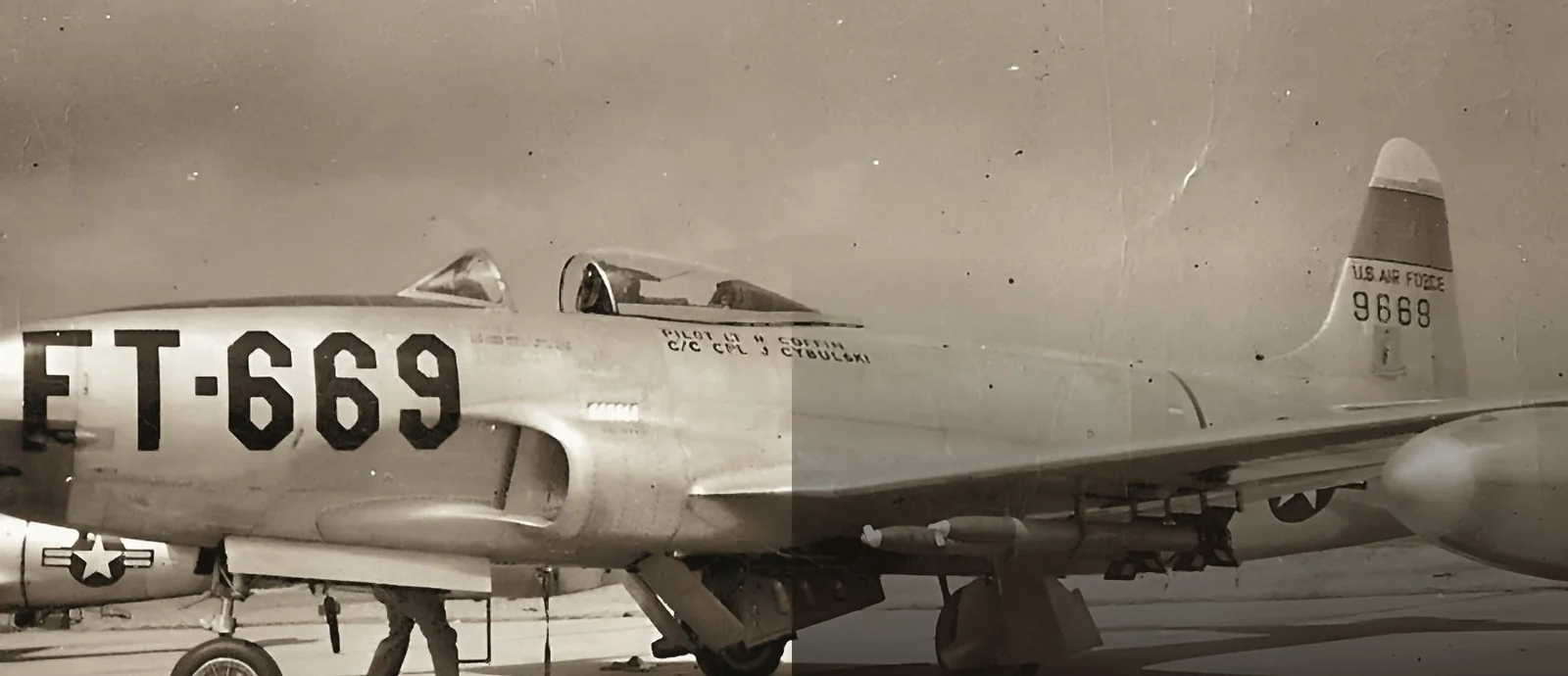
Ashiya, on the south-western Japanese coast, brought the fighters closer to the peninsula. It also made possible a punishing operating routine: long trips across the water, limited time to find and attack targets, and the constant calculation of fuel needed to come home. The F-80’s short endurance and demand for adequate runways shaped what its pilots could do. Improvised external fuel tanks helped, but not enough to remove the difficulty. George and his comrades were discovering how different a combat sortie felt from a training flight in Japan.⁷⁸
The squadron began combat flying on 9 July 1950. Its own history says that almost every pilot flew his first combat mission that day, George among them. Airfields, transport routes and concentrations of troops on the ground became targets, and missions followed one another in rapid succession. George was no longer a young man working to prove that he belonged in an aircraft. He was a combat pilot, operating over a fast-moving battlefield in a country that few of the men had expected to see. His decorations soon began to mark the tempo. A signed squadron certificate records ten F-80C operational flights between 16 and 28 July. The original Fifth Air Force order awarded him the Air Medal, and Major Brown supported the First Oak Leaf Cluster for another series of ten combat missions. Each award arose from particular documented flying, not from a later attempt to calculate a grand total from newspaper reports. For all their official language, the certifications reveal a striking reality: George and the other pilots were repeatedly climbing into their aircraft and returning to the same war, day after day.⁷⁹,⁸⁰,⁸¹,⁸²
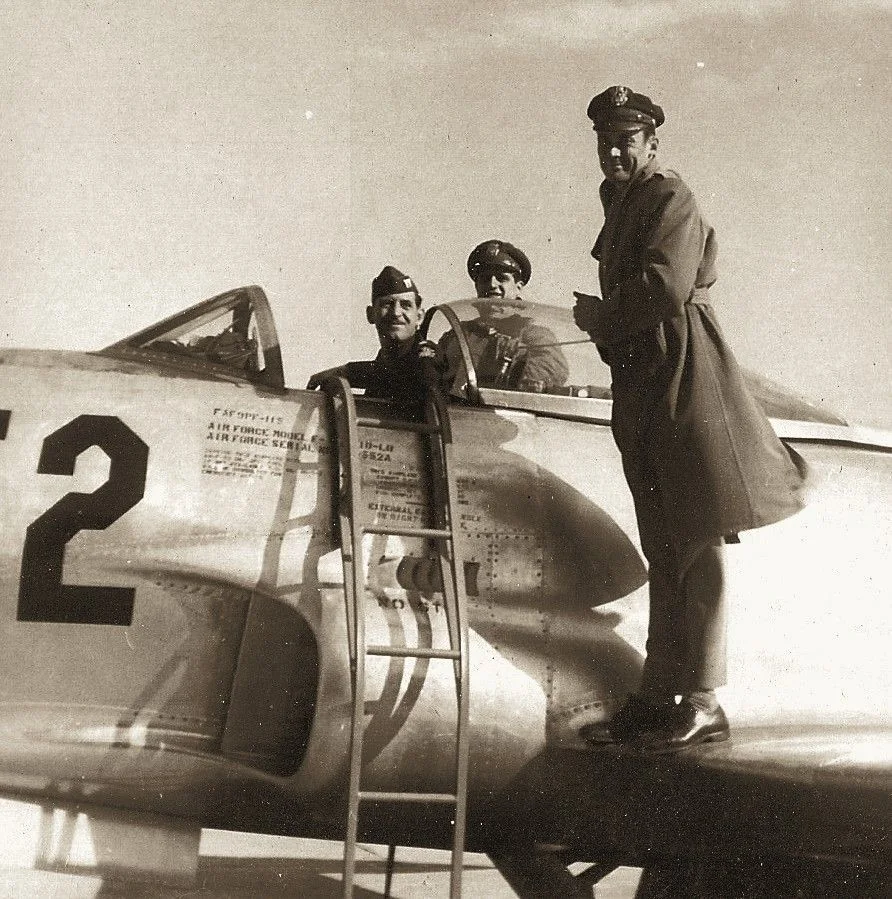
The next ten-sortie certificate covers the beginning of August and underlies the Second Oak Leaf Cluster. Its signed list runs through 5 August, while the subsequently issued General Order gives 4 August as the endpoint—a discrepancy preserved in the source record rather than wished away. The combat missions themselves are not in doubt. They took place while United Nations forces were holding a precarious position on the Korean peninsula, and the 39th was being called upon to support them from the air.⁸³,⁸⁴,⁸⁵
Almost every pilot in the 39th flew his first combat mission on 9 July 1950, George among them.
On 7 August 1950 George flew an armed-reconnaissance mission that would later bring him the Distinguished Flying Cross. The full original text of the individual decoration order has not yet been recovered; surviving recommendation and award records identify that date, and contemporary newspaper reporting supplies a citation excerpt. It was a distinct action, not to be confused with a later sortie on 10 October. At the time, of course, the pilots still had work to do. A new aircraft, an old familiar propeller fighter, was about to change the shape of their war.⁸⁶
Korea, July–August 1950Κορέα, Ιούλιος–Αύγουστος 1950
- 9.7.19501st combat mission
for George and most of the 39th1η πολεμική αποστολή
για τον Γιώργο και τους περισσότερους της 39ης - 16–28.710 F-80C flights
Air Medal10 πτήσεις F-80C
Air Medal - Early Aug.Αρχές Αυγ.10 more sorties
Second Oak Leaf Cluster10 ακόμη έξοδοι
Δεύτερο Φύλλο Δρυός - 7.8.1950Armed reconnaissance
DFC, posthumouslyΈνοπλη αναγνώριση
DFC, μετά θάνατον
Την πρώτη εβδομάδα του Ιουλίου οι πιλότοι της 39ης Μοίρας Αναχαίτισης ήξεραν ότι η αποστολή τους είχε αλλάξει. Η μονάδα τους βρισκόταν στην Ιαπωνία, απασχολημένη με εκπαίδευση, συντήρηση και αναδιοργάνωση· τώρα πήγαινε στον πόλεμο. Ο Ταγματάρχης Gerald Brown είπε στους άνδρες του στις 2 Ιουλίου ότι σύντομα θα έφευγαν για άγνωστο προορισμό. Ο Γιώργος Λουκάκης ήταν ανάμεσα στους πιλότους μαχητικών που περνούσαν απότομα από τις πτήσεις καιρού ειρήνης στη μάχη. Η μοίρα πετούσε με το Lockheed F-80C Shooting Star, ένα γρήγορο αεριωθούμενο με εντυπωσιακή ταχύτητα αλλά με ακτίνα δράσης που σύντομα θα γινόταν πρόβλημα πάνω από την Κορέα.⁷⁷
Η Ashiya, στη νοτιοδυτική ιαπωνική ακτή, έφερε τα μαχητικά πιο κοντά στη χερσόνησο. Έκανε όμως δυνατό και ένα εξουθενωτικό πρόγραμμα: μεγάλες διαδρομές πάνω από τη θάλασσα, λίγο χρόνο για να εντοπίσουν και να πλήξουν στόχους και τον διαρκή υπολογισμό των καυσίμων που χρειάζονταν για να γυρίσουν. Η μικρή αυτονομία του F-80 και η ανάγκη του για επαρκείς διαδρόμους καθόριζαν τι μπορούσαν να κάνουν οι πιλότοι του. Οι αυτοσχέδιες εξωτερικές δεξαμενές καυσίμου βοηθούσαν, όχι όμως αρκετά ώστε να εξαλείψουν τη δυσκολία. Ο Γιώργος και οι σύντροφοί του ανακάλυπταν πόσο διαφορετική ήταν μια πολεμική έξοδος από μια εκπαιδευτική πτήση στην Ιαπωνία.⁷⁸
Η μοίρα άρχισε τις πολεμικές πτήσεις στις 9 Ιουλίου 1950. Το δικό της ιστορικό αναφέρει ότι σχεδόν κάθε πιλότος πέταξε εκείνη την ημέρα την πρώτη του πολεμική αποστολή, ανάμεσά τους και ο Γιώργος. Αεροδρόμια, οδοί μεταφορών και συγκεντρώσεις στρατευμάτων στο έδαφος έγιναν στόχοι, και οι αποστολές διαδέχονταν η μία την άλλη με γρήγορο ρυθμό. Ο Γιώργος δεν ήταν πια ένας νέος που πάλευε να αποδείξει ότι η θέση του ήταν σε ένα αεροσκάφος. Ήταν πιλότος μάχης, πάνω από ένα πεδίο μάχης που άλλαζε γρήγορα, σε μια χώρα που λίγοι από τους άνδρες περίμεναν ποτέ να δουν. Τα παράσημά του άρχισαν σύντομα να σημαδεύουν τον ρυθμό. Ένα υπογεγραμμένο πιστοποιητικό της μοίρας καταγράφει δέκα επιχειρησιακές πτήσεις με F-80C από τις 16 ως τις 28 Ιουλίου. Η αρχική διαταγή της 5ης Αεροπορικής Δύναμης του απένειμε το Air Medal, και ο Ταγματάρχης Brown υποστήριξε το Πρώτο Φύλλο Δρυός για μια ακόμη σειρά δέκα πολεμικών αποστολών. Κάθε απονομή προέκυπτε από συγκεκριμένες, τεκμηριωμένες πτήσεις, όχι από μεταγενέστερη προσπάθεια να υπολογιστεί ένα συνολικό άθροισμα από δημοσιεύματα εφημερίδων. Παρά την υπηρεσιακή τους γλώσσα, τα πιστοποιητικά αποκαλύπτουν μια συγκλονιστική πραγματικότητα: ο Γιώργος και οι άλλοι πιλότοι ανέβαιναν ξανά και ξανά στα αεροσκάφη τους και επέστρεφαν στον ίδιο πόλεμο, μέρα με τη μέρα.⁷⁹,⁸⁰,⁸¹,⁸²
Το επόμενο πιστοποιητικό δέκα εξόδων καλύπτει τις αρχές Αυγούστου και στηρίζει το Δεύτερο Φύλλο Δρυός. Ο υπογεγραμμένος κατάλογός του φτάνει ως τις 5 Αυγούστου, ενώ η Γενική Διαταγή που εκδόθηκε αργότερα δίνει ως τέλος τις 4 Αυγούστου, μια απόκλιση που διατηρείται στις πηγές και δεν παραμερίζεται. Οι ίδιες οι πολεμικές αποστολές δεν αμφισβητούνται. Έγιναν ενώ οι δυνάμεις του ΟΗΕ κρατούσαν μια επισφαλή θέση στην κορεατική χερσόνησο, και η 39η καλούνταν να τις υποστηρίξει από τον αέρα.⁸³,⁸⁴,⁸⁵
Σχεδόν κάθε πιλότος της 39ης πέταξε την πρώτη του πολεμική αποστολή στις 9 Ιουλίου 1950, ανάμεσά τους και ο Γιώργος.
Στις 7 Αυγούστου 1950 ο Γιώργος πέταξε μια αποστολή ένοπλης αναγνώρισης που αργότερα θα του χάριζε το Distinguished Flying Cross. Το πλήρες αρχικό κείμενο της ατομικής διαταγής απονομής δεν έχει ακόμη ανευρεθεί· τα σωζόμενα έγγραφα πρότασης και απονομής προσδιορίζουν εκείνη την ημερομηνία, και δημοσιεύματα της εποχής δίνουν ένα απόσπασμα του σκεπτικού. Ήταν μια ξεχωριστή επιχείρηση, που δεν πρέπει να συγχέεται με μια μεταγενέστερη έξοδο στις 10 Οκτωβρίου. Τότε, φυσικά, οι πιλότοι είχαν ακόμη δουλειά να κάνουν. Ένα νέο αεροσκάφος, ένα παλιό γνώριμο μαχητικό με έλικα, επρόκειτο να αλλάξει τη μορφή του πολέμου τους.⁸⁶
Mustangs over KoreaMustang πάνω από την Κορέα
The Mustang was hardly the future of jet aviation, yet in Korea it offered something the F-80 often could not: time over the battlefield. With greater endurance and an ability to operate from rougher, shorter fields, the North American F-51D could remain near ground troops and return to the fight. There were costs, including the exposure of its liquid-cooled engine to ground fire. The 39th made the change under pressure. On 9 August 1950 the squadron received orders to move to Pohang in South Korea, where a fighter pilot could feel much closer to the war he was fighting. Pohang was no comfortable new home. The battle for the perimeter was near, the front unstable and the danger to the airfield immediate. Friendly artillery helped suppress enemy fire on 11 August, but within days the squadron was ordered back across the water to Tsuiki in Japan. Missions continued, and aircraft and pilots were lost. For George, the return to a piston-engined fighter also had an irony that no service record fully captures: in 1944 his P-40 transition had ended in failure, while in 1950 he was flying the Mustang in combat as a commissioned fighter pilot.⁸⁷
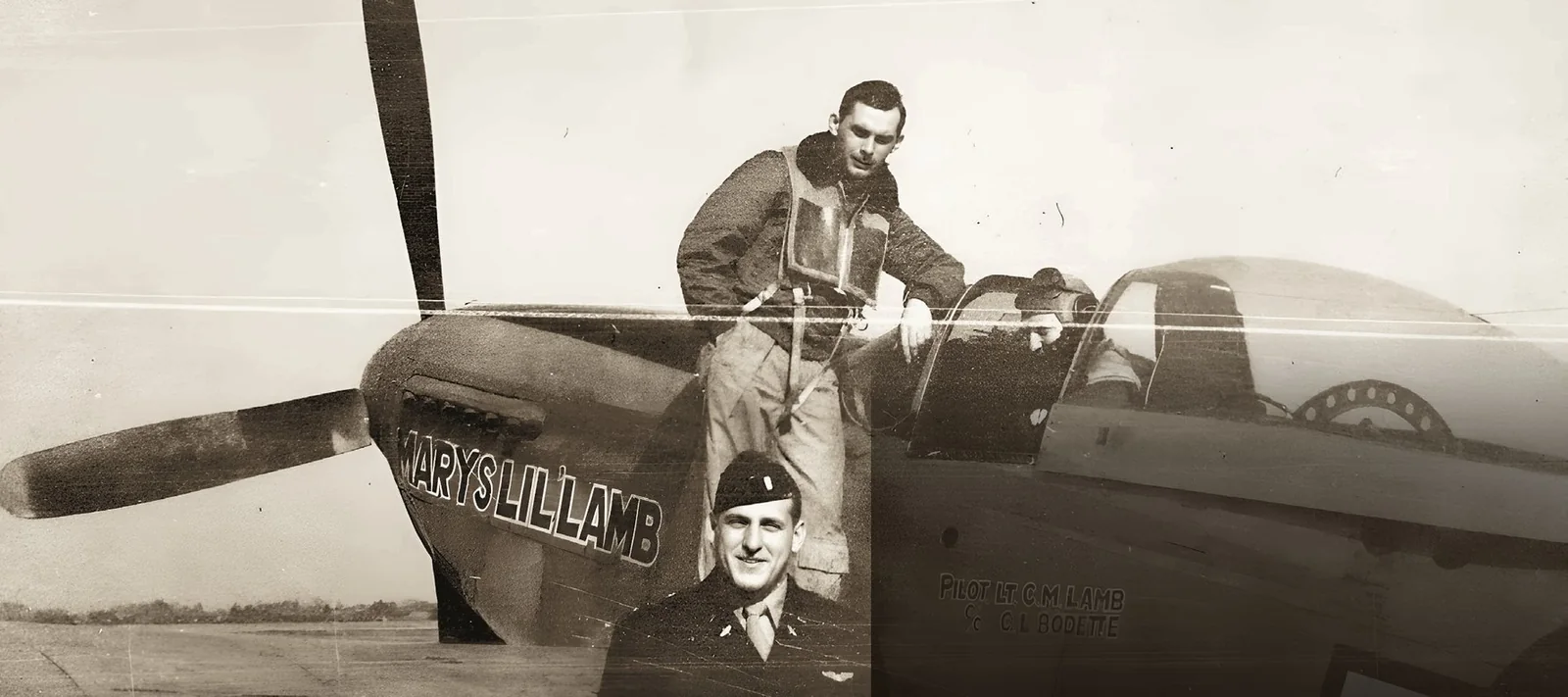
The mission records are the surest way to follow the pace of those months. One signed certificate lists ten F-51 missions in the period 8–26 August and underpins the Third Oak Leaf Cluster. Another, dated 22 September and signed by Major Charles J. Bowers, lists ten further F-51 sorties between 26 August and 3 September for the Fourth Cluster. It gives individual dates and operating areas. These are George’s personal missions, not squadron totals, and the ten August–September sorties must not be counted once again on top of the later cumulative total.⁸⁸,⁸⁹,⁹⁰
The tally, Aug.–Oct. 1950Ο απολογισμός, Αύγ.–Οκτ. 1950
- 8–26.810 F-51 missions
Third Cluster10 αποστολές F-51
Τρίτο Φύλλο - 26.8–3.910 F-51 sorties
Fourth Cluster10 έξοδοι F-51
Τέταρτο Φύλλο - By 15.9Ως 15.958 combat missions
since 9 July58 πολεμικές αποστολές
από τις 9 Ιουλίου - By 11.10Ως 11.1065
documented minimum65
τεκμηριωμένο ελάχιστο
Even while he flew combat sorties, George continued to receive additional duties; a late-August squadron order assigned him work outside the cockpit. In September the unit’s tactical-support attachment changed, and the operational rhythm continued. A signed certificate establishes that George had completed fifty-eight combat missions between 9 July and 15 September 1950. His service brought further temporary-duty orders in the second half of September. Whether measured in sorties, hours or successive moves from airfield to airfield, the record shows how intensely the 39th was being used.⁹¹,⁹²,⁹³
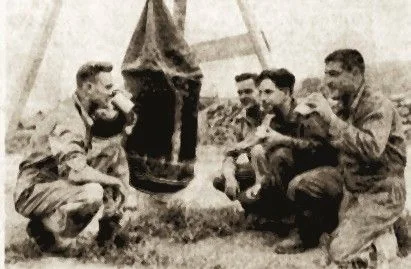
In October the squadron returned to Pohang, the field it had been forced to leave in August. The 40th Fighter-Interceptor Squadron and the Australians of No. 77 Squadron RAAF were operating in the same wider environment. Another order on 12 October continued to name George for additional duties with the group. Such entries can feel prosaic after accounts of low-level attacks, but they remind us that a squadron depended not only on men in the air but also on those who kept its daily life working between missions.⁹⁴
Το Mustang δεν ήταν βέβαια το μέλλον της αεροπορίας των αεριωθουμένων, στην Κορέα όμως πρόσφερε κάτι που το F-80 συχνά δεν μπορούσε: χρόνο πάνω από το πεδίο της μάχης. Με μεγαλύτερη αυτονομία και ικανότητα να επιχειρεί από πιο πρόχειρους και μικρότερους διαδρόμους, το North American F-51D μπορούσε να μένει κοντά στα χερσαία στρατεύματα και να επιστρέφει στη μάχη. Υπήρχε και κόστος, όπως η έκθεση του υδρόψυκτου κινητήρα του στα πυρά από το έδαφος. Η 39η έκανε την αλλαγή υπό πίεση. Στις 9 Αυγούστου 1950 η μοίρα πήρε διαταγή να μετακινηθεί στο Pohang της Νότιας Κορέας, όπου ένας πιλότος μαχητικού ένιωθε πολύ πιο κοντά στον πόλεμο που πολεμούσε. Το Pohang δεν ήταν άνετο καινούργιο σπίτι. Η μάχη για την περίμετρο ήταν κοντά, το μέτωπο ασταθές και ο κίνδυνος για το αεροδρόμιο άμεσος. Το φίλιο πυροβολικό βοήθησε να καταπνιγούν τα εχθρικά πυρά στις 11 Αυγούστου, μέσα σε λίγες μέρες όμως η μοίρα διατάχθηκε να γυρίσει πίσω, πάνω από τη θάλασσα, στο Tsuiki της Ιαπωνίας. Οι αποστολές συνεχίστηκαν, και χάθηκαν αεροσκάφη και πιλότοι. Για τον Γιώργο, η επιστροφή σε ένα εμβολοφόρο μαχητικό είχε και μια ειρωνεία που κανένα υπηρεσιακό αρχείο δεν αποτυπώνει πλήρως: το 1944 η μετάβασή του στο P-40 είχε καταλήξει σε αποτυχία, ενώ το 1950 πετούσε σε μάχη με Mustang ως αξιωματικός πιλότος μαχητικών.⁸⁷
Τα αρχεία των αποστολών είναι ο ασφαλέστερος τρόπος να ακολουθήσει κανείς τον ρυθμό εκείνων των μηνών. Ένα υπογεγραμμένο πιστοποιητικό απαριθμεί δέκα αποστολές με F-51 από τις 8 ως τις 26 Αυγούστου και στηρίζει το Τρίτο Φύλλο Δρυός. Ένα άλλο, με ημερομηνία 22 Σεπτεμβρίου και υπογραφή του Ταγματάρχη Charles J. Bowers, απαριθμεί δέκα ακόμη εξόδους με F-51 από τις 26 Αυγούστου ως τις 3 Σεπτεμβρίου για το Τέταρτο Φύλλο. Δίνει ατομικές ημερομηνίες και περιοχές επιχειρήσεων. Είναι οι προσωπικές αποστολές του Γιώργου, όχι σύνολα της μοίρας, και οι δέκα έξοδοι Αυγούστου–Σεπτεμβρίου δεν πρέπει να μετρηθούν ξανά πάνω από το μεταγενέστερο αθροιστικό σύνολο.⁸⁸,⁸⁹,⁹⁰
The tally, Aug.–Oct. 1950Ο απολογισμός, Αύγ.–Οκτ. 1950
- 8–26.810 F-51 missions
Third Cluster10 αποστολές F-51
Τρίτο Φύλλο - 26.8–3.910 F-51 sorties
Fourth Cluster10 έξοδοι F-51
Τέταρτο Φύλλο - By 15.9Ως 15.958 combat missions
since 9 July58 πολεμικές αποστολές
από τις 9 Ιουλίου - By 11.10Ως 11.1065
documented minimum65
τεκμηριωμένο ελάχιστο
Ακόμη και ενώ πετούσε πολεμικές εξόδους, ο Γιώργος συνέχιζε να παίρνει πρόσθετα καθήκοντα· μια διαταγή της μοίρας στα τέλη Αυγούστου του ανέθεσε δουλειά έξω από το πιλοτήριο. Τον Σεπτέμβριο άλλαξε η υπαγωγή της μονάδας σε πτέρυγα τακτικής υποστήριξης, και ο επιχειρησιακός ρυθμός συνεχίστηκε. Ένα υπογεγραμμένο πιστοποιητικό βεβαιώνει ότι ο Γιώργος είχε ολοκληρώσει πενήντα οκτώ πολεμικές αποστολές από τις 9 Ιουλίου ως τις 15 Σεπτεμβρίου 1950. Η υπηρεσία του έφερε και νέες διαταγές προσωρινής υπηρεσίας στο δεύτερο μισό του Σεπτεμβρίου. Είτε μετρηθεί σε εξόδους, είτε σε ώρες, είτε σε διαδοχικές μετακινήσεις από αεροδρόμιο σε αεροδρόμιο, το αρχείο δείχνει πόσο εντατικά χρησιμοποιούνταν η 39η.⁹¹,⁹²,⁹³
Τον Οκτώβριο η μοίρα επέστρεψε στο Pohang, το πεδίο που είχε αναγκαστεί να εγκαταλείψει τον Αύγουστο. Η 40ή Μοίρα Αναχαίτισης και οι Αυστραλοί της 77ης Μοίρας της RAAF επιχειρούσαν στο ίδιο ευρύτερο περιβάλλον. Μια ακόμη διαταγή στις 12 Οκτωβρίου εξακολουθούσε να ορίζει τον Γιώργο για πρόσθετα καθήκοντα στη σμηναρχία. Τέτοιες εγγραφές μοιάζουν πεζές μετά από αφηγήσεις για επιθέσεις σε χαμηλό ύψος, μας θυμίζουν όμως ότι μια μοίρα δεν στηριζόταν μόνο στους άνδρες στον αέρα αλλά και σε εκείνους που κρατούσαν την καθημερινή της ζωή σε λειτουργία ανάμεσα στις αποστολές.⁹⁴
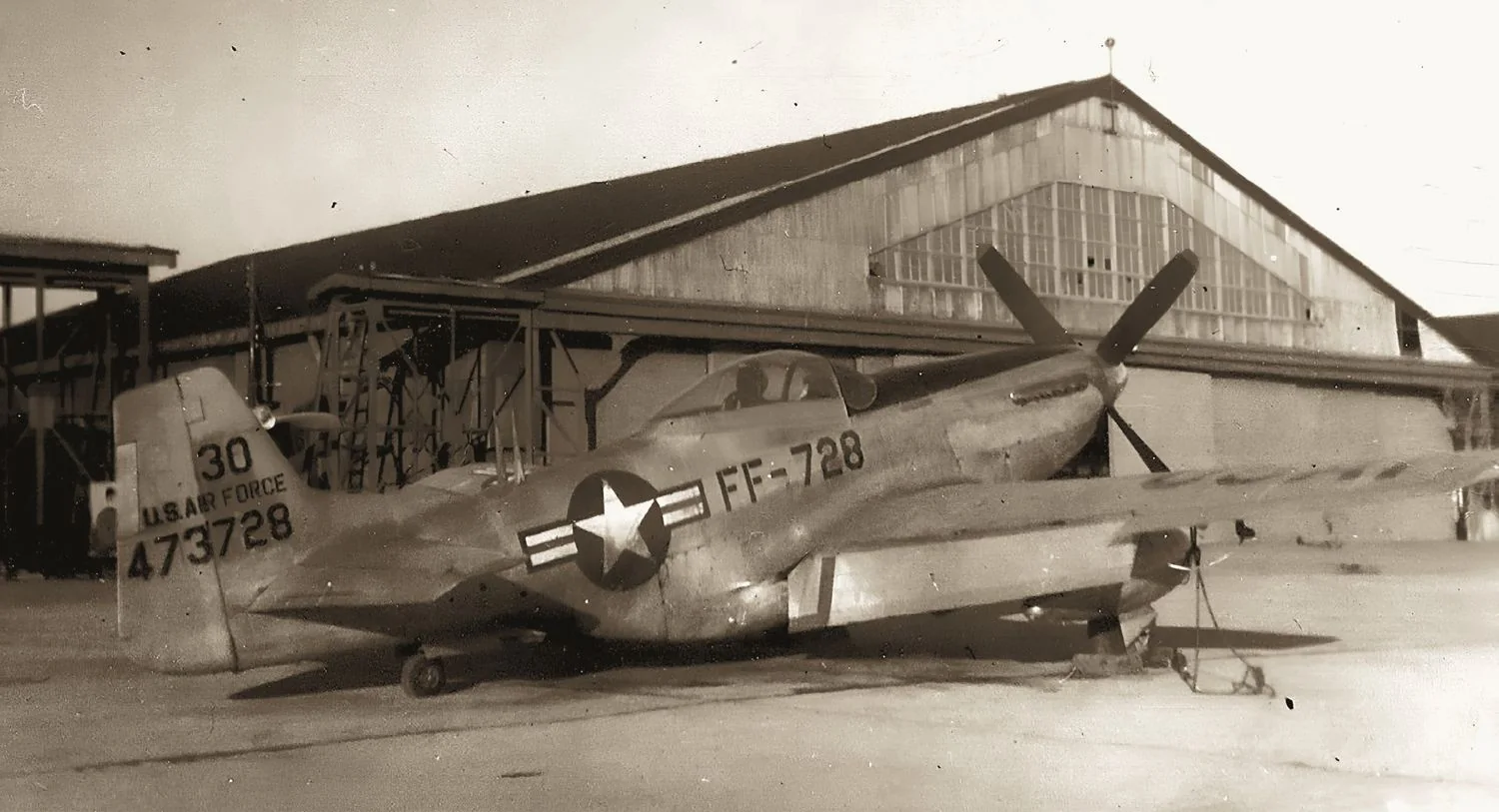
Mustang FF-728
F-51D 44-73728, the Mustang George Lukakis flew in close formation over Japan in the autumn of 1949, in natural metal with the buzz number FF-728 and the number 30 on its tail.Το F-51D 44-73728, το Mustang με το οποίο ο Γιώργος Λουκάκης πέταξε σε κλειστό σχηματισμό πάνω από την Ιαπωνία το φθινόπωρο του 1949, σε γυμνό μέταλλο με τον αριθμό FF-728 και το 30 στην ουρά.
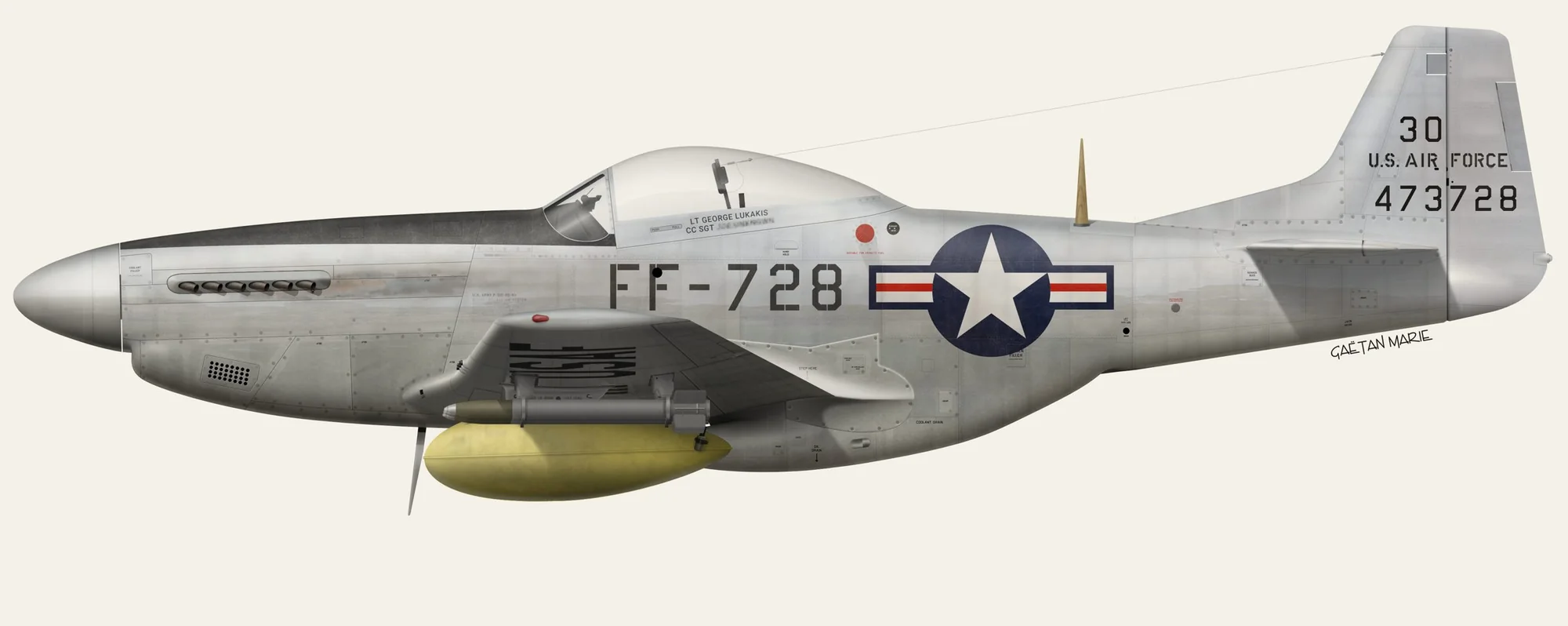
- TypeΤύπος
- P-51D-25-NA
- SerialΑριθμός
- 44-73728
- CodeΚωδικός
- FF-728 · 30
- UnitΜονάδα
- 39th FIS, 35th FIW39η Μοίρα, 35η Πτέρυγα
The aircraftΤο αεροσκάφος
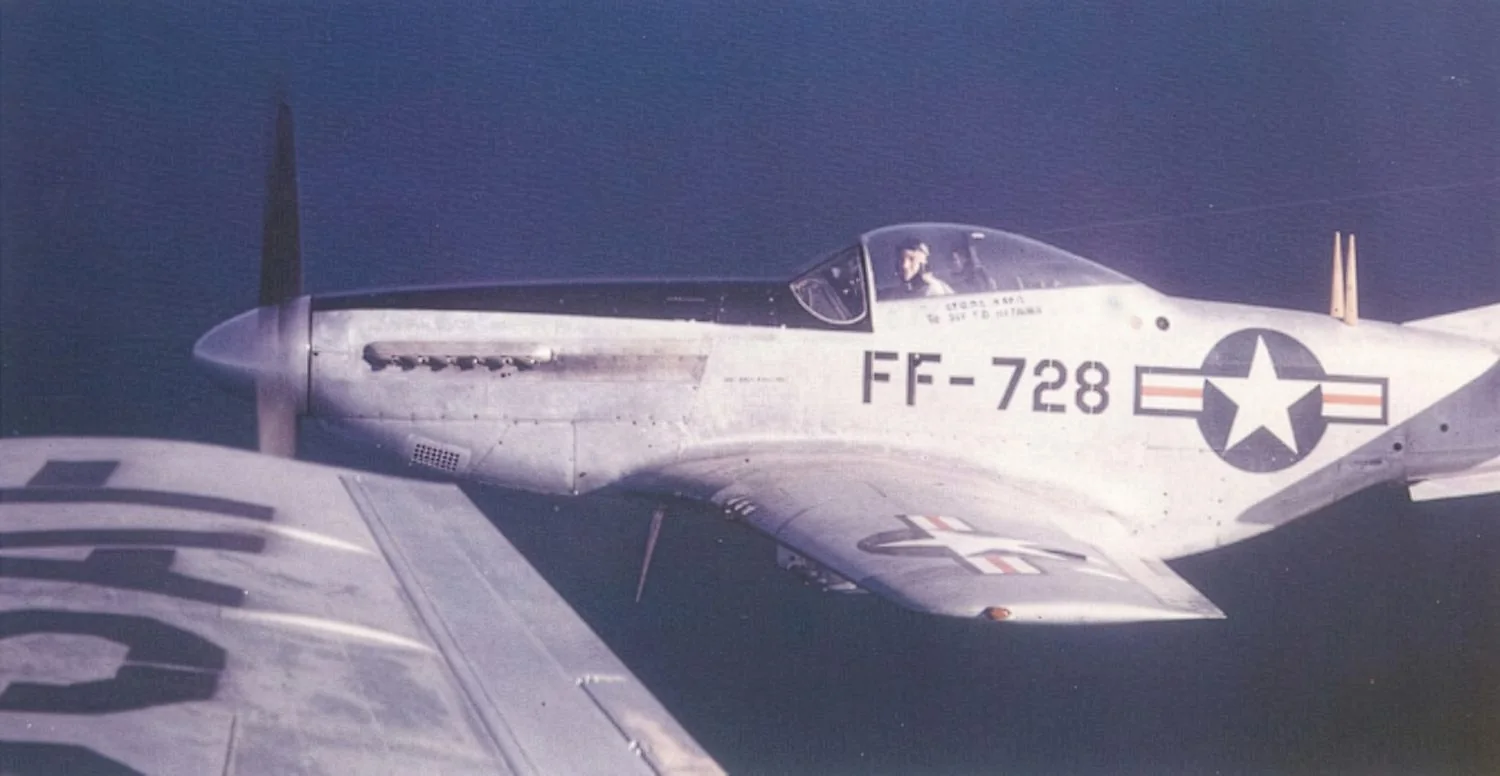
North American P-51D-25-NA Mustang 44-73728, later redesignated F-51D, carrying the buzz number ‘FF-728’ and aircraft number ‘30’. Recorded with the 80th Fighter Squadron, 8th Fighter Group, in 1947, it subsequently passed to the 35th Fighter Interceptor Group. In autumn 1949, Lt George M. Lukakis was photographed flying this Mustang in close formation with Lt Robert Dunnavant over Japan; another surviving photograph shows it at Yokota Air Base.
Following the 39th Fighter Interceptor Squadron’s conversion to F-80C Shooting Stars, the aircraft was placed in storage before returning to service during the Korean War. The canopy rail bears Lukakis’s name above that of his crew chief. The profile illustrates a typical Korean War ground-attack load of napalm and HVAR rockets; this particular combination is not independently confirmed for 44-73728.
Το North American P-51D-25-NA Mustang 44-73728, που αργότερα μετονομάστηκε F-51D, με τον αριθμό αναγνώρισης («buzz number») «FF-728» και τον αριθμό αεροσκάφους «30». Καταγράφεται το 1947 στην 80ή Μοίρα Μαχητικών της 8ης Σμηναρχίας Μαχητικών και πέρασε στη συνέχεια στην 35η Σμηναρχία Αναχαίτισης. Το φθινόπωρο του 1949 ο Υπολοχαγός George M. Lukakis φωτογραφήθηκε να πετά με αυτό το Mustang σε κλειστό σχηματισμό με τον Υπολοχαγό Robert Dunnavant πάνω από την Ιαπωνία· μια άλλη σωζόμενη φωτογραφία το δείχνει στη βάση Yokota.
Μετά τη μετάβαση της 39ης Μοίρας Αναχαίτισης σε F-80C Shooting Star, το αεροσκάφος μπήκε σε αποθήκευση πριν επιστρέψει σε υπηρεσία στον Πόλεμο της Κορέας. Στο πλαίσιο της καλύπτρας είναι γραμμένο το όνομα του Lukakis πάνω από εκείνο του αρχιμηχανικού του. Το προφίλ δείχνει ένα τυπικό φορτίο εδαφικής προσβολής του Πολέμου της Κορέας, με ναπάλμ και ρουκέτες HVAR· ο συγκεκριμένος συνδυασμός δεν επιβεβαιώνεται ανεξάρτητα για το 44-73728.
Colour profile © Gaëtan Marie.Έγχρωμο προφίλ © Gaëtan Marie.
Aircraft recordΙστορικό αεροσκάφους
- 194780th FS, 8th FG80ή Μοίρα, 8η Σμηναρχία
- 1948Redesignated F-51DΜετονομασία σε F-51D
- Autumn 1949Φθιν. 194935th FIG, Japan;
flown by Lukakis35η Σμηναρχία, Ιαπωνία·
πιλότος ο Lukakis - 1950Out of storage,
39th FIS in KoreaΑπό την αποθήκευση
στην 39η Μοίρα, Κορέα
What the Citations RememberΤι θυμούνται τα σκεπτικά
As the war continued, the Air Force’s language of recognition tried to record what the crews had done. The Air Medal and five Oak Leaf Clusters were not six different decorations, but the original medal followed by five further awards. The surviving Fifth Cluster citation conveys the hazardous nature of the missions more vividly than any tally:
“In the course of these operations, strafing and dive bombing were made from dangerously low altitudes, destroying and damaging enemy installations and equipment. Through his ability, initiative and courage Lieutenant Lukakis has brought great credit upon himself and the United States Air Force.”⁹⁵
The Fifth Oak Leaf Cluster was based on another series of F-51D missions. It was approved in November, after George’s death. The award continued an already established sequence of operational recognition, and its approval date must not be confused with the date on which the actions were flown. In the language of citations, a few lines had to stand for the hazards of many individual missions and the decisions made on each of them.⁹⁶,⁹⁷
The records also demand care. A flight to “Wonson,” as one original certificate spells it, took place on 10 October; it was not the 7 August action cited for the Distinguished Flying Cross. Likewise, the Fifth Cluster certificate and the issued order use different end dates for the covered period. The original orders establish the sequence: Air Medal in July; first and second Clusters in September; third and fourth in October; fifth in November. Those distinctions matter precisely because they allow the story to be told without embellishment.⁹⁸,⁹⁹
Major Thomas D. Robertson recommended George posthumously for the Distinguished Flying Cross in December 1950, praising his “outstanding skill, aggressiveness, and courage during aerial flight against the enemy.” Senior officers endorsed the recommendation, and the decoration records identify the qualifying action as the armed-reconnaissance mission of 7 August. A newspaper excerpt printed in May 1951 credited attacks on vehicles, an oil-storage depot, a supply dump and radio stations in the Wonsan area. These were the claims of the contemporary citation as published, not an independently checked count of enemy losses. The full individual order remains to be located; nothing in the evidence requires changing the mission date.¹⁰⁰,¹⁰¹
How many combat missions did George fly before he died? The firm contemporary total is fifty-eight through 15 September. A later signed certificate identifies seven more dated flights up to 11 October, giving a documented minimum of sixty-five. Newspapers printed other figures, among them sixty-one, eighty and eighty-three. Without a final cumulative flight log, none of those later figures should be promoted into an exact total. But the minimum alone conveys the scale of what he had done in barely three months of war.¹⁰²
Through his ability, initiative and courage Lieutenant Lukakis has brought great credit upon himself.
Όσο συνεχιζόταν ο πόλεμος, η γλώσσα των τιμητικών διακρίσεων της Πολεμικής Αεροπορίας προσπαθούσε να καταγράψει τι είχαν κάνει τα πληρώματα. Το Air Medal και τα πέντε Φύλλα Δρυός δεν ήταν έξι διαφορετικά παράσημα, αλλά το αρχικό μετάλλιο και πέντε επιπλέον απονομές του. Το σωζόμενο σκεπτικό του Πέμπτου Φύλλου μεταφέρει την επικινδυνότητα των αποστολών πιο ζωντανά από κάθε αριθμό:
«Κατά τη διάρκεια των επιχειρήσεων αυτών, πολυβολισμοί και βομβαρδισμοί κατάδυσης εκτελέστηκαν από επικίνδυνα χαμηλό ύψος, καταστρέφοντας και προκαλώντας ζημιές σε εχθρικές εγκαταστάσεις και εξοπλισμό. Με την ικανότητα, την πρωτοβουλία και το θάρρος του, ο Υπολοχαγός Lukakis τίμησε μεγάλως τον εαυτό του και την Πολεμική Αεροπορία των Ηνωμένων Πολιτειών.»⁹⁵
Το Πέμπτο Φύλλο Δρυός βασίστηκε σε μια ακόμη σειρά αποστολών με F-51D. Εγκρίθηκε τον Νοέμβριο, μετά τον θάνατο του Γιώργου. Η απονομή συνέχιζε μια ήδη καθιερωμένη σειρά επιχειρησιακών διακρίσεων, και η ημερομηνία έγκρισής της δεν πρέπει να συγχέεται με την ημερομηνία κατά την οποία πετάχτηκαν οι αποστολές. Στη γλώσσα των σκεπτικών, λίγες γραμμές έπρεπε να αντιπροσωπεύσουν τους κινδύνους πολλών μεμονωμένων αποστολών και τις αποφάσεις που πάρθηκαν σε καθεμιά.⁹⁶,⁹⁷
Τα αρχεία απαιτούν επίσης προσοχή. Μια πτήση στο «Wonson», όπως το γράφει ένα πρωτότυπο πιστοποιητικό, έγινε στις 10 Οκτωβρίου· δεν ήταν η επιχείρηση της 7ης Αυγούστου για την οποία απονεμήθηκε το Distinguished Flying Cross. Ομοίως, το πιστοποιητικό του Πέμπτου Φύλλου και η διαταγή που εκδόθηκε δίνουν διαφορετικές ημερομηνίες λήξης για την περίοδο που καλύπτουν. Οι πρωτότυπες διαταγές καθορίζουν τη σειρά: Air Medal τον Ιούλιο· πρώτο και δεύτερο Φύλλο τον Σεπτέμβριο· τρίτο και τέταρτο τον Οκτώβριο· πέμπτο τον Νοέμβριο. Οι διακρίσεις αυτές μετρούν ακριβώς επειδή επιτρέπουν να ειπωθεί η ιστορία χωρίς εξωραϊσμούς.⁹⁸,⁹⁹
Ο Ταγματάρχης Thomas D. Robertson πρότεινε τον Γιώργο μετά θάνατον για το Distinguished Flying Cross τον Δεκέμβριο του 1950, επαινώντας την «εξαιρετική ικανότητα, τη μαχητικότητα και το θάρρος του σε πτήση εναντίον του εχθρού». Ανώτεροι αξιωματικοί προσυπέγραψαν την πρόταση, και τα έγγραφα της απονομής προσδιορίζουν ως πράξη που τη δικαιολογεί την αποστολή ένοπλης αναγνώρισης της 7ης Αυγούστου. Ένα απόσπασμα εφημερίδας που δημοσιεύτηκε τον Μάιο του 1951 του πίστωνε επιθέσεις σε οχήματα, σε αποθήκη πετρελαίου, σε σταθμό ανεφοδιασμού και σε ραδιοσταθμούς στην περιοχή του Wonsan. Αυτοί ήταν οι ισχυρισμοί του σκεπτικού όπως δημοσιεύτηκε, όχι ανεξάρτητα ελεγμένη καταμέτρηση εχθρικών απωλειών. Η πλήρης ατομική διαταγή δεν έχει ακόμη εντοπιστεί· τίποτα στα στοιχεία δεν απαιτεί αλλαγή της ημερομηνίας της αποστολής.¹⁰⁰,¹⁰¹
Πόσες πολεμικές αποστολές πέταξε ο Γιώργος πριν σκοτωθεί; Το βέβαιο σύνολο της εποχής είναι πενήντα οκτώ ως τις 15 Σεπτεμβρίου. Ένα μεταγενέστερο υπογεγραμμένο πιστοποιητικό καταγράφει επτά ακόμη χρονολογημένες πτήσεις ως τις 11 Οκτωβρίου, δίνοντας ένα τεκμηριωμένο ελάχιστο εξήντα πέντε. Οι εφημερίδες έγραψαν άλλους αριθμούς, ανάμεσά τους εξήντα ένα, ογδόντα και ογδόντα τρία. Χωρίς ένα τελικό αθροιστικό ημερολόγιο πτήσεων, κανένας από εκείνους τους αριθμούς δεν πρέπει να προβιβαστεί σε ακριβές σύνολο. Μόνο το ελάχιστο όμως αρκεί για να δείξει το μέγεθος όσων είχε κάνει σε τρεις μόλις μήνες πολέμου.¹⁰²
Με την ικανότητα, την πρωτοβουλία και το θάρρος του, ο Υπολοχαγός Lukakis τίμησε μεγάλως τον εαυτό του.
Confirmed combat missionsΕπιβεβαιωμένες πολεμικές αποστολές
From the first sortie over Kongju on 16 July 1950 to Munchon on 11 October: the dates and strike targets recorded on the squadron’s signed certificates, first in the F-80C Shooting Star and then in the F-51D Mustang.Από την πρώτη έξοδο πάνω από το Kongju στις 16 Ιουλίου 1950 ως το Munchon στις 11 Οκτωβρίου: οι ημερομηνίες και οι στόχοι που κατέγραψαν τα υπογεγραμμένα πιστοποιητικά της μοίρας, πρώτα με το F-80C Shooting Star και έπειτα με το F-51D Mustang.
- Combat missionsΠολεμικές αποστολές
- 65+documented minimumτεκμηριωμένο ελάχιστο
- Dated sortiesΧρονολογημένες έξοδοι
- 50in the ledger belowστον πίνακα
- AircraftΑεροσκάφη
- F-80C · F-51DShooting Star · Mustang
- TheaterΘέατρο
- Fifth Air Force · Korea5η Αεροπορική Δύναμη · Κορέα
Dated sorties by month, 1950Χρονολογημένες έξοδοι ανά μήνα, 1950
The 50 sorties that the surviving certificates date individually.Οι 50 έξοδοι που τα σωζόμενα πιστοποιητικά χρονολογούν μία προς μία.
By aircraftΑνά αεροσκάφος
F-80C Shooting Star in July and early August; F-51D Mustang from 8 August.F-80C Shooting Star τον Ιούλιο και στις αρχές Αυγούστου· F-51D Mustang από τις 8 Αυγούστου.
Mission ledgerΠίνακας αποστολών
| No.Α/Α | DateΗμερομηνία | AircraftΑεροσκάφος | Strike targetsΣτόχοι | SortiesΈξοδοι |
|---|---|---|---|---|
| 1 | 16.07.1950 | F-80C | Kongju | 1 |
| 2 | 17.07.1950 | F-80C | Chonan | 1 |
| 3 | 18.07.1950 | F-80C | Mukyoku-Ri | 1 |
| 4 | 21.07.1950 | F-80C | Kanggyang | 1 |
| 5 | 25.07.1950 | F-80C | Pongsong-dong · Yongju | 2 |
| 6 | 26.07.1950 | F-80C | Taejon · Chechon | 2 |
| 7 | 28.07.1950 | F-80C | Nokchon-po · Dangong | 2 |
| 8 | 31.07.1950 | F-80C | Koryong · Waegwang | 2 |
| 9 | 01.08.1950 | F-80C | Hadong · Chinju | 2 |
| 10 | 02.08.1950 | F-80C | Chinju · Suwon | 2 |
| 11 | 03.08.1950 | F-80C | Chingju · Suwon | 2 |
| 12 | 04.08.1950 | F-80C | Hypo’chon | 1 |
| 13 | 05.08.1950 | F-80C | Chinju | 1 |
| 14 | 08.08.1950 | F-51D | Yondok | 1 |
| 15 | 18.08.1950 | F-51D | Yondok | 1 |
| 16 | 19.08.1950 | F-51D | Andong | 1 |
| 17 | 20.08.1950 | F-51D | Tanchon | 1 |
| 18 | 22.08.1950 | F-51D | Chinju · Andong | 2 |
| 19 | 23.08.1950 | F-51D | Masan | 1 |
| 20 | 24.08.1950 | F-51D | Masan | 1 |
| 21 | 26.08.1950 | F-51D | Masan · Mikpo · Chingpyong | 3 |
| 22 | 28.08.1950 | F-51D | Piksong-dong · Kunsan | 2 |
| 23 | 30.08.1950 | F-51D | Hyonjong · Seoul | 2 |
| 24 | 02.09.1950 | F-51D | Kochang · Hyopchon · Waegwan | 3 |
| 25 | 03.09.1950 | F-51D | Chingju · Waegwan · Osan | 3 |
| 26 | 07.09.1950 | F-51D | Chungan-ni | 1 |
| 27 | 15.09.1950 | F-51D | Changyong | 1 |
| 28 | 30.09.1950 | F-51D | Yangyang · Pyongyang | 2 |
| 29 | 05.10.1950 | F-51D | Pyongyang | 1 |
| 30 | 06.10.1950 | F-51D | Pyongyang | 1 |
| 31 | 09.10.1950 | F-51D | Pyongyang | 1 |
| 32 | 10.10.1950 | F-51D | Wonsan | 1 |
| 33 | 11.10.1950 | F-51D | Munchon | 1 |
| ✝ | 06.11.1950 | F-51D | Armed reconnaissance · crashed on an attempted return to PohangΈνοπλη αναγνώριση · συνετρίβη σε απόπειρα επιστροφής στο Pohang | — |
Showing 1 to 10 of 34 entries. The ledger lists the sorties the certificates date individually; a signed certificate credits 58 missions to 15 September, and with seven later dated flights up to 11 October the documented minimum is 65.Εμφανίζονται 1 έως 10 από 34. Ο πίνακας περιέχει τις εξόδους που τα πιστοποιητικά χρονολογούν μία προς μία· υπογεγραμμένο πιστοποιητικό του πιστώνει 58 αποστολές ως τις 15 Σεπτεμβρίου, και με επτά μεταγενέστερες πτήσεις ως τις 11 Οκτωβρίου το τεκμηριωμένο ελάχιστο είναι 65.
The Last ApproachΗ τελευταία προσέγγιση
On the morning of 6 November 1950, First Lieutenant George M. Lukakis prepared to leave Pohang in North American F-51D Mustang 44-73570. He was flying third in a four-aircraft formation assigned an armed-reconnaissance mission over North Korea. What happened after take-off would be told in several official documents, each preserving a different part of a very short final flight. The contemporary casualty report gives the take-off time as 06:45. Gerald Brown, writing the following day to George’s mother, said 06:40. Both place the event at Pohang, and both describe an attempted return toward the runway, not an aerial fight with an enemy jet.¹⁰³,¹⁰⁴
A later compiled accident index entered the aircraft under 5 November, but the contemporary military records and the official American loss register establish 6 November as the date of death. That is the date retained here. The exact problem that first compelled George to attempt to return has not been established from a flight-safety investigation in the records presently available.¹⁰⁵
“Officer was pilot of F-51 acft #44-73570, in #3 position of 4 ship flight, on day take-off, armed recon mission to North Korea. Deceased acft was airborne at 0645 hrs, taking off west to east. Acft made 360 turn to left at approx 600 ft and started final approach when acft fell off to right at approx 400 ft and crashed 500 yds directly off West end of runway, Pohang Airdrome, Pohang, Korea. Acft burned on impact. Body recovered approx 0800 hrs.”¹⁰⁶
The report describes a left turn at roughly 600 feet, a loss of control to the right at about 400 feet, and impact approximately 500 yards beyond the western end of the runway. The Mustang burned; the body was recovered around 08:00. Brown supplied the detail of a very strong crosswind and said the aircraft stalled as George attempted to line up for landing. The squadron’s own history, written at the end of November and preserved on AFHRA Reel K0489, corroborates the strong crosswind, the attempted landing and the crash near the runway. It also records a memorial service in the group chapel on the evening of 7 November. None of those records explains with certainty what first went wrong aboard the aircraft.¹⁰⁷,¹⁰⁸
A later online account attributed the loss of 44-73570 to a Soviet MiG-15 pilot, N. Kuznetsov. No original Soviet combat report supporting that particular attribution is among the examined sources, and the claim conflicts with the contemporaneous American description of a landing accident after an emergency return. It belongs in the history of how the loss was later reported, not as a competing explanation on equal terms with the original operational records.¹⁰⁹
Word reached the family in Massachusetts. On 7 November Brown wrote to Irene Lukakis; a week later Brigadier General E. H. Underhill confirmed the death and warned that wartime conditions meant George’s remains would be buried in Korea for the time being. The Air Force classified his death as killed in action and in the line of duty, with no misconduct. That classification described a loss during wartime service; it did not declare that he had been shot down. Brown’s letter, composed while events were still painfully recent, offers something the forms cannot: the voice of a commanding officer speaking to a mother.¹¹⁰,¹¹¹
39th Fighter-Interceptor Squadron
7 November 1950
Mrs Irene M. Lukakis
524 Springfield Street
Chicopee, Massachusetts
Dear Madam:
We wish to express to you our very deepest sympathy in the loss of your son, First Lieutenant George M. Lukakis, a member of this squadron. His loss will be very keenly felt by all the officers and airmen of the squadron.
Luke, we all called him Luke, was killed in an aircraft accident which occurred the morning of Monday, 6 November 1950. He had taken off on a mission at 0640 hours when something as yet undetermined happened to his aircraft and he immediately circled the field for a landing. There was a very strong cross-wind that morning and he had difficulty lining up with the runway. In attempting to line up with the runway to land, his aircraft stalled and dove into the ground.
I thought Luke was one of the finest young officers with which it has been my pleasure to associate. His eagerness to do a job and his flying ability marked him as one who would go a long way in his chosen field.
Memorial services for Lieutenant Lukakis were held this afternoon in the 35th Fighter-Interceptor Group Chapel and all members of the squadron were present to do honor to his memory. Our prayers shall be for you, that our Lord might give you comfort in this time of sorrow.
All the many close friends of your son in the squadron and on the Base mourn his death, and want to extend to you their deepest sympathy. We are sad to lose so fine a friend and know in some measure at least, the pain of the loss you must bear. The entire squadron will miss him and mourn him.
Yours in deep sympathy,
Gerald Brown
Lt Colonel, USAF · Commanding
39η Μοίρα Αναχαίτισης
7 Νοεμβρίου 1950
Κυρία Irene M. Lukakis
524 Springfield Street
Chicopee, Massachusetts
Αγαπητή κυρία,
Επιθυμούμε να σας εκφράσουμε τα βαθύτατα συλλυπητήριά μας για την απώλεια του γιου σας, Υπολοχαγού George M. Lukakis, μέλους αυτής της μοίρας. Η απώλειά του θα γίνει έντονα αισθητή σε όλους τους αξιωματικούς και τους αεροπόρους της μοίρας.
Ο Luke, όλοι τον λέγαμε Luke, σκοτώθηκε σε ατύχημα αεροσκάφους το πρωί της Δευτέρας 6 Νοεμβρίου 1950. Είχε απογειωθεί για αποστολή στις 0640, όταν κάτι ακόμη ακαθόριστο συνέβη στο αεροσκάφος του, και αμέσως έκανε κύκλο πάνω από το πεδίο για να προσγειωθεί. Εκείνο το πρωί φυσούσε πολύ ισχυρός πλευρικός άνεμος και δυσκολεύτηκε να ευθυγραμμιστεί με τον διάδρομο. Προσπαθώντας να ευθυγραμμιστεί για να προσγειωθεί, το αεροσκάφος του έχασε στήριξη και έπεσε με τη μύτη στο έδαφος.
Θεωρούσα τον Luke έναν από τους καλύτερους νέους αξιωματικούς με τους οποίους είχα τη χαρά να συνεργαστώ. Η προθυμία του να κάνει τη δουλειά και η πτητική του ικανότητα έδειχναν ότι θα πήγαινε πολύ μακριά στον τομέα που διάλεξε.
Το μνημόσυνο για τον Υπολοχαγό Lukakis τελέστηκε σήμερα το απόγευμα στο παρεκκλήσι της 35ης Σμηναρχίας Αναχαίτισης, και όλα τα μέλη της μοίρας ήταν παρόντα για να τιμήσουν τη μνήμη του. Οι προσευχές μας θα είναι για εσάς, να σας δώσει ο Κύριος παρηγοριά σε αυτή την ώρα της θλίψης.
Όλοι οι πολλοί στενοί φίλοι του γιου σας στη μοίρα και στη βάση πενθούν τον θάνατό του και θέλουν να σας εκφράσουν τη βαθύτατη συμπάθειά τους. Λυπούμαστε που χάνουμε έναν τόσο καλό φίλο και καταλαβαίνουμε, έστω και σε κάποιο βαθμό, τον πόνο της απώλειας που πρέπει να σηκώσετε. Ολόκληρη η μοίρα θα νιώσει την απουσία του και θα τον πενθήσει.
Με βαθιά συμπάθεια,
Gerald Brown
Αντισυνταγματάρχης, USAF · Διοικητής
Brown’s condolences have the weight of firsthand command testimony, but they are not a completed technical investigation. He called the event an aircraft accident and acknowledged that the initial difficulty was undetermined. The temptation to name a mechanical failure, hostile gunfire or any other unproven initiating cause would add certainty that George’s surviving documents do not give us. His final minutes can be described in detail without pretending to know more than the men who wrote those reports.¹¹²
I thought Luke was one of the finest young officers with which it has been my pleasure to associate.
Το πρωί της 6ης Νοεμβρίου 1950 ο Υπολοχαγός George M. Lukakis ετοιμάστηκε να απογειωθεί από το Pohang με το North American F-51D Mustang 44-73570. Πετούσε τρίτος σε σχηματισμό τεσσάρων αεροσκαφών με αποστολή ένοπλης αναγνώρισης πάνω από τη Βόρεια Κορέα. Ό,τι συνέβη μετά την απογείωση θα το κατέγραφαν αρκετά επίσημα έγγραφα, το καθένα διασώζοντας ένα διαφορετικό κομμάτι μιας πολύ σύντομης τελευταίας πτήσης. Η αναφορά απώλειας της εποχής δίνει ώρα απογείωσης 06:45. Ο Gerald Brown, γράφοντας την επομένη στη μητέρα του Γιώργου, ανέφερε 06:40. Και οι δύο τοποθετούν το συμβάν στο Pohang, και οι δύο περιγράφουν απόπειρα επιστροφής προς τον διάδρομο, όχι αερομαχία με εχθρικό αεριωθούμενο.¹⁰³,¹⁰⁴
Ένας μεταγενέστερος συγκεντρωτικός κατάλογος ατυχημάτων κατέγραψε το αεροσκάφος στις 5 Νοεμβρίου, τα στρατιωτικά αρχεία της εποχής όμως και το επίσημο αμερικανικό μητρώο απωλειών ορίζουν ως ημερομηνία θανάτου την 6η Νοεμβρίου. Αυτή είναι η ημερομηνία που κρατάμε εδώ. Το ακριβές πρόβλημα που ανάγκασε αρχικά τον Γιώργο να επιχειρήσει να επιστρέψει δεν έχει προσδιοριστεί από έρευνα ασφάλειας πτήσεων στα αρχεία που είναι σήμερα διαθέσιμα.¹⁰⁵
«Ο αξιωματικός ήταν πιλότος του αεροσκάφους F-51 #44-73570, στη θέση #3 σχηματισμού τεσσάρων αεροσκαφών, σε ημερήσια απογείωση, για αποστολή ένοπλης αναγνώρισης στη Βόρεια Κορέα. Το αεροσκάφος του θανόντος απογειώθηκε στις 0645, με κατεύθυνση από δυτικά προς ανατολικά. Το αεροσκάφος έκανε στροφή 360 μοιρών αριστερά σε ύψος περίπου 600 ποδιών και άρχισε την τελική προσέγγιση, όταν έπεσε προς τα δεξιά σε ύψος περίπου 400 ποδιών και συνετρίβη 500 γιάρδες ακριβώς πέρα από το δυτικό άκρο του διαδρόμου, στο αεροδρόμιο Pohang, Pohang, Κορέα. Το αεροσκάφος πήρε φωτιά με την πρόσκρουση. Η σορός ανασύρθηκε περίπου στις 0800.»¹⁰⁶
Η αναφορά περιγράφει αριστερή στροφή σε ύψος περίπου 600 ποδιών, απώλεια ελέγχου προς τα δεξιά στα 400 περίπου πόδια και πρόσκρουση περίπου 500 γιάρδες πέρα από το δυτικό άκρο του διαδρόμου. Το Mustang πήρε φωτιά· η σορός ανασύρθηκε γύρω στις 08:00. Ο Brown πρόσθεσε τη λεπτομέρεια ενός πολύ ισχυρού πλευρικού ανέμου και είπε ότι το αεροσκάφος έχασε στήριξη καθώς ο Γιώργος προσπαθούσε να ευθυγραμμιστεί για προσγείωση. Το ιστορικό της ίδιας της μοίρας, γραμμένο στο τέλος Νοεμβρίου και διατηρημένο στο μικροφίλμ K0489 της AFHRA, επιβεβαιώνει τον ισχυρό πλευρικό άνεμο, την απόπειρα προσγείωσης και τη συντριβή κοντά στον διάδρομο. Καταγράφει επίσης μνημόσυνο στο παρεκκλήσι της σμηναρχίας το απόγευμα της 7ης Νοεμβρίου. Κανένα από αυτά τα αρχεία δεν εξηγεί με βεβαιότητα τι πήγε στραβά αρχικά στο αεροσκάφος.¹⁰⁷,¹⁰⁸
Μια μεταγενέστερη διαδικτυακή αφήγηση απέδωσε την απώλεια του 44-73570 σε Σοβιετικό πιλότο MiG-15, τον N. Kuznetsov. Καμία πρωτότυπη σοβιετική έκθεση μάχης που να στηρίζει αυτή τη συγκεκριμένη απόδοση δεν περιλαμβάνεται στις πηγές που εξετάστηκαν, και ο ισχυρισμός έρχεται σε αντίθεση με τη σύγχρονη αμερικανική περιγραφή ενός ατυχήματος προσγείωσης μετά από επιστροφή ανάγκης. Ανήκει στην ιστορία του πώς αναφέρθηκε αργότερα η απώλεια, όχι σε μια ισότιμη εναλλακτική εξήγηση απέναντι στα πρωτότυπα επιχειρησιακά αρχεία.¹⁰⁹
Η είδηση έφτασε στην οικογένεια στη Μασαχουσέτη. Στις 7 Νοεμβρίου ο Brown έγραψε στην Ειρήνη Λουκάκη· μια εβδομάδα αργότερα ο Ταξίαρχος E. H. Underhill επιβεβαίωσε τον θάνατο και προειδοποίησε ότι, λόγω των συνθηκών του πολέμου, η σορός του Γιώργου θα έμενε προς το παρόν θαμμένη στην Κορέα. Η Πολεμική Αεροπορία χαρακτήρισε τον θάνατό του ως «σκοτωμένος σε μάχη» και «εν ώρα καθήκοντος», χωρίς καμία υπαιτιότητα. Ο χαρακτηρισμός αυτός περιέγραφε μια απώλεια κατά την πολεμική υπηρεσία· δεν δήλωνε ότι είχε καταρριφθεί. Το γράμμα του Brown, γραμμένο όταν τα γεγονότα ήταν ακόμη οδυνηρά πρόσφατα, προσφέρει κάτι που τα έντυπα δεν μπορούν: τη φωνή ενός διοικητή που μιλά σε μια μητέρα.¹¹⁰,¹¹¹
39th Fighter-Interceptor Squadron
7 November 1950
Mrs Irene M. Lukakis
524 Springfield Street
Chicopee, Massachusetts
Dear Madam:
We wish to express to you our very deepest sympathy in the loss of your son, First Lieutenant George M. Lukakis, a member of this squadron. His loss will be very keenly felt by all the officers and airmen of the squadron.
Luke, we all called him Luke, was killed in an aircraft accident which occurred the morning of Monday, 6 November 1950. He had taken off on a mission at 0640 hours when something as yet undetermined happened to his aircraft and he immediately circled the field for a landing. There was a very strong cross-wind that morning and he had difficulty lining up with the runway. In attempting to line up with the runway to land, his aircraft stalled and dove into the ground.
I thought Luke was one of the finest young officers with which it has been my pleasure to associate. His eagerness to do a job and his flying ability marked him as one who would go a long way in his chosen field.
Memorial services for Lieutenant Lukakis were held this afternoon in the 35th Fighter-Interceptor Group Chapel and all members of the squadron were present to do honor to his memory. Our prayers shall be for you, that our Lord might give you comfort in this time of sorrow.
All the many close friends of your son in the squadron and on the Base mourn his death, and want to extend to you their deepest sympathy. We are sad to lose so fine a friend and know in some measure at least, the pain of the loss you must bear. The entire squadron will miss him and mourn him.
Yours in deep sympathy,
Gerald Brown
Lt Colonel, USAF · Commanding
39η Μοίρα Αναχαίτισης
7 Νοεμβρίου 1950
Κυρία Irene M. Lukakis
524 Springfield Street
Chicopee, Massachusetts
Αγαπητή κυρία,
Επιθυμούμε να σας εκφράσουμε τα βαθύτατα συλλυπητήριά μας για την απώλεια του γιου σας, Υπολοχαγού George M. Lukakis, μέλους αυτής της μοίρας. Η απώλειά του θα γίνει έντονα αισθητή σε όλους τους αξιωματικούς και τους αεροπόρους της μοίρας.
Ο Luke, όλοι τον λέγαμε Luke, σκοτώθηκε σε ατύχημα αεροσκάφους το πρωί της Δευτέρας 6 Νοεμβρίου 1950. Είχε απογειωθεί για αποστολή στις 0640, όταν κάτι ακόμη ακαθόριστο συνέβη στο αεροσκάφος του, και αμέσως έκανε κύκλο πάνω από το πεδίο για να προσγειωθεί. Εκείνο το πρωί φυσούσε πολύ ισχυρός πλευρικός άνεμος και δυσκολεύτηκε να ευθυγραμμιστεί με τον διάδρομο. Προσπαθώντας να ευθυγραμμιστεί για να προσγειωθεί, το αεροσκάφος του έχασε στήριξη και έπεσε με τη μύτη στο έδαφος.
Θεωρούσα τον Luke έναν από τους καλύτερους νέους αξιωματικούς με τους οποίους είχα τη χαρά να συνεργαστώ. Η προθυμία του να κάνει τη δουλειά και η πτητική του ικανότητα έδειχναν ότι θα πήγαινε πολύ μακριά στον τομέα που διάλεξε.
Το μνημόσυνο για τον Υπολοχαγό Lukakis τελέστηκε σήμερα το απόγευμα στο παρεκκλήσι της 35ης Σμηναρχίας Αναχαίτισης, και όλα τα μέλη της μοίρας ήταν παρόντα για να τιμήσουν τη μνήμη του. Οι προσευχές μας θα είναι για εσάς, να σας δώσει ο Κύριος παρηγοριά σε αυτή την ώρα της θλίψης.
Όλοι οι πολλοί στενοί φίλοι του γιου σας στη μοίρα και στη βάση πενθούν τον θάνατό του και θέλουν να σας εκφράσουν τη βαθύτατη συμπάθειά τους. Λυπούμαστε που χάνουμε έναν τόσο καλό φίλο και καταλαβαίνουμε, έστω και σε κάποιο βαθμό, τον πόνο της απώλειας που πρέπει να σηκώσετε. Ολόκληρη η μοίρα θα νιώσει την απουσία του και θα τον πενθήσει.
Με βαθιά συμπάθεια,
Gerald Brown
Αντισυνταγματάρχης, USAF · Διοικητής
Τα συλλυπητήρια του Brown έχουν το βάρος μιας μαρτυρίας από πρώτο χέρι, δεν αποτελούν όμως ολοκληρωμένη τεχνική έρευνα. Χαρακτήρισε το συμβάν ατύχημα αεροσκάφους και παραδέχθηκε ότι η αρχική δυσκολία παρέμενε άγνωστη. Ο πειρασμός να ονομαστεί μια μηχανική βλάβη, εχθρικά πυρά ή οποιαδήποτε άλλη αναπόδεικτη αρχική αιτία θα πρόσθετε μια βεβαιότητα που τα σωζόμενα έγγραφα του Γιώργου δεν μας δίνουν. Τα τελευταία του λεπτά μπορούν να περιγραφούν λεπτομερώς χωρίς να προσποιούμαστε ότι ξέρουμε περισσότερα από τους ανθρώπους που έγραψαν εκείνες τις αναφορές.¹¹²
Θεωρούσα τον Luke έναν από τους καλύτερους νέους αξιωματικούς με τους οποίους είχα τη χαρά να συνεργαστώ.
The finalflightΗ τελευταίαπτήση
- AircraftΑεροσκάφος
- 44-73570
- MissionΑποστολή
- Armed reconΈνοπλη αναγν.
- PositionΘέση
- 3/4
- CauseΑιτία
- UnknownΆγνωστη
- 06:45AirborneΑπογείωσηNo. 3 of four, west to eastΝο. 3 σε τετράδα, από δυτικά προς ανατολικά
- ?TroubleΒλάβηSomething as yet undeterminedΚάτι ακόμη ακαθόριστο
- 360°Turns backΕπιστροφήLeft turn at about 600 ftΑριστερή στροφή στα 600 περίπου πόδια
- CrosswindΠλευρικός άνεμοςVery strong; hard to line upΠολύ ισχυρός· δύσκολη ευθυγράμμιση
- 400 ftStallΑπώλεια στήριξηςFalls off to the rightΠέφτει προς τα δεξιά
- 500 ydsImpactΠρόσκρουσηOff the west end of the runwayΠέρα από το δυτικό άκρο του διαδρόμου
- 08:00RecoveredΑνάσυρσηThe Mustang burned on impactΤο Mustang πήρε φωτιά
- 7.11MemorialΜνημόσυνο35th FIG chapel; Taegu burialΠαρεκκλήσι της 35ης· ταφή στο Taegu
An accident, not a dogfight. The casualty report (06:45) and Lt. Col. Gerald Brown’s letter (06:40) both describe an attempted return to the runway after something went wrong. The initial problem has never been established. A later online claim that a Soviet MiG-15 pilot, N. Kuznetsov, shot down 44-73570 is not supported by any original record examined.Ατύχημα, όχι αερομαχία. Η αναφορά απώλειας (06:45) και το γράμμα του Αντισυνταγματάρχη Gerald Brown (06:40) περιγράφουν και τα δύο απόπειρα επιστροφής στον διάδρομο αφού κάτι πήγε στραβά. Το αρχικό πρόβλημα δεν έχει προσδιοριστεί ποτέ. Ένας μεταγενέστερος διαδικτυακός ισχυρισμός ότι το 44-73570 καταρρίφθηκε από τον Σοβιετικό πιλότο MiG-15 N. Kuznetsov δεν στηρίζεται σε κανένα πρωτότυπο έγγραφο που εξετάστηκε.
The Long Journey HomeΤο μακρύ ταξίδι της επιστροφής
The journey home, 1950–51Η επιστροφή, 1950–51
- 7.11.1950Interred, UN Military
Cemetery No. 2, TaeguΤαφή, Στρατιωτικό Νεκροταφείο
ΟΗΕ Αρ. 2, Taegu - 26.1.1951Purple Heart sent with
Maj. Gen. Nugent’s letterΤο Purple Heart με επιστολή
του Υποστρ. Nugent - April 1951Απρίλιος 1951Chicopee asks for
his return that summerΤο Chicopee ζητά την επιστροφή
του εκείνο το καλοκαίρι - 9.8.1951Board reviews
the identificationΗ επιτροπή εξετάζει
την ταυτοποίηση - 17.9.1951Escorted by train,
New York to SpringfieldΜε συνοδεία, με τρένο,
Νέα Υόρκη–Springfield - 19.9.1951Laid to rest
in ChicopeeΤαφή
στο Chicopee
The next day brought the first of two burials. At 4 p.m. on 7 November 1950 George was interred in United Nations Military Cemetery No. 2 at Taegu, Plot C, Row 1, Grave 219. The graves-registration record described his death as “KIA Burned in plane crash”—the terse phrase of an office charged with caring for the dead. In Chicopee, Irene and the family were left with news of his loss and no immediate prospect of bringing him home. In January 1951 Major General R. E. Nugent sent her the Purple Heart, together with a letter that acknowledged how little an award could do to ease the grief.¹¹³
“Dear Mrs. Lukakis: Throughout the years the Armed Forces have tendered awards in honor of their fallen countrymen. The Secretary of the Air Force has requested me to transmit to you the Purple Heart, which has been awarded posthumously to your son, First Lieutenant George M. Lukakis, who sacrificed his life in defense of his country. This medal is of slight intrinsic value but is rich with the tradition for which Americans fight and gallantly give their lives. General Washington, whose profile adorns the medal, symbolizes our efforts in behalf of freedom-loving people throughout the world.
In addition, I am forwarding to you separately the Accolade, awarded by the President, which is our nation’s highest token of appreciation. Nothing the Air Force can do or say will in any sense repair the loss of your loved one. He has gone in honor and in the worthy company of his compatriots. Let me, in conveying to you the country’s deep sympathy, also express our gratitude for his valor and devotion.”¹¹⁴
The waiting continued through the winter and spring. In February Army officials explained that his grave in Korea was temporary but that the war prevented them from promising a date for repatriation. At the same time, the Air Force was arranging the presentation of his Distinguished Flying Cross and Air Medal with five Oak Leaf Clusters. Armand E. Daviau, writing for Chicopee’s Veterans’ Benefits Department in April, pleaded on Irene’s behalf: “Will you kindly do all in your power to have the remains returned this summer?” It was no longer merely a matter of administrative procedure. George’s mother wanted her son to come home.¹¹⁵,¹¹⁶,¹¹⁷
Will you kindly do all in your power to have the remains returned this summer?
Chaplain William McNeil of Westover Air Force Base also wrote, worried about Irene’s health and asking whether the return might be expedited. One of his letters accidentally gave the month of George’s death as December; the original death and burial records establish November. A note from 5 May describes McNeil standing with Irene and family friends as decorations were presented, although it does not identify every medal handled at the ceremony. On 31 May another letter—written on Irene’s behalf by a daughter of the family—asked when George’s belongings and his automobile could be returned. The writer explained that Irene had been ill. In those questions about personal possessions, the scale of a family’s loss becomes especially clear.¹¹⁸,¹¹⁹,¹²⁰
Behind the scenes, military graves-registration staff worked toward identification and return. An American board met on 9 August 1951 and considered identification tags, earlier certification, dental comparisons and the recorded circumstances of death. The earliest interment form and later identification sheets differ about the tags associated with the remains. The discrepancy remains in the archival record, but the board’s approved identification stands. An exact account need not conceal that surviving documents can disagree over such details.¹²¹
At last, in September, the journey home could be arranged. A message of 15 September notified the family’s chosen funeral establishment that George’s remains, accompanied by a military escort, would leave New York aboard New Haven Train 68 at 9:30 a.m. on Monday the 17th, with arrival in Springfield scheduled for 12:48 p.m. The funeral home acknowledged receipt that day. The family requested a Greek Orthodox service and military honours at the cemetery; the surviving telephone memorandum records those wishes, though it does not prove the precise form of every ceremony. The final burial took place on 19 September 1951. After ten months, George had returned to Massachusetts.¹²²
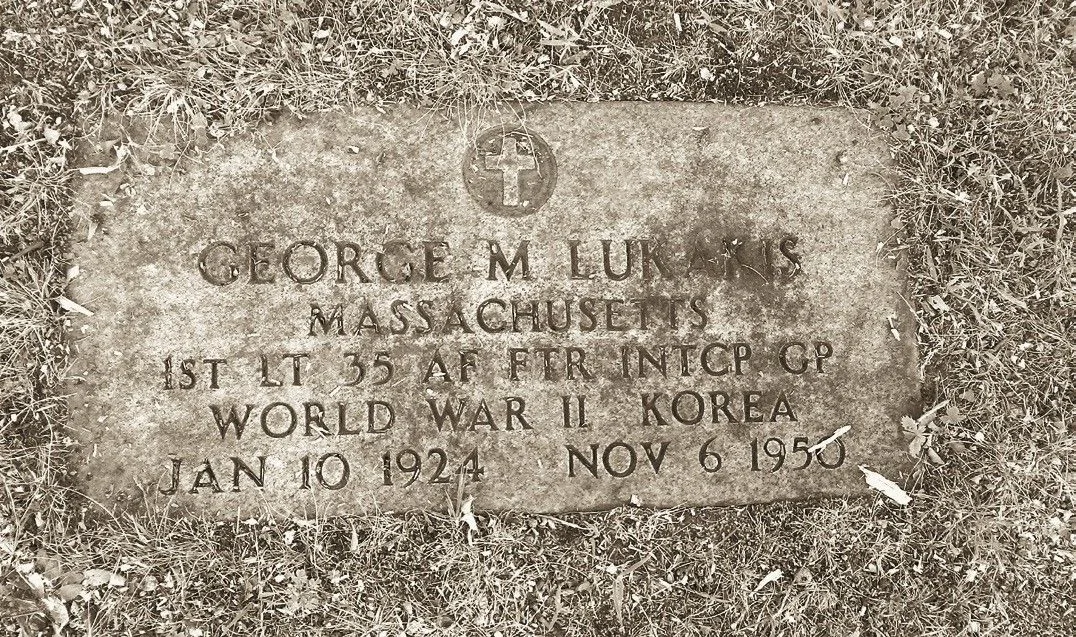
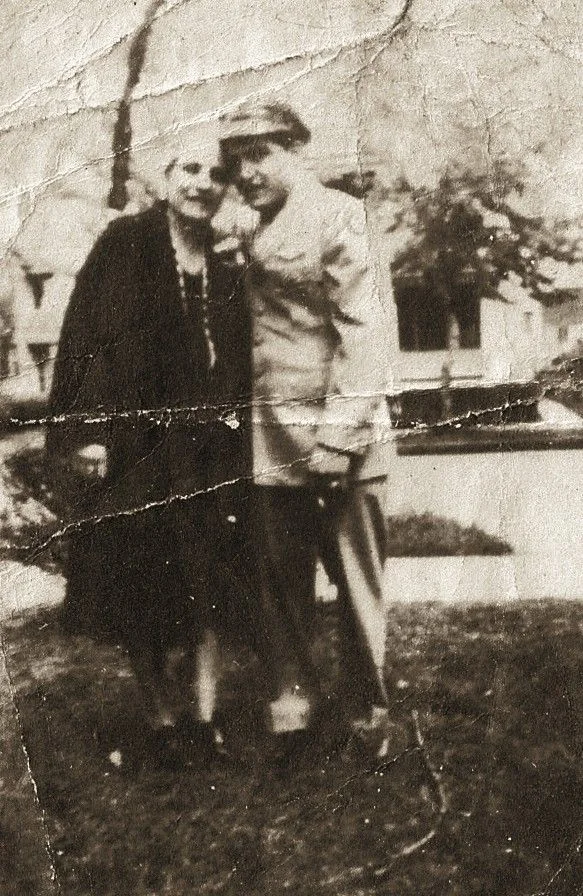
The effects records trace a second, quieter homecoming. Listed among George’s possessions were his pilot’s logbook, photographs and negatives, aircraft photographs, uniforms and a briefcase. They were more than inventory entries to those who had known him. The records also followed a 1946 Oldsmobile and a religious medal, with shipments and correspondence stretching into October 1951; they do not establish what subsequently survived in the family’s hands. Irene’s memorial arrangements named Fairview Cemetery in Chicopee. Graves records identify George as Greek Orthodox, while a standard government marker form bears the words “Latin Cross.” The two entries describe different kinds of paperwork, not proof that he had abandoned his faith.¹²³,¹²⁴,¹²⁵
The family’s care did not end with the funeral. In 1963 George’s younger brother, Captain John M. Luke of the Air Force Reserve, wrote again about military decorations and the recognition due to him. Through the years, Irene, Mary, Nick, John and those who came after them preserved what the official record could not: the image of a son and brother, cheerful enough to joke about the heat in Japan and to buy a pearl ring for his sister, determined enough to earn pilot wings after setbacks, and willing to serve once again when war came. He had left Chicopee as a young man with tools in his hands and flight in his imagination. It was to Chicopee that his long journey finally brought him home.¹²⁶
First Lieutenant George Michael Lukakis, United States Air Force. 10 January 1924 – 6 November 1950. Laid to rest in Chicopee, Massachusetts, on 19 September 1951.Υπολοχαγός George Michael Lukakis, Πολεμική Αεροπορία των Ηνωμένων Πολιτειών. 10 Ιανουαρίου 1924 – 6 Νοεμβρίου 1950. Αναπαύεται στο Chicopee της Μασαχουσέτης από τις 19 Σεπτεμβρίου 1951.
The journey home, 1950–51Η επιστροφή, 1950–51
- 7.11.1950Interred, UN Military
Cemetery No. 2, TaeguΤαφή, Στρατιωτικό Νεκροταφείο
ΟΗΕ Αρ. 2, Taegu - 26.1.1951Purple Heart sent with
Maj. Gen. Nugent’s letterΤο Purple Heart με επιστολή
του Υποστρ. Nugent - April 1951Απρίλιος 1951Chicopee asks for
his return that summerΤο Chicopee ζητά την επιστροφή
του εκείνο το καλοκαίρι - 9.8.1951Board reviews
the identificationΗ επιτροπή εξετάζει
την ταυτοποίηση - 17.9.1951Escorted by train,
New York to SpringfieldΜε συνοδεία, με τρένο,
Νέα Υόρκη–Springfield - 19.9.1951Laid to rest
in ChicopeeΤαφή
στο Chicopee
Η επόμενη μέρα έφερε την πρώτη από δύο ταφές. Στις 4 το απόγευμα της 7ης Νοεμβρίου 1950 ο Γιώργος ενταφιάστηκε στο Στρατιωτικό Νεκροταφείο Αρ. 2 των Ηνωμένων Εθνών στο Taegu, Τομέας C, Σειρά 1, Τάφος 219. Το αρχείο της υπηρεσίας καταγραφής τάφων περιέγραφε τον θάνατό του ως «KIA Burned in plane crash», σκοτωμένος σε μάχη, απανθρακωμένος σε συντριβή αεροσκάφους: η λιτή φράση μιας υπηρεσίας επιφορτισμένης με τη φροντίδα των νεκρών. Στο Chicopee, η Ειρήνη και η οικογένεια έμειναν με την είδηση του χαμού του και χωρίς άμεση προοπτική να τον φέρουν πίσω. Τον Ιανουάριο του 1951 ο Υποστράτηγος R. E. Nugent της έστειλε το Purple Heart, μαζί με ένα γράμμα που παραδεχόταν πόσο λίγο μπορούσε ένα παράσημο να απαλύνει τη θλίψη.¹¹³
«Αγαπητή κυρία Lukakis: Ανά τους αιώνες οι Ένοπλες Δυνάμεις απονέμουν διακρίσεις προς τιμήν των πεσόντων συμπατριωτών τους. Ο Υπουργός Αεροπορίας μού ζήτησε να σας διαβιβάσω το Purple Heart, που απονεμήθηκε μετά θάνατον στον γιο σας, Υπολοχαγό George M. Lukakis, ο οποίος θυσίασε τη ζωή του υπερασπιζόμενος την πατρίδα του. Το μετάλλιο αυτό έχει μικρή υλική αξία, είναι όμως πλούσιο σε εκείνη την παράδοση για την οποία οι Αμερικανοί πολεμούν και δίνουν γενναία τη ζωή τους. Ο Στρατηγός Washington, του οποίου το προφίλ κοσμεί το μετάλλιο, συμβολίζει τις προσπάθειές μας υπέρ των φιλελεύθερων λαών σε όλο τον κόσμο.
Επιπλέον, σας αποστέλλω χωριστά το Accolade, την τιμητική διάκριση που απονέμει ο Πρόεδρος και που αποτελεί την ύψιστη έκφραση ευγνωμοσύνης του έθνους μας. Τίποτα από όσα μπορεί να κάνει ή να πει η Πολεμική Αεροπορία δεν θα αναπληρώσει με κανέναν τρόπο την απώλεια του αγαπημένου σας. Έφυγε με τιμή και στην άξια συντροφιά των συμπατριωτών του. Επιτρέψτε μου, μεταφέροντάς σας τη βαθιά συμπάθεια της χώρας, να εκφράσω και την ευγνωμοσύνη μας για την ανδρεία και την αφοσίωσή του.»¹¹⁴
Η αναμονή συνεχίστηκε τον χειμώνα και την άνοιξη. Τον Φεβρουάριο αξιωματούχοι του Στρατού εξήγησαν ότι ο τάφος του στην Κορέα ήταν προσωρινός, αλλά ότι ο πόλεμος δεν τους επέτρεπε να υποσχεθούν ημερομηνία επαναπατρισμού. Την ίδια εποχή η Πολεμική Αεροπορία ετοίμαζε την επίδοση του Distinguished Flying Cross και του Air Medal με πέντε Φύλλα Δρυός. Ο Armand E. Daviau, γράφοντας τον Απρίλιο εκ μέρους της Υπηρεσίας Παροχών Βετεράνων του Chicopee, παρακάλεσε για λογαριασμό της Ειρήνης: «Θα έχετε την καλοσύνη να κάνετε ό,τι περνά από το χέρι σας ώστε η σορός να επιστρέψει αυτό το καλοκαίρι;» Δεν ήταν πια απλώς ζήτημα διοικητικής διαδικασίας. Η μητέρα του Γιώργου ήθελε τον γιο της πίσω στο σπίτι.¹¹⁵,¹¹⁶,¹¹⁷
Θα έχετε την καλοσύνη να κάνετε ό,τι περνά από το χέρι σας ώστε η σορός να επιστρέψει αυτό το καλοκαίρι;
Ο ιερέας William McNeil της βάσης Westover έγραψε κι εκείνος, ανήσυχος για την υγεία της Ειρήνης, ρωτώντας αν η επιστροφή θα μπορούσε να επισπευσθεί. Σε ένα από τα γράμματά του έγραψε κατά λάθος Δεκέμβριο ως μήνα θανάτου του Γιώργου· τα πρωτότυπα αρχεία θανάτου και ταφής ορίζουν τον Νοέμβριο. Ένα σημείωμα της 5ης Μαΐου περιγράφει τον McNeil να στέκεται δίπλα στην Ειρήνη και σε φίλους της οικογένειας την ώρα που επιδίδονταν τα παράσημα, χωρίς όμως να κατονομάζει κάθε μετάλλιο της τελετής. Στις 31 Μαΐου ένα ακόμη γράμμα, γραμμένο για λογαριασμό της Ειρήνης από μια κόρη της οικογένειας, ρωτούσε πότε θα επιστρέφονταν τα προσωπικά αντικείμενα και το αυτοκίνητο του Γιώργου. Εξηγούσε ότι η Ειρήνη ήταν άρρωστη. Μέσα σε αυτές τις ερωτήσεις για προσωπικά αντικείμενα φαίνεται με ιδιαίτερη καθαρότητα το μέγεθος της απώλειας μιας οικογένειας.¹¹⁸,¹¹⁹,¹²⁰
Στο παρασκήνιο, το προσωπικό καταγραφής τάφων του στρατού δούλευε για την ταυτοποίηση και την επιστροφή. Μια αμερικανική επιτροπή συνεδρίασε στις 9 Αυγούστου 1951 και εξέτασε τις πλάκες ταυτότητας, την προηγούμενη πιστοποίηση, οδοντιατρικές συγκρίσεις και τις καταγεγραμμένες συνθήκες του θανάτου. Το πρώτο έντυπο ενταφιασμού και τα μεταγενέστερα φύλλα ταυτοποίησης διαφέρουν ως προς τις πλάκες ταυτότητας που συνδέονταν με τη σορό. Η απόκλιση παραμένει στο αρχείο, η εγκεκριμένη ταυτοποίηση της επιτροπής όμως ισχύει. Μια ακριβής αφήγηση δεν χρειάζεται να κρύβει ότι τα σωζόμενα έγγραφα μπορεί να διαφωνούν σε τέτοιες λεπτομέρειες.¹²¹
Επιτέλους, τον Σεπτέμβριο, το ταξίδι της επιστροφής μπορούσε να οργανωθεί. Ένα μήνυμα της 15ης Σεπτεμβρίου ενημέρωνε το γραφείο τελετών που είχε επιλέξει η οικογένεια ότι η σορός του Γιώργου, με στρατιωτική συνοδεία, θα αναχωρούσε από τη Νέα Υόρκη με το τρένο 68 της New Haven στις 9:30 το πρωί της Δευτέρας 17 του μήνα, με προγραμματισμένη άφιξη στο Springfield στις 12:48 το μεσημέρι. Το γραφείο τελετών βεβαίωσε την παραλαβή την ίδια μέρα. Η οικογένεια ζήτησε ελληνορθόδοξη ακολουθία και στρατιωτικές τιμές στο νεκροταφείο· το σωζόμενο σημείωμα τηλεφωνικής συνομιλίας καταγράφει αυτές τις επιθυμίες, χωρίς να αποδεικνύει την ακριβή μορφή κάθε τελετής. Η οριστική ταφή έγινε στις 19 Σεπτεμβρίου 1951. Ύστερα από δέκα μήνες, ο Γιώργος είχε γυρίσει στη Μασαχουσέτη.¹²²
Τα αρχεία των προσωπικών του αντικειμένων καταγράφουν μια δεύτερη, πιο σιωπηλή επιστροφή. Ανάμεσα στα υπάρχοντα του Γιώργου ήταν το βιβλίο πτήσεων του πιλότου, φωτογραφίες και αρνητικά, φωτογραφίες αεροσκαφών, στολές και ένας χαρτοφύλακας. Για όσους τον είχαν γνωρίσει ήταν κάτι περισσότερο από εγγραφές σε μια απογραφή. Τα αρχεία παρακολουθούσαν επίσης ένα Oldsmobile του 1946 και ένα θρησκευτικό μετάλλιο, με αποστολές και αλληλογραφία που έφτασαν ως τον Οκτώβριο του 1951· δεν τεκμηριώνουν τι σώθηκε τελικά στα χέρια της οικογένειας. Οι διευθετήσεις της Ειρήνης για το μνήμα όριζαν το Fairview Cemetery στο Chicopee. Τα αρχεία τάφων καταγράφουν τον Γιώργο ως ελληνορθόδοξο, ενώ ένα τυποποιημένο κρατικό έντυπο επιτύμβιας πλάκας φέρει τις λέξεις «Latin Cross», λατινικός σταυρός. Οι δύο εγγραφές αφορούν διαφορετικά είδη γραφειοκρατίας και δεν αποδεικνύουν ότι είχε εγκαταλείψει την πίστη του.¹²³,¹²⁴,¹²⁵
Η φροντίδα της οικογένειας δεν τελείωσε με την κηδεία. Το 1963 ο μικρότερος αδελφός του Γιώργου, ο Λοχαγός John M. Luke της Εφεδρείας της Πολεμικής Αεροπορίας, έγραψε ξανά για τα στρατιωτικά του παράσημα και την αναγνώριση που του όφειλαν. Με τα χρόνια, η Ειρήνη, η Μαρία, ο Νίκος, ο Γιάννης και όσοι ήρθαν μετά από αυτούς διατήρησαν ό,τι δεν μπορούσε να κρατήσει το επίσημο αρχείο: την εικόνα ενός γιου και αδελφού αρκετά χαρούμενου ώστε να αστειεύεται για τη ζέστη της Ιαπωνίας και να αγοράζει ένα μαργαριταρένιο δαχτυλίδι για την αδελφή του, αρκετά αποφασισμένου ώστε να κερδίσει τις πτέρυγες του πιλότου μετά από αποτυχίες, και πρόθυμου να υπηρετήσει ξανά όταν ήρθε ο πόλεμος. Είχε φύγει από το Chicopee νέος, με εργαλεία στα χέρια και την πτήση στη φαντασία του. Και ήταν στο Chicopee που το μακρύ του ταξίδι τον έφερε τελικά πίσω στο σπίτι.¹²⁶
First Lieutenant George Michael Lukakis, United States Air Force. 10 January 1924 – 6 November 1950. Laid to rest in Chicopee, Massachusetts, on 19 September 1951.Υπολοχαγός George Michael Lukakis, Πολεμική Αεροπορία των Ηνωμένων Πολιτειών. 10 Ιανουαρίου 1924 – 6 Νοεμβρίου 1950. Αναπαύεται στο Chicopee της Μασαχουσέτης από τις 19 Σεπτεμβρίου 1951.
HonoursΤιμές
For his service in Korea George Lukakis was awarded the Distinguished Flying Cross, posthumously, the Air Medal with five Oak Leaf Clusters and, posthumously, the Purple Heart.Για την υπηρεσία του στην Κορέα ο Γιώργος Λουκάκης τιμήθηκε μετά θάνατον με το Distinguished Flying Cross, με το Air Medal με πέντε Φύλλα Δρυός και, μετά θάνατον, με το Purple Heart.
- Combat missionsΠολεμικές αποστολές
- 65+9 July – 11 October 19509 Ιουλίου – 11 Οκτωβρίου 1950
- Combat aircraftΑεροσκάφη μάχης
- 2F-80C · F-51D
- Air Medal
- +5Oak Leaf ClustersΦύλλα Δρυός
- AgeΗλικία
- 26born 1924 · killed 1950γεν. 1924 · σκοτώθηκε 1950
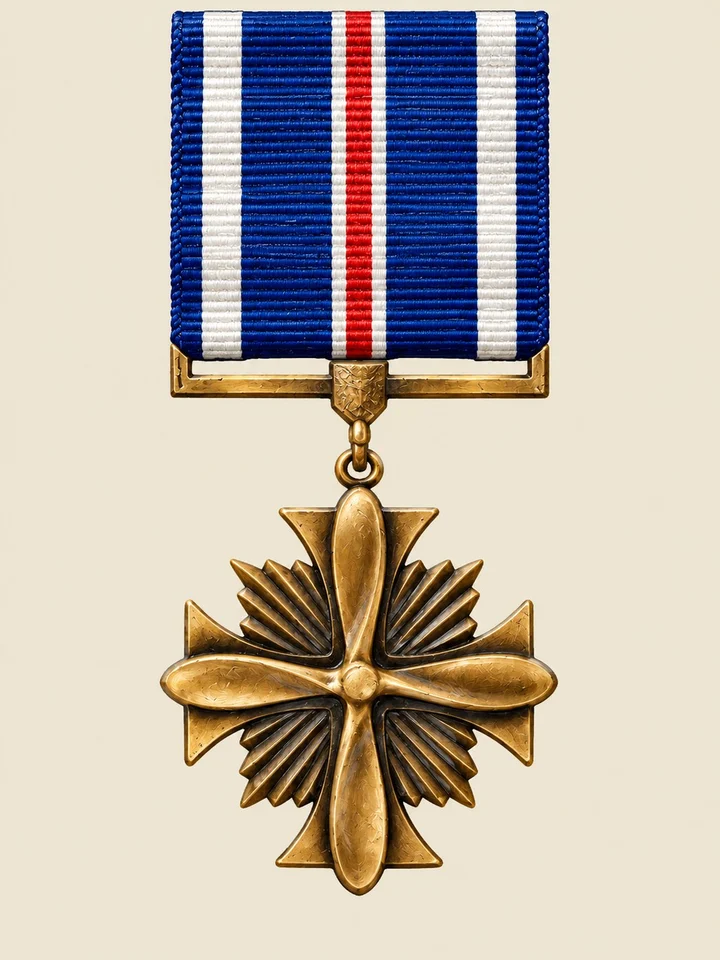
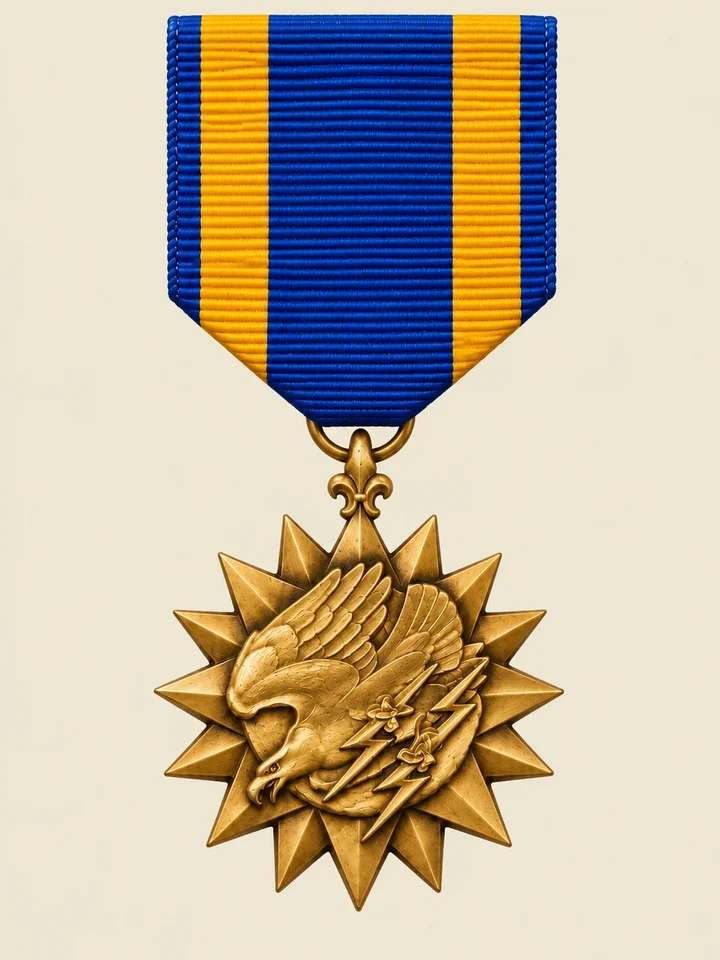
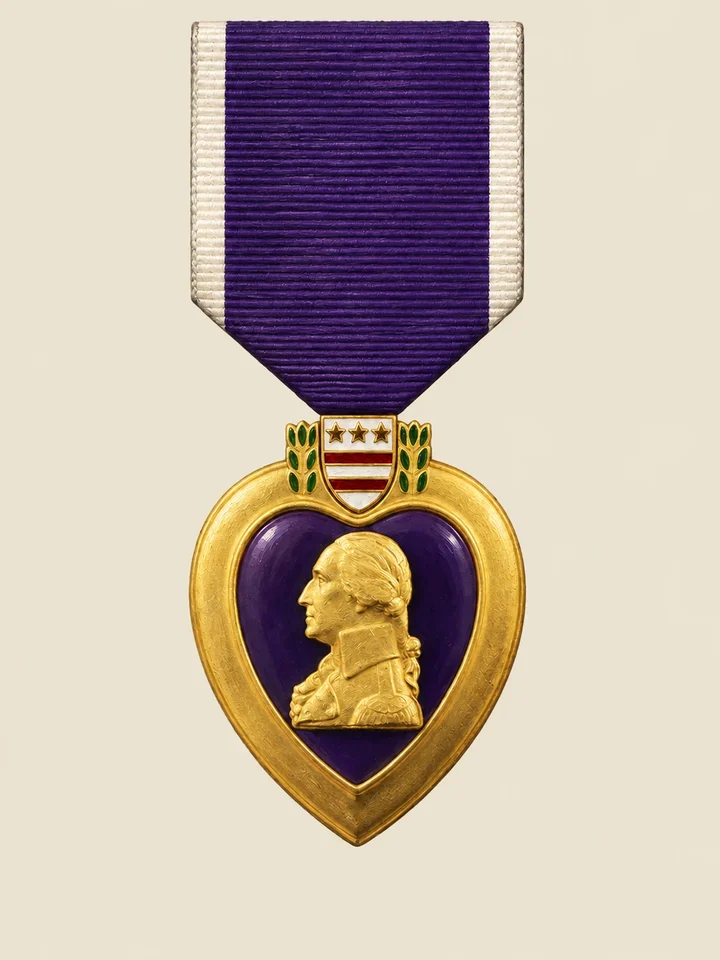
The Air MedalΤο Air Medal
After the First World War the United States created several new decorations, among them the Distinguished Flying Cross (1926) for heroism or extraordinary achievement in aerial flight. It led to the Air Medal: on 9 March 1942 Secretary of War Henry Stimson submitted the draft executive order creating it, to recognise anyone in the Army who distinguished himself by “meritorious achievement while participating in an aerial flight”. In Europe it was first awarded after five missions; in Korea the requirement rose to ten.Μετά τον Α΄ Παγκόσμιο Πόλεμο οι Ηνωμένες Πολιτείες θέσπισαν αρκετές νέες διακρίσεις, ανάμεσά τους το Distinguished Flying Cross (1926) για ηρωισμό ή εξαιρετικό επίτευγμα σε πτήση. Από αυτό προέκυψε το Air Medal: στις 9 Μαρτίου 1942 ο Υπουργός Πολέμου Henry Stimson υπέβαλε το σχέδιο του εκτελεστικού διατάγματος που το θέσπιζε, για να τιμηθεί όποιος στον Στρατό διακρινόταν για «αξιόλογο επίτευγμα κατά τη συμμετοχή σε πτήση». Στην Ευρώπη απονεμόταν αρχικά ύστερα από πέντε αποστολές· στην Κορέα η απαίτηση ανέβηκε στις δέκα.
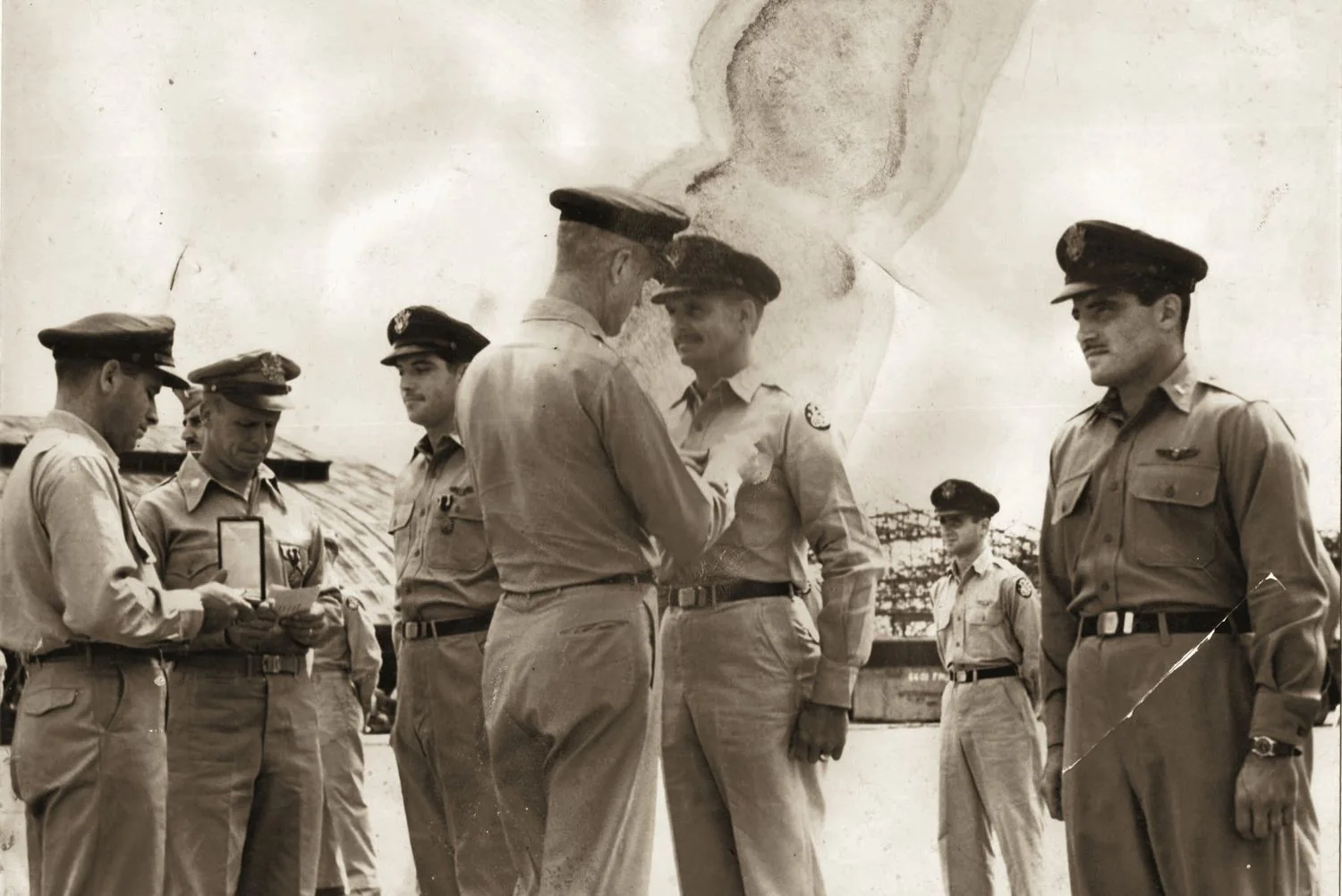
Image restoration, colorization & historical verificationΑποκατάσταση, επιχρωματισμός & ιστορική επαλήθευση εικόνων
The photographic material accompanying this biography has been carefully examined and, where necessary, digitally restored, enhanced, and colorized with the assistance of our dedicated AI Image Restoration Agent. This process includes the restoration of damaged, faded, or low-resolution photographs, the reconstruction of images originally reproduced in historical newspapers and other printed publications, and the improvement of contrast, sharpness, tonal balance, and overall image quality. Particular attention is given to achieving historically accurate colorization of military uniforms, insignia, aircraft, equipment, and surrounding environments through comparison with contemporary photographic and documentary references. Throughout the restoration process, every effort is made to preserve the original facial features, expressions, proportions, and historical authenticity of the individuals depicted. Where original photographs are unavailable, carefully reconstructed images from newspaper reproductions are clearly distinguished from original photographic sources. The objective is not to reinterpret or alter history, but to recover and present historical photographs with the greatest possible clarity, fidelity, and respect for the original material.Το φωτογραφικό υλικό που συνοδεύει αυτή τη βιογραφία εξετάστηκε προσεκτικά και, όπου χρειάστηκε, αποκαταστάθηκε, βελτιώθηκε και επιχρωματίστηκε ψηφιακά με τη βοήθεια του ειδικού μας AI Image Restoration Agent. Η διαδικασία περιλαμβάνει την αποκατάσταση κατεστραμμένων, ξεθωριασμένων ή χαμηλής ανάλυσης φωτογραφιών, την ανασύνθεση εικόνων που αρχικά δημοσιεύθηκαν σε ιστορικές εφημερίδες και άλλα έντυπα, καθώς και τη βελτίωση της αντίθεσης, της ευκρίνειας, της τονικής ισορροπίας και της συνολικής ποιότητας της εικόνας. Ιδιαίτερη προσοχή δίνεται στον ιστορικά ακριβή επιχρωματισμό των στρατιωτικών στολών, των διακριτικών, των αεροσκαφών, του εξοπλισμού και του περιβάλλοντος χώρου, μέσα από σύγκριση με σύγχρονες της εποχής φωτογραφικές και τεκμηριωτικές πηγές. Σε όλη τη διάρκεια της αποκατάστασης καταβάλλεται κάθε προσπάθεια ώστε να διατηρηθούν τα αυθεντικά χαρακτηριστικά του προσώπου, οι εκφράσεις, οι αναλογίες και η ιστορική αυθεντικότητα των προσώπων που απεικονίζονται. Όπου δεν υπάρχουν πρωτότυπες φωτογραφίες, οι προσεκτικά ανασυνθεμένες εικόνες από αναπαραγωγές εφημερίδων διακρίνονται σαφώς από τις πρωτότυπες φωτογραφικές πηγές. Στόχος δεν είναι να επανερμηνευθεί ή να αλλοιωθεί η ιστορία, αλλά να ανακτηθούν και να παρουσιαστούν οι ιστορικές φωτογραφίες με τη μεγαλύτερη δυνατή καθαρότητα, πιστότητα και σεβασμό προς το πρωτότυπο υλικό.
Sources & acknowledgementsΠηγές & ευχαριστίες
This dossier tells the story of 1st Lt. George M. Lukakis from his Official Military Personnel File (OMPF) and Individual Deceased Personnel File (IDPF), the histories of the 39th Fighter-Interceptor Squadron and the 35th Fighter-Interceptor Group, official correspondence with his family, contemporary newspapers, and the photographs, letters and recollections kept by his family. It is based on the chapter on George Lukakis in the Greek book Έλληνες σε ξένα cockpit, Volume IV. Where the surviving documents disagree, the text says so. Thanks to the family of George M. Lukakis, who kept his memory, his letters and his photographs for more than seventy years. Photographs: family archive courtesy of Christina Luke; Robert Dunnavant (formation photograph); Allan Lambert (Taegu, August 1950); USAAF via Wikipedia (Spence Field); National Archives 66384 AC (B-29 ‘Rush Order’). Aircraft profile: F-51D 44-73728 ‘FF-728’ by Gaëtan Marie.Ο φάκελος αφηγείται την ιστορία του Υπολοχαγού George M. Lukakis με βάση τον Επίσημο Στρατιωτικό Φάκελο Προσωπικού του (OMPF) και τον Ατομικό Φάκελο Θανόντος (IDPF), τα ιστορικά της 39ης Μοίρας Αναχαίτισης και της 35ης Σμηναρχίας Αναχαίτισης, την επίσημη αλληλογραφία με την οικογένειά του, εφημερίδες της εποχής και τις φωτογραφίες, τα γράμματα και τις αναμνήσεις που φύλαξε η οικογένειά του. Βασίζεται στο κεφάλαιο για τον Γιώργο Λουκάκη στο βιβλίο Έλληνες σε ξένα cockpit, Τόμος IV. Όπου τα σωζόμενα έγγραφα διαφωνούν, το κείμενο το λέει. Ευχαριστίες στην οικογένεια του George M. Lukakis, που φύλαξε τη μνήμη του, τα γράμματα και τις φωτογραφίες του για περισσότερα από εβδομήντα χρόνια. Φωτογραφίες: οικογενειακό αρχείο, ευγενική παραχώρηση της Christina Luke· Robert Dunnavant (φωτογραφία σχηματισμού)· Allan Lambert (Taegu, Αύγουστος 1950)· USAAF μέσω Wikipedia (Spence Field)· National Archives 66384 AC (B-29 «Rush Order»). Προφίλ αεροσκάφους: F-51D 44-73728 «FF-728» του Gaëtan Marie.
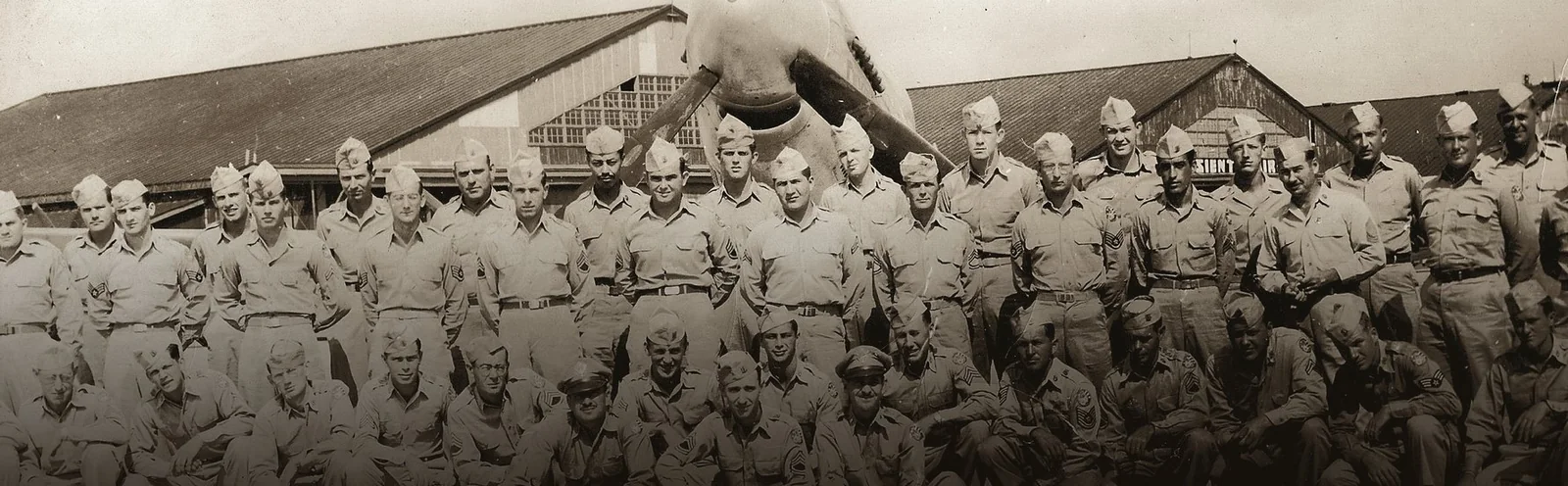
Notes & referencesΣημειώσεις & παραπομπές
OMPF and IDPF refer to the parts and pages of his personnel files.Οι σημειώσεις δίνονται στα αγγλικά, όπως στο πρωτότυπο· OMPF και IDPF είναι τα μέρη και οι σελίδες των φακέλων του.
- 02 · The Boy from Chicopee02 · Το αγόρι από το Chicopee
- 1“Edited Community and Family Background,” unpublished family-history text, undated, Lukakis family collection.
- 2Commonwealth of Massachusetts, City of Springfield, certified birth-record extract for George Lukakis, signed by City Clerk Clifford F. Smith, September 19, 1942, OMPF 4, p. 26 (birth recorded January 14, 1924). The typed parental entry reads 'Michael - Ermi Romakis'.
- 3Chicopee Directory, 1922, s.v. “Lukakis Michael”; Chicopee Directory, 1930, s.v. “Lukakis Michael”; Chicopee Directory, 1932, 121, s.v. “Lukakis Michael (Irene).” All digitized by Chicopee Public Library; 1932 scan: https://www.chicopeepubliclibrary.org/archives/files/original/1f13668f6d073206c07e592ed0991ec1.pdf
- 4“Edited Community and Family Background,” family-history text, section “Community and Family Background,” Lukakis family collection.
- 5Chicopee High School, handwritten letter of recommendation to the Army Air Cadet Corps Recruiting Office, 19 June 1942, OMPF 2, p. 40.
- 6Chicopee High School stationery, handwritten endorsement of George Lukakis signed “(Miss) C. M. Bartholomew”, 15 September 1942, OMPF 2, p. 38.
- 7J. L. Flarer, Officer in Charge, and G. G. Mackintosh, Supervisor, G. G. Mackintosh Apprentice School, Springfield Armory, letter “To Whom It May Concern,” 6 November 1942, OMPF 2, p. 39. The original refers to tool-crib experience and a good leave record.
- 8George Michael Lukakis, “Application for Appointment as Aviation Cadet,” Chicopee, 13 November 1942, and attached sworn affidavit, OMPF 2, pp. 36–37; Aviation Cadet Examining Board, Springfield, 24 November 1942, ibid., p. 35.
- 03 · Learning to Fly03 · Μαθαίνοντας να πετά
- 9Headquarters, 65th College Training Detachment (Aircrew), Syracuse, New York, Special Orders No. 3, March 9, 1943, paragraph 4 and named continuation “George M. Lukakis, 11106969,” OMPF 2, pp. 55–57 (pp. 55–56 are duplicate impressions of the same first sheet); Headquarters, 65th College Training Detachment, Special Orders No. 16, April 26, 1943, paragraph 5 and named entry “Lukakis, George M., 11106969,” ibid., p. 54. SO 3 specifies attachment for administration effective March 3; SO 16 confirms Aviation Student detail effective March 8.
- 1065th College Training Detachment (Aircrew), Syracuse University, “Final Grade Sheet,” George M. Lukakis, ASN 11106969, departure 7 August 1943, OMPF 2, p. 45; corresponding physical-training record dated 26 July 1943, ibid., p. 46.
- 11Headquarters, 65th College Training Detachment (Aircrew), Syracuse University, Special Orders No. 48, July 6, 1943, paragraph 1 and individual named entry under “SQUADRON K,” OMPF 2, pp. 47–48. The record authorizes a period of flight-related duty, without an individual sortie tally.
- 1265th College Training Detachment (Aircrew), Syracuse University, Special Orders No. 58, August 6, 1943, introductory transfer instructions and named entry under “Squadron K,” OMPF 2, pp. 50–51; “Final Grade Sheet,” ibid., p. 45; Nashville Army Air Center, “Papers Included in 201 Files,” handwritten intake entry, ibid., p. 49. The checklist is cited for provenance, without resolving its indistinct handwritten day.
- 13Headquarters, 65th College Training Detachment (Aircrew), Syracuse University, Special Orders No. 58, August 6, 1943, second retained copy with “SQUADRON K” named entry “Lukakis, George M.,” OMPF 2, pp. 28–30; compare first copy ibid., pp. 50–51. These are duplicate copies of the same order, not separate transfers.
- 14Army Air Forces classification and acceptance record, signed by George M. Lukakis, 23 August 1943, OMPF 2, p. 32.
- 15U.S. Army Air Forces, “Designation or Change in Address of Beneficiary,” witnessed at Nashville, Tenn., August 17, 1943, OMPF 1, pp. 28–29; Veterans Administration, “Application for National Service Life Insurance,” signed December 2, 1943, ibid., p. 80. The latter is an application, not confirmation of issuance or payment.
- 16George M. Lukakis, signed “Preference Form,” reproduced twice in the officer personnel file, OMPF 2, pp. 24–25. Both copies unambiguously number pilot 1, bombardier 2 and navigator 3; their handwritten date reads “8/9/43”.
- 17Nashville Army Air Center, Special Orders No. 253, paragraph 3, September 28, 1943, and named entry under “Privates (G-2),” OMPF 2, pp. 26–27; Maxwell Field, Special Orders No. 273, paragraph 3, October 5, 1943, introductory text and named “Squadron K, Group III” entry, ibid., pp. 13, 17.
- 18Headquarters, Maxwell Field, Alabama, Special Orders No. 324, paragraph 14, November 26, 1943, named entry “LUKAKIS, GEORGE M.,” classified “SHARPSHOOTERS,” score 76, OMPF 2, p. 8.
- 19Headquarters, Maxwell Field, Alabama, Special Orders No. 326, paragraph 16, November 28, 1943, OMPF 2, pp. 4–5 (Squadron K, Group III entry and departure certificate on p. 5); compare the December 6 entries discussed in the preceding paragraph.
- 20U.S. Army Air Forces Pre-Flight School (Pilot), “Final Grade Record,” Maxwell Field, December 6, 1943, OMPF 1, p. 81; Headquarters, Maxwell Field, Special Orders No. 326, paragraph 16, November 28, 1943, ibid., pp. 82–84; 64th AAF Flying Training Detachment, “Final Grade” record, March 22, 1944, ibid., p. 73.
- 21Southern Aviation School, 64th AAF Flying Training Detachment, “Link Trainer Individual Progress Record,” George M. Lukakis, Class 44-G, individual exercises Feb.–Mar. 1944, OMPF 1, p. 75. Some individual handwritten dates are indistinct.
- 22U.S. Army Air Forces, “Individual Flight Record —Student,” 64th AAF Flying Training Detachment, George M. Lukakis, OMPF 1, p. 59. The form records 224 landings and 90:00 total flying time; 54:15 is recorded as student first-pilot time.
- 23Headquarters, 64th AAF Flying Training Detachment, Special Orders No. 59, 22 March 1944, including Lukakis and 24 March transportation certificate, OMPF 1, pp. 76–78; Headquarters, 2150th AAF Base Unit, Contract Pilot School (Basic), Bush Field, “Final Grade Sheet,” p. 61; Special Orders No. 11, 20 May 1944, list and transportation certificate, ibid., pp. 63–66.
- 24Headquarters, 72nd AAF Flying Training Detachment, Bush Field, Special Orders No. 50, March 24, 1944, para. 1, OMPF 1, pp. 70–71; compare the receiving-station entry in the same file, p. 61.
- 25Headquarters, 72nd AAF Flying Training Detachment, Bush Field, Georgia, Special Orders No. 70, 30 April 1944, par. 2, transfer of Class 44-G aviation cadets to the 2150th AAF Base Unit effective 1 May, name entry “Lukakis, George M.”; OMPF 1, pp. 67–68.
- 26Headquarters, 2150th AAF Base Unit, Contract Pilot School (Basic), Bush Field, “Final Grade Sheet,” George M. Lukakis, dated report 25 March 1944, OMPF 1, p. 61; Student “Individual Flight Record,” same collection, p. 62 (the latter has a nonmatching printed serial number requiring a separate check); Army Air Forces Pilot School, final grade sheet, p. 38.
- 27Georgia Aero Tech, “Instrument Flight Check,” George M. Lukakis, OMPF 1, pp. 57–58. The printed grading scale identifies C as Average, D as Below Average, and B as Above Average.
- 28Headquarters, Army Air Forces Pilot School (Advanced Single Engine), Spence Field, Georgia, Special Orders No. 143, 24 May 1944, par. 38, listing “George M. Lukakis, 11106969” as reporting and attached to Section H, 2133d AAF Base Unit; OMPF 1, p. 56.
- 29War Department, “Personnel Qualifications Questionnaire,” signed by George Michael Lukakis, 27 May 1944, OMPF 1, pp. 15, 18.
- 30War Department, “Personnel Qualifications Questionnaire,” 27 May 1944, OMPF 1, p. 16.
- 31AAF Pilot School (Advanced—Single Engine), Spence Field, Moultrie, Georgia, “Proceedings of the Faculty Board in the Case of Class 44-G,” 26 June 1944, recommendation for appointment and pilot rating upon graduation, entry no. 146, “Lukakis, George Michael,” serial 11106969; OMPF 1, pp. 20, 22, 24. This was an institutional recommendation, not the final appointment order.
- 32Headquarters, Army Air Forces Pilot School (Advanced Single Engine), Spence Field, Moultrie, Georgia, Class 44-G Faculty Board proceedings, 26 June 1944, concluding signatures of Col. W. V. Brown and Maj. Dwight W. Pratt, OMPF 1, p. 26.
- 33“Rating Scale for Selection of Commissioned and Flight Officers,” assessments of George M. Lukakis by Lt. C. R. Cross, 30 November 1943, Capt. Joseph R. Kiley, 21 March 1944, 2nd Lt. R. M. Sterling, 25 May 1944, and 1st Lt. Clyde B. Smith, 26 June 1944, OMPF 1, pp. 37, 36, 35, 33, respectively; the printed key states 2 = Excellent, 4 = Average, 5 = Below Average.
- 34Army Air Forces, “Physical Fitness Test and Record Card,” George M. Lukakis, cumulative entries at Camden, Bush Field and Spence Field, OMPF 1, p. 41.
- 35U.S. Army Air Forces, training record reverse, typed notation “Instrument test passed 27 July 1944,” OMPF 1, p. 40.
- 36Headquarters, Army Air Forces Eastern Flying Training Command, Personnel Orders No. 29, 26 July 1944, pars. 25–26, including “Lukakis, George Michael, T 63 921,” effective 4 August, OMPF 1, pp. 30–31; Headquarters, Army Air Forces Pilot School (Advanced Single Engine), Spence Field, Special Orders No. 210, 30 July 1944, par. 1, pp. 54–55; “Roster of Graduates—Class 44-G,” Aviation Cadets, entry “Lukakis, George Michael,” Flight Officer T-63921, appointment and acceptance 4 August 1944, pp. 43, 46.
- 37Headquarters, Army Air Forces Eastern Flying Training Command, Personnel Orders No. 29, 26 July 1944, paragraph 26 and named continuation, OMPF 3, pp. 72–74; certified extract naming F/O George Michael Lukakis T-63921, ibid., p. 119.
- 38Headquarters, Army Air Forces Pilot School (Advanced Single Engine), Spence Field, Moultrie, Georgia, Special Orders No. 215, 4 August 1944, paragraph 2, entry “FO GEORGE MICHAEL LUKAKIS, T-63921,” OMPF 1, p. 51.
- 3964th AAF Flying Training Detachment, Southern Aviation School, “Final Grade” record, March 22, 1944, OMPF 1, pp. 73– 74; Headquarters, 2150th AAF Base Unit, Bush Field, “Final Grade Sheet,” ibid., p. 60; Army Air Forces Pilot School (Advanced Single Engine), Spence Field, “Final Grade Sheet,” August 4, 1944, ibid., p. 38.
- 40Army Air Forces Pilot School (Advanced Single Engine), Spence Field, “Final Grade Sheet,” August 4, 1944, OMPF 1, p. 38; U.S. Army Air Forces, “Individual Flight Record—Student,” George Michael Lukakis, ibid., p. 39. Both original records state 250 hours 45 minutes total, including 153 hours 25 minutes solo.
- 41Army Air Forces Pilot School (Advanced Single Engine), “Final Statement,” George M. Lukakis, 8 September 1944, Exhibit C, OMPF 3, p. 71.
- 42Headquarters, Army Air Forces Pilot School (Advanced Single Engine), Spence Field, “Report of Unsatisfactory Progress,” 9 September 1944, signed acknowledgment by Flight Officer George M. Lukakis, OMPF 3, p. 70.
- 43Army Air Forces Pilot School (Advanced Single Engine), Spence Field, “Proceedings of the Faculty Board,” 13 September 1944, including board roster, findings and recommendations, OMPF 3, pp. 65–68; final instructor statement, ibid., p. 71.
- 44Headquarters Army Air Forces Pilot School (Advanced Single Engine), Spence Field, Restricted Special Orders No. 255, September 14, 1944, para. 4, utility-pilot assignment, OMPF 6, p. 9; Spence Field Special Orders No. 270, September 29, 1944, para. 4, transfer to Amarillo with report-by date October 2 and movement effective October 3, ibid., p. 8; Headquarters Amarillo Army Air Field Special Orders No. 277, October 3, 1944, para. 23 and named continuation, ibid., pp. 6–7. The later retrospective 30 October date does not supersede these contemporary orders.
- 45Headquarters, Amarillo Army Air Field, Restricted Special Orders No. 310, 14 November 1944, paragraph 56, OMPF 3, pp. 87–88; Lowry Field, “Proceedings of a Board of Officers,” 12 February 1945, ibid., pp. 77–79; Headquarters, Lowry Field, Restricted Special Orders No. 48, 17 February 1945, paragraph 19, ibid., p. 93.
- 46Headquarters Army Air Forces, Personnel Orders No. 280, 22 November 1944, para. 8, OMPF 3, p. 75; Headquarters Lowry Field, Operations Orders No. 40, 9 February 1945, para. 1, ibid., p. 89.
- 47Headquarters Lowry Field, Special Orders No. 44, 13 February 1945, para. 1, OMPF 3, p. 90; Headquarters Army Air Forces, Personnel Orders No. 38, 13 February 1945, para. 10, ibid., p. 76; Headquarters Lowry Field, Special Orders No. 71, 12 March 1945, para. 2, ibid., pp. 94–95.
- 48U.S. Army Air Forces Pilot School (Specialized Very Heavy Bombardment), 3030th AAF Base Unit, Roswell Army Air Field, New Mexico, “Special School Efficiency Report,” George M. Lukakis, B-29 Transition (Flight Engineer), course March 5–April 29, 1945, signed by Capt. Ezra Melrose, OMPF 7, p. 16. Compare officer chronological records, ibid., pp. 4 and 8 for the later completion-date variants.
- 49Maj. George L. Simmons, “Efficiency Report,” Headquarters 328th Army Air Forces Base Unit (CCTS VHB), Gulfport Army Air Field, Mississippi, July 1, 1945, reporting period January 1–June 30, 1945, OMPF 7, p. 17.
- 50Headquarters 328th Army Air Forces Base Unit (CCTS VHB), Gulfport Army Air Field, Mississippi, Restricted Special Orders No. 212, July 31, 1945, transfer of aircraft crews to Kearney Army Air Field, Crew No. 19, OMPF 6, pp. 4–5, especially p. 5. The roster identifies George M. Lukakis by Flight Officer serial T-63921 and crew code “OE”; no operational sortie is stated.
- 51U.S. Army Air Forces, “Officer Qualification Record,” chronological military service, George M. Lukakis, OMPF 7, p. 4; Headquarters 328th AAF Base Unit, Special Orders No. 212, July 31, 1945, OMPF 6, pp. 4–5; compare U.S. Army separation summary cited in the next section.
- 52Headquarters, Army Service Forces, First Service Command, War Department Separation Center, Fort Devens, Massachusetts, Special Orders No. 54, 23 February 1946, paragraph 4 and named continuation, OMPF 3, pp. 125– 126 (duplicate beginning at p. 111).
- 53U.S. Army, “Military Record and Report of Separation,” George M. Lukakis, March 21, 1946, OMPF 4, p. 11; U.S. Army, “Separation Qualification Record,” ibid., pp. 12–13. These are separation-era occupational summaries and not individual flight logs.
- 04 · A Second Chance in the Air04 · Μια δεύτερη ευκαιρία
- 54U.S. Air Force, “WD AGO Form 66,” Officer Qualification Record for George M. Lukakis, employment-and-awards continuation, signed November 29, 1948, OMPF 7, p. 2. Civilian experience lists Sewak Company of America (1946–48) and Savage Arms Corporation (Mar.–Sep. 1948); the reported ranges overlap.
- 55War Department, commission of George Michael Lukakis as Second Lieutenant, Army of the United States, appointment effective 18 April 1947, issued at Washington 14 May 1947, OMPF 3, p. 127; George M. Lukakis, signed Reserve commission application showing separate appointment and acceptance dates, ibid., p. 116; Oath of Office sworn by Lukakis at Westover Field, 24 April 1947, ibid., p. 118; Headquarters USAF, Statement of Military Service, 8 June 1950, ibid., p. 48.
- 56George M. Lukakis, handwritten letter beginning “Dear Sir,” 25 April 1947, OMPF 3, p. 121; War Department appointment correspondence, 18 April 1947, ibid., p. 122.
- 57Headquarters, 106th AAF Base Unit (Reserve), Westover Field Air Reserve Training Detachment, Chicopee Falls, Massachusetts, “Request for Orders,” 23 October 1947, OMPF 3, p. 114.
- 58George Michael Lukakis, signed “Application for Extended Active Duty with the United States Air Force,” 19 May 1948, OMPF 3, p. 109; 2349th AF Overseas Replacement Depot, Hamilton AFB, “Report of Entry on Active Duty,” 18 March 1949, ibid., p. 51.
- 59Department of the Air Force, Headquarters USAF, Special Orders No. 178, 9 September 1948, named extract, OMPF 3, p. 54 (duplicate p. 105); Headquarters USAF, “Extended Active Duty Requirements,” 9 September 1948, ibid., pp. 60, 106; Headquarters USAF, “Temporary Appointment in the Air Force of the United States,” 30 September 1948, ibid., p. 107; “Physical Examination for Flying,” Hamilton Air Force Base, 5 October 1948, ibid., pp. 58–59 (additional copy pp. 61–62).
- 60George Michael Lukakis, Application for National Service Life Insurance, signed at Hamilton Air Force Base, 4 October 1948, OMPF 3, pp. 100–102; compare Veterans Administration, earlier National Service Life Insurance application, signed 2 December 1943, OMPF 1, p. 80. Both are applications, not evidence of policy issuance, final beneficiaries or payout.
- 61Headquarters 2349th Air Force Overseas Replacement Depot, Hamilton Air Force Base, California, Special Orders No. 39, October 21, 1948, paragraph 18 and overseas passenger roster, entry 20, OMPF 5, pp. 57–58; U.S. Air Force, Officer Qualification Record, “Chronological Record of Military Service,” OMPF 7, p. 4.
- 62Headquarters, 35th Air Base Group, Special Orders No. 66, November 12, 1948, paragraph 17, OMPF 5, p. 56; Headquarters, 39th Fighter Squadron, Orders No. 21, December 3, 1948, paragraph 2, ibid., p. 53; Orders No. 23, December 13, 1948, paragraph 3, ibid., p. 54.
- 63Headquarters USAF, Personnel Orders No. 2, 4 January 1949, paragraphs 3–4, OMPF 3, p. 96.
- 64Headquarters, 35th Fighter Wing, “Officers’ Interim Training,” June 7, 1949, OMPF 5, p. 46.
- 65U.S. Air Force, “Report of Officer Effectiveness,” AF Form 77, George M. Lukakis, period 1 February–30 June 1949, reporting officer Capt. Ervin C. Ethell, indorsed by Lt. Col. Archie M. Burke; OMPF 7, p. 10.
- 66United States Air Force, “Report of Officer Effectiveness,” AF Form 77, Second Lieutenant George M. Lukakis, reporting period February 1–June 30, 1949, June 30, 1949, comments by Capt. Ervin C. Ethell, indorsed by Lt. Col. Archie M. Burke; OMPF 7, p. 10.
- 67Capt. Ervin C. Ethell, “Report of Officer Effectiveness,” for 1 February–30 June 1949, 30 June 1949, OMPF 7, p. 10.
- 68Headquarters, 35th Air Base Group, Special Orders No. 184, August 8, 1949, paragraph 15, OMPF 5, p. 44; Special Orders No. 196, August 22, 1949, paragraph 18, ibid., p. 43; FAF Forms 32 and 33, ibid., pp. 14–15.
- 69Capt. Ervin C. Ethell, “Report of Officer Effectiveness,” 18 November 1949, with endorsement by Lt. Col. Jack Delmar Dale Jr., OMPF 7, p. 12.
- 70Maj. Gerald Brown, “Recommendation for Promotion of Officer,” DA AGO Form 78, 7 March 1950, OMPF 3, p. 9.
- 71Maj. Gerald Brown to Commanding Officer, 35th Fighter-Interceptor Group, memorandum, “Promotion of Officer in USAF Reserve,” 7 March 1950, OMPF 3, p. 11.
- 72Maj. Gerald Brown, “Promotion of Officer in USAF Reserve,” 39th Fighter-Interceptor Squadron, Johnson Air Base, 7 March 1950, OMPF 3, p. 11; endorsement and recommendation, ibid., pp. 9–10.
- 73Headquarters Fifth Air Force, correspondence on “Recommendation for Promotion of Officer,” 22 March 1950, with 35th Fighter-Interceptor Wing endorsement, 28 March 1950, OMPF 2, p. 58; Headquarters USAF, reserve-appointment memorandum, 9 August 1950, ibid., pp. 65–66 (duplicate copy on p. 66).
- 74Headquarters Far East Air Forces, Special Orders No. 81, 16 May 1950, paragraph 1, OMPF 3, p. 50.
- 75USAF, WD AGO Form 66A “Report of Change for WD AGO Form 66,” January 12 and July 11, 1949, OMPF 6, p. 1; May 26 and 30, 1950, ibid., p. 2. The latter reports May 24 as MOS change effective date and May 16 as First Lieutenant rank date.
- 76FAF Form No. 32, May 26, 1950, OMPF 5, p. 12; FAF Form No. 33, June 5, 1950, ibid., p. 9; Headquarters, 39th Fighter-Interceptor Squadron, Order No. 21, June 3, 1950, ibid., p. 27.
- 05 · The Shooting Stars Go to War05 · Τα Shooting Star στον πόλεμο
- 77Headquarters, 35th Fighter-Interceptor Wing, Special Orders No. 123, June 6, 1950, paragraph 13, OMPF 4, p. 31; “Report of Change,” George M. Lukakis, August 23, 1950, ibid., p. 30.
- 78Organizational History Branch, Research Division, Air Force Historical Research Agency, The U.S. Air Force in Korea: Campaigns, Units, and Stations, 1950–1953, edited by Judy G. Endicott (Washington, DC: Air Force History and Museums Program, 2001), 61–62, https://www.govinfo.gov/content/pkg/GOVPUB-D301-PURL-gpo111119/pdf/GOVPUB-D301-PURL-gpo111119.pdf.
- 79Maj. Charles J. Bowers, “Certificate,” 27 August 1950, listing ten F-80C combat sorties 16–28 July 1950, OMPF 3, p. 32; “Citation,” Air Medal, First Oak Leaf Cluster, ibid., p. 31.
- 80Headquarters Fifth Air Force, Advance, General Orders No. 4, July 19, 1950, sec. III, “Air Medal,” continuation sheet, entry for First Lieutenant George M. Lukakis and period July 9–16, 1950, OMPF 7, pp. 24–25. An unexplained ink strike is present on the entry; no order rescinding the award has been identified.
- 81Major Gerald Brown, “Recommendation for the Award of the First Oak Leaf Cluster in Lieu of an Additional Air Medal,” 39th Fighter-Interceptor Squadron, 27 August 1950, OMPF 3, p. 29; Headquarters Fifth Air Force in Korea, third endorsement approving the First Oak Leaf Cluster, 19 September 1950, ibid., p. 28.
- 82Headquarters 35th Fighter-Interceptor Group, first endorsement, 5 September 1950, signed Lt. Col. Jack D. Dale Jr.; Headquarters 6150th Tactical Support Wing, second endorsement, 7 September 1950, signed Capt. Justin R. Hall Jr., OMPF 3, p. 30; Headquarters Fifth Air Force, third endorsement, 19 September 1950, ibid., p. 28.
- 83Maj. Charles J. Bowers, “Certificate,” 6 September 1950, sorties 31 July–5 August 1950, OMPF 3, p. 38; “Citation,” Air Medal, Second Oak Leaf Cluster, ibid., p. 37; Maj. Gerald Brown, award recommendation, ibid., p. 35.
- 84Headquarters Fifth Air Force in Korea, third endorsement concerning the Second Oak Leaf Cluster to the Air Medal, 25 September 1950, OMPF 3, p. 34. Compare Headquarters Fifth Air Force in Korea, General Orders No. 46, September 21, 1950, second-cluster entry for First Lieutenant Lukakis with award interval July 31–August 4, 1950, OMPF 7, p. 22; the squadron’s operations certificate extends to August 5, OMPF 3, p. 38. No correcting order has been identified.
- 85Headquarters 35th Fighter-Interceptor Group, first endorsement, 13 September 1950; Headquarters 6150th Tactical Support Wing, second endorsement, 13 September 1950, concerning 39th FIS letter of 6 September 1950, OMPF 3, p. 36; Headquarters Fifth Air Force, third endorsement of 25 September 1950, ibid., p. 34.
- 86Major Thomas D. Robertson, “Recommendation for the Award of the Distinguished Flying Cross (Posthumously),” concerning First Lieutenant George M. Lukakis, December 28, 1950, 39th Fighter-Interceptor Squadron, OMPF 4, p. 44; U.S. Air Force, “Decorations Certificate Data Sheet,” entry for DFC, “Korea, 7 August 1950,” ibid., p. 41; “Mother to Receive DFC for Lukakis Killed in Korea,” Transcript-Telegram, May 4, 1951, 2. The printed newspaper target claims have not been independently verified as an operational damage assessment.
- 06 · Mustangs over Korea06 · Mustang πάνω από την Κορέα
- 8739th Fighter-Interceptor Squadron, Third Oak Leaf Cluster operations certificate, signed by Major Charles J. Bowers, September 22, 1950, OMPF 3, p. 17, ten F-51 sorties August 8–26, 1950; for the separately located Fourth Oak Leaf Cluster certificate, see Maj. Charles J. Bowers, “Certificate,” September 22, 1950, OMPF 5, p. 24, duplicate p. 63.
- 88Maj. Gerald Brown, recommendation for Third Oak Leaf Cluster, 22 September 1950, OMPF 3, p. 14; Third Oak Leaf Cluster citation, ibid., p. 16; Maj. Charles J. Bowers, certified combat-mission roster, 22 September 1950, ibid., p. 17.
- 89Headquarters Fifth Air Force in Korea, third endorsement approving the Third Oak Leaf Cluster, 11 October 1950, OMPF 3, p. 13; preceding endorsement chain, ibid., p. 15. Compare Headquarters Fifth Air Force in Korea, General Orders No. 65, October 4, 1950, third-cluster award entry for Lukakis, OMPF 7, pp. 20–21; the October 11 award-approval endorsement is a separately dated administrative record.
- 90Maj. Charles J. Bowers, Operations Officer, 39th Fighter-Interceptor Squadron, “Certificate,” September 22, 1950, listing ten F-51 combat missions of First Lieutenant George M. Lukakis for August 26–September 3, 1950, OMPF 5, p. 24 (second copy, p. 63); Maj. Gerald Brown, “Recommendation for the Award of the Fourth Oak Leaf Cluster in Lieu of an Additional Air Medal,” September 22, 1950, ibid., p. 21; original “Citation,” ibid., p. 23; Headquarters Fifth Air Force in Korea, General Orders No. 64, October 4, 1950, award entry for Lukakis, OMPF 7, p. 19.
- 91Maj. Gerald Brown, 39th Fighter-Interceptor Squadron, Orders No. 27, 29 August 1950, paragraphs 1–2, OMPF 3, p. 24.
- 92Capt. Ernest E. Biggs, Operations Officer, 39th Fighter-Interceptor Squadron, signed “Certificate” of 58 combat missions, July 9–September 15, 1950, OMPF 4, p. 46; Maj. Thomas D. Robertson, DFC recommendation, December 28, 1950, ibid., p. 44.
- 93Headquarters, 6150th Tactical Support Wing, Special Orders No. 9, 16 September 1950, paragraph 8, OMPF 3, p. 23. Compare the 118th Station Hospital, admissions and dispositions sheet, September 19, 1950, naming First Lieutenant Lukakis and carrying “Inj,” OMPF 4, pp. 27–29, especially p. 29. The notation is not a diagnosis.
- 94Headquarters 35th Fighter-Interceptor Group, Special Orders No. 3, 12 October 1950, para. 2, OMPF 3, p. 33.
- 08 · What the Citations Remember08 · Τι θυμούνται τα σκεπτικά
- 95USAF, Air Medal (Fifth Oak Leaf Cluster), citation for First Lieutenant George M. Lukakis, ten operational flights, 3 September–11 October 1950, OMPF 3, p. 21.
- 96Fifth Oak Leaf Cluster citation, OMPF 3, p. 21; 1st Lt. Richard G. Newell, “Certificate,” 3 September–11 October 1950, ibid., p. 22; Maj. Charles J. Bowers, award recommendation dated 24 October 1950, ibid., p. 19; intermediate approvals, ibid., p. 20.
- 97Headquarters Fifth Air Force in Korea, third endorsement concerning the Fifth Oak Leaf Cluster to the Air Medal, 15 November 1950, OMPF 3, p. 18.
- 9839th Fighter-Interceptor Squadron, Fifth Oak Leaf Cluster mission certificate, 1950, OMPF 3, p. 22, listing “Wonson” for 10 October; Fifth Cluster award citation, ibid., p. 21. Compare Department of the Air Force, Statement of Military Service, 6 March 1958, OMPF 1, p. 9, citing Distinguished Flying Cross, Headquarters Fifth Air Force General Orders No. 111 (12 February 1951), for flight of 7 August 1950. The primary DFC general order remains unexamined.
- 991st Lt. Richard G. Newell, “Certificate,” 39th Fighter-Interceptor Squadron, ten combat missions, OMPF 3, p. 22 (original typescript spells the location “Wonson”); Air Medal, Fifth Oak Leaf Cluster citation, ibid., p. 21; USAF, “Statement of Military Service,” 6 March 1958, OMPF 1, p. 9 (retrospective reference to DFC General Orders No. 111, Headquarters Fifth Air Force, 12 February 1951). Compare the complete printed award chain: Air Medal, GO No. 4, July 19, 1950 (OMPF 7, pp. 24–25); First Oak Leaf Cluster, GO No. 40, September 17 (p. 23); Second, GO No. 46, September 21 (p. 22); Third, GO No. 65, October 4 (pp. 20–21); Fourth, GO No. 64, October 4 (p. 19); and Fifth, GO No. 117, November 6 (p. 18).
- 100Maj. Thomas D. Robertson, 39th Fighter-Interceptor Squadron, “Recommendation for the Award of the Distinguished Flying Cross (Posthumously),” December 28, 1950, OMPF 4, p. 44; indorsements, ibid., pp. 45 and 43; “Decorations Certificate Data Sheet,” March 9, 1951, ibid., p. 41.
- 101“Mother to Receive DFC for Lukakis Killed in Korea,” Transcript-Telegram, May 4, 1951, 2; “Chicopee Mother Given Son’s DFC,” The Republican, May 5, 1951, 5–6; personnel-file award entries, including GO No. 111, 12 February 1951.
- 10239th Fighter-Interceptor Squadron, ten-sortie operational certificate supporting Fifth Air Medal Oak Leaf Cluster, OMPF 3, p. 22 (seven entries dated September 30–October 11, 1950, after the September 15 end of the fifty-eight-mission certification); Capt. Ernest E. Biggs, signed certificate, OMPF 4, p. 46. The resulting 65 is a lower bound, not a certified final sortie total.
- 10 · The Last Approach10 · Η τελευταία προσέγγιση
- 103Lt. Col. Gerald Brown, letter of condolence to Irene M. Lukakis, 7 November 1950, OMPF 5, p. 1 (reports as-yet-undetermined difficulty and crosswind); Department of the Air Force, Casualty Report AF931637-R-1X, prepared 13 November 1950, ibid., p. 3 (actual report details; take-off at 0645, 500 yards).
- 104Defense POW/MIA Accounting Agency, “Korean War Air Loss (KORWALD): Report by Date of Loss (Accounted For),” 18, entry “LUKAKIS, George M.,” November 6, 1950, https://www.dpaa.mil/portals/85/KoreaAccounting/korwald_acc_DATELOSS_20200911.pdf.
- 105Defense POW/MIA Accounting Agency, “Korea Air Loss Database, Sorted by Date of Loss,” entry for George M. Lukakis, 6 November 1950, F-51D 44-73570, https://www.dpaa.mil/portals/85/KoreaAccounting/korwald_acc_DATELOSS_20200911.pdf; Korean War Educator, “Airplane Accidents,” compiled tabulation, line dated 5 November 1950, https://thekwe.org/topics/airplane_crashes/airplane_accidents.pdf. The latter is a later index, not an original accident investigation.
- 106Department of the Air Force, Casualty Report AF931637-R-1X, prepared 13 November 1950, narrative under Details of Death, OMPF 5, p. 3.
- 107Lt. Col. Gerald Brown to Irene M. Lukakis, 7 November 1950, OMPF 5, p. 1; U.S. Air Force, “Casualty Report,” prepared 13 November 1950, ibid., p. 3.
- 10839th Fighter-Interceptor Squadron, “Unit Historical Report,” November 30, 1950, “Organizational Events,” 6, Air Force Historical Research Agency (AFHRA), microfilm reel K0489, frame 1650, copies held in the George M. Lukakis research collection. Compare Gerald Brown to Irene M. Lukakis, November 7, 1950, OMPF 5, p. 1, and U.S. Air Force, “Casualty Report,” prepared November 13, 1950, OMPF 5, p. 3.
- 109“39th Fighter Interceptor Squadron, Historical Report for November 1950,” Air Force Historical Research Agency Reel K0489, frames 1644–1653, specifically cited in U.S. Army Command and General Staff College study “Air-Ground Success and Failure: Lessons Learned from Korea,” bibliography, https://cgsc.contentdm.oclc.org/digital/api/collecti on/p4013coll3/id/4181/download; U.S. National Archives, “Aircraft Accident Reports,” https://www.archives.gov/research/transportation/ aircraft-accidents, assigns Air Force accident records through 1956 to AFHRA. The 39th FIS November 1950 unit history (AFHRA reel K0489, frame 1650, report p. 6) was consulted; a separate technical accident investigation identifying the initiating fault has not been verified. A secondary claim appears in “The MiG-15: The Soviet Answer to Western Jets,” Discover HubPages, https://discover.hubpages.com/education/The-MiG15-The-Soviet-Answer-to-Western-Jets, but is unverified.
- 110Brig. Gen. E. H. Underhill, Director of Military Personnel, letter to Irene M. Lukakis, 14 November 1950, OMPF 2, p. 62.
- 111Department of the Air Force, “Casualty Report,” AFHQ Form 0-529, First Lieutenant George M. Lukakis, prepared 21 November 1950, OMPF 2, p. 61; Brig. Gen. E. H. Underhill, casualty notification to Irene M. Lukakis, 14 November 1950, ibid., p. 62.
- 112Lt. Col. Gerald Brown to Mrs. Irene M. Lukakis, condolence letter, 7 November 1950, OMPF 5, p. 1.
- 12 · The Long Journey Home12 · Το μακρύ ταξίδι
- 113U.S. Army, American Graves Registration Service, “Report of Interment” (WD QMC Form 1042), 11 November 1950, IDPF 3, p. 22 (death 6 November; burial 7 November 1950, 1600 hours, Plot C, Row 1, Grave 219); Department of the Air Force, “Decorations Certificate Data Sheet,” Purple Heart (Posthumous), 15 December 1950, OMPF 2, p. 60. The burial report’s “KIA” wording does not establish hostile fire as the cause of the crash.
- 114Maj. Gen. R. E. Nugent, Deputy Chief of Staff, Personnel, USAF, letter to Irene M. Lukakis transmitting the posthumous Purple Heart and presidential Accolade, 26 January 1951, OMPF 2, p. 59; “Decorations Certificate Data Sheet,” Purple Heart (Posthumous), 15 December 1950, ibid., p. 60.
- 115Col. Ralph C. Lockwood, USAF, letter to Irene M. Lukakis, 5 February 1951, IDPF 3, p. 19; see also Brig. Gen. E. H. Underhill to Irene M. Lukakis, 14 November 1950, OMPF 2, p. 62.
- 116Headquarters, U.S. Air Force, “Presentation of Decorations,” March 15, 1951, OMPF 4, p. 40; “Decorations Certificate Data Sheet,” DFC, dated March 9, 1951, ibid., p. 41; Air Medal with five OLC data sheet, ibid., p. 42.
- 117Armand E. Daviau, Veterans’ Benefits Department, Chicopee, to Memorial Division, 6 April 1951, IDPF 3, p. 18; “Joint Message Form,” disposition instructions, ibid., p. 11; “Casualty Report,” 13 November 1950, OMPF 5, p. 3.
- 118Capt. William McNeil, Casualty Assistance Chaplain, Westover Air Force Base, letter to Quartermaster General, 24 April 1951, IDPF 3, p. 16; Col. James A. McKerley, Headquarters USAF, to Commanding Officer, Westover Air Force Base, 18 May 1951, OMPF 4, p. 74. The April letter’s “6 Dec. 1950” is inconsistent with original casualty and burial documentation establishing 6 November 1950.
- 119U.S. Air Force, “Information,” 5 May 1951, on Capt. William McNeil accompanying Mrs. Lukakis to receive decorations, OMPF 4, p. 75; Headquarters USAF, “Presentation of Decorations,” 15 March 1951, ibid., p. 40. The May note does not identify each decoration.
- 120Handwritten family letter addressed to Capt. Stanley Zablocki, Effects Quartermaster, Kansas City, 31 May 1951, IDPF 3, pp. 63–64. The writer identifies herself as Irene’s daughter; the letter is signed in Irene’s name. No confident identification of the daughter’s personal name is made.
- 121Zone Headquarters, American Graves Registration Service Group, 8204th Army Unit, approved identification-board report, board convened 9 August 1951, IDPF 3, p. 21; U.S. Army Graves Registration Service, “Report of Interment,” 11 November 1950, ibid., p. 22; “Identification Data,” 12 May 1951, ibid., p. 24. The identification-tag discrepancy is preserved rather than reconciled by assumption.
- 122Capt. Arthur C. Miller, USAF Air Liaison Service, “Joint Message Form,” 15 September 1951, with 17 September signed receipt by the funeral establishment, IDPF 3, p. 6; U.S. Department of the Army, public voucher for burial allowance, date of burial 19 September 1951, payment $125 to Irene M. Lukakis, ibid., p. 7.; U.S. Air Force, “Telephone Conversation with Brother of Lt. George Lukakis,” 17 September 1951, OMPF 4, p. 70 (the family requested Greek Orthodox church and military cemetery rites; this is a planning record, not proof of the full ceremony).
- 123U.S. Air Force, “Inventory of Effects,” First Lieutenant George M. Lukakis, OMPF 3, pp. 43–45; Maj. H. V. Hawes, Effects Quartermaster, to Irene M. Lukakis, 20 July 1951, IDPF 3, p. 51 (automobile shipping report); Lt. Col. J. G. Rooks, letter to Irene M. Lukakis, 18 October 1951, ibid., p. 49 (additional religious medal). Neither an inventory nor a reported shipment proves final receipt or survival.
- 124USAF, Inventory of Effects, George M. Lukakis, First Lieutenant, serial AO-944241, OMPF 3, pp. 43–45. The inventory records a pilot logbook, negatives, aircraft photos and other property; it is not a custody chain proving survival or delivery to relatives.
- 125Irene M. Lukakis, original government flat-granite-marker request, IDPF 3, p. 40; Armand E. Daviau to Quartermaster General, 16 February 1952, ibid., p. 2; Edward S. Bemis, Fairview Cemetery, letter, 6 March 1952, ibid., p. 3; American Graves Registration Service, identification-data sheet indicating “Greek Orthodox,” ibid., p. 35. Marker paperwork is evidence of the order, not installation.
- 126Capt. John M. Luke to Air Force Records Center, 25 October 1963, OMPF 1, p. 6; Arthur R. Wilson to Mrs. Irene M. Lukakis, 20 November 1963, ibid., p. 4; “Statement of Military Service,” 6 March 1958, ibid., p. 9.
- Family album · The Greeks of ChicopeeΟικογενειακό άλμπουμ · Οι Έλληνες του Chicopee
- 127Greek Orthodox Metropolis of Boston, 2022 Centennial Awards Booklet (Boston: Greek Orthodox Metropolis of Boston, 2022), 18, https://fliphtml5.com/iput/oxxp/2022_Centennial_A wards_Booklet/.
- 128Jacqueline T. Lynch, “July 4, 1901 – The 125th Anniversary of 1776,” Chicopee Historical Society, July 29, 2026, https://chicopeehistoricalsociety.org/2026/07/29/jul y-4-1901-the-125th-anniversary-of-1776/.
A research project under the auspices of KERM C.L.C.
© 2017-2026 Dimitris Vassilopoulos - All Rights Reserved